16 Dining Room Curtain Ideas for a Finished Look
Curtains are often the finishing touch that transforms a dining room from ordinary to extraordinary. The right drapery not only frames your windows but also enhances the room’s style, sets the mood, and even improves acoustics. With countless options in fabric, length, color, and pattern, choosing dining room curtains can feel overwhelming—but the results are well worth the effort.
Elegant floor-length panels can make a room feel grand and polished, while lightweight sheers create an airy, relaxed vibe. Rich textures like velvet or linen add depth and sophistication, and patterned curtains can bring energy and personality to the space. Beyond aesthetics, curtains provide privacy, filter natural light, and can even help with insulation. In this guide, you’ll discover 16 dining room curtain ideas for a finished look, each designed to elevate your space, complement your décor, and turn your dining area into a stylish, inviting centerpiece of your home.
1. Floor-to-Ceiling Drapes for Drama
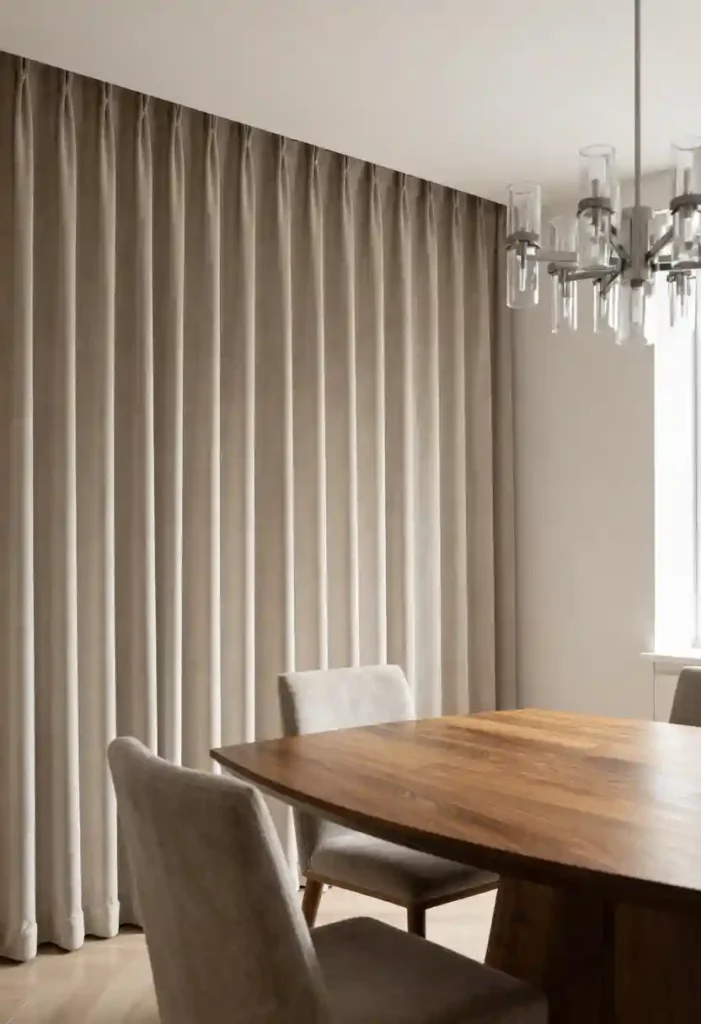
Floor-to-ceiling curtains create an instant sense of height and sophistication in any dining room. By extending the fabric from the ceiling all the way to the floor, you draw the eye upward, making the space feel larger and more elegant. This style works especially well in formal dining rooms or spaces with high ceilings. Opt for heavy fabrics like velvet or thick linen for a luxurious, dramatic effect, or lighter fabrics if you prefer a softer, more airy feel. Pairing the drapes with polished hardware, like decorative rods or finials, adds an extra touch of refinement. Floor-to-ceiling panels can also help with light control, allowing you to create cozy ambiance during evening meals while letting in natural light during the day. The long, flowing lines give the room a finished, tailored look that instantly elevates your dining area.
2. Sheer Curtains for a Light and Airy Feel
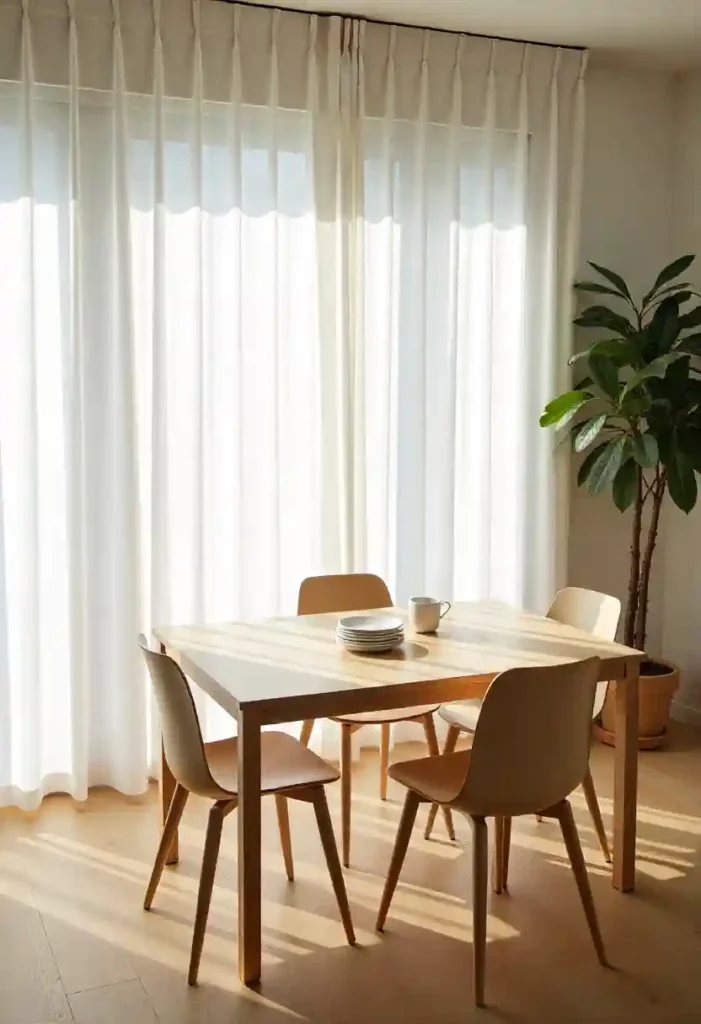
Sheer curtains are perfect for dining rooms that benefit from natural light and a soft, airy atmosphere. Lightweight fabrics like voile or chiffon gently filter sunlight, creating a warm, inviting glow without overwhelming the room. Sheers are ideal for casual or contemporary dining spaces, offering a breezy, relaxed vibe. They can be layered over blinds for privacy while still maintaining a light-filled ambiance. Pairing sheer panels with neutral or pastel tones ensures they complement your decor seamlessly. For added elegance, hang the sheers from ceiling-mounted rods to create longer lines, or use double rods to layer them with heavier drapes for versatility. The result is a dining room that feels open, fresh, and effortlessly refined—perfect for both everyday meals and entertaining guests.
3. Linen Panels for Casual Elegance
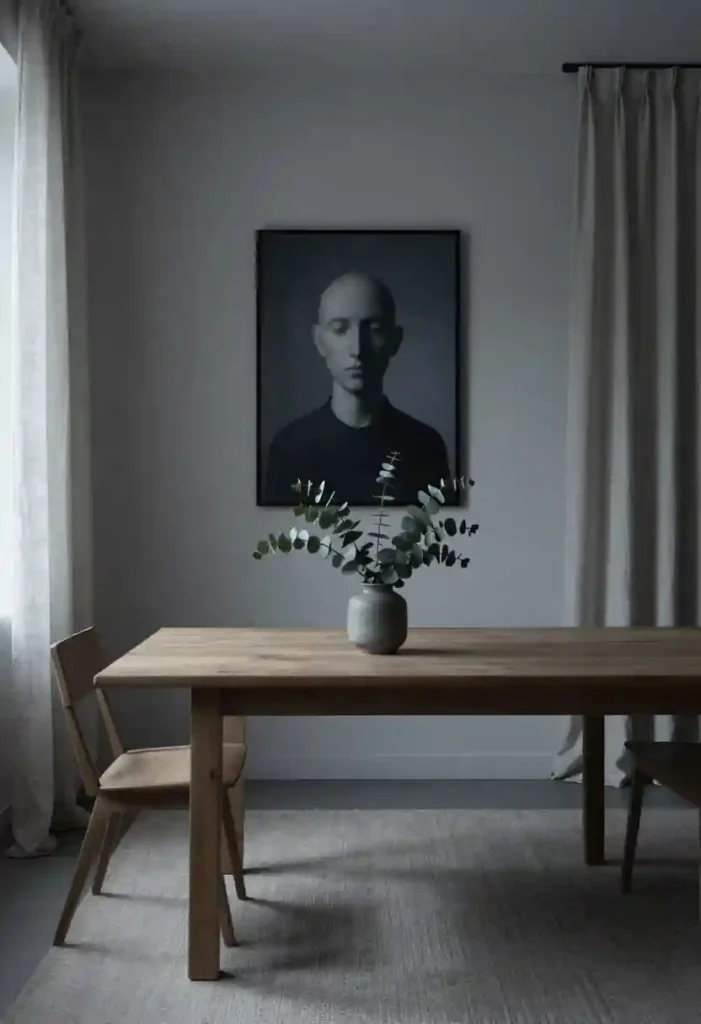
Linen curtains strike the perfect balance between casual charm and understated elegance. Their natural texture adds warmth and visual interest while keeping the dining space relaxed and inviting. Linen drapes work well in both modern and rustic interiors, complementing wooden furniture and neutral color schemes. They’re lightweight enough to move with the breeze, yet substantial enough to provide a finished look when closed. For a polished appearance, hang them slightly above the window frame and let the fabric gently pool on the floor. Linen’s versatility allows it to pair seamlessly with layered sheers or heavier curtains for varying levels of privacy and light control. The slightly wrinkled texture gives the room a lived-in, comfortable feel, making linen a favorite for dining rooms that want effortless sophistication without feeling stiff.
4. Velvet Curtains for a Luxurious Touch
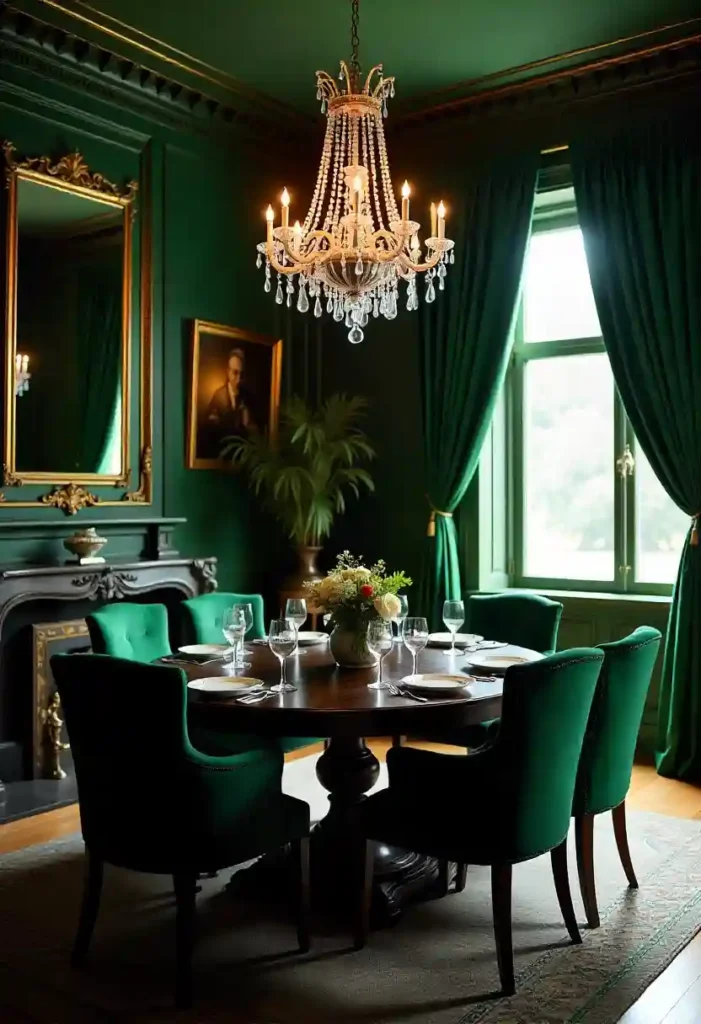
Velvet curtains instantly elevate a dining room with a sense of luxury and opulence. Their rich texture and deep color add depth and sophistication to any space. Velvet is particularly suited for formal dining rooms, pairing beautifully with polished wood, chandeliers, and metallic accents. Floor-length velvet panels can create a dramatic backdrop, framing windows like a piece of art. They’re also excellent for insulating the room and providing privacy, making evening gatherings feel cozy and intimate. Lighter shades like blush or ivory give a soft, elegant vibe, while darker hues like emerald, navy, or charcoal make a bold statement. Combining velvet with sheer inner panels allows for versatility, letting you enjoy natural light during the day while maintaining luxury at night.
5. Patterned Drapes to Add Personality
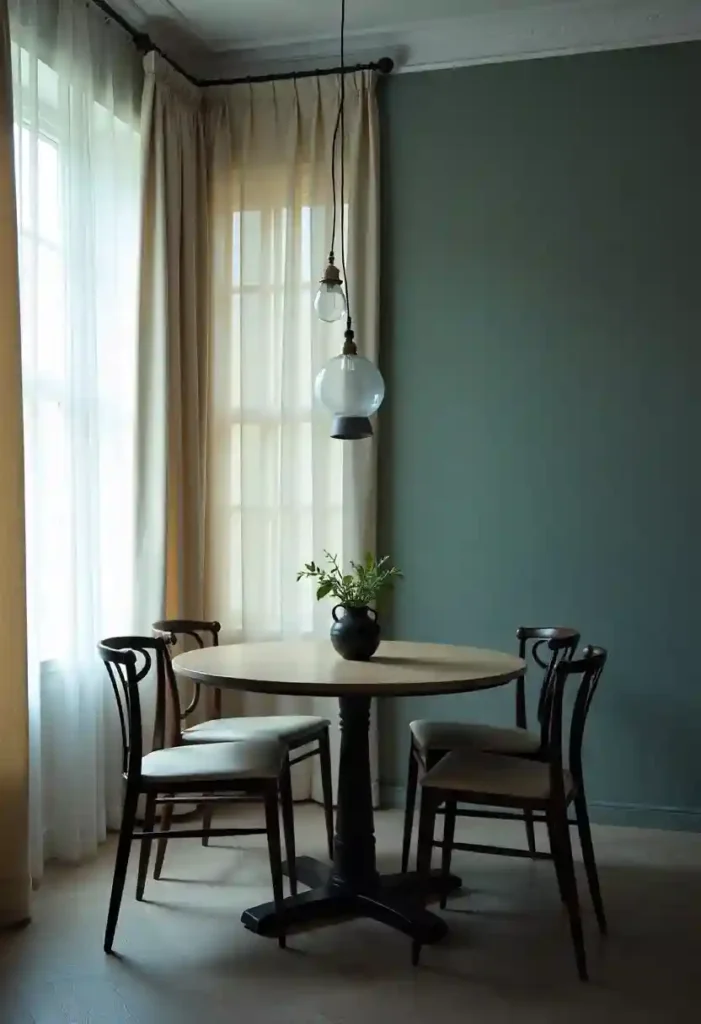
Patterned curtains are a fun and stylish way to inject personality into a neutral dining room. From floral prints and geometric designs to subtle stripes or abstract motifs, patterned drapes can serve as the focal point of your space. They add visual interest without overwhelming the decor when paired with simpler furniture and accessories. Bold patterns work well in contemporary or eclectic rooms, while muted, delicate patterns complement classic or farmhouse interiors. Patterned curtains can also help tie together other design elements, such as cushions, rugs, or wall art. Choose fabrics that flow well and hang evenly to maintain a polished, cohesive appearance. The key is balancing the pattern with the room’s color palette for a finished and thoughtfully styled look.
6. Layered Curtains for Depth
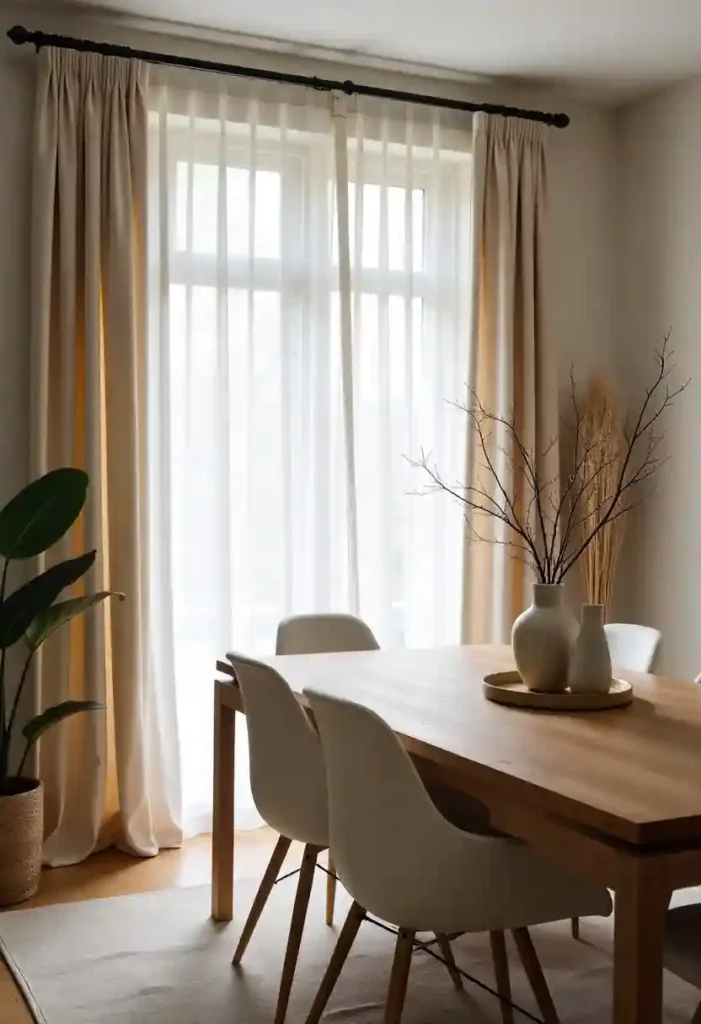
Layering curtains combines multiple fabrics to create depth, texture, and versatility. For example, pairing sheer panels with heavier drapes allows you to control light and privacy while adding a sophisticated, layered look. This approach works well in dining rooms of all styles, from traditional to contemporary. Layered curtains also provide the opportunity to mix textures, colors, or subtle patterns for a richer, more dynamic appearance. Tiebacks can further enhance the layered effect by creating neat folds and framing windows elegantly. By using layers, your dining room feels more curated and finished, giving the space a designer-quality look without major renovations.
7. Neutral Tones for Timeless Style
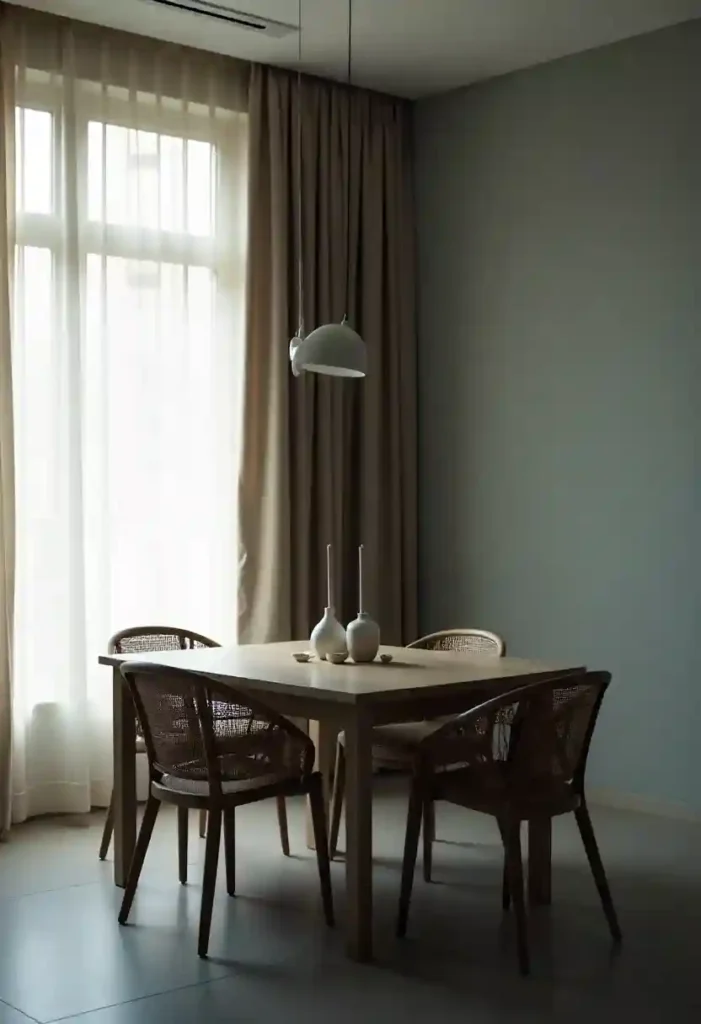
Neutral-colored curtains are a timeless choice that complements any dining room style. Shades like beige, ivory, gray, or soft taupe create a calm, balanced backdrop, allowing furniture, lighting, and accessories to shine. Neutral curtains work beautifully with layered textures, patterned rugs, or metallic accents, maintaining elegance without overwhelming the space. They’re also versatile, making it easy to update other decor elements over time without needing to replace your curtains. For a polished look, hang neutral drapes from ceiling-mounted rods and let them skim the floor. The result is a sophisticated, cohesive dining room that feels thoughtfully designed and perpetually stylish.
8. Bold Colors for a Statement Look
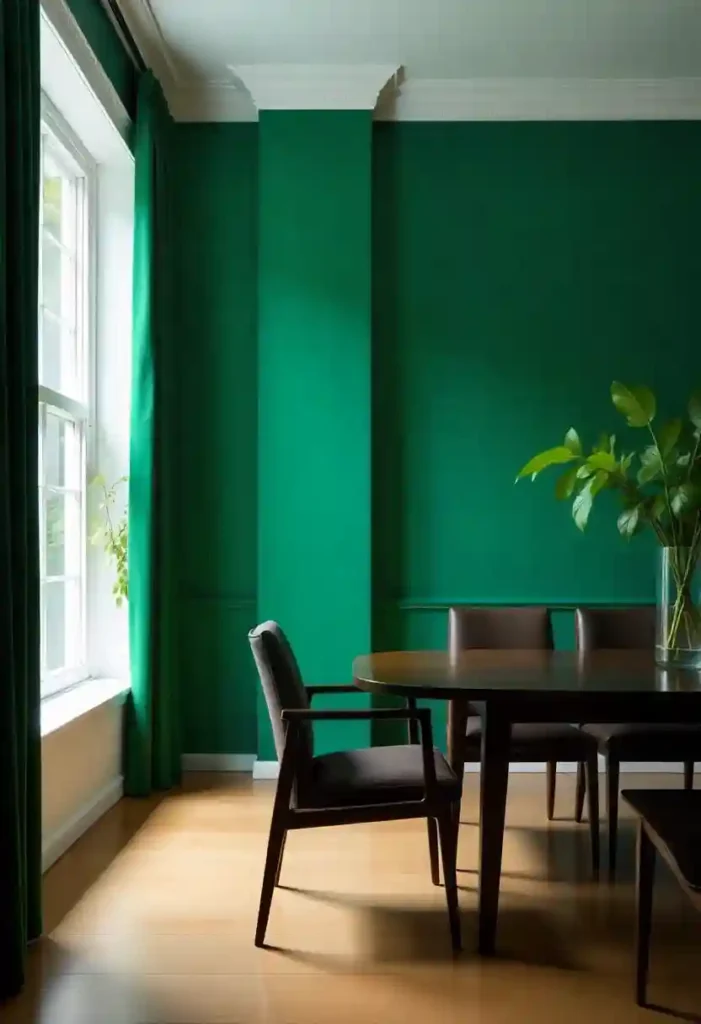
Bold-colored curtains turn windows into a striking focal point in your dining room. Deep hues like navy, emerald, or burnt orange can add drama and energy, while jewel tones bring richness and warmth. Statement curtains are especially effective in rooms with neutral furniture, as they instantly elevate the space. Pair bold drapes with metallic accents, a subtle rug, or light walls to balance the intensity of color. Bold curtains can also reflect your personal style and make the dining area feel more inviting and unique. Choosing a rich fabric like velvet or silk enhances the luxurious feel, giving the room a finished, polished look.
Read Also: 17 Neutral Room Decor Ideas That Feel Anything But Boring
9. Metallic or Shimmery Fabrics for Glam
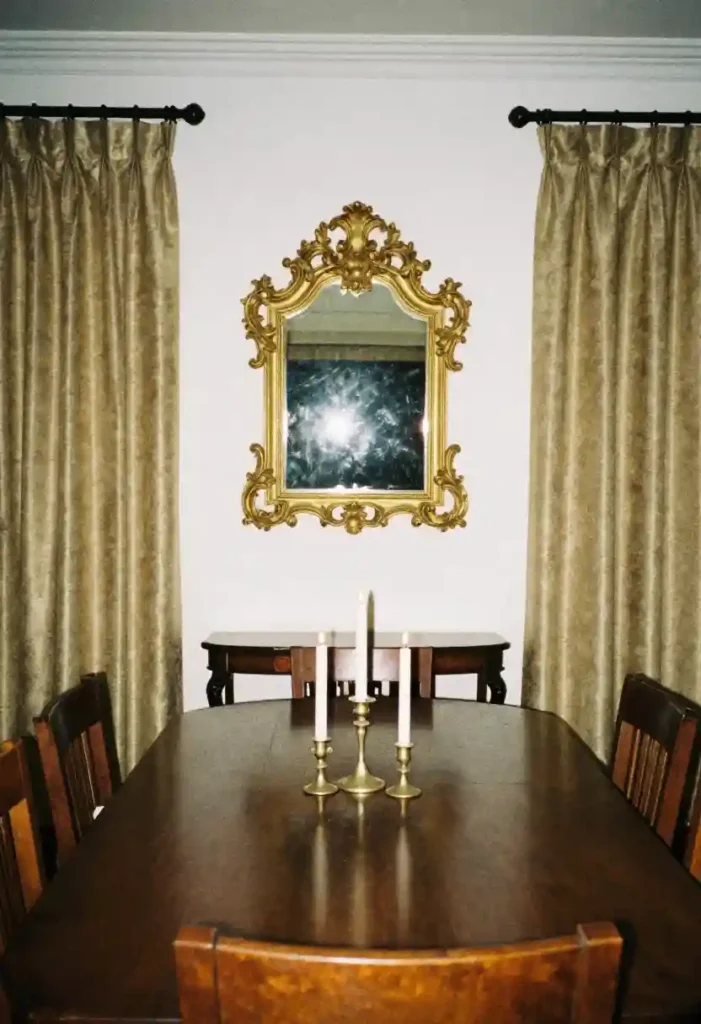
Metallic or shimmery curtains bring a touch of glamour and sophistication to any dining room. Fabrics with subtle gold, silver, or bronze threads catch the light beautifully, creating a luxurious ambiance. These curtains pair well with chandeliers, mirrored furniture, or metallic accessories, enhancing the overall elegance of the space. Shimmery drapes are perfect for special occasions, evening dinners, or formal settings where ambiance matters. They can be paired with neutral or dark walls to create contrast and make the metallic threads pop. The shimmer adds depth and a visual sparkle without feeling over-the-top, giving your dining room a refined, finished look.
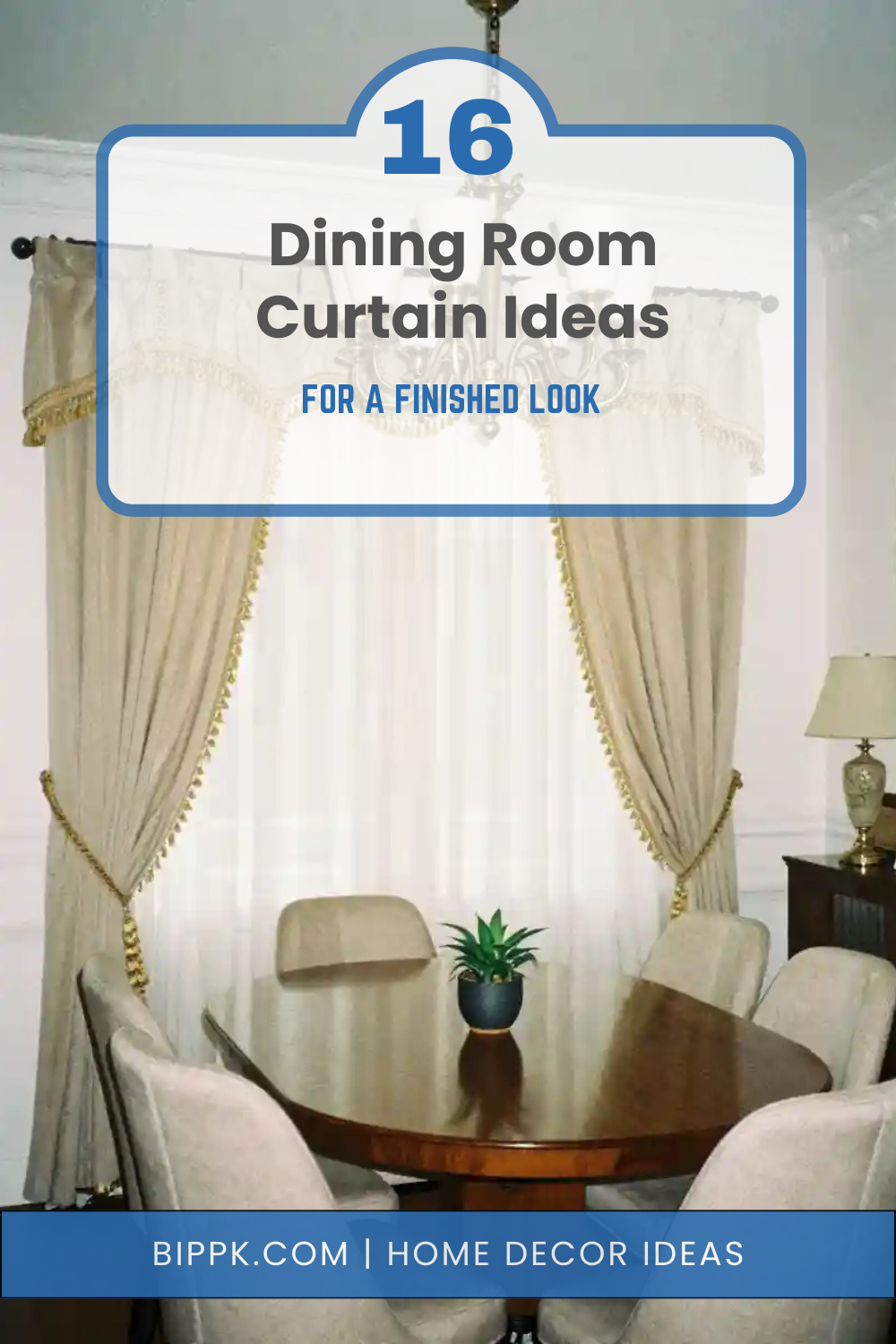
10. Tiebacks and Holdbacks for a Polished Finish
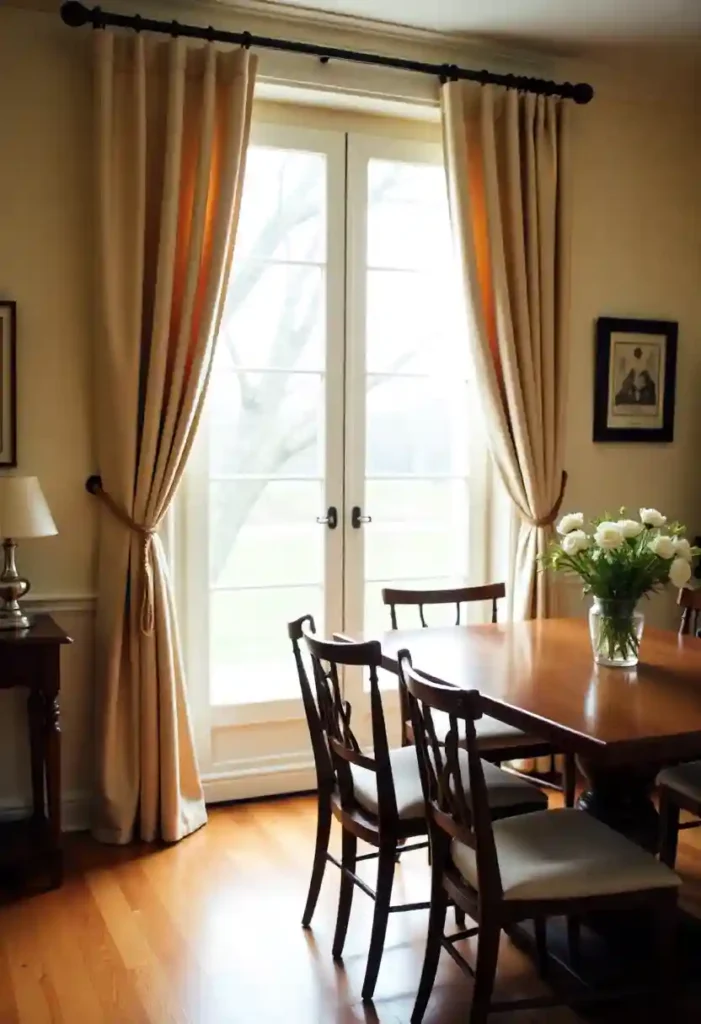
Adding tiebacks or holdbacks to your dining room curtains gives a refined, tailored appearance. They allow you to neatly pull curtains aside during meals, showcasing the view and letting in natural light. Decorative tiebacks—made of rope, metal, or fabric—can complement your room’s style, adding subtle charm and detail. They work beautifully with layered drapes, velvet panels, or patterned fabrics, enhancing the overall elegance. Functionally, tiebacks help control sunlight and prevent curtains from draping unevenly, while visually, they create a sense of symmetry and polish. Small details like this make a big difference in achieving a finished, thoughtfully designed dining space.
11. Curtains with Trims or Tassels
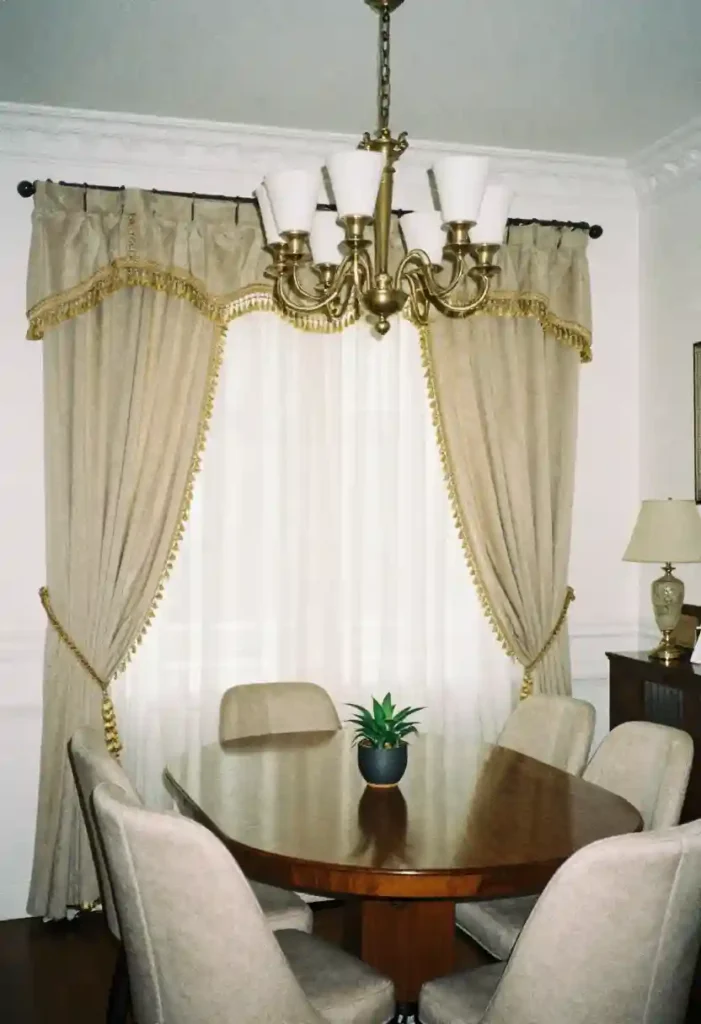
Curtains with decorative trims, fringes, or tassels add subtle character and charm to a dining room. These details draw attention to the edges of the fabric, giving curtains a tailored, high-end feel. Trimmed curtains work well with both classic and eclectic decor styles, adding visual interest without overpowering the space. Pairing tassels with coordinating tiebacks enhances the overall design and frames the windows elegantly. Whether it’s a gold fringe on a velvet drape or delicate lace trim on linen panels, these finishing touches make the dining area feel curated, polished, and complete.
12. Roman Shades for a Clean Look
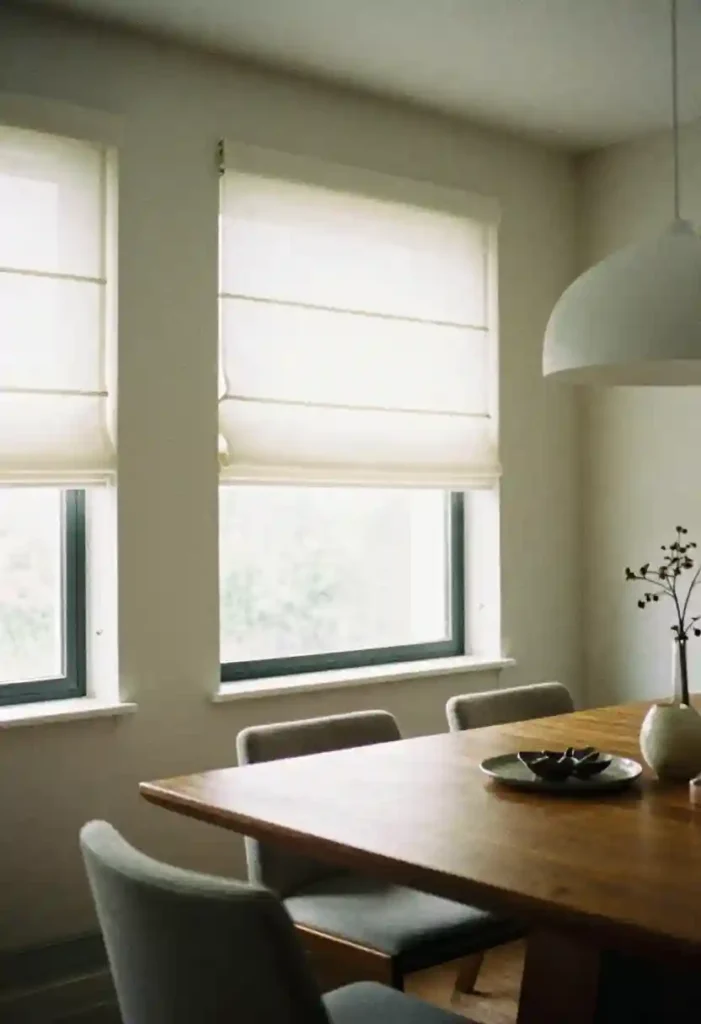
Roman shades offer a sleek, tailored alternative to traditional drapes in the dining room. They fold neatly when raised, creating a crisp, organized look that complements modern or minimalist interiors. Fabric choices—from linen to cotton—allow for a soft, finished appearance while still offering light control and privacy. Roman shades can be layered under curtains for versatility or used alone for a clean, uncluttered aesthetic. Patterns, textures, and subtle colors add interest without overwhelming the space. Their neat lines and simplicity make Roman shades an ideal solution for smaller windows or dining rooms where you want elegance without bulk.
13. Printed Panels to Complement Decor
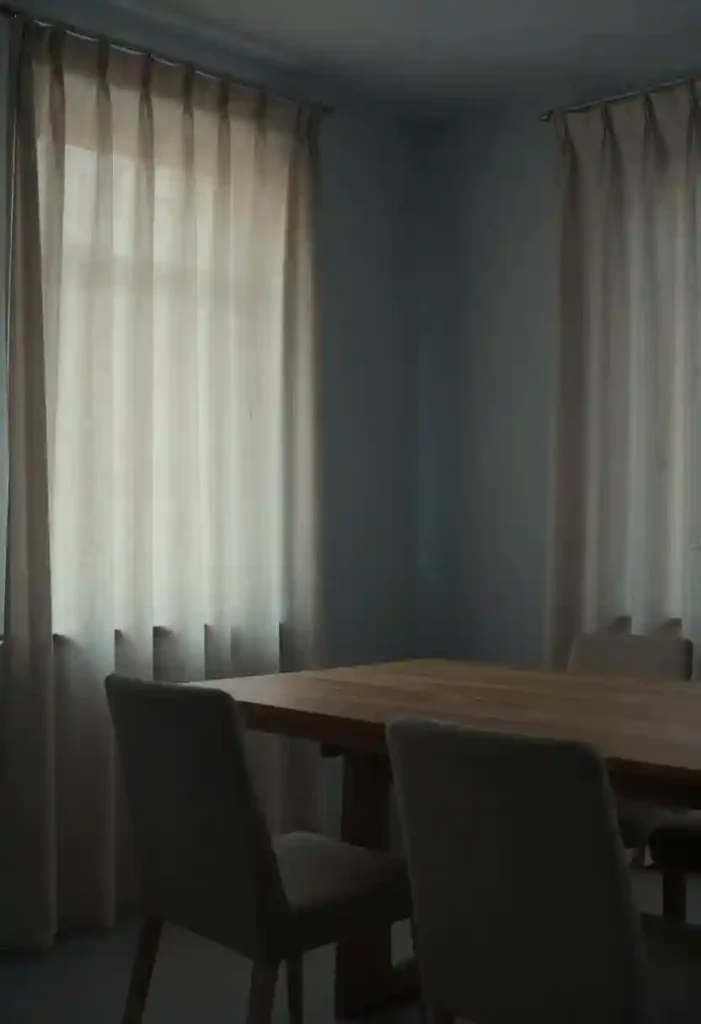
Printed curtains can tie together your dining room’s color scheme and overall aesthetic. Floral, geometric, or abstract prints add personality and visual interest without dominating the room. Choosing colors that echo furniture, wall art, or rugs ensures cohesion. Printed panels work well with solid-colored drapes or sheers for a layered effect. In casual or eclectic dining spaces, prints create energy and charm, while in classic rooms, subtle patterns add understated elegance. Fabric choice and scale of the print are key; smaller prints work in compact rooms, while larger motifs make a bold statement in spacious dining areas.
14. Two-Toned or Ombre Curtains
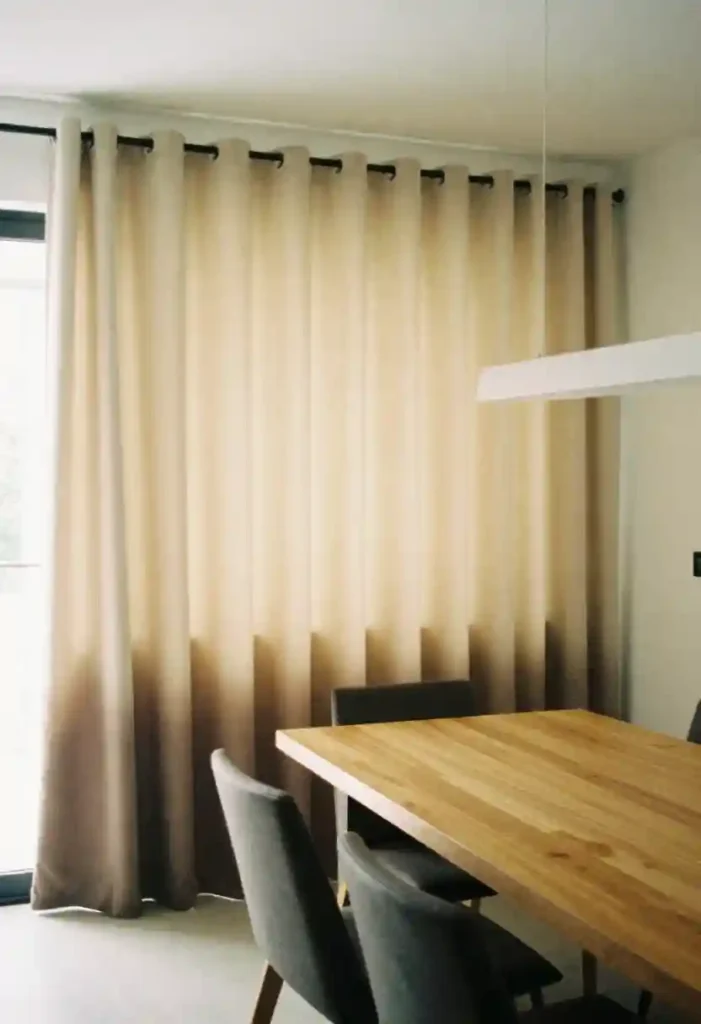
Two-toned or ombre curtains create a visual gradient that adds dimension and movement to a dining room. They’re a unique alternative to solid-colored drapes, providing interest while maintaining a sophisticated look. Ombre designs can transition from light at the top to darker at the bottom, complementing furniture or wall colors. This style works beautifully with minimalist decor, modern interiors, or eclectic spaces, giving the room a curated, artistic touch. The soft color shift draws the eye upward, enhancing perceived height and making windows feel larger.
15. Floor-Length Curtains with Rugs for Cohesion
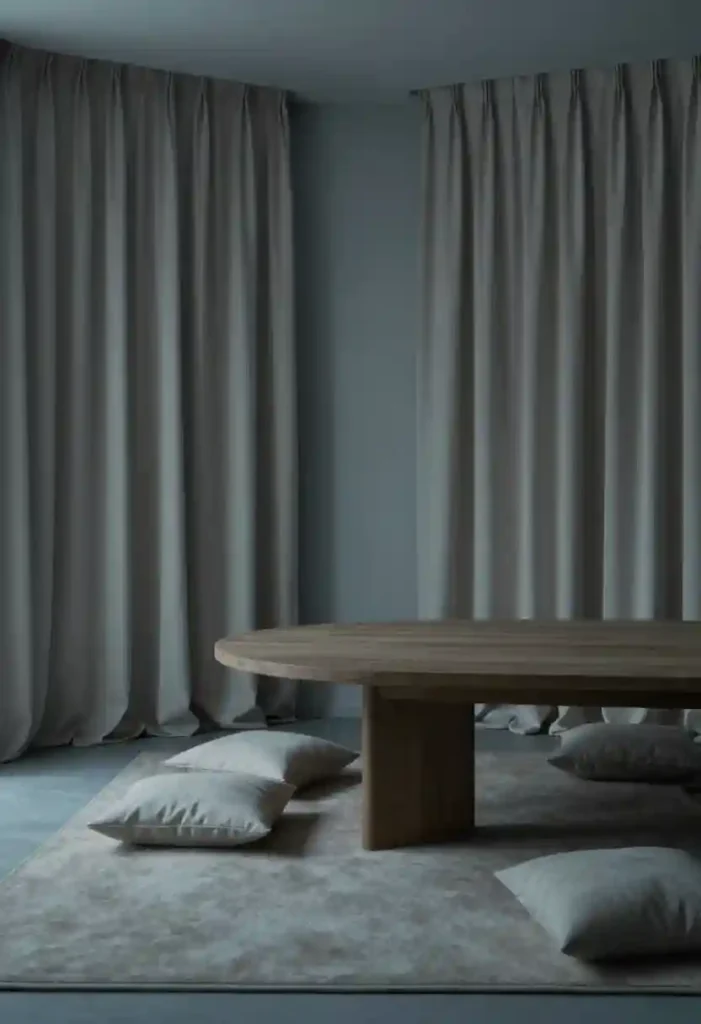
Pairing floor-length curtains with a coordinating rug creates harmony and cohesion in the dining room. The repetition of color or tone ties the vertical and horizontal elements together, making the space feel well-planned. Heavy fabrics for curtains and plush rugs add texture, warmth, and comfort. This combination anchors the furniture and adds visual weight, ensuring the room feels complete. Matching patterns or complementary colors reinforce the design, giving the dining area a polished, finished appearance suitable for everyday use or entertaining.
16. Curtain Rods and Hardware that Elevate Style
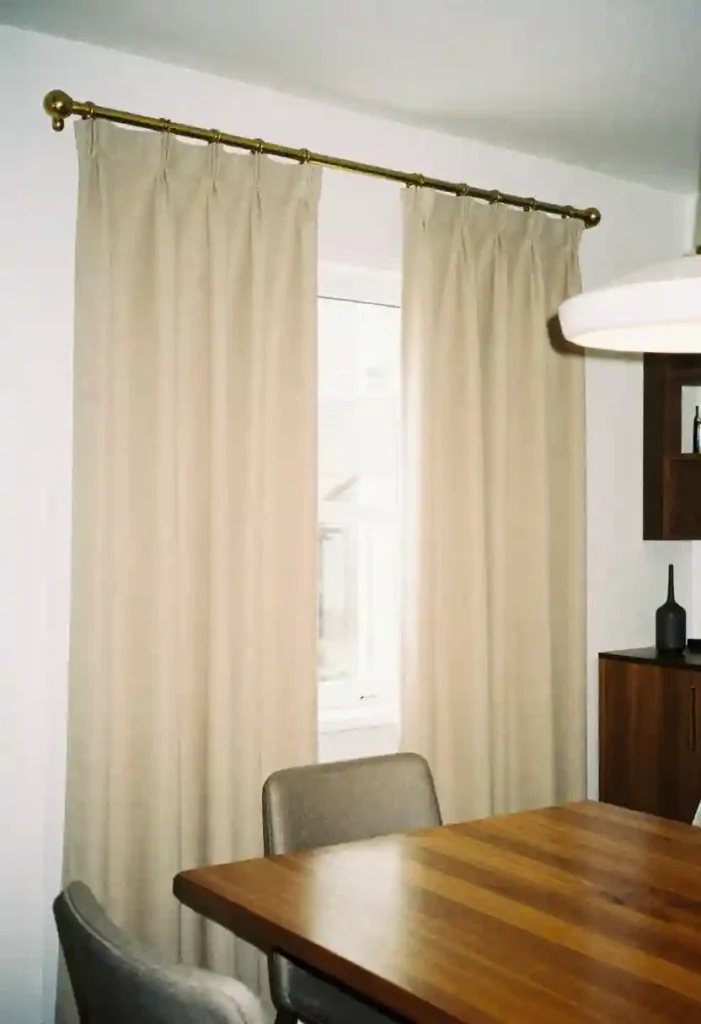
The right curtain rods and hardware can elevate the look of any dining room. Decorative rods in brushed metal, polished brass, or matte black add sophistication, while finials and brackets contribute subtle style details. Choosing hardware that complements the room’s design ensures the curtains feel integrated rather than tacked-on. Ceiling-mounted rods create the illusion of height, while ornate brackets add elegance. Even simple curtains can feel luxurious with the right hardware, proving that finishing touches make a major difference in achieving a polished, cohesive dining room.
Final Words
Choosing the right curtains can completely transform your dining room, turning it from ordinary to polished and inviting. Whether you prefer floor-to-ceiling drapes, airy sheers, patterned panels, or luxurious velvet, the right fabric, color, and style add personality, warmth, and sophistication. Details like tiebacks, tassels, layered curtains, and elegant hardware further enhance the finished look. Curtains not only frame your windows beautifully but also control light, provide privacy, and tie the entire room together. By exploring these 16 dining room curtain ideas, you can create a space that feels cohesive, stylish, and thoughtfully designed—perfect for both everyday meals and special gatherings. A well-styled window truly completes the room, making your dining area a space everyone will love to spend time in.