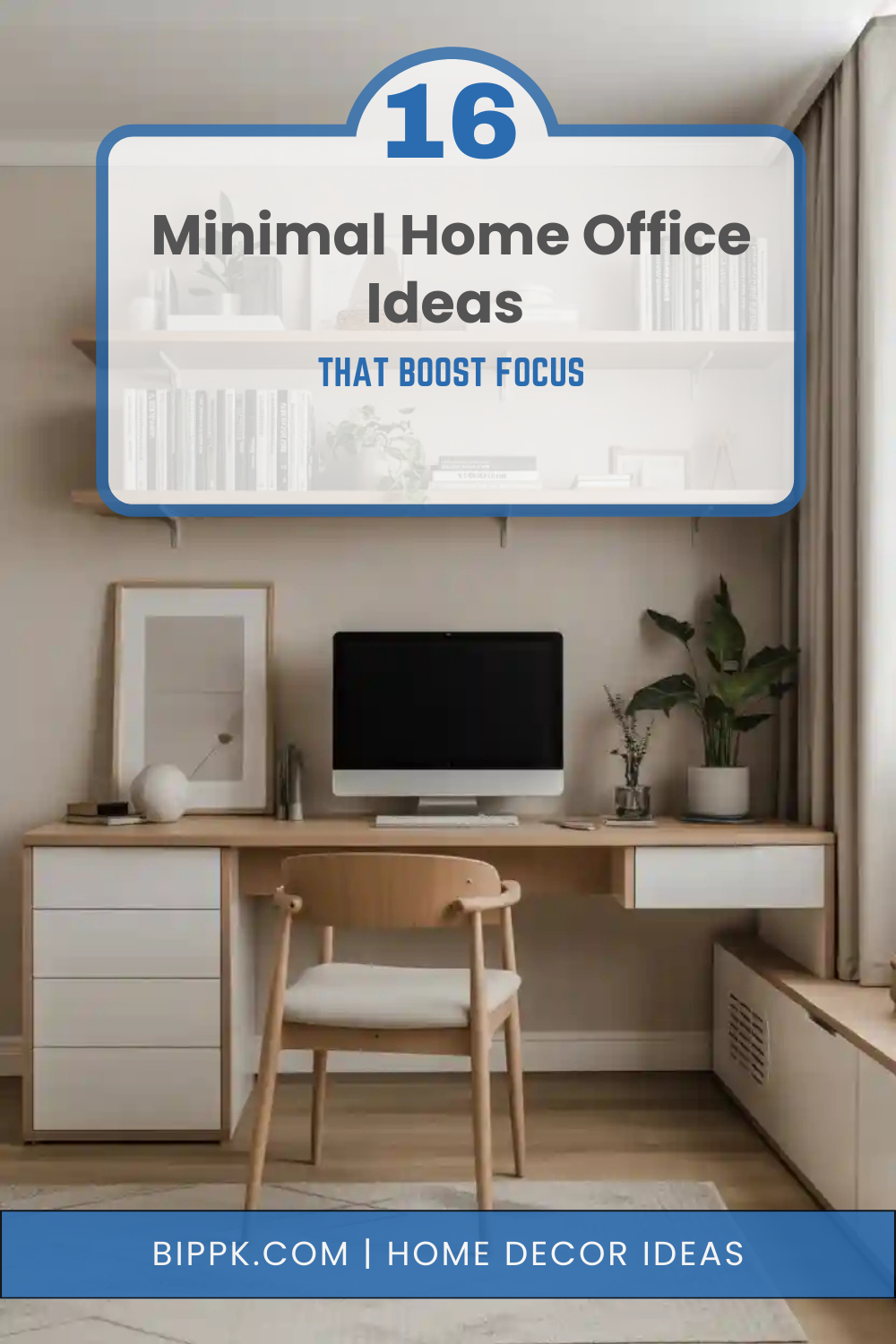
16 Minimal Home Office Ideas That Boost Focus
A minimal home office is the ultimate environment for focus, productivity, and calm. By reducing clutter and embracing clean lines, neutral tones, and functional furniture, a minimalist workspace allows your mind to concentrate fully on the task at hand. The beauty of a minimal design is that it combines simplicity with comfort, creating a space that feels organized yet inviting. Thoughtfully selected desks, ergonomic chairs, and smart storage solutions keep essential items at hand without overwhelming the senses.
Natural light, greenery, and subtle textures enhance well-being, reduce stress, and elevate your mood, making it easier to sustain attention for long periods. Minimalism doesn’t mean sacrificing style or personality—small decor accents, soft fabrics, or carefully chosen artwork can make the space uniquely yours. In this guide, we explore 16 minimal home office ideas that boost focus, providing inspiration to transform your workspace into a serene, productive, and highly functional environment.
1. Neutral Color Palette for Calm
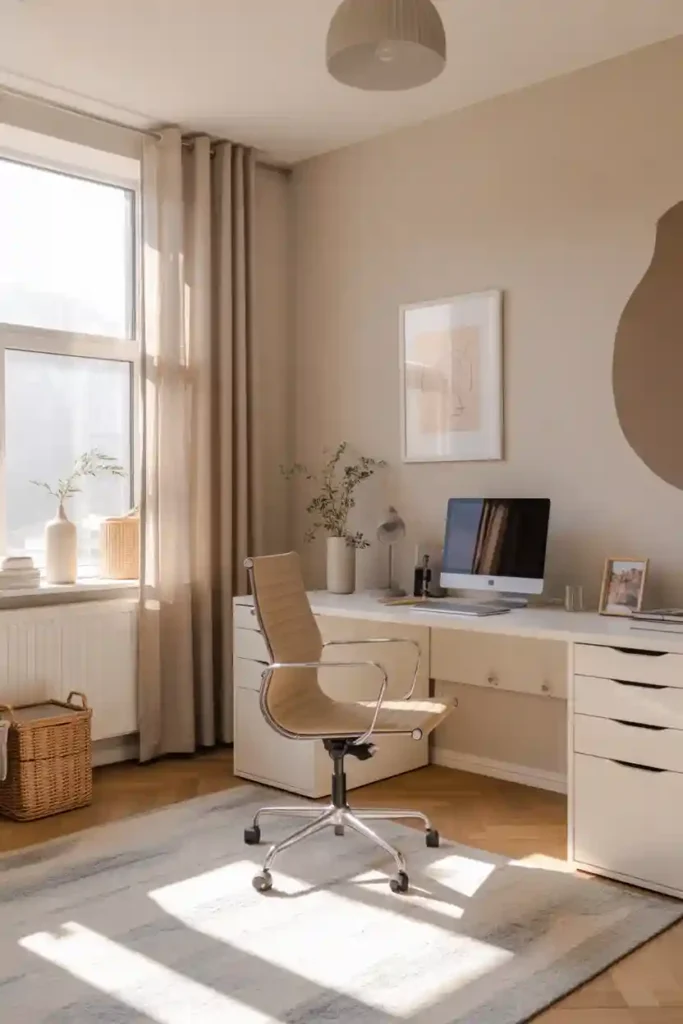
Using a neutral color palette is the foundation of a minimal home office. Whites, beiges, soft grays, and muted taupes reduce visual clutter and create a serene environment conducive to focus. These colors reflect natural light, making the space feel larger and more open. Walls, furniture, and decor should harmonize to maintain cohesion, while subtle textures like linen curtains, woven rugs, or soft throws prevent the room from feeling too stark.
A neutral palette allows you to concentrate on work without being distracted by bold colors or patterns, creating an atmosphere of calm and clarity. It also provides a versatile backdrop for occasional pops of color or personal accents, making the space feel inviting yet still minimal.
2. Sleek, Clutter-Free Desk
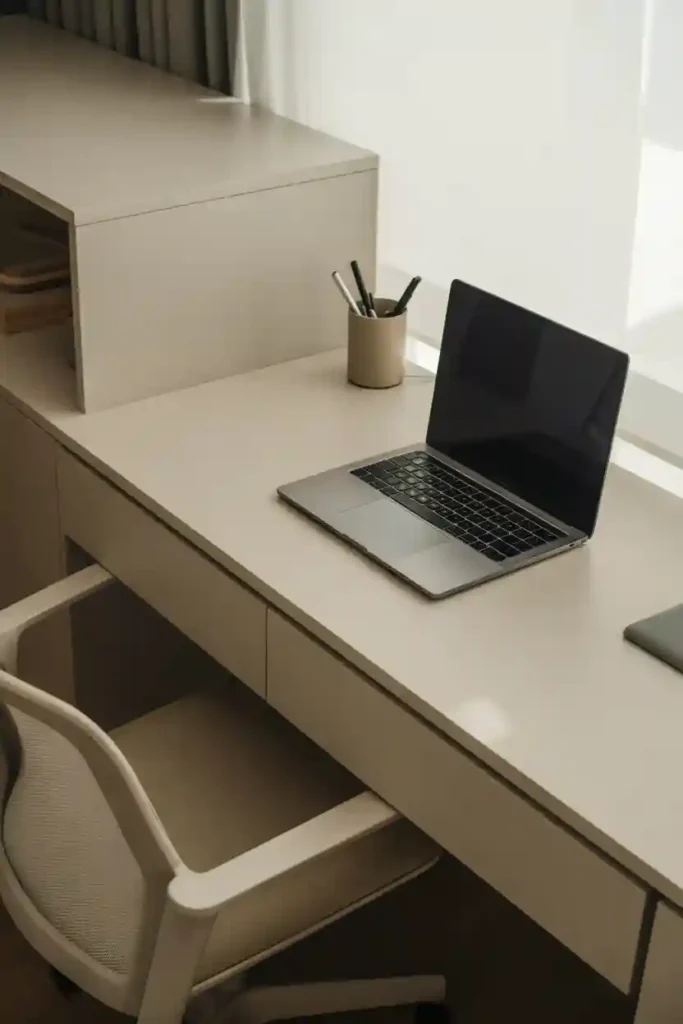
A sleek desk is essential for a minimalist office. Choose a desk with clean lines and built-in storage to keep your workspace organized. Limit the items on your desktop to essentials like a laptop, notebook, and pen holder. Hidden drawers, cable management systems, or desks with minimal hardware maintain a streamlined look. A clutter-free desk reduces distractions, making it easier to focus on tasks.
Pair with neutral or natural materials such as wood, metal, or matte finishes to complement the minimalist aesthetic. The combination of clean design and functionality ensures that every item has a purpose, contributing to both productivity and visual calm.
Read Also: 12 Rustic Living Room Ideas That Feel Inviting
3. Ergonomic Seating for Long Hours
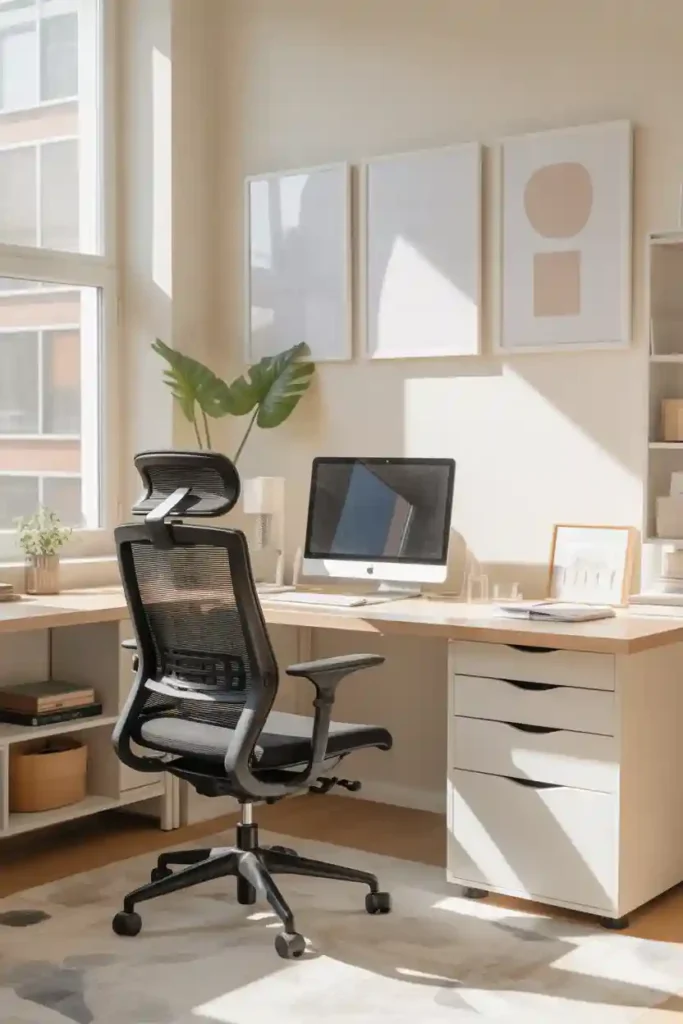
A comfortable, ergonomic chair is vital for maintaining focus during extended work sessions. Minimalist designs favor chairs with clean lines, adjustable height, lumbar support, and breathable materials. An ergonomic chair prevents fatigue, back pain, and discomfort, allowing you to concentrate longer. Pair it with a desk at the correct height and keep the surrounding area free of clutter for a fully functional workspace.
Opt for neutral tones or subtle textures that complement the minimal decor. Ergonomic seating is not just practical—it also reinforces the clean, streamlined aesthetic of a minimalist office, ensuring your focus remains uninterrupted while supporting physical well-being.
4. Floating Shelves for Functional Storage
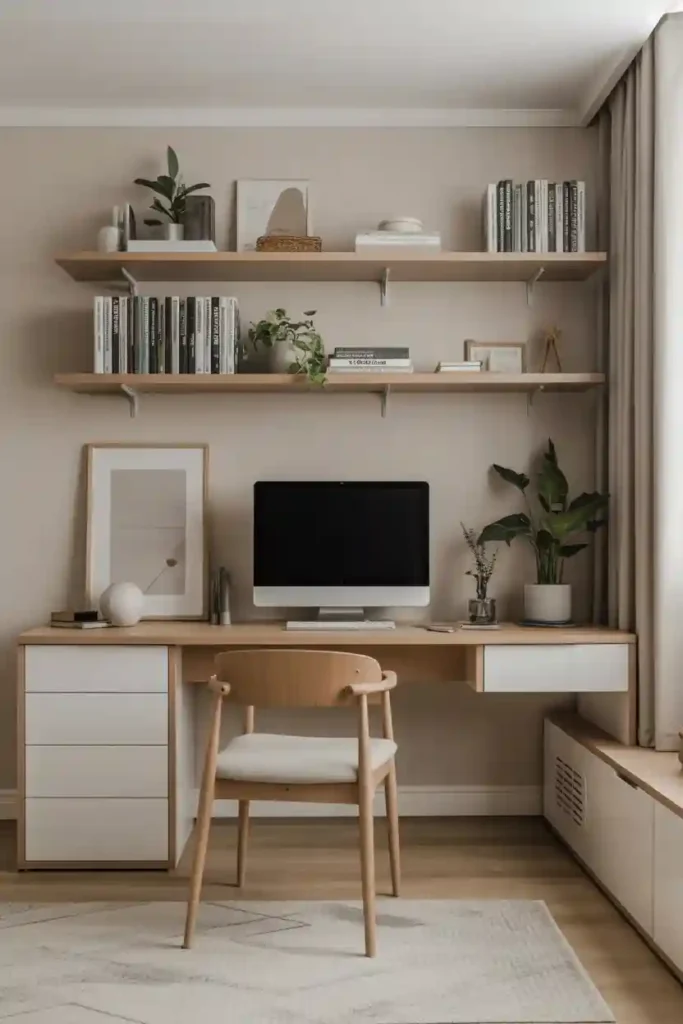
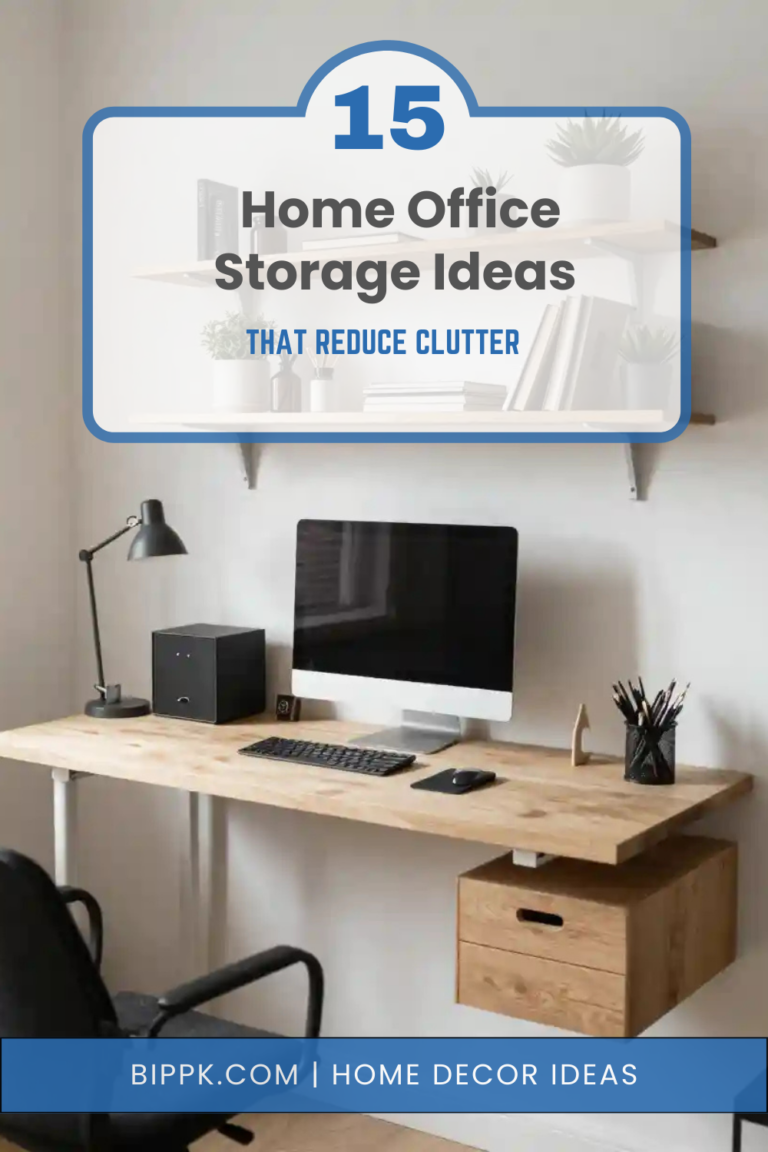
Floating shelves provide vertical storage without occupying floor space, keeping the office organized and minimal. Use them to display essential items such as books, binders, or a few decorative accents like small plants. By arranging items neatly, you can maintain visual order while keeping frequently used items within reach. Floating shelves contribute to a clean aesthetic and prevent clutter from accumulating on the desk or floor.
Choose shelves in natural wood, matte white, or metal to complement your overall design. Functional yet stylish, floating shelves enhance productivity by keeping your space organized, visually appealing, and focused on the essentials.
5. Hidden Cable Management
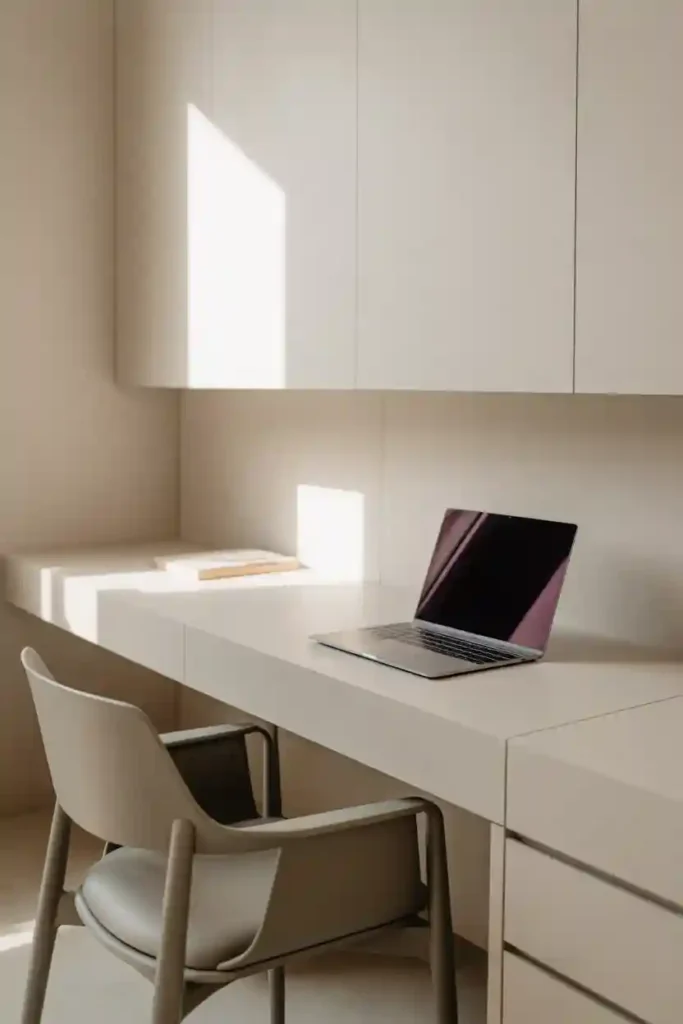
Cables and wires can quickly disrupt a minimalist workspace. Effective cable management keeps cords organized and hidden, preventing visual clutter and distractions. Use cable trays, clips, or integrated desk channels to keep power cords, chargers, and monitor cables out of sight. Concealed cables create a clean and streamlined look while improving safety and workspace efficiency.
When paired with a clutter-free desk and minimal decor, hidden wiring maintains the visual simplicity essential for focus. Even small details like wireless devices or compact power strips can help preserve the aesthetic. A workspace free of tangled cables promotes calm and ensures that your attention stays on work rather than visual chaos.
6. Natural Light and Window Placement
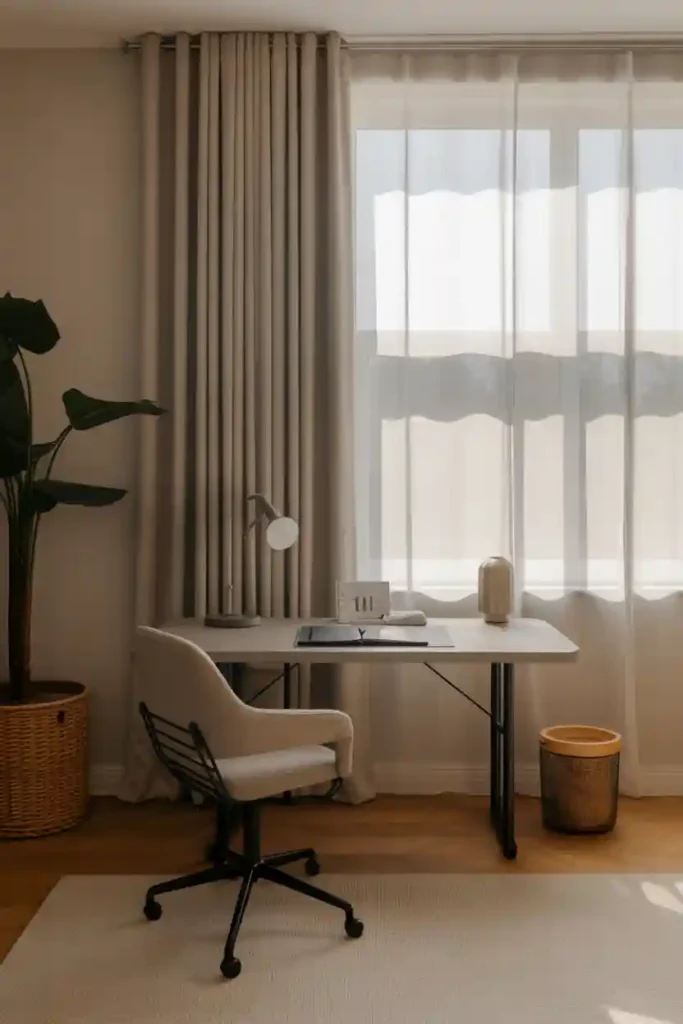
Positioning your desk near a window maximizes natural light, which has been proven to improve mood, energy, and concentration. Natural light reduces eye strain and creates a bright, airy environment that enhances focus. Keep window treatments simple, using sheer curtains or blinds to diffuse harsh sunlight while maintaining brightness.
A well-lit space feels larger and more inviting, complementing minimalist decor. Natural light also highlights textures, neutral colors, and minimal furnishings, making your office feel cohesive and calm. Even in small spaces, maximizing daylight can transform your workspace into an energizing yet serene area where focus comes naturally.
7. Greenery for Calm and Productivity
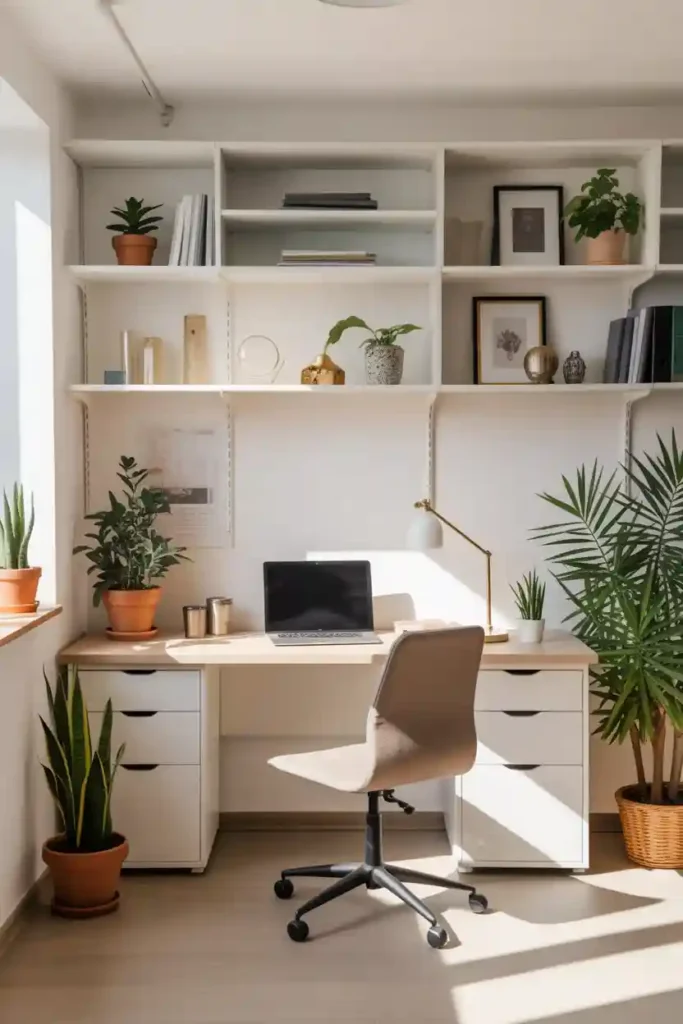
Adding greenery to a minimalist office introduces life and vibrancy without creating clutter. Small potted plants, succulents, or a single leafy plant can improve air quality, reduce stress, and enhance focus. Place plants strategically on shelves, desktops, or windowsills to maintain visual balance.
Greenery adds organic texture that complements neutral tones and clean lines, creating a natural, serene environment. Minimalist offices benefit from carefully chosen plants that do not overwhelm the design but instead promote calm and well-being. Integrating nature into your workspace encourages mindfulness and productivity, making the office feel inviting yet uncluttered.
8. Dual Monitors for Efficient Workflow
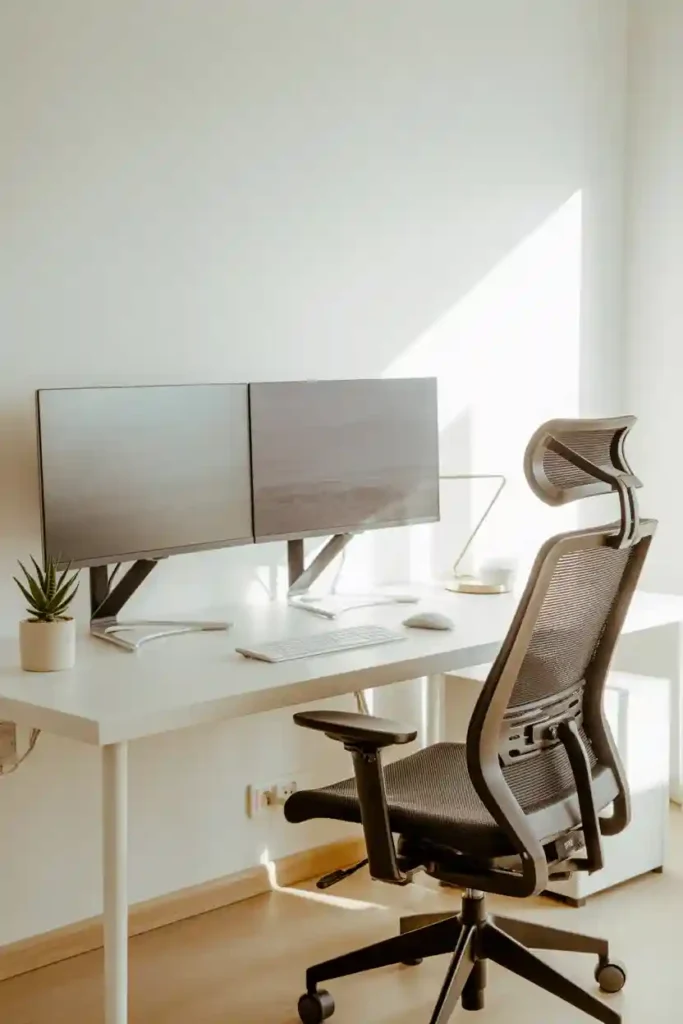
Dual monitors increase productivity while maintaining a minimal setup. Use adjustable monitor arms to keep screens elevated and free up desk space. A streamlined arrangement prevents clutter and allows for efficient multitasking. Choose thin, neutral-framed monitors that blend with the minimal aesthetic. Proper monitor placement reduces eye strain and promotes ergonomic posture, enhancing focus over long work sessions.
Integrating dual monitors with a tidy desk, cable management, and neutral decor maintains a clean, organized environment while supporting efficiency. This setup is ideal for those who require multiple applications open simultaneously, combining functionality and minimalism without sacrificing clarity or visual calm.
9. Minimal Wall Art for Inspiration
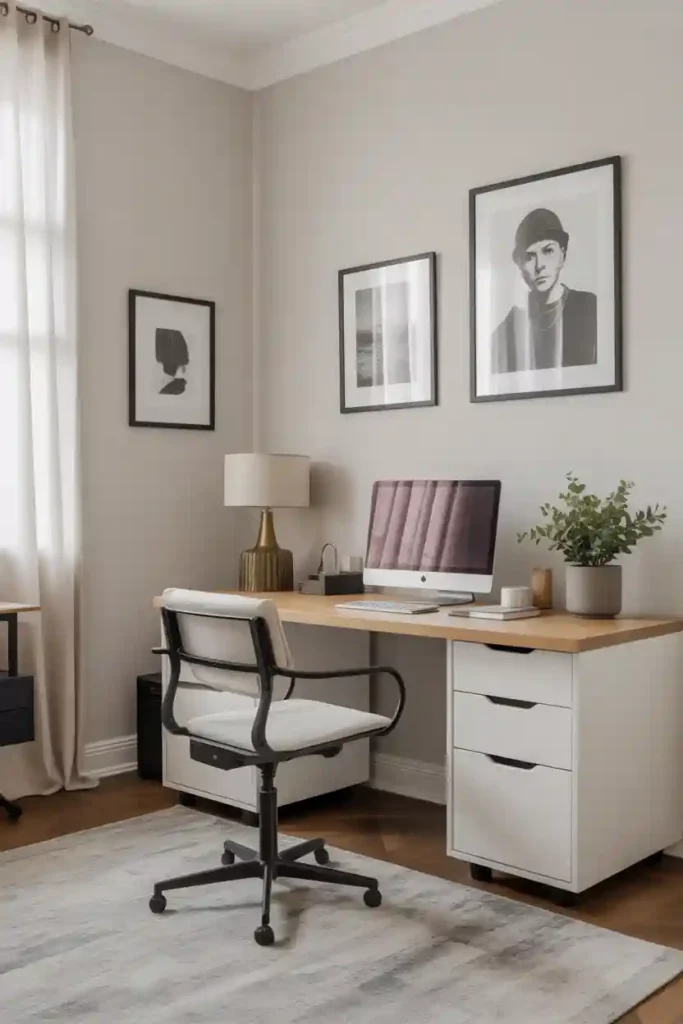
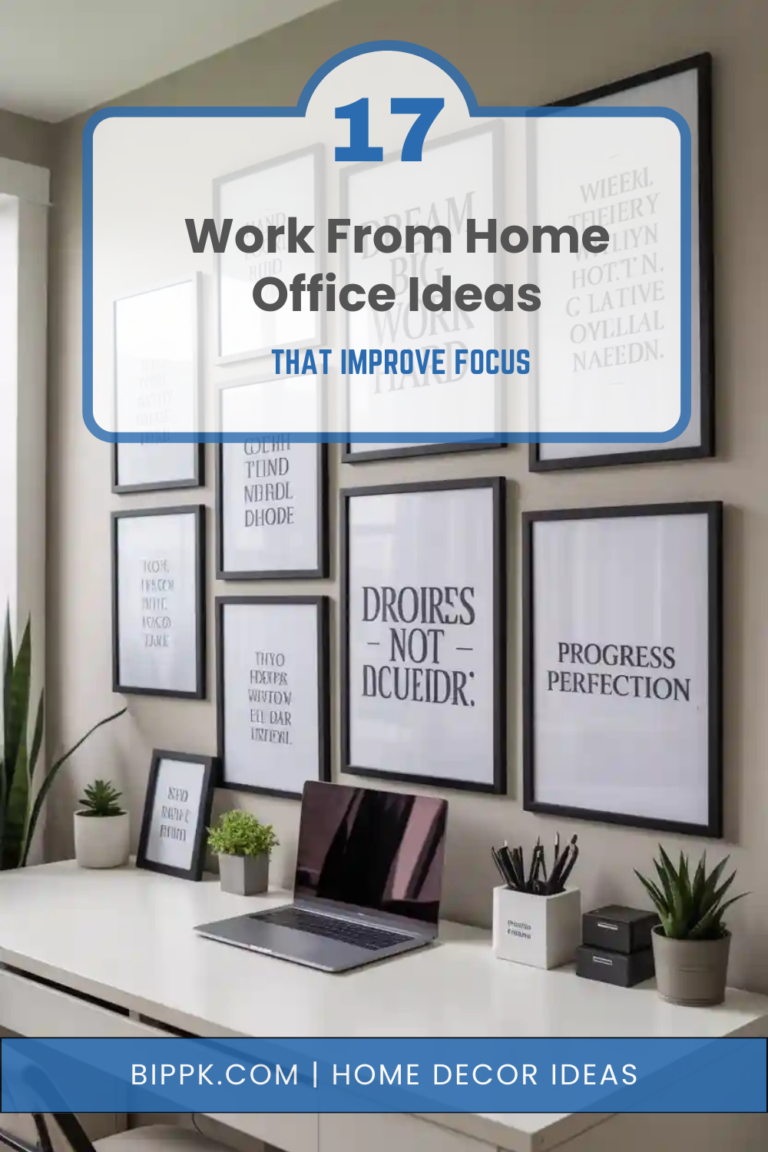
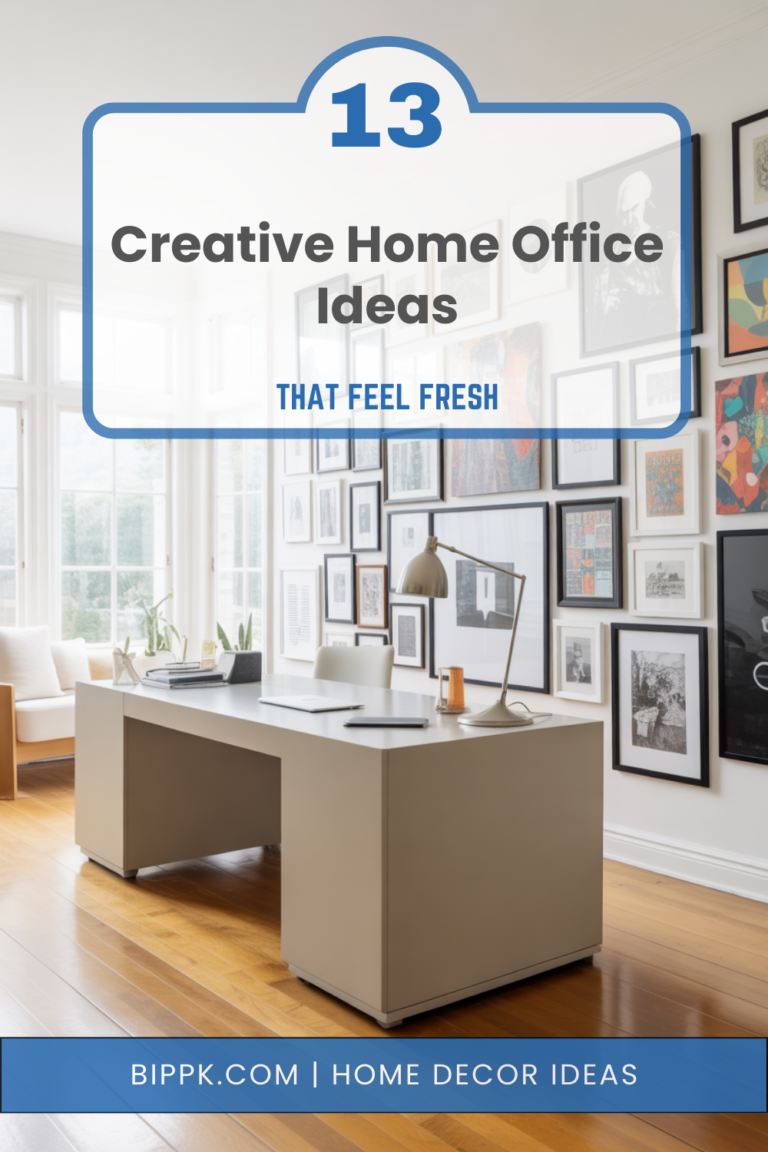
Minimal wall art can inspire creativity without overwhelming the senses. Choose simple black-and-white prints, abstract pieces, or framed motivational quotes that complement neutral tones. Hanging art at eye level adds interest and personality without creating visual clutter. Minimalist artwork encourages focus by subtly stimulating the mind while maintaining calm.
Avoid busy patterns or bright colors that could distract from work. Properly curated art becomes part of the decor’s rhythm, supporting both inspiration and concentration. Even one or two carefully selected pieces can elevate a minimalist office, creating a harmonious balance between aesthetics and productivity.
10. Multi-Functional Furniture
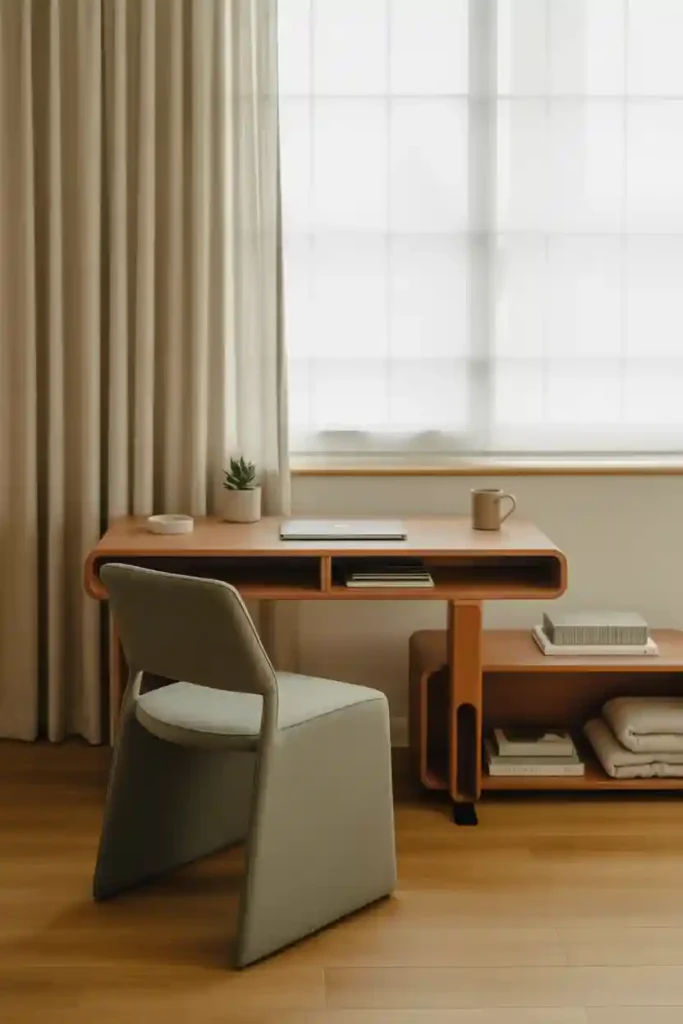
In a minimal home office, furniture that serves multiple purposes is essential for maximizing both functionality and visual calm. Multi-functional pieces—like a desk with built-in drawers, a storage bench that doubles as extra seating, or shelves that act as room dividers—help reduce clutter while maintaining a clean, streamlined aesthetic. When every item in the room has a purpose, it encourages efficiency and focus.
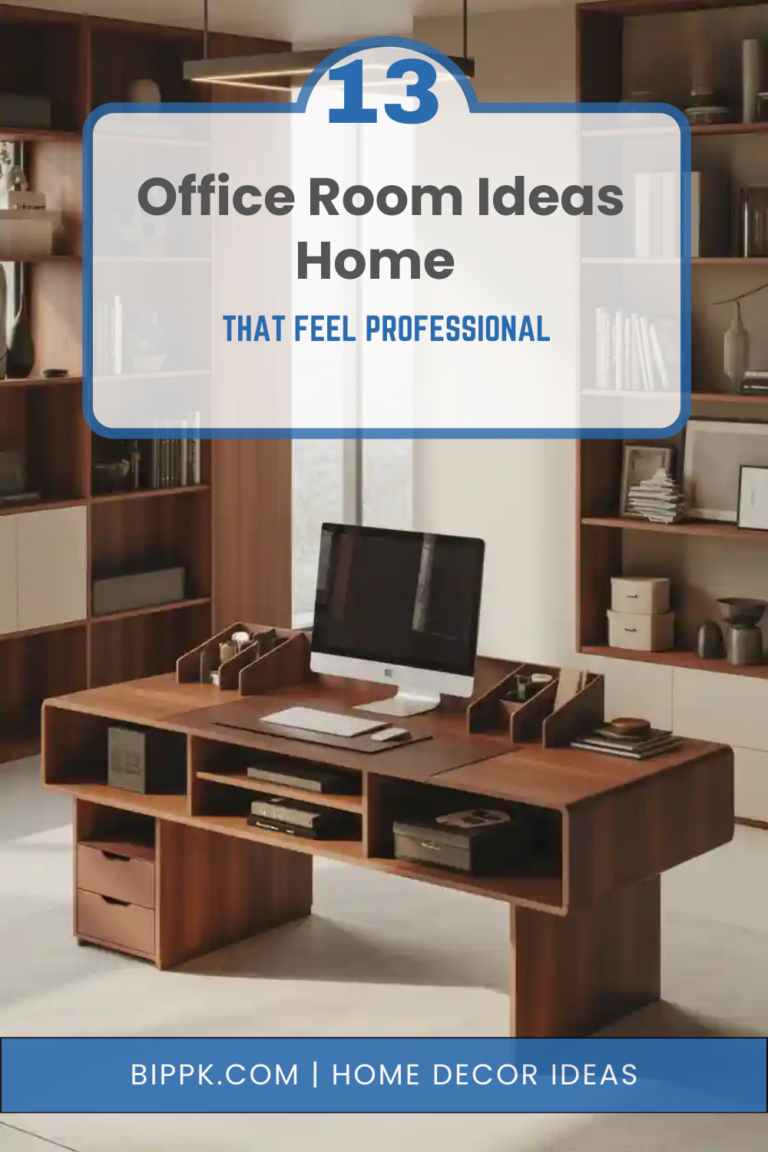
For example, a desk with concealed compartments keeps stationery, cables, and documents neatly tucked away, while a storage bench can house office supplies and provide a place to sit for meetings or casual breaks. Choosing furniture in neutral colors and natural materials, such as wood, metal, or matte finishes, ensures cohesion with the minimalist style. Multi-functional pieces not only save space but also create a sense of order, which is crucial for maintaining a productive and distraction-free workspace.
11. Decluttered Floor Space
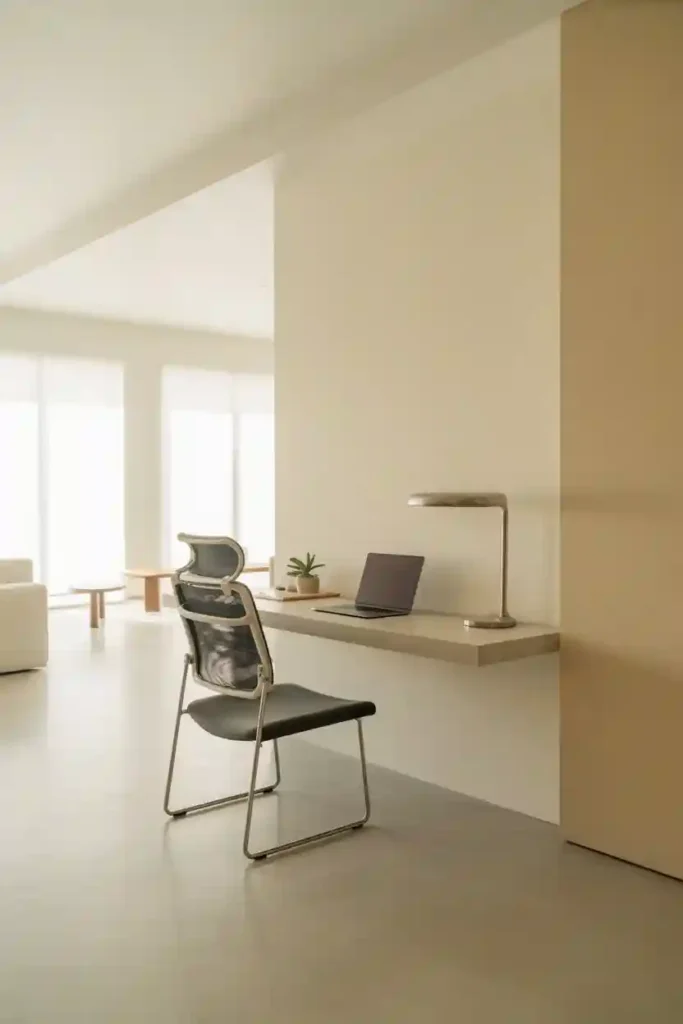
Maintaining a clear floor is key to a minimal office design. Open floor space reduces visual distractions, creates a sense of spaciousness, and allows for free movement throughout the room. Cluttered floors can cause stress and break focus, while a clean, open area fosters clarity and calm. Floating desks or wall-mounted storage solutions can further enhance floor space by keeping items off the ground.
Minimalist flooring choices, like hardwood or neutral-toned rugs, complement the clean aesthetic without overwhelming the room. Even small items such as cable organizers, under-desk bins, or compact wastebaskets help maintain order and reinforce the sense of openness. By keeping the floor decluttered, your home office feels more inviting, serene, and conducive to long periods of focused work. Open floor space also allows you to integrate subtle movement or stretches during breaks without disrupting the minimal aesthetic.
12. Neutral Rugs for Texture
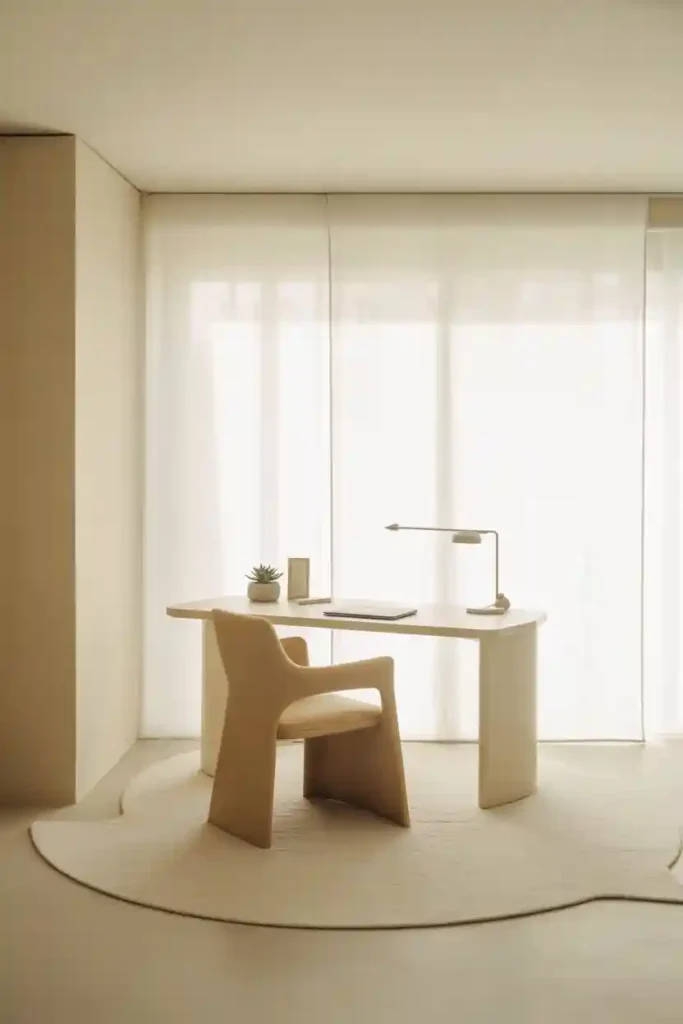
A neutral rug is a simple yet effective way to add comfort and warmth to a minimalist office. Rugs anchor the workspace, define the desk area, and add subtle texture without creating visual clutter. Opt for soft, muted tones such as beige, taupe, or light gray to complement the minimalist color palette. Natural fiber rugs, like wool, jute, or cotton, enhance texture and warmth while remaining easy to maintain.
Layering a smaller, patterned rug over a larger neutral base can introduce subtle depth and interest without compromising the clean aesthetic. A rug also provides acoustic benefits, softening sound in hard-floored spaces, which helps maintain a calm, distraction-free environment. Incorporating a neutral rug ensures that the home office remains visually balanced, cozy, and inviting, all while keeping focus at the forefront of your workday.
13. Integrated Lighting Solutions
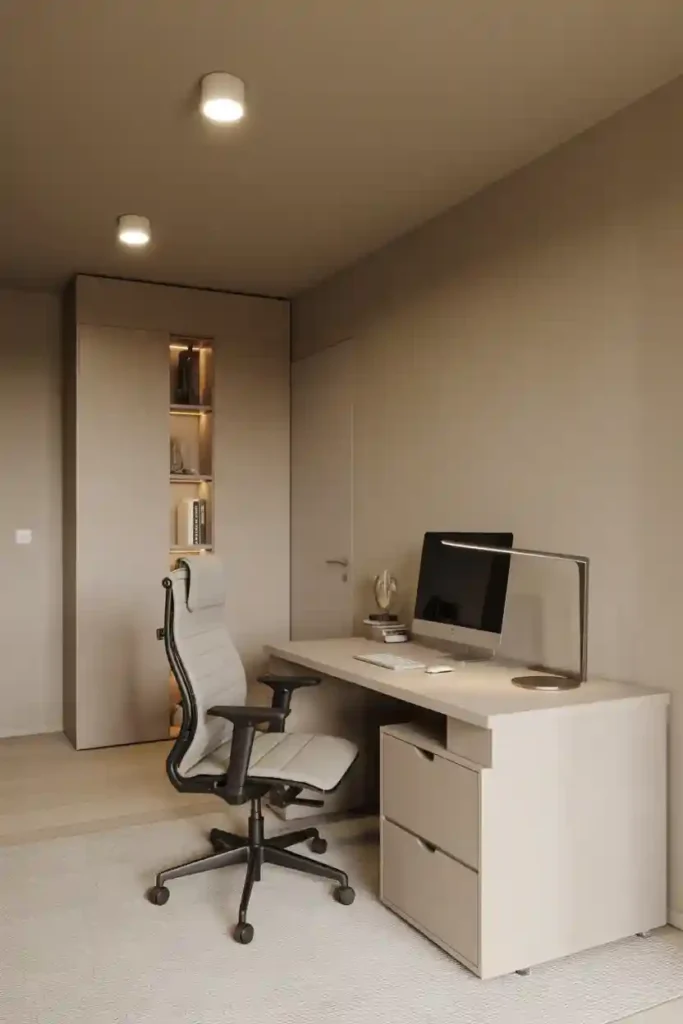
Lighting plays a crucial role in maintaining focus, especially in a minimal home office where every element must serve a purpose. Integrated lighting solutions—such as slim LED desk lamps, recessed ceiling lights, or wall-mounted fixtures—provide effective illumination without adding visual clutter. These lighting options blend seamlessly into the design, keeping surfaces clean and distractions to a minimum.
Adjustable lighting is particularly valuable, allowing you to control brightness and direction based on the time of day or task at hand. Warm-to-neutral lighting tones reduce eye strain while creating a calm and comfortable atmosphere. Integrated lighting also highlights clean lines, neutral colors, and minimal furnishings, reinforcing the overall aesthetic. By avoiding bulky lamps or tangled cords, your workspace remains streamlined and focused. Thoughtful lighting design ensures your office feels bright, balanced, and perfectly suited for long hours of productive work.
14. Minimalist Storage Bins for Organization
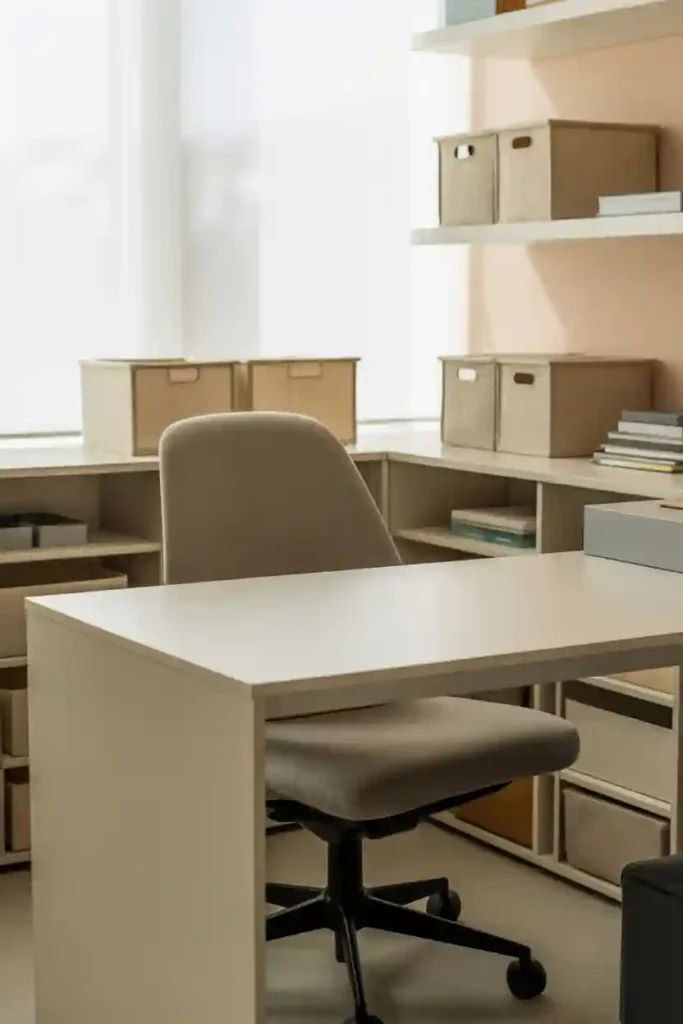
Storage is essential in any home office, but in a minimalist space, it must be discreet and intentional. Minimalist storage bins help keep papers, stationery, and supplies hidden while maintaining a clean visual flow. Opt for uniform bins in neutral tones such as white, beige, gray, or soft wood finishes to create harmony. These bins can be neatly placed on floating shelves, inside cabinets, or under the desk to maximize space efficiency.
By giving every item a designated place, storage bins reduce mental clutter and make daily organization effortless. The key is consistency—matching sizes, colors, and materials prevents the storage itself from becoming a distraction. Minimalist bins allow you to stay organized without sacrificing style, ensuring your workspace remains calm, tidy, and optimized for deep focus and productivity.
15. Tech-Free Zone for Mental Reset
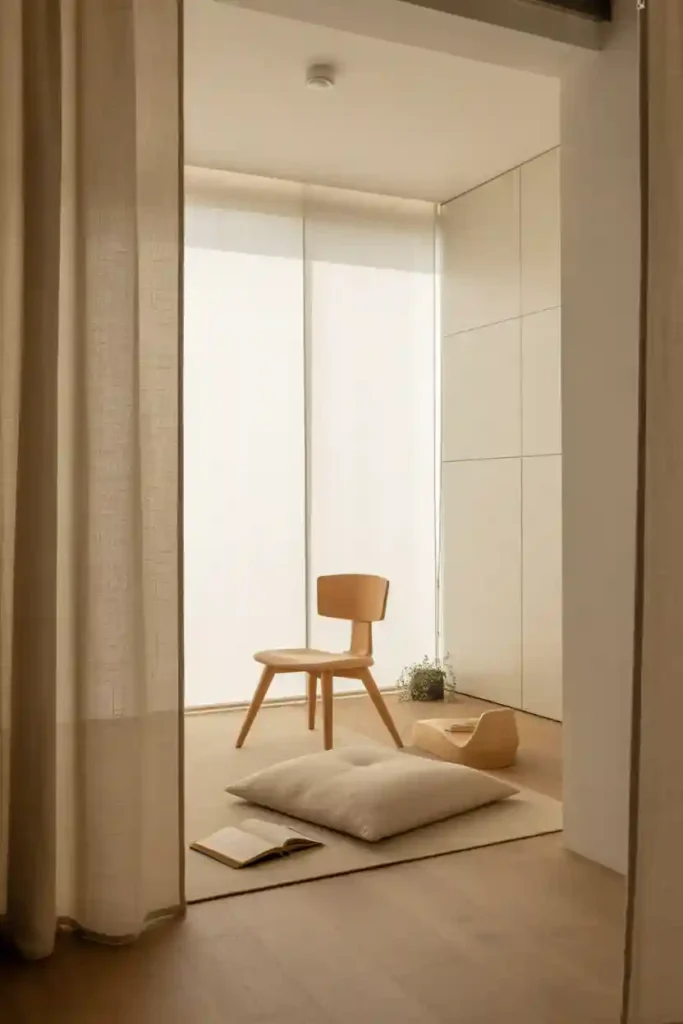
A minimal home office should support focus not only during work but also during short breaks. Creating a small tech-free zone within your office encourages mental resets that improve overall productivity. This space can be as simple as a comfortable chair, floor cushion, or small reading nook placed away from screens.
The absence of technology allows your mind to rest, reducing eye strain and mental fatigue. Keep this area minimal with neutral tones, soft textures, and calming elements like a throw blanket or small plant. Even five-minute breaks in a tech-free zone can restore clarity and creativity. By intentionally separating work tasks from rest moments, you create a healthier rhythm in your workday. This thoughtful addition ensures your minimalist office supports sustained focus, balance, and well-being.
16. Personal Touches in Moderation
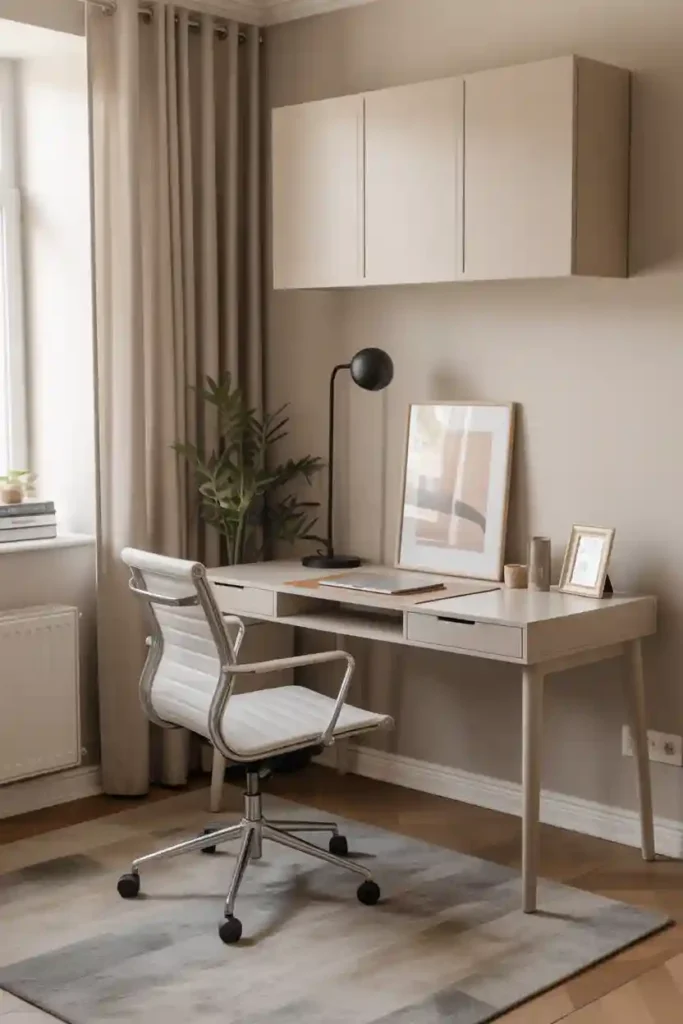
A minimal home office doesn’t have to feel cold or impersonal. The key is adding personal touches thoughtfully and in moderation, so they enhance focus rather than distract from it. A single framed photo, a favorite notebook, or a small decorative object can make the space feel inviting and uniquely yours without overwhelming the clean aesthetic. Choose items that hold meaning or inspiration but keep the number limited. Neutral colors, simple frames, and subtle textures help personal accents blend seamlessly into the minimalist design.
These intentional details create emotional comfort, which can improve motivation and focus throughout the workday. Avoid overcrowding surfaces or walls, and allow negative space to remain a visual resting point for the eyes. By carefully curating personal items, you strike the perfect balance between warmth and simplicity, ensuring your home office feels both calming and motivating—an environment where productivity and focus naturally thrive.
Final Words
Designing a minimal home office is about creating a space that supports clarity, comfort, and productivity. By focusing on clean lines, neutral color palettes, and purposeful furniture, you eliminate distractions and allow your mind to stay focused on what truly matters. From ergonomic seating and integrated lighting to smart storage solutions and tech-free zones, each idea plays a role in shaping a calm and efficient workspace. Minimalism also encourages intentional choices, ensuring every item has value and function.