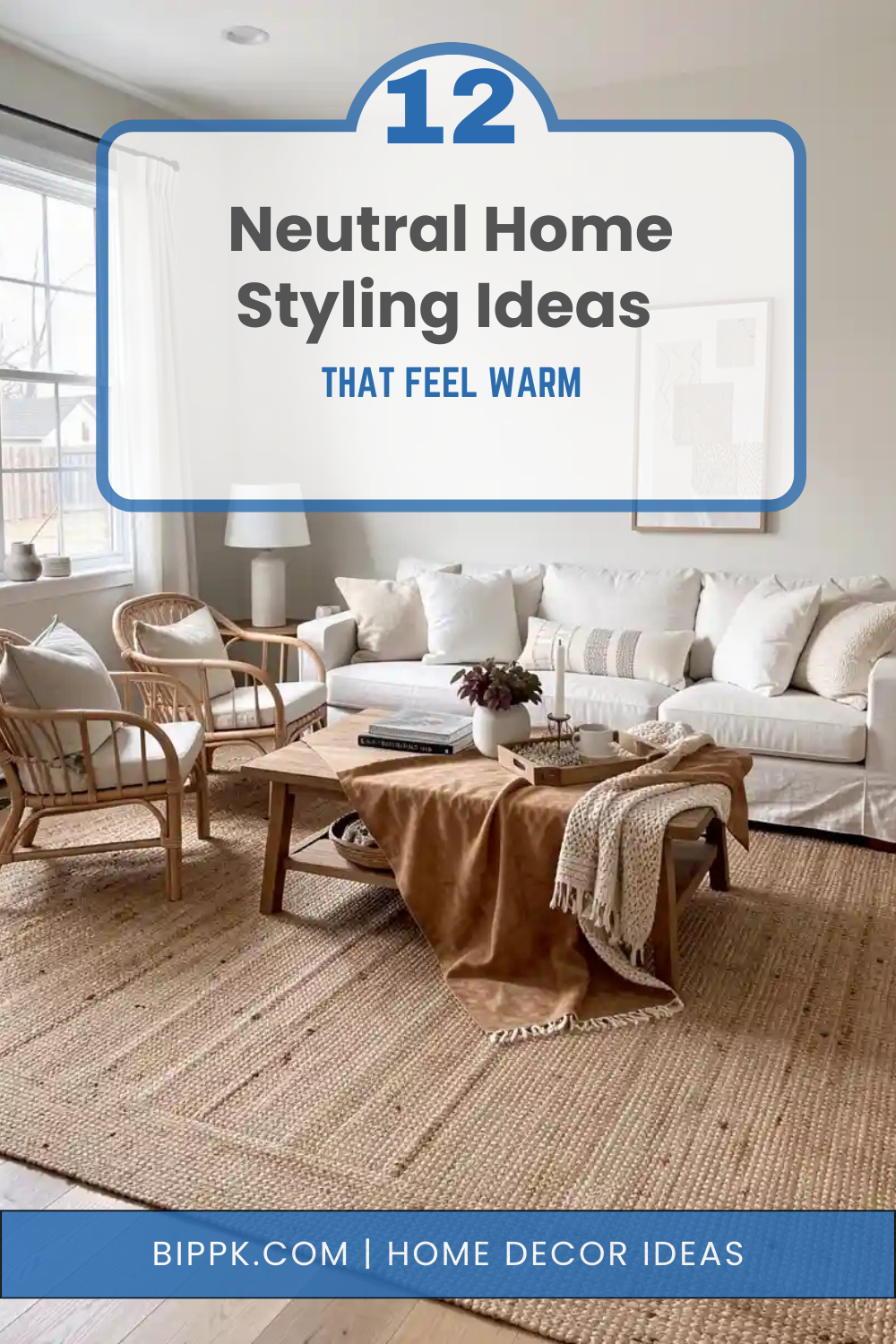
12 Neutral Home Styling Ideas That Feel Warm
Neutral décor is often associated with simplicity and minimalism, but it doesn’t have to feel cold or impersonal. With the right textures, layers, and thoughtful styling, neutral tones can create a home that feels cozy, inviting, and timeless. The secret lies in combining shades like beige, taupe, ivory, soft gray, and muted whites with warm materials, tactile fabrics, and natural accents. Whether it’s your living room, bedroom, or dining area, neutral palettes offer a versatile backdrop that allows furniture, accessories, and personal touches to shine.
These 12 Neutral Home Styling Ideas That Feel Warm provide inspiration for creating spaces that feel effortlessly comfortable yet polished. From layering soft textiles to incorporating wood tones, greenery, and subtle color accents, each idea focuses on balance, texture, and harmony. With these tips, your neutral home can exude warmth, sophistication, and a lived-in charm that feels personal and inviting.
1. Layer Soft Textiles
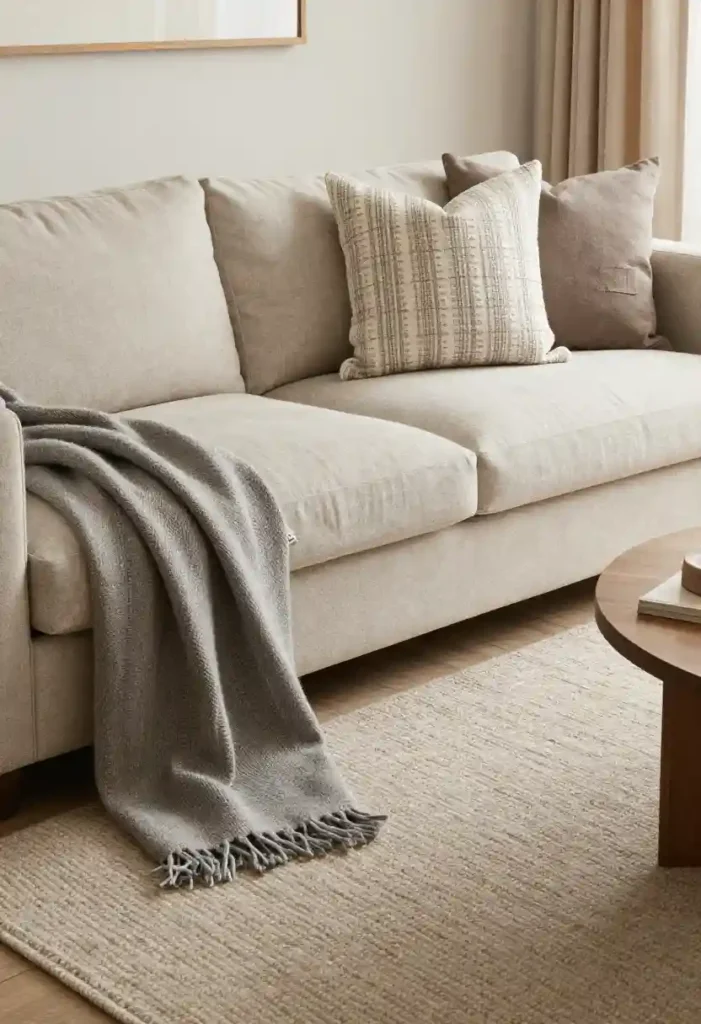
Adding layers of soft textiles is an instant way to warm up a neutral space. Throws, cushions, and rugs in natural fibers like linen, cotton, and wool introduce texture and depth, preventing a room from feeling flat. Mix patterns subtly—such as a striped cushion with a herringbone throw—to add interest without overwhelming the neutral palette.
Focus on tonal variety. Even within a beige or gray palette, varying shades can create a cozy, layered look. Place a soft throw on a sofa or chair and scatter cushions in different textures and heights to encourage a welcoming feel. A plush area rug anchors the furniture and invites people to linger, creating a sense of warmth underfoot. This approach is particularly effective in living rooms and bedrooms, where comfort is essential. Layered textiles make neutral spaces feel curated, tactile, and inviting while maintaining a calm, cohesive aesthetic.
Read Also: 14 Entryway Table Decor Ideas That Feel Complete
2. Incorporate Wood Elements
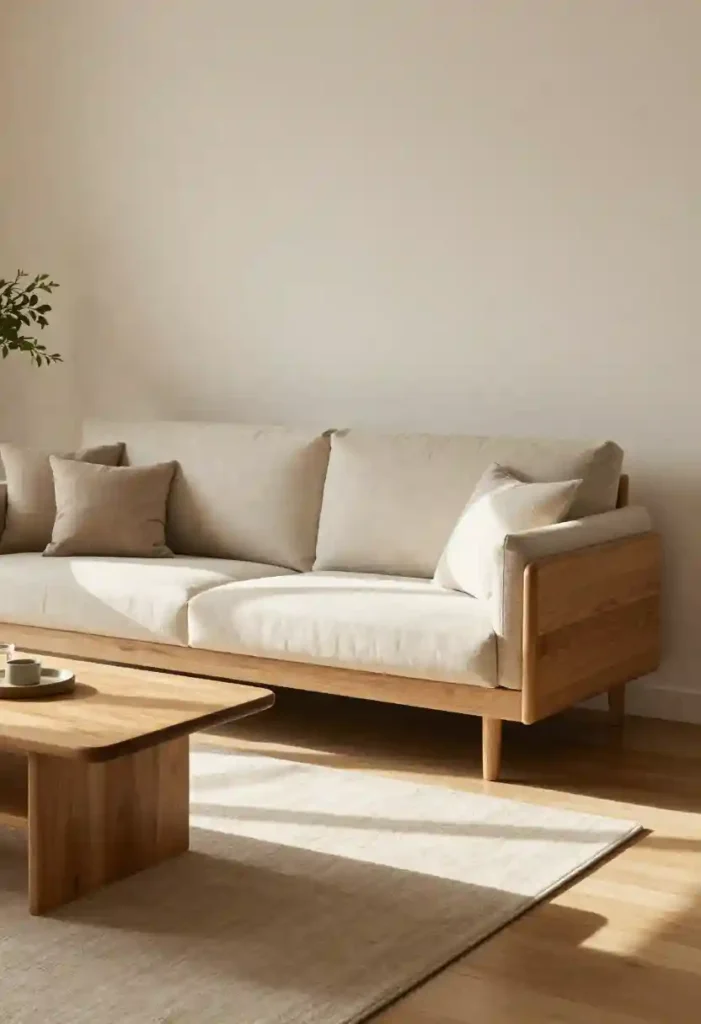
Wood instantly adds warmth and natural charm to neutral interiors. Whether it’s oak flooring, a walnut coffee table, or wooden shelving, natural wood tones break up monotony and create an inviting atmosphere. Light wood keeps the look airy, while darker wood adds depth and richness.
Combine wooden furniture with soft fabrics and neutral walls to balance warmth and simplicity. For example, a wooden dining table paired with upholstered chairs in beige or ivory adds texture and tactile interest. Shelving and picture frames in wood complement soft textiles and prevent the space from feeling sterile. The key is consistency and proportion. Too many different wood tones can clash, while repeating a single wood type across furniture pieces creates cohesion. Wood anchors the design, making neutral spaces feel earthy, lived-in, and warmly inviting.
3. Use Warm Lighting
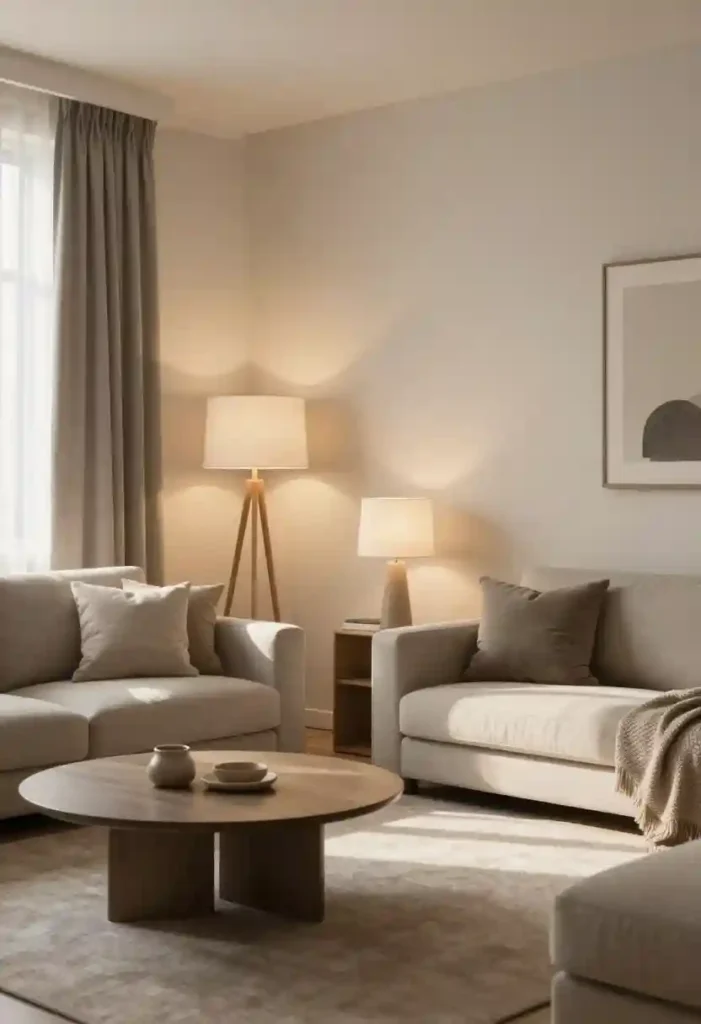
Lighting dramatically impacts the warmth of a neutral space. Soft, warm lighting can transform a pale or monochromatic room into a cozy, inviting haven. Choose bulbs with a warm color temperature (around 2700K) to enhance beige, taupe, and cream tones.
Layer lighting sources: combine overhead fixtures, table lamps, and floor lamps for depth. Lamps with fabric or textured shades diffuse light softly, creating a calming atmosphere. Strategically placed accent lighting highlights artwork, textured walls, or natural elements, making the room feel dynamic without disrupting the neutral palette. Consider reflective surfaces like mirrors or metallic accents to bounce light and make spaces feel brighter. Proper lighting ensures neutral interiors remain warm and welcoming rather than cold and clinical.
4. Introduce Textured Walls
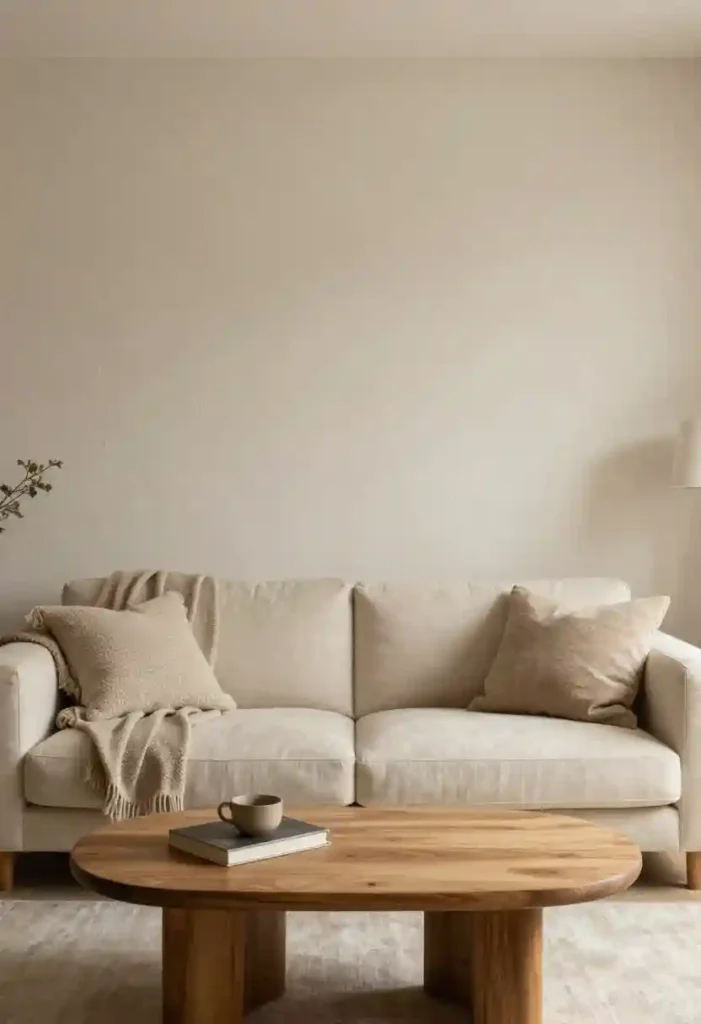
Neutral doesn’t mean flat. Textured walls add dimension and warmth without introducing bold colors. Consider plaster finishes, shiplap, wood paneling, or subtle wallpaper patterns. These tactile surfaces create visual interest while staying within a soft neutral color palette.
For example, a linen-textured wallpaper in muted cream or a matte plastered wall behind a sofa adds depth and coziness. Shiplap painted in soft white provides architectural character without overwhelming the space. Even a simple feature wall with a subtle texture can make a neutral room feel layered and thoughtfully styled. Textured walls harmonize with soft furnishings, wood tones, and lighting, helping neutral interiors feel intentional and warm rather than empty or sterile.
5. Bring in Greenery
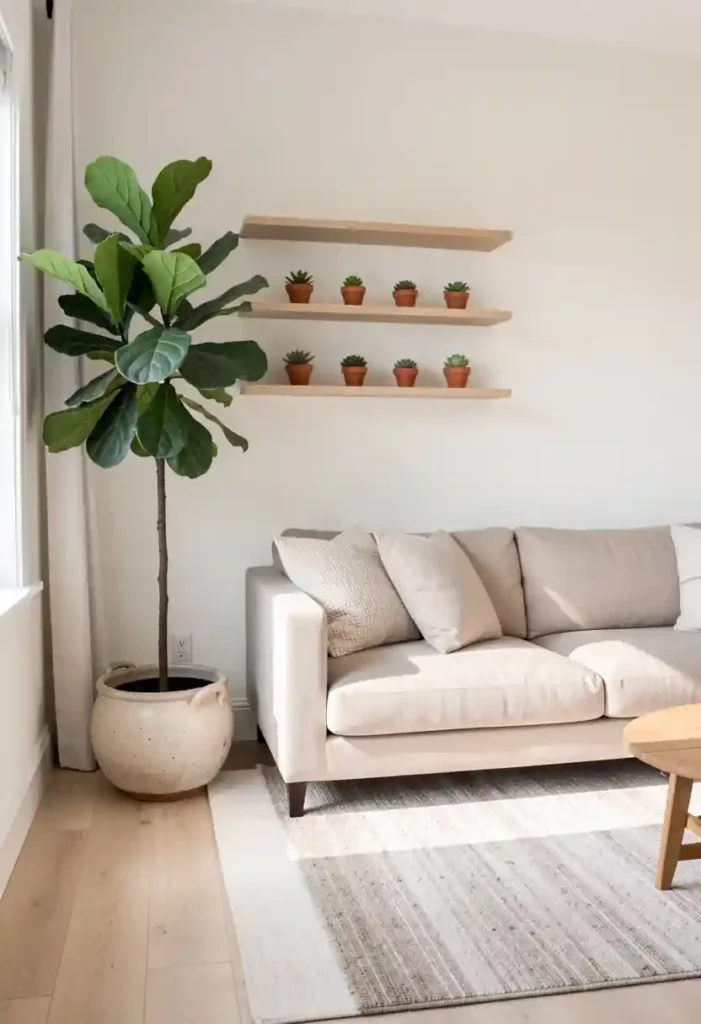
Plants are a simple yet transformative way to warm up neutral spaces. Their natural green tones contrast beautifully with beige, gray, and cream interiors, adding life, depth, and texture. Whether you choose small potted plants, trailing vines, or larger statement floor plants, greenery introduces an organic feel that makes a room inviting.
Place plants at varying heights to create visual layers. For instance, a tall fiddle leaf fig or rubber plant in a ceramic planter anchors a corner, while smaller succulents or potted herbs on shelves and tables add subtle touches. Terracotta, woven, or ceramic planters in neutral tones complement the palette without introducing jarring colors. Even faux plants can work effectively if they are realistic and thoughtfully styled. The key is balance: distribute greenery throughout the room so that it feels integrated rather than scattered. Greenery softens hard lines, balances textures, and instantly makes neutral interiors feel fresh and alive.
6. Mix Natural Fibers
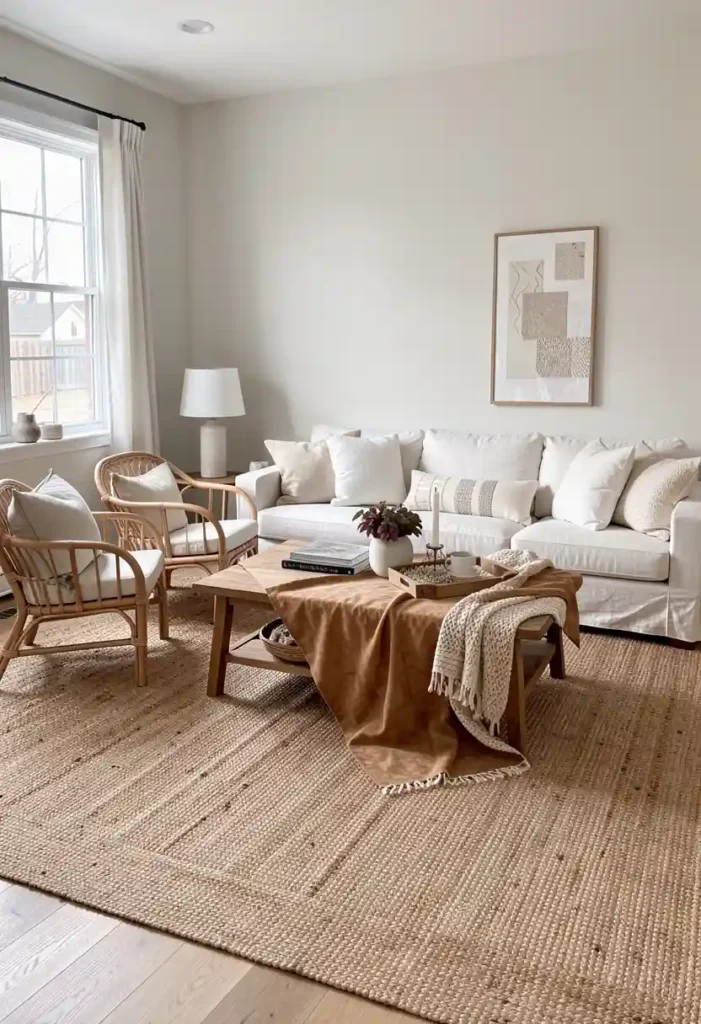
Natural fibers like jute, rattan, sisal, and linen are essential for adding warmth and tactile appeal to a neutral home. These materials provide texture and visual interest without introducing bold colors, which helps maintain a calm and cohesive aesthetic. A jute or sisal rug can anchor the living space, while rattan chairs or side tables bring lightness and an airy feel. Linen cushions, curtains, or throws add softness and dimension. Mixing these fibers in varying scales and patterns ensures that the space feels layered, dynamic, and inviting. For example, pairing a chunky woven basket with a fine linen throw creates contrast and balance.
These textures harmonize beautifully with wood, ceramics, and soft textiles. By thoughtfully layering natural fibers, you create a neutral home that feels cozy, approachable, and full of character.
7. Layer Artwork and Wall Decor
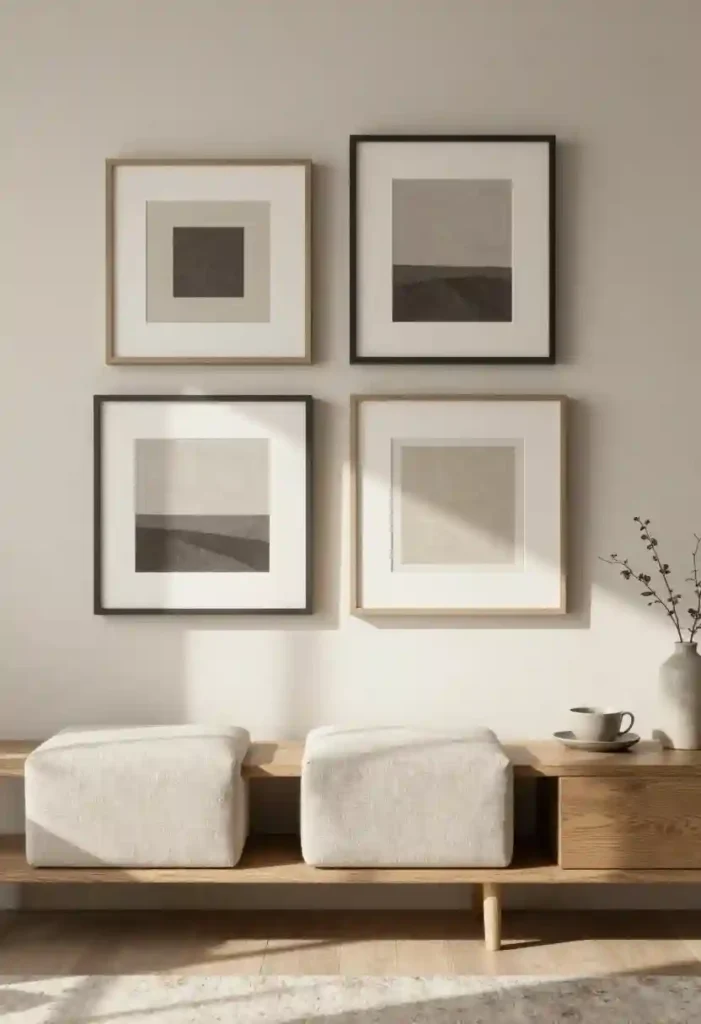
Artwork and wall décor bring personality and depth to neutral interiors without relying on bright colors. Layering frames, mirrors, or decorative objects creates dimension and visual interest while keeping the overall palette soft and cohesive.
Start with one or two larger pieces as a base and lean or hang smaller items around them. Mixing frame materials—wood, metal, or muted tones—adds subtle contrast while maintaining harmony. You can also include three-dimensional elements like small shelves or sculptural wall pieces to break flatness and add texture. Layered art works well in living rooms, bedrooms, or hallways. It creates a curated, intentional feel while allowing you to showcase personal style. The key is maintaining proportion and spacing so that the wall feels balanced and warm rather than cluttered or cold.
8. Introduce Layered Lighting
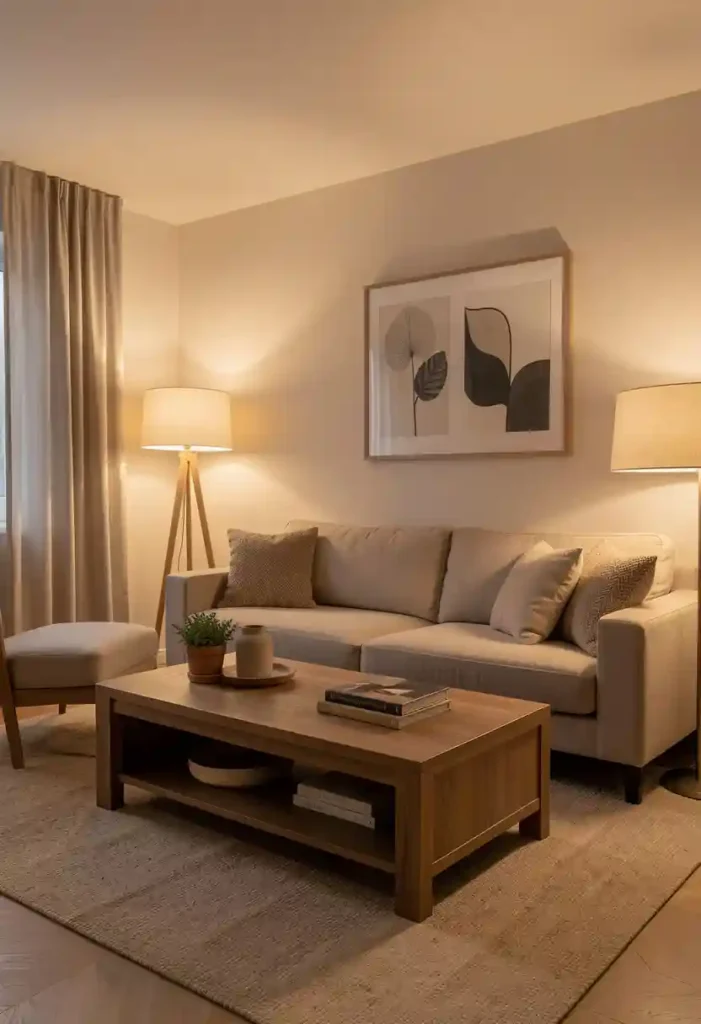
Lighting plays a crucial role in making neutral spaces feel warm and inviting. Layered lighting, which combines ambient, task, and accent sources, creates depth, comfort, and a soft glow that enhances neutral tones. Start with a main overhead light for overall illumination, such as a pendant or chandelier in a warm finish like brass, wood, or matte black. Add table lamps or floor lamps to corners and surfaces to create pockets of cozy light. Accent lighting, such as LED strips under shelves or spotlights on artwork, highlights textures and focal points, making the room feel dynamic and welcoming.
Using warm-colored bulbs (around 2700K) rather than cool-white ensures that beige, gray, and cream tones look soft and inviting rather than stark. Layered lighting also allows you to adjust mood and brightness according to the time of day or activity, making your neutral interior feel comfortable and complete.
9. Add Layered Rugs
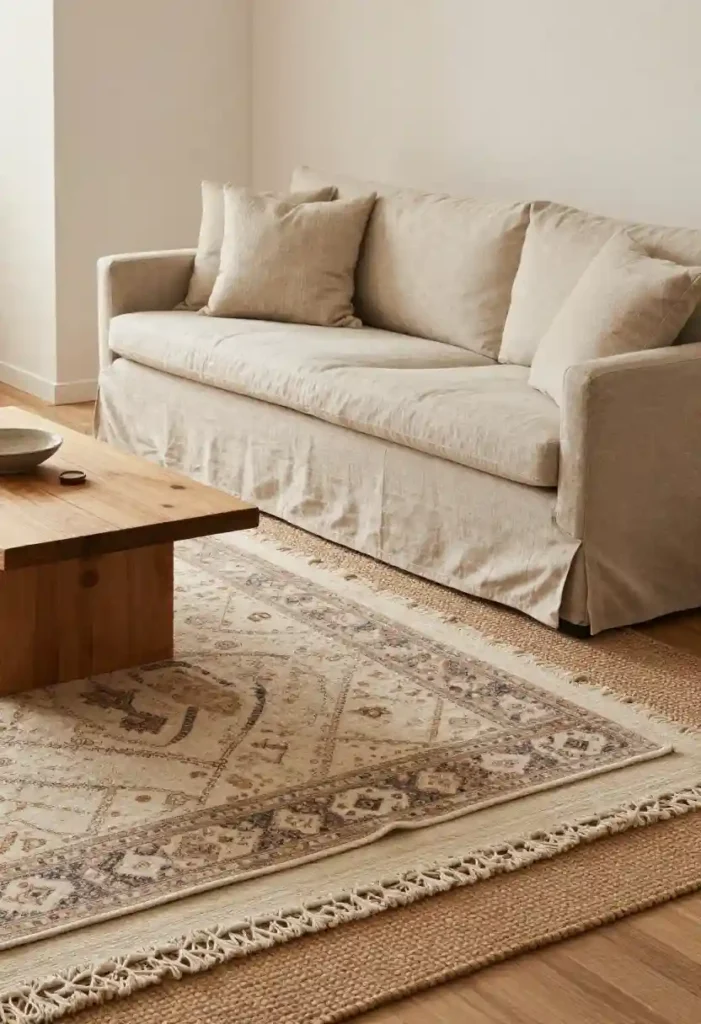
Layering rugs is an easy way to make a neutral space feel warmer, textured, and visually rich. Combining rugs of different sizes, textures, or subtle patterns adds dimension without introducing bold colors. For example, place a natural fiber jute or sisal rug as a base and layer a softer wool or cotton rug on top. The contrasting textures provide a tactile experience underfoot while adding depth to the room. Neutral patterns like stripes, geometric lines, or subtle ikat designs enhance interest without overpowering the calm palette.
Layered rugs also help define spaces within open floor plans. A smaller rug under a coffee table atop a larger area rug anchors the seating arrangement while creating a cozy, layered look. This technique makes neutral homes feel thoughtfully designed and inviting.
10. Introduce Warm Metallic Accents
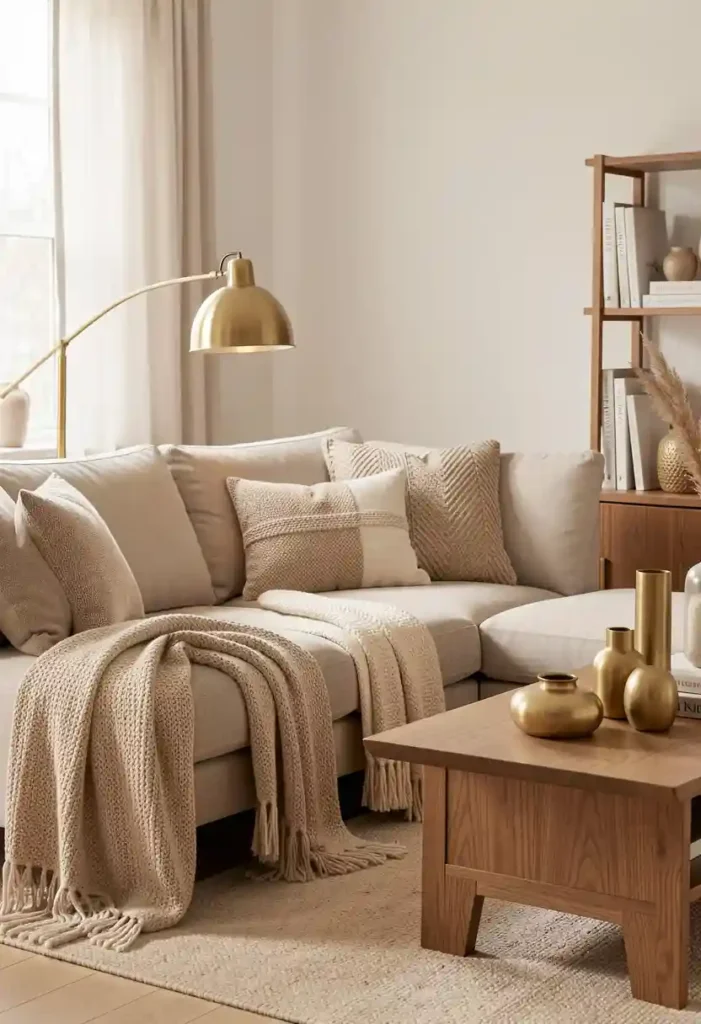
Subtle metallic accents can elevate a neutral space while adding warmth and sophistication. Brass, gold, or bronze accessories reflect light, create depth, and provide a soft contrast to muted tones.
Incorporate metallics through lighting fixtures, mirror frames, decorative trays, vases, or picture frames. For instance, a brass table lamp, gold candleholders, or a bronze sculpture can punctuate a neutral palette without overwhelming it. Pair metallic elements with soft textiles and wood to keep the room balanced and inviting. The key is moderation. A few carefully chosen metallic accents create warmth and visual interest, while too many can appear flashy or cluttered. When combined thoughtfully, metallic touches add elegance and a subtle glow that enhances the cozy, neutral ambiance.
11. Display Natural Decorative Objects
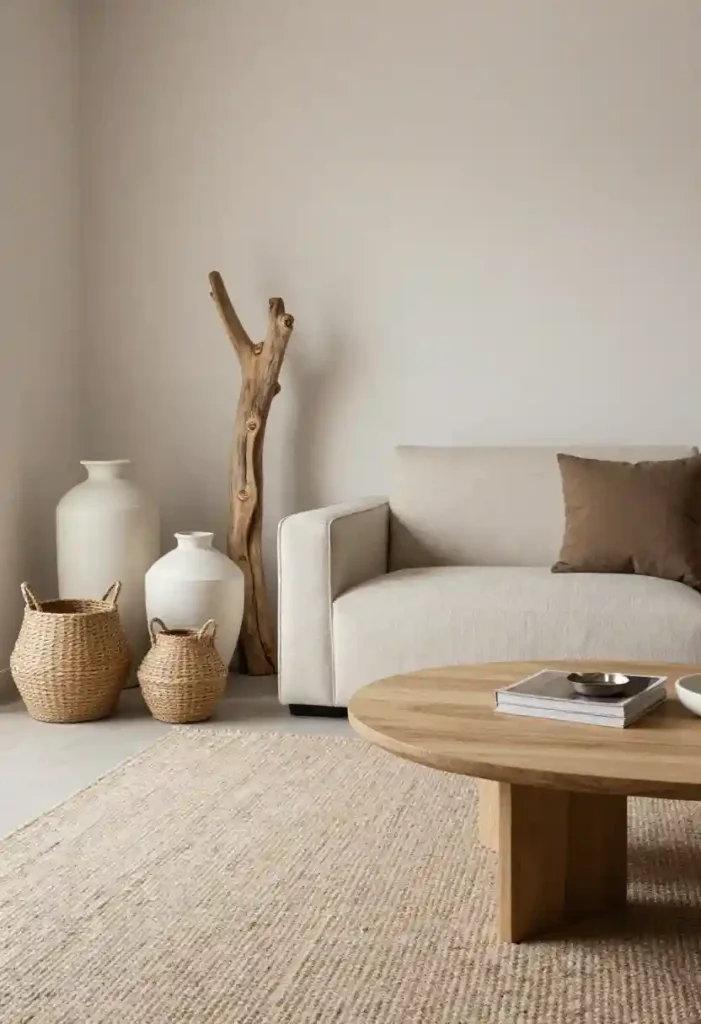
Incorporating natural decorative objects—like stone bowls, driftwood pieces, woven baskets, or ceramic vases—adds warmth and tactile interest to neutral interiors. These elements bring an organic feel that complements soft tones and layered textures, making the home feel cozy yet sophisticated.
For instance, a ceramic vase on a coffee table or a stone bowl on a shelf can serve as a subtle focal point. Driftwood or small wooden sculptures introduce irregular shapes and texture, which contrast beautifully with smooth textiles and furniture. Woven baskets or trays not only provide texture but can also serve as functional storage for blankets or magazines. Arranging natural objects thoughtfully, in odd-number groupings or layered clusters, creates visual rhythm and keeps the space feeling curated. Even in minimalist neutral spaces, natural décor adds warmth, personality, and an approachable, lived-in quality that makes your home feel complete.
12. Incorporate Soft Window Treatments
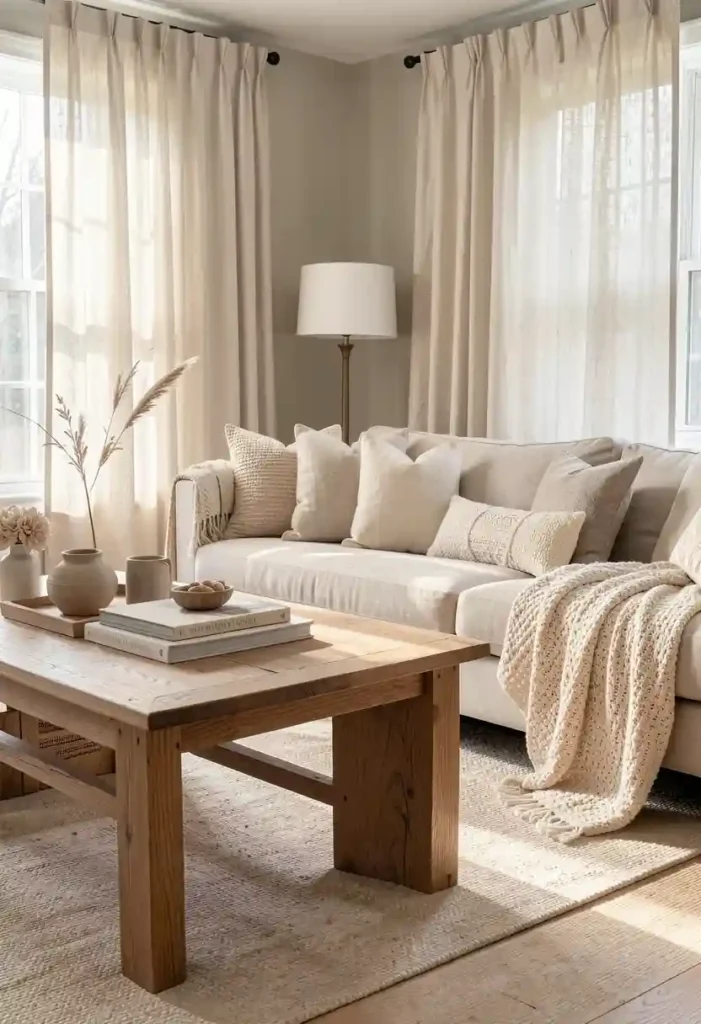
Soft, flowing window treatments enhance warmth and softness in neutral spaces. Linen, cotton, or sheer drapes in neutral shades like cream, beige, or light gray create an airy, welcoming atmosphere while maintaining the calm palette.
Layer curtains over blinds or shades to control light and add depth. Longer panels that puddle slightly on the floor create a relaxed, elegant look. Light fabrics diffuse natural sunlight, casting a warm glow throughout the room. For added texture, consider subtle patterns like stripes, herringbone, or tone-on-tone weaves. Soft window treatments also help define the space and frame views, creating a polished and complete look. They balance harder surfaces, such as wood furniture or metal accents, while maintaining a cozy, approachable ambiance in your neutral home.
Final Words
These 12 Neutral Home Styling Ideas That Feel Warm show that the key to a cozy neutral home lies in balance, texture, and proportion. By mixing materials, varying heights, and leaving intentional breathing room, you can design interiors that are timeless, sophisticated, and welcoming. With these simple yet effective strategies, every room in your home can feel polished, comfortable, and full of understated warmth.