12 Basement Stairs Ideas That Look Finished
Basement stairs are often treated as a purely functional feature, but they play a much bigger role in your home’s overall look and feel than most people realize. Because they connect main living areas to the lower level, unfinished or outdated stairs can make an entire basement feel dark, cold, or forgotten. The good news? With the right design choices, basement stairs can become a stylish transition that adds character, warmth, and visual interest to your home.
From modern railings and statement lighting to cozy runners and built-in storage, there are countless ways to elevate this often-overlooked space. Whether your style leans modern, farmhouse, industrial, or classic, thoughtful stair design can instantly make your basement feel more polished and intentional. In this guide, you’ll discover 12 basement stairs ideas that look finished, each offering practical design inspiration and creative details to help your staircase feel like a seamless extension of your home rather than an afterthought.
1. Painted Staircase with Crisp White Trim

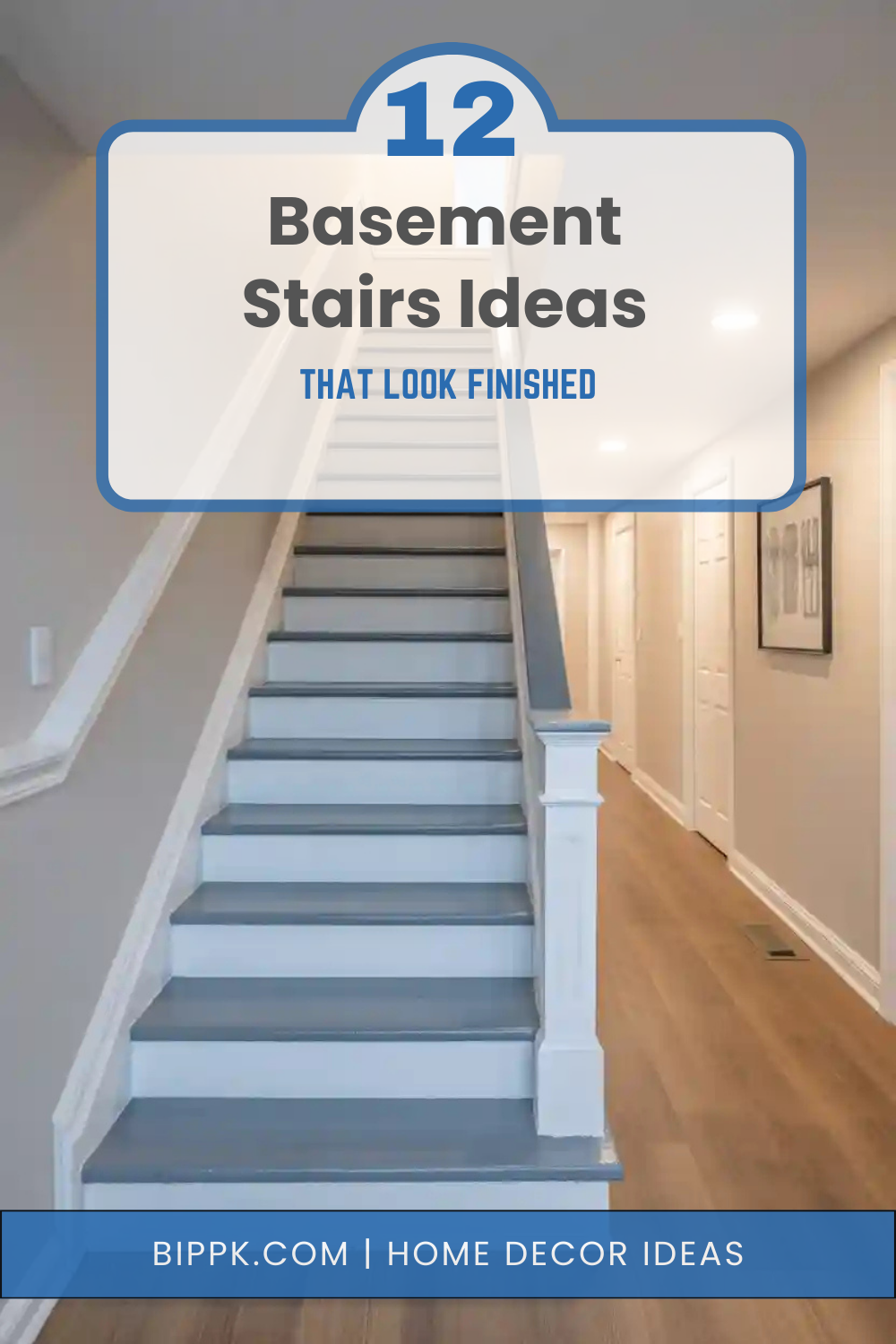
A painted staircase is one of the simplest ways to make basement stairs look clean and finished. Choosing a neutral paint color—such as warm white, soft gray, or greige—instantly brightens the space and makes the stairwell feel more open. Crisp white trim along the edges and risers adds contrast and creates a tailored look that feels intentional rather than unfinished.
Short paragraphs of color create visual interest while also helping hide wear over time. Satin or semi-gloss finishes work best because they’re easy to clean and reflect light, which is especially helpful in basements with limited natural light. Pair painted stairs with subtle wall décor or framed prints to elevate the look even more. This option is budget-friendly yet impactful, making it perfect for homeowners who want a polished result without major construction.
2. Carpet Runner for Warmth and Style
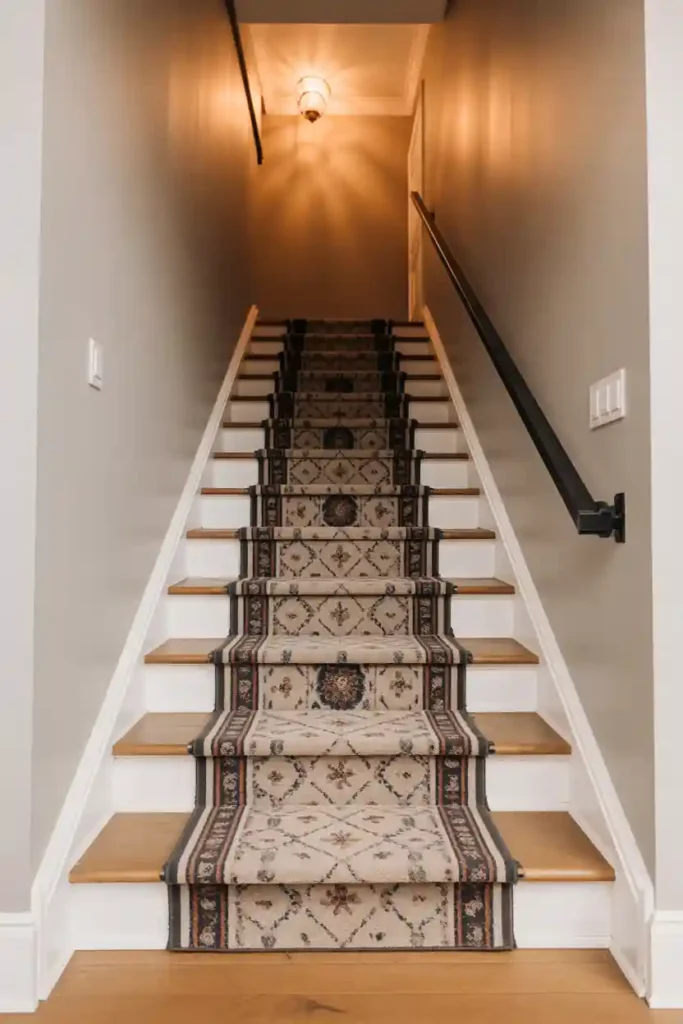
A carpet runner instantly transforms basement stairs into a cozy and welcoming feature. It softens hard surfaces, reduces noise, and adds warmth—perfect for basements that tend to feel cooler. Runners also bring in pattern and texture, allowing you to introduce color or design without overwhelming the space.
Choose low-pile or indoor/outdoor materials for durability. Patterns like subtle stripes, geometric prints, or vintage-inspired designs work especially well on stairs. Secure the runner with brass or black stair rods for a polished, designer finish. This idea is perfect if you want your basement stairs to feel intentional while also being safe and comfortable for everyday use.
Read Also: 13 Dining Room Feature Wall Ideas That Wow
3. Modern Wood Treads with Black Railings

For a sleek and contemporary look, pair natural wood treads with black metal railings. This combination creates strong contrast and adds architectural interest without feeling heavy. The warmth of wood balances the industrial feel of metal, making the staircase feel modern yet inviting.
This style works especially well in open basements or homes with modern or industrial décor. Keep the walls light to allow the staircase to stand out as a design feature. Adding subtle LED lighting under each tread can elevate the look even further. It’s a great choice for homeowners who want their basement stairs to feel high-end and professionally designed.
4. Finished Drywall with Decorative Trim
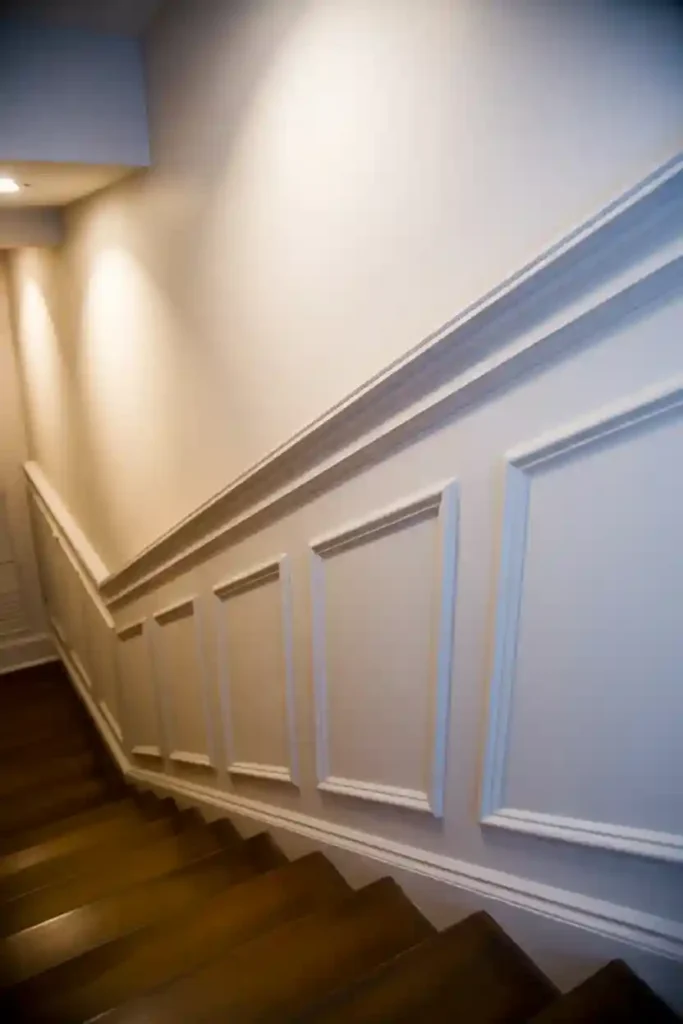
Many basement stairs feel unfinished simply because the surrounding walls are bare. Adding drywall and decorative trim instantly elevates the entire area. Board-and-batten, picture-frame molding, or simple paneling can transform plain stair walls into a stylish feature.
This approach works well in traditional, farmhouse, or transitional homes. Painting the trim in white or soft neutrals keeps the area bright, while darker accent colors add drama. Wall sconces or framed artwork can complete the look. This idea proves that sometimes it’s not the stairs themselves—but what surrounds them—that makes the biggest difference.
5. Staircase with Built-In Storage
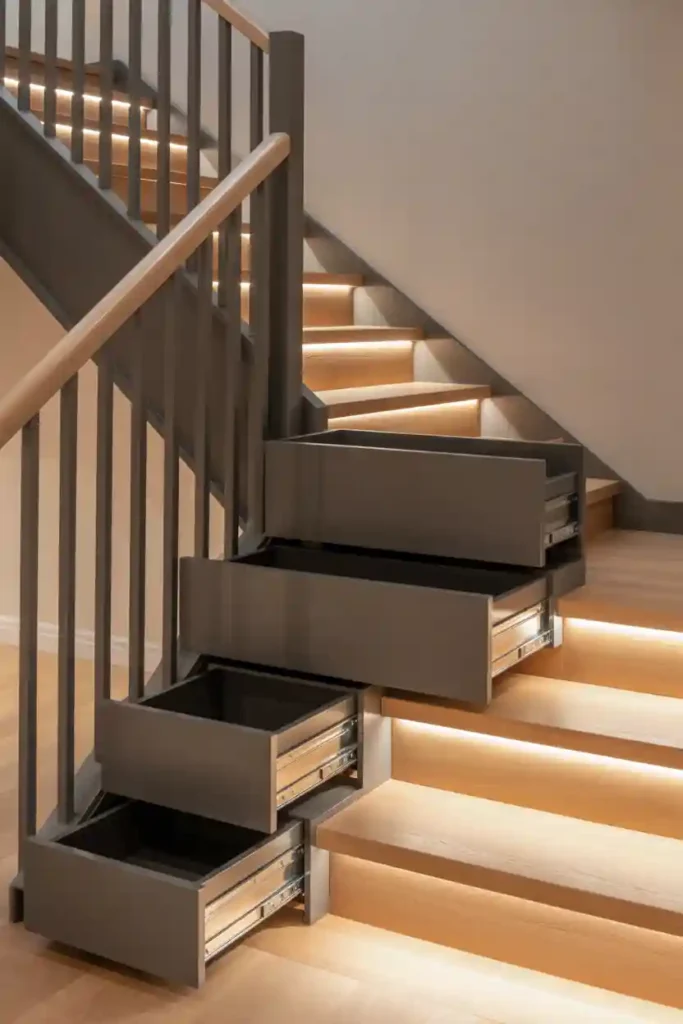
A staircase with built-in storage is one of the smartest ways to make basement stairs look completely finished while adding serious functionality. Since basements often lack storage space, using the area under the stairs is both practical and visually appealing. Drawers, pull-out cabinets, or hidden cubbies can be seamlessly integrated into the stair structure, keeping clutter out of sight while maintaining a clean appearance.
This design works especially well for storing shoes, seasonal décor, tools, or kids’ items. When finished in the same color as the stairs or walls, the storage blends in beautifully and looks custom-built rather than added later. Flat-panel drawer fronts and simple hardware help maintain a modern, streamlined look.Lighting can also enhance the effect. Soft LED strips or wall lights highlight the staircase while making the storage area easier to use. The result is a basement staircase that feels intentional, organized, and professionally designed rather than purely functional.
6. Statement Lighting Along the Stairs
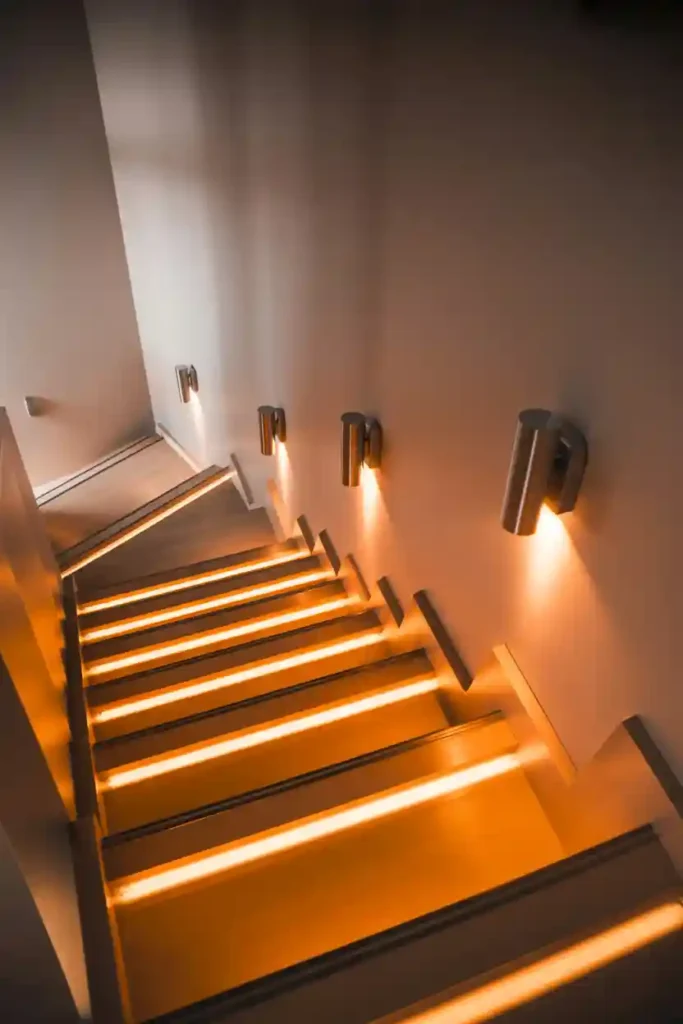
Lighting plays a major role in making basement stairs look finished and inviting. Statement lighting transforms a dark, overlooked stairwell into a design feature. Recessed step lights, wall sconces, or LED strip lighting along the treads add both safety and style.
Warm lighting creates a cozy ambiance, while cooler tones enhance a modern aesthetic. Spacing the lights evenly along the stairs helps guide movement and visually lengthens the stairway. This is especially useful in basements where natural light is limited. Statement lighting also highlights textures such as wood, tile, or painted walls, making the entire staircase feel more intentional. When paired with clean finishes and minimal décor, lighting alone can elevate even the simplest stair design into something polished and high-end.
7. Tile or Stone Stair Risers
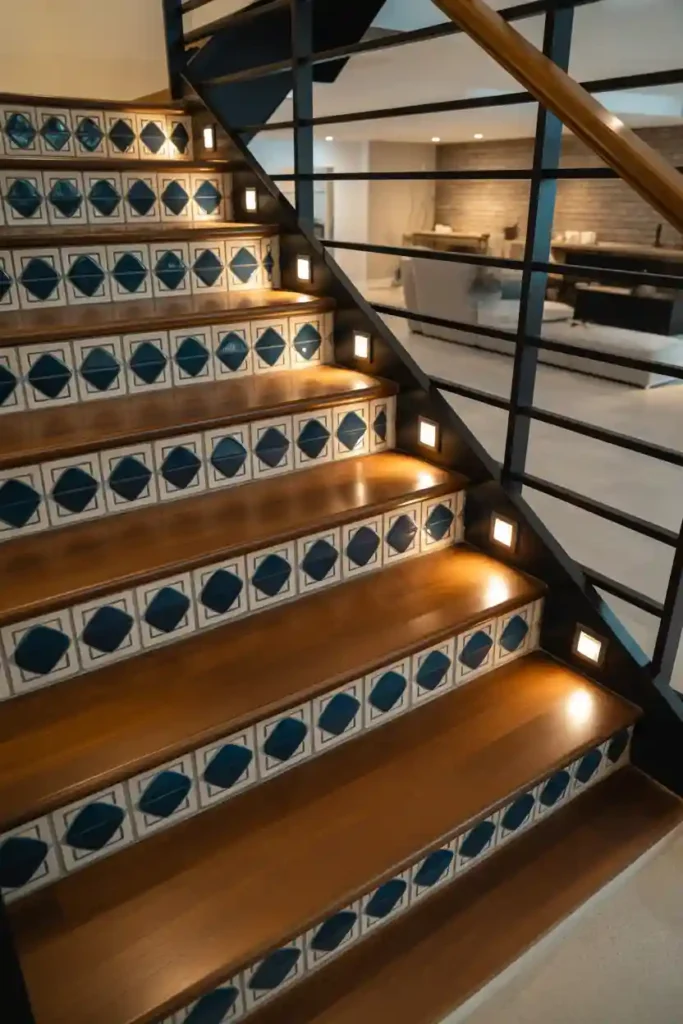
Tile or stone stair risers are a creative way to make basement stairs feel custom and visually striking. Instead of leaving risers plain, adding patterned tile or textured stone instantly adds personality and depth. This approach works beautifully in modern, Mediterranean, or eclectic homes.
Patterned tiles can introduce color and movement, while neutral stone creates a more subtle, elegant look. Pairing tiled risers with wooden or painted treads keeps the design balanced and prevents it from feeling overwhelming. Matte or textured finishes also improve safety by reducing slipperiness. This design choice works especially well when you want your basement stairs to feel like a true design feature rather than a forgotten transition space. The result is a staircase that feels thoughtfully curated and visually memorable.
8. Glass or Open Railing Design
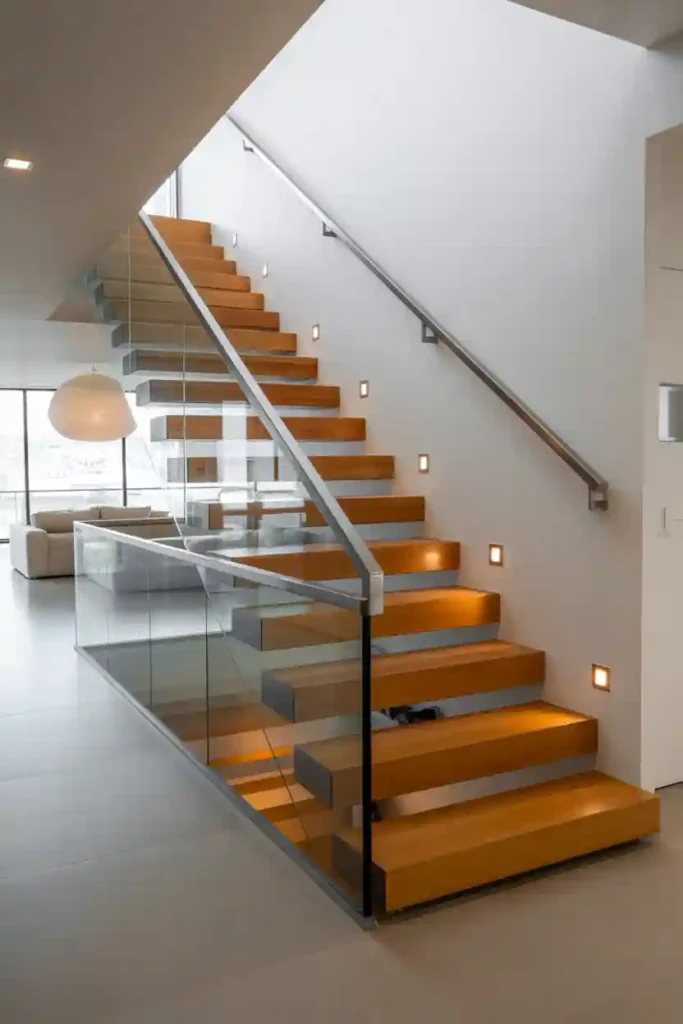
Glass or open railings instantly make basement stairs feel lighter, brighter, and more modern. This design removes visual barriers, allowing light to flow freely between levels and making the space feel larger. It’s especially effective in basements with limited natural light or narrow staircases.
Tempered glass panels paired with black metal or wood handrails create a sleek, contemporary look. Open metal railings are another great option, offering structure without closing in the space. These styles work beautifully in modern, industrial, or minimalist homes. The clean lines and open feel give your staircase a finished, high-end appearance while still maintaining safety. When paired with subtle lighting or wood treads, glass railings transform basement stairs into a striking architectural feature rather than just a passageway.
9. Dark and Moody Staircase Design
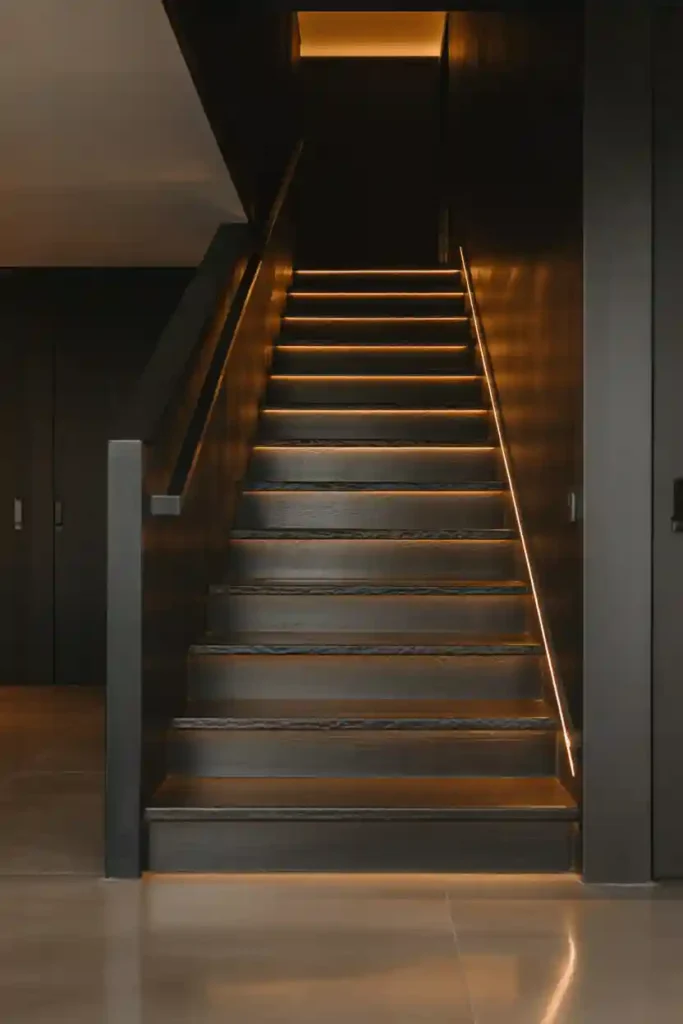
A dark staircase can feel bold, dramatic, and incredibly stylish when done right. Deep tones like charcoal, navy, or matte black add sophistication and make the stairs feel intentional rather than hidden away. This look works especially well in contemporary or industrial-style basements.
To prevent the space from feeling too heavy, balance dark stairs with warm lighting, lighter walls, or natural wood accents. Wall sconces or LED strips help soften the look while enhancing safety. Matte finishes are ideal for achieving a refined, upscale feel. This design choice creates a strong visual impact and turns the staircase into a standout feature rather than a background element. When paired with clean lines and minimal décor, dark stairs feel bold yet polished.
10. Rustic Wood Staircase Charm
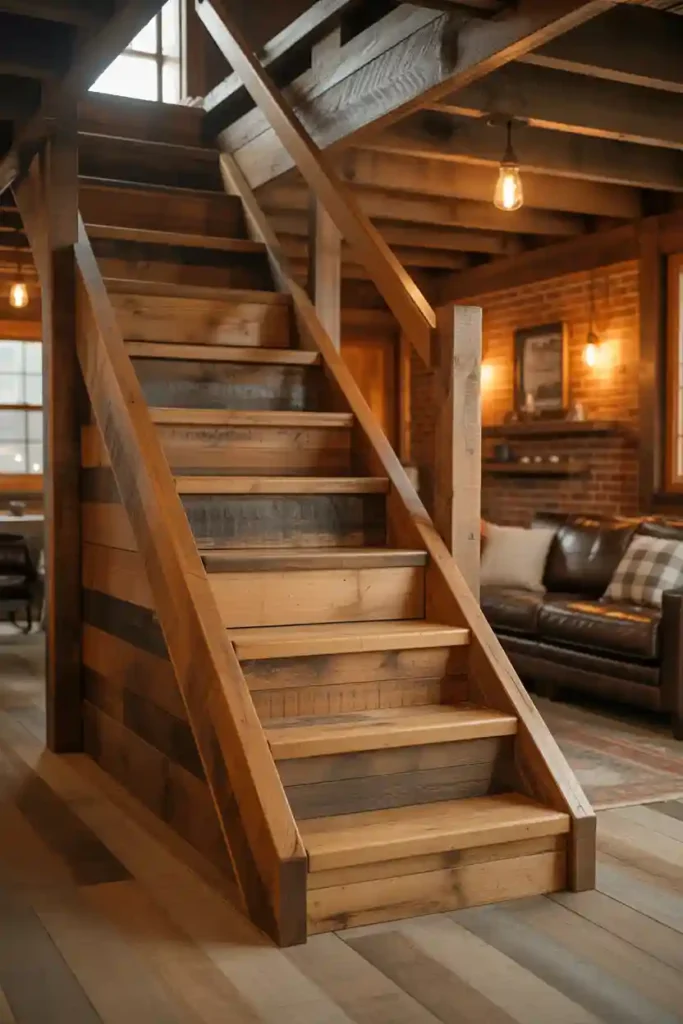
Rustic wood stairs bring warmth and character to basement spaces that might otherwise feel cold or unfinished. Natural wood tones, visible grain, and slightly distressed finishes create a cozy, welcoming feel that works beautifully in farmhouse, cottage, or rustic-style homes.
Reclaimed wood or stained oak treads add depth and authenticity, while simple railings keep the look balanced. Pairing rustic stairs with soft lighting and neutral walls enhances the natural texture without overwhelming the space. This style is perfect for homeowners who want their basement to feel like an extension of the home rather than a separate area. The warmth of wood instantly makes the staircase feel finished and inviting.
11. Gallery Wall Staircase
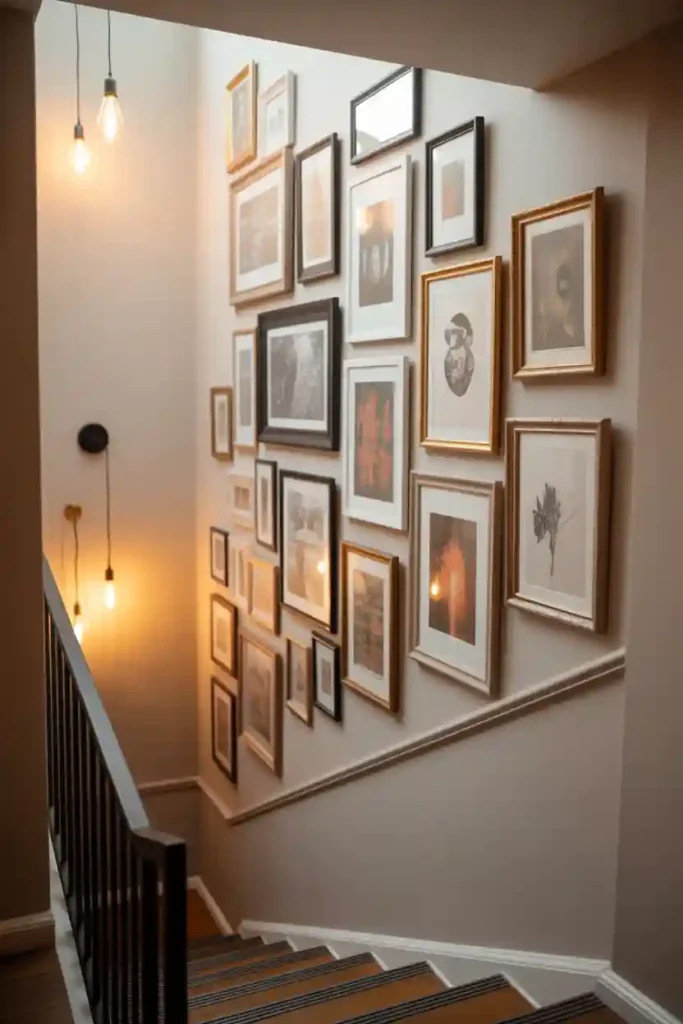
A gallery wall along your basement stairs adds personality and visual interest while making the space feel curated and complete. Framed photos, artwork, or typography prints draw the eye upward and turn the staircase into a design feature.
Using consistent frame colors or themes keeps the display cohesive. Black, white, or wood frames work especially well for a polished look. Adding picture lights or wall sconces enhances the gallery effect and highlights each piece. This idea works well for families, creatives, or anyone who wants their home to reflect personal style. It transforms an ordinary stairwell into a warm, welcoming transition space full of character.
12. Minimalist Finished Staircase
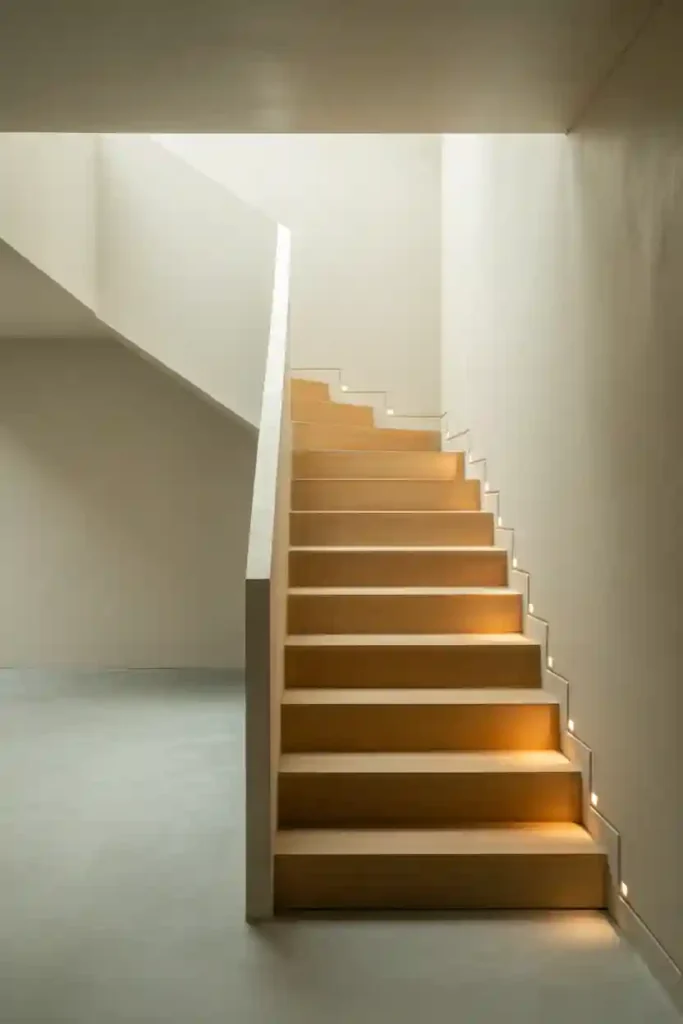
A minimalist staircase focuses on simplicity, clean lines, and a clutter-free appearance. This style uses neutral colors, smooth surfaces, and subtle details to create a calm, modern look that feels effortlessly finished.
Floating treads, simple railings, and soft lighting are common features of minimalist designs. The goal is to let the materials and structure speak for themselves without unnecessary decoration. Light-colored walls and natural textures help keep the space open and airy. This approach is ideal for modern homes or homeowners who prefer a timeless, low-maintenance aesthetic. The result is a staircase that feels intentional, elegant, and perfectly suited to a finished basement.
Final Thoughts
Basement stairs don’t have to feel like an afterthought. With the right design choices—whether it’s lighting, materials, storage, or style—you can transform them into a polished feature that enhances your entire home. From modern glass railings to warm rustic wood and clever storage solutions, these 12 basement stairs ideas that look finished prove that even the most functional spaces deserve thoughtful design. No matter your style or budget, a well-finished staircase can elevate your basement and make it feel truly complete.