

11 Basement Storage Ideas to Reduce Clutter
Basements are often the catch-all space in a home, collecting everything from seasonal décor to sports equipment and old furniture. While this can quickly lead to clutter, a well-organized basement can become a functional, tidy, and even stylish area. Implementing smart storage solutions not only reduces mess but also maximizes usable space, making the basement feel more open and inviting.
From wall-mounted shelving and built-in cabinets to creative use of bins, baskets, and under-stair storage, there are countless ways to manage items efficiently. Labeling, zoning, and vertical organization are essential strategies that help you maintain order over time. With the right combination of practical storage solutions and thoughtful design, your basement can transform from a cluttered storage room into a neat, accessible, and organized space. These 11 basement storage ideas provide actionable ways to keep your belongings in order while improving the overall functionality of your home.
1. Wall-Mounted Shelving for Vertical Storage
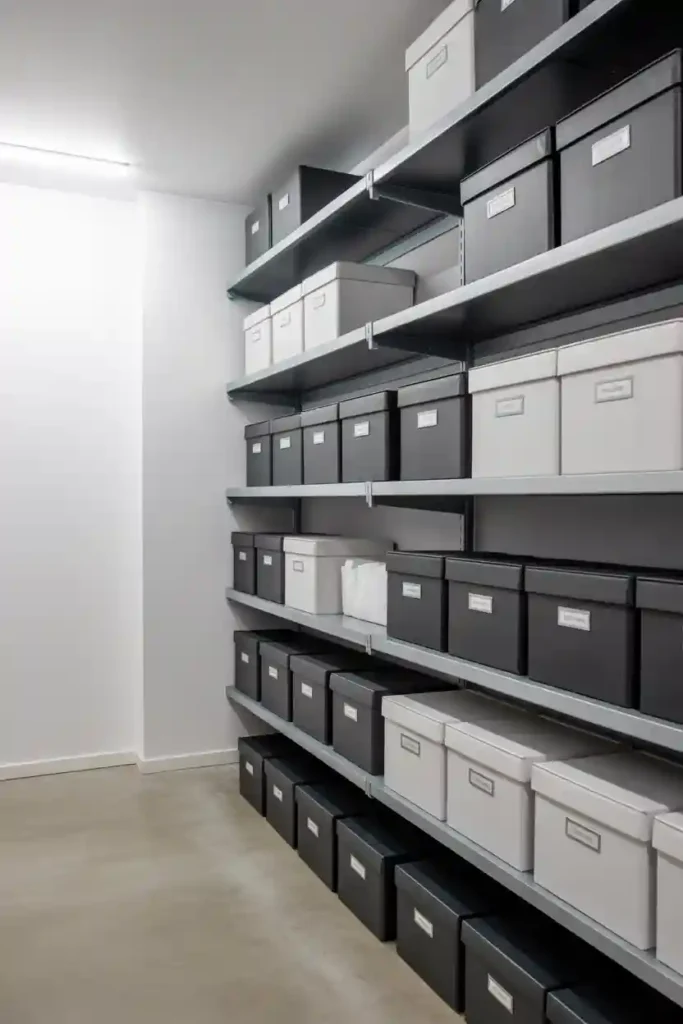
Wall-mounted shelving is a highly effective way to utilize vertical space in a basement while keeping the floor area clear. By storing items off the ground, you reduce clutter and create an organized, accessible layout. Short paragraphs focus on placement. Install sturdy shelves along unused walls to hold boxes, tools, or seasonal items. Adjustable shelving allows for flexibility, accommodating items of varying sizes. Open shelves make it easy to see and retrieve items, while adding bins or baskets keeps smaller belongings contained and tidy.
Wall-mounted shelving also helps maintain a clean, open feel in the basement. By drawing the eye upward, it creates the illusion of a larger space while providing practical storage. This approach ensures that even a clutter-prone basement can remain orderly and functional.
2. Built-In Cabinets Along Basement Walls
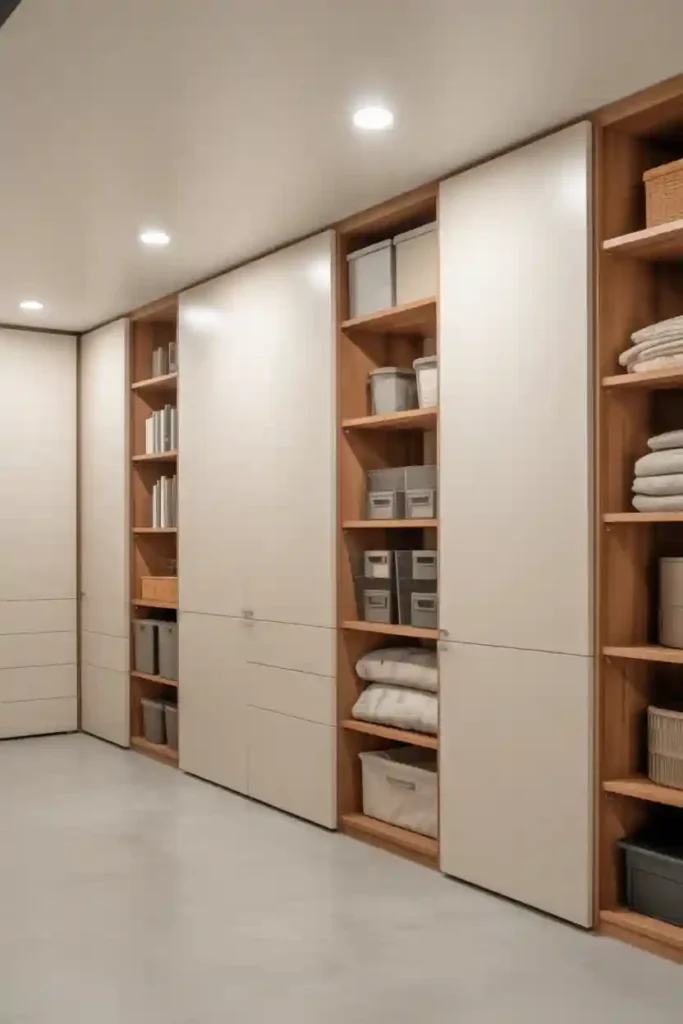
Built-in cabinets are an excellent solution for storing items discreetly while giving your basement a polished look. They hide clutter behind closed doors and provide long-term organization. Short paragraphs highlight function. Cabinets can be custom-built to fit under low ceilings or along long walls, offering storage for everything from holiday decorations to household tools. Incorporate adjustable shelves, drawers, and doors to accommodate different types of items. Matching cabinetry to the basement décor enhances aesthetics and creates a cohesive, professional appearance.
This method reduces visible clutter and keeps frequently used items easily accessible. Built-in cabinets balance functionality and style, transforming a messy basement into a tidy, organized, and visually appealing space.
Read Also: 13 Office Room Ideas Home That Feel Professional
3. Under-Stair Storage Solutions
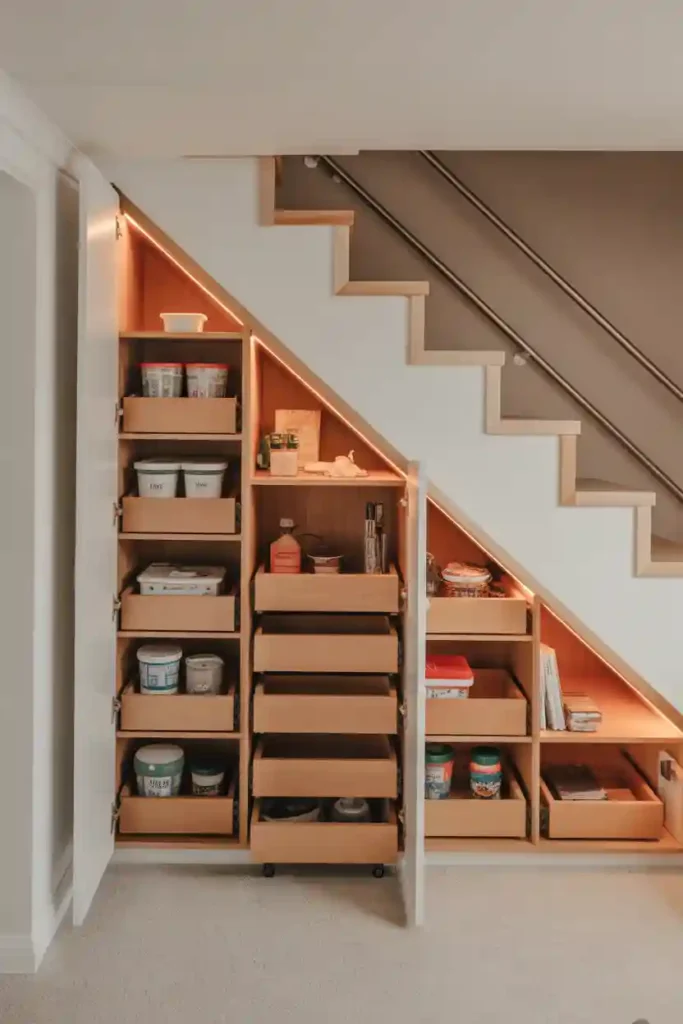
The space under basement stairs is often overlooked, but it can be transformed into valuable storage. Under-stair storage makes use of otherwise wasted space, helping to reduce clutter effectively. Short paragraphs focus on implementation. Custom shelves, pull-out drawers, or cubbies fit neatly beneath stairs to hold shoes, cleaning supplies, or smaller household items. Sliding doors or hinged panels can conceal stored items, keeping the area looking neat. For creative solutions, consider built-in benches with storage underneath or vertical racks for tall items like brooms.
By utilizing the under-stair area efficiently, you free up floor space and maintain organization. These storage solutions ensure that your basement is functional, accessible, and clutter-free, making it a more enjoyable part of your home.
4. Clear Plastic Bins with Labels
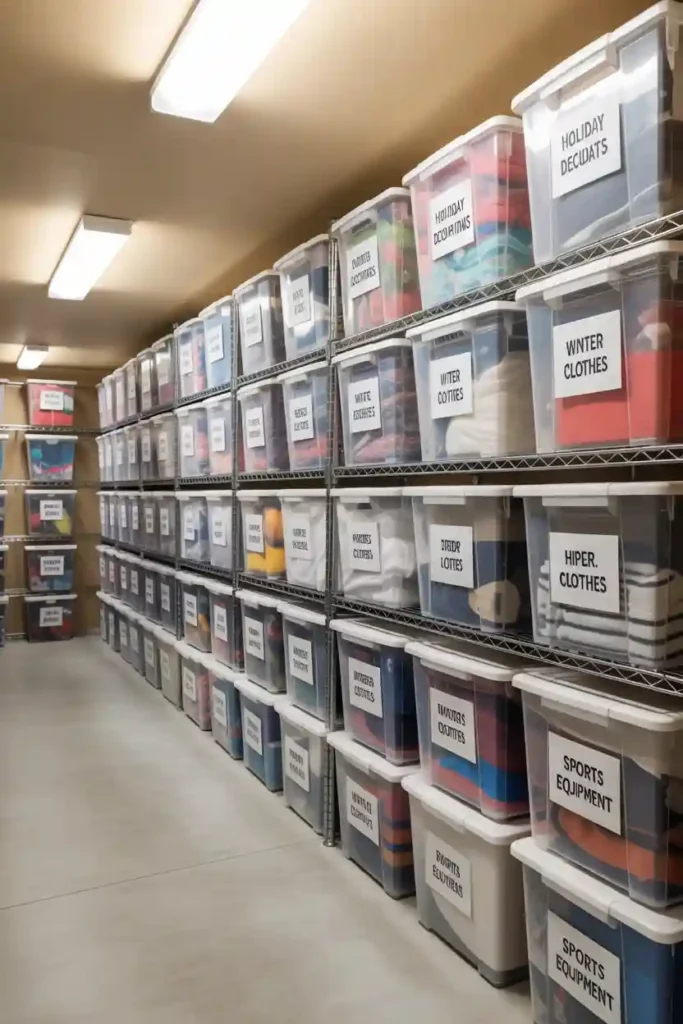
Clear plastic bins are one of the easiest ways to keep a basement organized while maintaining visibility of stored items. By using transparent containers, you can quickly identify contents without opening multiple boxes. Short paragraphs focus on practical tips. Group similar items together, such as holiday décor, craft supplies, or seasonal clothing, and label each bin clearly with large, readable tags. Stackable bins maximize vertical space and make the most of basement shelving or corners. Durable lids protect belongings from dust, moisture, and pests, ensuring long-term storage safety.
Clear plastic bins help reduce clutter while maintaining accessibility. They provide a simple yet effective solution for a basement that often becomes a “catch-all” area, keeping everything neat, organized, and easy to retrieve when needed.
5. Pegboards for Tools and Accessories
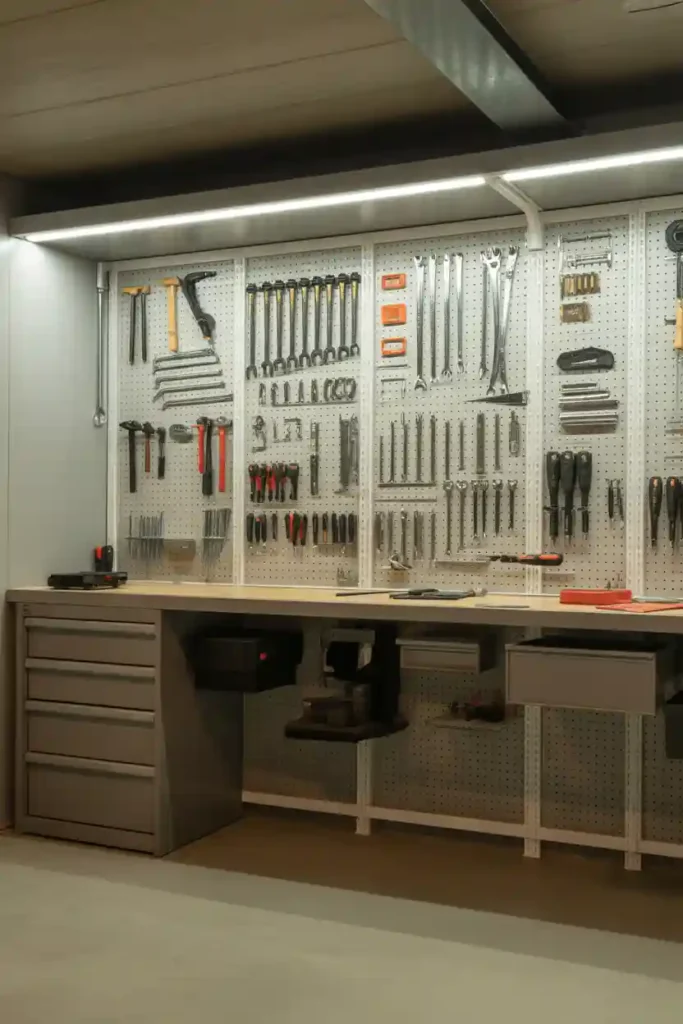
Pegboards are a versatile and space-saving solution for organizing tools, accessories, and smaller items in a basement. They keep items visible, accessible, and off the floor. Short paragraphs highlight usage. Install a sturdy pegboard on a wall to hang hand tools, gardening equipment, or craft supplies using hooks and holders. Adjustable layouts allow you to reposition items as needed, providing flexibility for changing storage needs. Pegboards can be painted to match the basement décor, adding a stylish and professional touch.
Using pegboards improves efficiency by ensuring tools are easy to find and return after use. This method reduces clutter, keeps work areas tidy, and creates a visually organized wall that maximizes space while maintaining functionality.
6. Rolling Storage Carts for Flexibility
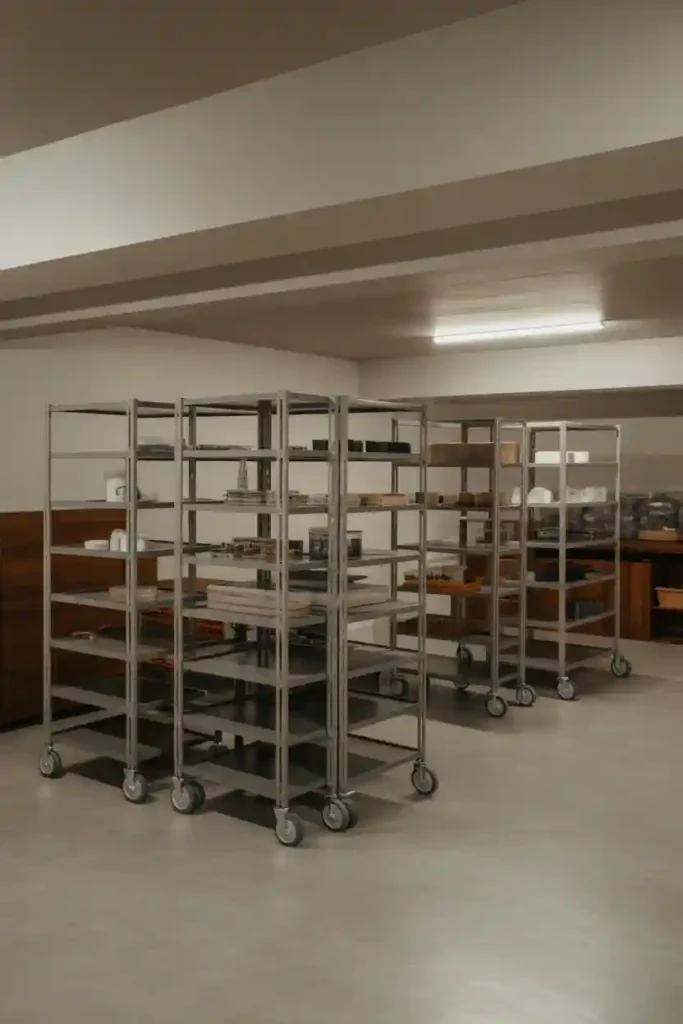
Rolling storage carts offer mobile storage solutions in a basement, allowing you to move items easily and create adaptable organization zones. Short paragraphs focus on practicality. Use carts to hold craft supplies, cleaning materials, or pantry items, and roll them out when needed. Multi-tiered designs maximize vertical storage, and locking wheels keep them stable during use. Choose neutral or matching finishes for a cohesive basement aesthetic.
Rolling carts are especially useful in multi-purpose basements where storage needs change. They provide easy access to frequently used items while keeping clutter off the floor. Flexible and functional, rolling storage carts make the basement organized, efficient, and adaptable to various storage needs.
7. Overhead Ceiling Storage Racks
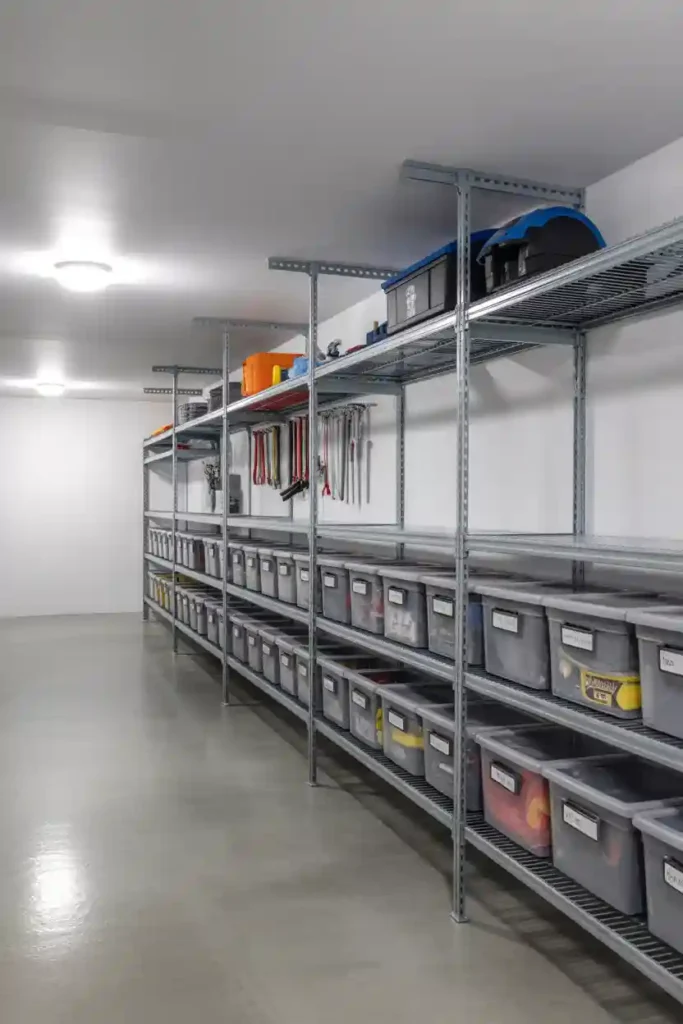
Overhead ceiling storage racks are perfect for storing bulky or seasonal items in a basement while keeping the floor clear. They utilize otherwise wasted space, allowing for maximum organization. Short paragraphs focus on implementation. Install sturdy racks on the ceiling to store bins, sports equipment, or camping gear. Ensure proper weight limits and safety brackets to prevent accidents. Adjustable racks can accommodate various heights, making it easy to organize items according to frequency of use.
Ceiling storage keeps the basement uncluttered while making seldom-used items accessible. It’s an ideal solution for families with limited floor space, providing a functional and organized storage system that enhances the overall usability of the basement.
8. Modular Shelving Units
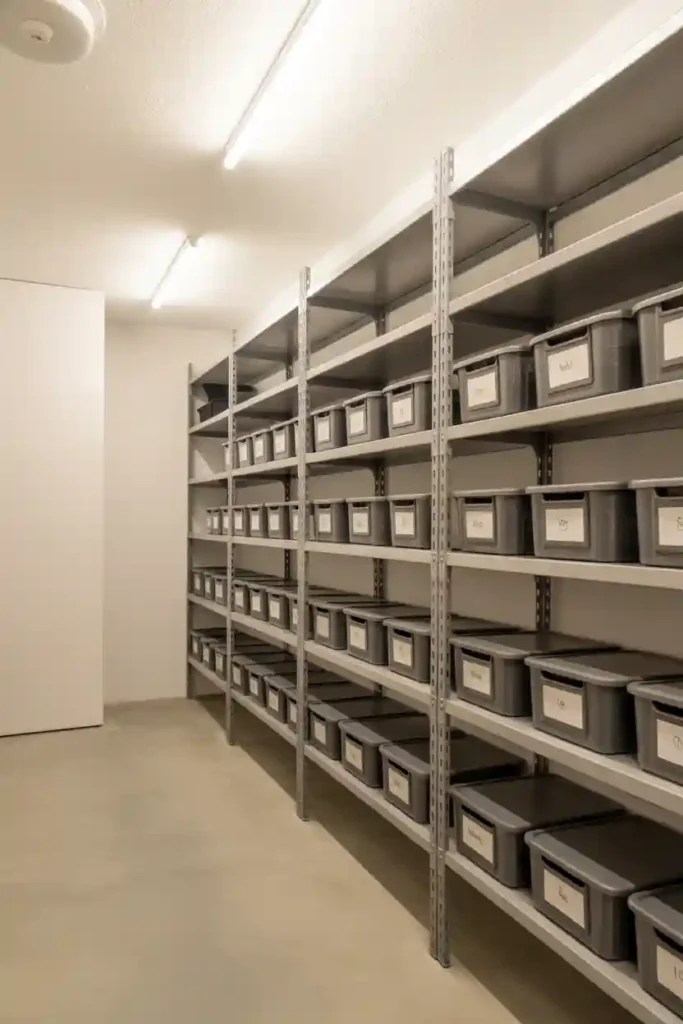
Modular shelving units offer flexible and customizable storage solutions for basements. They can be rearranged, stacked, or expanded as storage needs evolve. Short paragraphs highlight versatility. Use modular units to store boxes, tools, or household items. Adjustable shelves allow for items of different sizes, while stackable designs maximize vertical space. Choose finishes that match your basement décor to maintain a cohesive and polished appearance.
Modular shelving provides a practical, adaptable, and organized solution for clutter-prone basements. By combining functionality with style, it ensures belongings are stored efficiently while keeping the space visually appealing.
9. Hooks and Hangers for Bikes and Sports Gear

Hooks and hangers are excellent for storing bicycles, sports equipment, and other bulky items vertically. This keeps the basement floor open and reduces clutter. Short paragraphs focus on usage. Wall-mounted hooks can hold bikes, skateboards, or gym gear, while sturdy ceiling hooks can store ladders or kayaks. Group similar items together for easy access, and ensure hooks are rated for the weight of each item.
Using hooks and hangers transforms cluttered corners into organized zones. This method maximizes floor space and maintains a clean, functional, and professional-looking basement, making items easy to store and retrieve.
10. Corner Shelves to Maximize Unused Space

Corner shelves are an efficient way to utilize often-overlooked spaces in a basement. They provide additional storage without occupying valuable floor area. Short paragraphs highlight strategy. Place corner shelves in unused corners for boxes, books, or decorative storage baskets. Floating or built-in corner units maintain a clean look, while adjustable designs allow flexibility for varying items.
Corner shelves reduce clutter while making the basement feel more spacious and organized. They are a practical and aesthetic solution that maximizes every inch of the room, keeping belongings accessible and the space functional.
11. Storage Benches for Seating and Organization
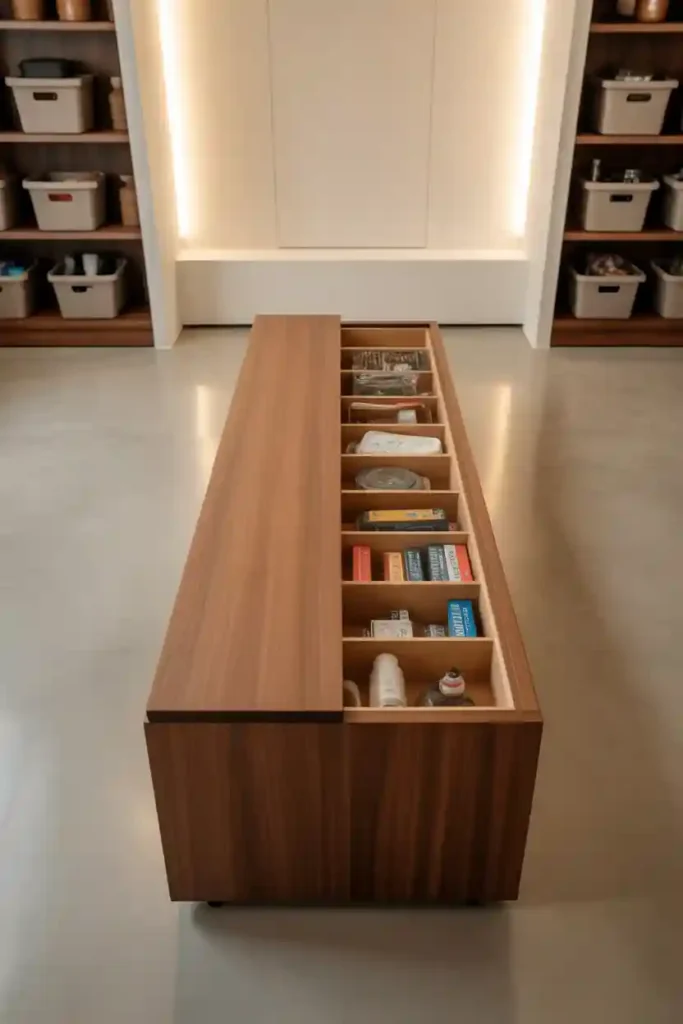
Storage benches combine seating with hidden storage, providing a dual-purpose solution for basements. They are ideal for reducing clutter while offering functional furniture. Short paragraphs focus on design. Place storage benches along walls or near activity areas to store toys, blankets, or seasonal items. Choose benches with hinged tops or drawers for easy access. Upholstered designs can add comfort and style, integrating seamlessly into the basement décor.
This approach maximizes utility while maintaining a tidy environment. Storage benches keep items out of sight, reduce clutter, and add practical seating, making the basement both organized and inviting.
Final Words
A cluttered basement doesn’t have to be an unavoidable problem. With the right storage solutions, you can transform even the most chaotic space into an organized, functional, and visually appealing area. From wall-mounted shelving and built-in cabinets to under-stair storage, overhead racks, and modular units, each strategy helps maximize available space while keeping items easily accessible.