
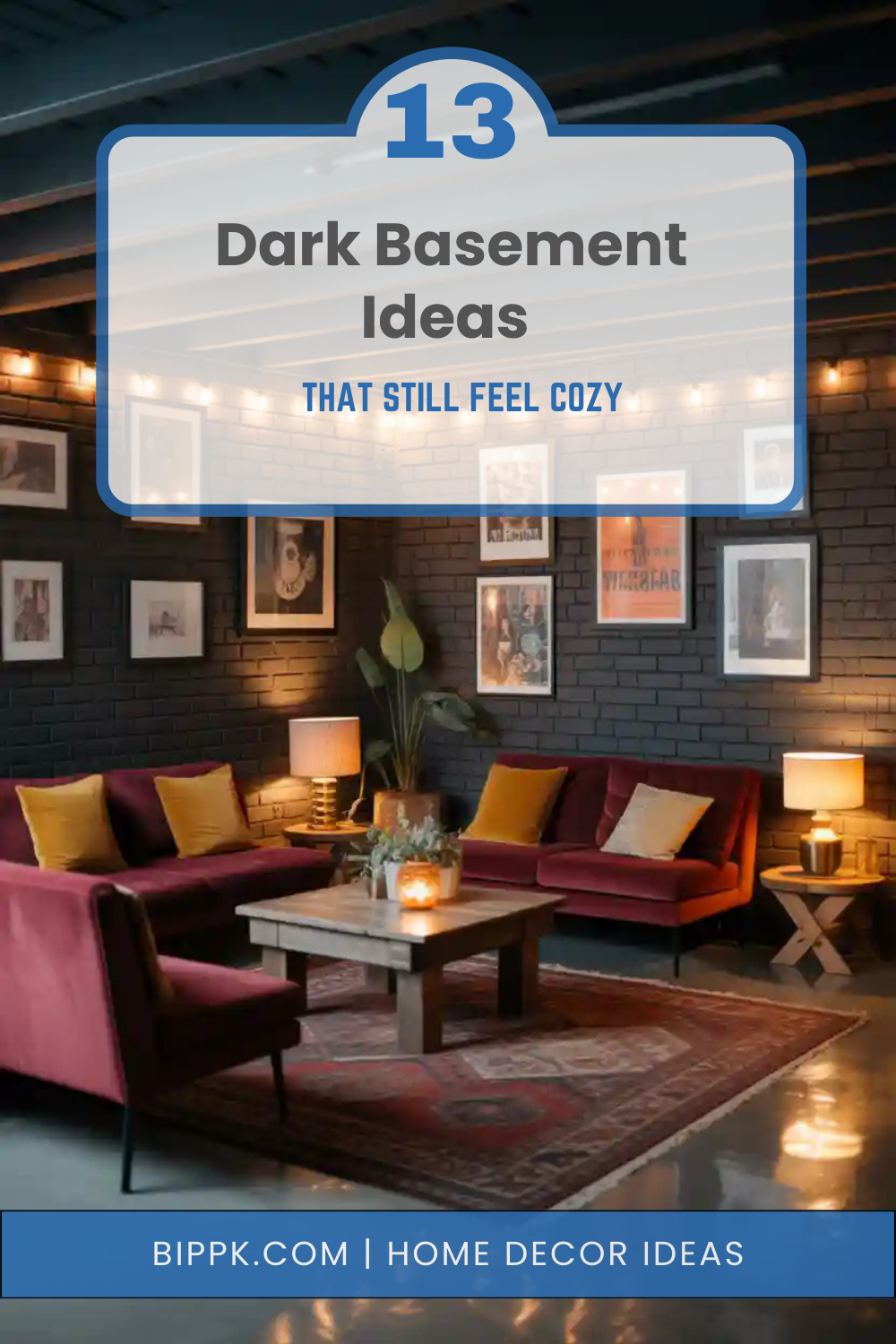
13 Dark Basement Ideas That Still Feel Cozy
Dark basements often get a bad reputation for feeling cold, gloomy, or uninviting—but when designed thoughtfully, they can become some of the coziest spaces in your home. Limited natural light, lower ceilings, and enclosed layouts don’t have to be drawbacks. In fact, darker basements offer a unique opportunity to create warm, intimate rooms that feel intentional and comfortable.
By embracing deeper color palettes, layered lighting, rich textures, and inviting furnishings, a basement can feel snug rather than shadowy. Whether you’re designing a family lounge, home theater, guest retreat, or reading nook, darkness can work in your favor when balanced correctly. These 13 Dark Basement Ideas That Still Feel Cozy focus on atmosphere, comfort, and smart design choices that transform low-light spaces into welcoming retreats. Instead of fighting the darkness, these ideas show how to lean into it—creating a basement that feels warm, stylish, and perfect for relaxation.
1. Warm Color Palettes Instead of Stark Contrast
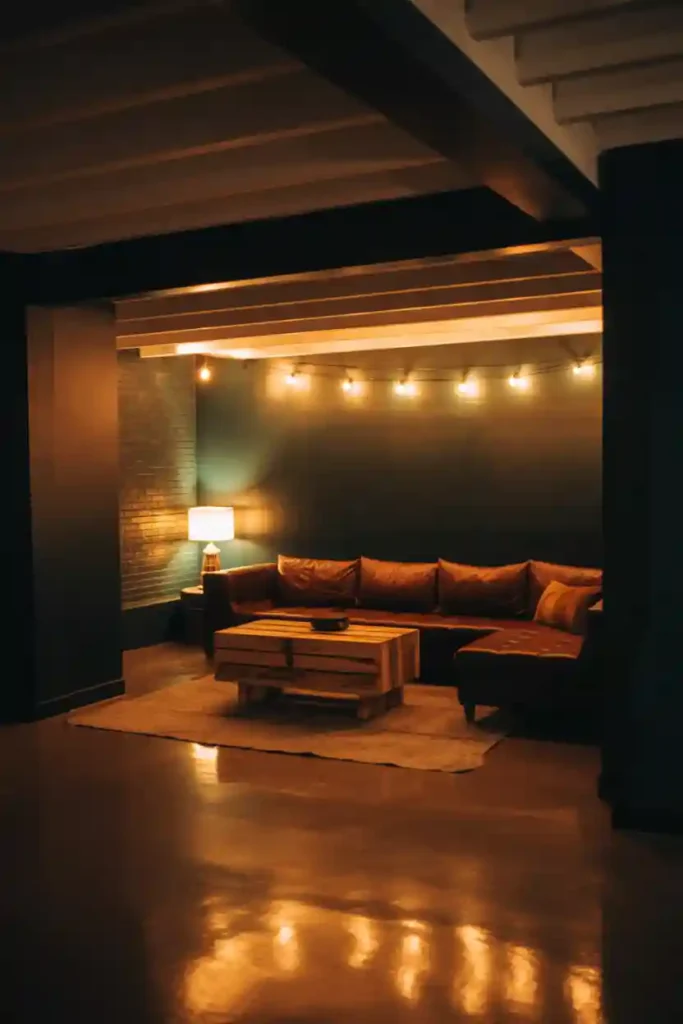
When designing a dark basement, choosing the right color palette is essential to maintaining a cozy atmosphere. Rather than relying on high-contrast black-and-white schemes, warm, deep tones such as charcoal, espresso brown, deep olive, or muted navy help the space feel enveloping and calm. These colors absorb light softly, creating a cocoon-like effect that’s ideal for basements meant for relaxation. Warm undertones make all the difference. Shades with hints of brown, red, or gold feel far more inviting than cooler grays or harsh blacks. Pairing dark walls with warm wood finishes, soft beige textiles, or brass accents adds balance and visual comfort. Keeping the palette consistent throughout the basement also helps the space feel intentional rather than gloomy.
This approach embraces darkness instead of fighting it. By choosing warm, cohesive colors, the basement transforms into a snug retreat that feels grounded, stylish, and deeply comfortable—perfect for lounging, entertaining, or unwinding at the end of the day.
Read Also: 12 Downstairs Cloakroom Ideas That Feel Stylish and Spacious
2. Layered Lighting for Soft Ambience
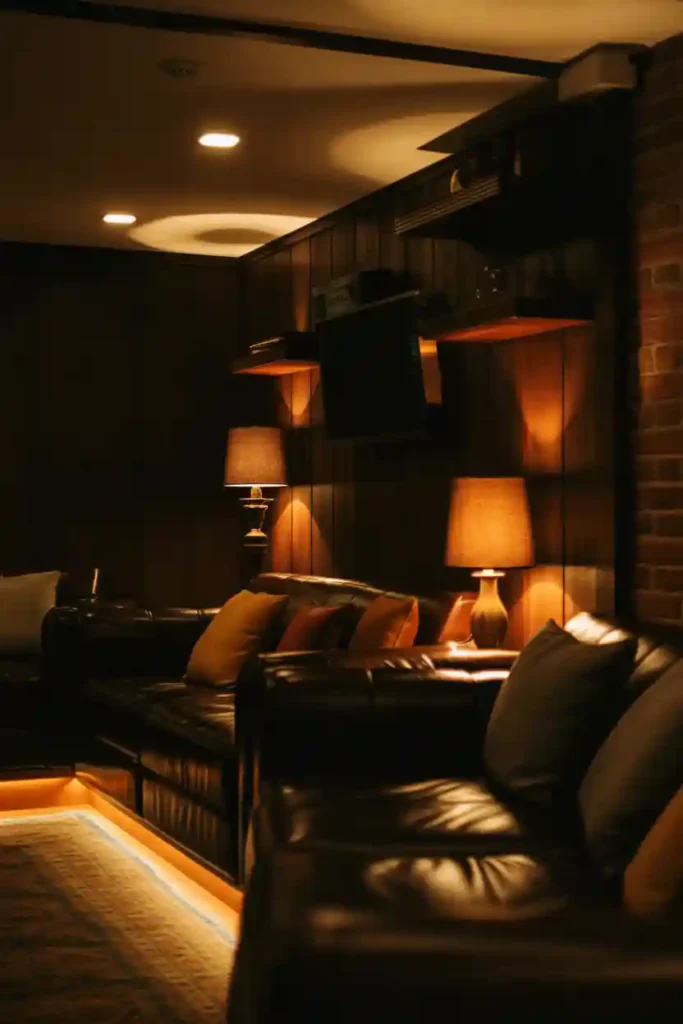
Lighting is the single most important element in making a dark basement feel cozy rather than cave-like. Instead of relying on one overhead fixture, layered lighting creates depth and warmth. Combining recessed ceiling lights, wall sconces, table lamps, and floor lamps ensures the room is evenly lit without harsh brightness. Warm light temperatures are key. Soft white or warm LED bulbs create a glow that enhances darker walls and makes the space feel comfortable. Accent lighting—such as LED strips under shelves or behind furniture—adds subtle highlights and visual interest. This prevents shadows from feeling heavy or uninviting.
Layered lighting allows you to control the mood depending on how the basement is used. Dimming lights for movie nights or brightening task areas for games or reading keeps the space flexible. Thoughtful lighting design turns a dark basement into a welcoming, intimate environment rather than a forgotten lower level.
3. Plush Seating for Instant Comfort
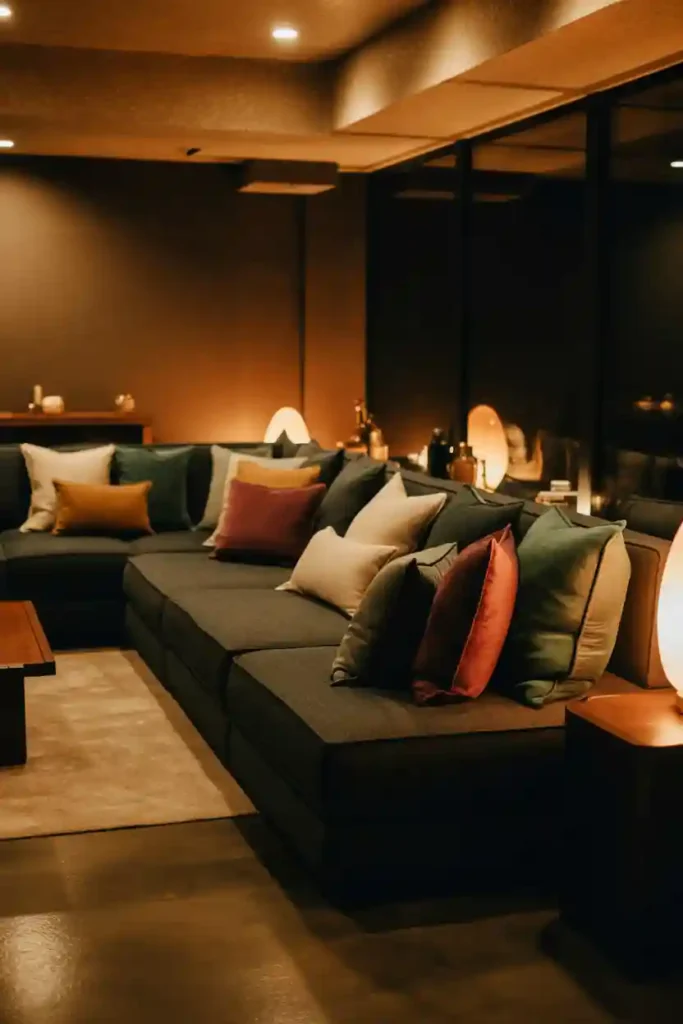
Comfortable seating is essential in a dark basement, where the goal is often relaxation. Plush sofas, deep sectionals, and overstuffed armchairs instantly make the space feel inviting. Soft upholstery materials like velvet, chenille, or textured fabric absorb light and add warmth. Arranging seating close together helps create intimacy, especially in larger basements. Modular sectionals work well, allowing flexibility while still encouraging conversation or lounging. Adding throw pillows and blankets increases comfort while reinforcing a cozy aesthetic.
Low-profile seating can also help with basements that have lower ceilings, keeping proportions balanced. The focus should always be on comfort rather than formality. When seating feels welcoming, the darkness of the basement becomes an asset—encouraging people to settle in, relax, and stay awhile.
4. Area Rugs to Add Warmth Underfoot
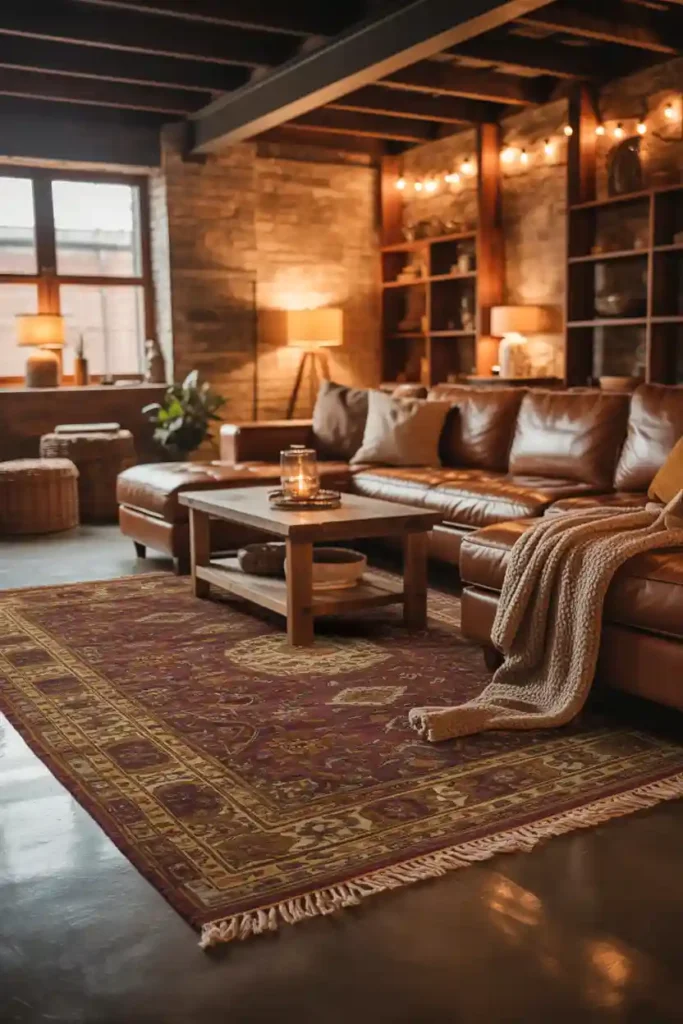
Area rugs play a major role in softening dark basement spaces. Concrete or tile floors can feel cold, especially in low-light environments. Rugs instantly add warmth underfoot and visually define seating or activity zones. Choosing rugs with rich textures or warm patterns enhances coziness. Wool, shag, or layered rugs help absorb sound and create a quieter, more comfortable atmosphere. Dark basements benefit from rugs in warm neutrals, deep jewel tones, or subtle patterns that add interest without overwhelming the space.
Beyond comfort, rugs help anchor furniture and make the basement feel finished. They prevent the room from feeling echoey or sparse. In darker spaces, rugs are not just decorative—they’re essential to creating a grounded, inviting environment that feels intentionally designed.
5. Wood Elements to Balance Darkness
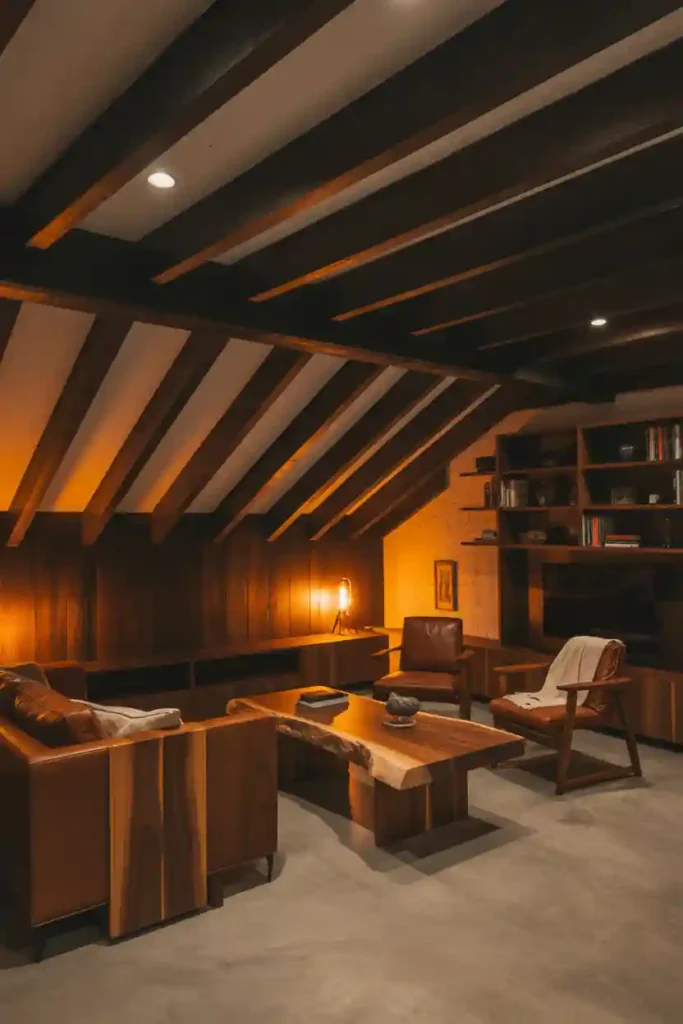
Wood elements bring natural warmth to dark basements and prevent them from feeling overly heavy. Whether used in flooring, ceiling beams, shelving, or furniture, wood adds texture and visual comfort. Lighter woods brighten subtly, while darker woods enhance richness and depth. Incorporating wood tones helps balance painted walls and upholstered furniture. Even small touches—like wood side tables or picture frames—can soften the space. Reclaimed or rustic wood works especially well in basements, adding character and warmth.
Wood also pairs beautifully with warm lighting, reflecting soft glows that enhance the cozy feel. By mixing wood elements with dark finishes, the basement becomes layered and inviting rather than flat or oppressive.
6. Accent Walls to Create Depth
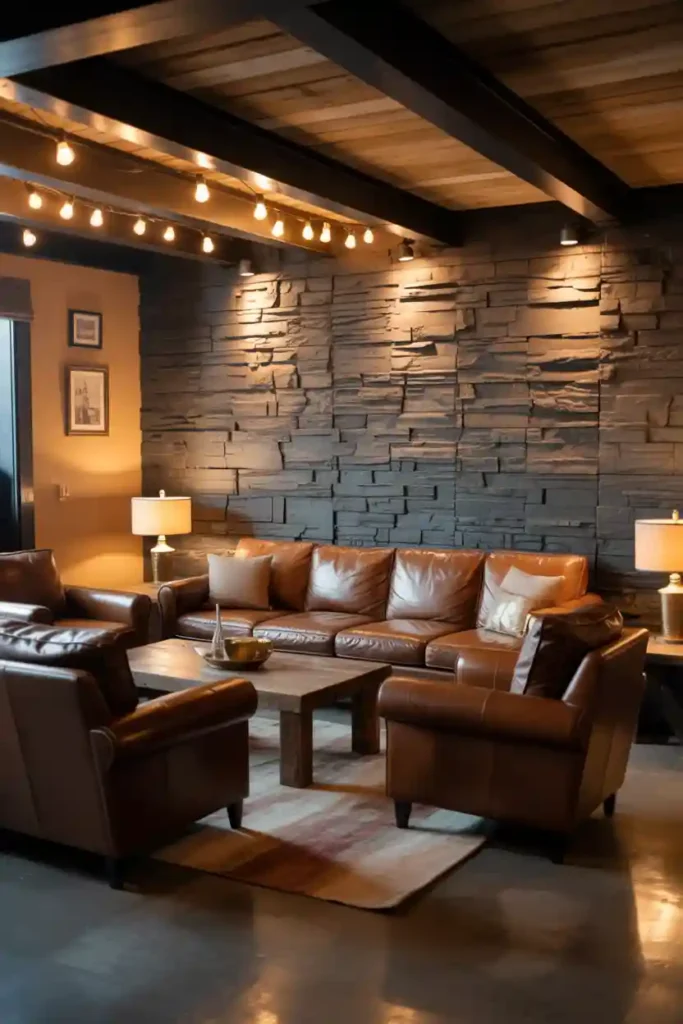
Accent walls are an effective way to add depth and dimension to a dark basement. Instead of painting every wall the same shade, choosing one feature wall allows the room to feel dynamic and intentional. Materials like textured wallpaper, wood paneling, or stone create visual interest. In basements, accent walls can help define specific zones—such as a TV area or seating nook. Dark accent walls with texture feel rich and comforting rather than flat. Paired with soft lighting, they enhance the room’s cozy character.
This design technique keeps the basement visually engaging without overwhelming it. Accent walls guide the eye and add personality, turning a dark space into a thoughtfully styled retreat.
7. Cozy Basement Media Rooms
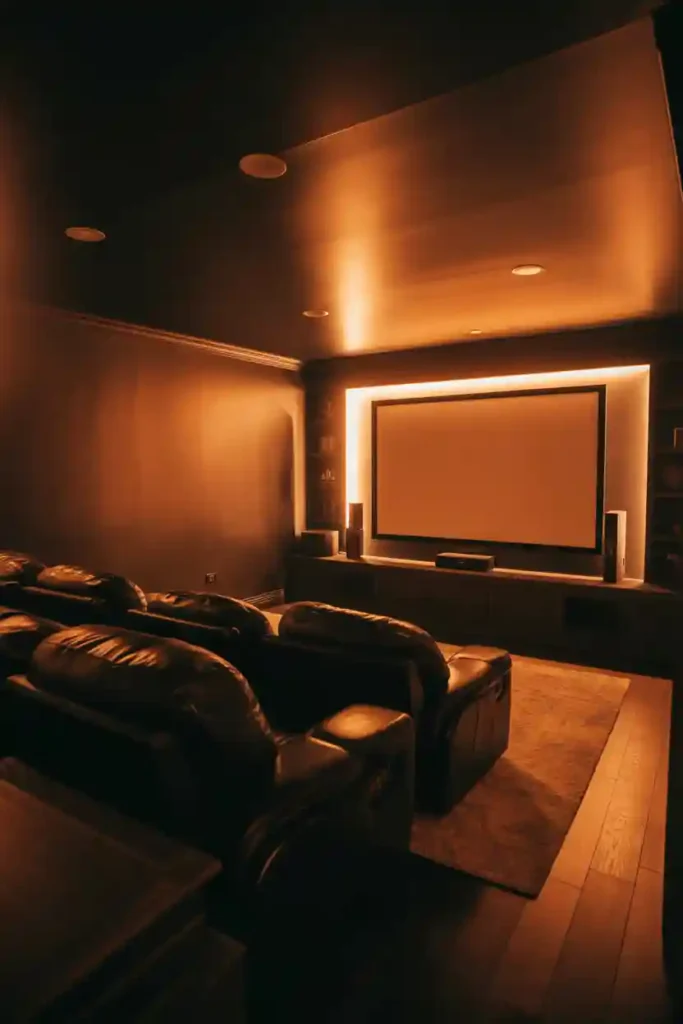
Dark basements are ideal for media rooms, as low light enhances screen visibility and immersion. When designed for comfort, these spaces feel snug rather than enclosed. Soft wall colors, plush seating, and layered lighting make the room inviting even when the screen is off. Sound-absorbing materials like upholstered walls, rugs, and curtains improve acoustics while adding warmth. Built-in shelving or cabinetry keeps equipment organized and hidden, reducing visual clutter.
By leaning into the darkness, a basement media room becomes a cocoon-like environment perfect for movie nights. Comfort-focused design ensures it feels cozy and intentional rather than dark and unfinished.
8. Built-In Shelving with Soft Lighting
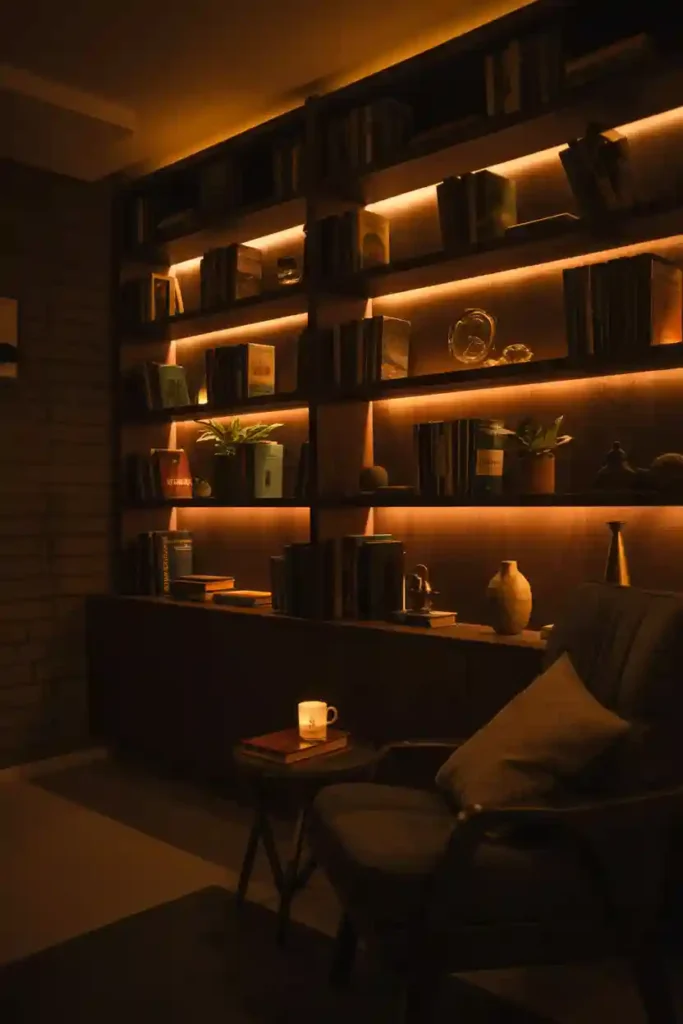
Built-in shelving is a smart way to add both function and warmth to a dark basement without making the space feel crowded. In lower-light environments, large blank walls can feel heavy or uninviting, but built-in shelves break up that darkness and add visual interest. When paired with soft, integrated lighting, shelving becomes a cozy design feature rather than just storage. LED strip lights or small recessed lights installed within shelves create a gentle glow that highlights books, artwork, or decorative objects. This layered lighting prevents the basement from feeling flat and adds depth to the room. Dark-stained wood shelves or shelves painted to match the wall color help maintain cohesion, while lighter decor items create contrast.
Built-in shelving also helps keep clutter under control, which is essential in darker spaces. When items are thoughtfully curated, the basement feels lived-in and welcoming rather than cluttered. This combination of structure, lighting, and personal touches makes a dark basement feel intimate, warm, and intentionally designed.
9. Dark Paint with Warm Undertones
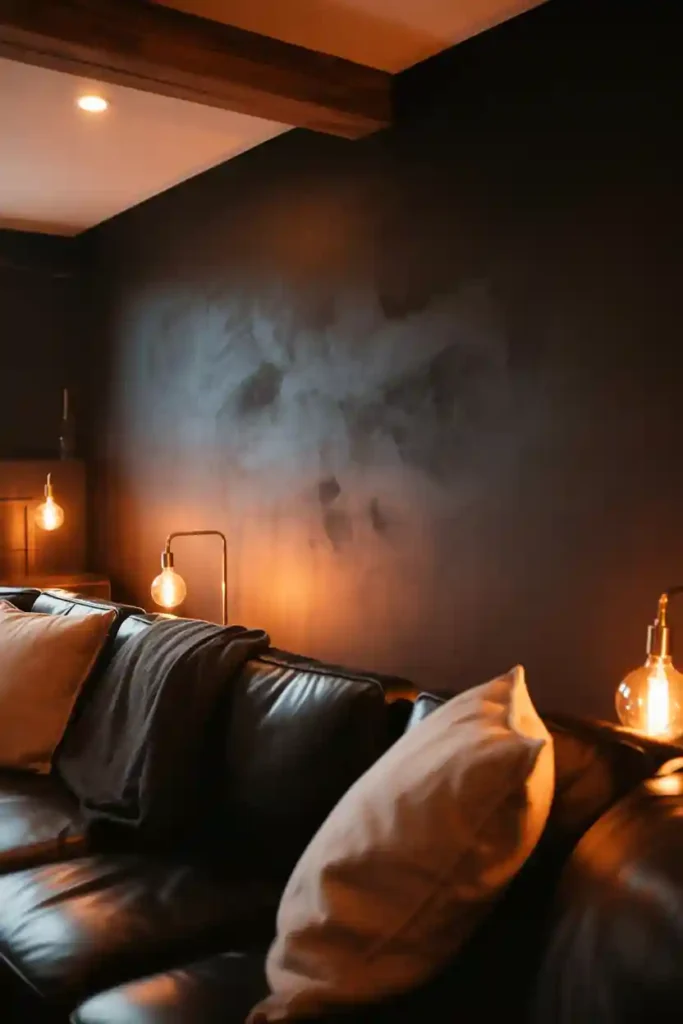
Using dark paint in a basement doesn’t mean the space has to feel cold or gloomy. The key is choosing colors with warm undertones that create a cocoon-like sense of comfort. Shades such as warm charcoal, deep taupe, chocolate brown, muted plum, or smoky navy add richness while still feeling inviting. These tones absorb light softly rather than harshly, which is ideal for basements. Warm undertones work especially well with layered lighting and natural materials. When paired with wood furniture, brass accents, or warm textiles, dark walls feel balanced and intentional. Matte or eggshell finishes further enhance coziness by reducing glare and creating a velvety appearance.
Rather than trying to brighten the basement unnaturally, warm dark paint embraces the space’s character. It creates an intimate environment perfect for relaxing, watching movies, or entertaining. When done thoughtfully, dark paint becomes the foundation of a cozy basement rather than a limitation.
10. Textiles and Fabrics for Softness
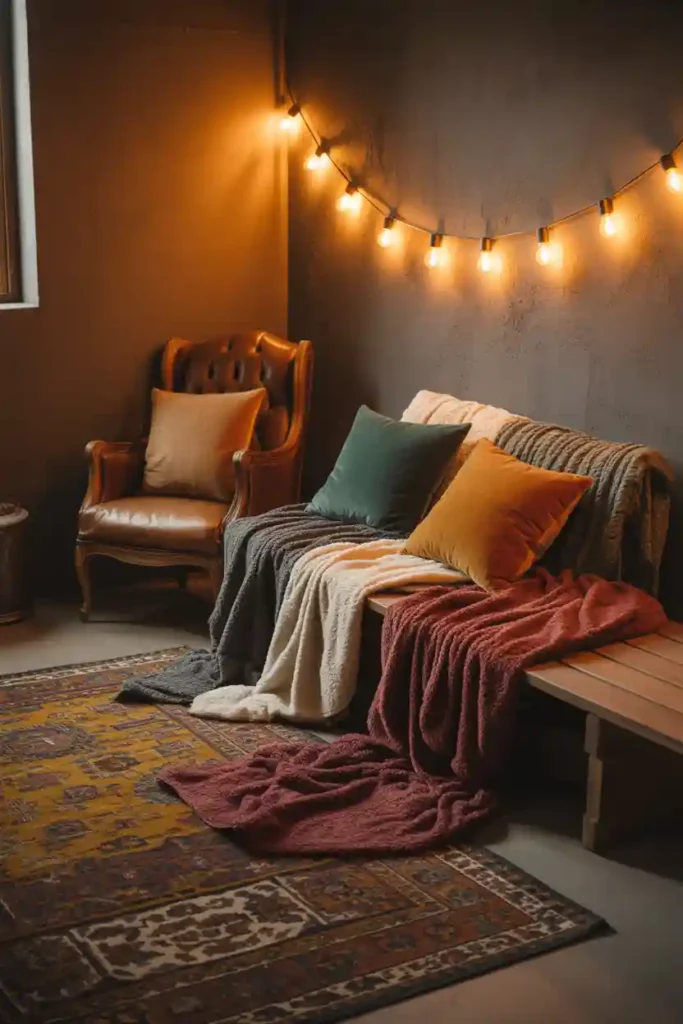
Textiles are essential for softening a dark basement and making it feel truly cozy. Without fabric layers, darker spaces can feel hard or echo-filled. Rugs, curtains, upholstered furniture, throw pillows, and blankets absorb both light and sound, creating a warmer, more comfortable atmosphere. Layering different fabrics adds depth and visual interest. Knitted throws, velvet cushions, wool rugs, and linen curtains introduce varied textures that prevent the space from feeling flat. Even when textiles are dark in color, their texture adds warmth and richness.
Textiles also allow flexibility. They can be updated seasonally or swapped out easily without major renovations. In a dark basement, fabric layers are what transform the room from simply dim into genuinely inviting. They encourage relaxation, making the basement a place where people naturally want to gather and unwind.
11. Low Ceilings Designed with Intention
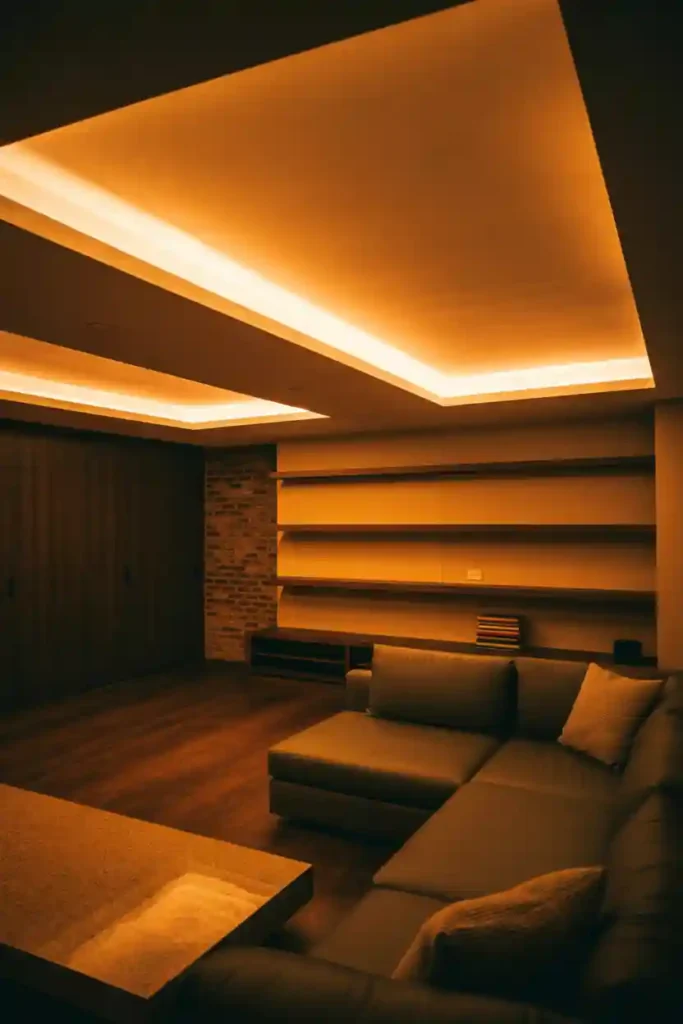
Low ceilings are a common feature in basements, but with intentional design, they can actually enhance a cozy atmosphere. Instead of trying to visually “stretch” the space unnaturally, embracing the lower height helps create a snug, intimate feel that works beautifully in darker environments. The key is keeping the design clean and balanced. Recessed lighting is ideal for low ceilings because it provides illumination without adding visual clutter. Painting the ceiling a slightly lighter shade than the walls helps prevent it from feeling heavy while maintaining continuity. Exposed beams, when painted in warm or dark tones, add character and structure without overwhelming the room.
Furniture choice also plays an important role. Low-profile sofas, sectionals, and media units keep proportions in check and prevent the space from feeling compressed. When designed thoughtfully, low ceilings contribute to a relaxed, enveloping atmosphere that makes a dark basement feel comfortable rather than confined.
12. Fireplace or Faux Fireplace Features
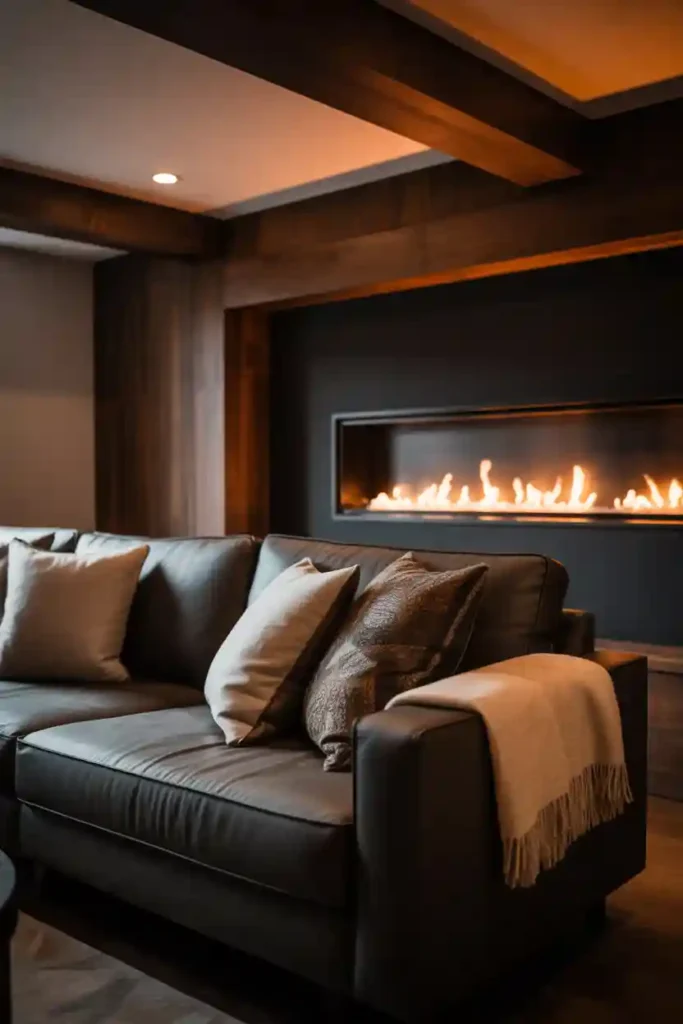
A fireplace—whether real or faux—instantly elevates the coziness of a dark basement. It acts as a natural focal point, drawing people into the space and creating a warm, comforting atmosphere. In basements where traditional fireplaces aren’t possible, electric or gas options provide the same visual appeal without structural challenges. The soft glow of a fireplace adds warmth that balances dark walls and low lighting. Surrounding the fireplace with textured materials such as stone, tile, or wood enhances depth and richness. Even a minimalist fireplace design can feel inviting when paired with comfortable seating and soft lighting.
Beyond aesthetics, a fireplace helps define the basement as a place for relaxation rather than just extra storage or utility space. It reinforces the idea of the basement as a cozy retreat, making it perfect for evenings spent unwinding, entertaining, or enjoying quiet moments.
13. Thoughtful Decor That Feels Intimate
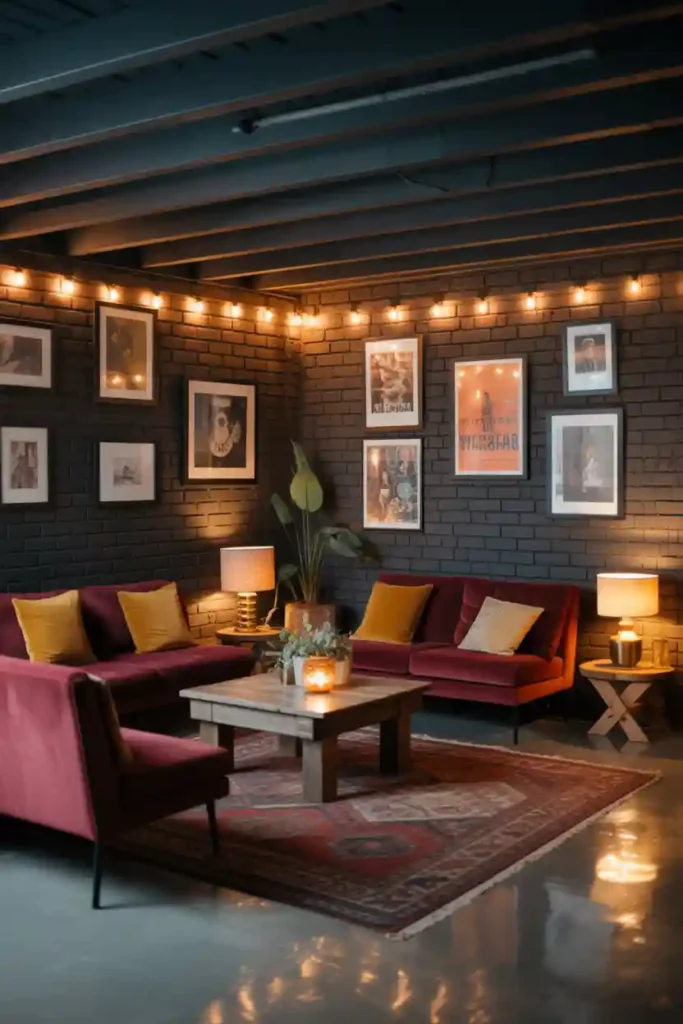
In a dark basement, decor should feel intentional, personal, and inviting. Rather than filling the space with too many accessories, choosing a few meaningful pieces helps maintain warmth without clutter. Artwork, books, framed photographs, and textured decor bring personality and depth to darker walls. Grouping decor items in small collections creates visual comfort and prevents walls from feeling empty or overwhelming. Warm frames, subtle metallic accents, and natural materials work especially well in low-light environments. Soft shapes and tactile surfaces further enhance the sense of coziness.
Thoughtful decor transforms a dark basement from simply functional into a lived-in, welcoming space. It completes the overall design by adding character and warmth, ensuring the basement feels intimate, comfortable, and intentionally styled for everyday enjoyment.
Final Words
A dark basement doesn’t have to feel cold or uninviting. With the right design choices, it can become one of the coziest and most atmospheric spaces in your home. By embracing deeper colors, layering warm lighting, and adding soft textures, you allow the basement’s natural low-light conditions to work in your favor. Elements like plush seating, wood accents, rugs, fireplaces, and thoughtful decor create comfort and intimacy rather than heaviness.