12 Living Room Rug Placement Ideas That Anchor
A well-placed rug can completely transform a living room by creating structure, warmth, and visual balance. The right rug placement does more than add softness underfoot it helps define zones, anchor furniture, and make a space feel thoughtfully designed. Whether your living room is large and open or small and cozy, strategic rug placement can improve both comfort and style.
These 12 Living Room Rug Placement Ideas That Anchor will help you understand how to position rugs in ways that enhance your layout and make your furniture feel connected. From placing rugs under sofas to layering textures and defining seating areas, these ideas offer practical inspiration for every home style. With the right approach, a rug becomes the foundation of your living room design and ties everything together beautifully.
1. Rug Under Front Sofa Legs
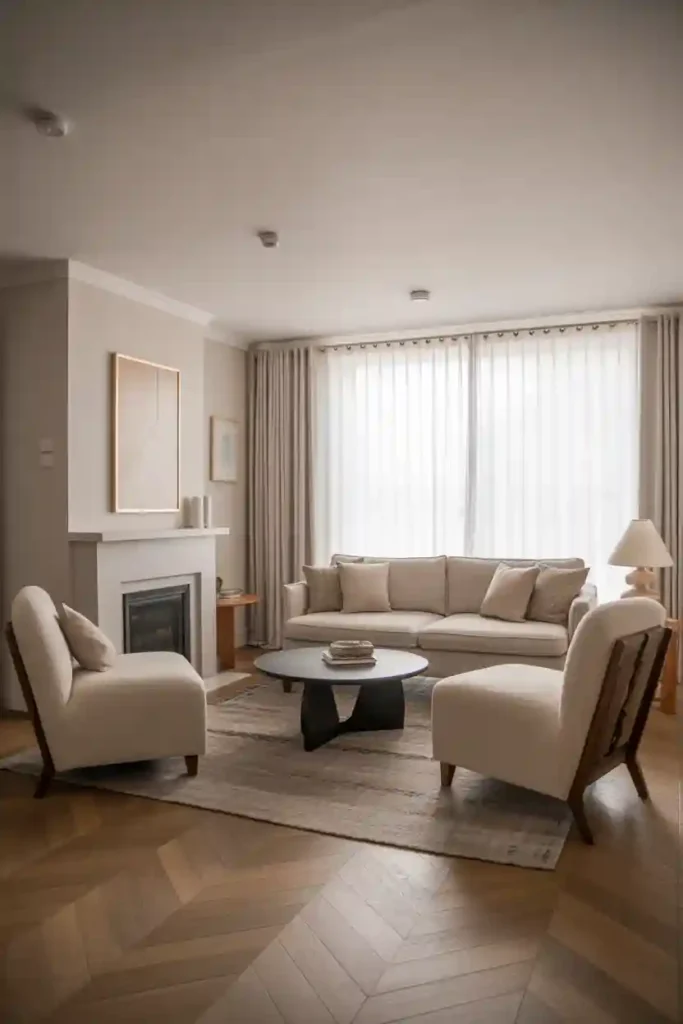
One of the easiest ways to anchor a living room is by placing the rug under the front legs of the sofa and chairs. This method works especially well in medium-sized spaces where a full rug may be too large or unnecessary. Positioning the rug this way visually connects the seating area without overwhelming the room. The rug extends beyond the coffee table and slightly under the sofa, creating a balanced and intentional look. This arrangement keeps furniture grounded while still allowing the flooring to remain visible around the edges. It is also a budget-friendly option because it requires a smaller rug than full coverage.
2. Fully Anchored Furniture Layout
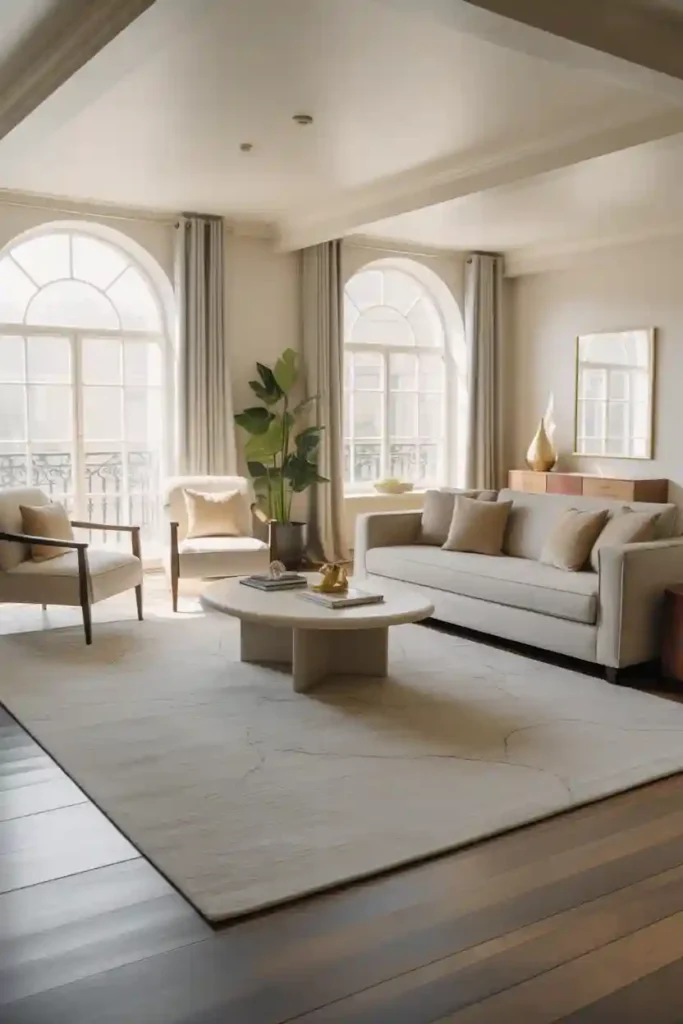
For a luxurious and cohesive appearance, place all major furniture pieces completely on the rug. This layout works best in larger living rooms where a generously sized rug can define the entire seating area. A large rug makes the room feel unified and prevents furniture from appearing scattered. Sofas, chairs, and coffee tables should sit comfortably within the rug’s boundaries. This placement creates a polished and professionally styled look often seen in well-designed interiors. It also enhances comfort because more floor area is covered.
Read also: 14 Laundry Room Shelving Ideas That Save Space
3. Rug Centered Under Coffee Table
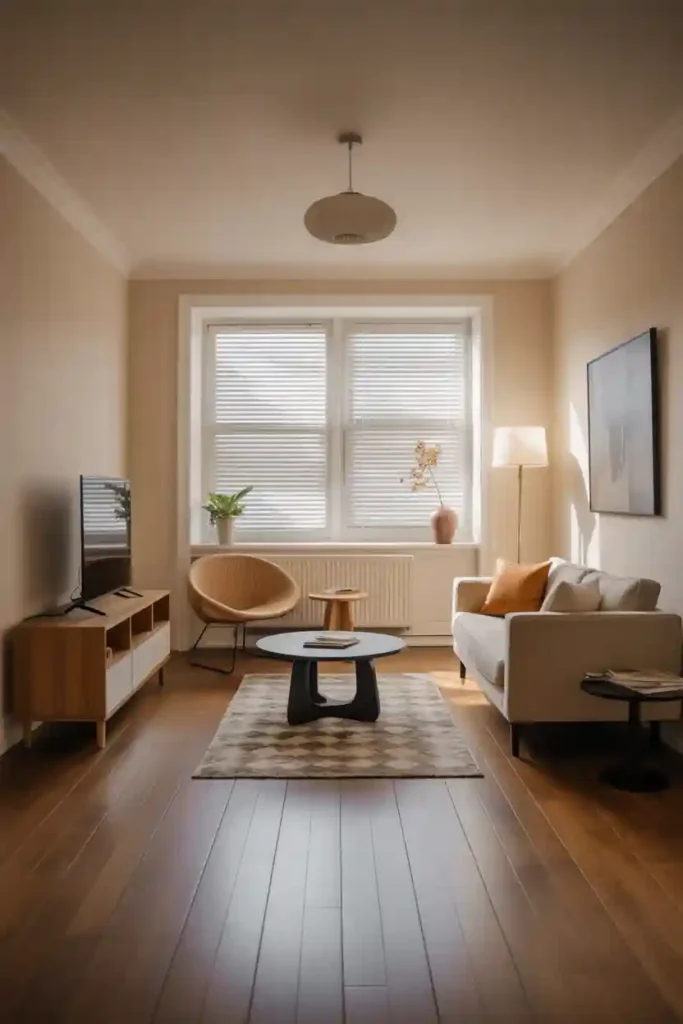
Centering a rug under the coffee table creates a simple and symmetrical focal point. This placement works well in compact living rooms or minimalist spaces. The rug should extend beyond the coffee table enough to visually connect nearby seating. Even though the sofa may not sit on the rug, the layout still feels organized. This approach highlights the coffee table as the central feature and creates a clean appearance.
4. Rug Extending Beyond Sofa Width
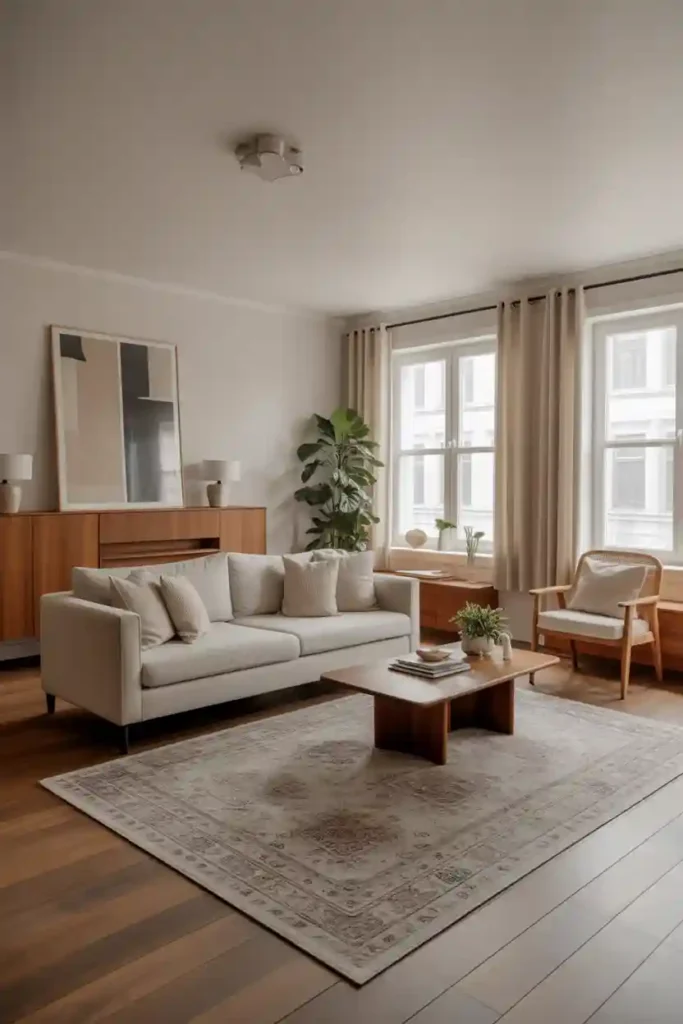
A rug that extends beyond the width of the sofa helps visually enlarge the room. This placement creates a strong horizontal line that stabilizes the layout. The rug should be wider than the sofa by at least 12–24 inches. This keeps the sofa from appearing oversized or cramped. This arrangement works particularly well in narrow living rooms. It helps create a balanced composition and prevents the rug from looking too small.
5. Layered Rugs for Depth
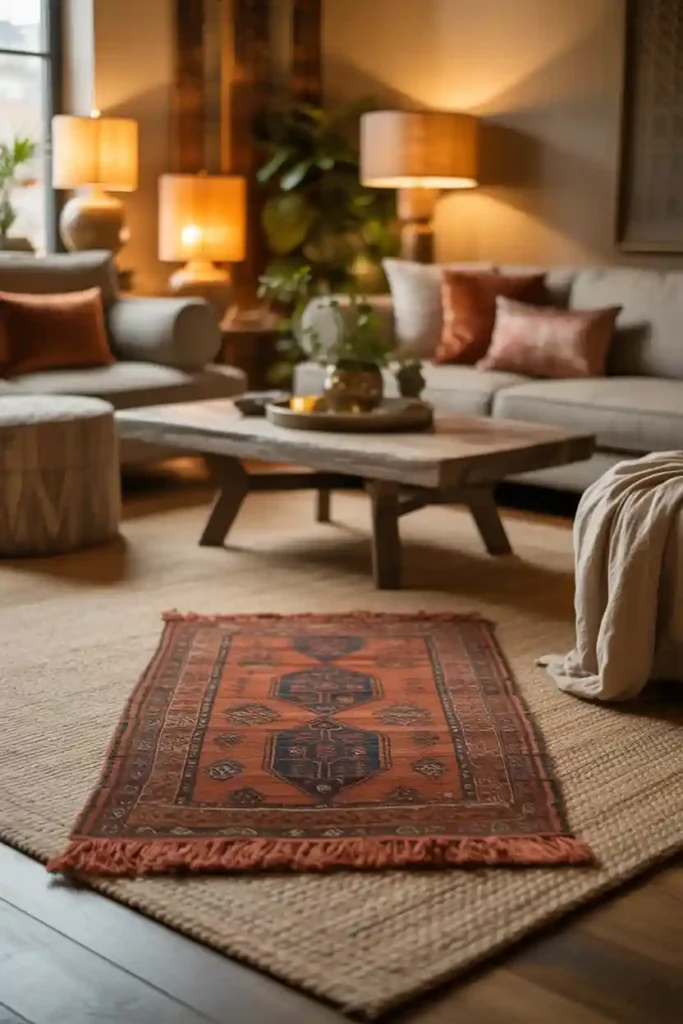
Layering rugs adds texture and depth to a living room. A large neutral rug can serve as the base while a smaller patterned rug sits on top. This approach creates visual interest and allows you to experiment with color and texture without overwhelming the room. Layered rugs work well in eclectic or cozy interiors. They also allow seasonal updates by switching the top rug.
6. Floating Rug Layout
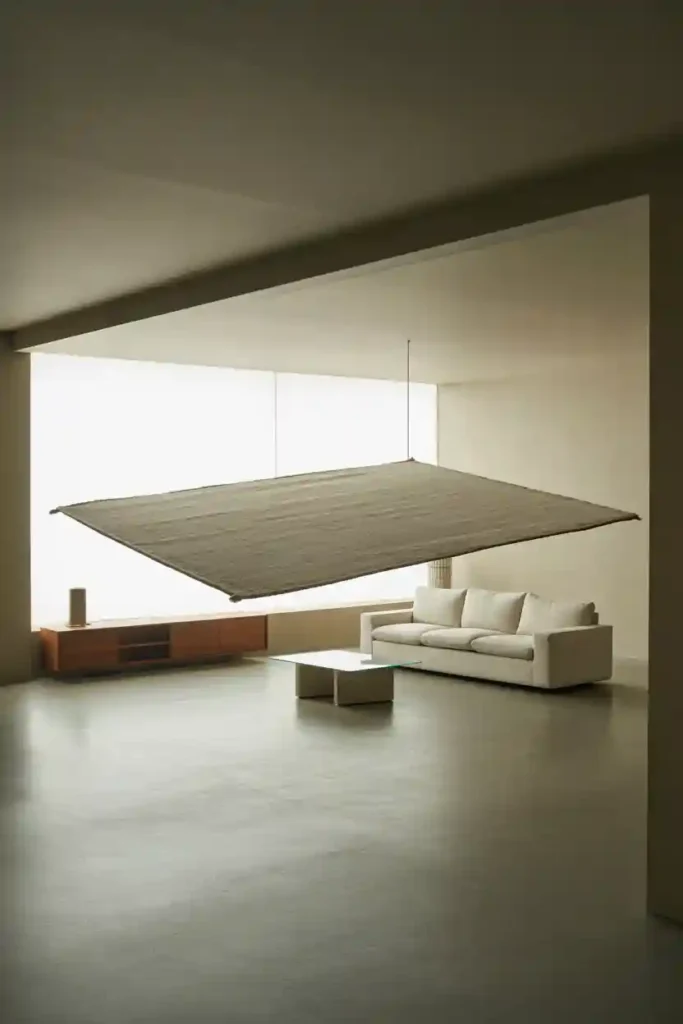
A floating rug sits in the middle of the seating area without touching furniture. This placement works best in small rooms. It creates a light and airy feeling because furniture remains separate from the rug. This layout emphasizes openness and simplicity. Choose a rug that complements furniture colors. Avoid rugs that are too small because they may look disconnected.
7. Rug Defining an Open Plan Zone
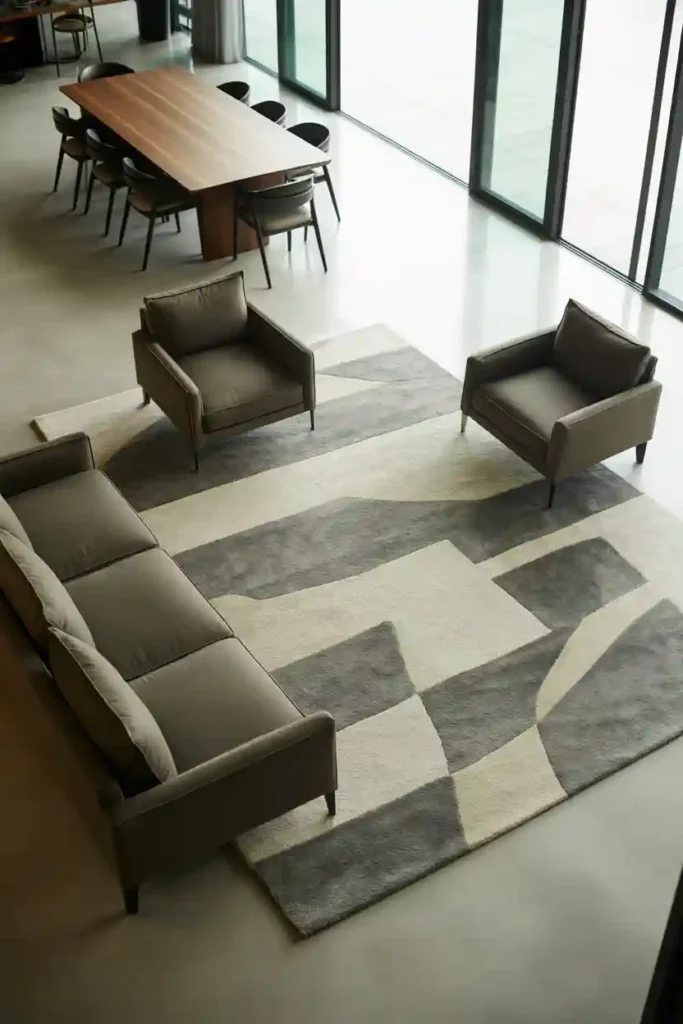
In open-plan homes, rugs help define the living room area. The rug separates the seating space from dining or kitchen areas. Place the rug so all seating furniture touches it at least partially. This creates a clear boundary without using walls. Large rugs work best for this layout. Consistent colors help unify the design.
8. Diagonal Rug Placement
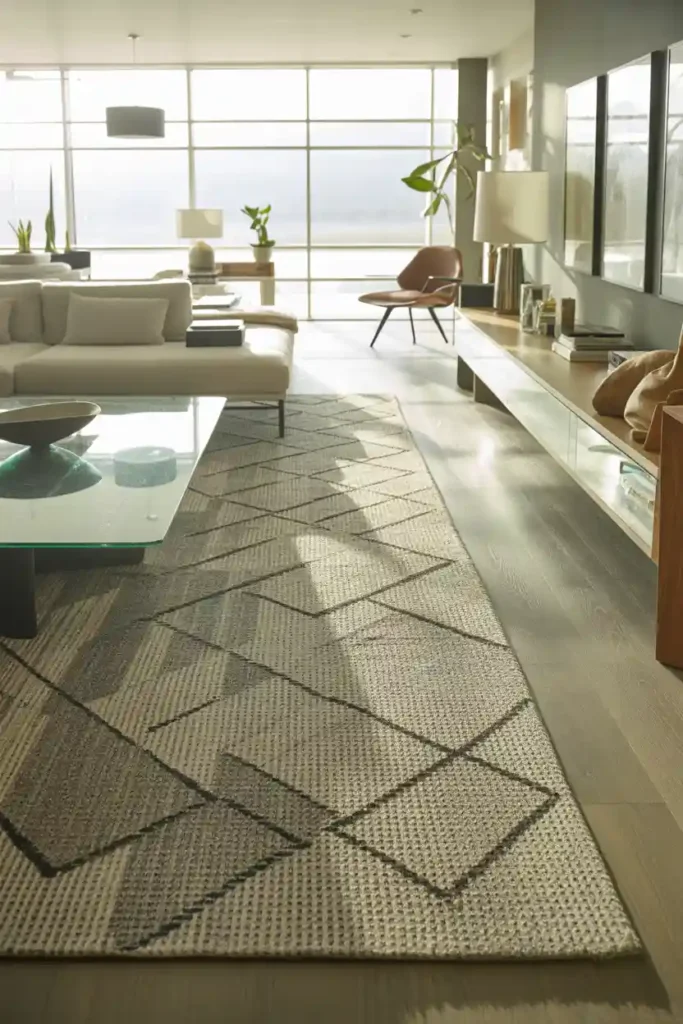
Placing a rug diagonally creates visual movement. This approach works well in square rooms. The angled placement makes the room feel dynamic. It can highlight architectural features. This placement works best with simple furniture. Avoid overly busy patterns. This layout adds creativity.
9. Rug Under Sectional Sofa
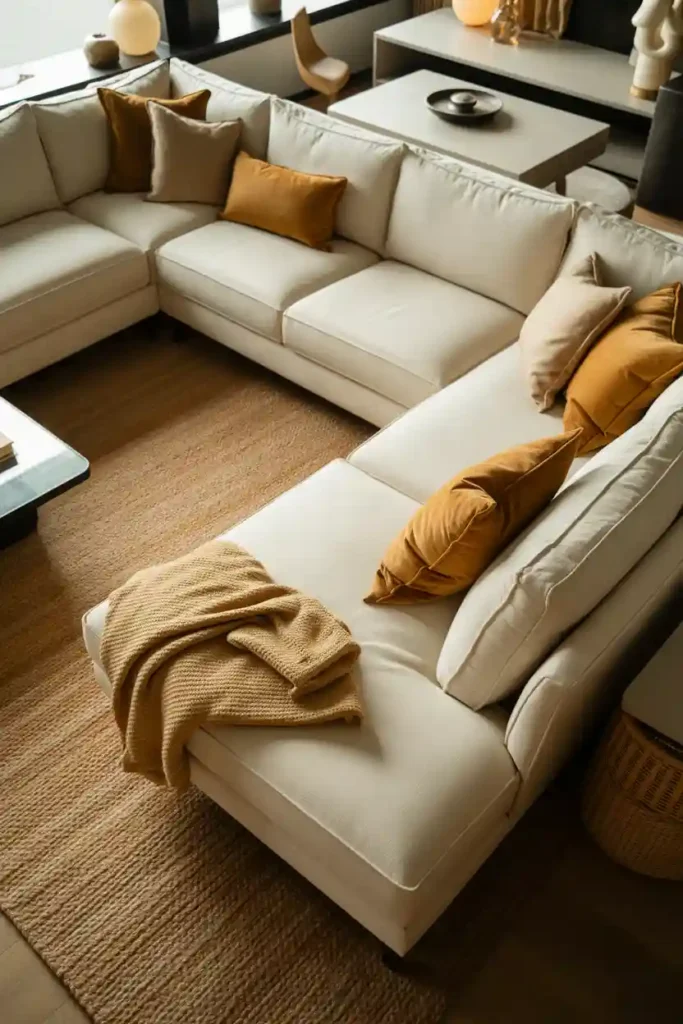
Sectional sofas benefit from rugs that follow their shape. A large rug should extend beyond the sectional edges. This placement keeps the sectional from looking heavy. It also creates a cozy seating zone. Choose a rug large enough for the coffee table. Soft textures improve comfort. This works well in family rooms.
10. Double Rug Layout
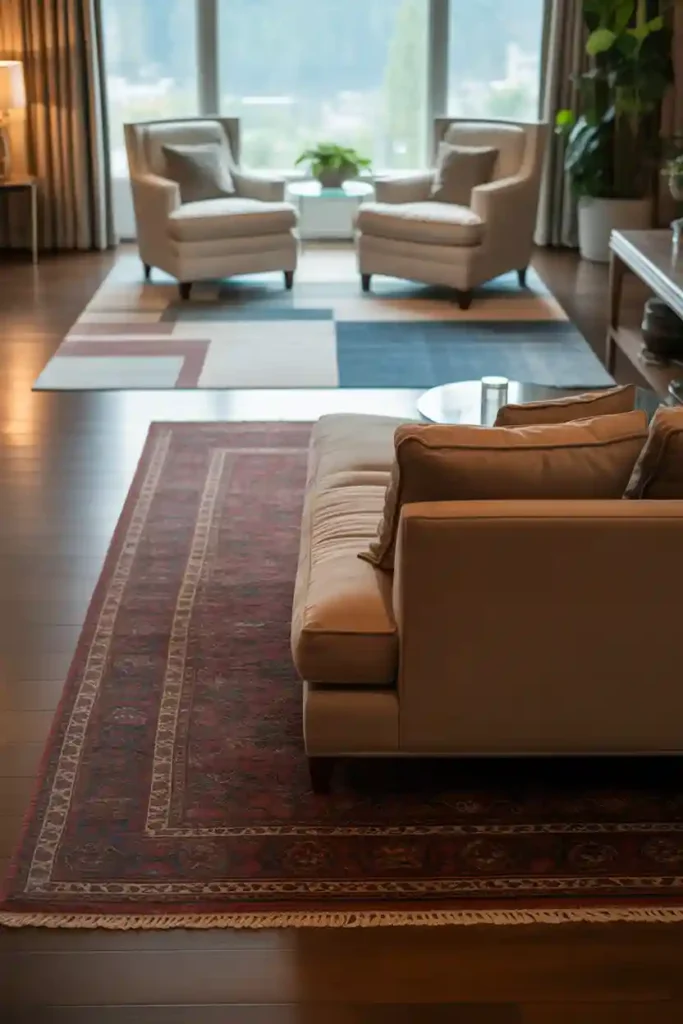
Using two rugs works well in large living rooms. Each rug defines a different seating area. This layout improves functionality. Matching rugs create consistency. Different rugs create contrast. Spacing should remain balanced. This works in large homes.
11. Rug Along Walkway Edge
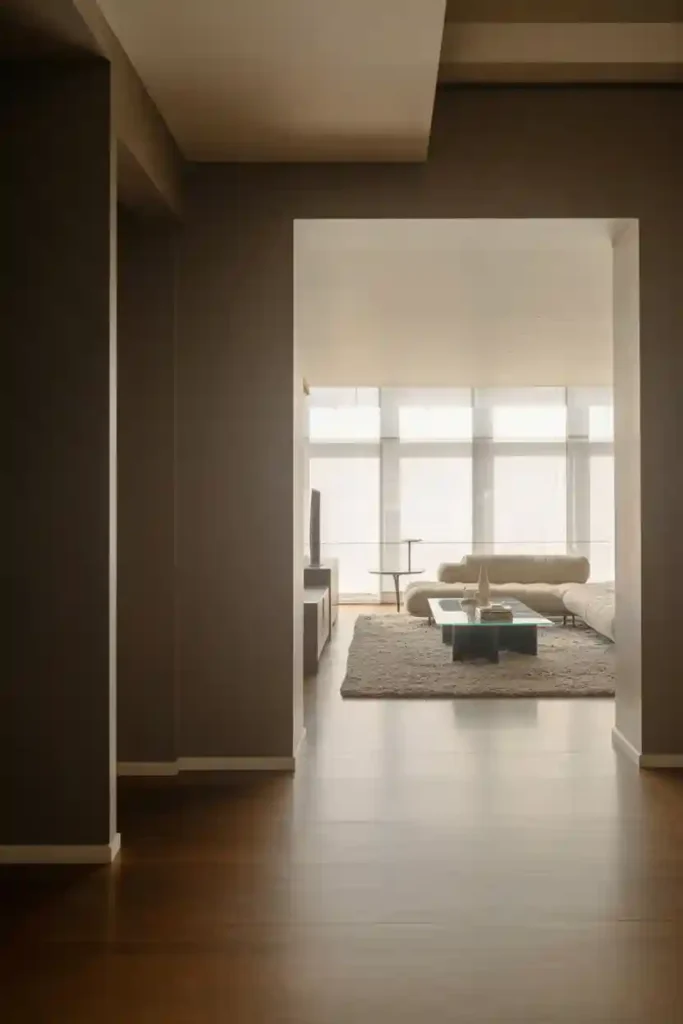
Placing a rug along the edge of a walkway keeps traffic paths clear. This works well in narrow rooms. The rug anchors seating without blocking movement. Choose durable materials. Keep edges aligned. This improves flow. It looks organized.
12. Oversized Statement Rug
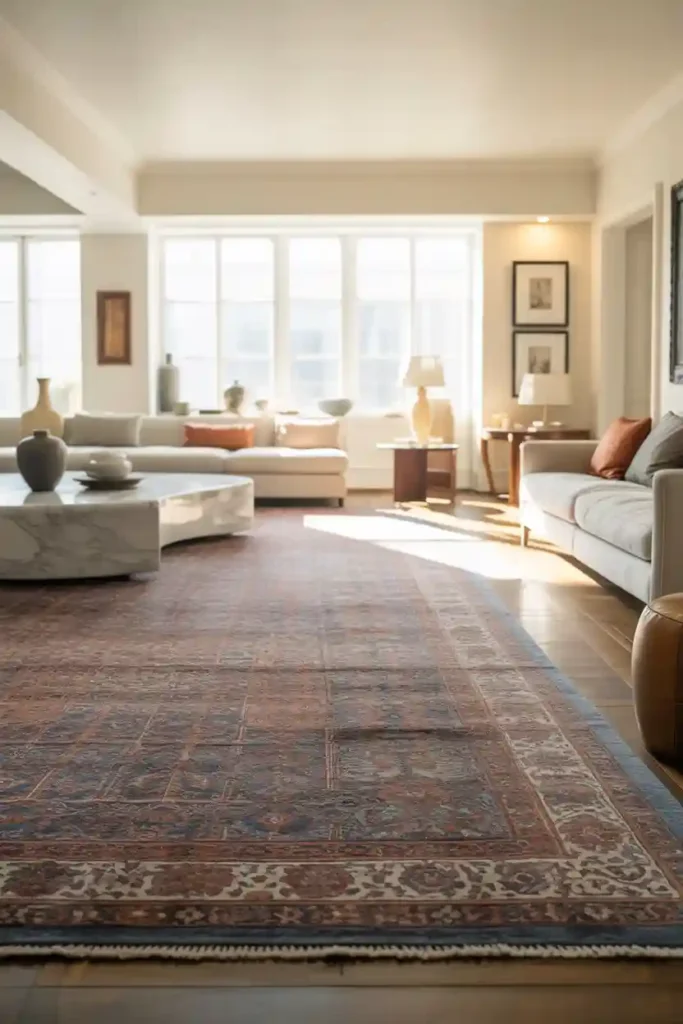
An oversized rug makes a strong statement. It covers most of the floor and creates a unified look. Large rugs make rooms feel bigger. They reduce visual clutter. Simple furniture works best. Soft colors maintain balance. This style feels luxurious.
Final Words
Choosing the right rug placement can make a remarkable difference in how your living room looks and feels. A thoughtfully positioned rug helps connect furniture, define spaces, and create a sense of balance that makes the room feel complete. Whether you prefer a fully anchored layout, layered textures, or a simple centered design, the right rug placement brings harmony to your space.