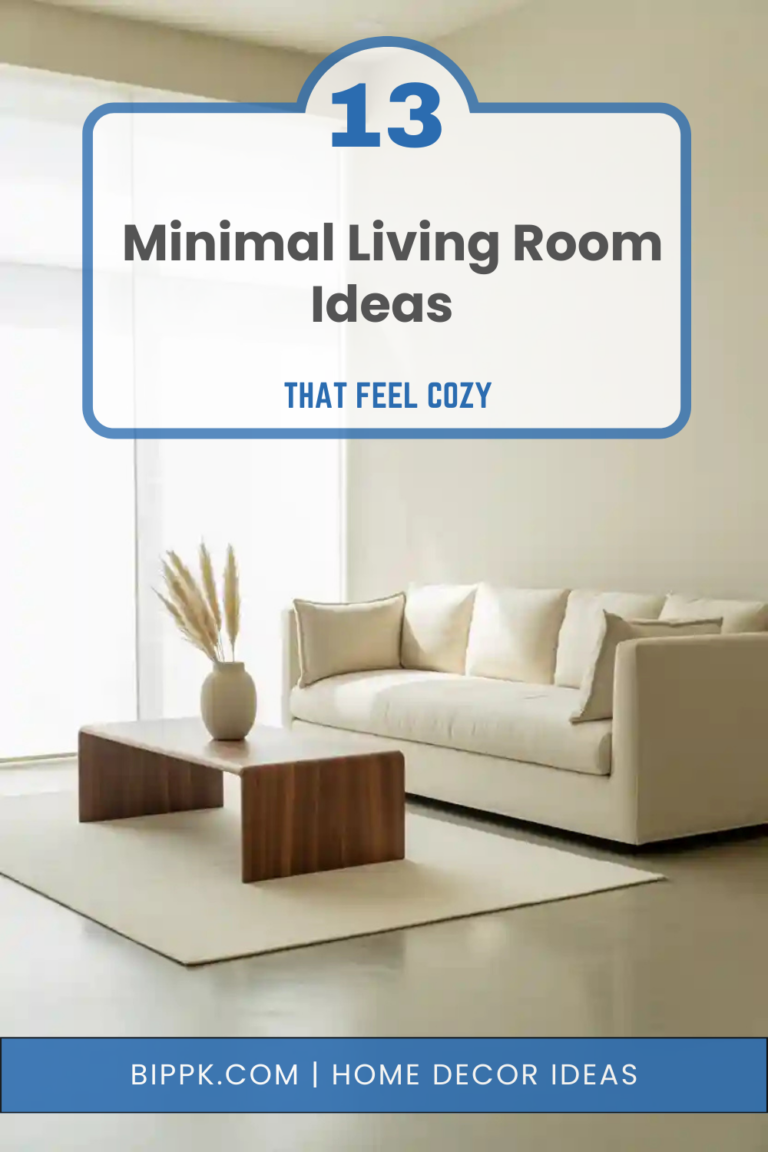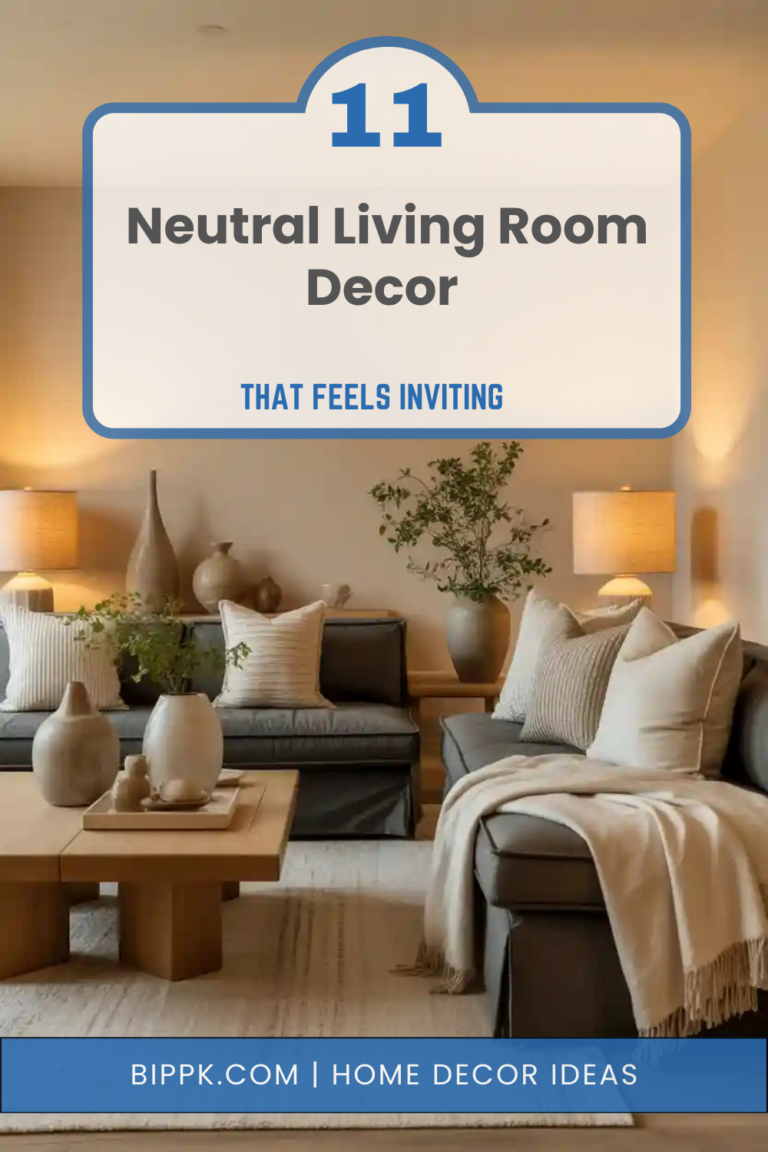
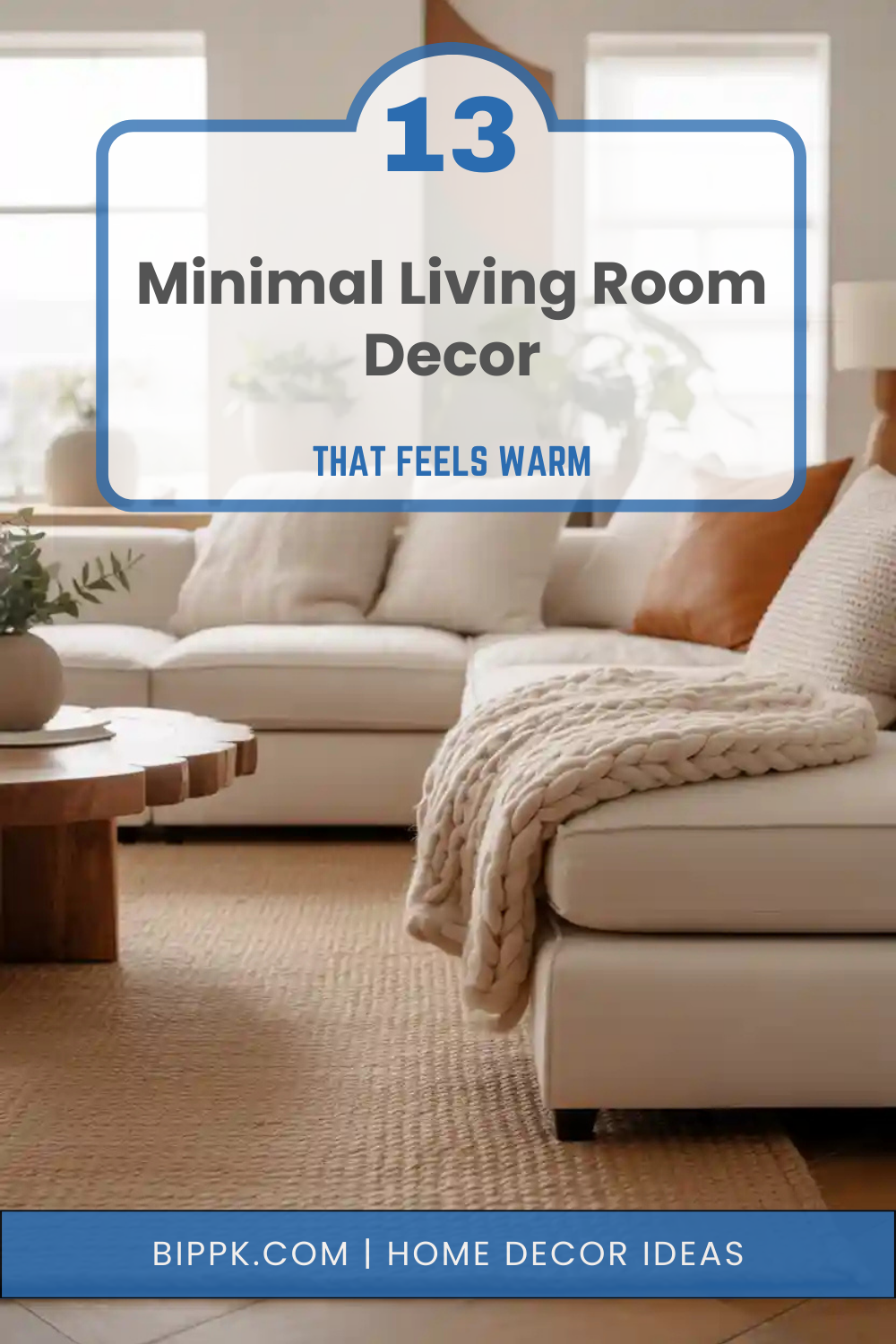
13 Minimal Living Room Decor That Feels Warm
Minimalism doesn’t have to feel cold or empty. When done thoughtfully, it can be just as warm, welcoming, and comforting as more layered design styles. This guide to 13 Minimal Living Room Decor That Feels Warm focuses on creating a space that feels calm and intentional without sacrificing coziness or personality. Warm minimalism is about balance. Clean lines and uncluttered layouts meet soft textures, natural materials, and gentle color palettes. Instead of removing character, this approach refines it, allowing each piece in your living room to breathe and matter.
Whether you live in a small apartment or a spacious home, warm minimalist décor helps reduce visual noise while enhancing comfort. Through thoughtful furniture choices, layered neutrals, and subtle details, you can design a living room that feels serene, inviting, and quietly luxurious a space you’ll actually want to spend time in every day.
1. Neutral Color Palettes with Warm Undertones
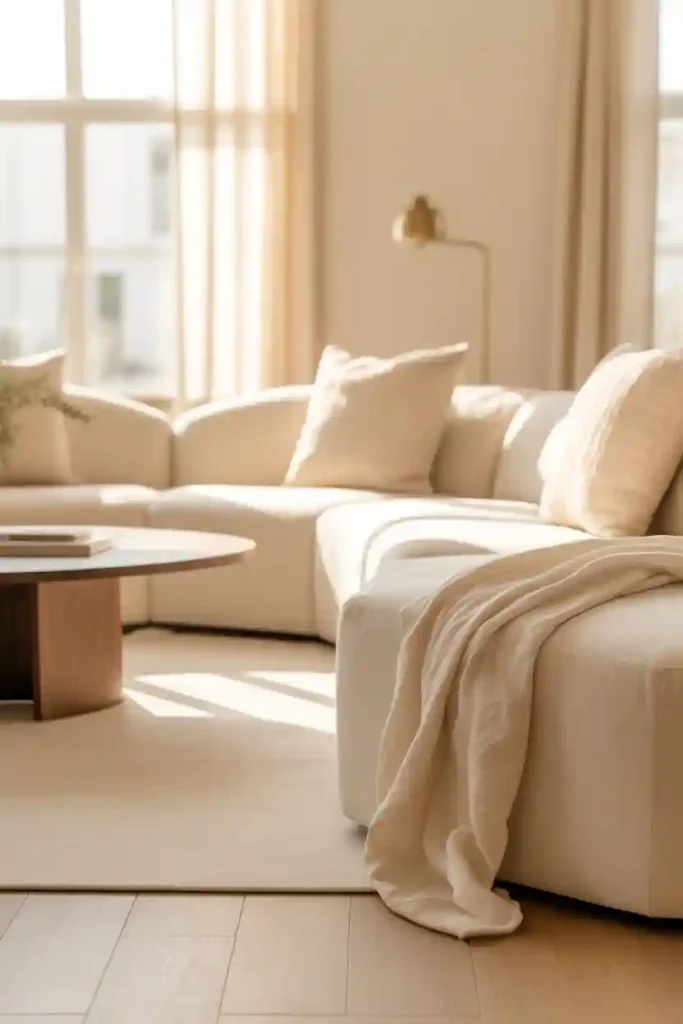
A warm minimalist living room starts with the right color palette. Instead of stark whites or cool grays, opt for neutrals with warm undertones such as cream, ivory, beige, soft taupe, or greige. These shades maintain the simplicity of minimalism while making the space feel more inviting and comfortable. Using a cohesive palette helps the room feel calm and uncluttered. Walls, furniture, and textiles should flow naturally into one another rather than compete for attention. This doesn’t mean everything must match perfectly. Slight variations in tone add depth without breaking the minimalist look.
Warm neutrals also reflect light softly, which enhances the cozy atmosphere, especially in natural daylight. Pair them with matte finishes instead of glossy ones to avoid a cold or sterile feel. When your base colors are warm and gentle, the entire living room instantly feels more relaxed and welcoming.
2. Clean-Lined Furniture with Soft Silhouettes
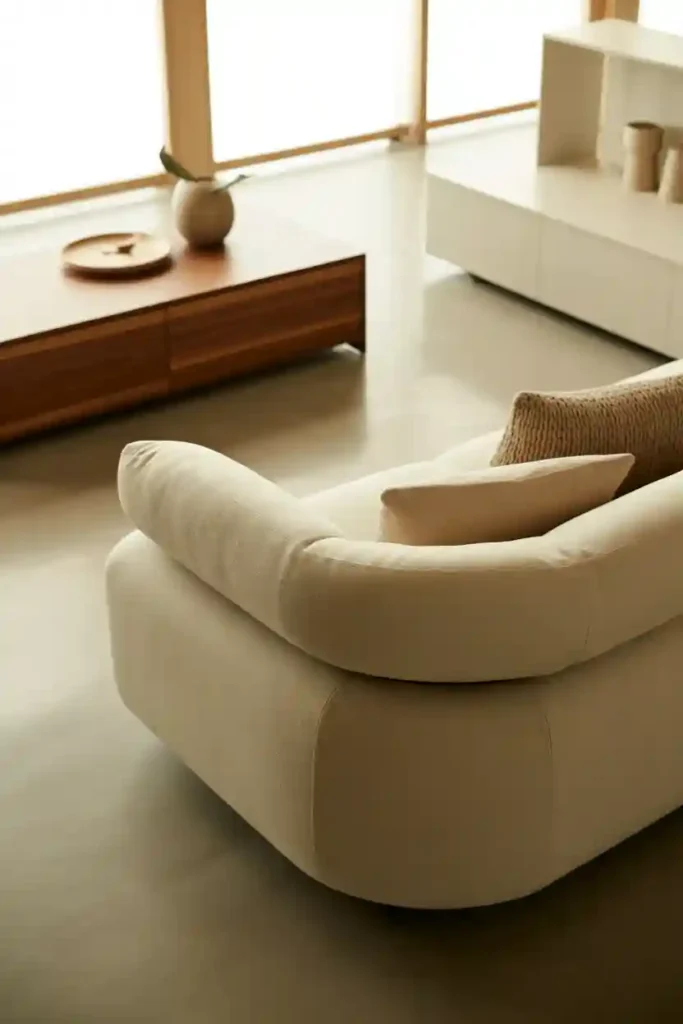
Minimalist furniture doesn’t have to feel rigid. Choosing pieces with clean lines but slightly rounded edges helps soften the overall look of the living room. A low-profile sofa with plush cushions or a curved armchair keeps the space modern while still feeling comfortable. Stick to fewer furniture pieces, but prioritize quality and comfort. Each item should feel intentional. Avoid overly sharp angles or ultra-sleek materials that can feel cold. Upholstered furniture in linen, cotton, or boucle adds warmth without visual clutter.
Spacing is equally important. Allow furniture to breathe so the room doesn’t feel crowded. Negative space is a key part of minimalism, and when paired with soft forms, it creates a calm, welcoming environment rather than an empty one. This balance between structure and softness is what makes minimalist living rooms feel livable, not showroom-like.
Read also: 12 Cottage core Home Decor Ideas with Cozy Charm
3. Layered Textures for Visual Warmth
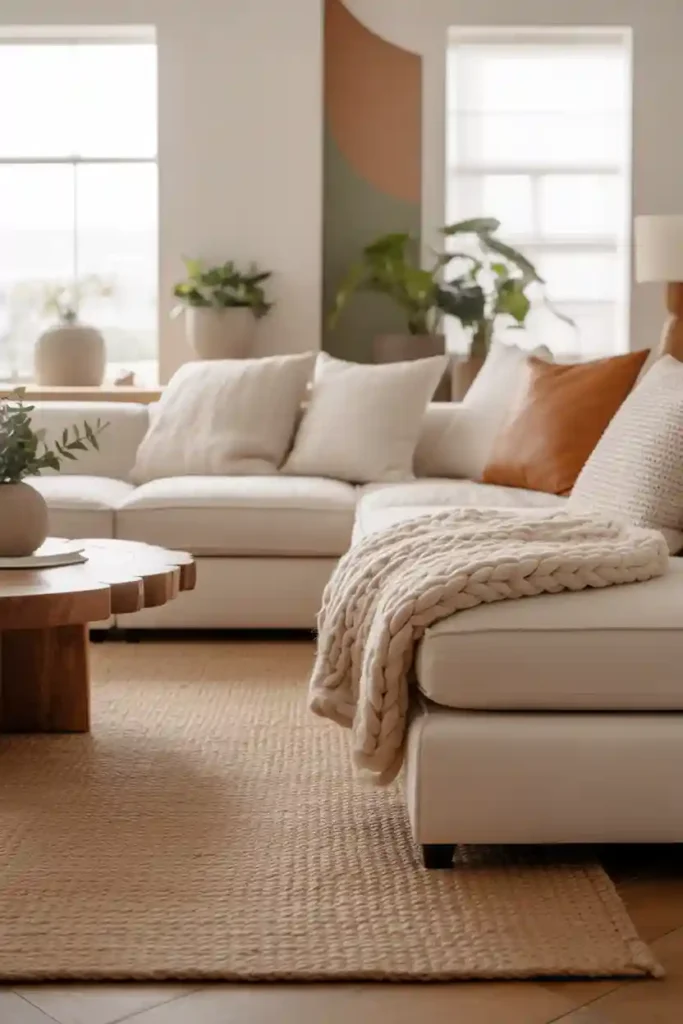
Texture is essential in warm minimalist design. Since the color palette is restrained, texture adds interest and depth without overwhelming the space. Layering different materials makes the living room feel cozy while maintaining simplicity. Start with textiles. A woven rug, a soft throw blanket, or textured cushions can instantly warm up the room. Choose natural fibers like wool, cotton, or linen for a relaxed and organic feel. Avoid overly patterned fabrics and focus on subtle textures instead.
Hard textures matter too. Pair smooth surfaces with rougher ones for example, a sleek coffee table with a chunky knit throw nearby. This contrast keeps the space visually engaging while staying minimalist. The key is restraint. A few thoughtfully chosen textures will do more for warmth than adding extra décor pieces.
4. Natural Wood Elements
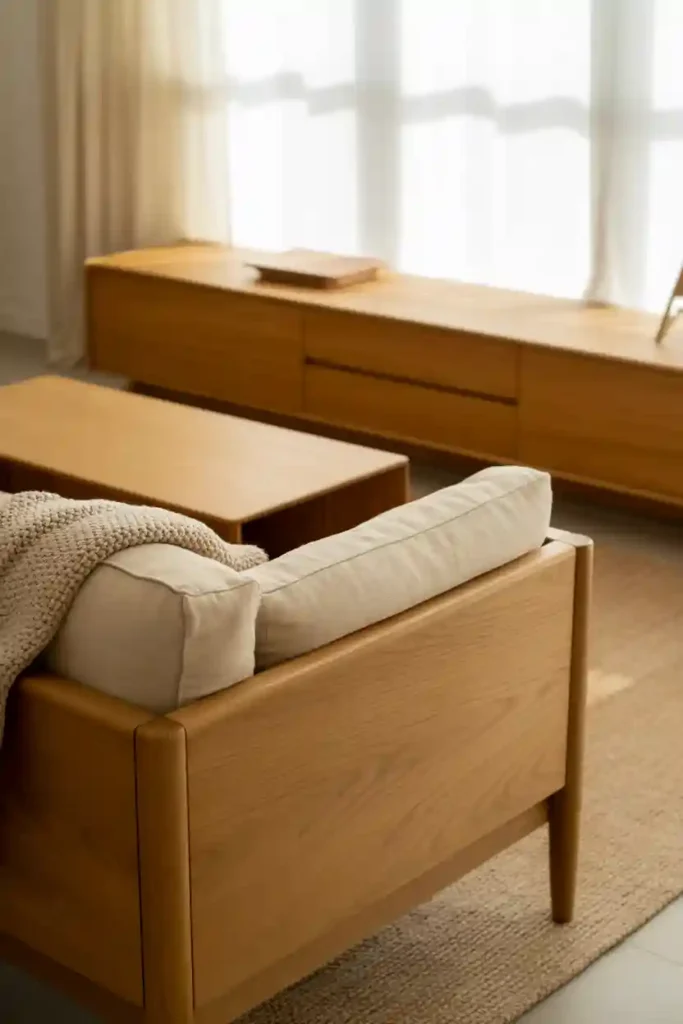
Wood is one of the easiest ways to bring warmth into a minimalist living room. Whether it’s light oak, walnut, or ash, natural wood tones soften the clean lines of minimalist design and create a welcoming atmosphere. Incorporate wood through furniture like coffee tables, side tables, shelving, or even exposed ceiling beams if possible. Keep finishes natural or lightly stained rather than glossy. Visible grain adds character without clutter.
Balance is important. Too much wood can feel heavy, so mix it with lighter elements such as neutral upholstery or simple décor. Even a single wooden piece can anchor the room and add warmth. Natural wood connects the space to nature, which is a core principle of warm minimalism. It grounds the room and makes it feel calm and timeless.
5. Soft, Ambient Lighting
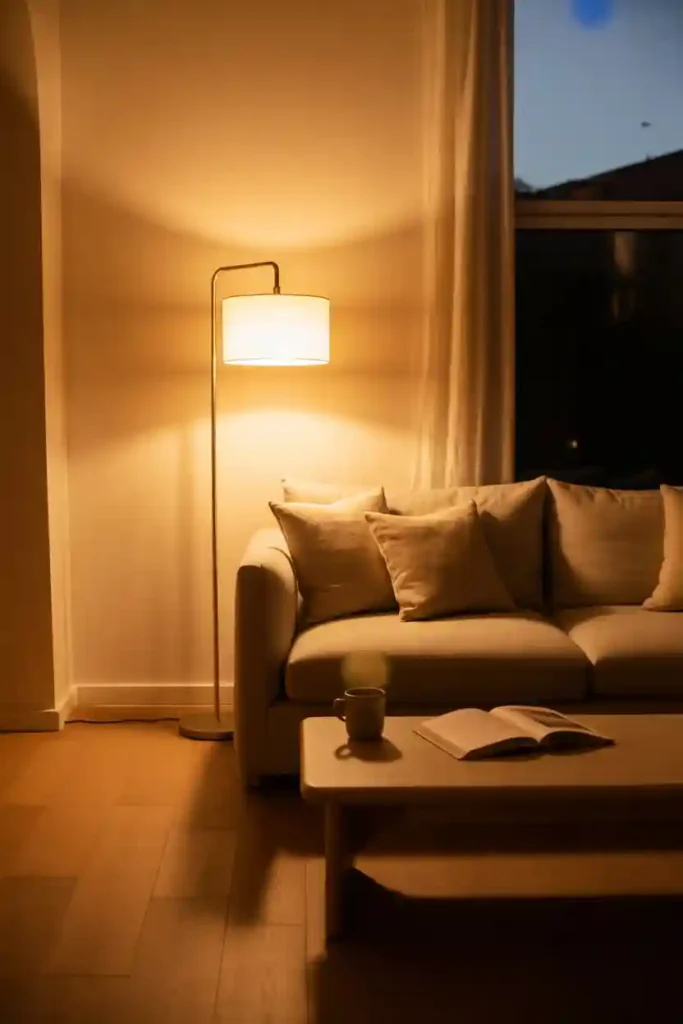
Lighting can completely change how a minimalist living room feels. Harsh overhead lighting often makes spaces feel cold and uninviting. Warm minimalism relies on soft, layered lighting instead. Use floor lamps, table lamps, and wall sconces to create a gentle glow throughout the room. Choose warm bulbs rather than cool white ones. Lampshades made of fabric or paper help diffuse light and soften the atmosphere.
Place lighting at different heights to create depth. A single corner lamp can make the entire room feel cozier, especially in the evening. Avoid cluttering the space with too many fixtures — a few well-placed lights are enough. Good lighting enhances warmth without adding physical décor, making it perfect for minimalist interiors.
6. Minimal Decor with Meaning
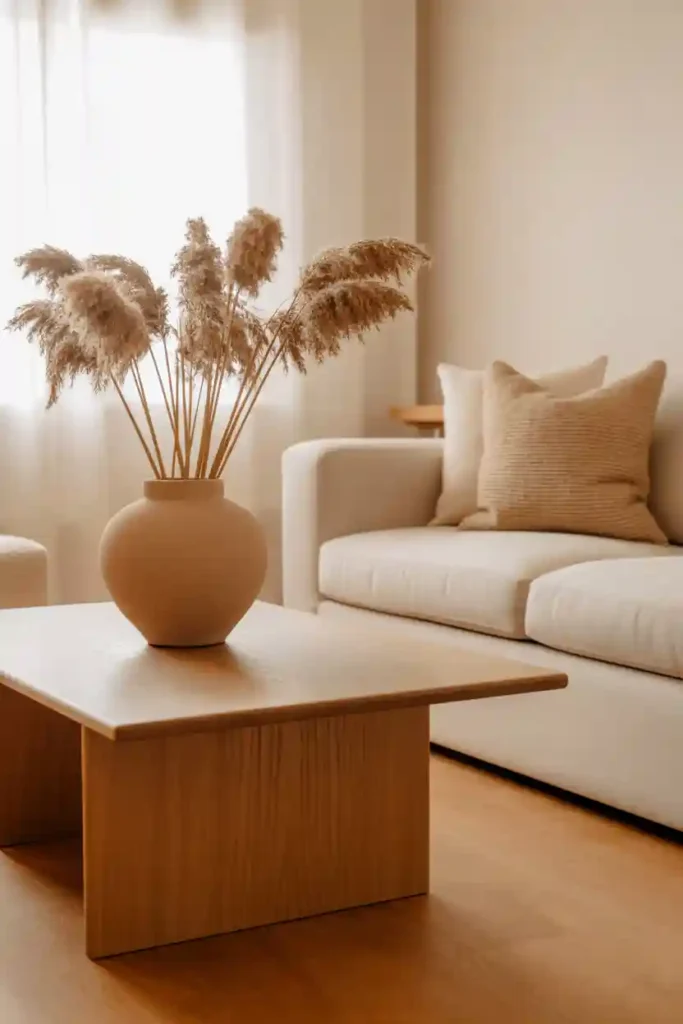
In a minimalist living room, décor should be intentional. Instead of many decorative objects, choose a few meaningful pieces that add warmth and personality. This could be a ceramic vase, a framed photograph, or a sculptural object in a natural material. Display items with space around them so each piece feels special rather than cluttered.
Avoid trendy or mass-produced décor that feels impersonal. Warm minimalism thrives on authenticity. Even one carefully chosen object can make the room feel more lived-in. This approach keeps the space visually calm while allowing emotional warmth to shine through.
7. Comfortable Seating as the Focus
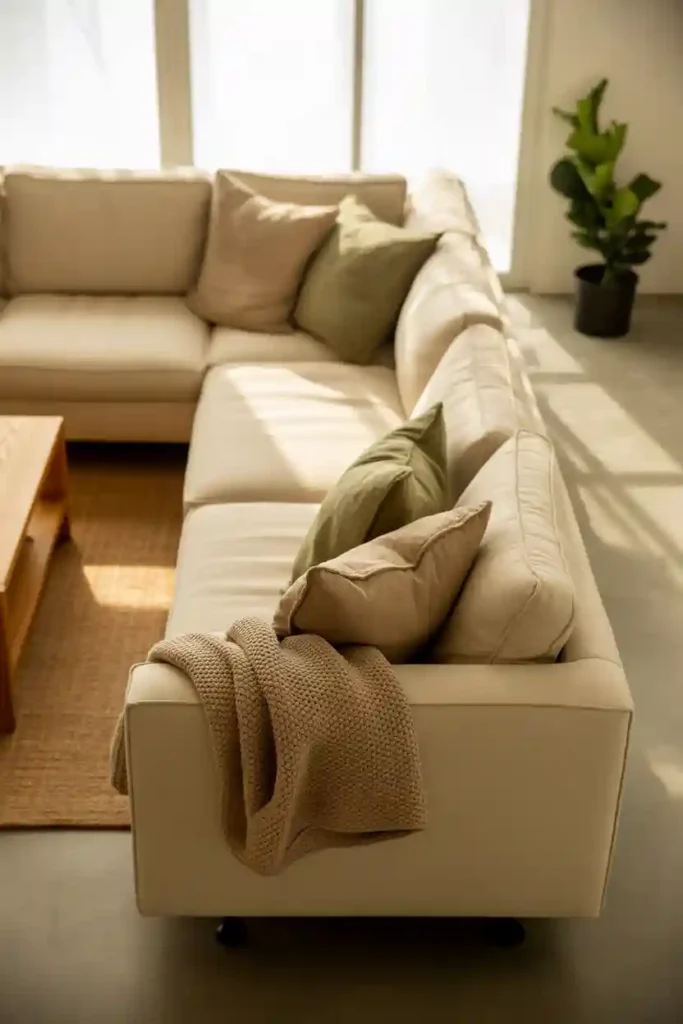
Comfort is key when making minimalism feel warm. Your seating should invite people to sit, relax, and stay awhile. A minimalist sofa can still be deep, plush, and comfortable. Choose upholstery in soft, neutral fabrics. Add one or two cushions for comfort, not decoration overload. Avoid stiff or overly structured seating that feels more decorative than usable.
Arrange seating to encourage conversation and relaxation. A simple layout with a sofa and one accent chair can feel more inviting than a crowded setup. When seating is comfortable, the living room automatically feels warmer and more welcoming.
8. Rugs That Ground the Space
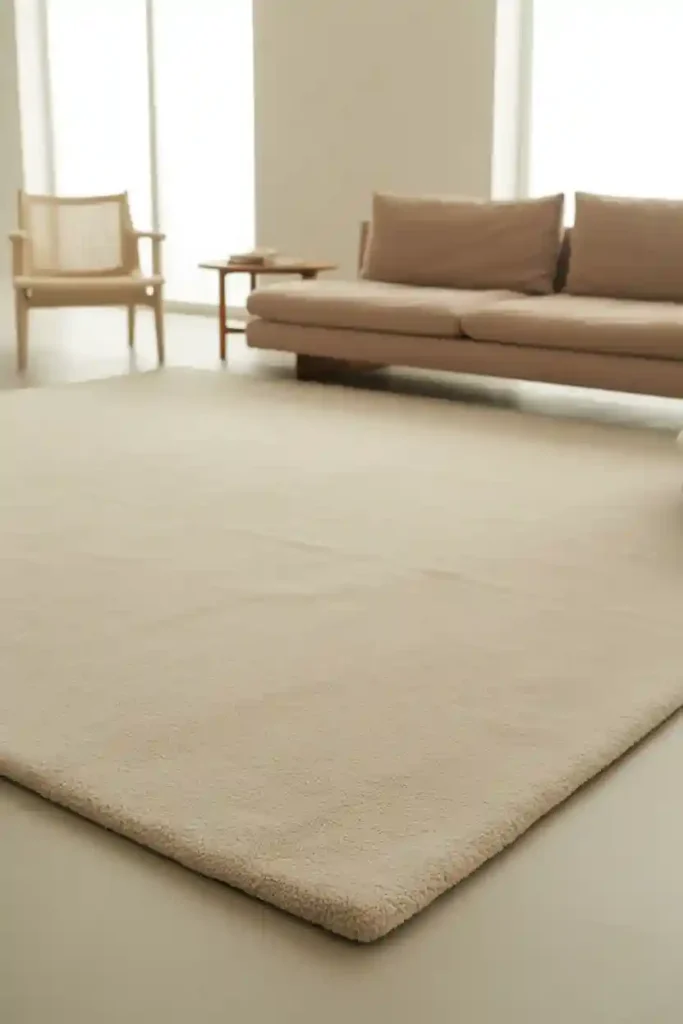
A rug is essential in a warm minimalist living room. It anchors the space and adds softness underfoot. Choose rugs in neutral tones with subtle texture rather than bold patterns.
Natural fiber rugs like wool or jute work especially well. They add warmth without visual noise. Make sure the rug is large enough to fit under key furniture pieces to avoid a fragmented look. A well-chosen rug makes the room feel complete and cozy while still maintaining clean lines and simplicity.
9. Subtle Contrast with Earthy Accents
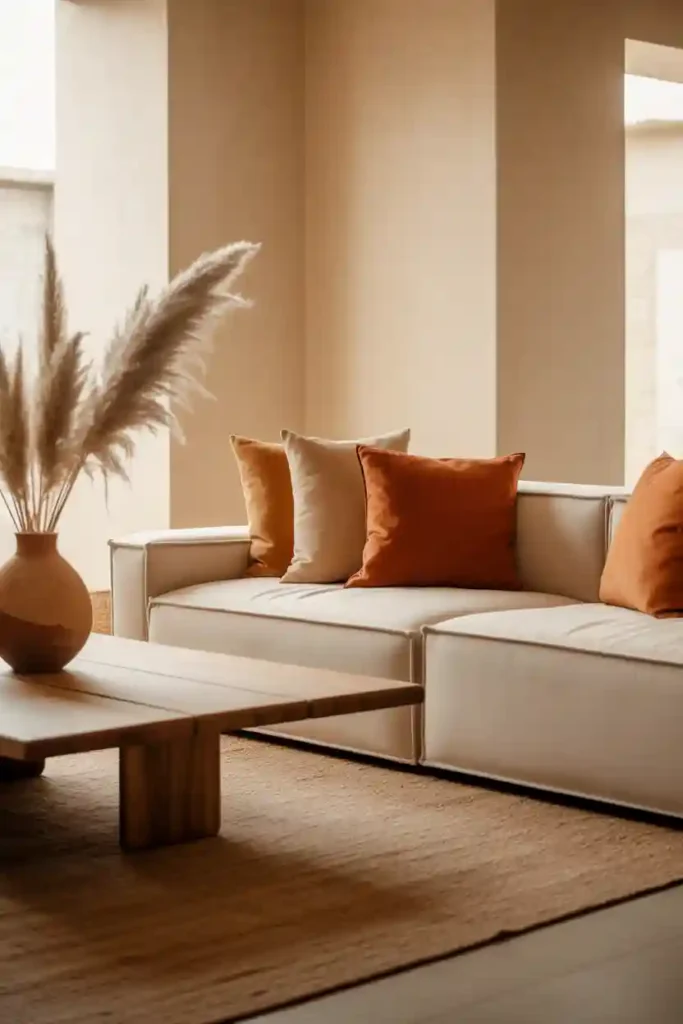
Minimalism doesn’t mean flat or boring. Adding subtle contrast through earthy accents brings warmth and depth without disrupting simplicity.
Think clay, terracotta, muted browns, or soft black details. These tones ground the space and keep it from feeling washed out. Use them sparingly a vase, a lamp base, or a small accent table is enough. Contrast helps highlight the neutral palette while maintaining a calm and cohesive look.
10. Natural Fabrics and Upholstery
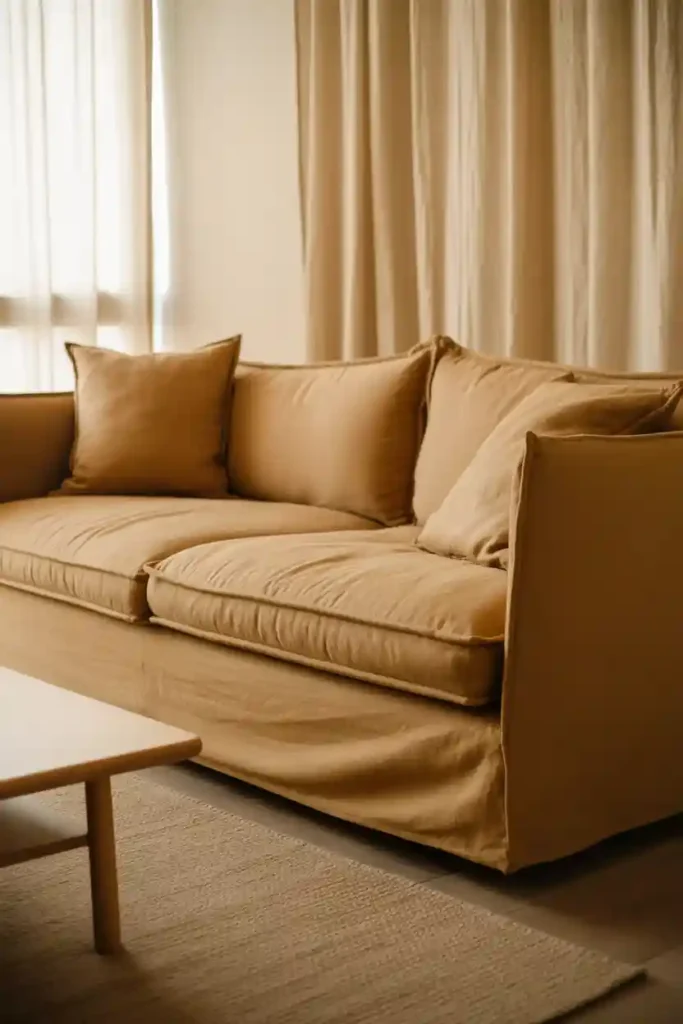
Fabric choices play a big role in how warm a minimalist living room feels. Natural fabrics like linen, cotton, and wool add softness and breathability.
Avoid synthetic materials that look shiny or stiff. Slight wrinkles and texture actually enhance the relaxed, warm aesthetic. Upholstery in warm neutrals keeps the room cohesive. Natural fabrics age beautifully and make the space feel more lived-in over time.
11. Thoughtful Negative Space
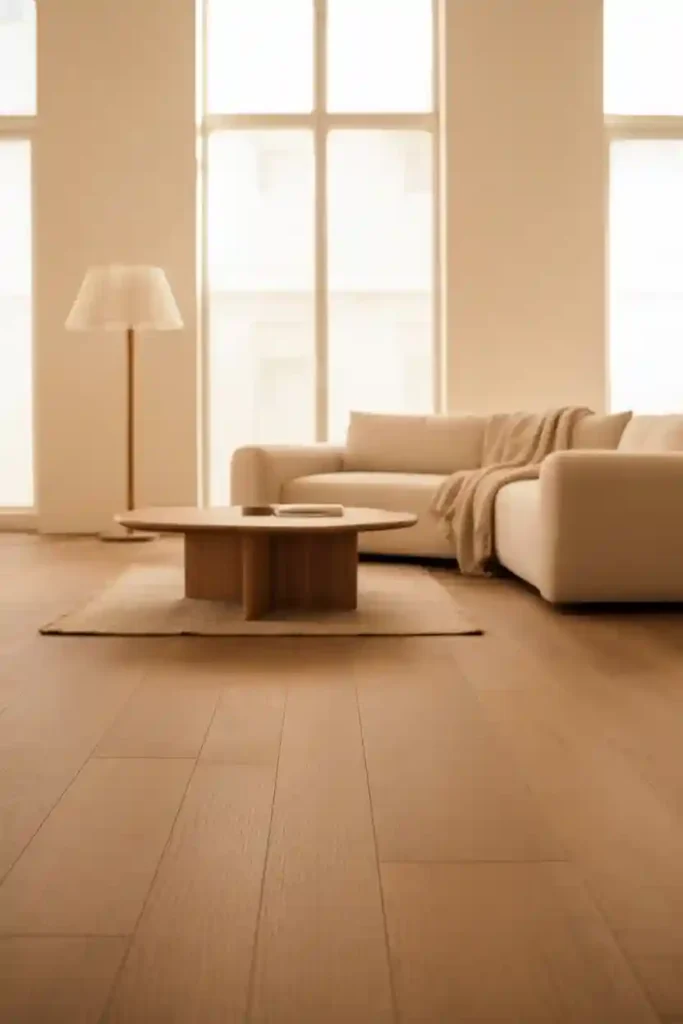
Negative space is essential in minimalism, but it must be intentional. Empty areas give the eye a place to rest and make the room feel calm rather than sparse.
Avoid filling every wall or corner. Let furniture and décor breathe. This openness enhances the warmth by reducing visual stress. When combined with soft textures and warm tones, negative space feels peaceful instead of empty.
12. Simple Wall Art with Soft Tones
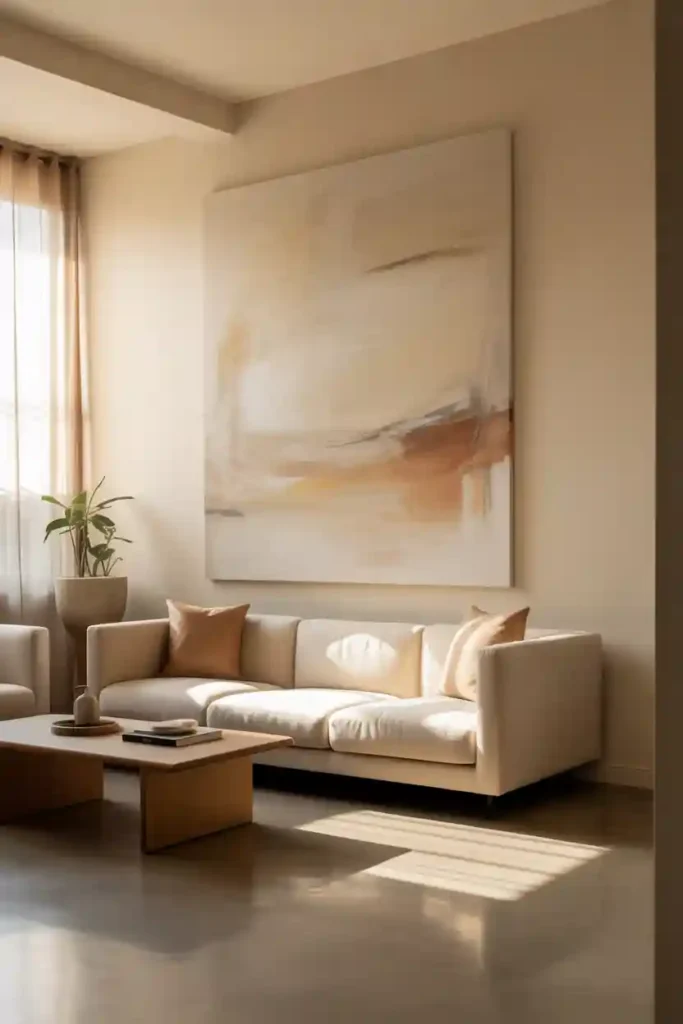
Wall art should complement, not dominate, a minimalist living room. Choose artwork in soft, neutral tones or abstract pieces with gentle movement.
One large piece or two small ones are usually enough. Avoid busy gallery walls. Frames in wood or matte finishes add warmth without distraction. Art should enhance the mood, not overwhelm the space.
13. A Calm, Clutter-Free Layout
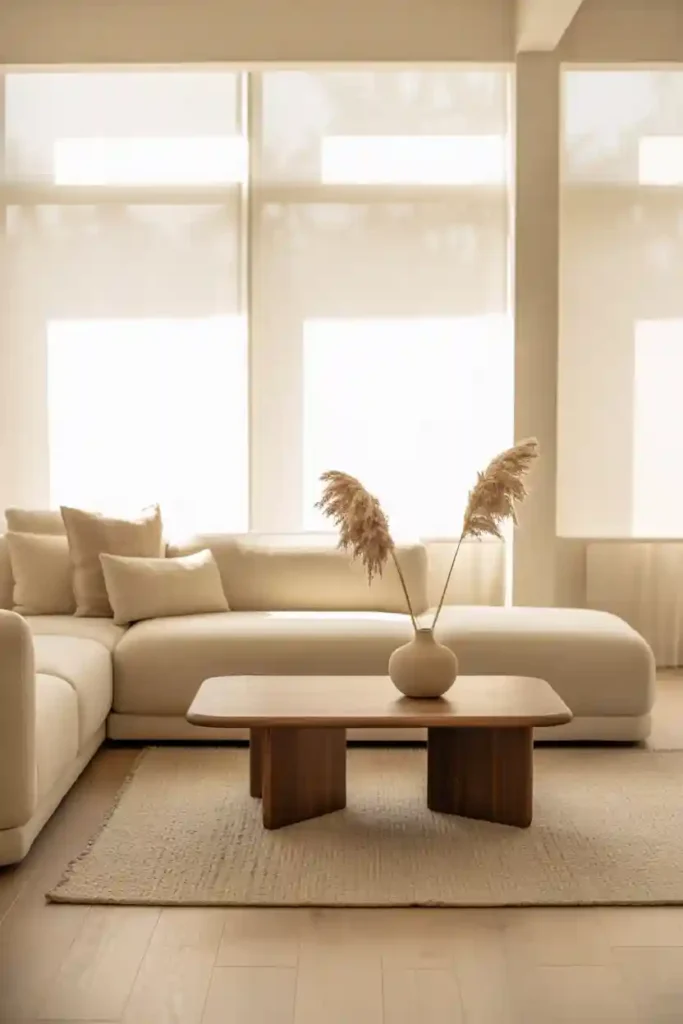
The final key to warm minimalism is a clutter-free layout. Storage should be discreet, and surfaces should remain mostly clear.
Choose furniture with hidden storage if needed. Keep only what you use or love. A tidy space feels calmer and more inviting. When everything has a place, the living room becomes a sanctuary simple, warm, and restorative.
Final Words
Warm minimalism proves that less can truly feel like more. By focusing on comfort, natural materials, and thoughtful choices, a minimalist living room can feel just as inviting as it is uncluttered. The ideas in 13 Minimal Living Room Decor That Feels Warm are meant to guide you toward a space that supports calm living, not rigid rules.