13 Rustic Dining Room Ideas with Timeless Charm
Rustic dining rooms are a perfect blend of warmth, authenticity, and timeless style. They celebrate natural materials, handcrafted details, and simple, functional designs that make a space feel welcoming for every meal and gathering. Unlike trendy interiors that can feel fleeting, rustic dining rooms age gracefully, gaining character over time. Think wood grains, exposed beams, stone accents, woven textiles, and soft neutral colors—all coming together to create a space that feels grounded yet elegant.
Rustic style isn’t about cluttered décor or overly ornate furniture; it’s about creating a comfortable, lived-in environment where every detail has a purpose and tells a story. These 13 rustic dining room ideas with timeless charm focus on design choices that combine practicality with aesthetic appeal. From farmhouse-inspired tables to subtle modern touches, these ideas show how to craft a dining room that is cozy, stylish, and enduring.
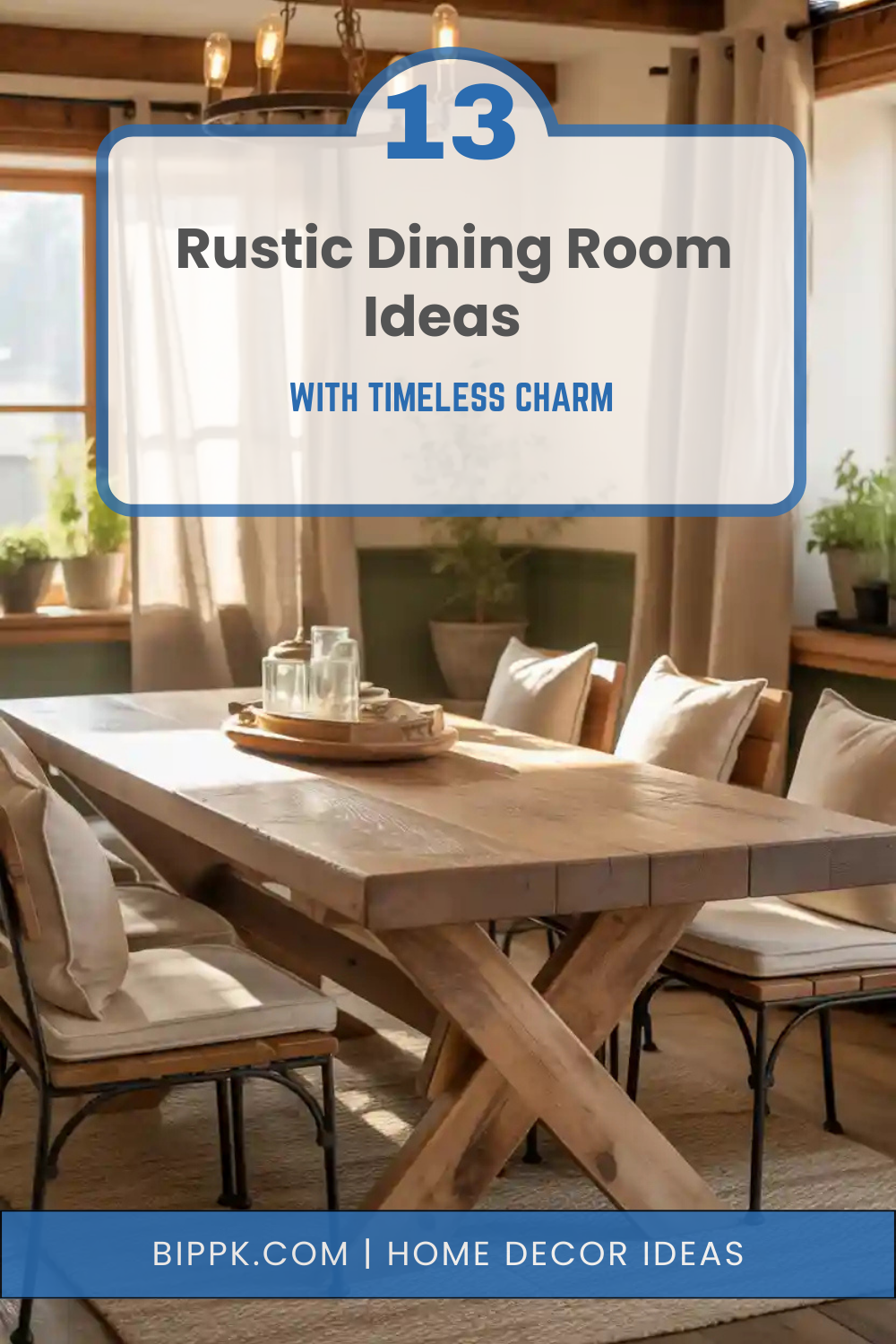
1. Solid Wood Dining Tables as the Room’s Heart

A solid wood dining table is the foundation of any rustic dining room, serving as both a practical workspace and a central design element. The natural grain, knots, and textures in the wood instantly add warmth and character, creating a welcoming environment where family and friends can gather. Unlike trendy furniture, a well-crafted wood table ages beautifully, developing a patina over time that enhances its rustic charm. Thick slabs, farmhouse styles, or live-edge designs all make a bold statement while remaining timeless. The key is to choose a table with enough presence to anchor the room without overwhelming the space, allowing other rustic elements like chairs, lighting, and textiles to complement it.
Pairing a solid wood table with simple, understated chairs keeps the focus on the craftsmanship and natural beauty of the wood. Lighter woods create a relaxed, airy feel, while darker finishes add depth and sophistication. Adding minimal décor—like a linen runner or a small centerpiece—enhances the table’s appeal without cluttering it. This combination of durability, texture, and understated elegance ensures that a solid wood table remains the heart of your rustic dining room for years to come.
2. Exposed Ceiling Beams for Architectural Warmth
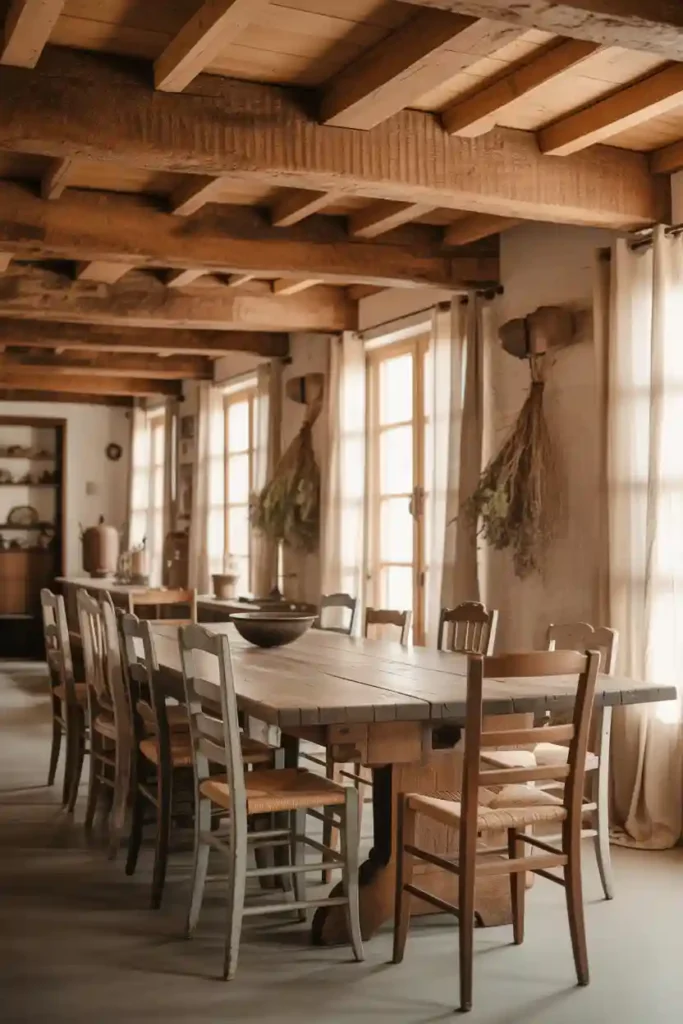
Exposed wooden beams instantly bring character and authenticity to a rustic dining room. Whether original or added as a design feature, beams create a sense of history and craftsmanship that feels timeless. They draw the eye upward, adding visual interest and height, while emphasizing the natural materials that define rustic style. Light-stained beams create an airy, relaxed vibe, while darker beams add contrast and depth, making the room feel grounded and cozy. Even in modern homes, faux beams can replicate this classic look, offering architectural warmth without major renovations.
Beams work best when paired with neutral walls and simple furnishings, allowing their texture and grain to shine. They can also help define the dining area in open-concept spaces without obstructing flow, subtly framing the table and creating a focal point. The combination of natural wood, height, and visual texture ensures that exposed beams remain a key element of rustic charm that never feels outdated, making your dining room feel both inviting and enduring.
Read Also: 16 Modern Apartment Interior Ideas That Feel Fresh
3. Neutral Rustic Color Palettes That Feel Timeless
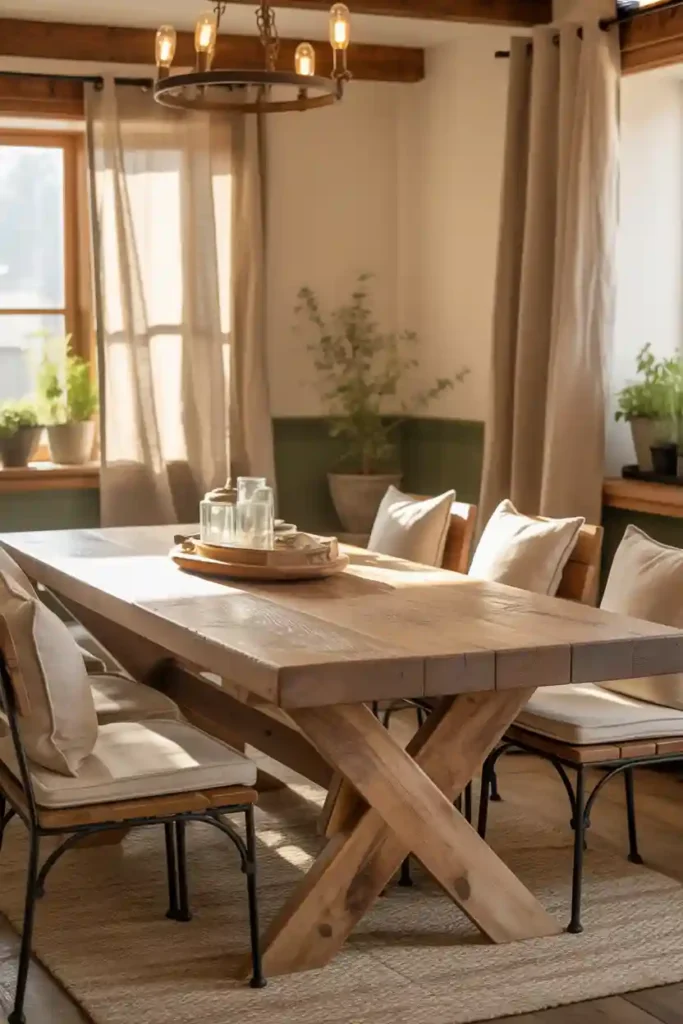
Neutral color palettes are the foundation of a rustic dining room that stands the test of time. Soft shades like cream, beige, warm gray, and taupe create a calm and welcoming backdrop that highlights natural materials such as wood, stone, and woven textiles. Unlike bold colors, neutrals allow the textures and craftsmanship in the room to shine while maintaining a sense of harmony and balance. This timeless palette also makes it easier to refresh the room seasonally with small decorative changes.
Layering different neutral tones through walls, furniture, and décor adds depth without cluttering the space. A cream-colored wall paired with medium-tone wood furniture and light textiles creates a cohesive, warm environment that invites gatherings. Neutral palettes also enhance natural light, making even smaller dining rooms feel open and airy. When executed thoughtfully, neutral colors provide a versatile, timeless foundation that keeps rustic charm at the forefront.
4. Mixing Wood Tones for Depth and Character
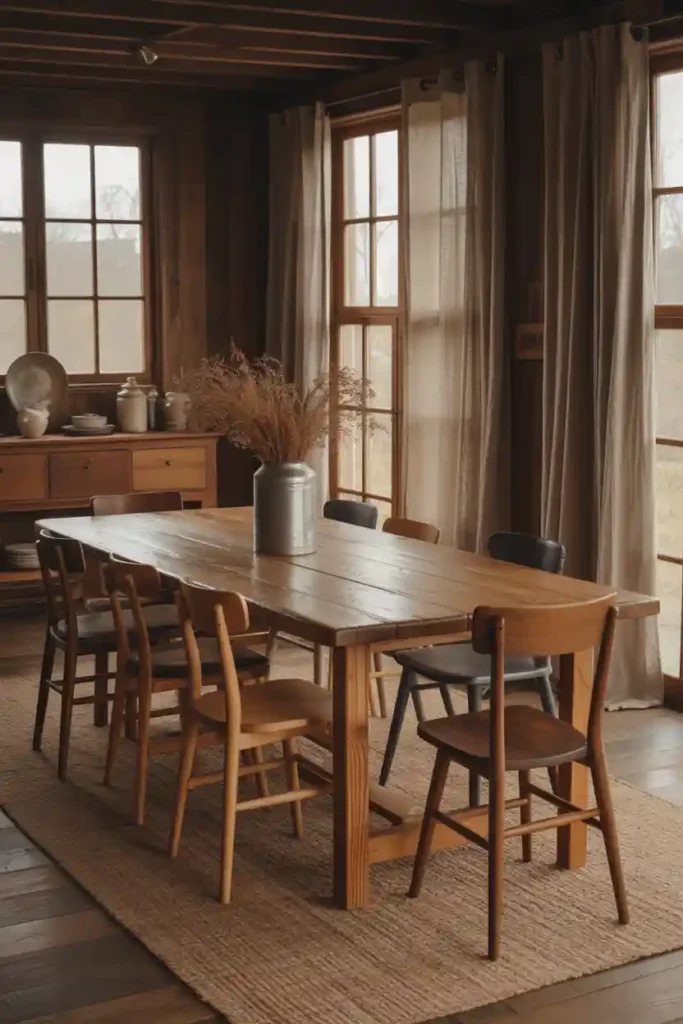
Combining different wood tones adds dimension and a collected feel to a rustic dining room. Instead of matching everything perfectly, mixing lighter and darker woods creates visual interest and a sense of authenticity. For example, a medium-tone dining table paired with darker chairs or lighter flooring creates natural contrast while keeping the space cohesive.
The key to successful mixed woods is harmony—warm tones with warm, cool with cool—so the room feels intentional rather than chaotic. Incorporating reclaimed wood alongside polished pieces adds texture and storytelling to the space. This layered approach reflects the organic, lived-in quality of rustic interiors, making the dining room feel rich, inviting, and timeless.
5. Rustic Lighting That Adds a Soft Glow
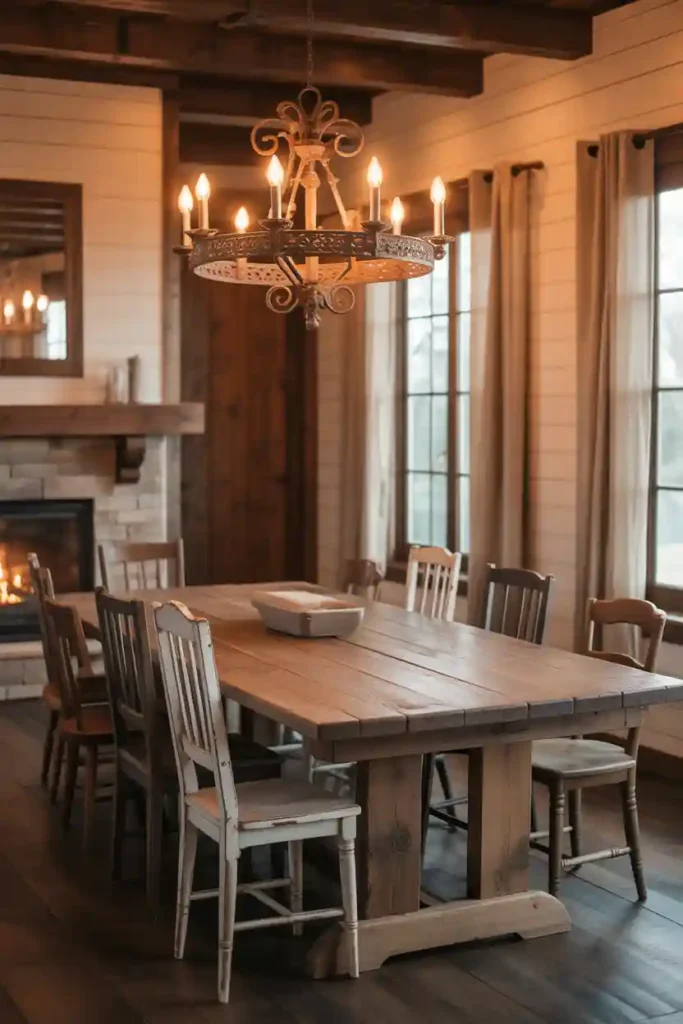
Lighting is essential for creating a warm, inviting atmosphere in a rustic dining room. Fixtures made from iron, aged metal, or wood enhance the natural and handcrafted aesthetic. Chandeliers, lantern-style pendants, or simple farmhouse lights above the table provide both illumination and a focal point for the room.
Soft, warm lighting highlights the textures of wood, stone, and textiles while keeping the atmosphere cozy and intimate. Dimmable bulbs allow flexibility for everyday meals or special occasions. When selected carefully, rustic lighting becomes a statement piece that complements other design elements, reinforcing the timeless charm and warmth of the dining space.
6. Natural Textiles for Comfort and Warmth

Natural textiles bring softness and comfort to a rustic dining room, balancing the harder textures of wood, stone, or metal. Linen tablecloths, cotton runners, woven placemats, and fabric seat cushions introduce gentle texture that feels inviting and authentic. These fabrics add warmth without overpowering the space, keeping the rustic aesthetic effortless and timeless.
Neutral-colored textiles work best, allowing the natural finishes of furniture and architectural elements to stand out. Subtle wrinkles and imperfections enhance the lived-in charm that defines rustic style. Layering textiles thoughtfully—such as a runner on the table paired with seat cushions—creates depth and interest while maintaining simplicity, making the dining space both cozy and stylish.
7. Vintage or Antique Dining Chairs for Personality
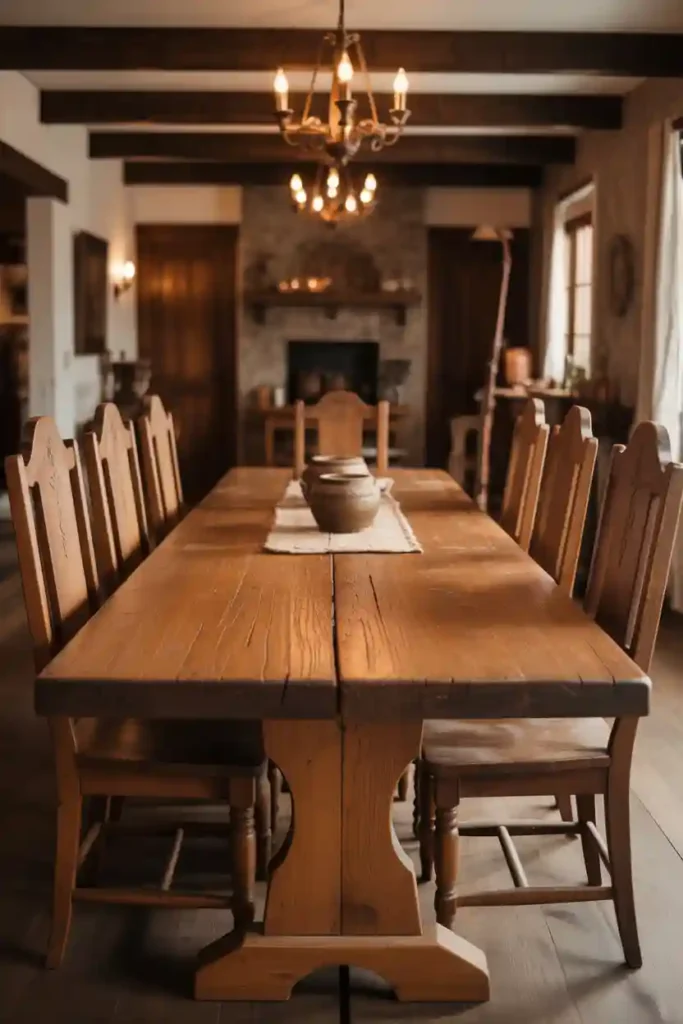
Vintage or antique dining chairs add character and individuality to a rustic dining room. Each piece carries a story, contributing warmth and history to the space. Even a mix of different chairs can feel cohesive if materials, finishes, or tones are thoughtfully coordinated with the table and room palette.
Chairs with subtle carvings, distressed finishes, or simple wooden designs enhance the authenticity of the space. Paired with a solid wood table, they maintain balance while adding personality. These chairs help the dining room feel collected over time, reinforcing the timeless and welcoming charm that makes rustic interiors so enduring.
8. Stone or Brick Accents for Texture

Stone or brick elements introduce texture and visual interest to a rustic dining room. A brick feature wall, stone fireplace, or exposed masonry adds an earthy, grounded feel that complements wooden furniture and natural textiles. These materials connect the space to nature while emphasizing authenticity.
Even subtle stone or brick details make a significant impact without overwhelming the room. Their natural variations add depth and character, while aging gracefully over time. Stone and brick accents anchor the space, providing a sense of permanence and enhancing the overall rustic charm, making the dining room feel cozy, enduring, and timeless.
9. Open Shelving with Simple Rustic Décor
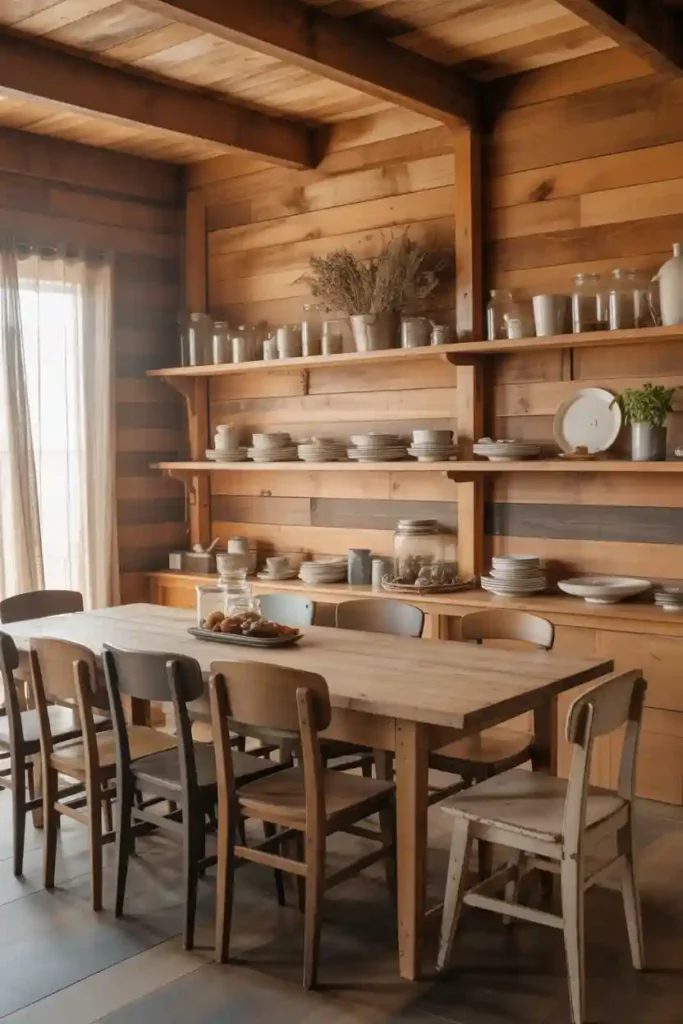
Open shelving adds both function and personality to a rustic dining room. Wooden shelves provide space to display dishes, pottery, glassware, or handmade items, keeping essentials within reach while enhancing the room’s character. Unlike closed cabinets, open shelving showcases textures and materials, reinforcing the rustic aesthetic.
To maintain a timeless look, keep decor simple and cohesive. Neutral ceramics, glass jars, and woven baskets add warmth without visual clutter. Open shelving also encourages a collected, lived-in style that feels personal and inviting. It highlights everyday items as design elements, creating a space that is both practical and charming.
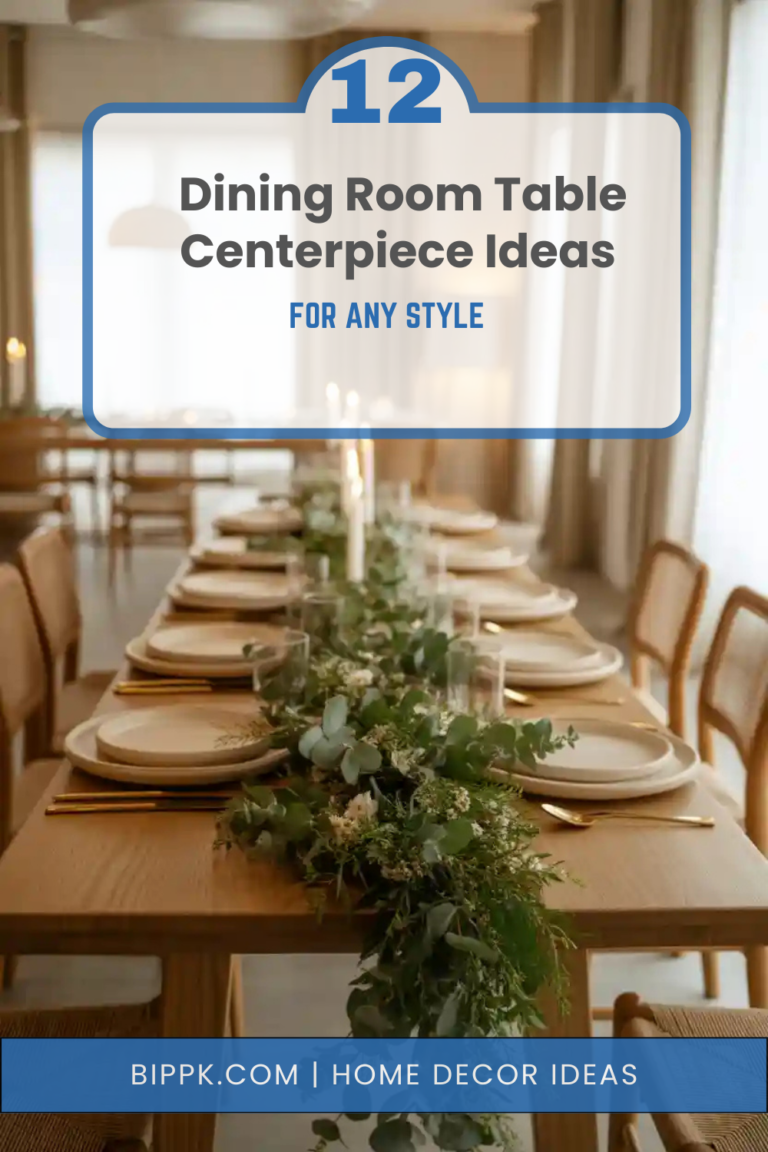
10. Simple Natural Centerpieces
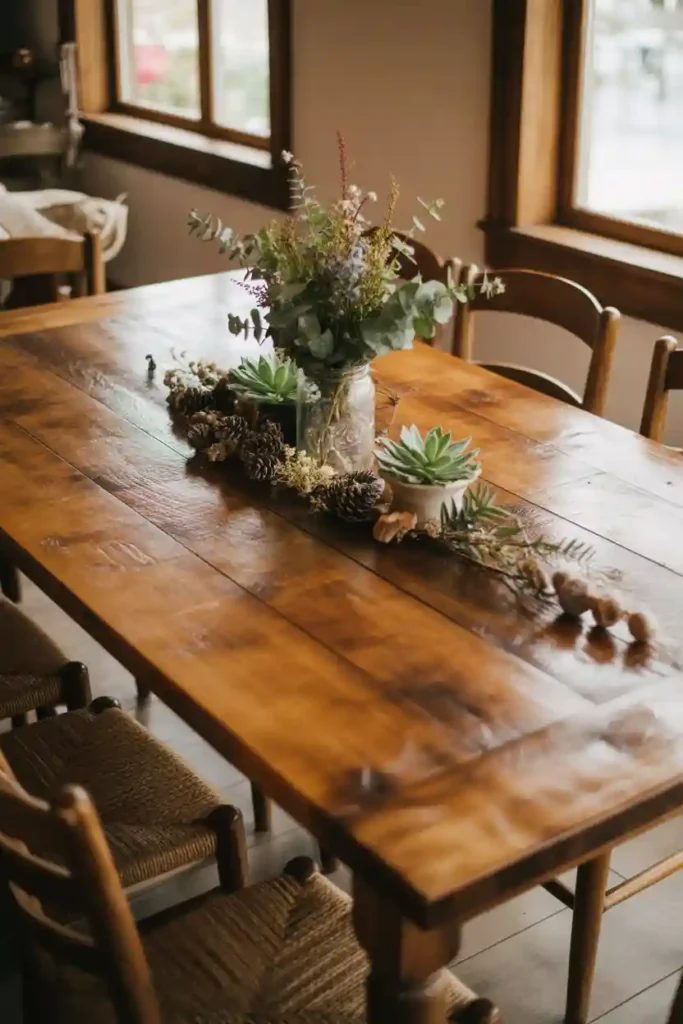
Centerpieces in a rustic dining room should be understated and organic. Fresh greenery, branches, bowls of fruit, or candles create visual interest without overwhelming the table. Natural materials tie the dining space to the surrounding textures of wood, stone, and textiles, reinforcing the rustic feel.
Keeping centerpieces low ensures conversation flows freely across the table. Seasonal touches like pinecones in winter or wildflowers in summer add subtle variation without changing the core design. These effortless, natural centerpieces enhance the dining experience while maintaining the room’s timeless, welcoming atmosphere.
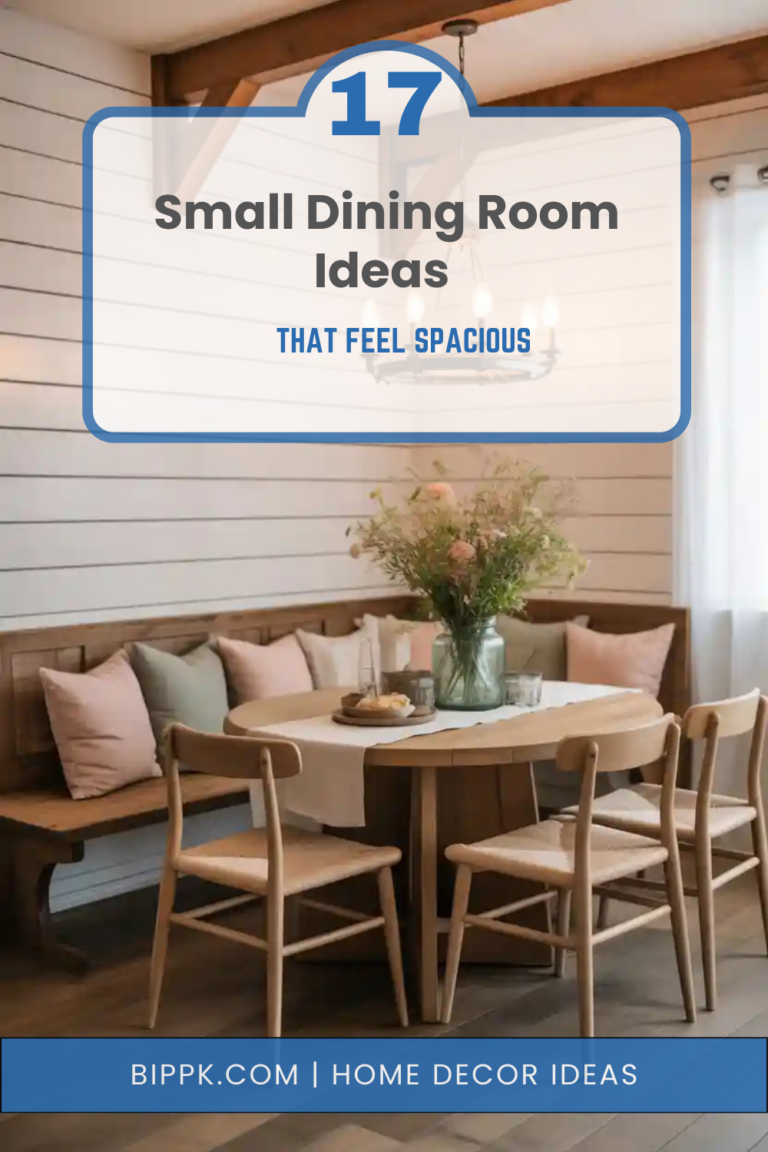
11. Farmhouse-Style Rustic Dining Rooms

Farmhouse-style rustic dining rooms focus on practicality, warmth, and comfort. Large tables, bench seating, and simple finishes create an inviting space ideal for family meals and social gatherings. The style emphasizes casual elegance rather than formality, making it perfect for everyday use.
Neutral walls and wood finishes brighten and anchor the space, while soft textiles and minimal décor keep it relaxed. Farmhouse dining rooms celebrate simplicity and functionality, allowing the natural materials and craftsmanship to shine. This approach ensures the room feels timeless, cozy, and effortlessly charming.
12. Blending Rustic and Modern Elements
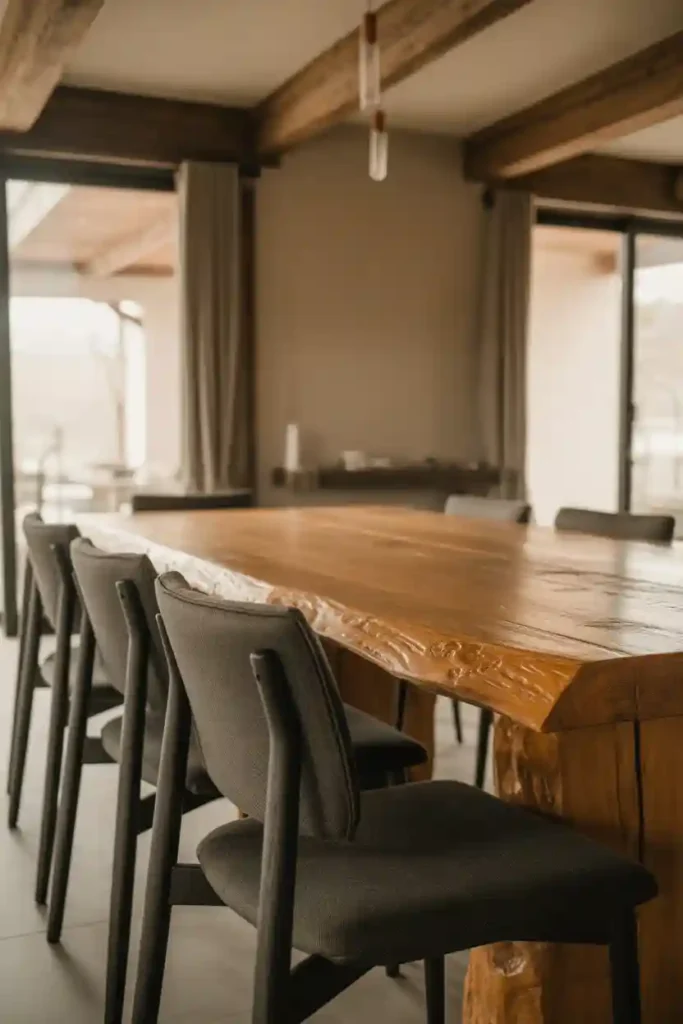
Blending rustic and modern elements creates a dining room that feels fresh, balanced, and timeless. Clean-lined furniture paired with natural wood, exposed beams, or stone accents brings together the best of both styles. This combination keeps the room from feeling heavy or overly traditional, while still retaining warmth and character.
For example, a sleek modern chair with a solid wood farmhouse table, or a minimalist pendant light over a rustic table, adds contrast and visual interest. The balance between modern simplicity and rustic charm ensures the space feels current, functional, and inviting. This approach allows the dining room to evolve with changing tastes without losing its timeless appeal.
13. Lived-In Styling That Feels Timeless
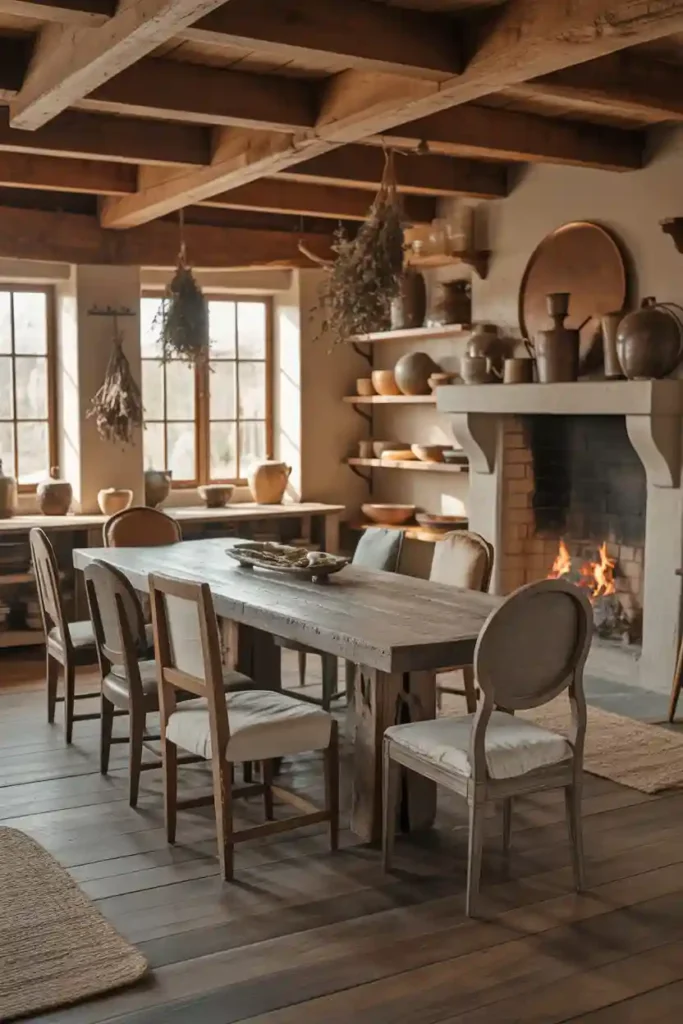
The most inviting rustic dining rooms feel lived-in rather than overly staged. Thoughtful styling prioritizes quality, comfort, and functionality, allowing the space to evolve naturally over time. This approach emphasizes authenticity, warmth, and personal character.
Small touches like handmade pottery, heirloom dishes, or simple artwork add personality without clutter. Overdecorating is avoided; instead, every element has purpose and contributes to the room’s charm. A lived-in rustic dining room feels welcoming, authentic, and enduring, ensuring it remains a space that never goes out of style and always feels like home.
Final Words
Creating a rustic dining room is about more than furniture—it’s about crafting a space that feels warm, authentic, and lived-in. By combining natural materials, thoughtful textures, and simple, functional décor, you can design a room that welcomes family, friends, and everyday moments alike. Solid wood tables, exposed beams, stone accents, and vintage pieces add character, while neutral palettes and layered textiles ensure the space remains timeless.