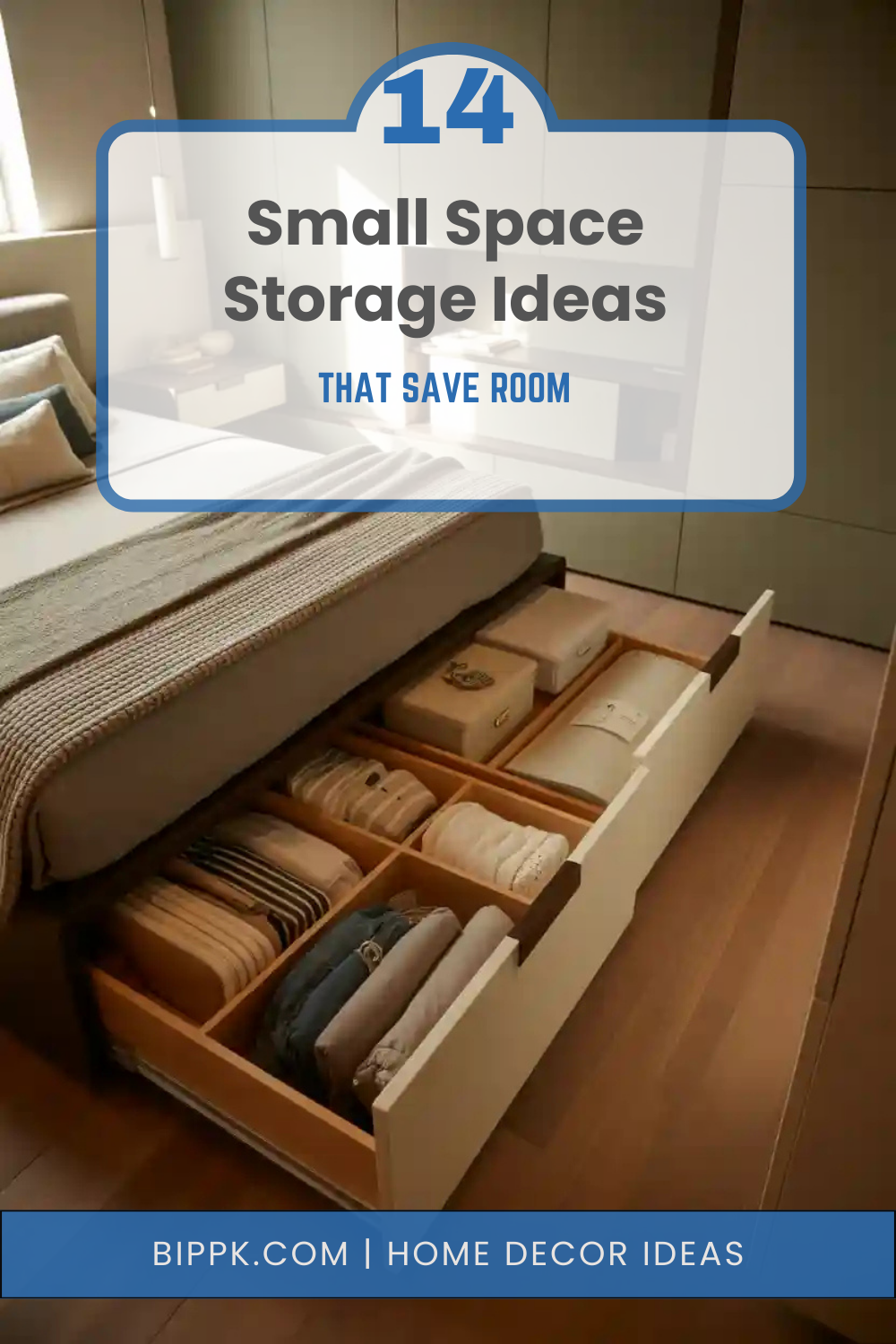
14 Small Space Storage Ideas That Save Room
Maximizing storage in small spaces can be a challenge, but smart solutions can transform even the tiniest rooms into organized, functional, and stylish areas. With the right approach, you can create storage that is both practical and visually appealing, ensuring every inch of space is utilized efficiently.
Designers focus on clever strategies like vertical storage, multi-functional furniture, hidden compartments, and wall-mounted solutions to make small rooms feel spacious and clutter-free. From compact kitchens and tiny bedrooms to small apartments and home offices, thoughtful storage ideas help reduce chaos and maintain a clean, open aesthetic. These 14 small space storage ideas show how innovative design can save room, enhance organization, and elevate the overall style of your home, proving that size doesn’t limit creativity or functionality.
1. Use Vertical Wall Shelves
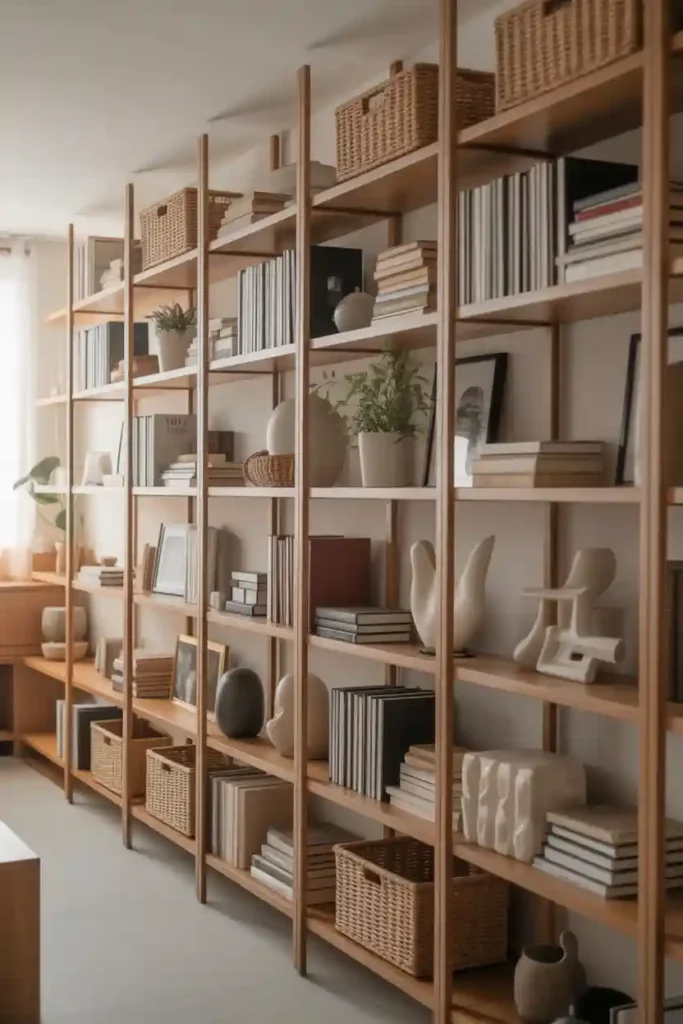
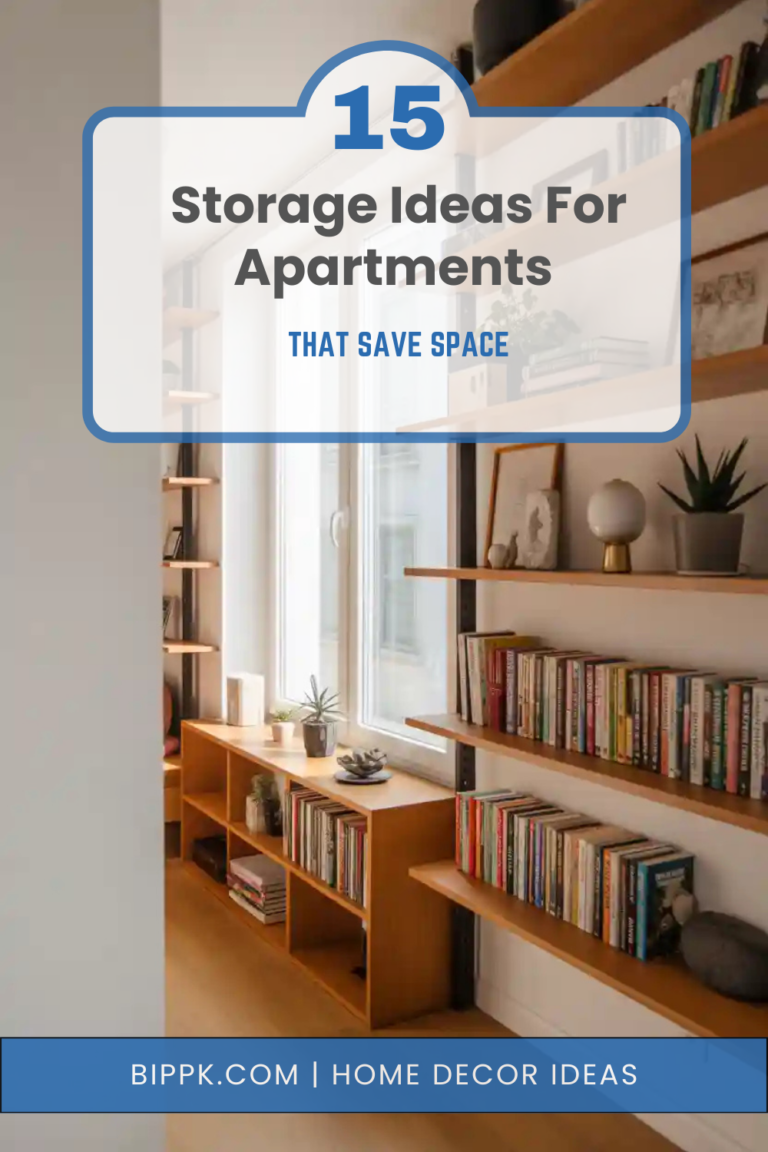
Vertical wall shelves make the most of limited floor space by drawing the eye upward and providing ample storage. Designers often install floor-to-ceiling shelves in kitchens, bedrooms, or living areas to store books, décor, or everyday items.
Open shelves create an airy feel, while closed cabinets can hide clutter. Staggering shelf heights accommodates items of varying sizes, and incorporating baskets or decorative boxes adds style and organization. Using the vertical dimension frees up floor space for furniture, making the room feel larger and more open. Proper styling ensures the shelves are functional yet visually appealing, transforming walls into a practical storage feature that also enhances the room’s aesthetic.
2. Invest in Multi-Functional Furniture

Multi-functional furniture is essential in small spaces, offering both storage and practical use. Designers recommend pieces like beds with built-in drawers, coffee tables with hidden compartments, or ottomans that double as storage boxes. This approach keeps the room tidy without sacrificing style, allowing furniture to serve multiple purposes.
High-quality finishes and thoughtful design ensure these pieces are durable and visually appealing. By choosing furniture that combines functionality with aesthetics, you can maximize storage while maintaining a clean, organized look. Multi-functional furniture works well in living rooms, bedrooms, or studio apartments, making it an ideal strategy for optimizing small spaces without overcrowding.
Read Also: 12 Bookshelf Ideas Living Room That Add Style
3. Install Floating Cabinets

Floating cabinets are mounted on walls, keeping floor space open while providing concealed storage. Designers often use them in kitchens, bathrooms, or living rooms to store essentials without making the room feel cramped. These cabinets can be wall-mounted at eye level or higher, depending on available space, and can include shelves or drawers inside.
Floating cabinets are ideal for small spaces because they maintain an airy, uncluttered look while hiding everyday items. Coordinating finishes with the room’s décor enhances style, while soft-close doors or drawers add a high-end touch. Floating cabinets combine functionality, efficiency, and aesthetic appeal, making them perfect for compact spaces.
4. Utilize Under-Bed Storage
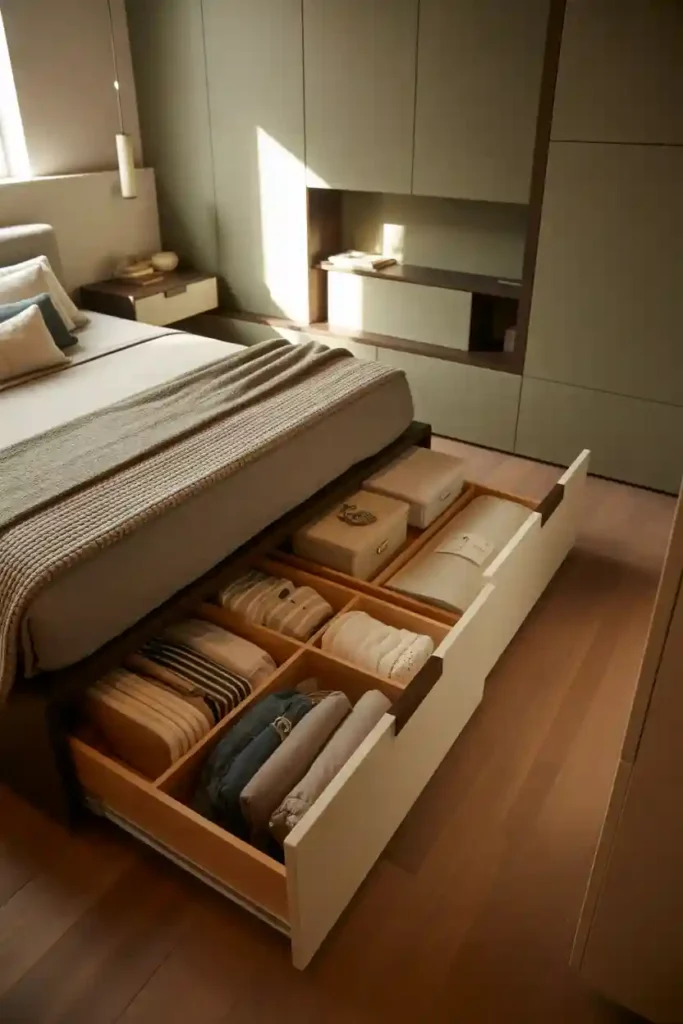
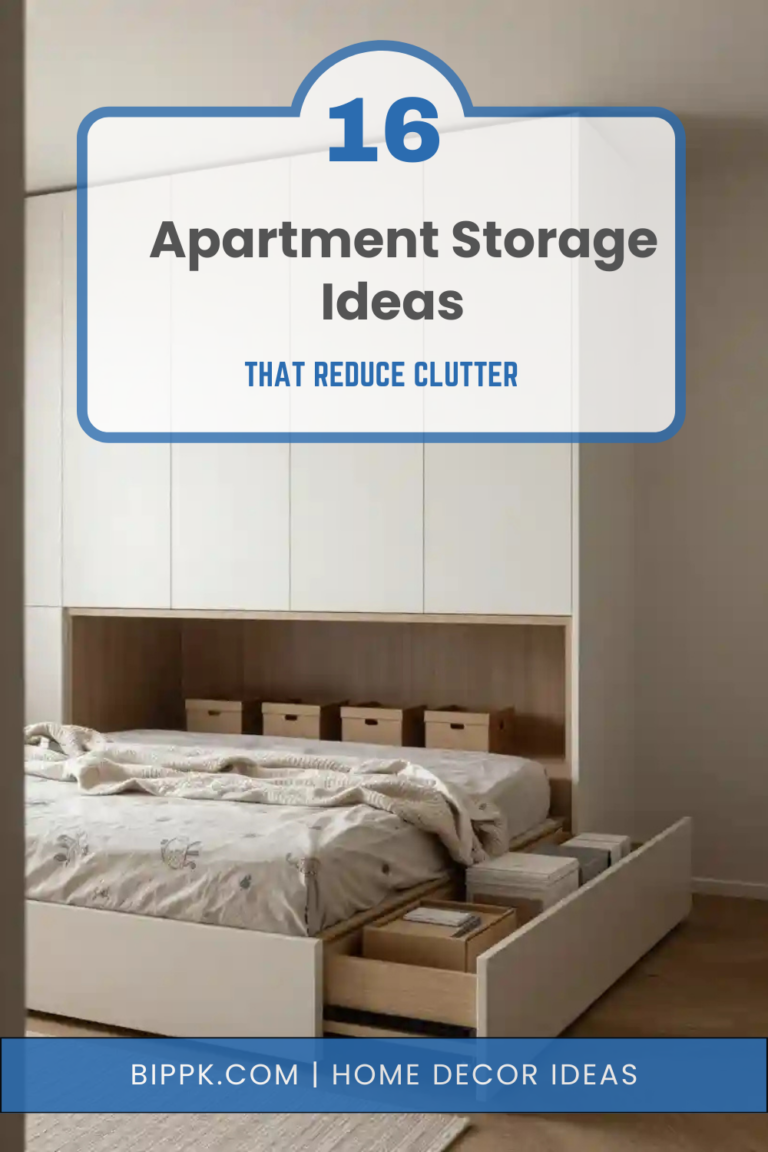
Under-bed storage is a smart solution for small bedrooms, providing hidden space for clothes, shoes, or linens. Designers often recommend using pull-out drawers, storage bins, or rolling containers to maximize the area beneath the bed. This keeps items organized and out of sight while making the room feel open and tidy.
For added style, matching storage containers with bedding or bed frames ensures a cohesive look. Under-bed storage works well in apartments, guest rooms, or kids’ rooms, offering a practical solution without sacrificing floor space. It’s a simple yet effective way to increase storage capacity and reduce clutter in small bedrooms.
5. Use Corner Shelving Units
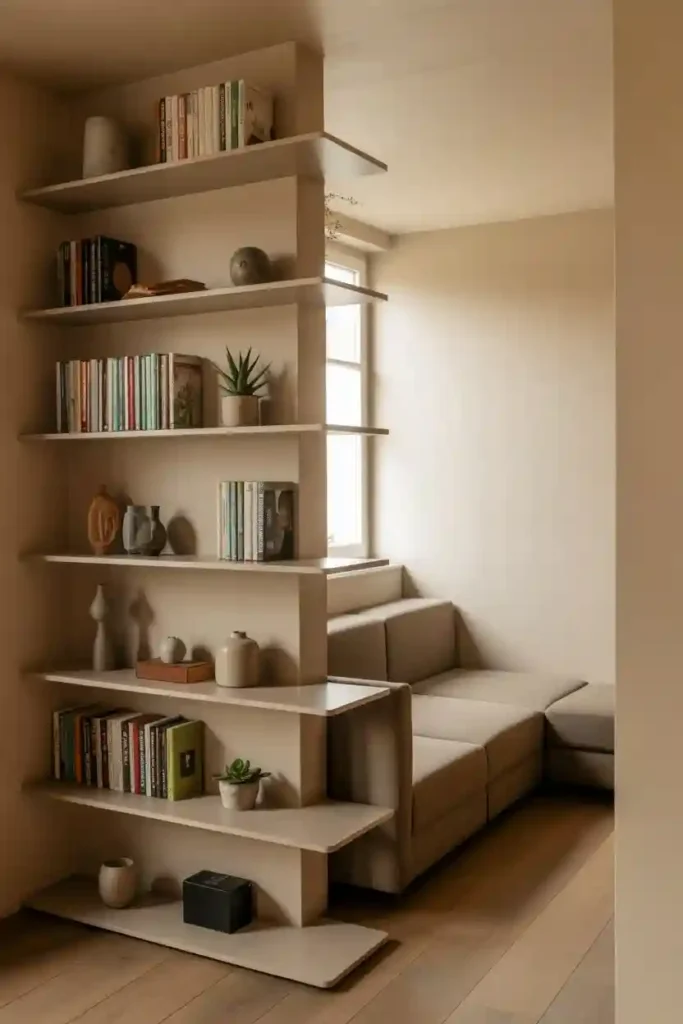
Corner shelving units transform unused corners into functional storage areas. Designers often recommend installing L-shaped or triangular shelves to make the most of these overlooked spaces. Corner shelves can hold books, décor, or small household items, adding both storage and visual interest. Using a mix of open and closed shelving creates a balanced look while keeping clutter concealed.
Corner shelving works particularly well in small living rooms, kitchens, or offices, optimizing every available inch. By creatively using corners, you can expand storage capacity without crowding the room or interfering with furniture placement.
6. Opt for Wall-Mounted Hooks and Pegboards
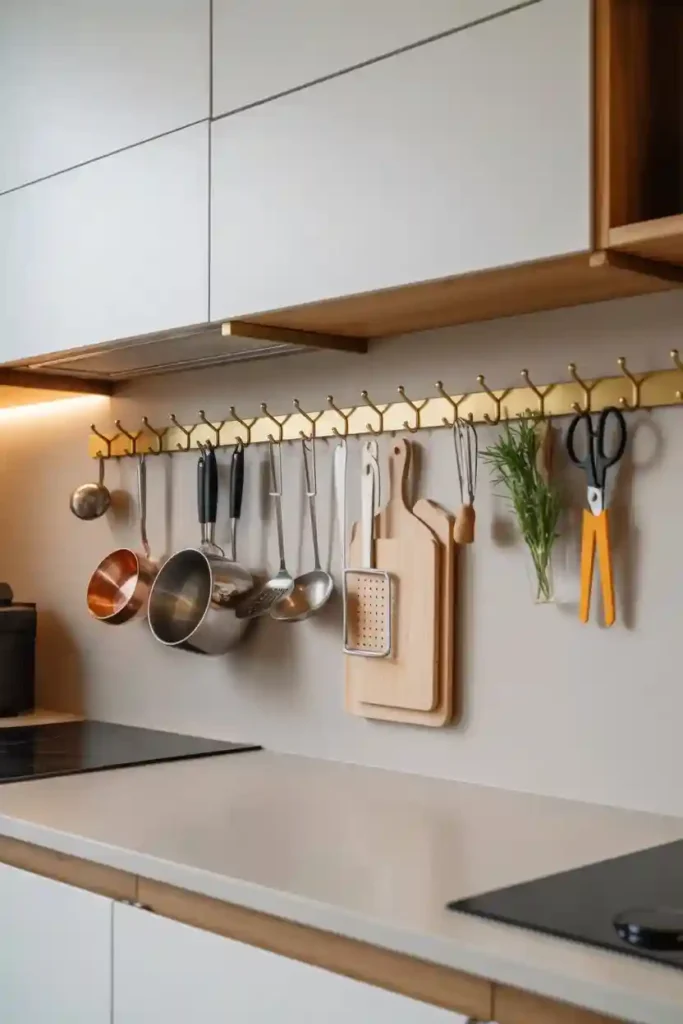
Wall-mounted hooks and pegboards are a versatile way to save floor space while keeping items organized. Designers often recommend using them in entryways, kitchens, or offices to hang bags, coats, utensils, or tools. Pegboards can be customized with baskets, hooks, and shelves, making them suitable for various items.
By using vertical surfaces, you free up floor space and reduce clutter, giving the room an airy feel. Coordinating the hooks or pegboard color with the room’s décor ensures a polished appearance. This solution is ideal for small apartments, tiny kitchens, or compact workspaces. Hooks and pegboards are affordable, flexible, and stylish, providing functional storage that keeps essentials within reach without occupying valuable square footage.
7. Add Storage Ottomans
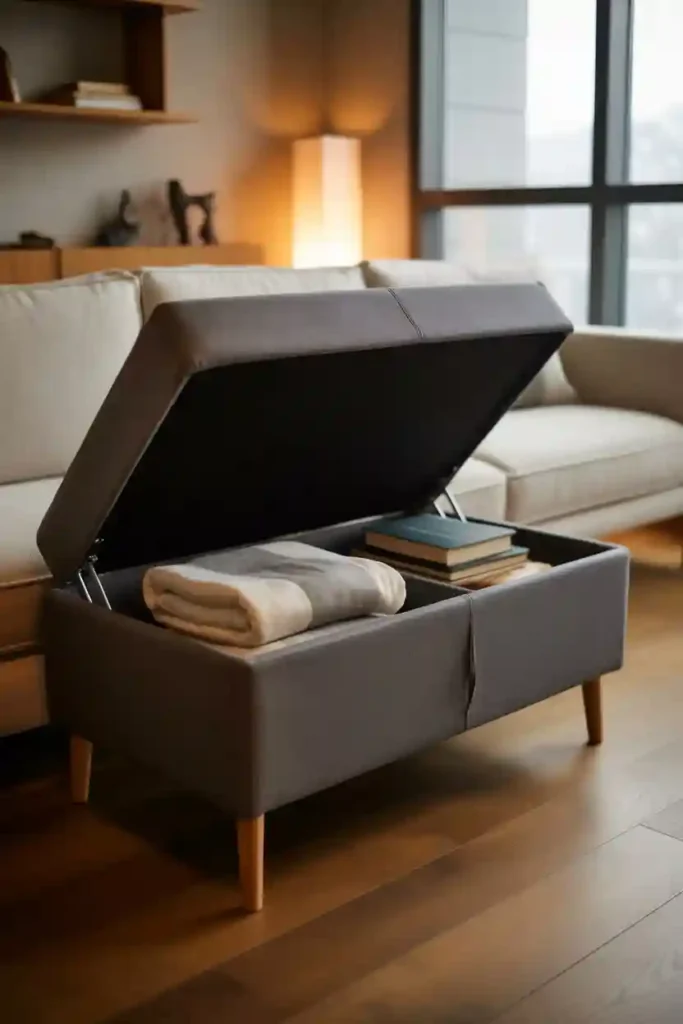
Storage ottomans combine seating and hidden storage, making them a designer favorite for small living rooms and bedrooms. The hollow interior can store blankets, toys, shoes, or books, keeping the space tidy and organized. Designers suggest choosing ottomans with durable upholstery that complements the room’s color palette for a cohesive look.
Lightweight or modular ottomans allow for flexibility in rearranging furniture, while cushioned tops provide extra seating. Storage ottomans are perfect for apartments or shared spaces where maximizing function is essential. They save room by merging two purposes into one piece of furniture, maintaining both style and practicality.
8. Utilize Floating Desks with Drawers
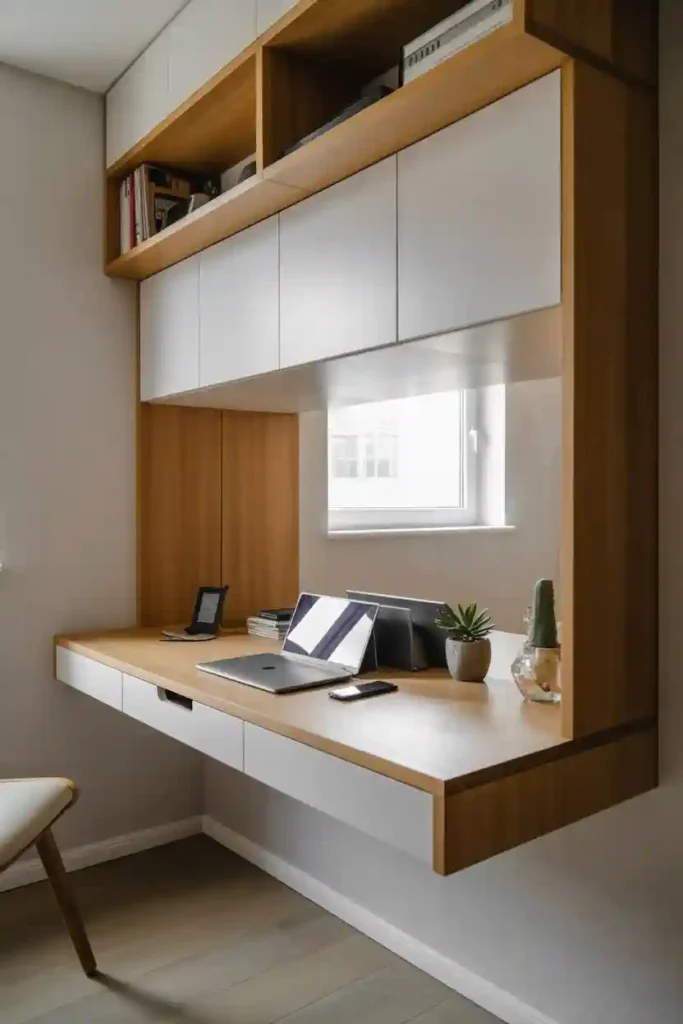
Floating desks with drawers are perfect for small home offices or study corners. Mounted on the wall, they save floor space while providing a compact workspace and hidden storage. Designers often integrate slim drawers or small cubbies for stationery, papers, or electronics, keeping the area clutter-free.
This design works well in bedrooms, living rooms, or studio apartments where traditional desks may occupy too much space. Floating desks also contribute to a minimalist aesthetic, giving the room an open and airy feel. By combining storage and function in one piece, floating desks offer an efficient and stylish solution for small spaces.
9. Use Stackable Storage Bins
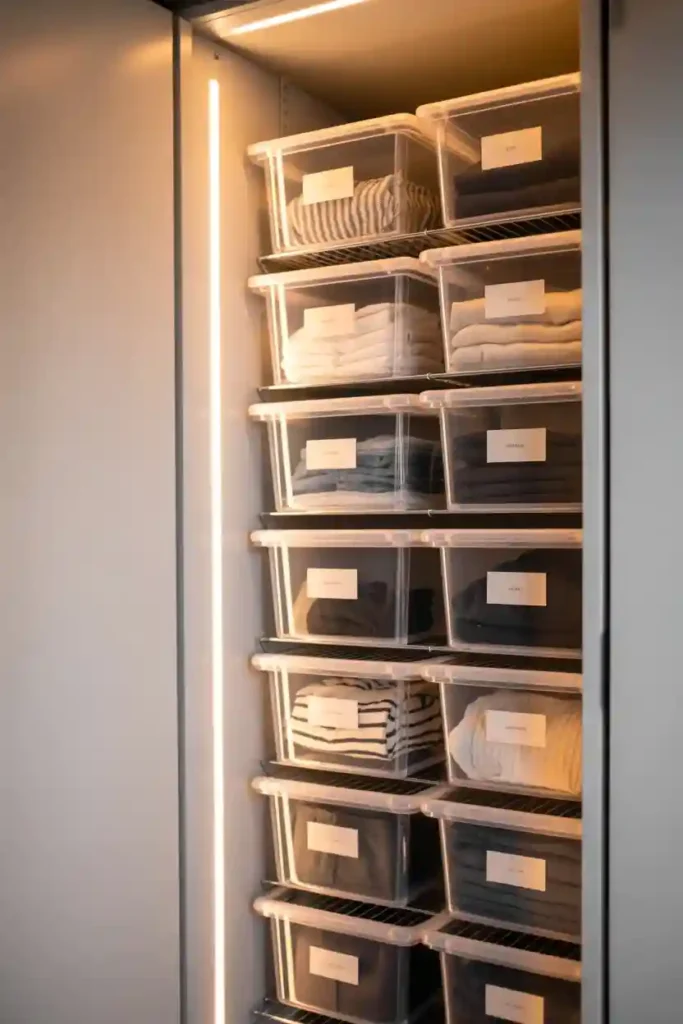
Stackable storage bins are a simple yet effective way to maximize vertical space in closets, kitchens, or laundry rooms. Designers recommend using uniform bins to create a cohesive look, stacking them to fit shelves or corners efficiently. Clear bins allow easy identification of contents, while labeled opaque bins provide a cleaner aesthetic.
This method is ideal for apartments, tiny pantries, or craft rooms, where floor space is limited. Stackable bins keep belongings organized, accessible, and out of sight when needed. They are flexible, easy to move, and affordable, making them an excellent solution for anyone seeking practical, space-saving storage.
10. Install Sliding Door Cabinets
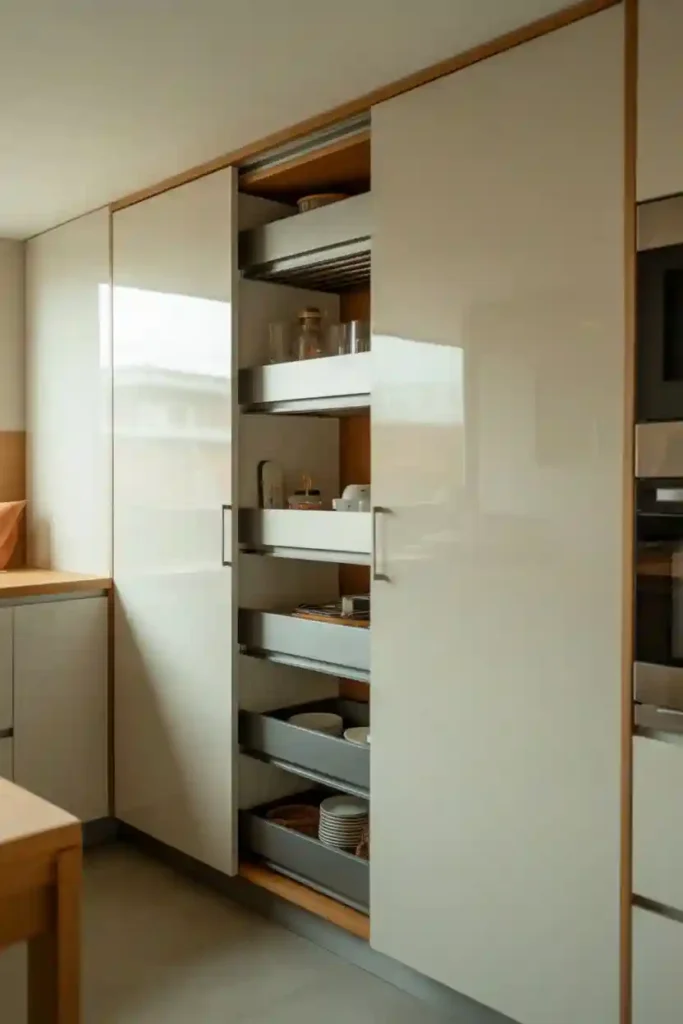
Sliding door cabinets are excellent for small spaces where traditional swing doors would be cumbersome. Designers often use them in kitchens, bathrooms, or laundry areas to conceal appliances, cleaning supplies, or personal items. The sliding mechanism saves room while maintaining a sleek and organized appearance. Inside, adjustable shelves or pull-out drawers maximize storage efficiency.
Sliding door cabinets can match surrounding décor or act as statement pieces with unique finishes or colors. This solution combines functionality and style, keeping essentials hidden while maintaining a clean and spacious look. Sliding cabinets are perfect for apartments or compact homes that need practical storage without sacrificing aesthetics.
11. Incorporate Under-Stair Storage
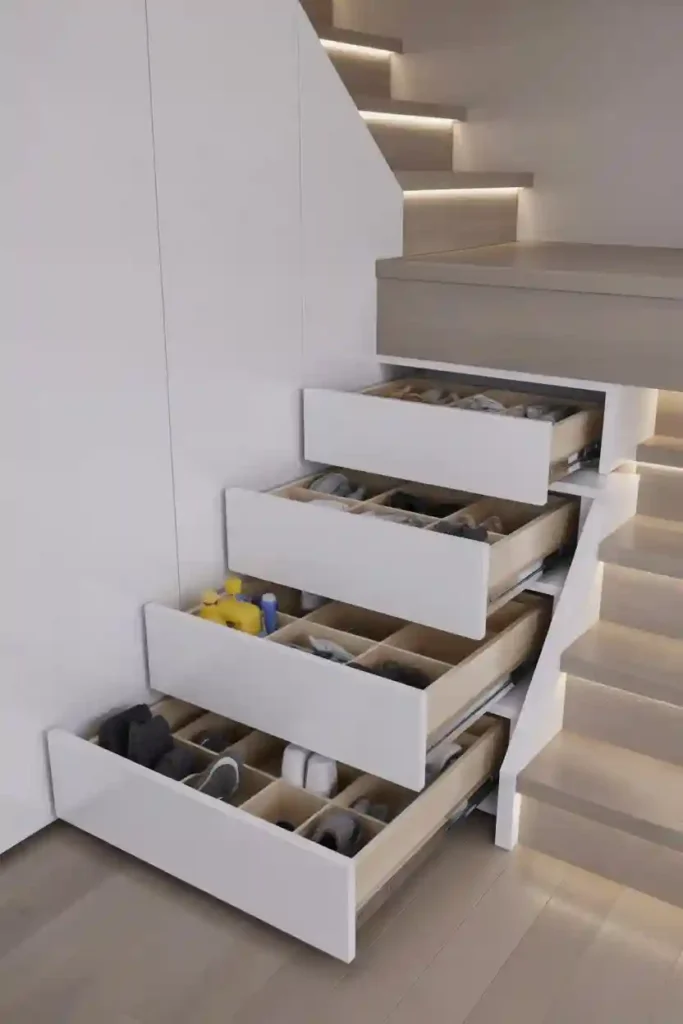
Under-stair storage is a clever way to utilize often-overlooked spaces in small homes or apartments. Designers recommend transforming the area beneath stairs into cabinets, drawers, or open shelves to store shoes, cleaning supplies, books, or seasonal items. Sliding doors, hinged panels, or pull-out drawers can maximize accessibility while maintaining a neat appearance.
This hidden storage not only reduces clutter but also creates a polished and organized look, transforming a wasted area into a functional feature. Whether used in entryways, living rooms, or hallways, under-stair storage optimizes vertical and horizontal space while adding character and style. By customizing the finish to match surrounding décor, it seamlessly integrates with the home’s design, keeping essentials out of sight while remaining easily accessible.
12. Utilize Over-Door Organizers
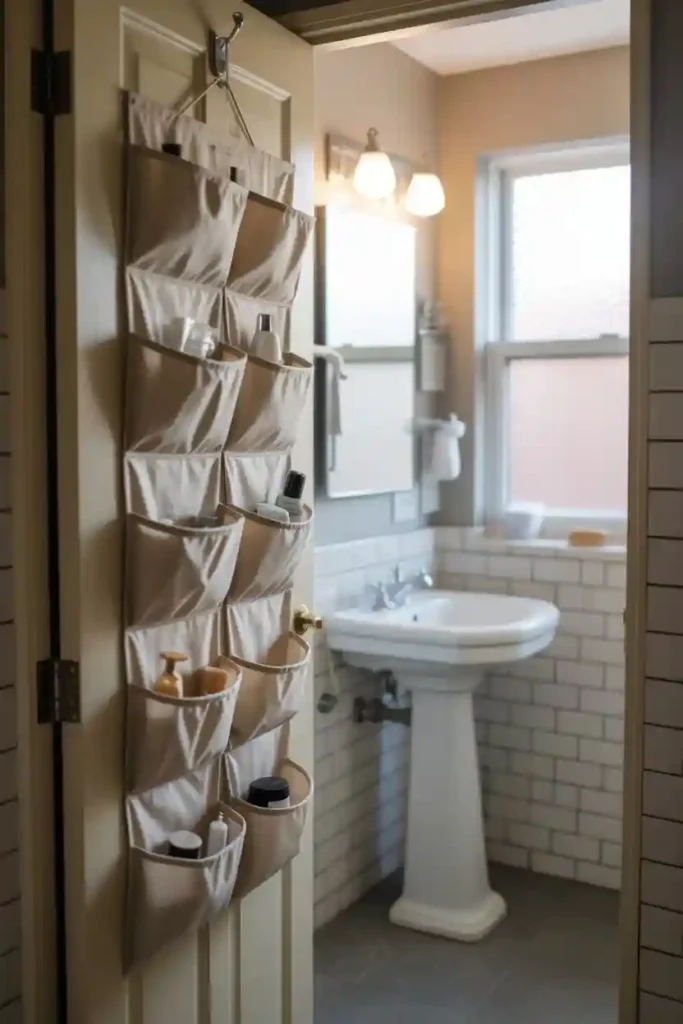
Over-door organizers are a practical and affordable solution for small spaces, particularly bathrooms, bedrooms, or pantries. Designers often use hanging racks, pockets, or shelves to store shoes, accessories, toiletries, or pantry items. By taking advantage of the vertical space behind doors, over-door organizers keep frequently used items accessible while freeing up shelves, counters, or floor space.
Clear or labeled pockets help with easy identification, while sturdy materials ensure durability. Over-door organizers are easy to install and reposition, making them ideal for rentals or temporary spaces. This solution maximizes small rooms efficiently without cluttering the main living areas, combining convenience with style.
13. Opt for Foldable or Collapsible Furniture

Foldable and collapsible furniture is a game-changer in small spaces, offering storage flexibility and functionality. Designers recommend items such as foldable tables, chairs, or wall-mounted desks that can be tucked away when not in use. These pieces maintain an open floor plan while providing practical surfaces when needed.
Some designs include hidden storage compartments, adding even more functionality. Foldable furniture is ideal for small dining areas, home offices, or guest spaces, allowing rooms to adapt to multiple uses. Lightweight materials make moving and folding effortless, while modern designs ensure style isn’t sacrificed. This approach creates a versatile, clutter-free environment that maximizes every inch of space.
14. Use Built-In Window Seats with Storage
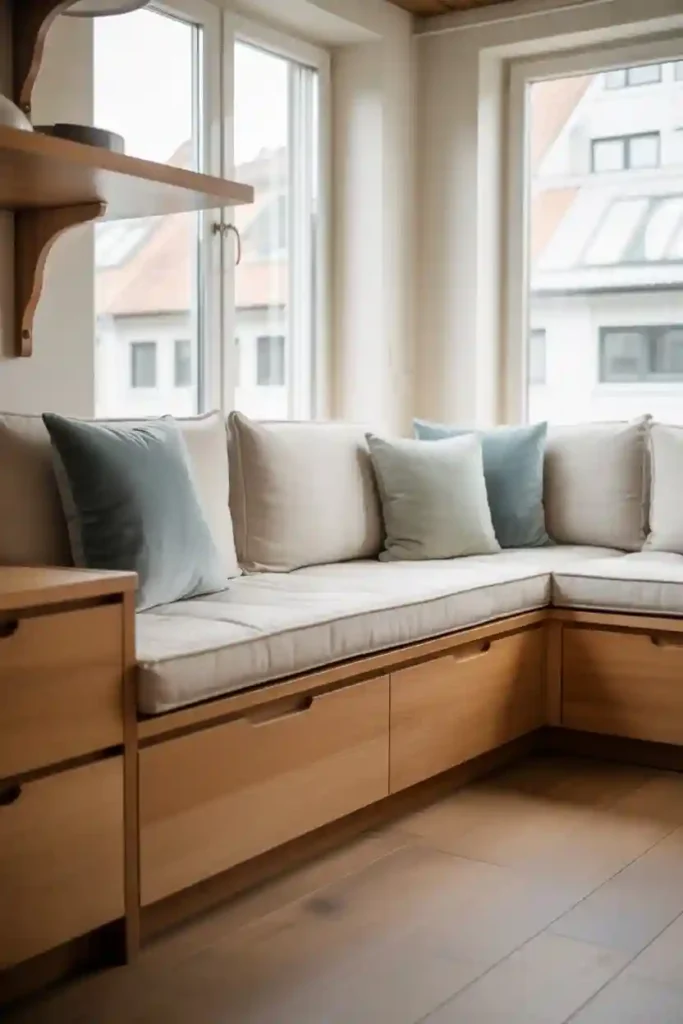
Built-in window seats with storage combine comfort, functionality, and clever space-saving design. Designers often recommend benches with lift-up lids or drawers beneath the seat, providing hidden storage for blankets, books, or toys. Placing these along windows adds natural light, making small rooms feel brighter and more spacious.
Cushions and pillows create a cozy reading nook while the storage underneath keeps the area clutter-free. This solution works well in bedrooms, living rooms, or home offices, turning unused window areas into functional, stylish features. Built-in window seats maximize vertical and horizontal space, offering both seating and practical storage without compromising aesthetics.
Final Words
Smart storage solutions are essential for small spaces, proving that size doesn’t limit style or functionality. From vertical shelves and multi-functional furniture to under-stair cabinets, over-door organizers, and built-in window seats, these 14 small space storage ideas demonstrate how to maximize every inch efficiently.