17 Studio Apartment Decorating Ideas That Feel Open
Decorating a studio apartment can feel challenging when you’re working with limited square footage and one open room serving multiple purposes. Without the right approach, studios can quickly feel cluttered, cramped, or visually overwhelming. The good news is that with smart decorating choices, a studio apartment can feel open, airy, and surprisingly spacious. The key lies in thoughtful layouts, light-enhancing design elements, and furniture that works harder without taking over the room.
Strategic use of color, lighting, zoning, and scale can dramatically change how the space feels—without major renovations. Whether you’re living in a small city studio or a compact apartment, the right ideas help create separation, flow, and comfort while maintaining an open look. These 17 studio apartment decorating ideas that feel open focus on practical, stylish solutions that make the most of every inch, helping your studio feel calm, functional, and inviting.
1. Use Light Colors to Open Up the Space
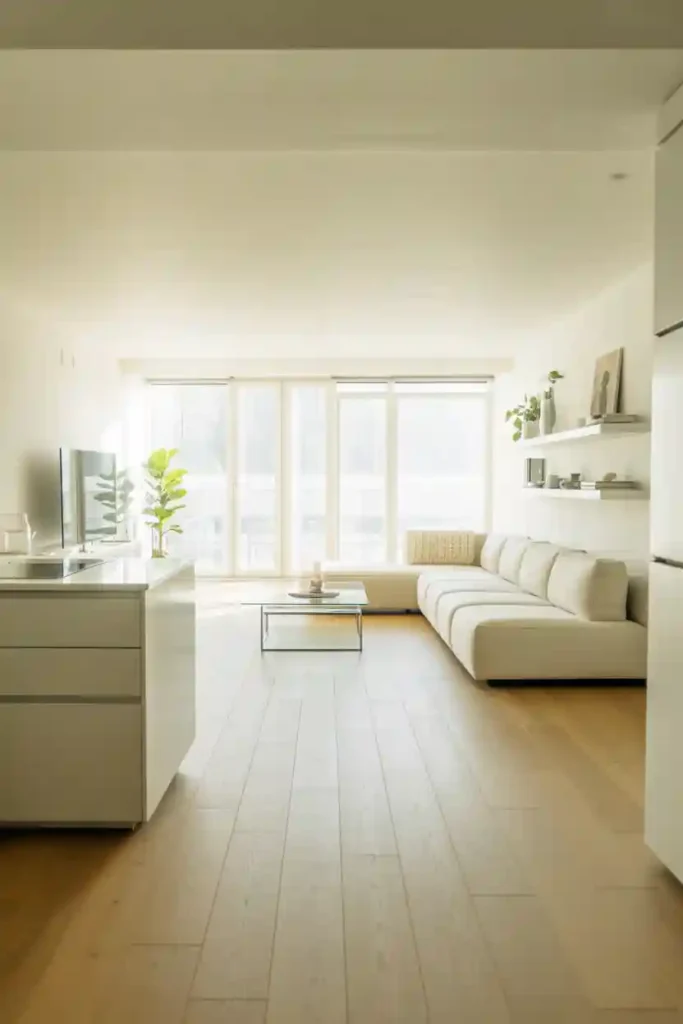
Light colors play a major role in making a studio apartment feel open and airy. Because studios combine living, sleeping, and dining areas into one room, darker shades can quickly make the space feel closed in. Light tones help reflect natural and artificial light, creating the illusion of more space. Soft whites, warm creams, pale grays, and light beige are excellent choices for walls and large furniture pieces. These colors bounce light around the room, reducing shadows and making the apartment feel brighter. Light-colored flooring or area rugs further enhance the sense of openness.
Using light colors consistently throughout the studio also improves visual flow. When walls, furniture, and décor share a similar palette, the space feels less broken up. This approach creates a calm, unified look that makes even a small studio feel larger and more comfortable.
2. Choose Multi-Functional Furniture
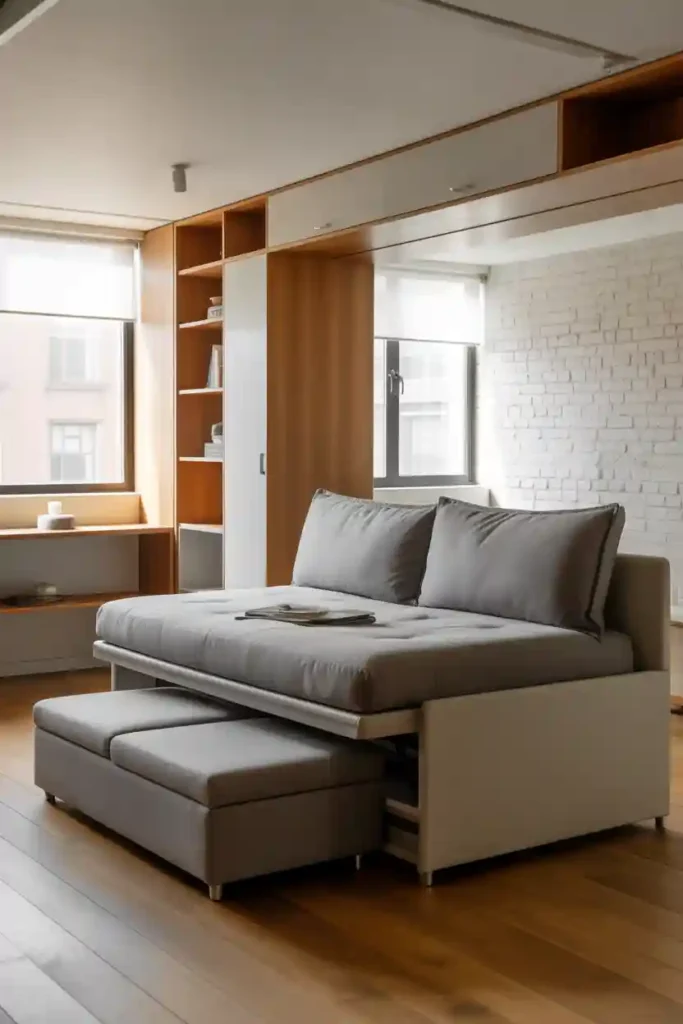
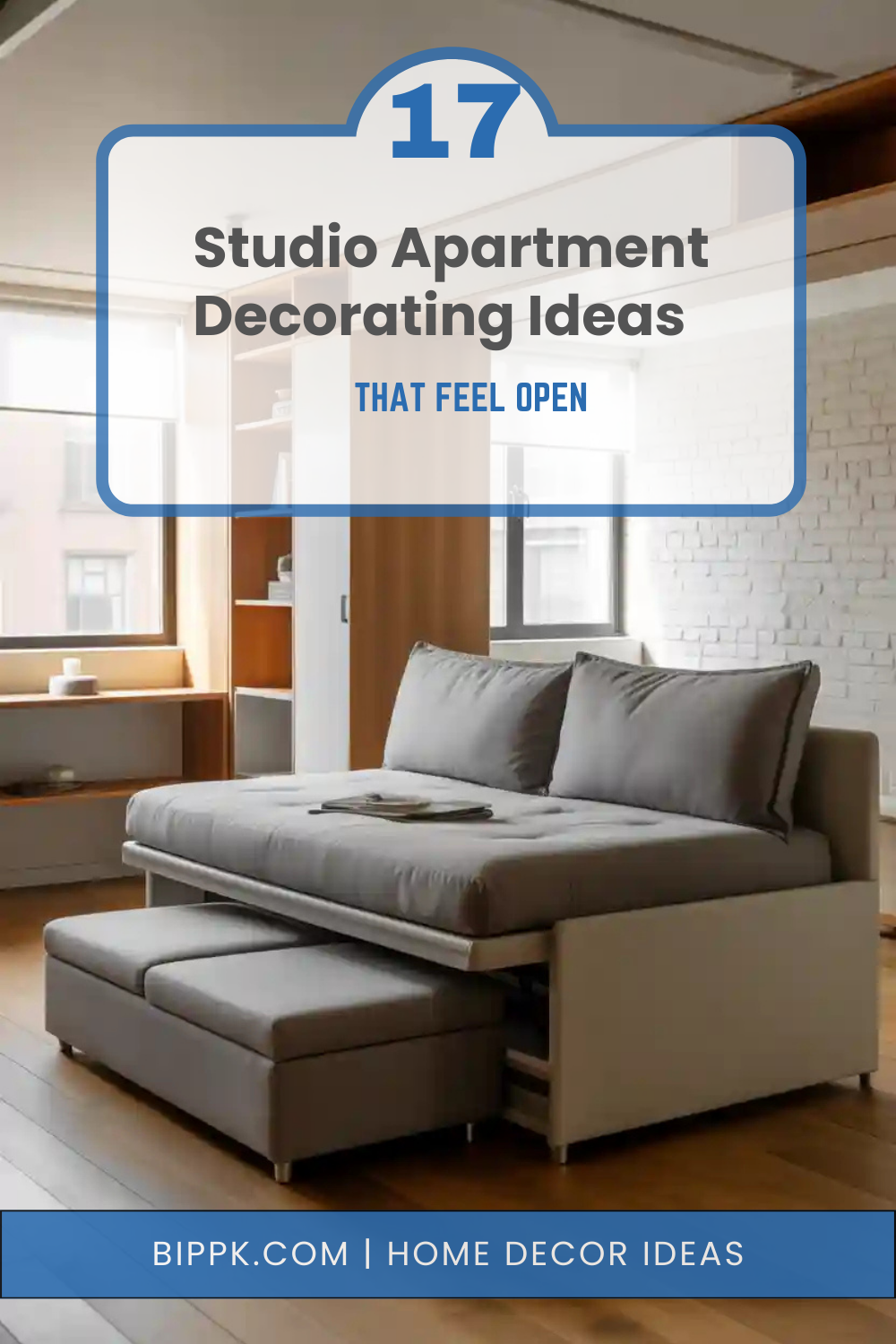
Multi-functional furniture is essential in a studio apartment where space must work overtime. Choosing pieces that serve more than one purpose helps reduce clutter and keeps the apartment feeling open rather than crowded. Sofa beds, storage ottomans, and coffee tables with hidden compartments provide flexibility without adding extra furniture. A desk that doubles as a dining table or a bed with built-in drawers can save valuable floor space. These pieces allow the apartment to adapt easily to different activities throughout the day.
By limiting the number of furniture items and selecting versatile pieces, the studio maintains a cleaner, more breathable layout. Multi-functional furniture supports both comfort and efficiency, helping the apartment feel thoughtfully designed and open instead of cramped.
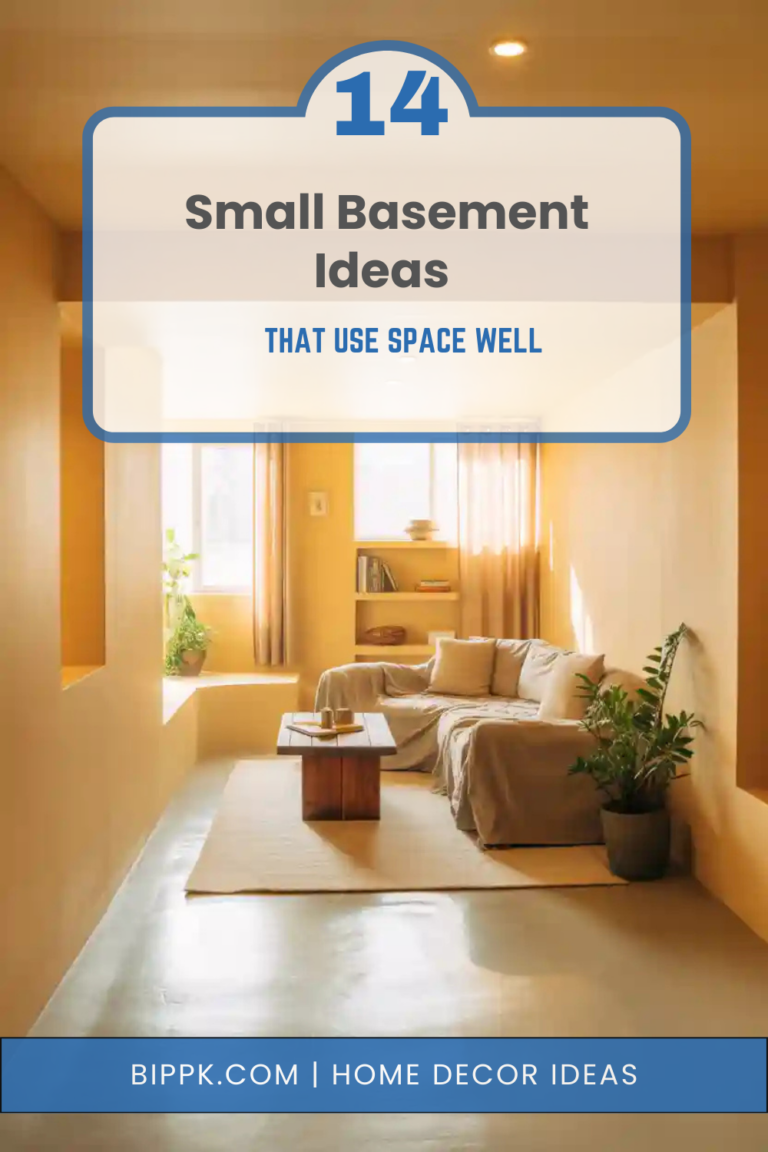
Read Also: 14 Small Basement Ideas That Use Space Well
3. Define Zones Without Walls
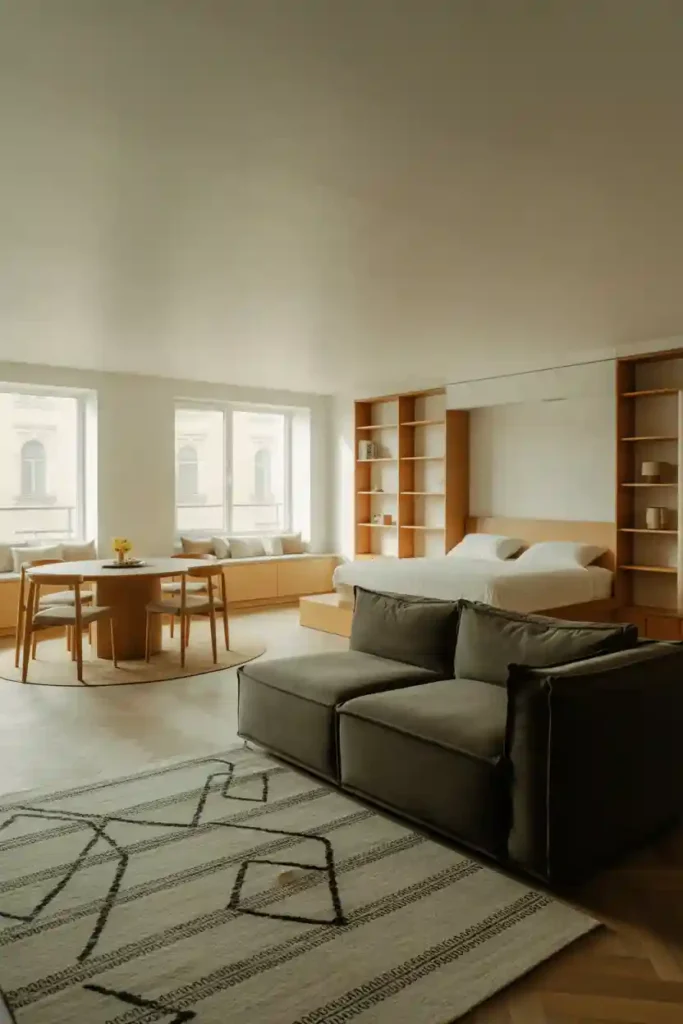
Defining zones is key to making a studio apartment functional without closing it off. Walls and bulky dividers can block light and shrink the space visually, so creating separation through design is a better solution. Rugs, lighting, and furniture placement help define areas for sleeping, living, and dining. For example, a sofa can face away from the bed to create a living zone, while an area rug anchors the seating space. Different lighting styles can also distinguish zones while keeping the space open.
This method maintains an open feel while adding structure. Clear zones improve organization and flow, making the apartment easier to live in. When done well, zoning adds function without sacrificing openness or brightness.
4. Opt for Low-Profile Furniture
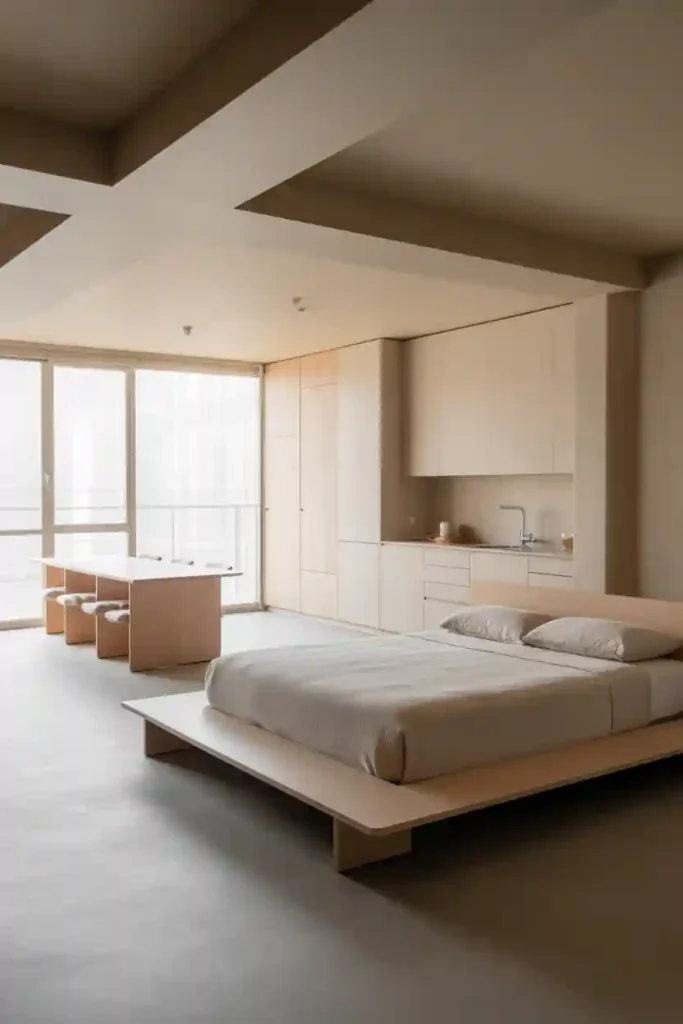
Low-profile furniture helps maintain openness in a studio apartment by keeping sightlines clear. Tall or bulky furniture can make the space feel heavy, while low pieces allow the eye to move freely across the room. Choose sofas, beds, and chairs with lower backs and slimmer frames. Platform beds or low sofas work especially well in studios with limited ceiling height. Furniture with exposed legs also helps create a lighter, airier feel.
Low-profile furniture improves proportion and scale, ensuring the apartment doesn’t feel overwhelmed. It also allows more light to circulate, enhancing the sense of space. This simple design choice can make a noticeable difference in how open and comfortable a studio apartment feels.
5. Add Mirrors to Reflect Light

Mirrors are one of the most effective decorating tools for making a studio apartment feel open and spacious. In a single-room layout, light can easily get trapped in one area, leaving other sections feeling dark or cramped. Mirrors help bounce light around the room, instantly brightening the entire space. Placing a mirror opposite a window reflects natural daylight and visually doubles the sense of openness. Large wall mirrors work especially well, but even mirrored closet doors or decorative mirrors can create depth. Vertical mirrors also help make ceilings feel taller, which is ideal in smaller studios.
Mirrors reduce the feeling of enclosure by breaking up solid walls and tight corners. When kept simple and uncluttered, they enhance openness without overwhelming the design. Used thoughtfully, mirrors transform a studio apartment into a brighter, lighter, and more breathable living space.
6. Keep Window Treatments Minimal
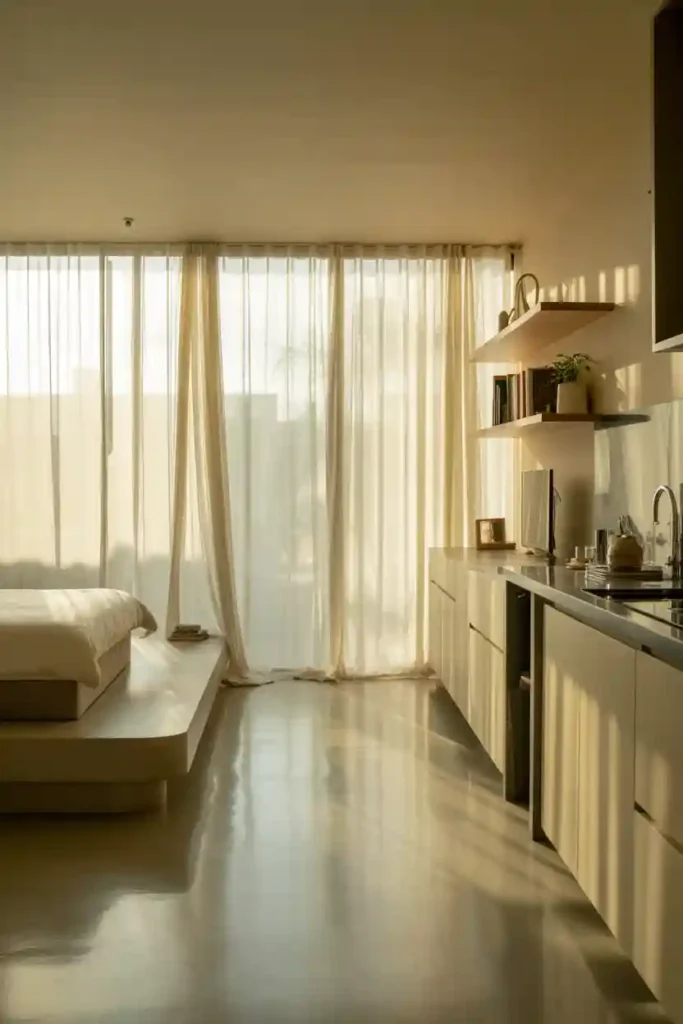
Window treatments have a major impact on how open a studio apartment feels. Heavy drapes or dark curtains can block light and visually shrink the room. Minimal window treatments help preserve brightness and create a more spacious atmosphere. Sheer curtains, light linen panels, or simple roller shades allow sunlight to flow freely while still offering privacy. Mounting curtain rods higher than the window frame helps draw the eye upward, making the ceiling feel taller and the space more open.
Keeping windows visually clean prevents unnecessary visual clutter. Natural light becomes a design feature rather than something hidden. With minimal window treatments, the studio feels airy, calm, and more connected to the outdoors—an essential element for making a small space feel open.
7. Use Rugs to Create Visual Separation

Rugs are a powerful way to organize a studio apartment while maintaining an open layout. Instead of walls or partitions, rugs define different areas visually without blocking light or movement. Placing a rug under the sofa clearly establishes a living area, while a separate rug can define the sleeping or dining space. Choosing rugs in similar tones or textures keeps the apartment cohesive and prevents visual clutter. Avoid overly bold patterns that can overwhelm a small room.
Rugs also add warmth and comfort, making each zone feel intentional and inviting. By visually separating spaces while keeping everything open, rugs help a studio apartment feel structured, balanced, and surprisingly spacious.
8. Maximize Vertical Storage
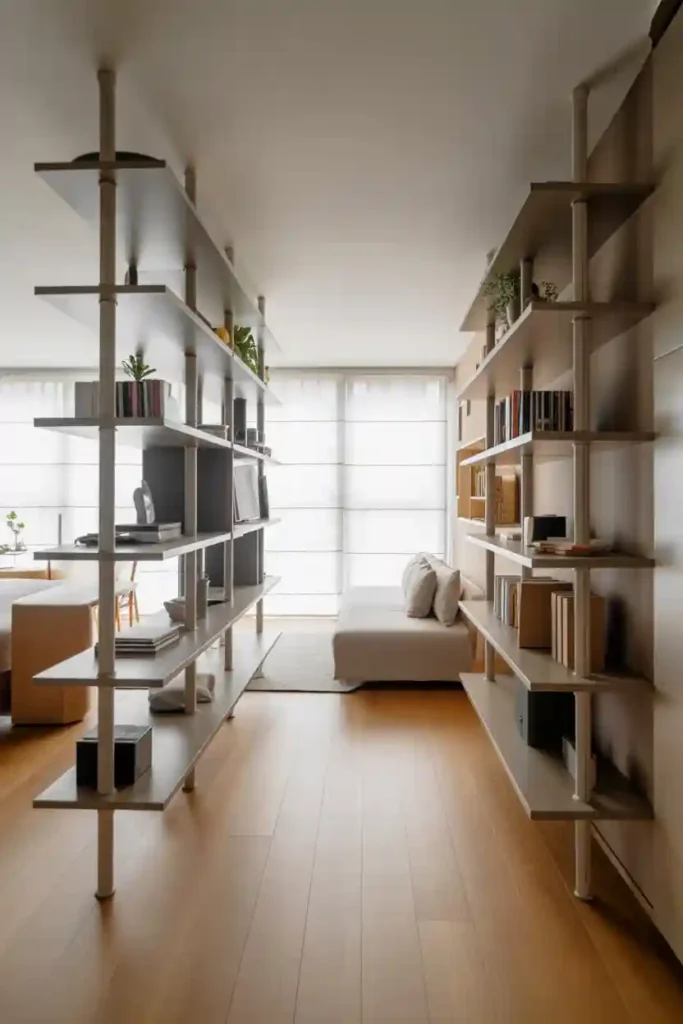
In a studio apartment, vertical storage is one of the most effective ways to keep the space feeling open while staying organized. When floor space is limited, using the height of the room allows you to store more without making the apartment feel crowded. Wall-mounted shelves, tall bookcases, and floating cabinets help move storage off the floor. This keeps walkways clear and improves visual flow. Vertical storage also draws the eye upward, which makes ceilings feel higher and the room feel larger. Open shelving keeps the look light, while a mix of closed storage can hide clutter when needed.
Using vertical space allows you to keep only essential furniture pieces on the floor. The result is a studio that feels organized, breathable, and intentionally designed—perfect for maintaining an open and airy atmosphere.
9. Stick to a Consistent Color Palette
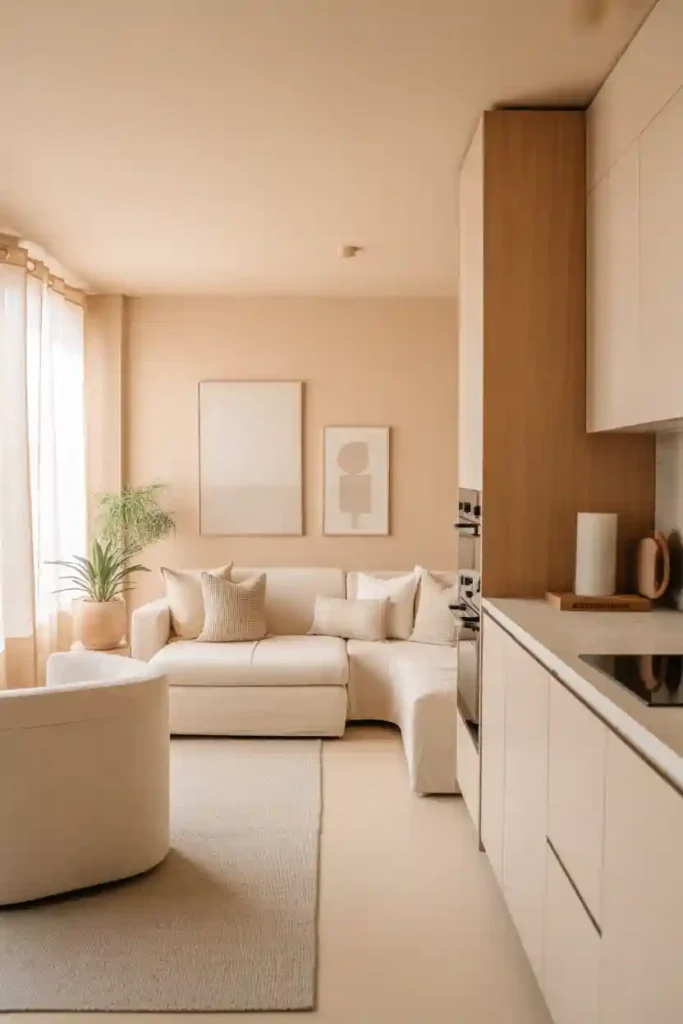
A consistent color palette is key to making a studio apartment feel open and cohesive. Because all areas share the same visual space, too many contrasting colors can make the apartment feel smaller and more chaotic. Choose one main neutral color—such as white, beige, or soft gray—and layer in one or two complementary shades. Repeat these colors across walls, furniture, rugs, and décor to create visual flow. This consistency allows the eye to move smoothly from one area to another without interruption.
A unified palette also helps different zones feel connected rather than separate. The studio feels calmer, more balanced, and more spacious. By limiting color variation, you create an open, harmonious environment that enhances both comfort and style.
10. Choose Furniture with Exposed Legs
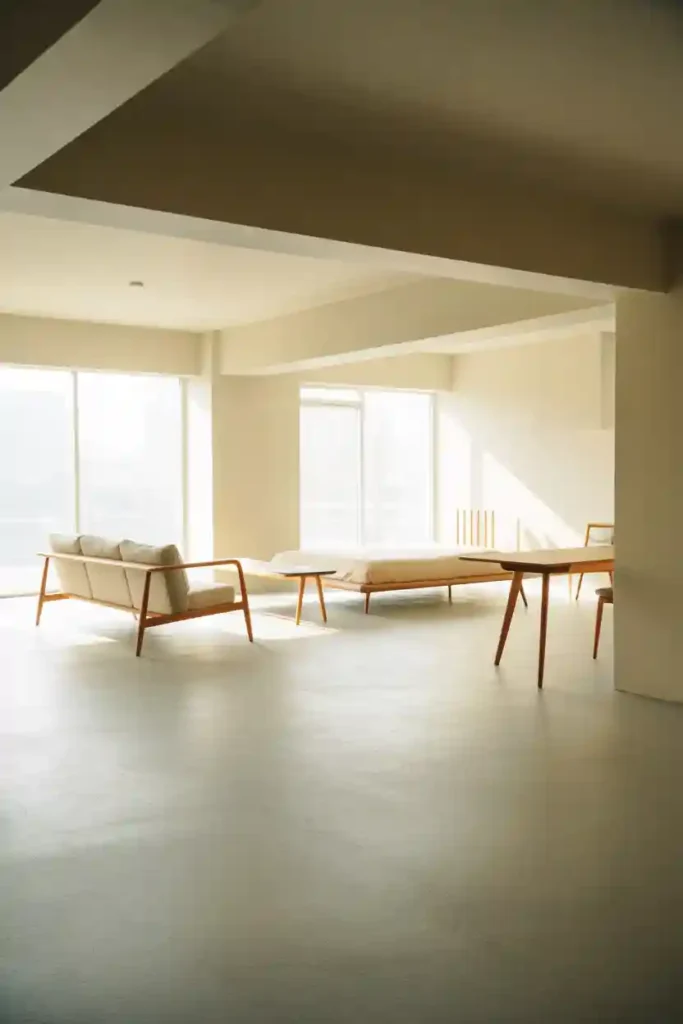
Furniture with exposed legs plays a subtle but powerful role in making a studio apartment feel open. When furniture sits directly on the floor, it can block visual space and make the room feel heavy. Exposed legs allow light to flow underneath sofas, chairs, and tables, creating a lighter and more spacious appearance. This visual openness helps prevent the apartment from feeling cramped. Slim legs also give furniture a less bulky look, which is ideal for small spaces.
Choosing raised furniture improves airflow and sightlines, making the studio feel more breathable and balanced. This simple design choice enhances openness without sacrificing comfort or function, helping the apartment feel stylish and easy to live in.
11. Incorporate Smart Lighting Layers
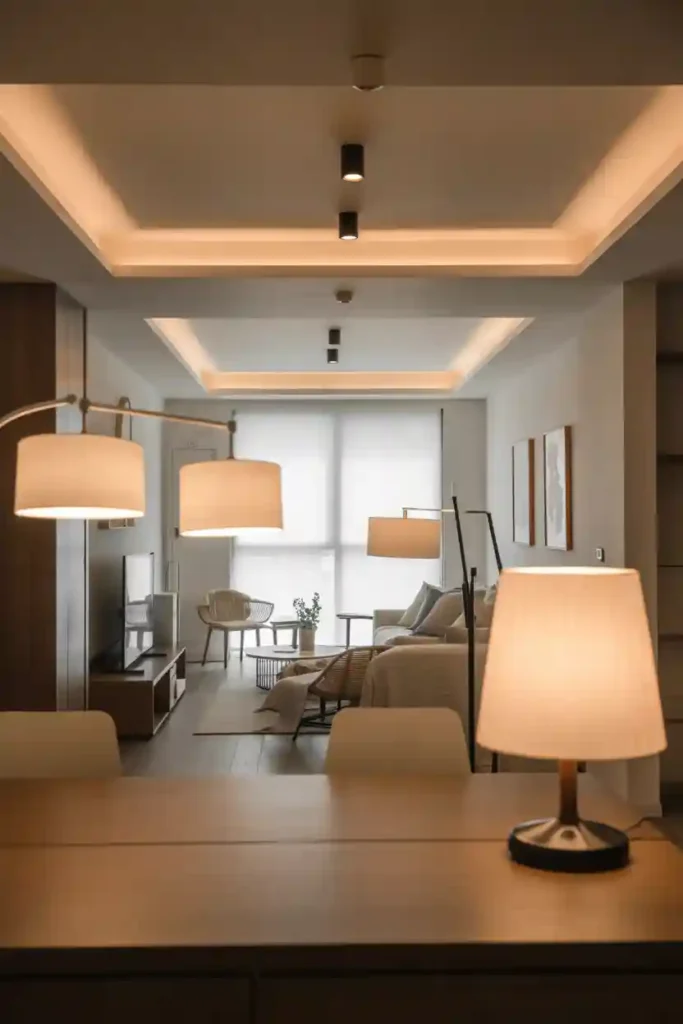
Lighting can transform a studio apartment, making it feel larger, brighter, and more inviting. Relying solely on overhead lighting often creates shadows and makes small spaces feel flat. Layered lighting, on the other hand, adds depth, warmth, and functionality. Combine ceiling fixtures with task lighting, such as desk lamps, floor lamps, or under-shelf lights. Accent lighting, like LED strips or small wall sconces, highlights specific zones and adds dimension. Different layers allow you to adjust brightness depending on time of day or activity, from work to relaxation.
Layered lighting also helps define separate areas without physical barriers, supporting an open and airy feel. By thoughtfully planning lighting layers, a studio apartment becomes both functional and visually expansive. The space feels more comfortable, well-designed, and welcoming, turning even the smallest studio into a bright and airy home.
12. Keep Decor Minimal and Intentional
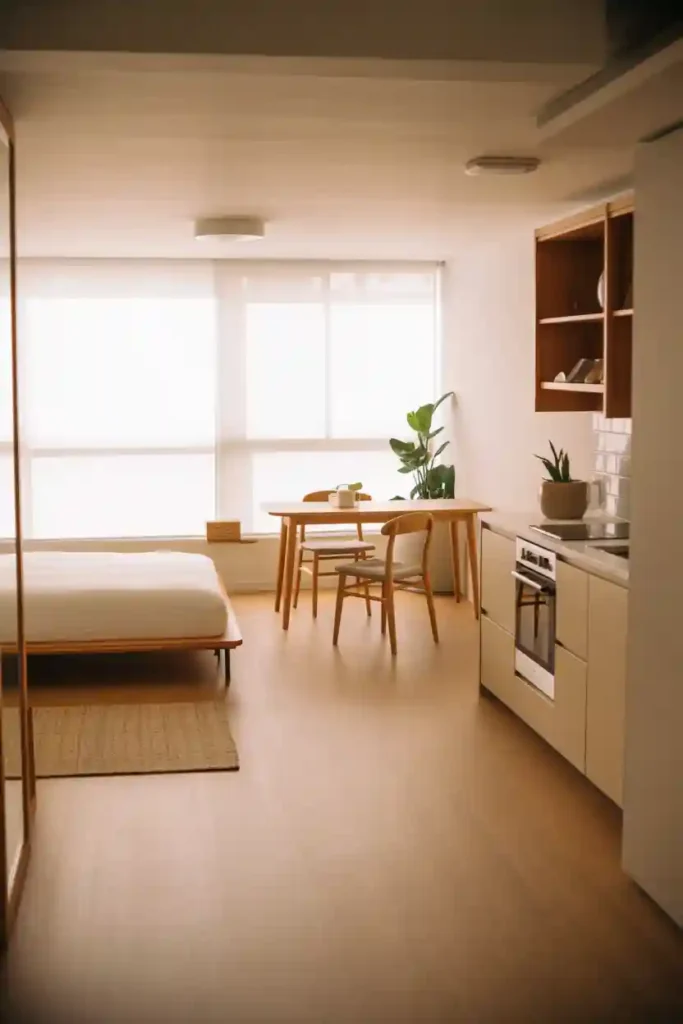
In a studio apartment, clutter can quickly make the space feel cramped. Keeping décor minimal and intentional helps maintain openness while still allowing personality to shine. Focus on a few well-chosen pieces rather than overcrowding surfaces. Wall art, decorative pillows, and small accent items can add character without overwhelming the room. Choose items that serve both a functional and aesthetic purpose, such as stylish storage baskets or multipurpose trays.
Minimal décor helps maintain visual flow between zones and prevents the apartment from feeling busy or chaotic. By editing thoughtfully and prioritizing essentials, you create a calm, organized, and airy space that feels larger than it is while still reflecting your style.
13. Use Open Shelving Carefully
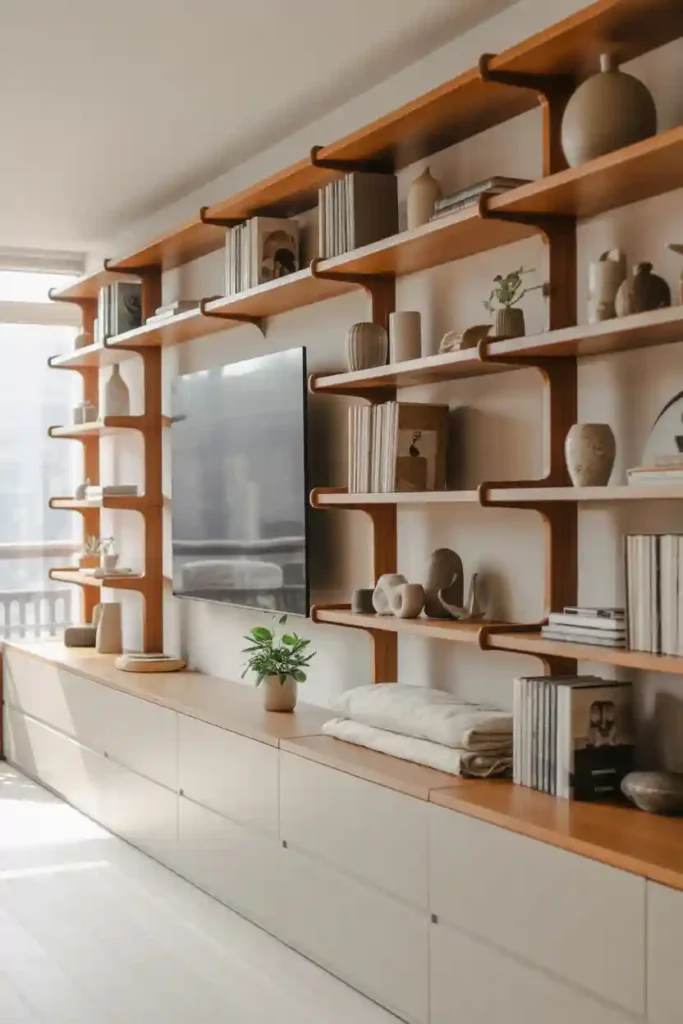
Open shelving can add storage and display space in a studio apartment, but it must be used carefully to avoid visual clutter. Properly curated open shelves can make the apartment feel organized, functional, and open. Use open shelves for items you use regularly, like books, kitchenware, or decorative objects. Group items by category or color to create a cohesive and intentional look. Avoid overcrowding shelves, which can quickly overwhelm a small space. Pairing open shelving with closed storage underneath helps balance practicality and style.
When used thoughtfully, open shelving maximizes storage while keeping floors clear and maintaining an airy feel. It provides easy access to essentials and allows you to showcase decorative items without sacrificing openness.
14. Separate the Bed Area Subtly
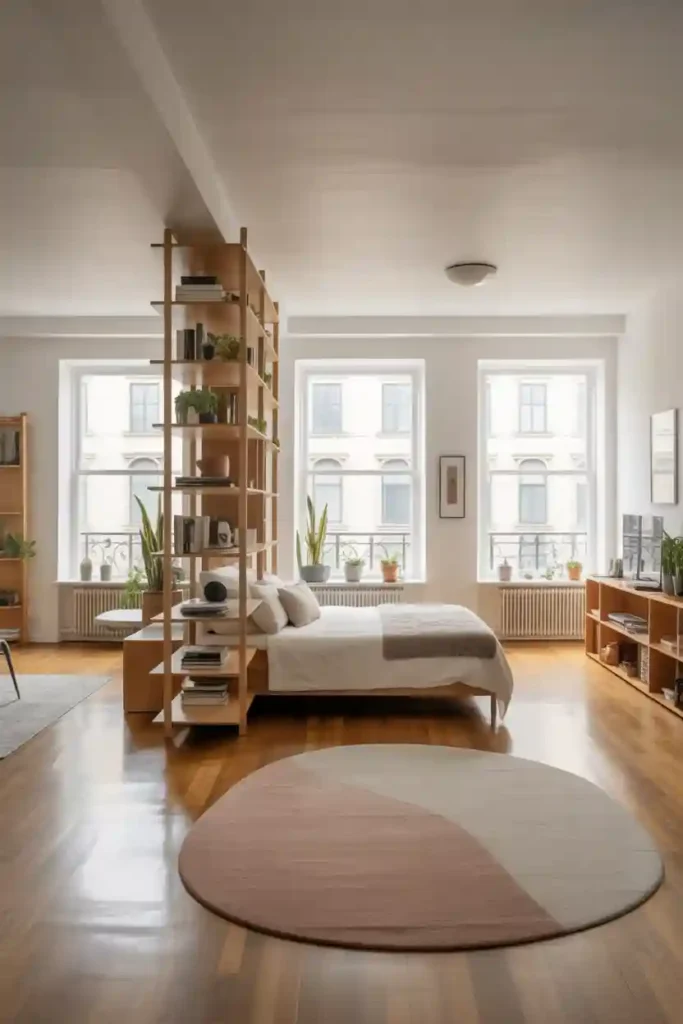
Even in a studio apartment, creating a sense of privacy for the bed area helps the space feel organized and intentional. You don’t need walls—subtle dividers can maintain openness while defining a sleeping zone. Room dividers, folding screens, or a tall bookshelf can create a boundary without closing off light. Curtains mounted on a ceiling track can also provide flexible separation that can be opened or closed as needed. Another option is to use a rug or different flooring pattern to visually designate the bed area.
Subtle separation keeps the studio feeling larger than it is while still giving the bed its own identity. By defining the sleeping space thoughtfully, the apartment feels structured, comfortable, and functional without sacrificing openness or airflow.
15. Create Clear Walkways

Maintaining clear walkways is essential in a studio apartment to prevent the space from feeling cramped. Open paths improve circulation, enhance functionality, and make the apartment feel larger. Arrange furniture to allow easy movement between zones without obstacles. Avoid overfilling the floor with chairs, tables, or bulky storage. Even compact furniture should be placed strategically to maintain sightlines and free space. Clear walkways also allow natural and artificial light to flow unimpeded, increasing the sense of openness.
By prioritizing circulation and visual flow, the apartment feels organized, airy, and comfortable to live in. This simple principle ensures that every square foot is used efficiently without making the studio feel crowded or cluttered.
16. Choose Compact Dining Solutions

In a studio apartment, a full-sized dining table can overwhelm the space. Compact dining solutions make mealtime functional without sacrificing openness. Foldable tables, drop-leaf tables, or wall-mounted desks that double as dining areas are perfect for small studios. Pair them with slim chairs or benches that can be tucked away when not in use. Multi-purpose furniture—like a storage bench that doubles as seating—maximizes efficiency while maintaining visual flow.
Keeping the dining area compact ensures it doesn’t block walkways or interrupt sightlines. Choosing lightweight, minimal furniture helps the apartment feel airy and open. Even a small dining setup can be stylish and comfortable, providing a dedicated spot for meals while preserving the overall spacious feel of the studio.
17. Maintain Visual Balance Throughout

Maintaining visual balance is crucial in a studio apartment to make the space feel open and harmonious. Because all functions share one room, disproportionate furniture, clutter, or heavy decor can make the space feel cramped. Distribute furniture evenly, keeping larger pieces against walls and leaving open areas in the center for circulation. Balance color, texture, and scale across zones so no single area dominates the room. For example, if the sofa is bold, keep surrounding accessories lighter and minimal. Mirrors, rugs, and consistent lighting further enhance balance.
A balanced layout ensures that the apartment feels intentional and spacious. Visual harmony makes the studio more comfortable to live in, creating a sense of openness that supports both style and functionality.
Final Words
Decorating a studio apartment doesn’t have to be overwhelming. With thoughtful design choices, even the smallest spaces can feel open, functional, and welcoming. By using light colors, multi-functional furniture, clear zoning, and smart storage solutions, you can maximize every inch without sacrificing style. Layered lighting, minimal décor, and intentional furniture placement help maintain a sense of openness while defining areas for living, sleeping, dining, and working.