
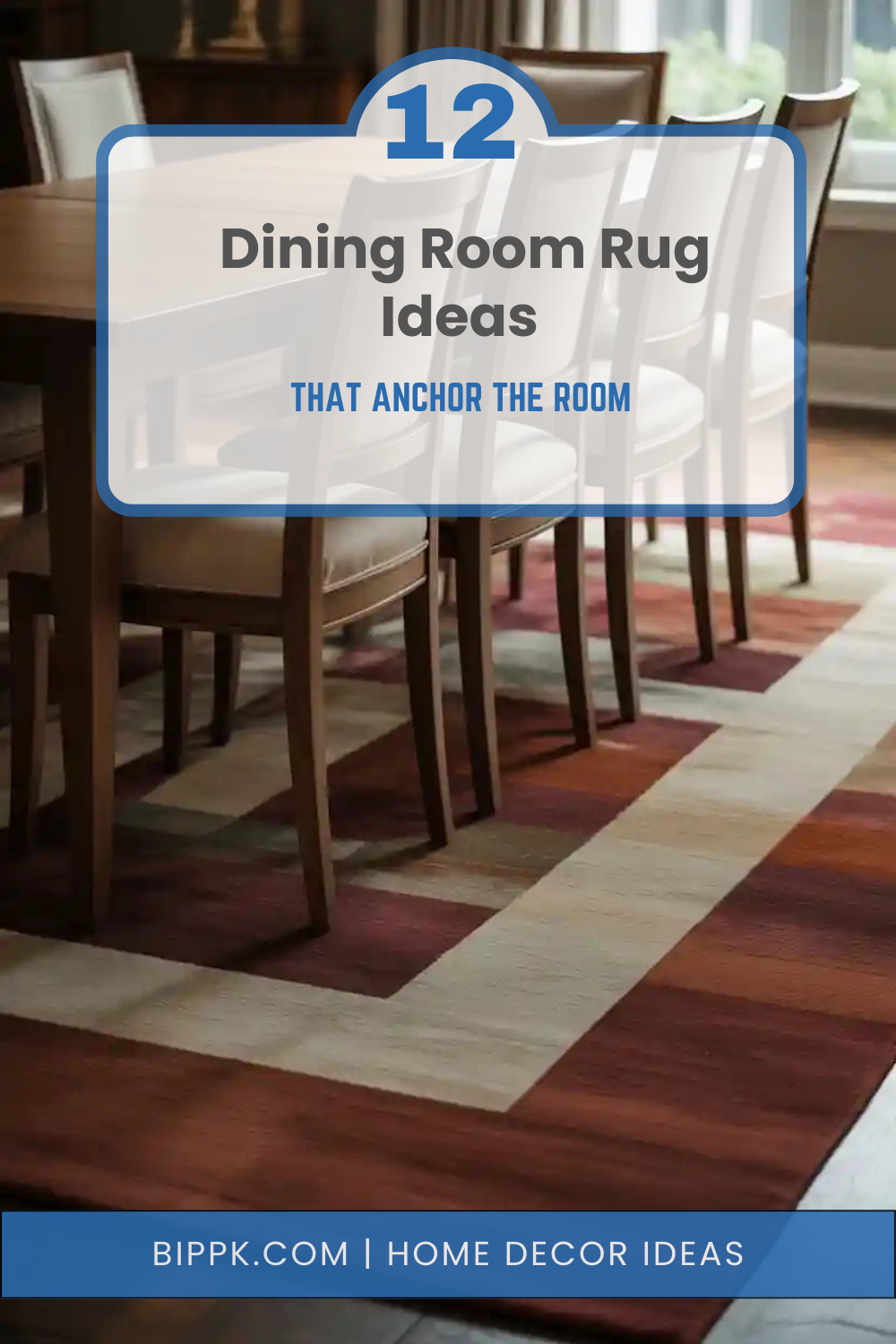
12 Dining Room Rug Ideas That Anchor the Room
A dining room rug does more than just cover the floor—it defines the space, anchors furniture, and adds texture, color, and personality to your dining area. The right rug can visually tie together your dining table, chairs, and surrounding décor while enhancing comfort underfoot. Choosing the perfect rug involves considering size, shape, material, and pattern to suit your space and lifestyle. Rugs can help delineate an open floor plan, prevent furniture from sliding, and create a cohesive, stylish look.
Whether you prefer bold patterns, neutral tones, natural fibers, or luxurious textures, a well-chosen dining room rug elevates the room’s aesthetic while offering practical benefits. Layering rugs, combining materials, or selecting statement pieces can transform a simple dining area into a warm, inviting gathering spot. Below are 12 dining room rug ideas that anchor the room and enhance both function and style.
1. Oversized Rugs for Open Dining Areas

An oversized rug helps define the dining area in large or open floor plans. It ensures that all chairs remain on the rug, even when pulled out, creating a cohesive and polished look. Natural fibers like wool or jute are durable for high-traffic areas. Neutral colors help anchor the room while allowing the table and décor to stand out. This approach makes the dining area feel intentional and well-balanced, providing both comfort and style. Oversized rugs also absorb sound, which is ideal for large spaces.
2. Patterned Rugs to Add Visual Interest

Patterned rugs bring energy and personality to a dining room while grounding the furniture. Geometric, floral, or abstract designs add layers of style and can complement or contrast with your table and chair finishes. Patterns can also help disguise stains and wear in high-traffic dining areas. Choosing a rug pattern that harmonizes with wall color, curtains, or artwork creates a cohesive look. A patterned rug acts as a visual anchor, ensuring the dining area feels vibrant, intentional, and pulled together.
Read Also: 14 Entryway Styling With Mirrors That Add Light
3. Round Rugs for Circular Tables
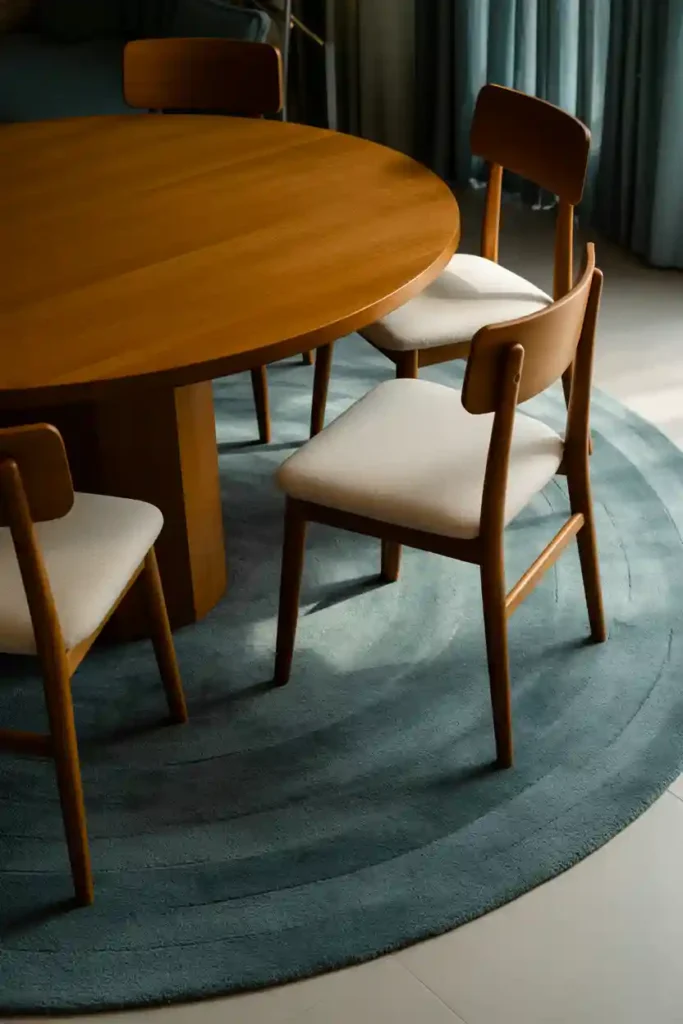
Round rugs are perfect for round dining tables, ensuring that the rug extends beyond the chairs for both comfort and proportion. Circular shapes soften the room’s edges and create a more intimate dining space. A round rug can complement contemporary or traditional décor, especially when layered with contrasting textures. Natural fiber or low-pile rugs are practical for spills. Round rugs anchor the table while maintaining flow, making small or open spaces feel balanced and cozy.
4. Layered Rugs for Depth and Texture
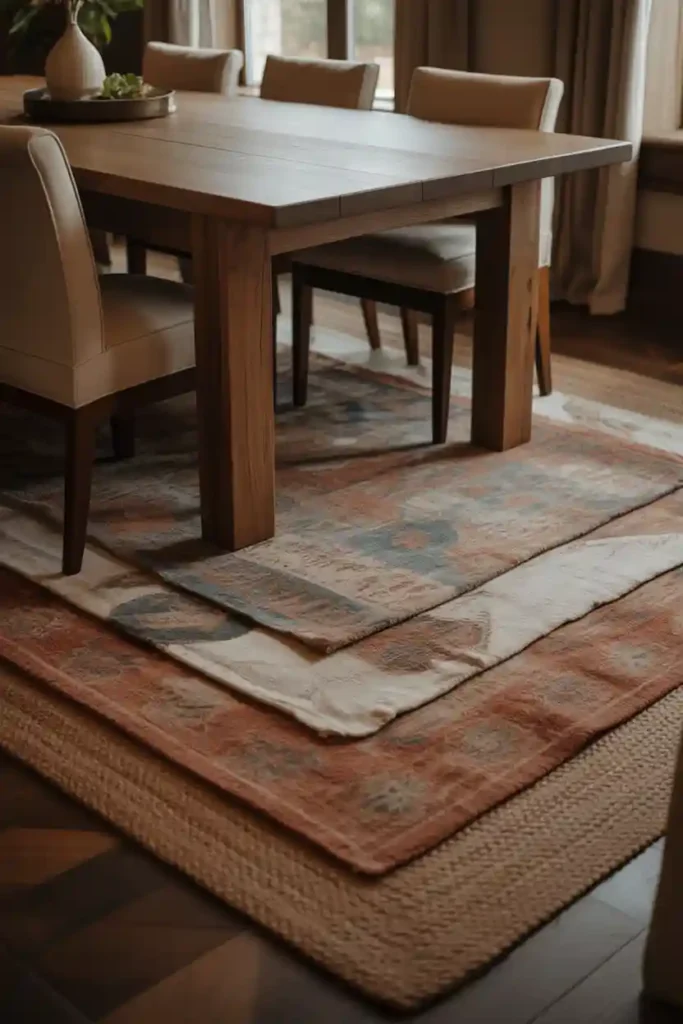
Layering rugs adds depth, texture, and visual interest to a dining room. Combining a neutral base rug with a smaller patterned or colorful rug on top creates dimension while anchoring the table and chairs. This technique works well in eclectic or transitional spaces. Layered rugs also allow for playful experimentation with materials and colors, enhancing the room’s personality. Using durable materials ensures practicality for high-traffic areas, making layered rugs both stylish and functional.
5. Natural Fiber Rugs for Warmth
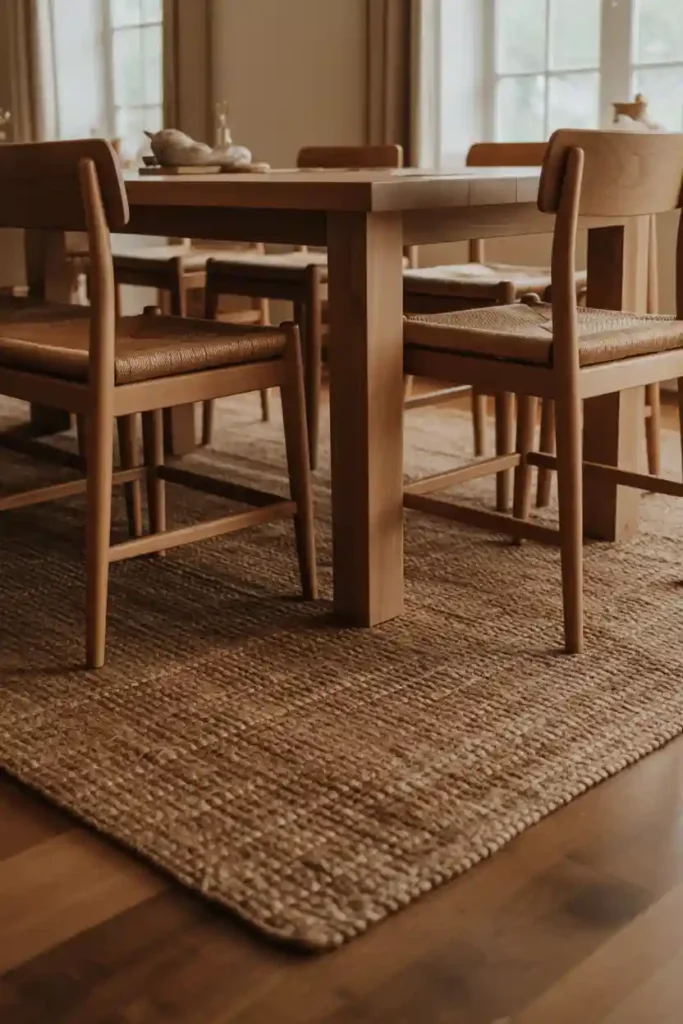
Rugs made of jute, sisal, or seagrass bring a natural, earthy texture that anchors the dining room. These materials are durable, easy to maintain, and add warmth to minimalist or contemporary designs. Natural fiber rugs complement wooden or metal furniture, creating an inviting environment. While neutral in color, their woven textures add subtle interest. They’re ideal for casual dining rooms or spaces where comfort and natural elegance are priorities.
6. Bold Colored Rugs for Statement Style
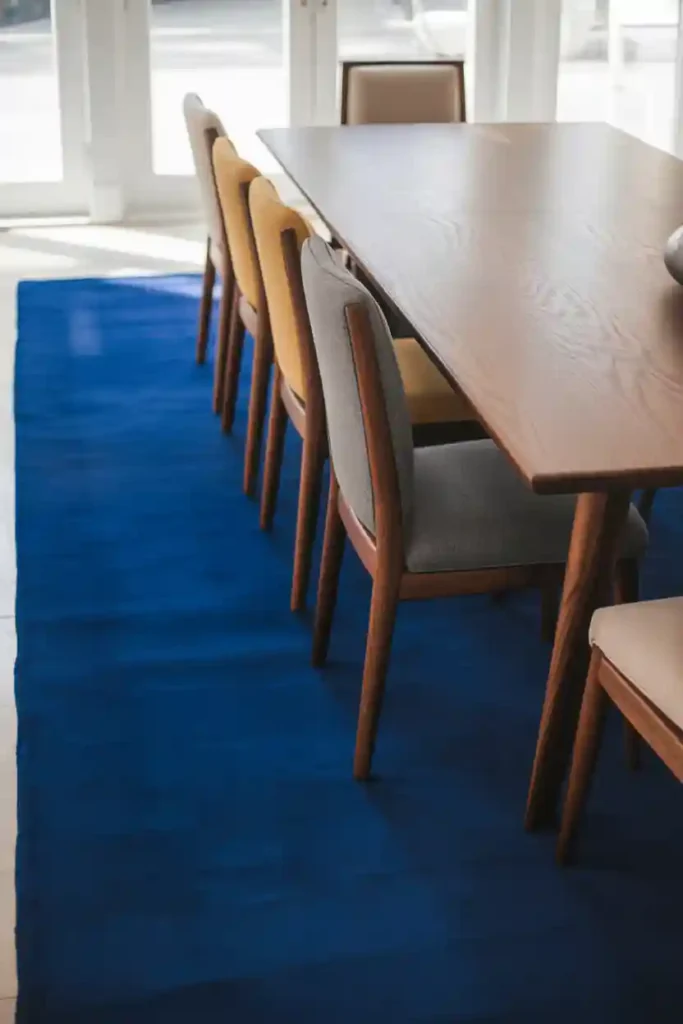
A brightly colored rug makes the dining area pop and becomes the focal point of the room. Deep blues, rich reds, or vibrant oranges can complement neutral walls and furniture. Bold rugs anchor the dining space visually, drawing attention to the table while energizing the room. Pairing with subtle décor ensures balance. This strategy works well in modern, eclectic, or bohemian designs where color and personality are key.
7. Low-Pile Rugs for Practicality
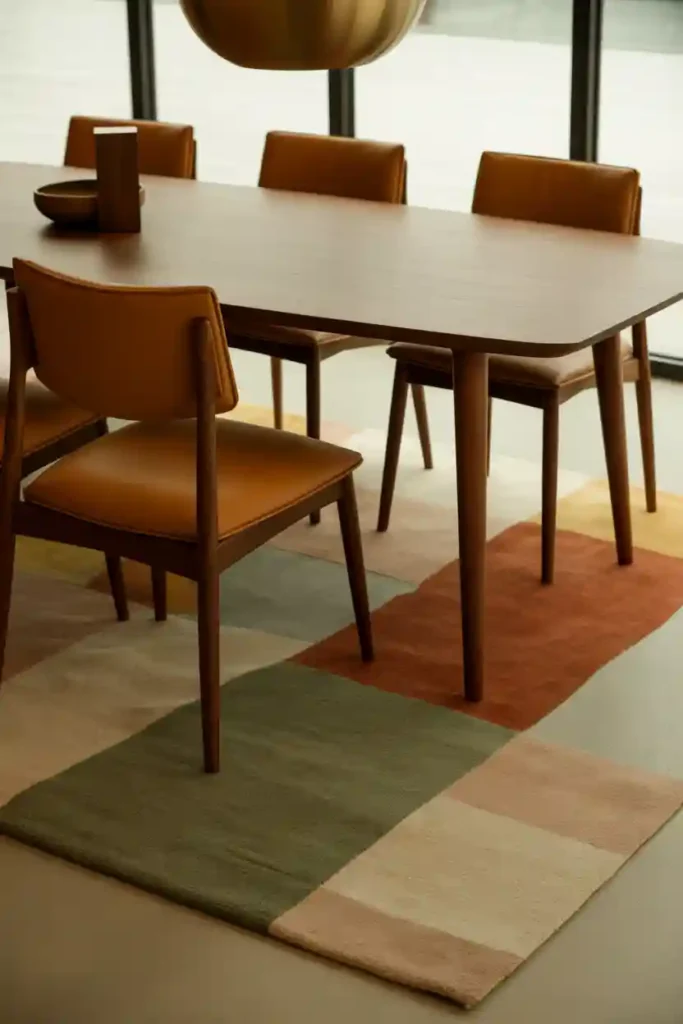
Low-pile rugs are ideal for dining rooms where spills and frequent chair movement are common. They’re easier to clean and allow chairs to slide smoothly while still anchoring the table. Materials like flat-weave cotton, wool, or synthetics combine durability with style. Low-pile rugs maintain a polished look, making them practical without sacrificing aesthetic appeal. They work well under large or small tables, providing function and visual grounding.
8. Moroccan-Style Rugs for Texture and Pattern
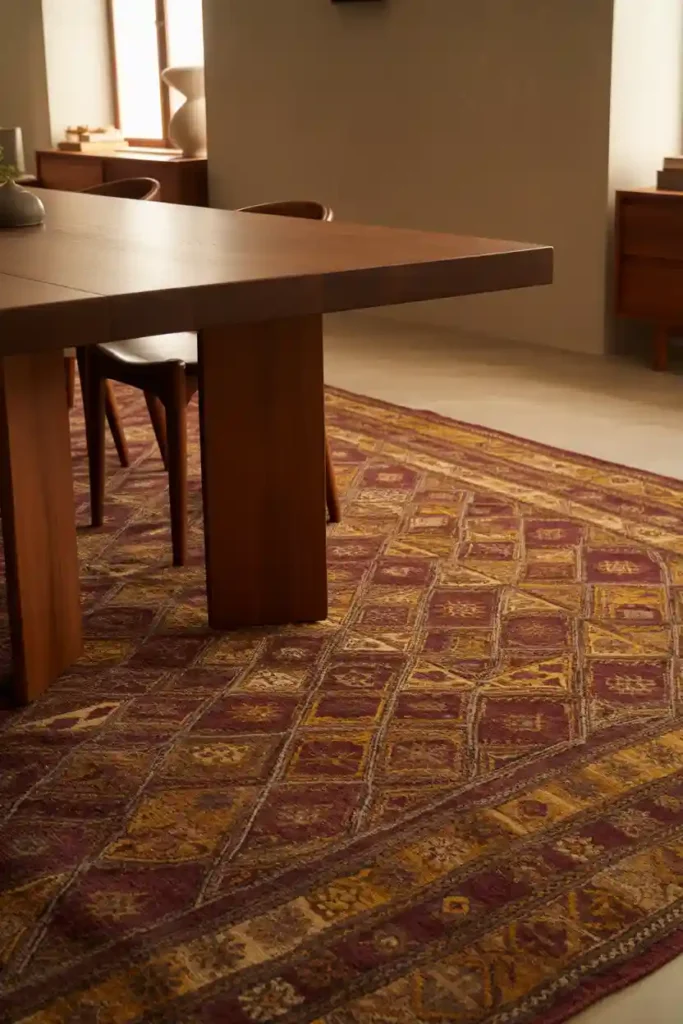
Moroccan-style rugs offer intricate patterns and textured weaves that add warmth and character. Their bold designs anchor the dining area and introduce a layered, cozy feel. Pairing these rugs with neutral furniture allows their patterns to shine while maintaining balance. Moroccan rugs work in bohemian, eclectic, or transitional interiors. The tactile texture underfoot enhances comfort and adds dimension to the room.
9. Indoor-Outdoor Rugs for Durability
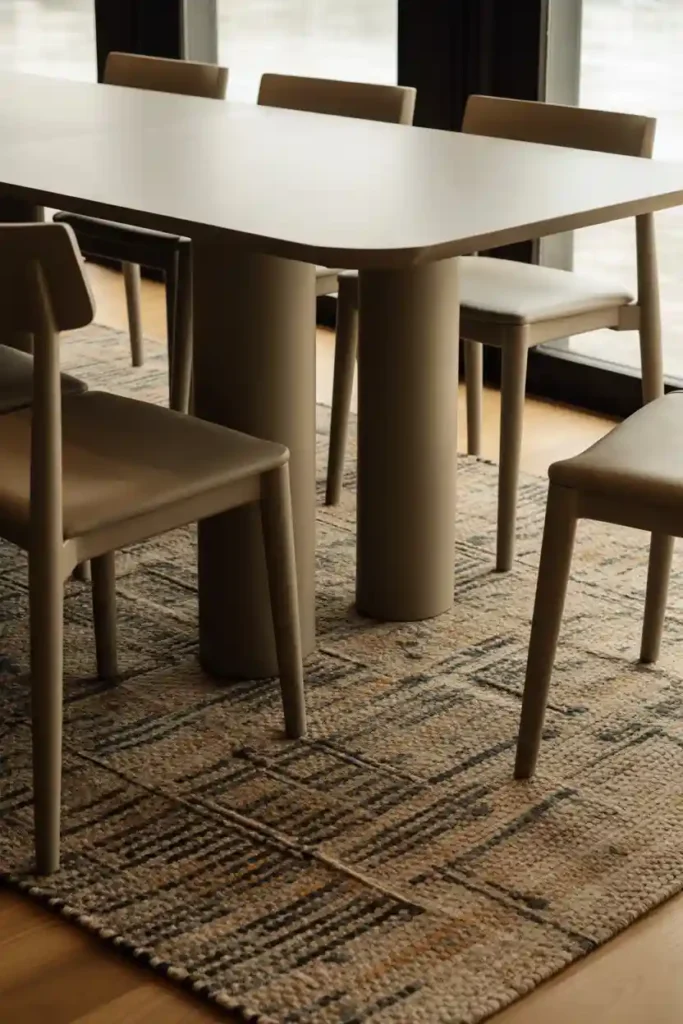
Indoor-outdoor rugs are practical and stylish for dining rooms prone to spills and heavy traffic. Made from durable synthetic fibers, they resist stains and moisture while anchoring the dining space visually. These rugs often feature woven textures and subtle patterns, providing warmth and grounding without worrying about wear. They are ideal for casual or contemporary dining rooms, balancing durability with design.
10. Monochromatic Rugs for Minimalist Spaces
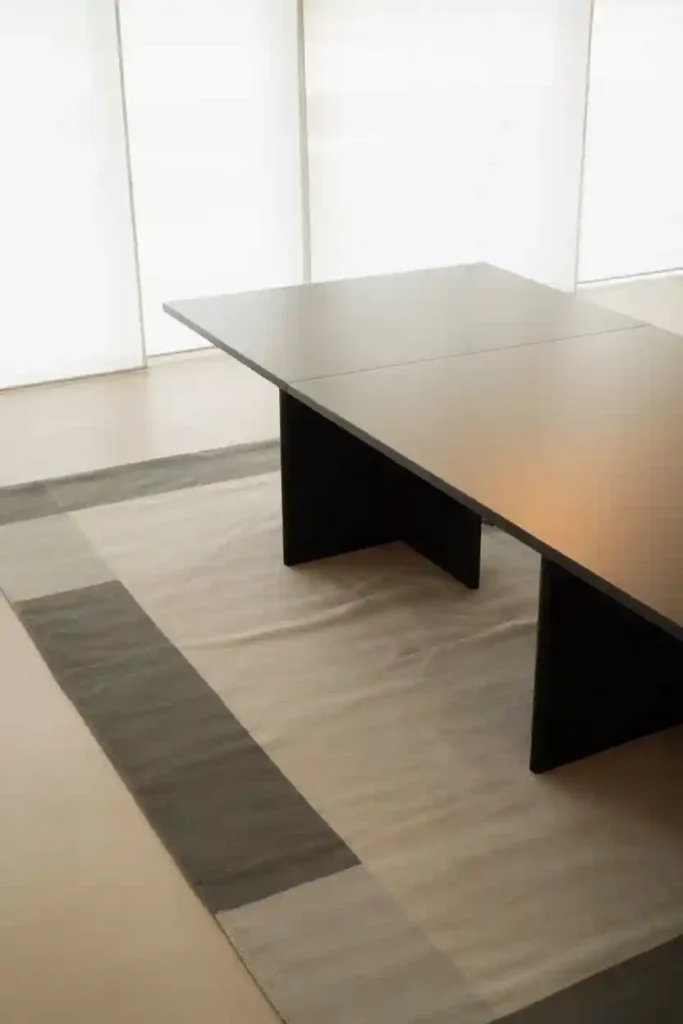
A monochromatic rug anchors the dining room while maintaining a clean, minimalist look. Matching the rug to wall or furniture tones creates a subtle, cohesive feel. Texture, rather than color, becomes the main design element, adding depth without distraction. Monochromatic rugs are perfect for modern or Scandinavian-inspired interiors. They help unify the room while emphasizing simplicity and elegance.
11. Distressed or Vintage Rugs for Character
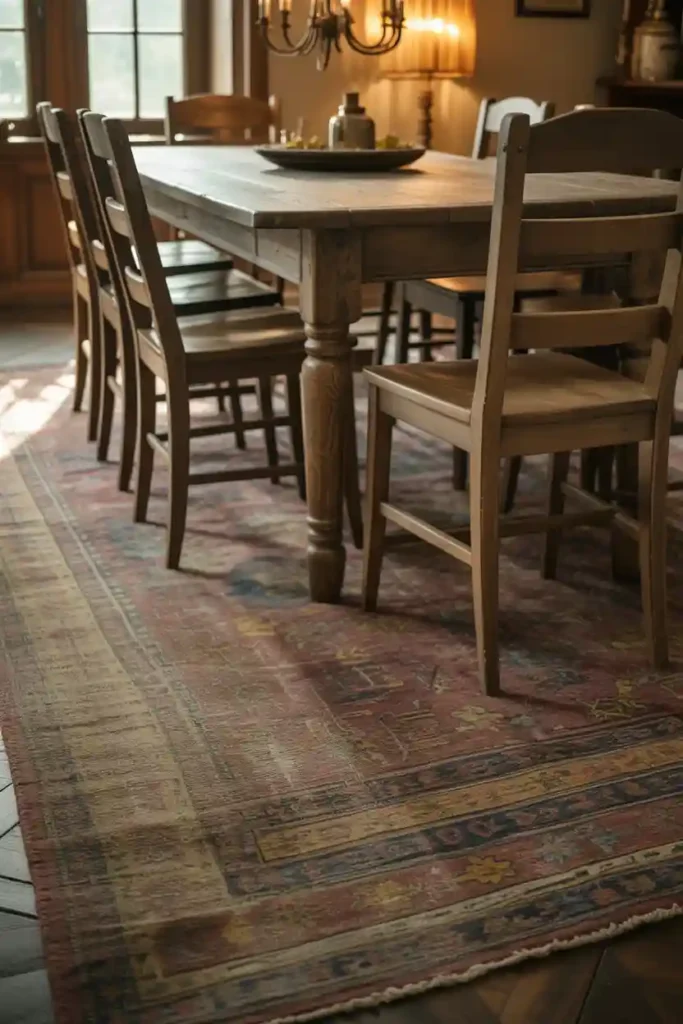
Distressed or vintage rugs add charm, character, and a sense of history to a dining room. Their worn patterns and faded colors bring texture and warmth while anchoring the dining table. These rugs work especially well in traditional, farmhouse, or eclectic interiors, creating a lived-in, inviting feel. The subtle variations in color and pattern help hide spills or wear over time, making them practical for high-traffic areas. A vintage rug can also serve as a statement piece, giving the room personality and depth without overwhelming other design elements. Pairing with neutral furniture or modern décor balances the old-world charm with contemporary style.
12. Custom-Sized Rugs for Perfect Fit
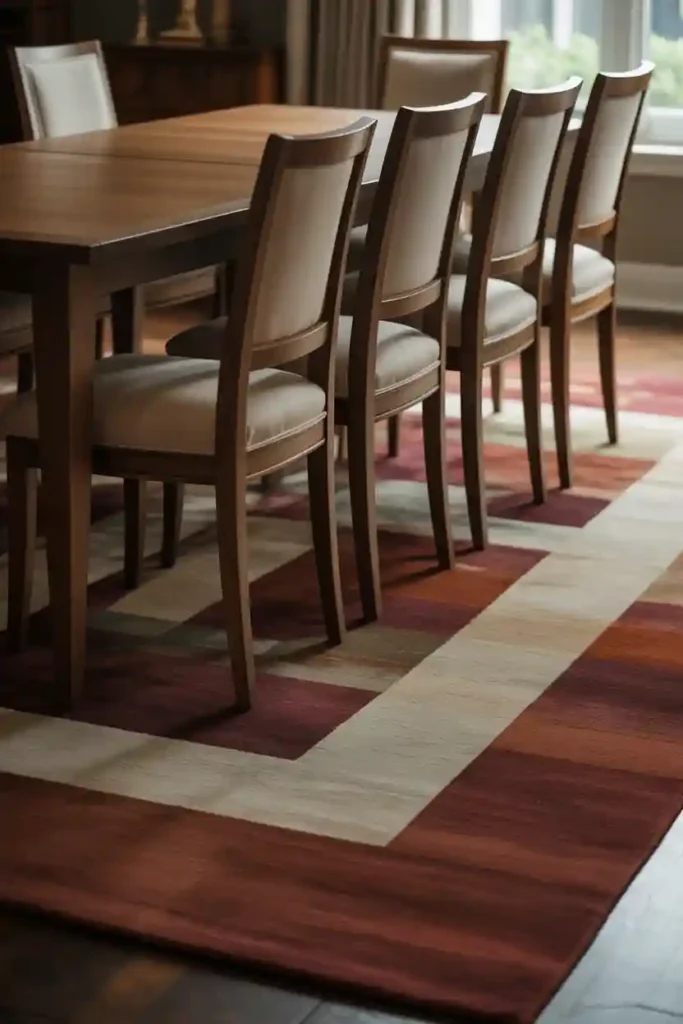
Custom-sized rugs allow you to perfectly anchor your dining room, no matter the table shape or room layout. Measuring precisely ensures all chairs remain on the rug when pulled out, creating a polished and cohesive look. Custom rugs also allow flexibility with patterns, colors, and materials to match the room’s décor and lighting. Choosing a durable material ensures practicality for daily dining use, while unique colors or designs add personality. This option is ideal for irregularly shaped rooms, open floor plans, or tables that don’t conform to standard rug sizes.
Final Words
Choosing the right dining room rug can transform your space from ordinary to beautifully anchored and inviting. Whether you prefer bold patterns, subtle textures, natural fibers, or custom-sized designs, a well-selected rug defines the dining area, ties furniture together, and enhances the overall style of the room. Rugs not only add visual interest but also improve comfort, absorb sound, and create a welcoming atmosphere for meals and gatherings. By thoughtfully considering size, shape, and material, you can ensure the rug complements your décor while remaining functional for daily use.