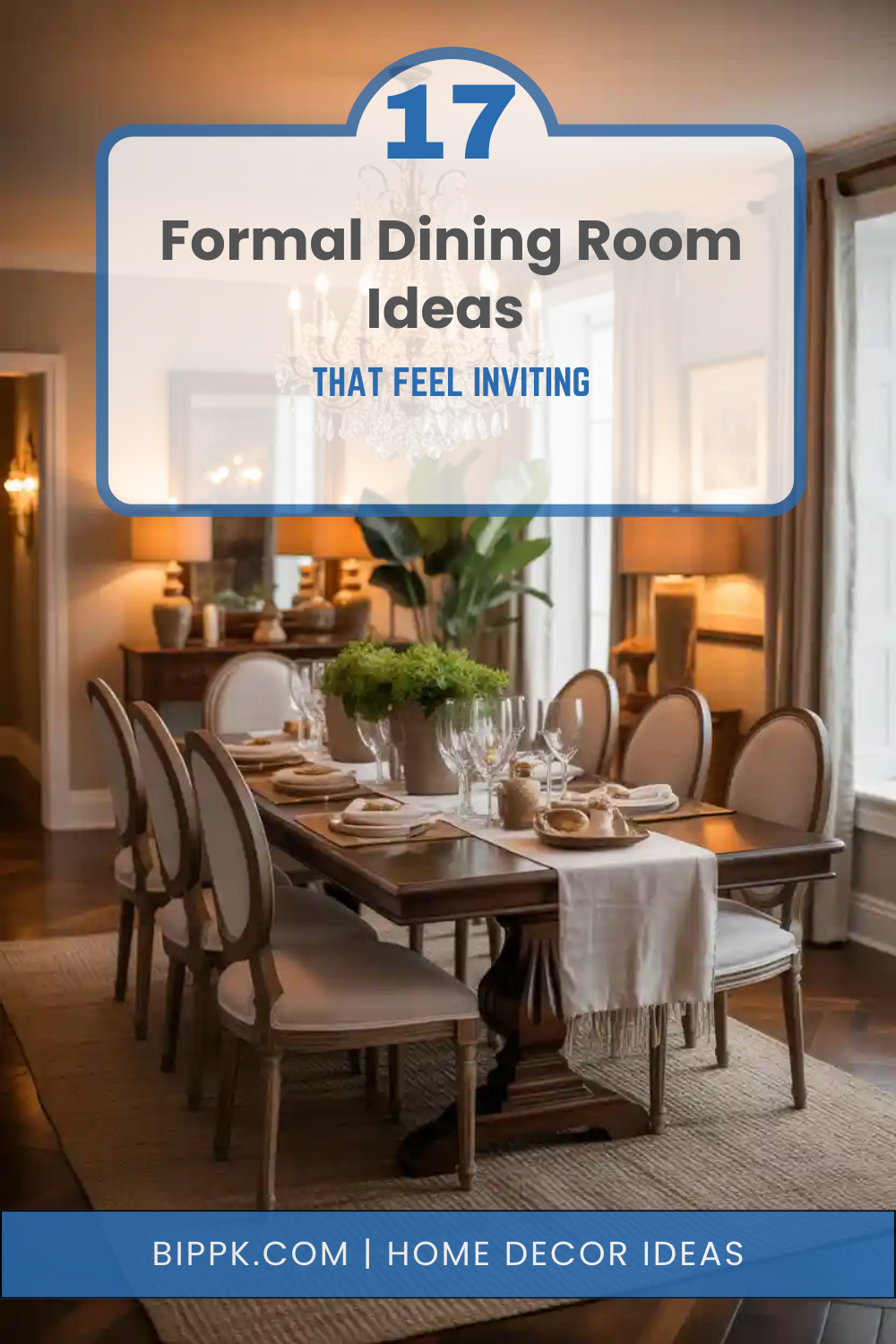
17 Formal Dining Room Ideas That Feel Inviting
A formal dining room should feel elegant, but it should never feel cold or unwelcoming. The most successful spaces balance sophistication with comfort, creating an environment where guests want to linger and conversations flow easily. Thoughtful design choices—such as furniture scale, lighting, textures, and layout—play a major role in achieving this balance. A formal dining room doesn’t have to be reserved only for special occasions; with the right details, it can feel warm enough for regular use while still maintaining a refined look.
These 17 formal dining room ideas that feel inviting focus on combining classic elements with modern comfort. From lighting and seating to color palettes and layout, each idea helps soften formality without losing style. Whether you’re redesigning an entire room or making small updates, these ideas will help you create a dining space that feels polished, welcoming, and effortlessly timeless.
1. Warm Color Palettes for Formal Comfort
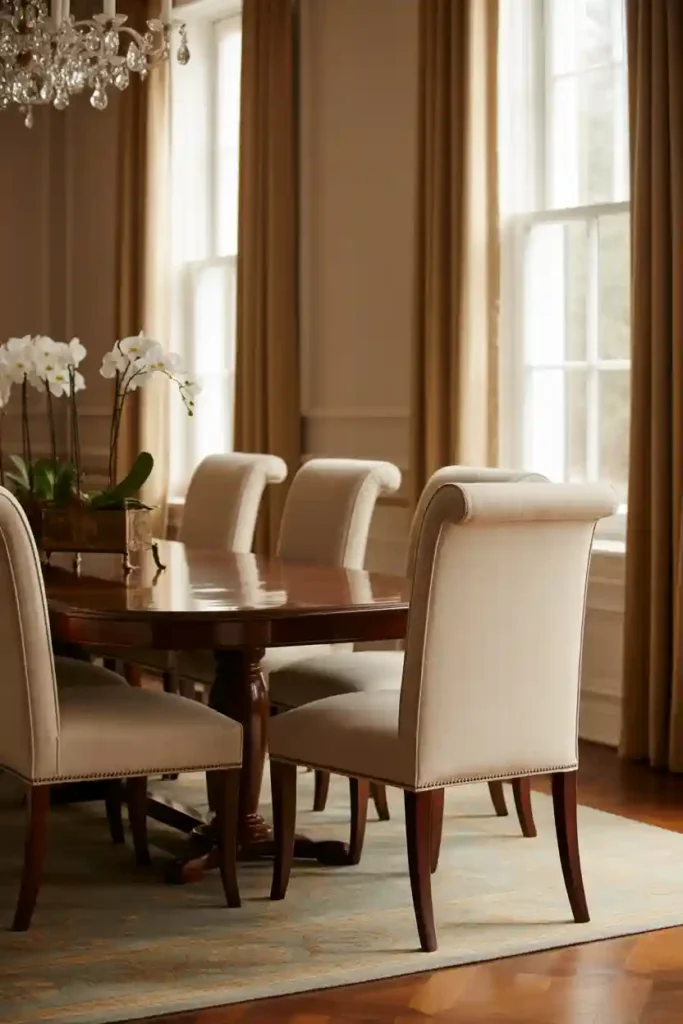
A warm color palette is one of the easiest ways to make a formal dining room feel more inviting. Shades like soft beige, warm gray, taupe, muted terracotta, or deep cream create a welcoming backdrop while maintaining elegance. These tones soften the formality of the space and help guests feel at ease the moment they walk in.
Warm colors also work well with traditional dining furniture, highlighting wood finishes and classic details. Pairing these tones with subtle contrast—such as darker chairs or metallic accents—adds depth without making the room feel heavy. Walls, upholstery, and even artwork can echo these warmer hues for a cohesive look. This approach ensures the dining room feels refined but never rigid, proving that formality and comfort can exist beautifully together.
2. Upholstered Dining Chairs for Added Softness
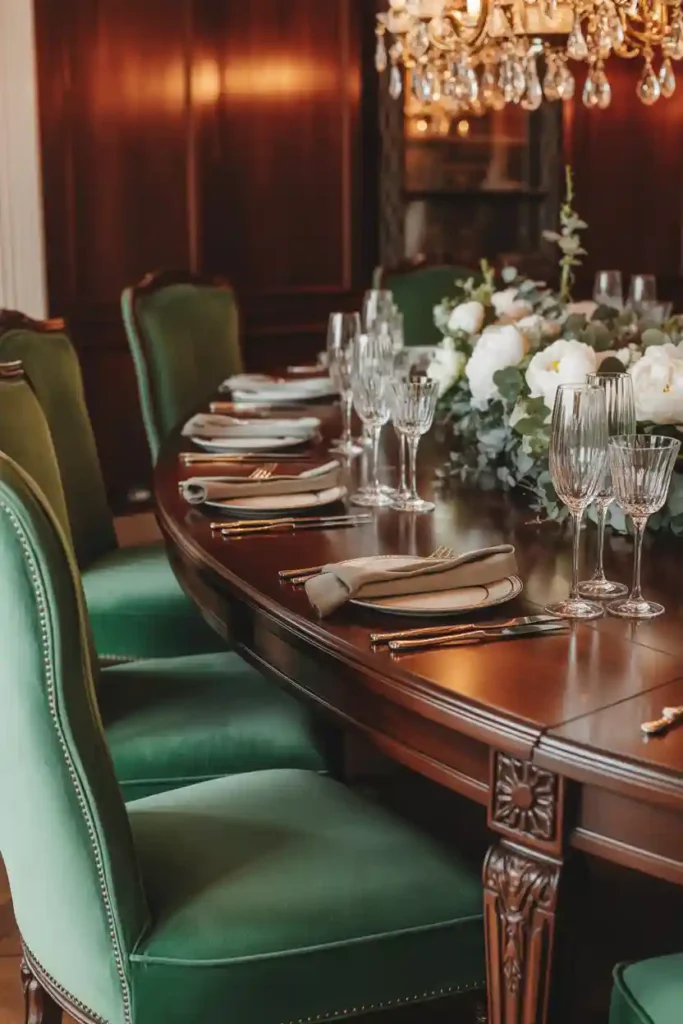
Upholstered dining chairs instantly elevate comfort in a formal dining room. Unlike hard wood seating, upholstered chairs encourage guests to linger longer, making meals feel relaxed and enjoyable. Fabric, leather, or velvet upholstery adds softness and texture while maintaining a polished look.
Neutral upholstery keeps the room classic, while deeper tones add richness. High backs and subtle detailing enhance formality without sacrificing comfort. Mixing upholstered chairs with wood-framed options can also strike a perfect balance. This idea proves that a formal dining room doesn’t have to feel stiff—it can be stylish, comfortable, and welcoming all at once.
Read Also: 14 Living Room Layout Ideas That Actually Work
3. Statement Lighting That Sets the Mood
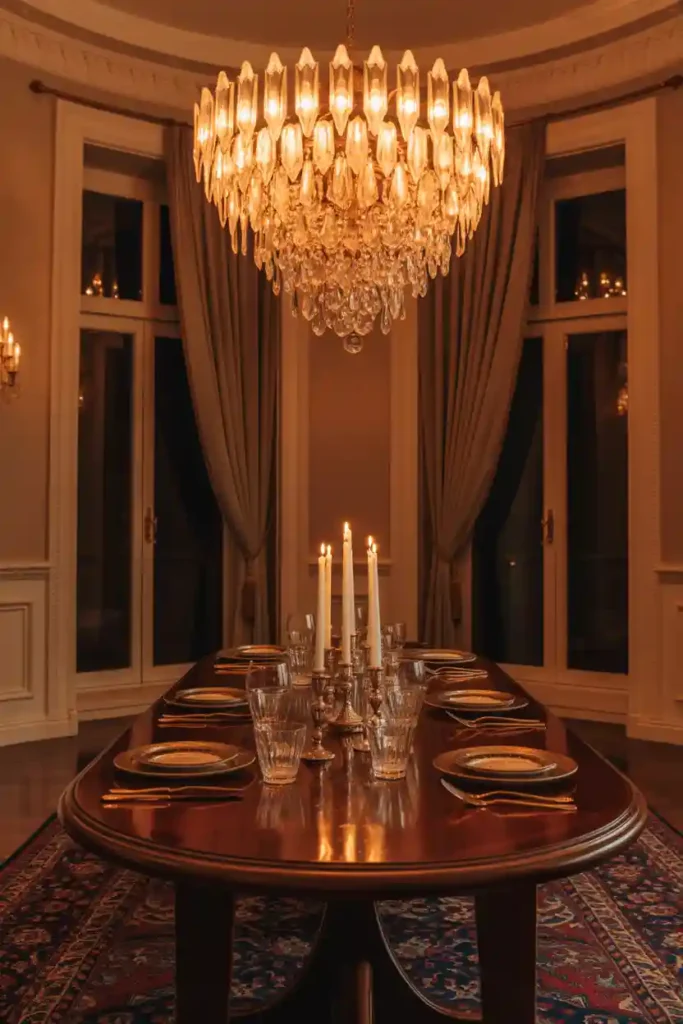
Lighting is one of the most important elements in a formal dining room. A statement chandelier or pendant light instantly defines the space and creates ambiance. The right lighting sets the tone for gatherings, making the room feel intimate rather than overly formal.
Choose lighting with warm bulbs and layered glow. Chandeliers with soft curves or classic detailing feel elegant yet approachable. Hanging the fixture at the correct height ensures visual balance and comfort. Statement lighting transforms the dining room into a space that feels special, welcoming, and thoughtfully designed.
4. Symmetrical Layout for Classic Balance
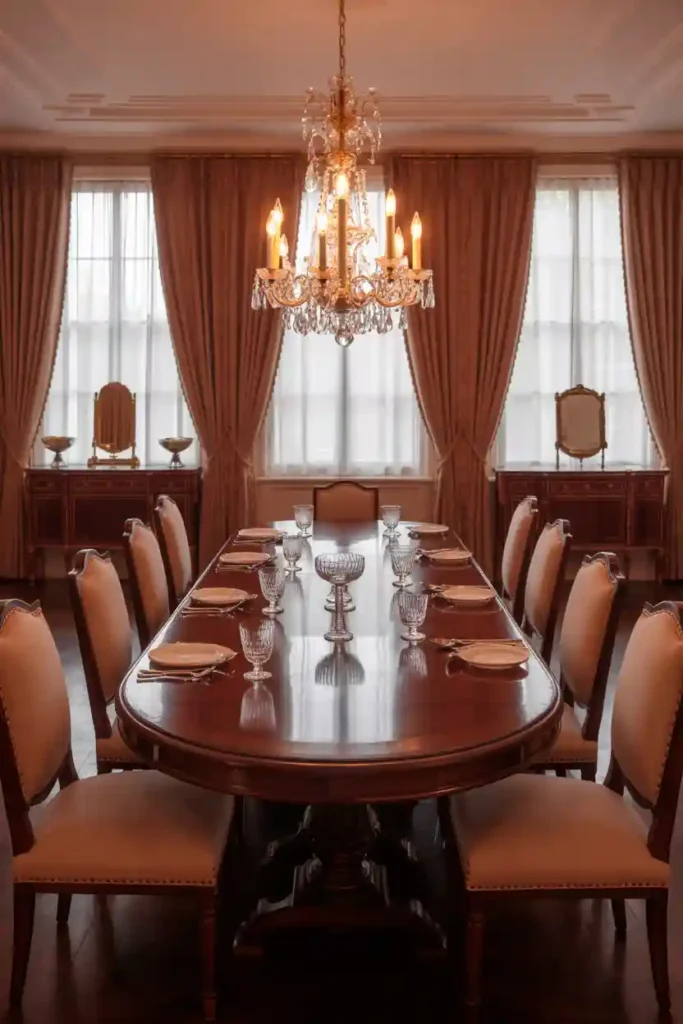
Symmetry brings a sense of calm and order to a formal dining room. A symmetrical layout—centered table, evenly spaced chairs, matching lighting or decor—creates visual balance that feels timeless and refined. This structure helps the room feel organized without appearing rigid.
Matching sideboards, artwork, or lighting on both sides of the room enhances harmony. Even subtle symmetry, like aligned chairs or centered rugs, can have a strong impact. This layout approach reinforces formality while still feeling welcoming and composed.
5. Natural Wood Tones to Add Warmth
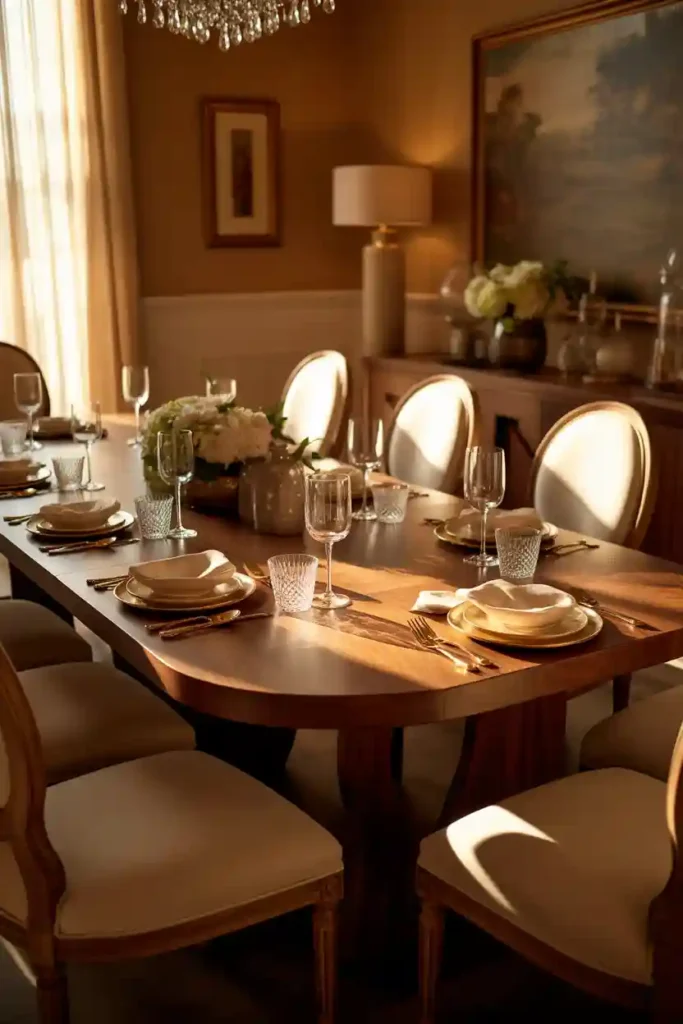
Natural wood finishes bring warmth and authenticity to a formal dining room. Whether used in the dining table, flooring, or cabinetry, wood adds depth and texture that softens the overall look. Rich tones like walnut, oak, or mahogany feel timeless and inviting.
Pairing wood with soft textiles and warm lighting enhances its natural beauty. Even in modern formal spaces, wood elements prevent the room from feeling cold. This idea blends tradition with comfort, making the dining room feel grounded and welcoming.
6. Layered Textiles for Visual Comfort

Layering textiles helps formal dining rooms feel cozy and approachable. Table linens, upholstered chairs, curtains, and rugs all contribute to a softer atmosphere. These layers add depth and warmth while maintaining elegance.
Choose fabrics with subtle texture rather than bold patterns. Linen, wool, and velvet work beautifully in formal settings. Layered textiles absorb sound, making conversations feel more intimate. This approach enhances both comfort and style, creating a dining space guests truly enjoy.
7. Round Dining Tables for Intimate Gatherings
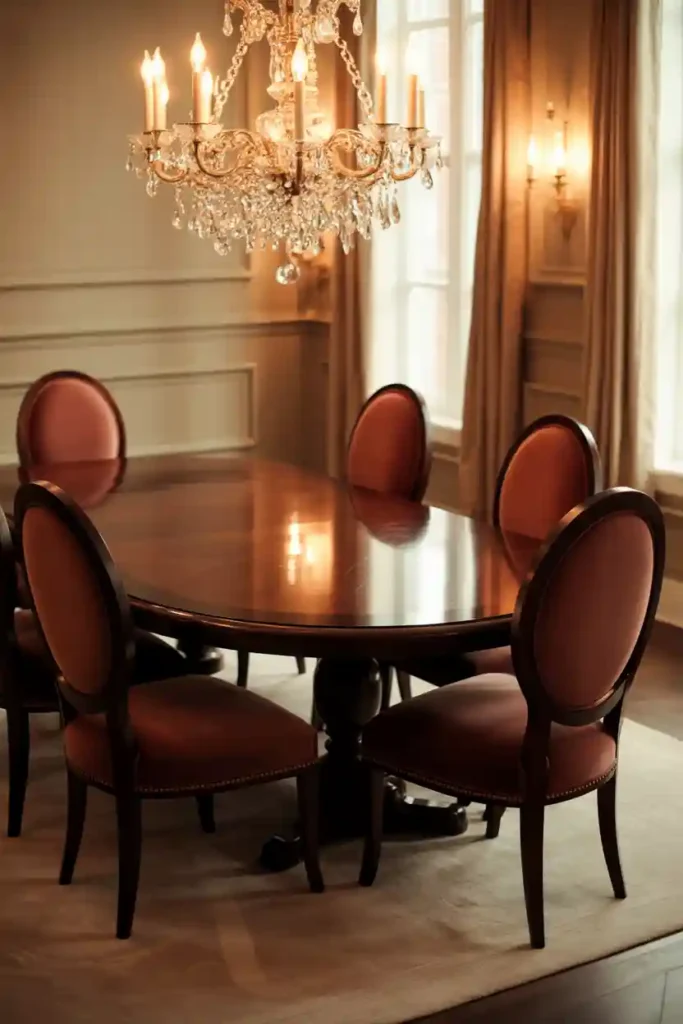
A round dining table is one of the most inviting choices for a formal dining room because it naturally encourages connection. Without sharp corners or rigid edges, everyone seated feels equally included in the conversation. This shape softens the overall look of a formal space, making it feel more relaxed while still maintaining elegance. It’s especially effective in smaller or square dining rooms where flow and balance matter.
Round tables also make movement around the room easier, preventing the space from feeling tight or awkward. Pairing the table with upholstered chairs enhances comfort and encourages guests to linger longer during meals. A centered chandelier above the table reinforces symmetry and adds a refined focal point. Whether used for formal dinners or casual gatherings, a round table creates a welcoming atmosphere that feels intentional, warm, and perfectly suited for meaningful moments shared around the table.
8. Formal Dining Rooms with Soft Wall Treatments
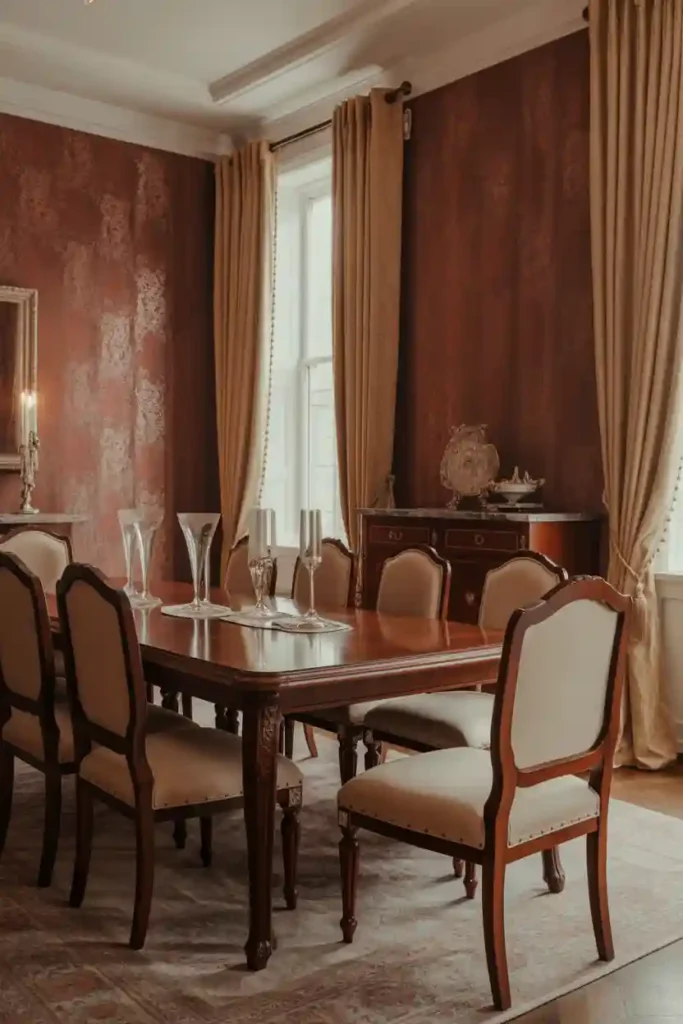
Soft wall treatments can completely change how a formal dining room feels. Instead of stark painted walls, adding texture through wallpaper, fabric panels, or subtle wall molding introduces warmth and depth. These treatments help soften the formality of the room, making it feel more comfortable and visually layered without sacrificing sophistication.
Textured wallpaper in neutral tones adds quiet elegance, while fabric panels improve acoustics and create a cozy ambiance. Even classic wainscoting or muted paneling can make walls feel richer and more welcoming. Soft wall treatments also create a beautiful backdrop for artwork, lighting, and furniture. When paired with warm lighting and balanced decor, they elevate the dining room into a space that feels polished yet inviting. This idea is perfect for homeowners who want a refined dining room that still feels warm and lived-in.
9. Mixing Formal and Casual Elements
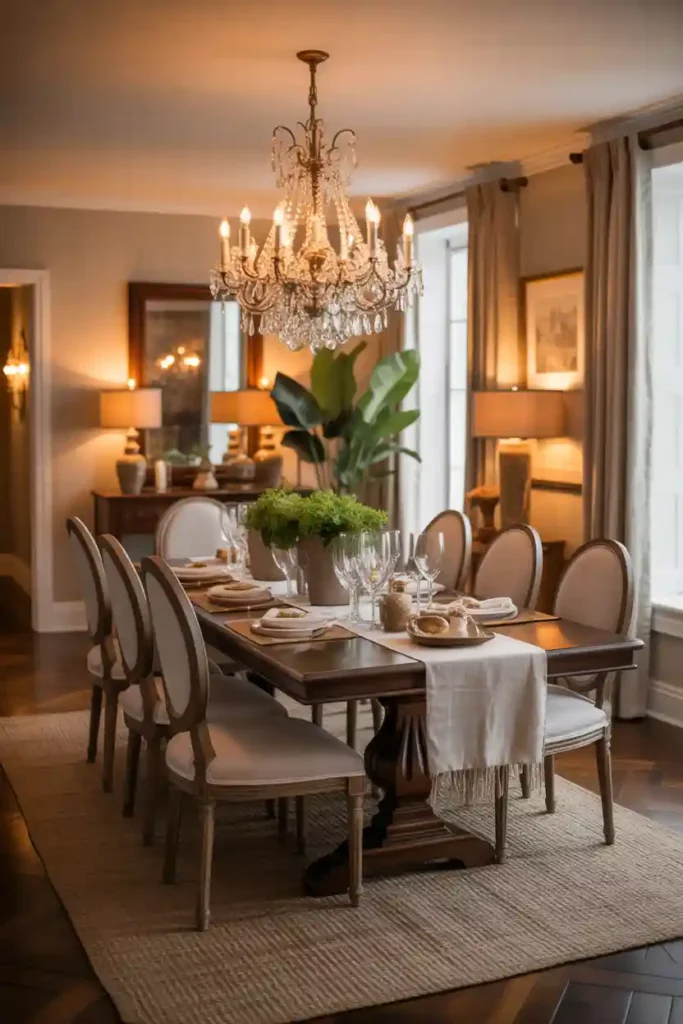
Mixing formal and casual elements is one of the best ways to make a formal dining room feel welcoming rather than intimidating. This approach blends classic pieces—such as a traditional dining table or chandelier—with more relaxed elements like simple chairs, natural textures, or understated decor. The result is a space that feels elegant but approachable.
For example, pairing a polished wood table with linen-upholstered chairs instantly softens the look. Casual elements like woven accessories, subtle artwork, or simple table settings prevent the room from feeling overly stiff. This balance allows the dining room to feel suitable for both everyday meals and special occasions. By thoughtfully combining refined and relaxed details, you create a dining space that feels stylish, personal, and comfortable—perfect for real-life use.
10. Thoughtful Table Centerpieces That Don’t Overwhelm
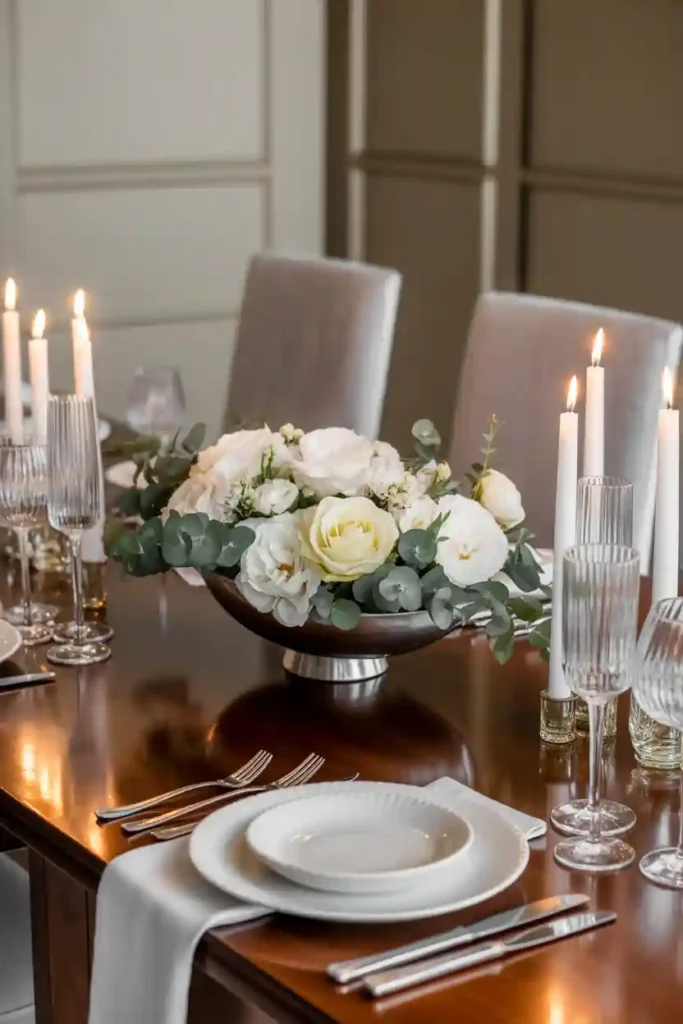
A well-chosen centerpiece can elevate a formal dining room, but restraint is essential. The goal is to enhance the table without distracting from conversation or comfort. Low-profile centerpieces work best, allowing guests to see and engage with one another easily. Simple floral arrangements, grouped candles, or sculptural objects create interest while maintaining balance.
Neutral tones and organic materials keep the look elegant and timeless. Seasonal changes—such as greenery in spring or warm-toned arrangements in fall—add freshness without overpowering the table. Leaving enough space around the centerpiece ensures the table remains functional for serving meals. Thoughtful centerpieces add polish to a formal dining room while preserving a welcoming atmosphere, proving that simplicity often feels the most refined.
11. Drapery That Frames the Room Beautifully
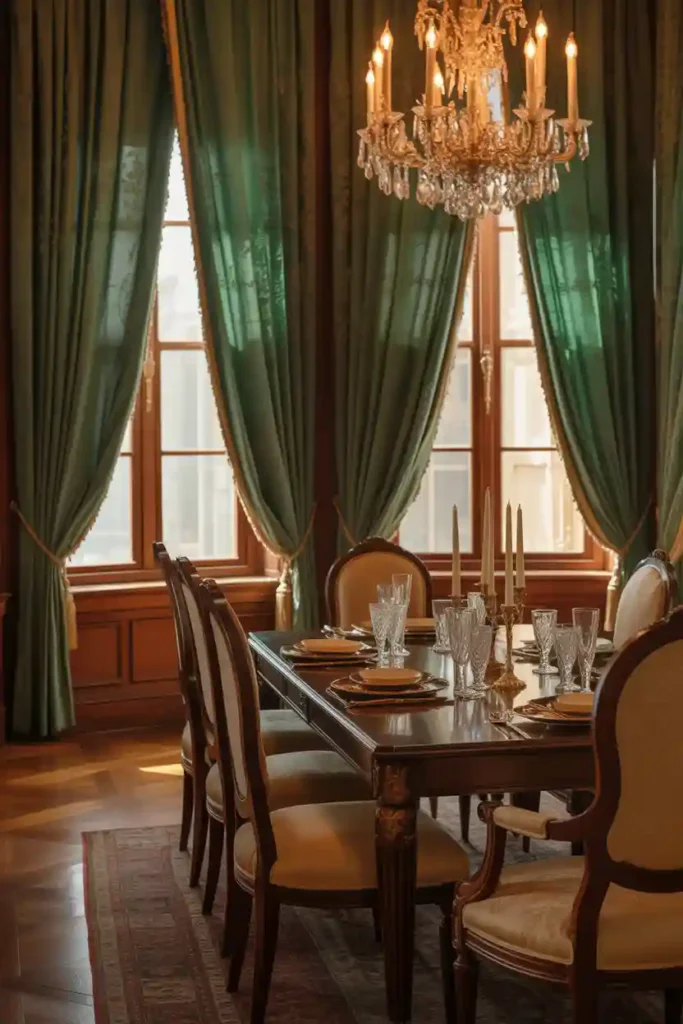
Drapery plays a key role in making a formal dining room feel soft and inviting. Floor-length curtains add height and elegance while balancing the room’s harder surfaces like wood, stone, or glass. The right drapery frames windows beautifully, creating a sense of warmth and refinement.
Choosing fabrics with subtle texture—such as linen blends or soft velvet—adds depth without feeling heavy. Neutral or muted colors maintain a timeless look, while proper fullness ensures the drapery feels luxurious rather than flat. Beyond aesthetics, drapery improves acoustics by absorbing sound, making conversations more comfortable. This simple addition transforms the dining room into a space that feels polished, cozy, and thoughtfully designed.
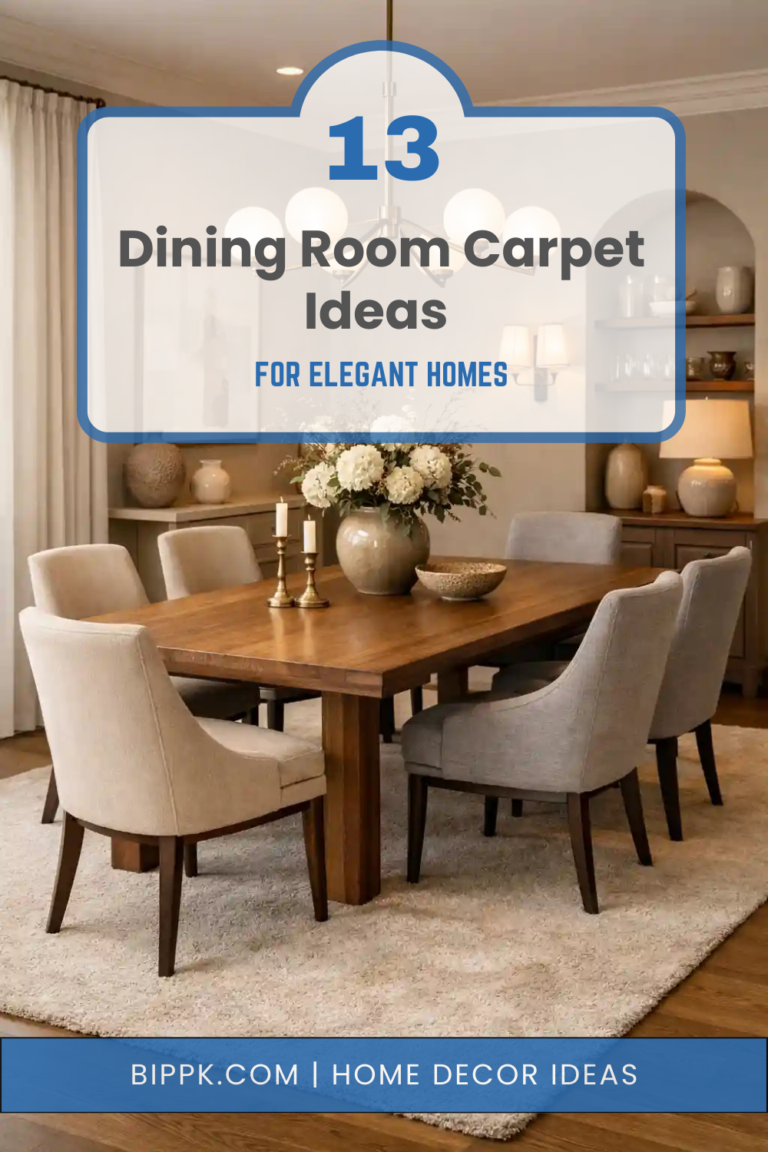
12. Area Rugs to Ground the Dining Space
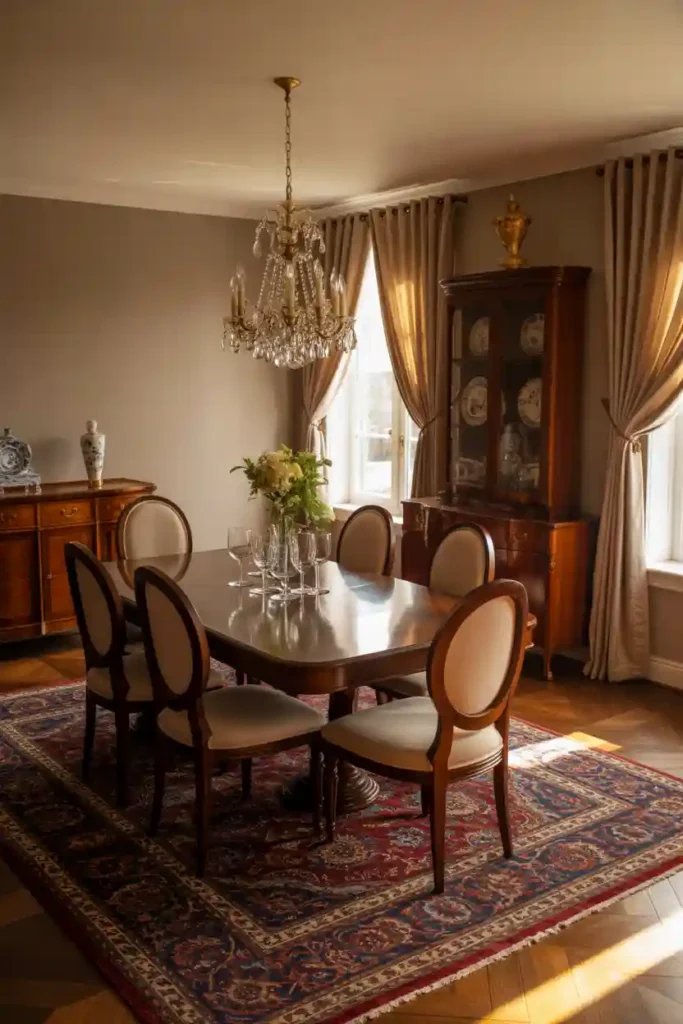
An area rug is essential for grounding a formal dining room and defining the dining zone. It visually anchors the table, making the room feel complete and cohesive. Rugs also add warmth underfoot and soften the overall look of the space.
Selecting the right size is crucial. The rug should extend beyond the table so chairs remain on it even when pulled out. Classic patterns or subtle textures complement formal furniture without overwhelming it. Rugs also help reduce noise, contributing to a calmer dining experience. This design choice blends comfort and elegance, ensuring the dining room feels both refined and welcoming.
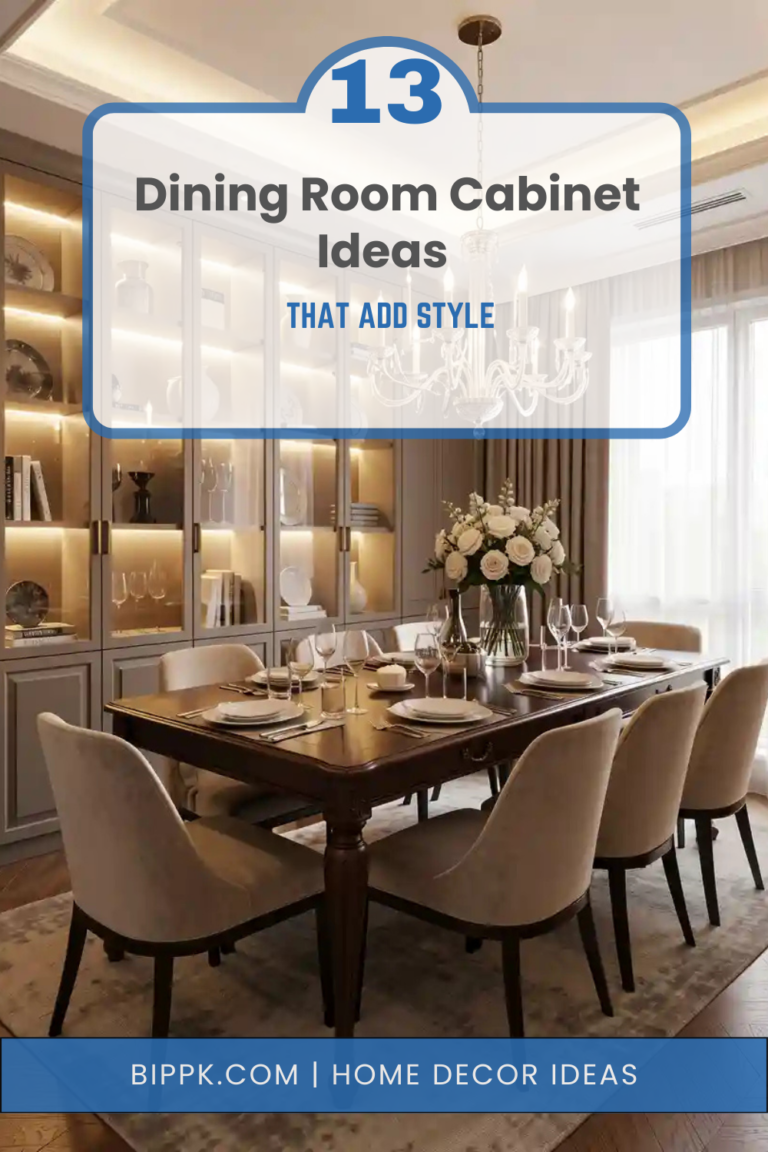
13. Display Cabinets That Feel Styled, Not Stiff
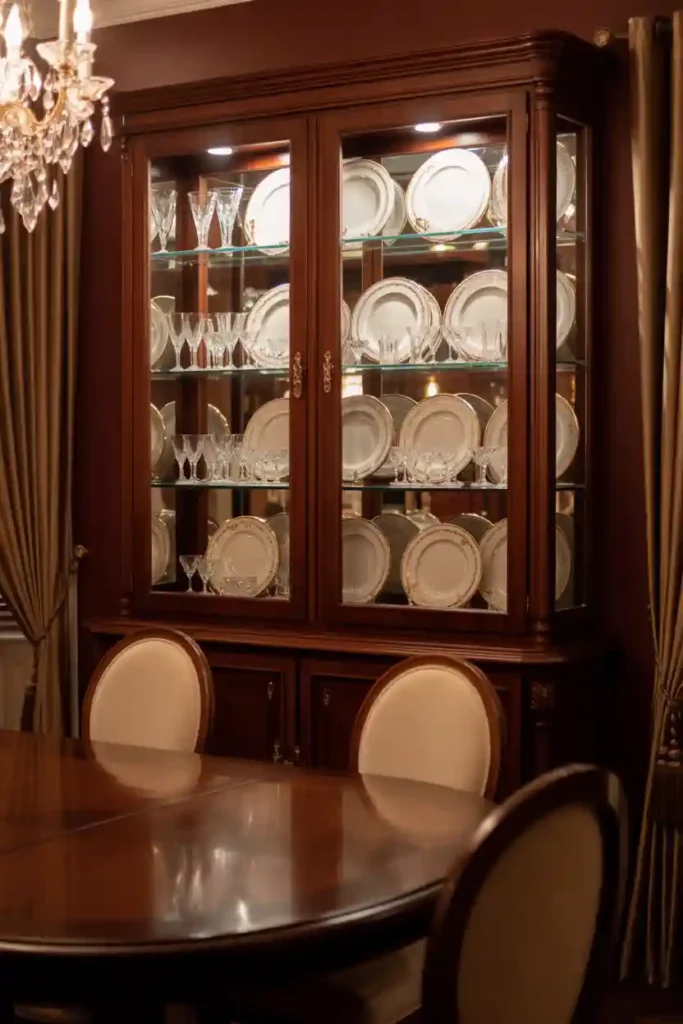
Display cabinets are a classic feature in formal dining rooms, but they don’t have to feel rigid or overly traditional. When styled thoughtfully, they add both function and personality while keeping the room inviting. The key is balance—mixing decorative pieces with practical items so the cabinet feels curated rather than crowded.
Use a combination of dinnerware, glassware, and a few decorative accents such as vases or sculptural objects. Leaving some open space on each shelf allows the display to breathe and prevents visual clutter. Glass-front cabinets work especially well, as they reflect light and keep the room feeling open. Neutral back panels or subtle lighting inside the cabinet can further soften the look. A well-styled display cabinet enhances elegance while making the dining room feel warm, lived-in, and welcoming.
14. Lighting Dimmers for a Softer Atmosphere
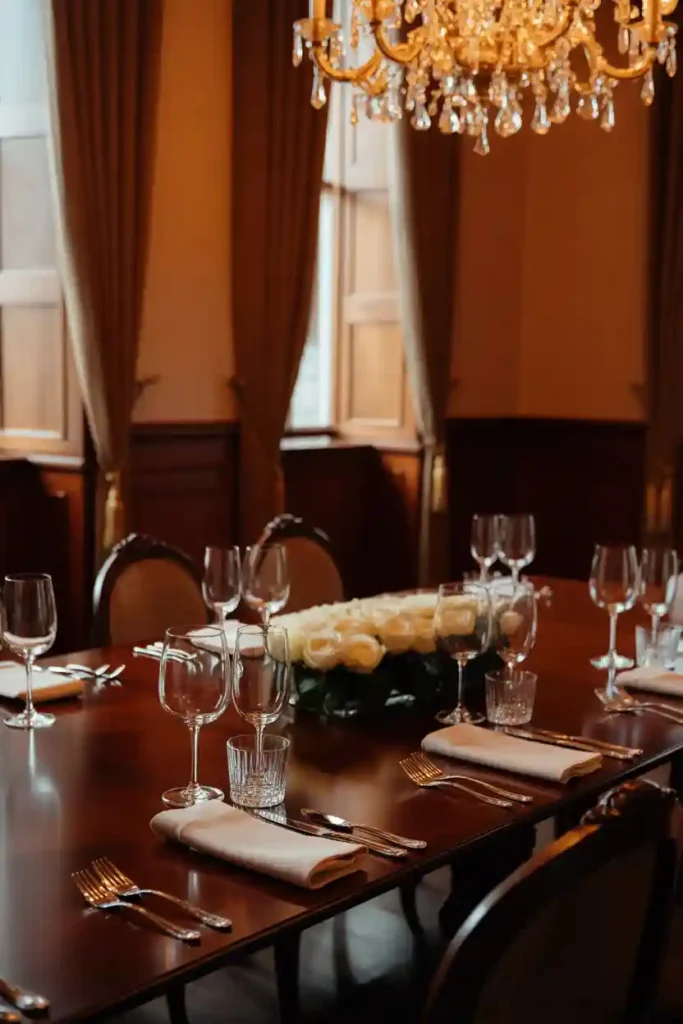
Lighting dimmers are a simple yet powerful upgrade for a formal dining room. They allow you to control the mood of the space, transitioning easily from bright and functional to soft and intimate. This flexibility is especially important in dining rooms, where atmosphere plays a big role in how welcoming the space feels.
During meal preparation or daytime use, brighter lighting keeps the room practical. When it’s time to dine, dimming the lights instantly creates a relaxed, elegant ambiance. Dimmers work beautifully with chandeliers, pendant lights, and wall sconces. Warm-toned bulbs enhance the effect, adding glow without harshness. This small change makes formal dining feel more comfortable and personal, encouraging guests to relax and enjoy the experience.
15. Art That Personalizes the Room
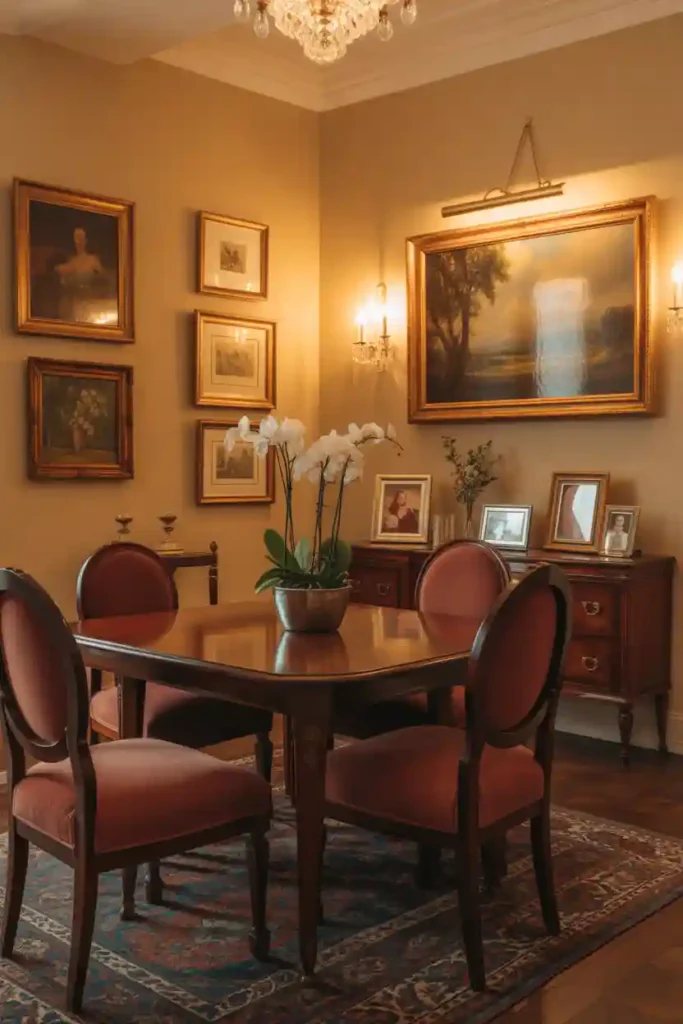
Art is one of the most effective ways to make a formal dining room feel personal and inviting. Rather than choosing pieces solely for formality, select artwork that reflects your taste and adds emotional warmth to the space. Art softens the room’s structure and gives guests something engaging to connect with.
Large-scale artwork creates a strong focal point, while smaller pieces arranged in a gallery wall add character and charm. Keep colors and themes harmonious with the room’s palette to maintain elegance. Proper placement is important—art should sit at eye level and complement the dining table rather than compete with it. When chosen thoughtfully, artwork transforms a formal dining room into a space that feels expressive, welcoming, and uniquely yours.
16. Neutral Palettes with Rich Texture
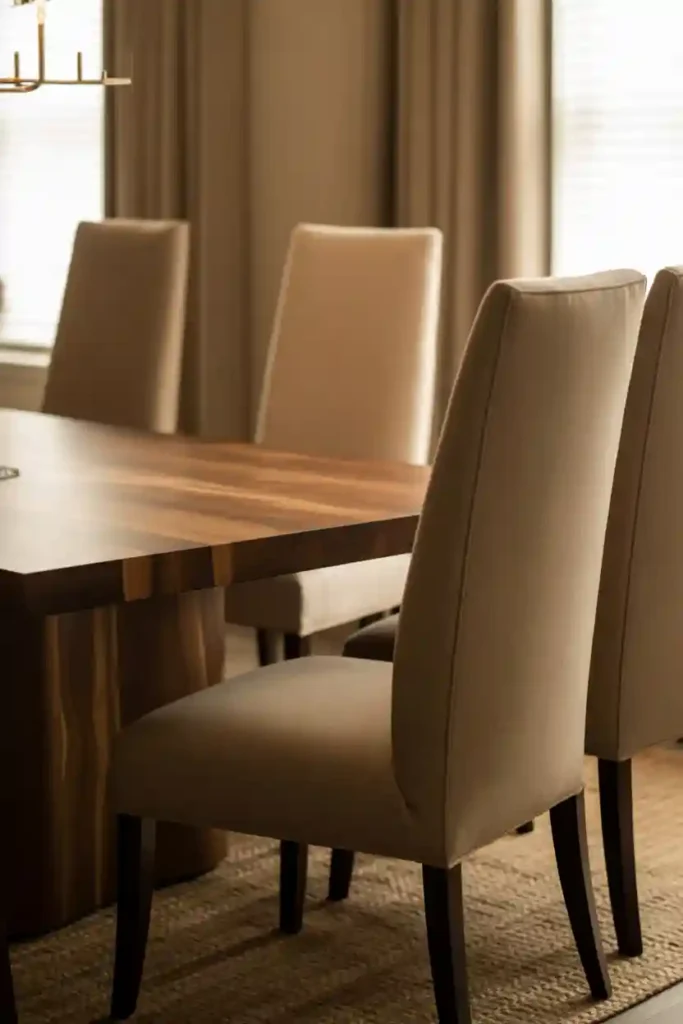
Neutral color palettes are a timeless choice for formal dining rooms, but texture is what makes them feel inviting rather than flat. Shades like cream, beige, soft gray, and taupe create a calm, elegant foundation. When layered with rich textures, these neutrals gain warmth and depth that welcome guests into the space.
Textured elements can include natural wood furniture, upholstered dining chairs, woven rugs, linen tablecloths, or subtle metallic accents. These materials catch light differently, adding visual interest without introducing bold colors. Textured wall treatments, such as grasscloth wallpaper or soft paneling, further enhance the layered look. The result is a dining room that feels refined yet comfortable. By focusing on texture instead of color contrast, this approach maintains formality while creating an atmosphere that feels relaxed, warm, and thoughtfully designed.
17. Comfortable Layouts That Encourage Conversation
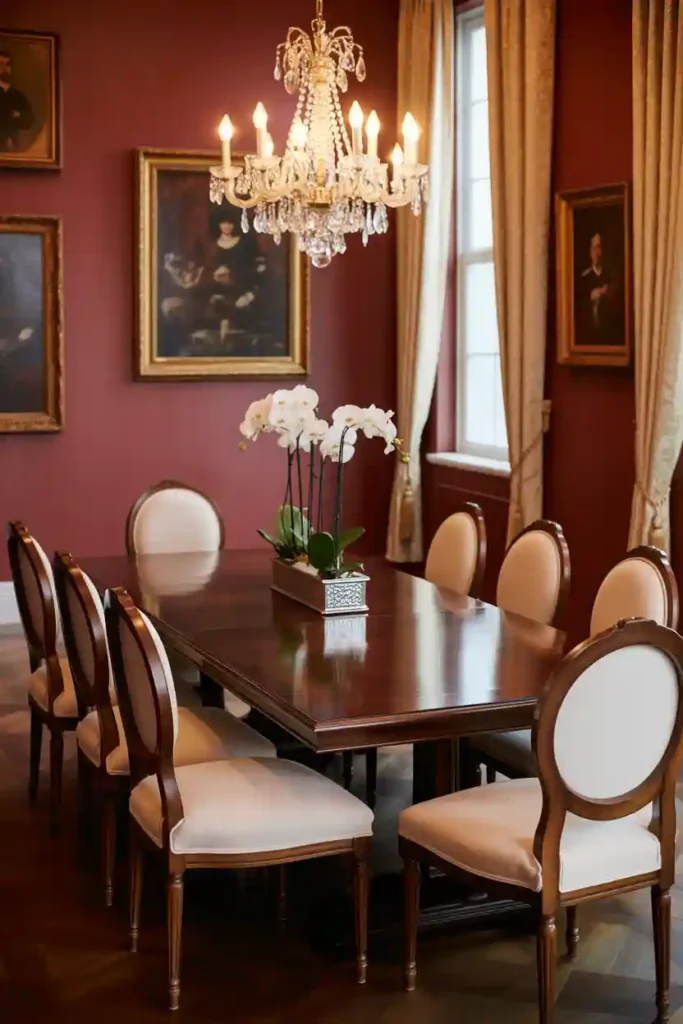
A welcoming formal dining room starts with a layout that supports comfort and connection. Even the most beautiful space can feel uninviting if chairs are too tight or movement feels restricted. A comfortable layout ensures that guests can sit, move, and interact easily throughout the meal.
Begin by choosing a table size that suits the room, leaving enough clearance around it for chairs to be pulled out comfortably. Chairs should be evenly spaced to give everyone adequate personal space. Avoid pushing furniture too close to walls; allowing some breathing room creates a more relaxed atmosphere. Proper lighting placement also plays a role, keeping faces well-lit without harsh glare. When the layout encourages natural conversation and ease, the dining room becomes a space where people feel welcome to linger and enjoy meaningful moments together.
Final Words
A formal dining room should feel just as inviting as it is elegant. With the right balance of comfort, warmth, and thoughtful design, this space can become more than a room reserved for special occasions. From soft textures and warm lighting to comfortable seating and balanced layouts, small details play a big role in how welcoming the room feels.