
15 Minimal Entryway Ideas That Feel Open
A minimal entryway sets the tone for your entire home, creating a calm and welcoming first impression while keeping clutter at bay. Even in small or narrow spaces, thoughtful design choices can make an entryway feel open, airy, and organized. Minimalism isn’t about emptiness—it’s about intentional design, smart storage, and visual balance. By focusing on light colors, streamlined furniture, and functional décor, a minimal entryway can feel spacious without sacrificing warmth or personality.
From floating furniture and concealed storage to strategic lighting and subtle textures, minimal design helps create breathing room where it’s needed most. Whether you live in an apartment, townhouse, or compact home, a well-designed entryway can instantly improve flow and functionality. In this guide, we’ll explore 15 minimal entryway ideas that feel open, offering practical solutions, styling tips, and image prompts to help you visualize each concept and create a refined, clutter-free entrance.
1. Keep the Color Palette Light and Neutral
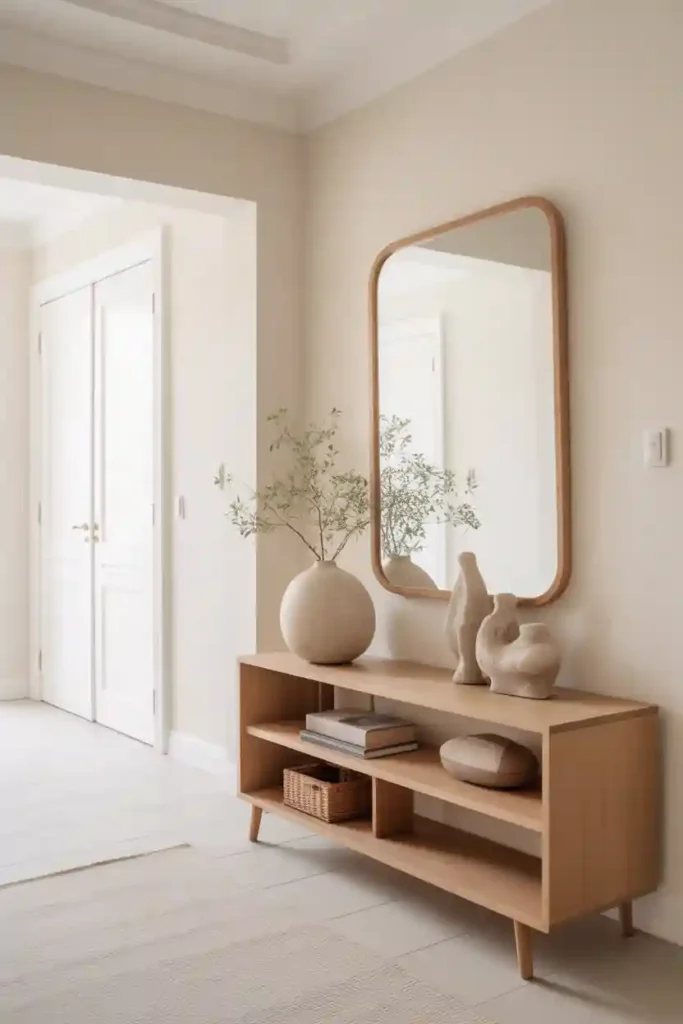
Light, neutral colors instantly make an entryway feel larger and more open. Shades like white, beige, soft gray, and warm cream reflect light instead of absorbing it, helping even the smallest entryway feel airy. A neutral palette also creates visual continuity, preventing the space from feeling segmented or crowded. Using a single color family across walls, trim, and furniture enhances this effect. Subtle contrast can be introduced through texture rather than bold color—think matte walls paired with natural wood or linen accents. Neutral tones also allow functional pieces like shoe storage or wall hooks to blend seamlessly into the background, maintaining a clean look.
This approach works especially well in narrow or windowless entryways where brightness is limited. When paired with minimal décor and clean lines, a light palette creates a welcoming, calm first impression that sets the tone for the rest of the home.
2. Use a Floating Console Table

A floating console table keeps the floor visually clear, making the entryway feel larger and less cluttered. Mounted directly to the wall, it provides a functional surface for keys, mail, or décor without the bulk of traditional furniture. This creates a sense of openness while maintaining practicality. Floating furniture also emphasizes horizontal space, which is especially helpful in narrow entryways. Choose a slim design with clean lines and minimal detailing. Light wood, matte white, or soft neutral finishes blend effortlessly into a minimalist design.
You can pair the console with a single decorative object or small tray to maintain visual balance. Leaving space beneath the console allows light to flow freely and makes cleaning easier. This simple design choice keeps the entryway looking intentional, airy, and uncluttered.
Read Also: 17 Small Dining Room Ideas That Feel Spacious
3. Add a Large Minimal Mirror
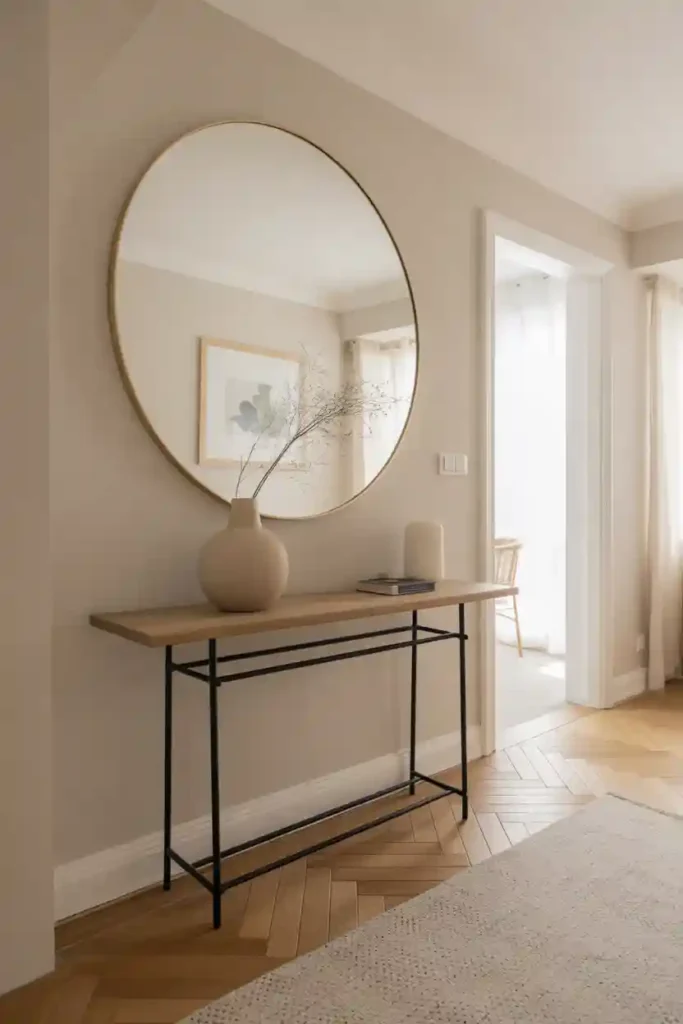
Mirrors are one of the most effective tools for making a minimal entryway feel open. A large mirror reflects light and visually doubles the space, instantly creating depth. In minimalist design, a simple frame or frameless mirror works best to maintain a clean look. Placing the mirror above a console or directly on a blank wall keeps the entryway visually balanced. A vertical mirror emphasizes height, while a wide horizontal mirror enhances width. Either option makes tight spaces feel less confined.
Beyond aesthetics, mirrors are functional—perfect for last-minute checks before heading out. Keeping the surrounding décor minimal ensures the mirror remains the focal point without overwhelming the space. This simple addition adds elegance while maintaining an airy, uncluttered feel.
4. Limit Furniture to Essentials Only
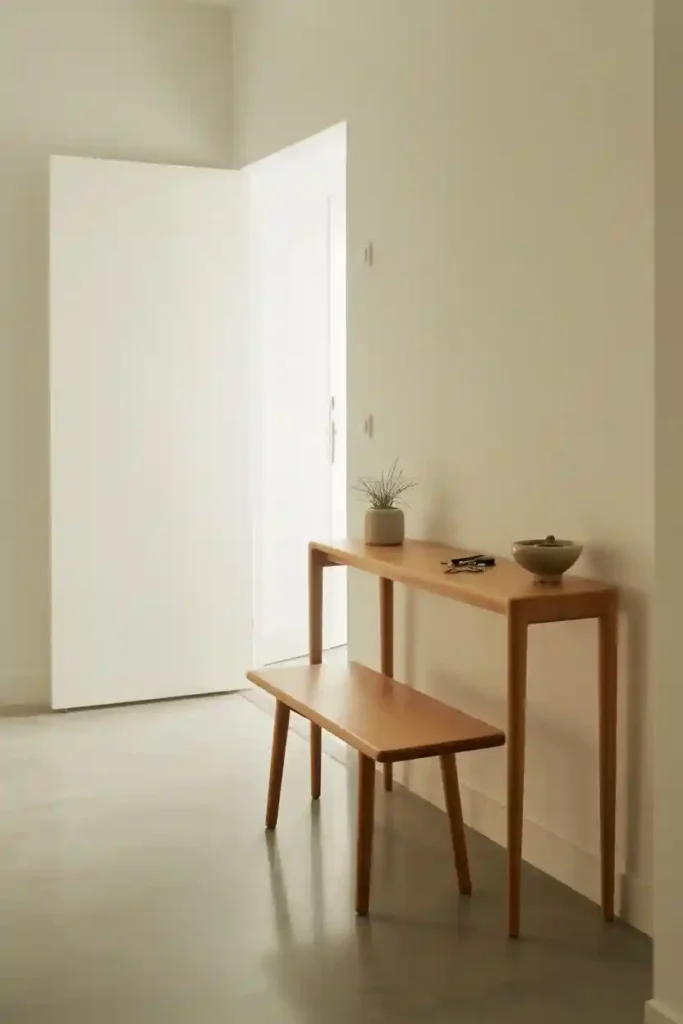
Minimal entryways thrive on simplicity, and that starts with limiting furniture to only what’s necessary. Avoid overcrowding the space with extra chairs, cabinets, or decorative pieces. Instead, focus on one or two functional items, such as a console table and a small bench. Keeping furniture minimal improves circulation and prevents the entryway from feeling cramped. Slim profiles and open designs work best, allowing light and movement to flow freely. When fewer items occupy the space, each piece feels intentional and visually lighter.
This approach also encourages better organization, as there’s less surface area for clutter to accumulate. A restrained furniture layout creates a calm, open environment that feels welcoming rather than chaotic.
5. Choose Wall-Mounted Storage
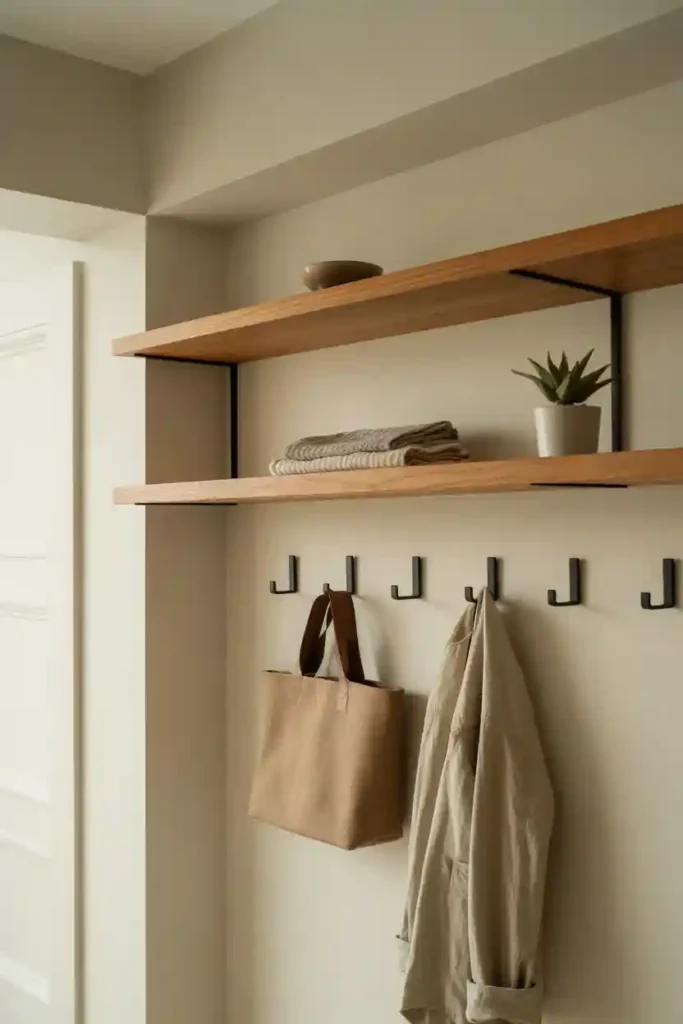
Wall-mounted storage keeps items off the floor, instantly making an entryway feel more open. Floating shelves, wall hooks, and mounted cabinets provide necessary storage without adding bulk. This vertical approach maximizes space while maintaining a minimalist aesthetic. Opt for closed storage if you want a clean, clutter-free look, or open shelves for a lighter visual feel. Keeping storage slim and streamlined ensures it blends into the background rather than dominating the space.
Wall-mounted solutions are especially effective in small entryways, where floor space is limited. By lifting storage upward, you create better flow and a more spacious appearance while keeping essentials neatly organized.
6. Use Built-In Storage Where Possible

Built-in storage creates a seamless, custom look that enhances openness in a minimal entryway. Because built-ins sit flush with the wall, they reduce visual clutter and eliminate bulky furniture. This creates a streamlined appearance that feels calm and organized. Built-in benches, cabinets, or cubbies can hide shoes, bags, and seasonal items while maintaining a clean façade. Matching the built-in finish to the wall color further enhances the sense of space.
This solution works especially well in modern or contemporary homes where clean lines are key. Built-ins combine function and design effortlessly, making them ideal for minimalist entryways that feel open and refined.
7. Keep the Floor Clear
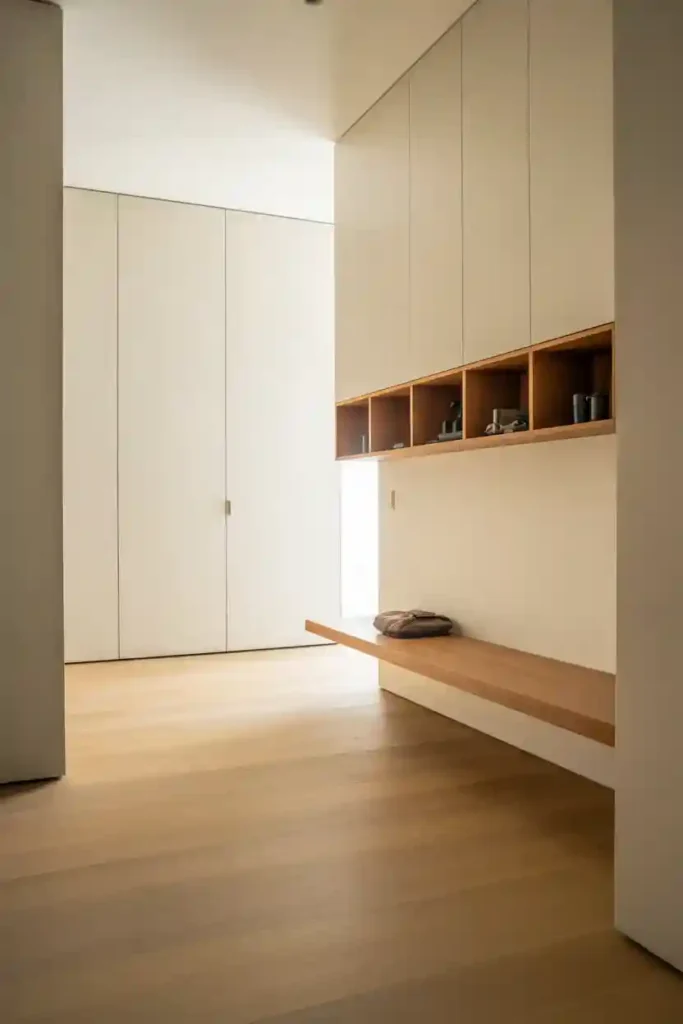
Keeping the floor clear is one of the most effective ways to make a minimal entryway feel open and spacious. When the floor is visible and uncluttered, the eye can move freely across the space, creating the illusion of more square footage. Avoid placing baskets, loose shoes, or decorative items directly on the floor, as these instantly make the entryway feel crowded and chaotic. Instead, rely on wall-mounted or floating furniture to handle storage needs. Floating benches, wall hooks, and mounted cabinets allow the floor to remain unobstructed while still keeping everyday essentials within reach. This approach improves both visual openness and physical movement, making the entryway easier to navigate.
If you choose to use a rug, keep it slim and light in color, or opt for no rug at all to showcase the flooring. A clear floor also enhances natural and artificial light, helping the entryway feel brighter and more inviting. In minimal design, negative space is just as important as furniture, and an open floor plays a key role in achieving that balance.
8. Use Slim Wall Hooks Instead of Bulky Coat Racks

Traditional coat racks can quickly overwhelm a small or narrow entryway, both visually and physically. Slim wall hooks offer a minimalist alternative that keeps coats, bags, and accessories organized without taking up valuable floor space. By mounting hooks directly on the wall, you maintain clean lines and preserve an open layout. Choose hooks with a simple shape and neutral finish, such as matte black, brushed metal, or natural wood. Installing them in a straight line or symmetrical arrangement creates visual order and reinforces a minimalist aesthetic. Limiting the number of hooks is equally important, as too many can lead to clutter buildup.
Wall hooks also encourage intentional habits—only frequently used items are displayed, while seasonal pieces can be stored elsewhere. This keeps the entryway tidy and visually calm. Slim hooks blend seamlessly into the background, making the space feel functional yet uncluttered. The result is an entryway that feels open, practical, and effortlessly modern.
9. Incorporate Soft, Indirect Lighting
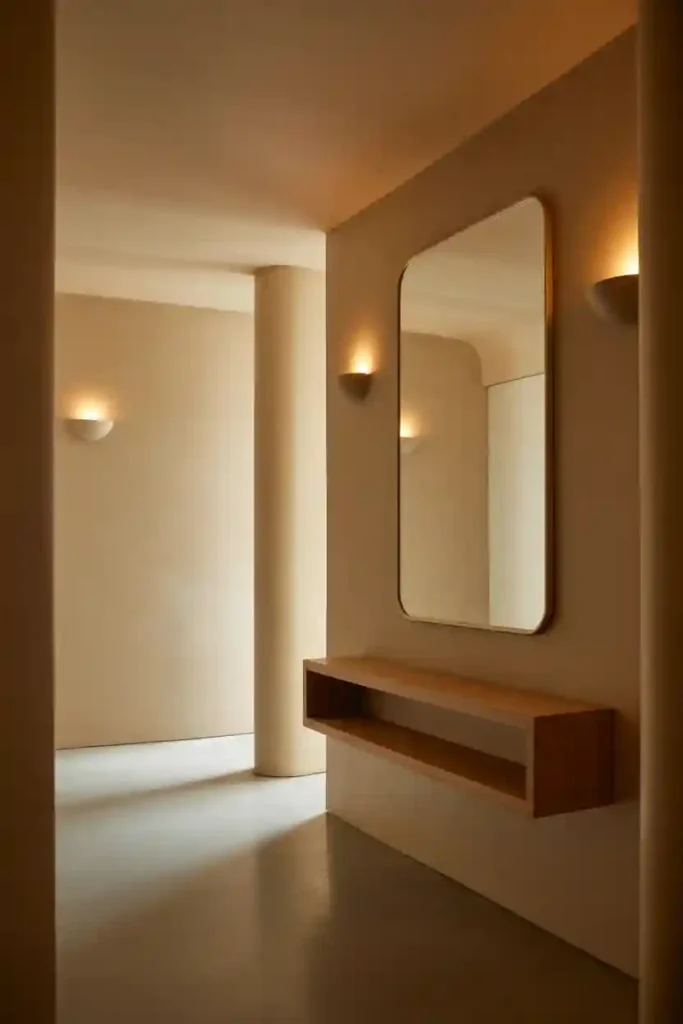
Lighting has a powerful impact on how open an entryway feels, and soft, indirect lighting is ideal for minimalist spaces. Harsh overhead lights can create strong shadows that make an entryway feel smaller, while indirect lighting gently illuminates the space and enhances its sense of depth. Wall sconces, recessed ceiling lights, or concealed LED strips provide even illumination without drawing attention to the fixtures themselves. Warm white light works best, as it adds warmth and complements neutral color palettes often used in minimal design. Lighting placed near walls or ceilings helps visually expand the space by highlighting architectural lines.
In windowless entryways, indirect lighting becomes especially important. It prevents dark corners and creates a welcoming atmosphere from the moment you enter. Choosing fixtures with simple, clean designs ensures they blend seamlessly into the space. Thoughtful lighting not only improves visibility but also reinforces the calm, open feeling that defines a minimalist entryway.
10. Stick to One Clear Focal Point

A minimal entryway feels most open when it has a single, well-defined focal point. Too many visual features competing for attention can quickly make the space feel cluttered and overwhelming. By choosing one main element—such as a mirror, artwork, or a slim console table—you create visual clarity and balance. A large mirror is often the best focal point because it reflects light and adds depth without adding bulk. If you prefer artwork, choose a simple piece with a neutral palette and clean lines. The surrounding décor should remain understated so the focal point stands out naturally.
Keeping one focal element also makes the entryway easier to style and maintain. When every object has a purpose, the space feels calm and intentional. This approach enhances openness while still allowing personality to shine through in a subtle, refined way.
11. Use Closed Storage to Hide Everyday Clutter

Closed storage is essential for maintaining a minimal entryway that feels open and organized. Shoes, bags, keys, and daily essentials can easily create visual chaos if left exposed. Cabinets, drawers, or storage benches with concealed compartments allow you to store these items out of sight while keeping them easily accessible. Flat-front cabinets or push-to-open drawers work especially well in minimalist spaces because they maintain clean lines and avoid visual interruptions. Matching the storage color to the wall helps it blend seamlessly into the background, making the entryway feel larger.
Closed storage also encourages better habits by defining where items belong. When clutter is hidden, the entryway immediately feels calmer and more spacious. This approach allows you to enjoy a clean, welcoming entrance without sacrificing functionality or convenience.
12. Keep Décor Intentional and Minimal

In a minimal entryway, décor should be intentional rather than abundant. A few thoughtfully chosen pieces have a much greater impact than multiple decorative items competing for space. One sculptural vase, a small plant, or a single framed artwork can add personality while preserving openness. Limiting décor prevents surfaces from becoming cluttered and ensures the entryway remains functional. Neutral colors, organic shapes, and natural materials work best in minimalist settings, as they add warmth without visual weight. Texture plays an important role here—subtle variations in material can create interest without overcrowding the space.
By editing décor carefully, the entryway feels calm, balanced, and refined. This restraint allows architectural elements and furniture to shine, reinforcing the clean, open feeling that defines minimalist design.
13. Choose Furniture with Clean, Simple Lines
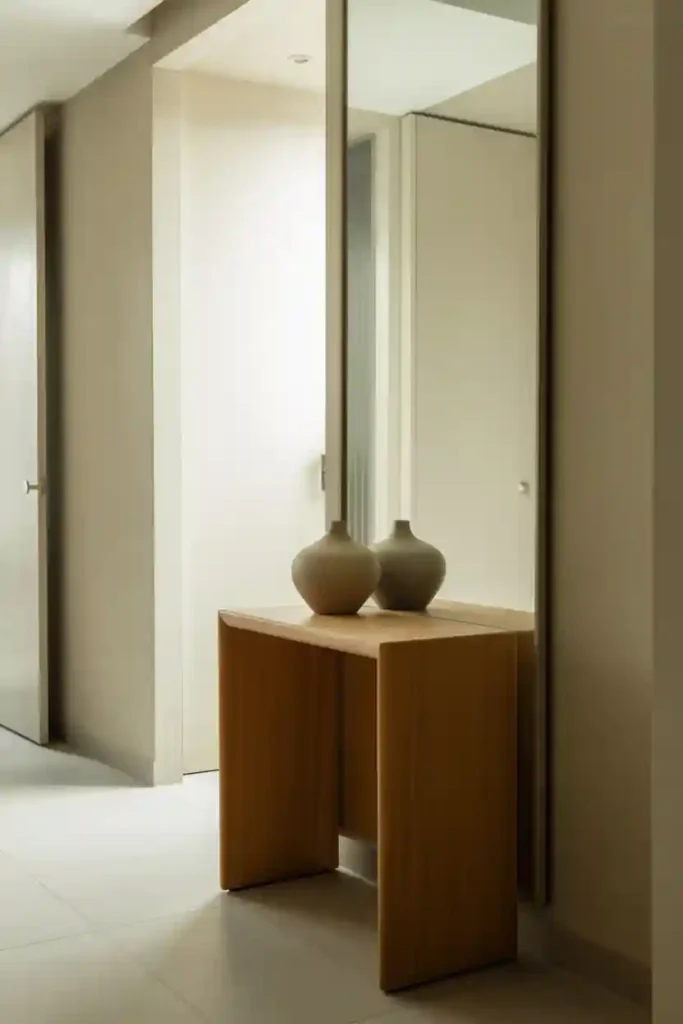
Furniture with clean, simple lines is essential for creating a minimal entryway that feels open. Ornate details, heavy carvings, and bulky shapes can visually weigh down a space, making it feel smaller and more cluttered. In contrast, streamlined furniture allows the eye to move freely, enhancing the sense of openness. Look for entryway benches, consoles, or cabinets with straight edges, thin legs, and smooth surfaces. Materials like light wood, matte finishes, or powder-coated metal work especially well in minimalist designs. Avoid decorative hardware or excessive detailing that draws attention away from the overall layout.
Clean-lined furniture also improves functionality by keeping the space easy to navigate. When each piece feels visually light and intentional, the entryway becomes calm, balanced, and welcoming. This approach ensures your entryway remains timeless, practical, and effortlessly open.
14. Use Natural Materials to Add Warmth Without Clutter

Minimal entryways can sometimes feel cold if not balanced properly. Natural materials help add warmth while preserving openness and simplicity. Light wood, stone, linen, jute, or leather introduce texture and depth without visual heaviness. A wooden bench, a woven runner, or a linen cushion softens the space and makes it feel inviting. These materials pair beautifully with neutral color palettes, enhancing the overall harmony of the entryway. Choosing one or two natural elements is enough—overuse can lead to visual clutter.
Natural textures also age well and add character over time, making the entryway feel lived-in yet refined. By thoughtfully incorporating organic materials, you maintain a minimal aesthetic while creating a welcoming, open atmosphere that feels balanced and comfortable.
15. Create Visual Continuity with the Rest of the Home
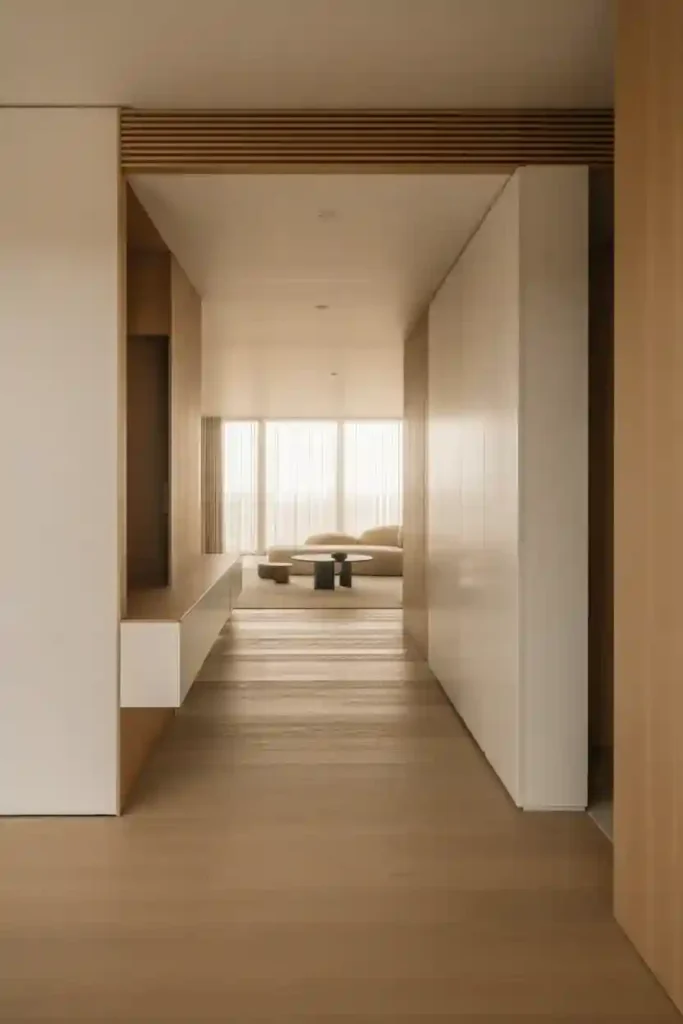
Visual continuity plays a key role in making a minimal entryway feel open. When the entryway flows seamlessly into adjacent rooms, it avoids feeling like a separate, enclosed space. Using the same flooring, wall colors, or design style helps create this sense of cohesion. Avoid abrupt transitions such as dark color changes or heavy partitions. Instead, let the entryway blend naturally into the living area or hallway. Consistent materials and finishes guide the eye forward, enhancing the perception of space.
This continuity also makes the home feel more intentional and well-designed. When the entryway mirrors the aesthetic of the rest of the house, it becomes a natural extension rather than a confined zone. The result is an open, welcoming entrance that feels spacious and thoughtfully curated.
Final Words
A minimal entryway is more than just a design choice—it’s a way to create a calm, organized, and welcoming transition into your home. By focusing on simplicity, functionality, and thoughtful layout, even the smallest entryway can feel open and inviting. Light color palettes, clean-lined furniture, and intentional storage solutions help reduce visual clutter while improving flow. Keeping the floor clear, limiting décor, and choosing wall-mounted or built-in elements all contribute to a spacious, balanced look. Natural materials add warmth without overwhelming the design, while consistent styling with adjacent spaces enhances visual continuity.