
12 Aesthetic Bookshelf Ideas That Feel Curated
A bookshelf can be much more than a place to store books—it can tell a story about who you are and how you live. When styled thoughtfully, shelves become a focal point that adds warmth, texture, and personality to a room. The key to creating an aesthetic bookshelf that feels curated is balance. Too much clutter can feel chaotic, while shelves that are too sparse may look unfinished.
A curated look blends books with décor, negative space, and intentional color choices so everything feels considered rather than random. Whether your style leans modern, cozy, minimalist, or eclectic, the way you arrange your bookshelf can elevate the entire space. This guide explores 12 aesthetic bookshelf ideas that feel curated, offering practical styling approaches that make shelves look polished yet lived-in. From color-coordinated books to layered décor and mixed materials, these ideas will help you create shelves that feel personal, stylish, and effortlessly put together.
1. Color-Coordinated Bookshelves

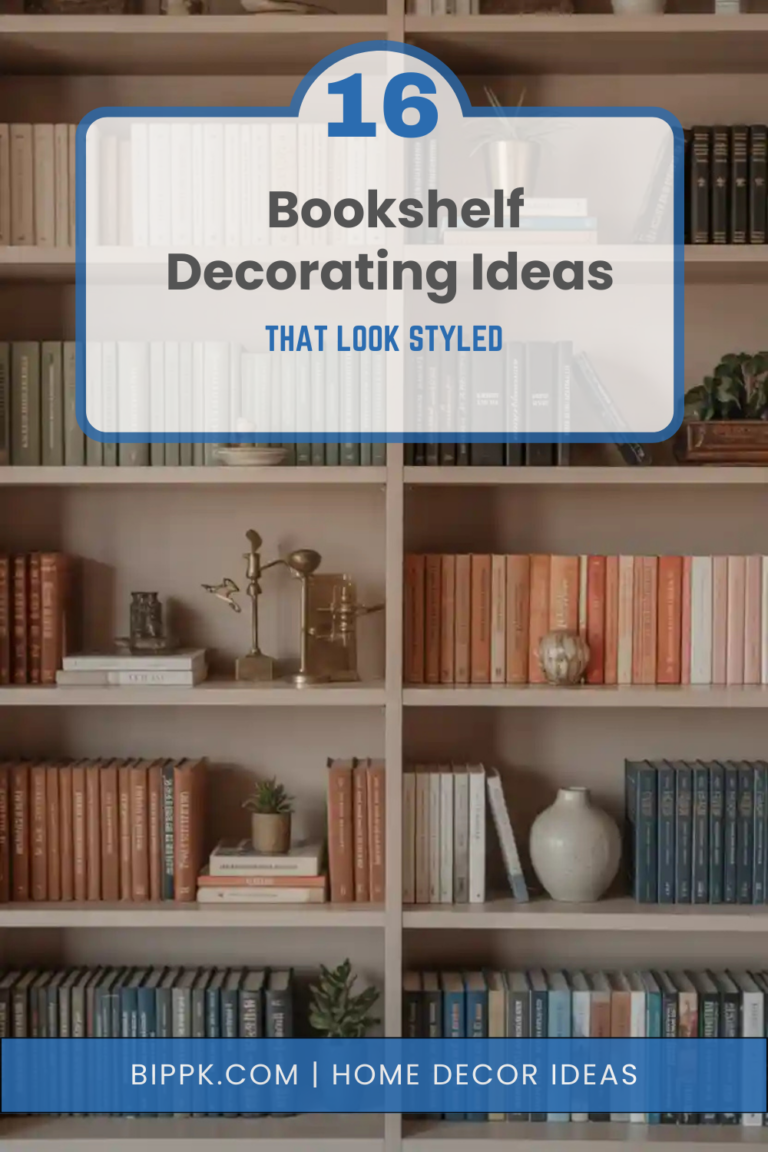
Color-coordinated bookshelves are one of the most visually striking ways to create a curated aesthetic. By arranging books according to color rather than size or genre, the shelf becomes more like an art installation than a storage unit. This approach works especially well in modern or minimalist interiors where visual harmony matters.
To keep the look refined, mix in neutral décor pieces like ceramic vases, small sculptures, or framed art to break up solid color blocks. Leaving some breathing room between color sections prevents the shelf from feeling too busy. You don’t need to use every color—limiting the palette to soft neutrals or warm tones creates a more sophisticated effect. This method works because it feels intentional and balanced, turning everyday books into a design element while maintaining a clean, curated appearance.
2. Mix Books With Decorative Objects
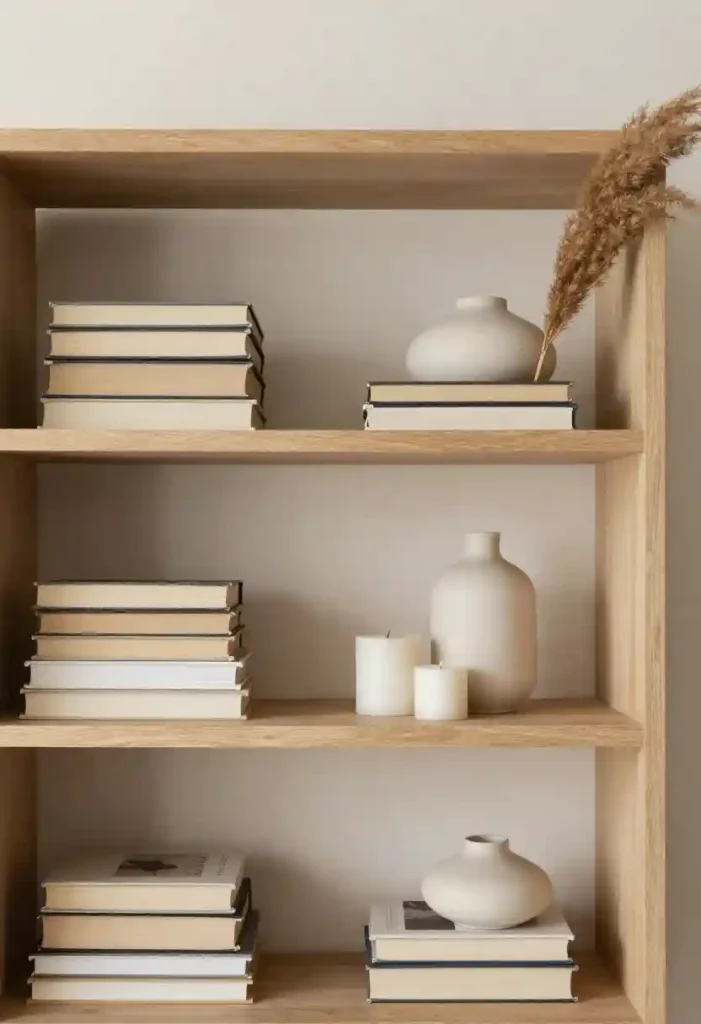
A truly curated bookshelf balances books with decorative objects to create visual interest. Stacking books both vertically and horizontally allows you to place vases, candles, or small sculptures on top, adding layers and texture. This breaks the monotony of straight book rows and makes the shelf feel styled rather than stored.
Decorative objects should complement the room’s overall style and color palette. Natural materials like wood, stone, or ceramics work well for an aesthetic look. The key is restraint—too many objects can feel cluttered. Aim for a rhythm of books, décor, and empty space. This approach works because it gives the eye places to rest while highlighting meaningful pieces, making the bookshelf feel thoughtfully curated instead of overcrowded.
Read Also: How To Choose Living Room Lighting Like a Pro
3. Use Negative Space Intentionally
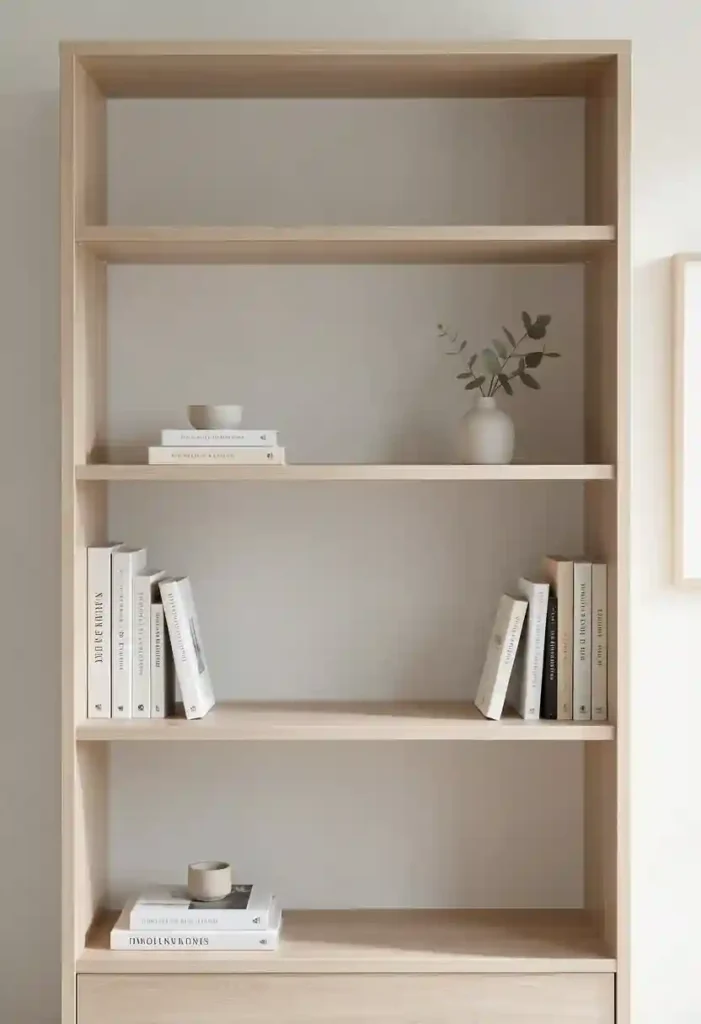
Negative space is one of the most important elements in creating an aesthetic bookshelf that feels curated. Leaving empty areas between groupings allows each item to stand out. This approach prevents shelves from feeling cramped and gives the entire display a calm, intentional look.
Instead of filling every inch, choose a few key pieces per shelf and let them breathe. Negative space works especially well in small rooms where visual clutter can quickly overwhelm. It also highlights special items like art books or statement décor. This method feels curated because it shows restraint and confidence—nothing feels forced or accidental.
4. Layer Artwork on Bookshelves
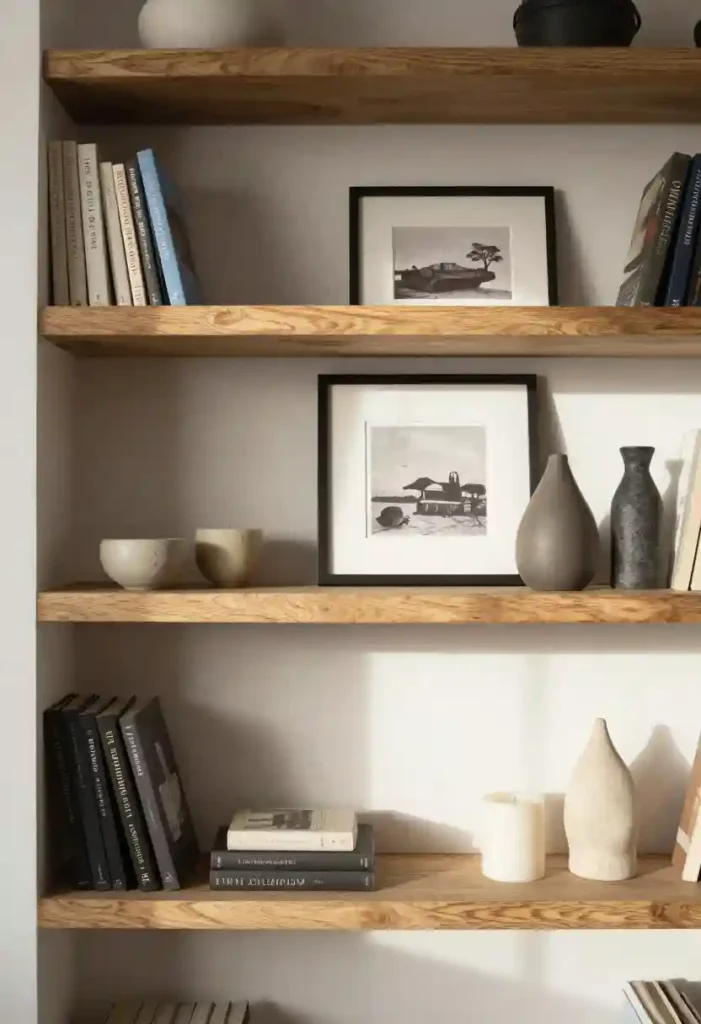
Layering artwork on bookshelves adds depth and personality, making the display feel more collected over time. Leaning framed art or photographs against the back of shelves creates a relaxed, gallery-like effect. This approach works well for both modern and eclectic interiors.
Mix different frame sizes and finishes while keeping the color palette cohesive. Artwork doesn’t have to be expensive—prints, sketches, or personal photos work beautifully. Layering art behind books or décor adds dimension without taking up additional space. This idea works because it tells a story and makes the bookshelf feel lived-in and thoughtfully styled.
5. Stick to a Limited Color Palette

A limited color palette instantly makes a bookshelf feel curated and cohesive. Choosing two to four main colors keeps the display visually calm and intentional. Neutral tones like beige, white, and gray work well, while adding one accent color brings interest.
You can achieve this by selecting book covers, décor, and storage boxes within the same color family. Even mismatched items feel connected when the palette is consistent. This approach works because it reduces visual noise and creates a polished, designer-approved look that feels effortless.
6. Combine Vertical and Horizontal Stacks
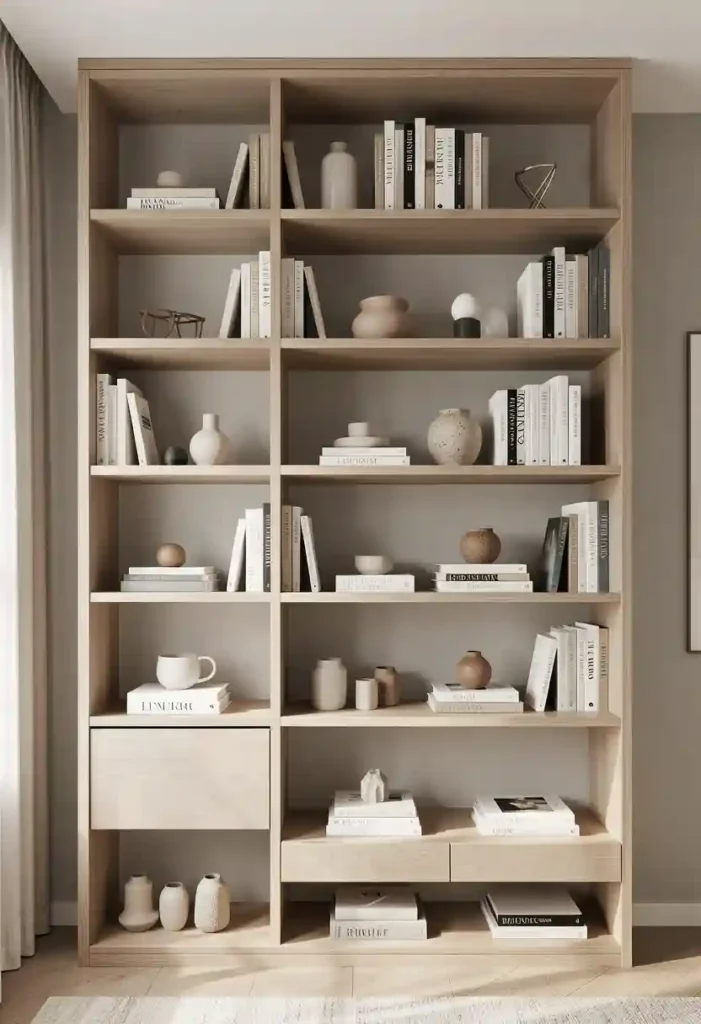
Mixing vertical and horizontal book stacks adds movement and visual rhythm to shelves. Vertical stacks create structure, while horizontal stacks introduce variety and provide surfaces for décor. This balance is a hallmark of professionally styled bookshelves.
Use horizontal stacks to highlight favorite books or create platforms for small objects. Avoid overstacking—three to five books per horizontal pile is ideal. This technique works because it breaks uniformity and makes the bookshelf feel dynamic and thoughtfully arranged.
7. Add Natural Elements
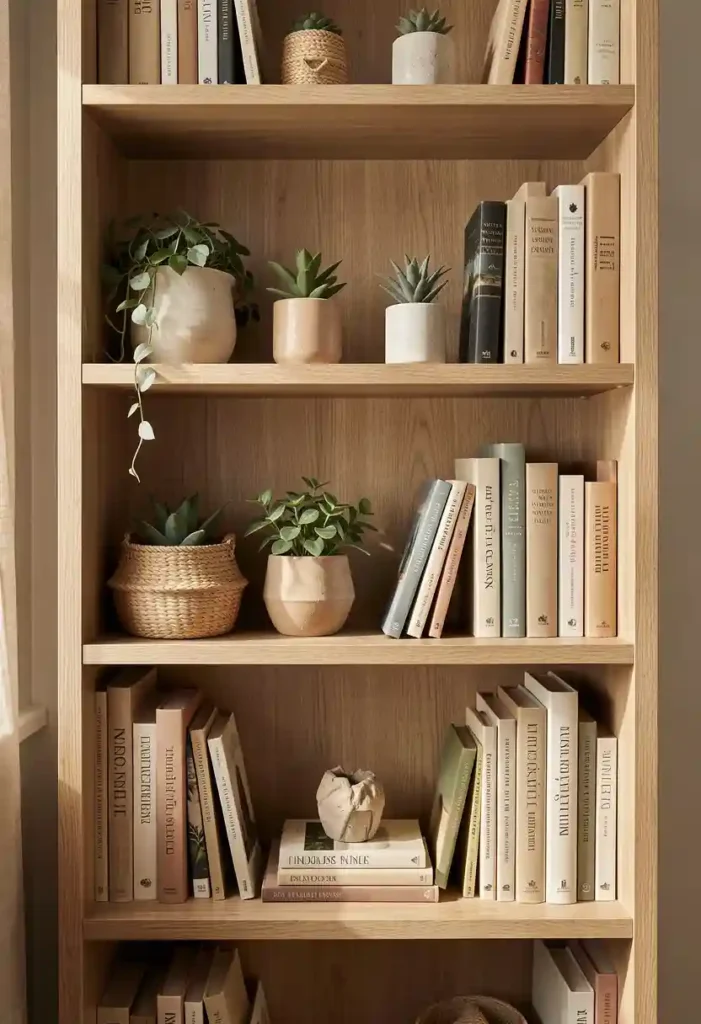
Natural elements bring warmth and texture to aesthetic bookshelves. Plants, dried branches, or stone accents soften the look and make the display feel more organic. Even small potted plants can make a big impact.
Choose low-maintenance greenery or faux plants if lighting is limited. Natural elements work because they contrast beautifully with structured shelves and books, adding life and balance. This approach makes shelves feel welcoming and thoughtfully styled rather than overly rigid.
8. Style Books by Size and Height
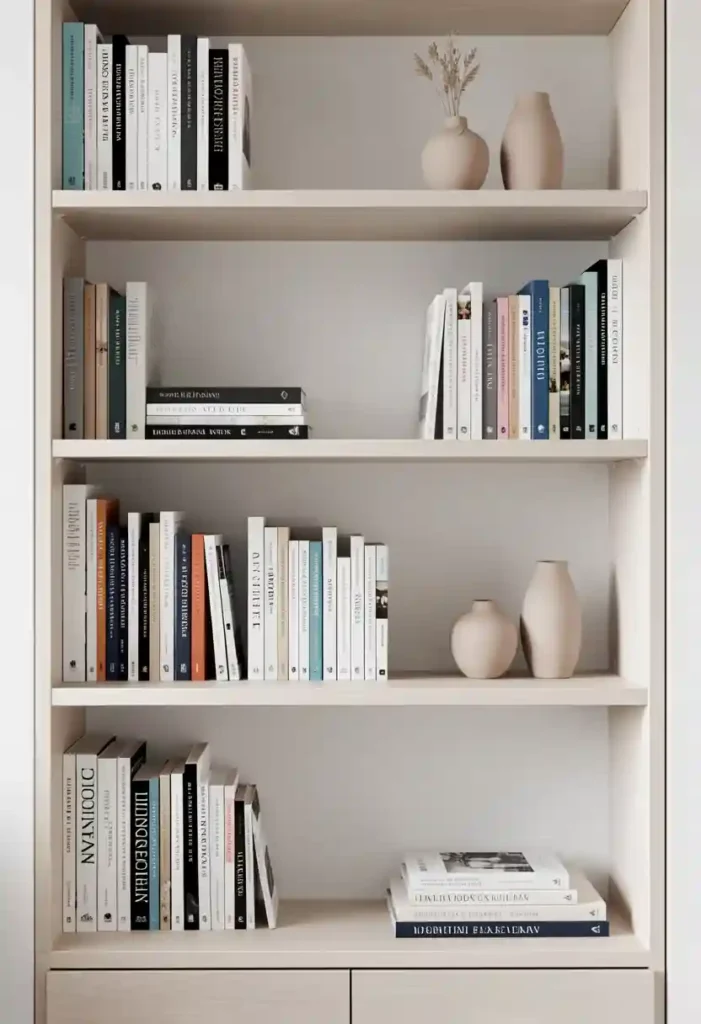
Styling books by size and height creates a clean, orderly appearance that feels curated. Taller books anchor the shelf, while smaller ones fill in gaps. This method works especially well for modern or minimalist spaces.
Pair size-based organization with subtle décor to avoid stiffness. Adding a few horizontal stacks or objects keeps the look from feeling too formal. This approach works because it creates visual balance and makes shelves feel intentional and easy on the eye.
9. Incorporate Personal Objects
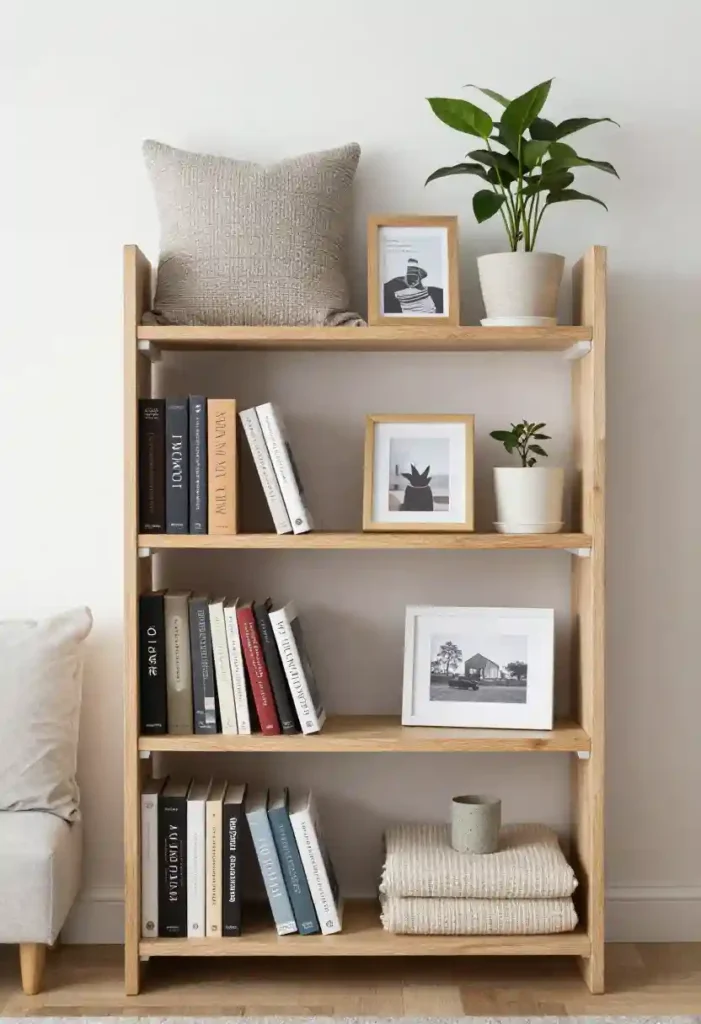
Curated bookshelves feel personal, not staged. Adding meaningful objects like travel souvenirs, family photos, or handmade items gives shelves character and authenticity. These pieces make the bookshelf feel collected over time.
Limit personal items to a few per shelf so they remain special. Mixing them with books and décor creates a balanced display. This idea works because it tells your story, making the bookshelf feel uniquely yours while still maintaining a cohesive look.
10. Use Decorative Bookends
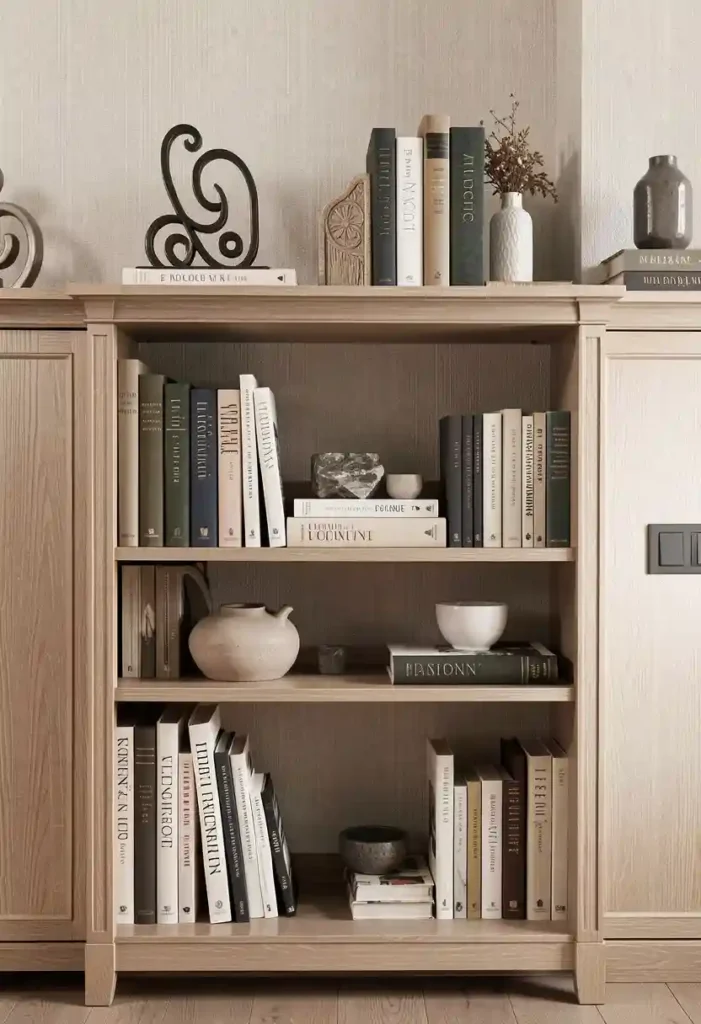
Decorative bookends are both functional and stylish. They help organize books while adding sculptural interest. Choose bookends that reflect your style, whether minimalist, vintage, or artistic.
Bookends can act as focal points on shelves, breaking up long rows of books. This small detail adds polish and intention, making the bookshelf feel finished and curated.
11. Highlight Statement Pieces
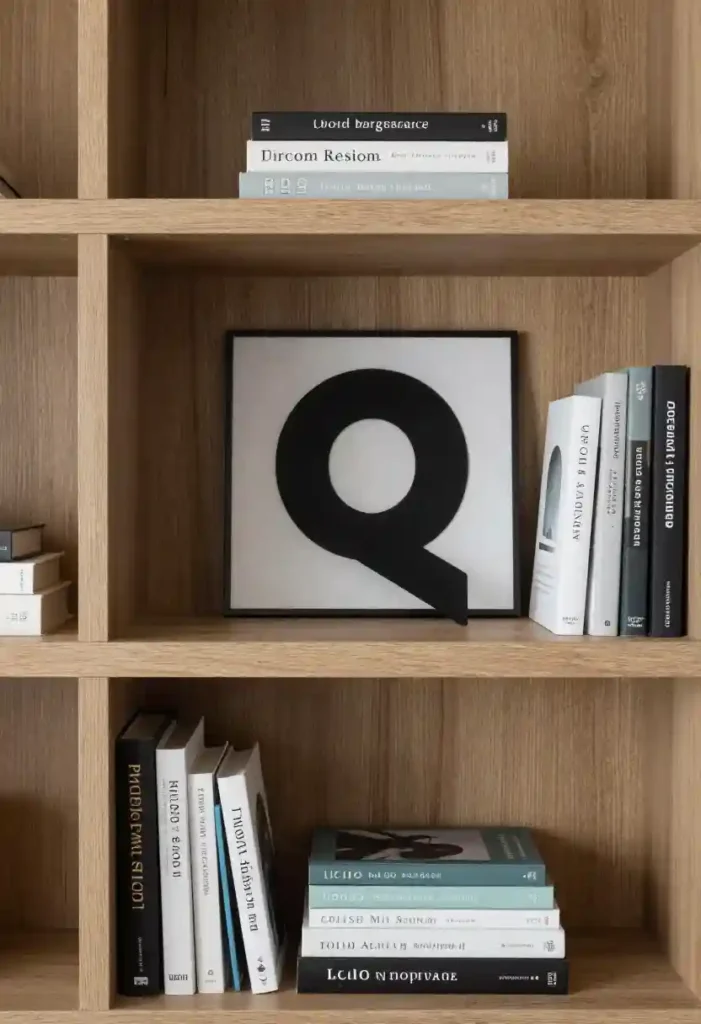
Statement pieces give bookshelves a focal point. This could be an oversized vase, a bold sculpture, or a large art book. Placing statement items strategically prevents shelves from feeling flat.
Limit statement pieces to one or two per bookshelf to maintain balance. Surround them with simpler items to let them shine. This approach works because it creates visual hierarchy and makes the bookshelf feel thoughtfully styled.
12. Refresh and Edit Regularly

A curated bookshelf is never truly finished—it evolves. Regularly editing and refreshing shelves keeps them feeling intentional and current. Swapping décor, rearranging books, or removing excess items helps maintain balance.
This process prevents clutter from building up and allows your style to grow. Curated shelves feel effortless because they’re edited over time. This final step ensures your bookshelf remains aesthetic, functional, and reflective of your personal taste.
Final Words
Creating an aesthetic bookshelf that feels curated is less about perfection and more about intention. When books are styled alongside meaningful décor, natural textures, and thoughtfully placed negative space, shelves begin to feel personal and refined rather than cluttered. A curated bookshelf evolves over time—books are added, objects are swapped, and layouts shift as your style grows.