
13 Basement Ceiling Ideas That Add Style
Basement ceilings are often overlooked, yet they play a huge role in how finished, stylish, and inviting the space feels. Many basements start with exposed pipes, low heights, or unfinished surfaces, which can make the area feel dark or utilitarian. The right ceiling design can completely change that perception. By choosing thoughtful materials, colors, and lighting, you can turn your basement ceiling into a design feature rather than something to hide.
Whether your basement is used as a family room, home office, game room, or guest space, ceiling choices help define the mood and style of the room. From classic drywall and wood planks to modern painted ceilings and creative lighting solutions, there are options for every budget and ceiling height. These 13 Basement Ceiling Ideas That Add Style focus on making your basement feel brighter, taller, and more cohesive while adding character and personality to the space.
1. Finished Drywall Ceiling for a Clean Look
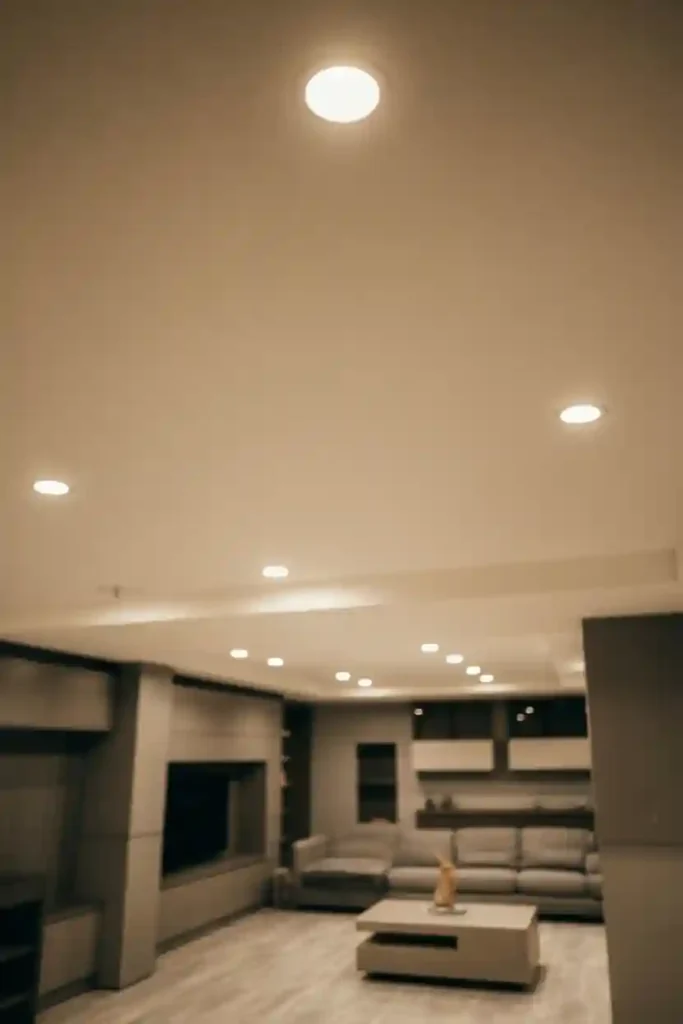
A finished drywall ceiling is one of the most classic and polished options for basements. It instantly gives the space a complete, home-like feel that blends seamlessly with the rest of the house. Drywall ceilings are ideal if you want your basement to feel like a true extension of your living space rather than a secondary area.
This option hides wiring, ductwork, and pipes, creating a smooth and uncluttered appearance. Recessed lighting can be installed to maintain a clean look without sacrificing headroom. Painting the ceiling a light neutral color helps reflect light and makes the basement feel brighter and more open. While drywall ceilings may require access panels for utilities, the overall aesthetic payoff is worth it. This solution works well for finished basements used as family rooms, guest suites, or home theaters.
2. Painted Exposed Ceiling for an Industrial Style

Painting an exposed basement ceiling is a stylish and budget-friendly way to embrace an industrial look. Instead of hiding pipes, beams, and ductwork, this approach highlights them as part of the design. Black, charcoal, or dark gray are popular choices, but white or soft neutrals can also work depending on the desired vibe.
A painted exposed ceiling can make the basement feel taller by drawing the eye upward. It’s especially effective in modern, loft-style spaces or creative areas like game rooms and home offices. Pairing this ceiling style with track lighting or pendant lights adds depth and character. While it doesn’t conceal utilities, it creates a cohesive and intentional design that feels edgy yet stylish.
Read Also: 12 Basement Game Room Ideas for All Ages
3. Wood Plank Ceiling for Warmth and Texture

A wood plank ceiling adds instant warmth and character to a basement. Whether you choose natural wood tones, whitewashed planks, or stained finishes, wood introduces texture that makes the space feel cozy and inviting. This style works beautifully in family rooms, basements lounges, or rustic-inspired designs.
Wood planks can be installed horizontally or vertically to influence how the space feels. Lighter wood tones help brighten basements with limited natural light, while darker stains add richness and depth. Pair wood ceilings with recessed lighting or flush-mount fixtures to maintain balance. A wood plank ceiling softens the basement’s atmosphere and adds a high-end, custom feel without overwhelming the space.
4. Drop Ceiling with Modern Tiles
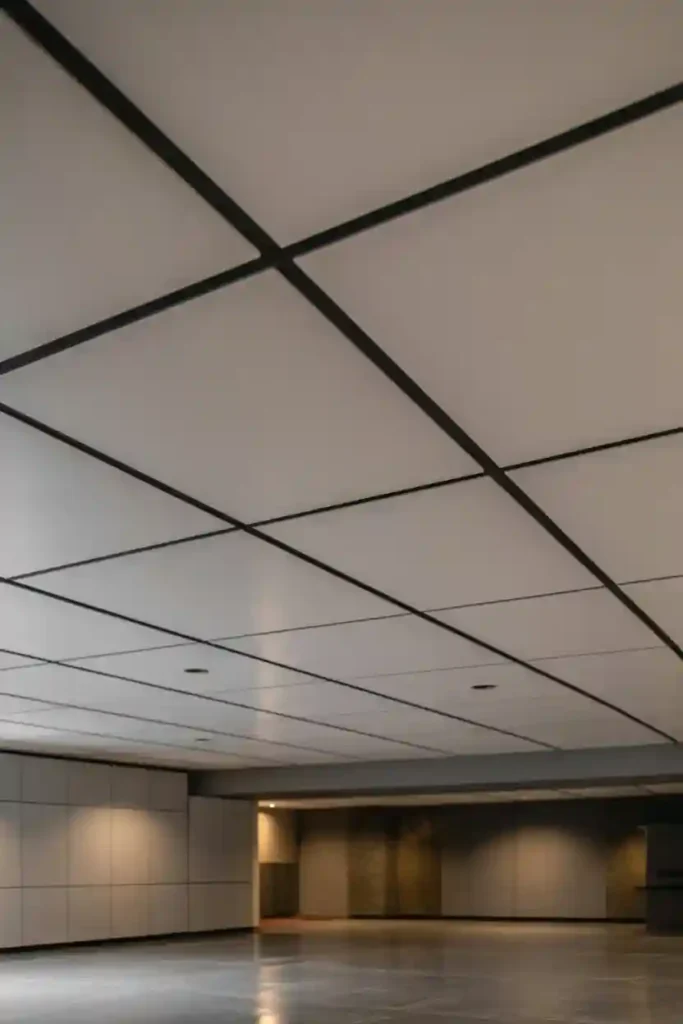
Drop ceilings have evolved far beyond basic white panels. Modern ceiling tiles now come in sleek designs, textured finishes, and stylish patterns that elevate the look of a basement. A drop ceiling offers easy access to wiring and plumbing while still looking polished and intentional.
Choose slim grid systems and contemporary tile designs to avoid a dated appearance. Neutral colors or subtle textures keep the ceiling visually light. This option is especially practical for basements that may need frequent access to utilities. With the right tile choice, a drop ceiling can feel modern, functional, and stylish.
5. Coffered Ceiling for a High-End Feel
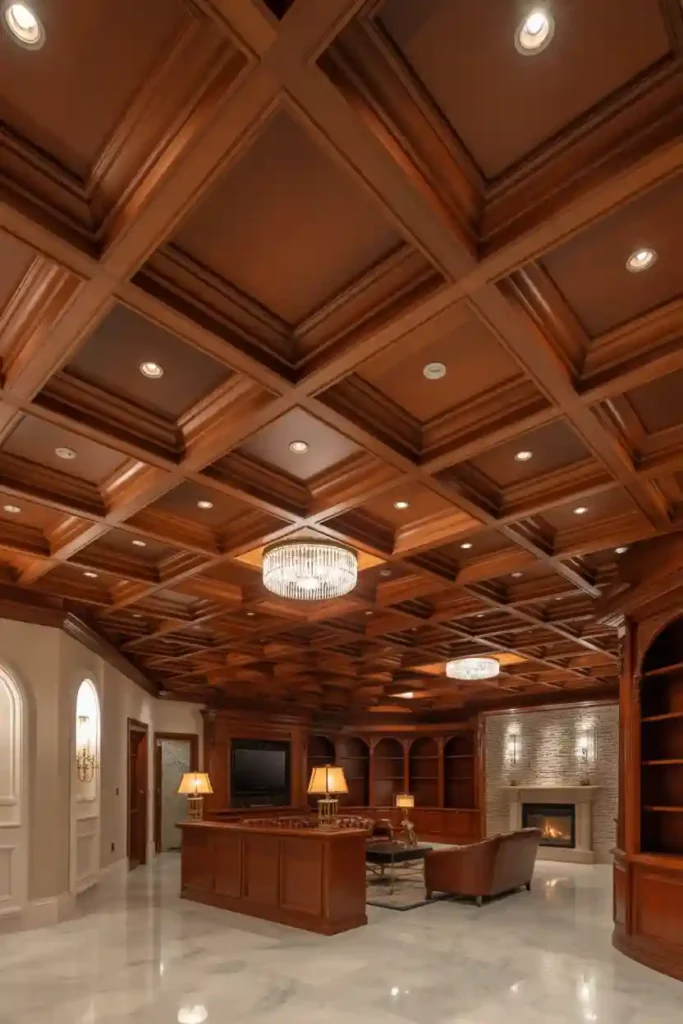
A coffered ceiling adds architectural interest and elegance to a basement. With its grid of recessed panels, this ceiling style creates depth and visual drama, making the space feel more upscale. Coffered ceilings work best in basements with higher ceiling heights, as they add dimension without making the room feel cramped.
Paint the beams and panels in soft neutrals or contrasting tones for added impact. Integrated lighting within the coffers enhances the design and provides even illumination. This ceiling style is ideal for formal basement living rooms or entertainment spaces where you want a refined, luxurious look.
6. Beamed Ceiling for Architectural Charm

Exposed or faux beams add charm and structure to a basement ceiling. Beams can create a rustic, farmhouse, or traditional aesthetic depending on the material and finish. Even in lower ceilings, slim or painted beams can add interest without overwhelming the space.
Wood beams bring warmth, while painted beams offer a subtle architectural detail. Pair them with soft lighting and neutral walls for balance. Beamed ceilings help define zones in open basements and make the space feel thoughtfully designed rather than plain.
7. White Ceiling to Brighten the Basement

A white ceiling is one of the simplest ways to make a basement feel brighter and more spacious. White reflects light, helping compensate for limited natural light common in basements. This choice works well with both finished drywall ceilings and painted exposed ceilings.
A white ceiling creates a clean backdrop that allows walls, furniture, and decor to stand out. It also visually lifts the ceiling, making the room feel taller. This approach is ideal for smaller basements or those aiming for a fresh, modern look.
8. Tray Ceiling for Subtle Dimension
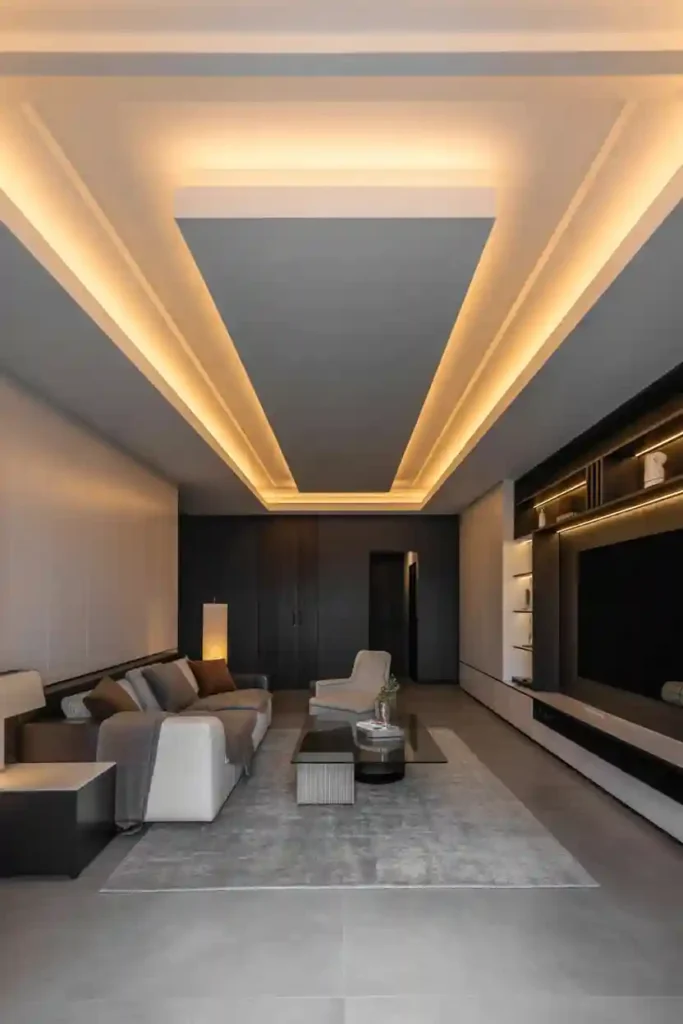
Tray ceilings add dimension without overwhelming the space. This design features a recessed center section that creates visual interest while maintaining a streamlined look. Tray ceilings work well in basements used as living rooms or home theaters.
Soft lighting along the tray edges enhances the effect and adds ambiance. Neutral tones keep the design elegant and understated. A tray ceiling subtly elevates the space, making it feel more finished and intentional.
9. Fabric or Acoustic Ceiling Panels

Fabric or acoustic ceiling panels are a stylish solution for basements where sound control is important. These panels help absorb noise, making them ideal for media rooms, game rooms, or music spaces. Modern acoustic panels come in various colors and textures, allowing them to double as design elements.
Arranged in patterns or grids, they add visual interest while improving acoustics. Pair them with minimalist lighting to maintain a clean look. This ceiling idea balances function and style beautifully.
10. Wood Slat Ceiling for Warmth and Texture
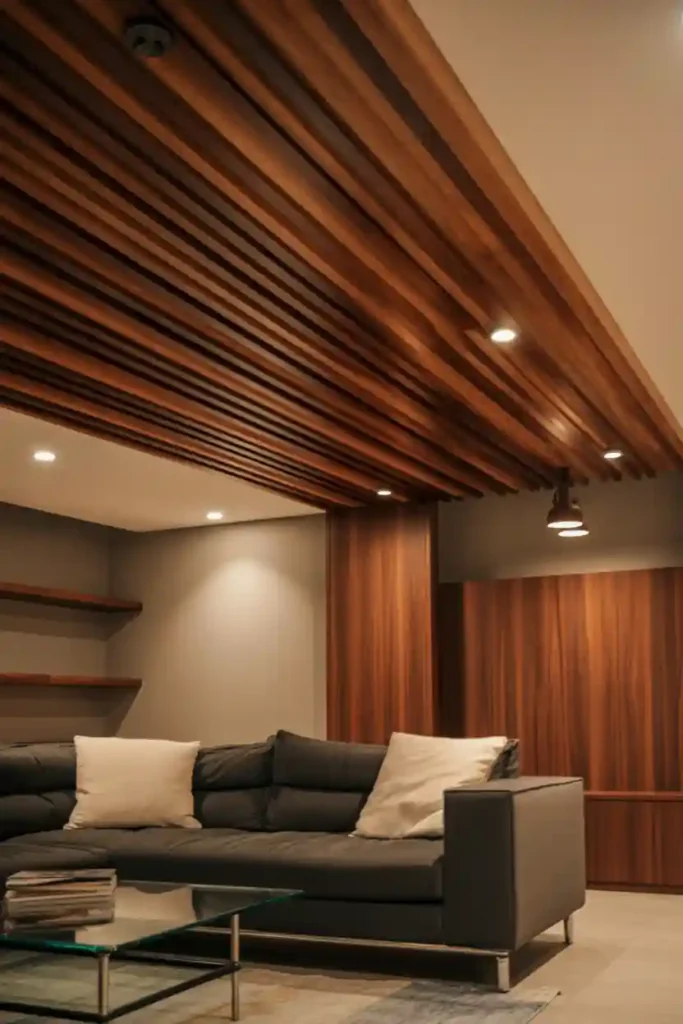
A wood slat ceiling instantly adds warmth and architectural interest to a basement, making it feel less like a lower level and more like a thoughtfully designed living space. Vertical or horizontal wood slats draw the eye upward, which helps visually increase ceiling height—especially important in basements with limited headroom. Natural wood tones soften the space and balance out concrete floors or painted walls, creating a cozy yet modern feel.
This ceiling style works beautifully in basements used as family rooms, home theaters, or lounges. You can choose light oak or pine for an airy look, or go with darker walnut tones for a more dramatic and upscale vibe. Spacing the slats evenly also allows room to conceal wiring, vents, or speakers without disrupting the overall design.Pair a wood slat ceiling with recessed lighting or slim LED strips tucked between slats for a subtle glow. This combination enhances texture while maintaining functionality, turning the ceiling into a true design feature rather than an afterthought.
11. Painted Black Ceiling for a Bold, Modern Look
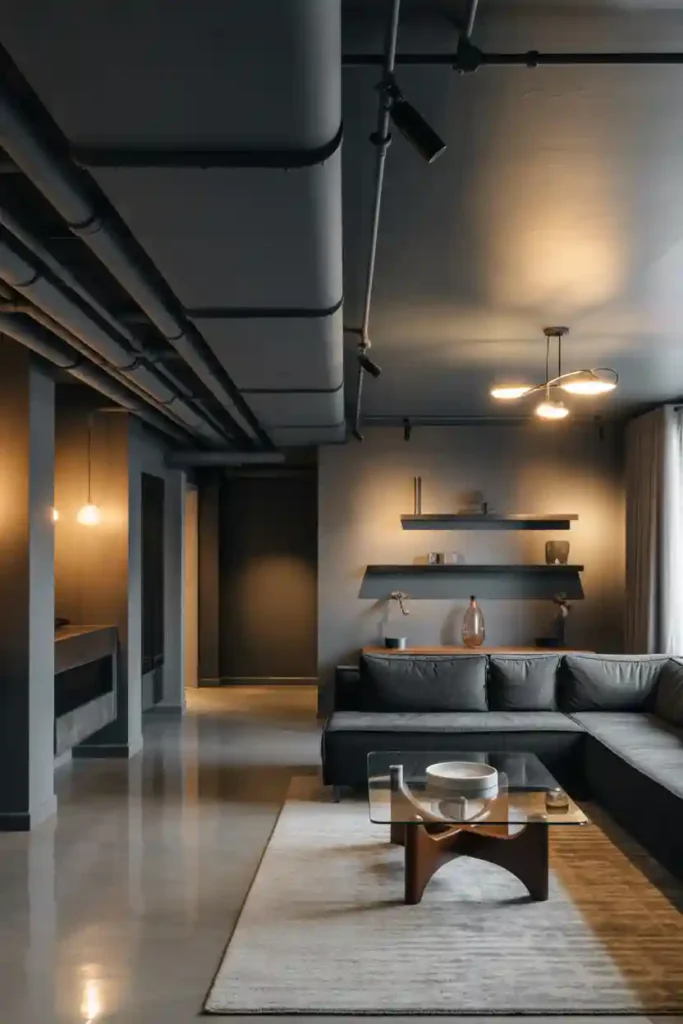
A black-painted ceiling is a bold choice that can completely transform a basement, especially one with exposed elements like ducts and pipes. Instead of hiding these features, painting everything black creates a cohesive, intentional look that feels modern and industrial. This approach visually pushes the ceiling upward, making it feel higher and less cluttered.
Black ceilings work particularly well in basement media rooms, game rooms, or home bars where a moody atmosphere enhances the experience. When paired with lighter walls, wood accents, or metallic finishes, the contrast feels stylish rather than heavy. Matte black paint is usually the best option, as it minimizes glare and keeps the ceiling from feeling overwhelming. Strategic lighting is key here. Use pendant lights, track lighting, or wall sconces to bring balance and prevent the space from feeling too dark. When done right, a black ceiling adds sophistication and makes your basement feel intentionally designed rather than unfinished.
12. Drop Ceiling with Decorative Panels
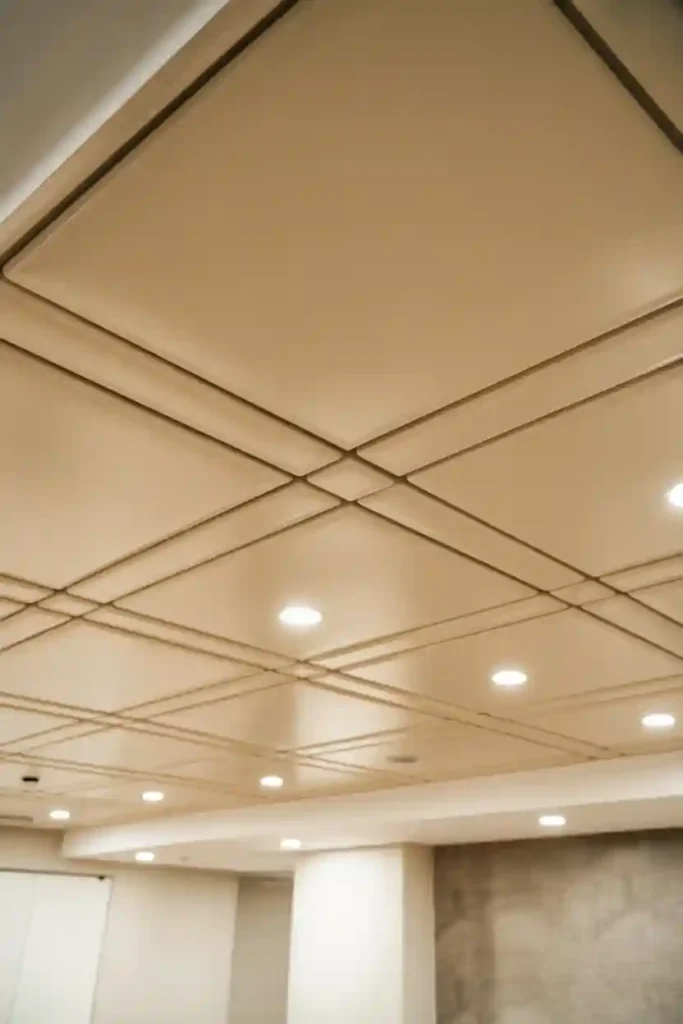
A drop ceiling doesn’t have to look outdated or purely functional. With decorative ceiling panels, it can become a stylish and practical solution for basements. Modern drop ceiling panels come in a variety of textures, patterns, and finishes—ranging from faux tin and wood grain to clean, minimal designs.
One of the biggest advantages of a drop ceiling is accessibility. It allows easy access to plumbing, electrical wiring, and HVAC systems, which is especially important in basements. Decorative panels elevate the look while maintaining this convenience. Choosing lighter-colored panels can help reflect light and make the basement feel brighter and more open. This type of ceiling works well in multi-purpose basements where practicality matters just as much as style. Pair it with recessed lighting or grid-compatible fixtures for a seamless appearance. With the right panels, a drop ceiling can feel intentional, polished, and surprisingly upscale.
13. Wallpapered Ceiling for a Statement Finish
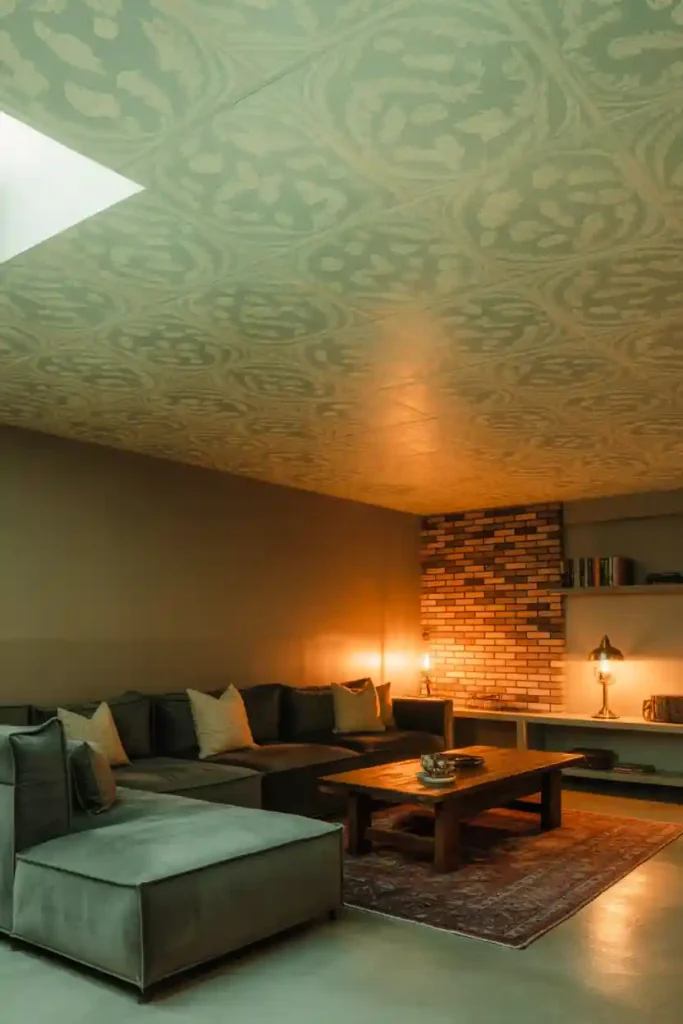
Wallpapering the basement ceiling is an unexpected design move that instantly adds personality and visual interest. Often referred to as the “fifth wall,” the ceiling is a perfect place to introduce pattern, texture, or color without overwhelming the rest of the space. This works especially well in basements used as lounges, reading areas, or creative spaces.
Choose subtle patterns for a refined look or bold designs to make a dramatic statement. Light-colored wallpaper with soft patterns can help brighten a basement and create a sense of height. For lower ceilings, avoid heavy or overly dark prints and instead opt for designs that feel airy and balanced. To keep the space cohesive, echo colors from the ceiling wallpaper in throw pillows, rugs, or wall art. When done thoughtfully, a wallpapered ceiling turns the basement into a memorable, designer-inspired space that feels intentional and unique.
Final Words
Basement ceilings are often overlooked, but they have the power to completely transform the look and feel of the space. These 13 Basement Ceiling Ideas That Add Style prove that the ceiling can be just as impactful as the walls or flooring when it comes to design. Whether you prefer warm wood textures, bold painted finishes, decorative panels, or creative statement ceilings, each option offers a way to enhance both function and aesthetics. The right ceiling choice can improve lighting, visually increase height, conceal utilities, and create a cohesive, finished appearance.