13 Basement Playroom Ideas for Endless Fun
A basement playroom is the perfect way to create a fun, safe, and imaginative space for kids while keeping the rest of the home clutter-free. With the right design choices, a basement can easily transform into a vibrant play zone that encourages creativity, movement, and learning. Whether you’re working with a large open basement or a smaller finished area, thoughtful planning can turn it into a space kids love spending time in.
From colorful play zones and cozy reading corners to creative storage solutions and interactive features, a well-designed playroom blends fun with functionality. Lighting, layout, and furniture choices all play an important role in making the space inviting and practical. These 13 basement playroom ideas for endless fun are designed to help you create a playful environment that grows with your child while keeping the space organized, stylish, and full of energy.
1. Colorful Play Zones for Active Fun
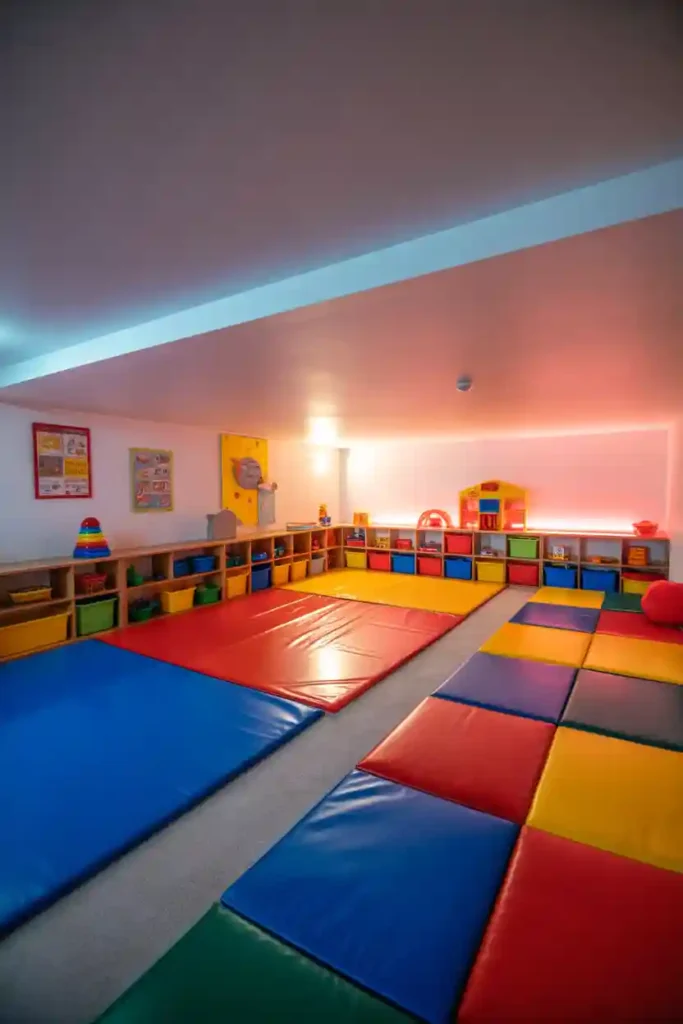
Creating distinct colorful play zones is a fantastic way to encourage activity and organization in a basement playroom. Designating specific areas for different activities—like building, imaginative play, or movement—helps kids know where each type of play belongs while keeping the room organized. Bright rugs, foam mats, or color-coded floor tiles can visually separate these zones and make the space feel lively and energetic.
Furniture and accessories in bold, cheerful colors make the basement fun and inviting. Low shelves or storage units can define areas while keeping toys accessible. Open space for running, jumping, and active games is essential for burning energy safely indoors, especially in basements with fewer natural light sources. Adding wall decals or playful patterns reinforces the fun atmosphere while giving each zone a unique identity. This approach turns the basement into a dynamic environment where kids can explore, learn, and play freely.
2. Creative Art and Craft Corner
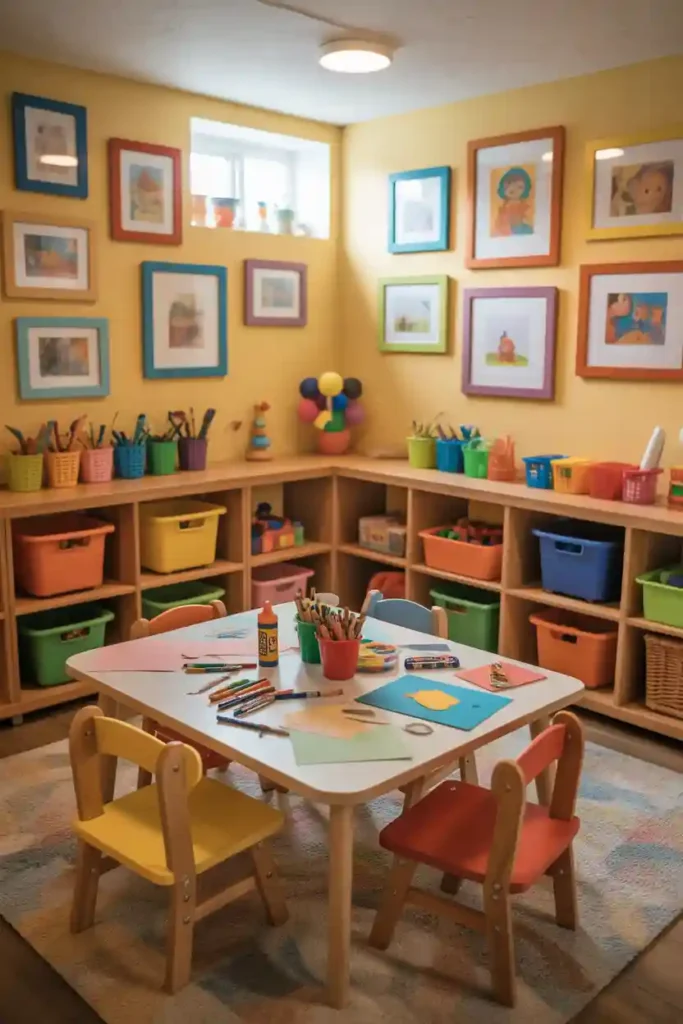
An art and craft corner encourages creativity while keeping messy activities contained. A dedicated table or desk with storage for paints, crayons, paper, and craft supplies ensures kids have everything they need at hand without spreading clutter throughout the basement. Using washable surfaces and bins makes clean-up simple, maintaining the space’s overall order.
Add corkboards, magnetic boards, or display walls to showcase children’s creations, giving them a sense of pride and ownership over their space. Bright lighting is essential for detail work, so consider adjustable lamps or overhead fixtures that keep the area well-lit. Comfortable seating and a small rug define the creative corner, inviting kids to spend hours drawing, painting, or crafting. By designing a space focused on imaginative expression, you give your child a fun, stimulating area that sparks creativity and supports learning.
Read Also: 12 Living Room Furniture Ideas That Fit Any Space
3. Reading Nook for Quiet Time
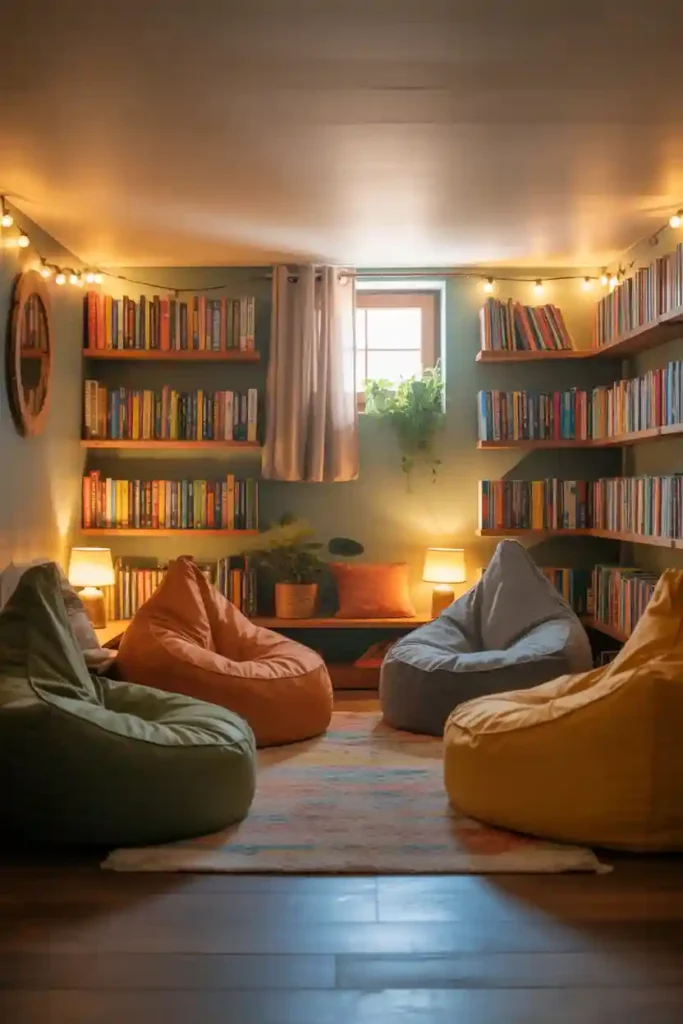
A reading nook in a basement playroom provides a calm retreat amid active play areas. Cozy chairs, floor cushions, beanbags, or small couches create a comfortable environment where kids can enjoy books independently or with family. Soft rugs and throws add warmth and make the nook feel inviting.
Shelving at child height ensures books are easy to reach, encouraging kids to explore new stories. Adding gentle lighting, such as table lamps or string lights, enhances the cozy ambiance and prevents eye strain. A reading nook also teaches kids the importance of quiet, focused time, balancing high-energy play with moments of calm. Incorporating fun décor, like themed wall decals or playful baskets for books, makes the space visually appealing while keeping it functional. A well-designed reading corner turns the basement into a multi-purpose playroom that nurtures both imagination and literacy.
4. Toy Storage Solutions That Stay Organized
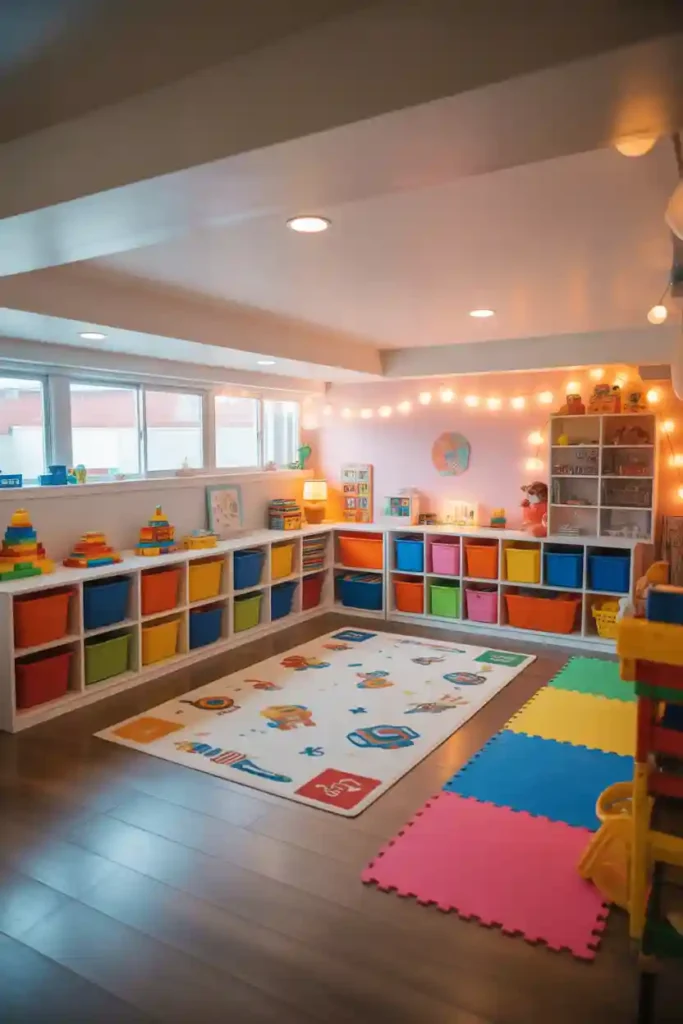
A basement playroom can quickly become chaotic without smart storage solutions. Installing shelves, cubbies, or modular storage bins helps keep toys organized and accessible while teaching kids responsibility. Transparent bins or labeled baskets make it easy for children to find their favorite toys and put them away when finished.
Vertical storage is particularly useful in basements where floor space is limited. Wall-mounted shelves, hanging organizers, and stackable bins maximize every inch while maintaining an open play area. Low shelves allow even young children to access toys independently, fostering independence and order. Adding colorful baskets or fun storage designs keeps the area visually appealing and playful. Efficient storage not only keeps the basement tidy but also creates more usable space for active play. Combining organization with style ensures the playroom feels inviting while staying functional, allowing kids to enjoy endless hours of play without clutter taking over.
5. Soft Play Area for Toddlers

A soft play area is perfect for toddlers who need a safe, cushioned space to explore. Foam mats, padded climbing blocks, and soft toys reduce the risk of injury while providing an engaging environment for physical play. Bright colors and interactive shapes keep young children entertained and help develop motor skills.
This type of space works well in one corner of the basement or as a defined zone within a larger playroom. Soft walls, beanbags, and padded furniture enhance safety and comfort, making it ideal for crawling, jumping, and rolling. Parents can relax knowing their little ones are playing in a secure environment. Adding interactive toys like activity cubes, soft stacking blocks, or small slides encourages exploration and keeps toddlers engaged for longer periods. A well-planned soft play area balances safety, fun, and learning, making it a must-have in any basement playroom.
6. Game and Activity Table Setup

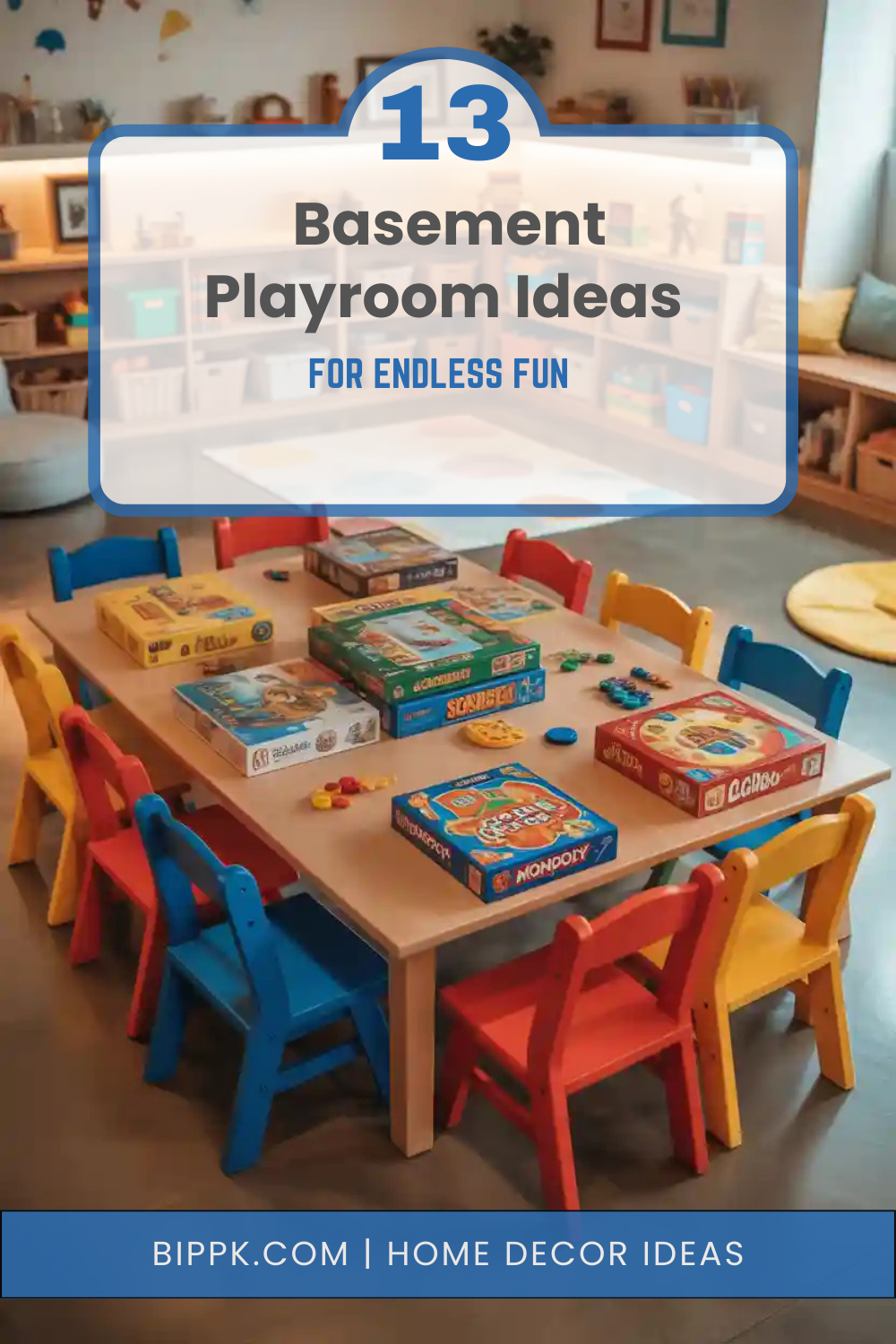
A game and activity table is a versatile addition that keeps kids entertained while promoting creativity and social interaction. Tables can be used for board games, puzzles, Lego building, or crafts, making them a multi-purpose hub of activity. Choose a durable, easy-to-clean surface to withstand spills and frequent use.
Adding storage drawers or bins underneath keeps game pieces and supplies organized, reducing clutter around the basement. Chairs at the appropriate height ensure comfort and accessibility for children of all ages. Bright lighting above the table enhances focus and makes every activity more enjoyable. An activity table encourages collaborative play, learning, and skill development while keeping all activities contained in one area. It’s a functional and stylish piece that supports endless fun while maintaining order in the basement playroom.
7. Chalkboard or Whiteboard Wall
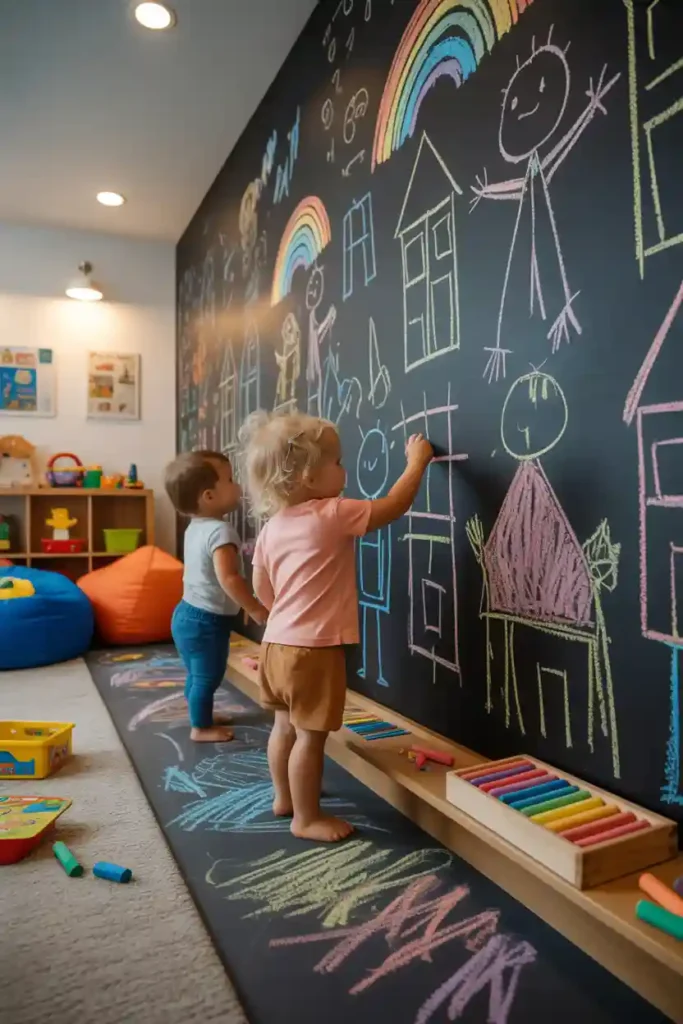
A chalkboard or whiteboard wall transforms any basement playroom into an interactive space for creativity and learning. Children can doodle, practice writing, or even play educational games directly on the wall, providing endless entertainment. This feature encourages imaginative expression while keeping traditional paper and markers to a minimum, helping reduce clutter.
Choose a large section of wall or a dedicated panel that’s easily accessible for children of all ages. Magnetic whiteboards can double as storage for letters, numbers, or magnetic toys, adding an educational element. Chalkboards provide a tactile experience and can be paired with colorful chalk to enhance visual stimulation. Adding a chalkboard or whiteboard wall also allows parents to leave messages, reminders, or fun prompts for kids. This interactive feature makes the basement both fun and functional, giving children a creative outlet that grows with them.
8. Indoor Slide or Climbing Feature
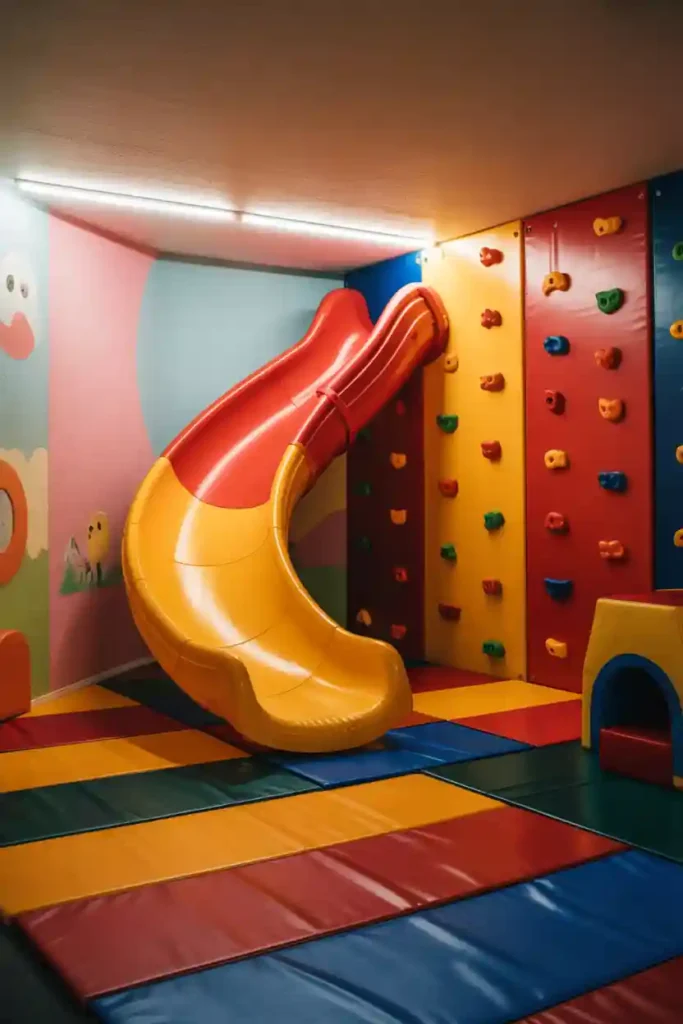
An indoor slide or climbing feature turns a basement playroom into an exciting adventure zone. These elements provide physical activity opportunities in a safe environment, keeping kids active even when outdoor play isn’t possible. Small slides, climbing walls, or modular play structures encourage coordination, balance, and confidence.
When installing climbing or sliding features, safety is paramount. Use soft flooring such as foam mats or padded rugs to reduce injury risks. Ensure structures are age-appropriate, sturdy, and well-secured. Bright colors and fun shapes make these features visually appealing while creating an inviting play atmosphere. This type of feature is ideal for basements with open space. It transforms the area into a dynamic play zone, allowing kids to engage in active play, burn energy, and explore creatively without leaving the safety of home.
9. Themed Playroom Design
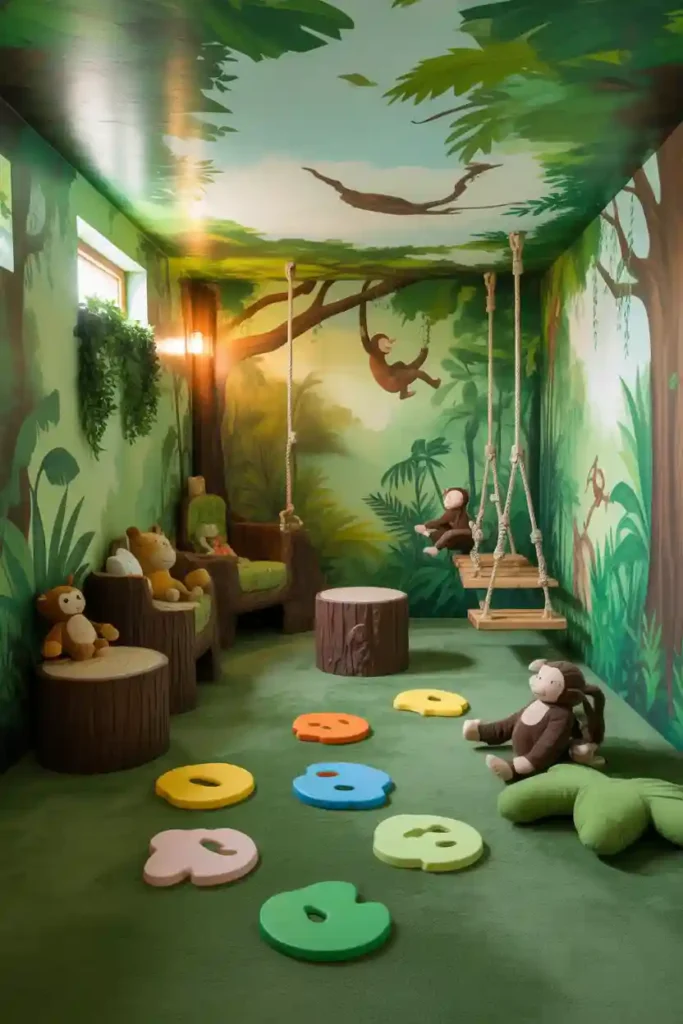
A themed basement playroom sparks imagination and creates an immersive environment for kids. Popular themes include space, jungle, ocean, or fairytale settings, complete with themed wall murals, décor, and furniture. This approach encourages imaginative play and makes the room visually exciting.
Incorporate themed rugs, storage, and seating to reinforce the concept while maintaining functionality. Even subtle touches, like color-coordinated accessories or decorative wall decals, help bring the theme to life. Lighting can also support the theme—soft fairy lights for a magical effect or LED strips for a futuristic space vibe. A themed playroom can be tailored to your child’s interests, evolving as they grow. It creates a special place in the home that feels unique, engaging, and fun, making every play session an adventure.
10. Cozy Movie and Gaming Zone

Creating a cozy movie and gaming zone in a basement playroom provides kids with a fun, relaxing space to unwind. A comfortable couch or beanbag seating, paired with a small screen or projector, makes it easy for children to enjoy movies, cartoons, or video games in a safe and private area. Soft pillows and blankets add warmth, encouraging longer, comfortable play sessions.
Consider using blackout curtains or blinds to control lighting and enhance the viewing experience. Storage cabinets or bins nearby can hold games, DVDs, or controllers, keeping the area tidy. Surrounding the zone with vibrant décor, rugs, and wall art makes it inviting and playful without sacrificing functionality. This area allows kids to enjoy interactive entertainment while maintaining boundaries between high-energy play and calm activities. A well-designed movie and gaming zone encourages shared family time or solo relaxation, making the basement a multi-functional and enjoyable space.
11. Multi-Use Playroom for Growing Kids
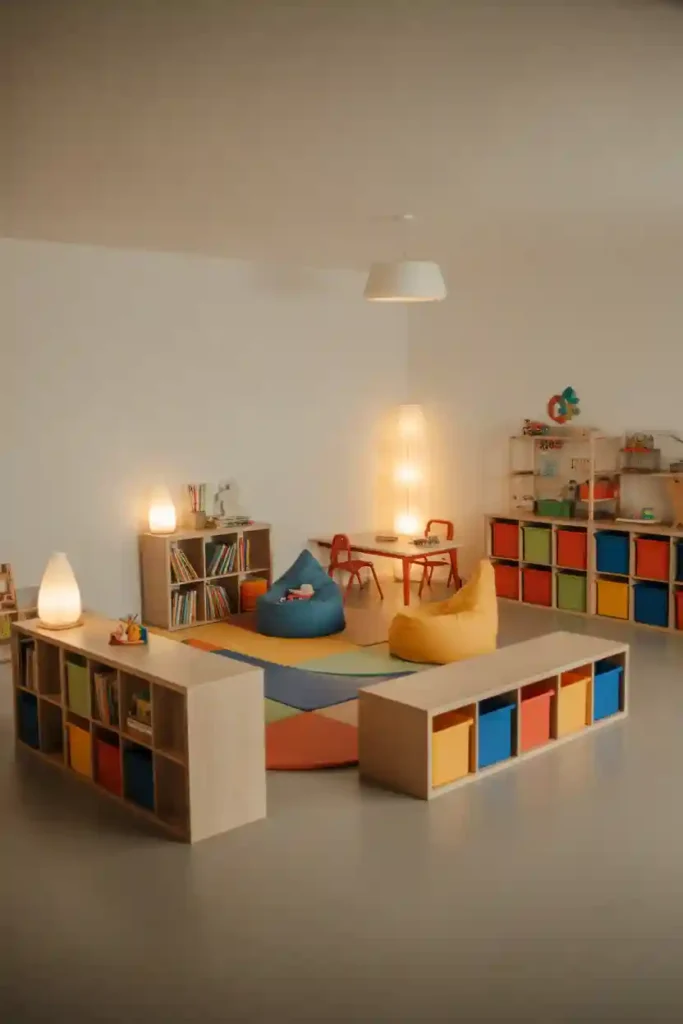
A multi-use basement playroom adapts as your child grows, making it a long-term investment. By including flexible furniture, open play spaces, and adjustable storage, the room can transition from toddler activities to older kids’ hobbies or teen interests. Tables, chairs, and shelving should be versatile and durable, accommodating changing needs.
Dividing the room into zones—active play, creative activities, and quiet time—ensures children of different ages can enjoy the space simultaneously. Modular furniture, storage bins, and foldable play equipment maximize flexibility while maintaining organization. This approach encourages independence, allowing children to personalize their environment while parents maintain a functional layout. A multi-use playroom ensures that the basement continues to be a fun, engaging, and safe environment for years to come.
12. Educational Learning Space
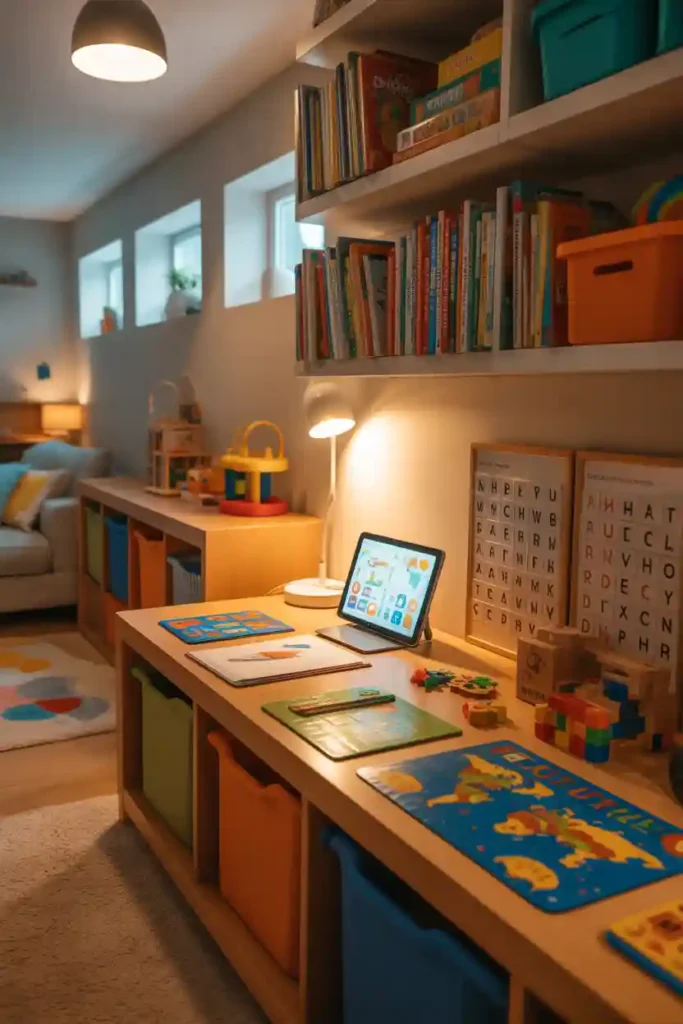
Incorporating an educational learning space within the basement playroom blends fun with enrichment. A small desk or table with books, puzzles, STEM kits, and interactive learning tools encourages focus and exploration. Wall charts, magnetic letters, or whiteboards provide hands-on activities to develop skills and creativity.
This area complements the active play zones, balancing high-energy activities with educational engagement. Good lighting is essential, so consider desk lamps or adjustable overhead lights to prevent eye strain. Age-appropriate seating and organized storage bins make it functional and accessible. By integrating learning into the playroom, children develop problem-solving skills, creativity, and concentration while having fun. An educational space makes the basement more versatile and contributes to your child’s growth and curiosity.
13. Bright Lighting and Safe Flooring Choices

Lighting and flooring are crucial for creating a safe, welcoming basement playroom. Bright, well-distributed lighting ensures visibility for active play, crafts, and reading. A combination of overhead lights, lamps, and soft accent lighting provides versatility for different activities. LED lights or daylight-mimicking bulbs can keep the basement feeling cheerful and energetic.
Safe flooring is equally important. Foam mats, rubber tiles, or padded carpets reduce injury risks and make cleaning easier. Non-slip surfaces are essential for active zones, while softer rugs can define reading or craft areas. Durable, washable materials help maintain cleanliness and hygiene over time. By combining bright lighting with safe, comfortable flooring, the basement becomes a versatile and secure space where kids can play, learn, and explore freely.
Final Words
These 13 basement playroom ideas for endless fun show how to balance energy, creativity, and safety. By combining bright, engaging décor with practical solutions, you can create a playroom that encourages imagination, supports learning, and makes every day an adventure. A well-designed basement playroom becomes a cherished area for fun, family bonding, and unforgettable memories.