
16 Bookshelf Decorating Ideas That Look Styled
A well-decorated bookshelf does more than store books—it tells a story. When styled thoughtfully, bookshelves can elevate an entire room, adding personality, balance, and visual interest without feeling cluttered. The secret to shelves that look effortlessly styled lies in intentional layering, varied textures, and a mix of functional and decorative pieces. Instead of filling every inch, curated shelves use negative space to let each item breathe.
Bookshelf styling is also incredibly flexible; you can lean classic, modern, minimal, or eclectic while still keeping everything cohesive. From mixing books with décor to playing with scale, color, and repetition, the right approach makes shelves feel polished rather than random. In this guide to 16 Bookshelf Decorating Ideas That Look Styled, you’ll find practical inspiration that works for living rooms, home offices, bedrooms, and beyond. Each idea focuses on creating visual harmony while showcasing your personal taste, helping your bookshelves look intentional, elevated, and beautifully put together.
1. Style with a Balanced Mix of Books and Decor

A styled bookshelf always strikes a balance between books and decorative accents. Instead of lining up books edge-to-edge, mix them with objects like vases, framed art, or small sculptures. This creates visual breaks that make shelves feel curated rather than crowded. Try grouping books in odd numbers and leaving small gaps between sections for décor.
Varying book orientation also helps. Stack some books horizontally and others vertically to add movement and dimension. Use the horizontal stacks as platforms for decorative items like candles or small plants. Color coordination can elevate the look even further—neutral book covers or color-blocked groupings create a calm, styled effect. The key is restraint. Too many decorative objects can feel cluttered, while too many books can feel heavy. When the balance feels right, your bookshelf looks intentional, layered, and thoughtfully styled rather than purely functional.
2. Use a Consistent Color Palette
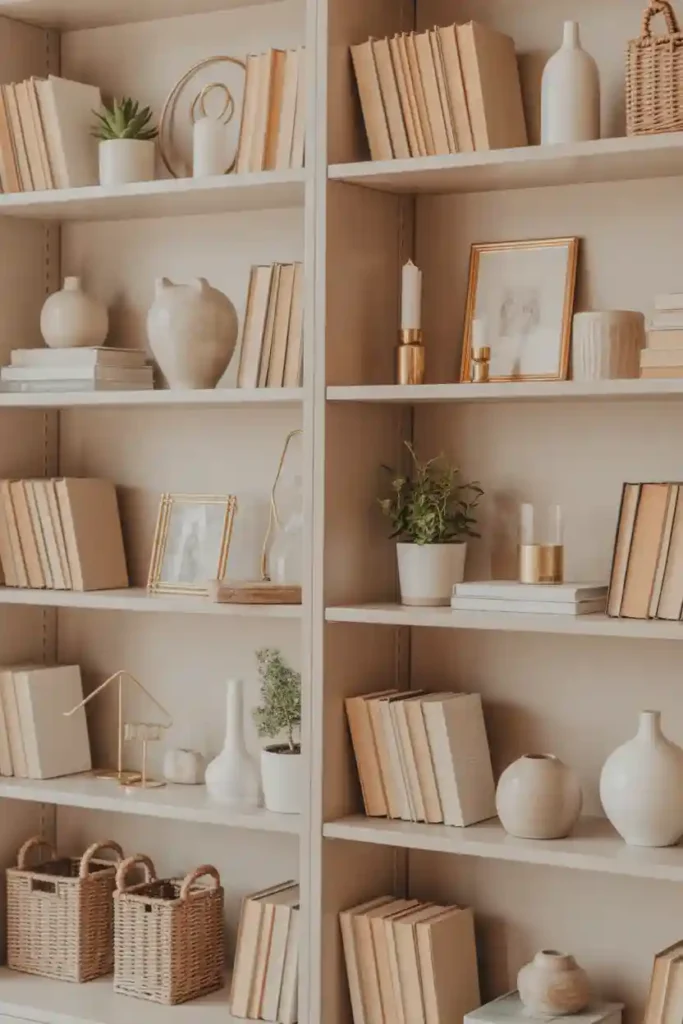
A cohesive color palette instantly makes a bookshelf look styled. Choosing two to four main colors helps unify books and décor, even if the items themselves vary in shape or texture. Neutrals like white, beige, gray, and wood tones create a timeless look, while muted blues or greens add subtle interest.
You don’t need to replace your books to achieve this. Turn book spines inward for a soft, neutral effect or group books by color to create intentional sections. Decorative objects should complement the palette rather than compete with it. This consistency creates visual flow across shelves. A limited color palette also allows textures to shine—ceramics, wood, glass, and metal become the stars. The result is a bookshelf that feels calm, polished, and professionally styled without looking overly designed.
Read Also: 15 Farmhouse Dining Room Ideas with Cozy Appeal
3. Play with Height and Scale
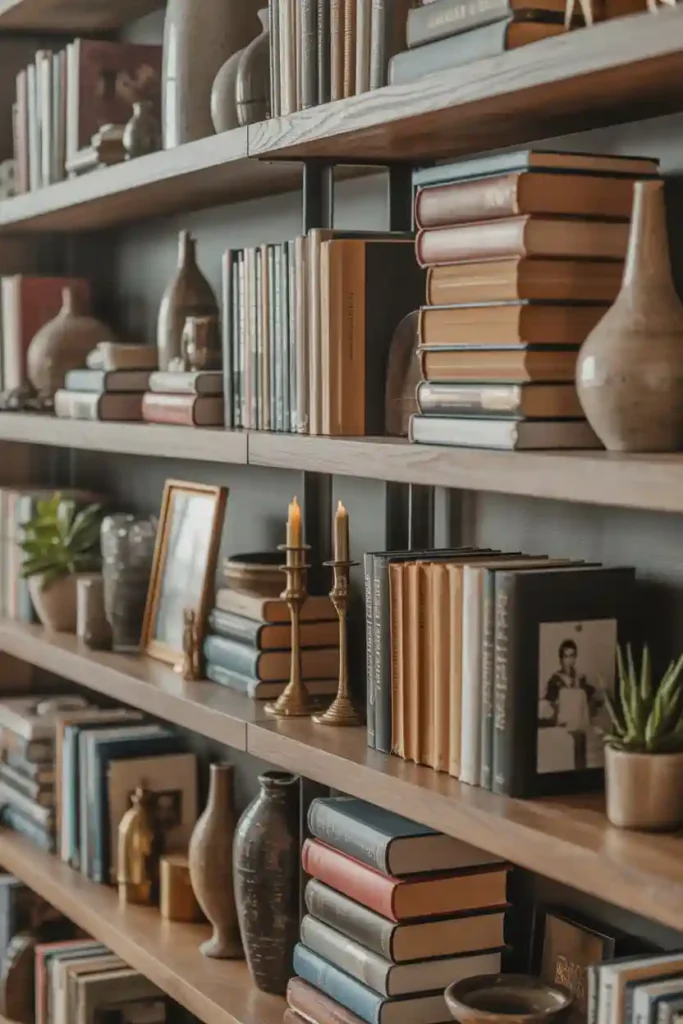
Variation in height and scale is essential for a styled bookshelf. When everything is the same size, shelves can look flat and uninspired. Mixing tall vases, medium sculptures, and smaller accents creates rhythm and visual interest.
Tall objects work well at the ends of shelves or as anchors within groupings. Medium-sized items help transition between heights, while smaller pieces fill gaps without overwhelming the space. Books themselves can contribute to this variation when stacked at different heights. This approach keeps the eye moving naturally across the shelves. Thoughtful scale variation makes the display feel dynamic and layered, giving your bookshelf a designer-quality finish that feels intentional rather than accidental.
4. Incorporate Negative Space
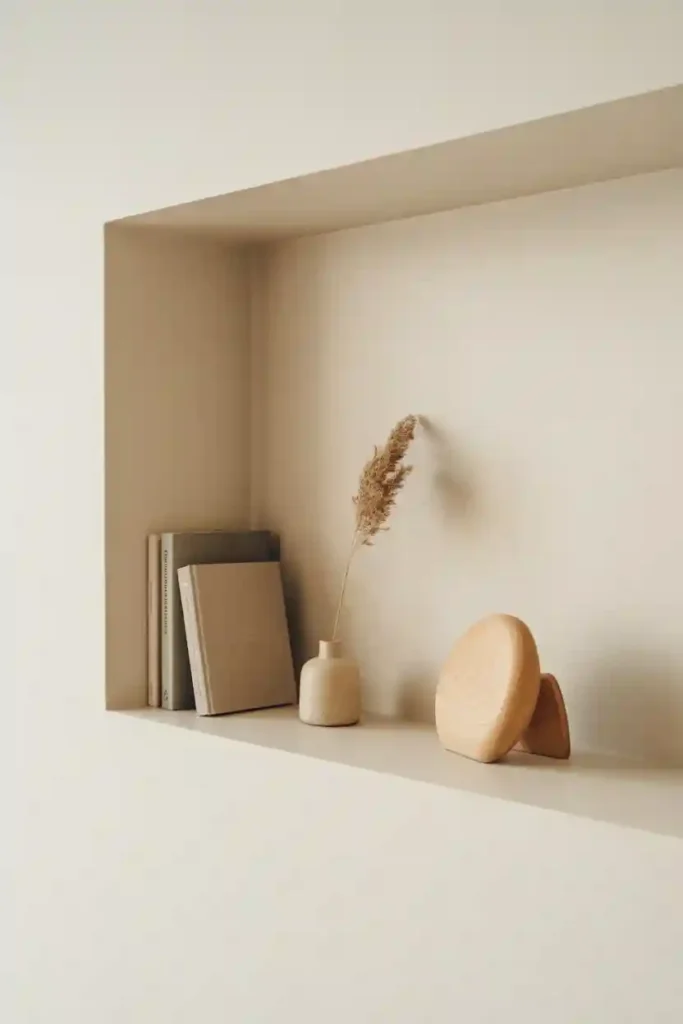
One of the most overlooked elements of bookshelf styling is negative space. Leaving some areas intentionally empty allows the eye to rest and prevents shelves from feeling cluttered. Styled bookshelves don’t aim to fill every inch.
Negative space highlights your décor by giving each piece room to stand out. It also adds a sense of calm and sophistication. Try leaving one section of a shelf partially empty or limiting décor to just one or two items per shelf. This technique is especially effective in small rooms, where visual breathing room makes the space feel larger and more refined. Less truly is more when it comes to styled shelves.
5. Layer Artwork and Frames
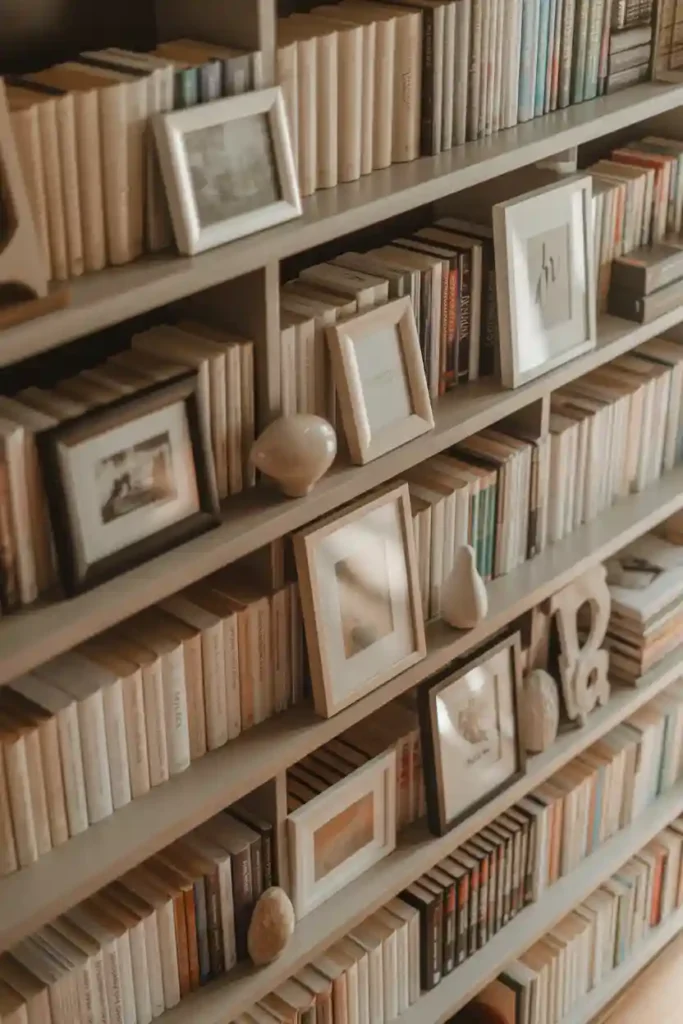
Layering artwork on bookshelves adds depth and personality. Instead of hanging all art on walls, lean framed prints or photos against the back of shelves. This creates a relaxed, styled look that feels curated rather than formal.
Mix frame sizes and finishes while keeping the artwork cohesive in color or theme. Layering smaller frames in front of larger ones adds dimension without overwhelming the shelf. This technique works especially well when combined with books and sculptural objects. Artwork adds a personal element and breaks up the monotony of book spines. When layered thoughtfully, it elevates shelves and makes them feel intentionally styled.
6. Use Decorative Objects with Purpose
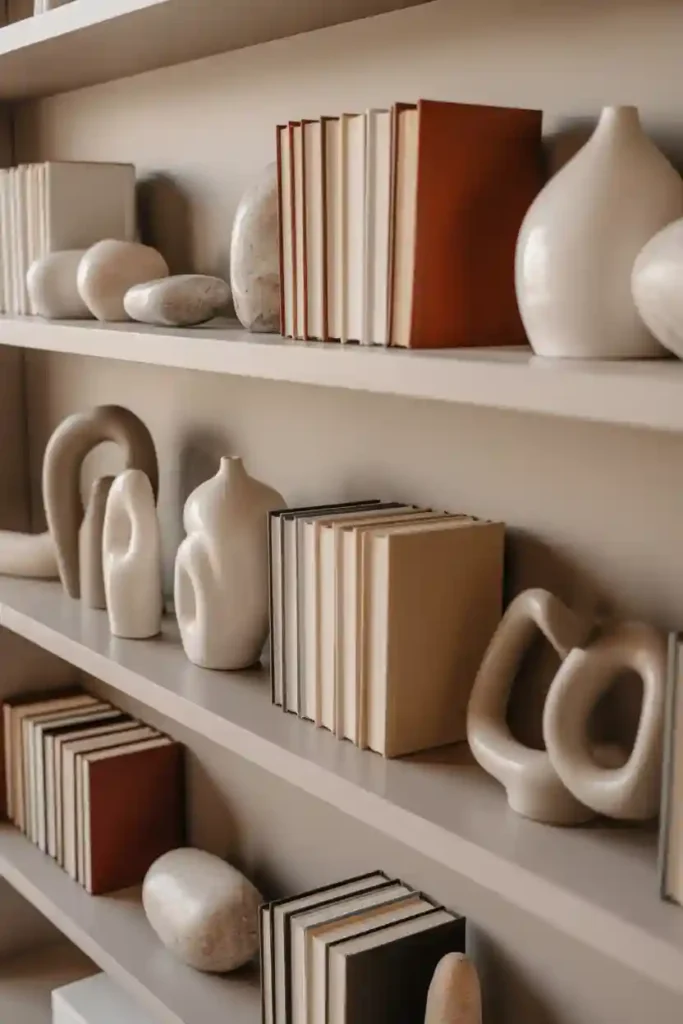
Decorative objects are what transform a bookshelf from functional storage into a styled design feature. The key is intention. Every object placed on a shelf should add either texture, shape, contrast, or meaning. Random décor can quickly make shelves feel cluttered, but purposeful pieces create a curated, polished look.
Start by choosing a few high-quality items rather than many small ones. Ceramic vases, sculptural bowls, stone objects, or metallic accents work well because they add visual weight and texture. Personal items can also be decorative when styled correctly. A meaningful object feels elevated when paired with books or framed artwork. Leave breathing room around each piece so it can stand out. When décor is chosen and placed with purpose, bookshelves feel refined, thoughtful, and effortlessly styled rather than crowded or chaotic.
7. Style Books Horizontally and Vertically
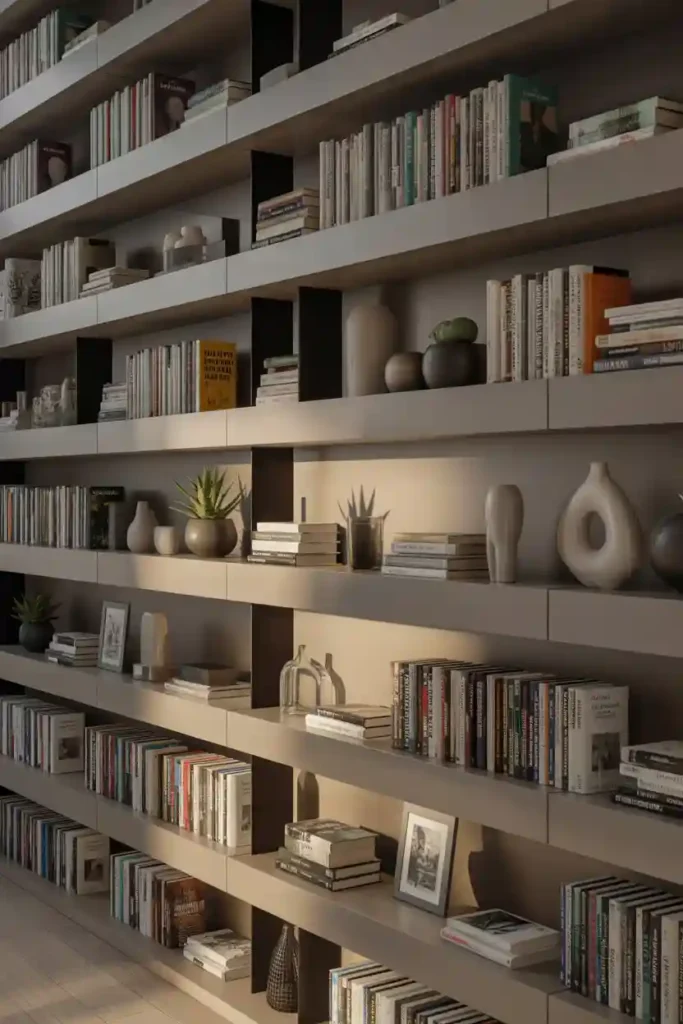
One of the simplest ways to make a bookshelf look professionally styled is by mixing horizontal and vertical book arrangements. Shelves filled with only upright books can feel rigid and repetitive. Introducing horizontal stacks softens the look and adds visual rhythm. Vertical books provide structure and are perfect for anchoring sections of a shelf. Horizontal stacks, on the other hand, act as platforms for décor. Place a small vase, candle, or sculptural object on top of stacked books to create layered height. Keep horizontal stacks to three to five books to maintain balance and avoid clutter.
Varying the orientation also helps guide the eye across the shelves, making the arrangement feel dynamic. This technique works in any space, from modern living rooms to cozy home offices. When combined thoughtfully, horizontal and vertical book styling creates depth, movement, and a curated appearance that feels intentional rather than purely functional.
8. Add Natural Elements for Warmth and Life

Natural elements bring warmth, softness, and a lived-in feel to bookshelf styling. Plants, wood accents, stone pieces, and organic textures prevent shelves from feeling too stiff or overly polished. Even one or two natural elements can completely change the mood of a bookshelf. Small potted plants, trailing greenery, or dried florals add life and movement without overwhelming the shelves. Wood objects—such as carved bowls or frames—introduce warmth and contrast beautifully with books and ceramics. Stone or marble accents add subtle elegance while keeping the look grounded.
Natural elements also help balance hard lines and straight edges commonly found in shelving units. They create a sense of calm and connection to nature, which makes the space feel more inviting. When styled thoughtfully, organic pieces elevate bookshelves while maintaining a relaxed, effortlessly styled aesthetic.
9. Create Visual Triangles for a Designer Look
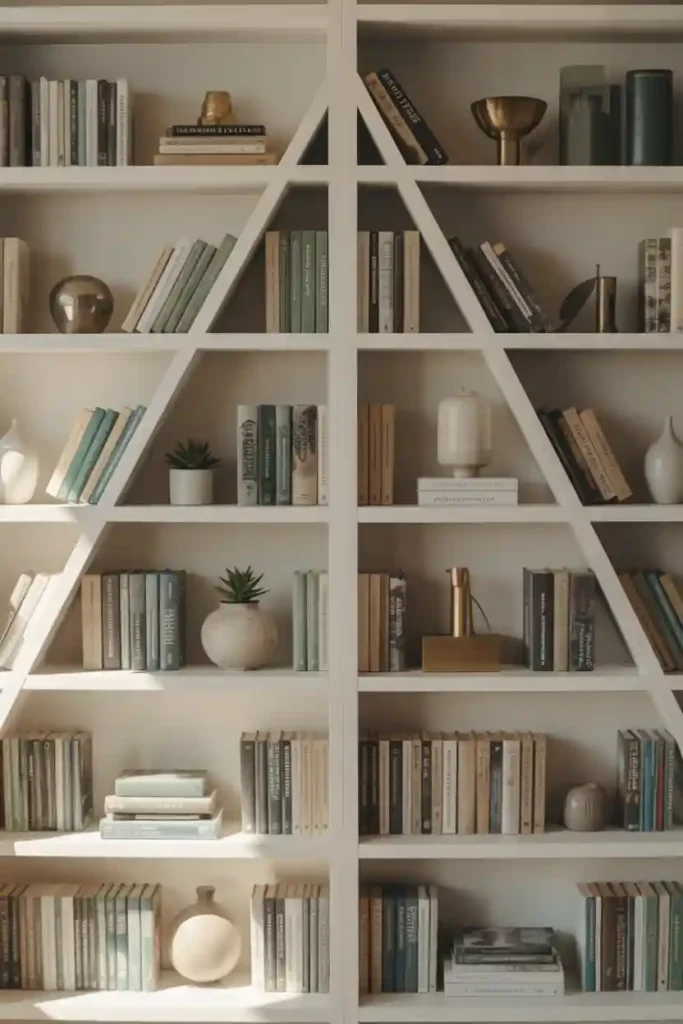
Visual triangles are a subtle styling technique designers use to make bookshelves feel balanced and intentional. The idea is to arrange items so the eye naturally moves in a triangular pattern across the shelf. This creates flow and prevents the display from feeling flat or random. Start by placing a taller item—such as a vase or stack of books—on one side of the shelf. Balance it with a medium-height object near the center and a smaller accent on the opposite side. Books can also be part of this structure, especially when stacked horizontally to vary height.
This method works especially well when combined with mixed textures and neutral tones. Visual triangles bring harmony to shelves while still allowing variety. They guide the eye smoothly across the display, making the bookshelf feel curated and professional. When done correctly, the arrangement looks effortless, even though it’s carefully planned, giving your shelves a truly styled appearance.
10. Repeat Shapes and Materials for Cohesion
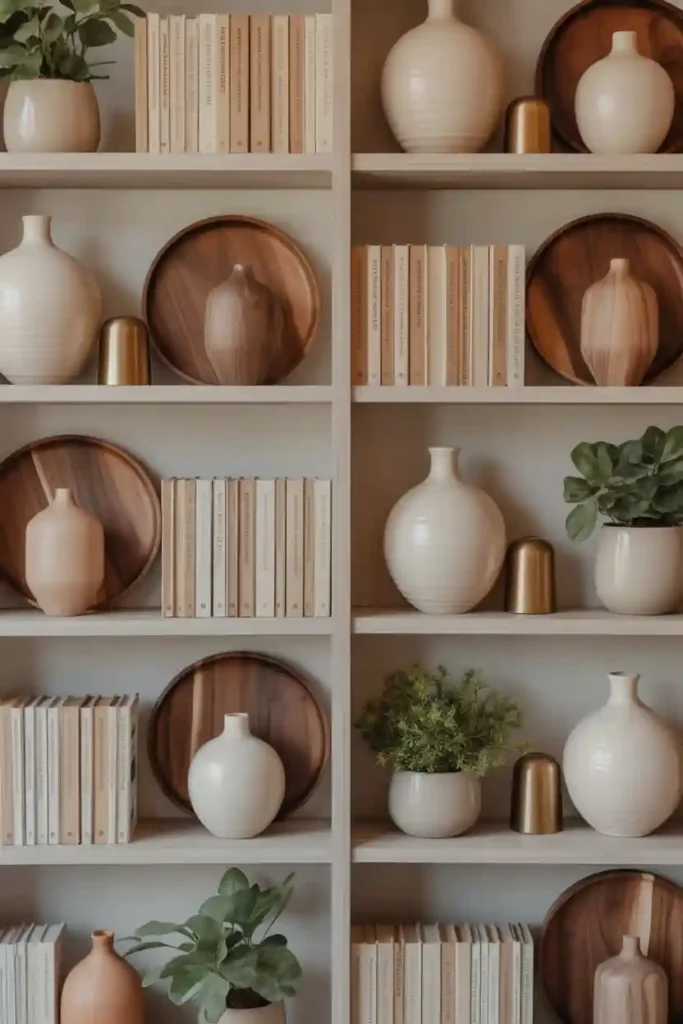
Repetition is one of the easiest ways to make bookshelf décor feel cohesive. By repeating similar shapes, materials, or finishes, you create a visual thread that ties everything together. This doesn’t mean everything should match—subtle consistency is what makes shelves feel styled rather than chaotic.
For example, you might repeat ceramic objects in different sizes or use black metal accents across multiple shelves. Rounded shapes can be echoed in bowls, vases, and planters, while wood tones can appear in frames, sculptures, or bookends. These repeated elements help the eye move smoothly from shelf to shelf. Repetition also brings calm to busy spaces. Even when shelves hold a variety of items, shared materials and shapes create harmony. This technique works especially well in open shelving where everything is visible at once. When repetition is used thoughtfully, bookshelves look intentional, refined, and beautifully styled.
11. Mix Old and New Pieces for Character

A bookshelf that looks truly styled often includes a mix of old and new pieces. Vintage books, antique objects, or weathered décor add depth and character, while modern accents keep the look fresh and balanced. This contrast creates interest and tells a story. Old items bring warmth and history, making shelves feel collected over time rather than purchased all at once. New pieces—such as clean-lined vases or minimalist frames—prevent the display from feeling dated. Together, they create a layered and dynamic look.
The key is balance. Avoid letting one style overpower the other. Pair a vintage book stack with a modern sculpture, or place an antique object next to a sleek ceramic piece. This thoughtful mix adds personality while maintaining cohesion. When done well, shelves feel personal, curated, and effortlessly stylish.
12. Use Books as Design Elements
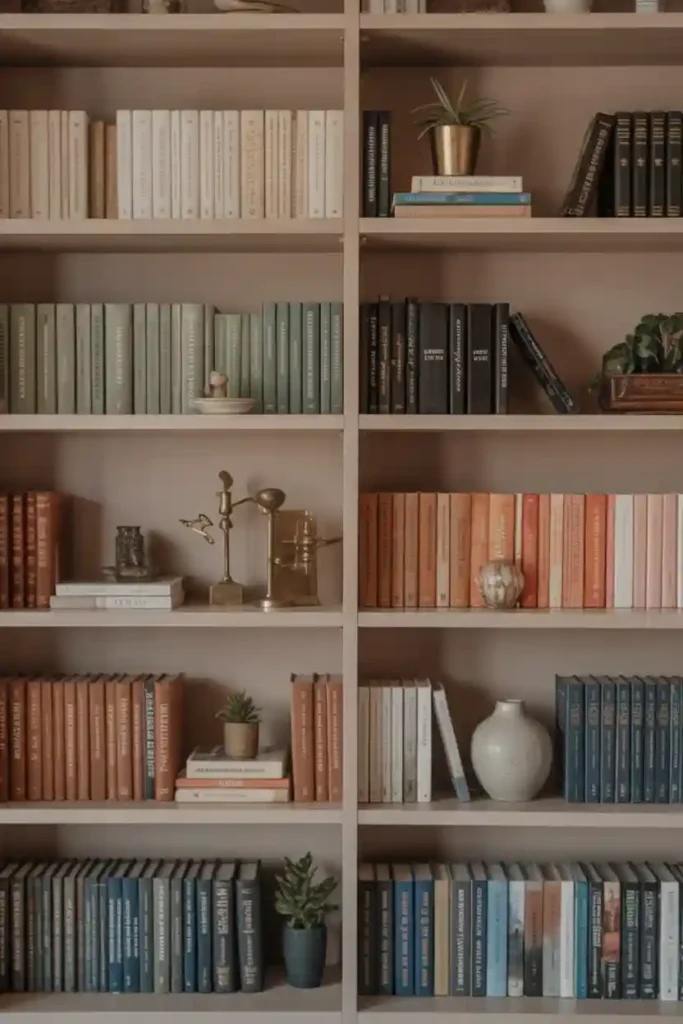
Books are not just for reading—they’re one of the most powerful design tools on a bookshelf. When styled intentionally, books add color, structure, and personality to shelves. Instead of treating them as background items, let them take center stage.
Grouping books by color creates a clean, organized look, while turning spines inward offers a softer, neutral aesthetic. Coffee-table books work especially well for horizontal stacks, adding both height and sophistication. Use these stacks as bases for décor like candles or small sculptures. You can also mix hardcovers and paperbacks to vary texture. The goal is to make books feel part of the design rather than an afterthought. When used creatively, books themselves elevate the shelves, making them feel intentional, styled, and visually cohesive.
13. Anchor Shelves with Statement Pieces
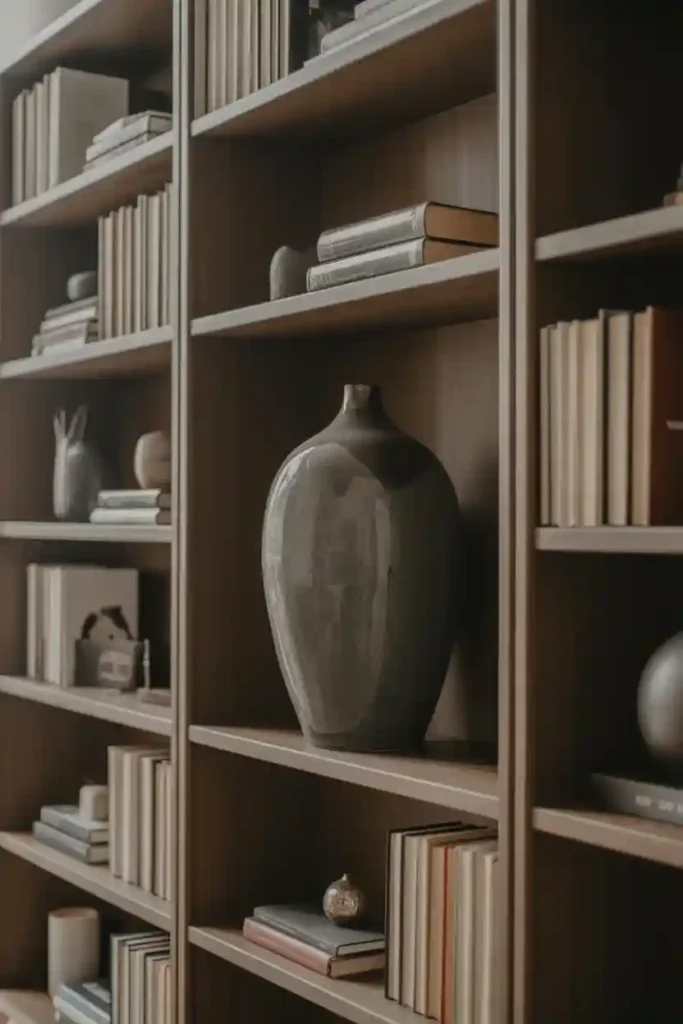
Statement pieces give bookshelves structure and confidence. Without them, shelves can feel scattered or unfinished. A statement object—such as an oversized vase, bold sculpture, or large framed artwork—acts as an anchor that grounds the entire display. These pieces work best when used sparingly. One strong focal item per shelving unit is often enough. Place it at eye level or on a lower shelf to create visual weight, then build lighter elements around it. Books, smaller décor, and negative space help balance the scale so the statement doesn’t overwhelm the shelf.
Statement pieces also help define your style. A modern sculpture creates a contemporary feel, while a textured ceramic or antique piece adds warmth and character. When thoughtfully chosen, anchor items give shelves intention and direction. They create a clear starting point for styling and elevate the overall look, making bookshelves feel curated, confident, and professionally styled.
14. Keep Styling Asymmetrical for a Relaxed Look
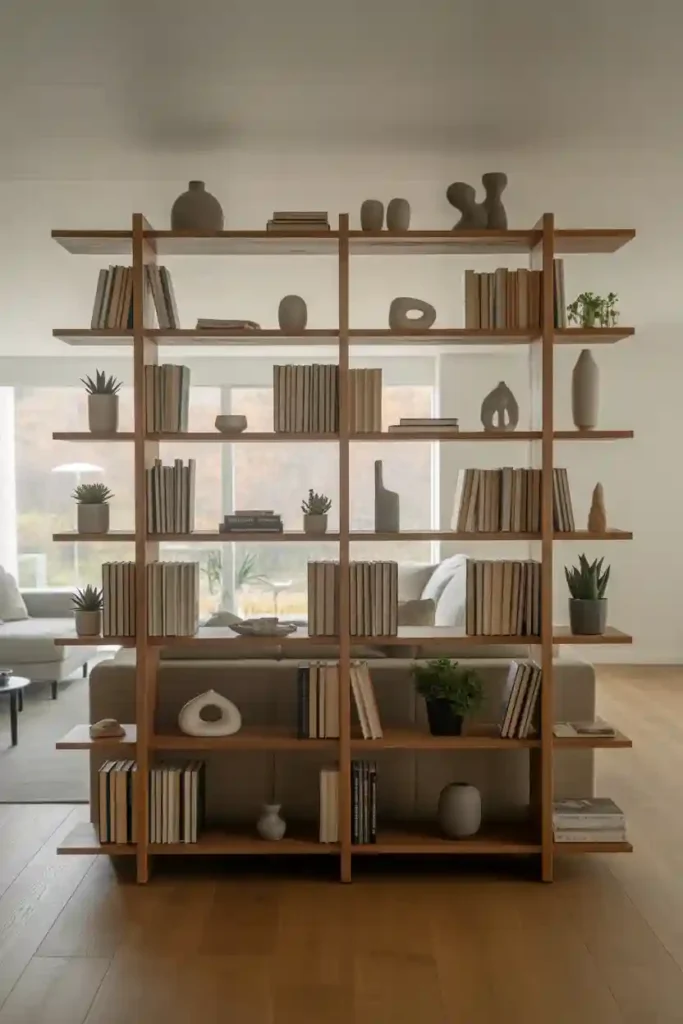
Perfect symmetry can make bookshelves feel stiff and overly formal. Asymmetrical styling, on the other hand, creates a relaxed and modern look that feels more natural and lived-in. This approach is a key reason professionally styled shelves feel effortless rather than forced. To achieve asymmetry, vary the placement of objects instead of mirroring items on each side. Balance a tall object on one side of a shelf with several smaller items on the other. Let books and décor interact organically rather than lining everything up evenly.
Asymmetry encourages movement and visual interest. It keeps the eye engaged and makes shelves feel dynamic. This technique works especially well when paired with neutral colors and simple décor, allowing shapes and spacing to do the work. The result is a bookshelf that looks intentionally styled, comfortable, and effortlessly chic.
15. Refresh Seasonally Without Overstyling
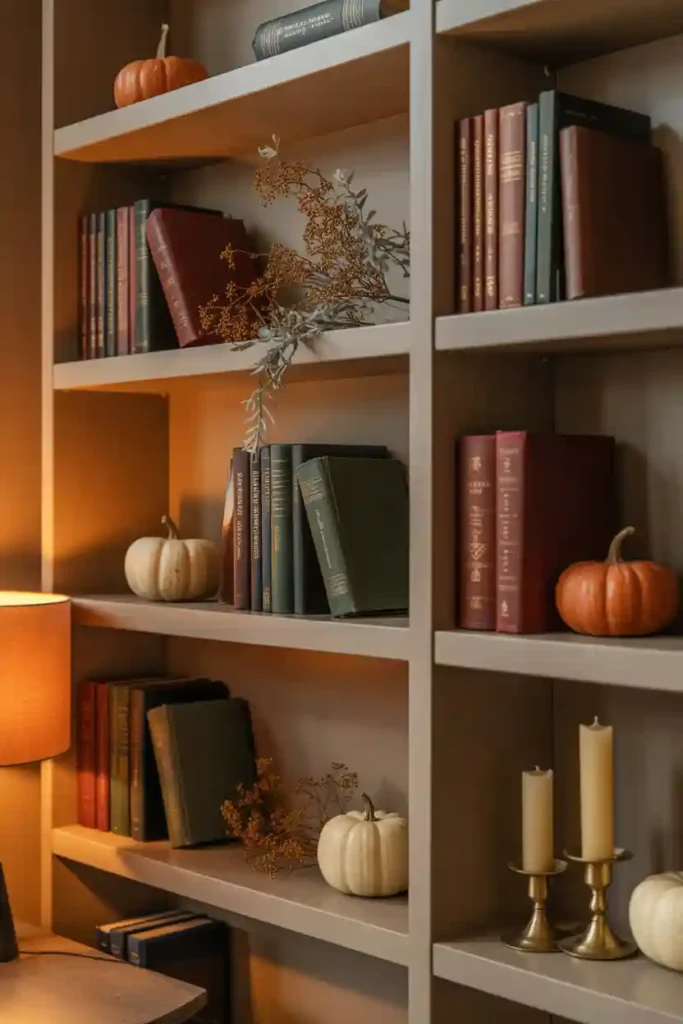
A bookshelf that looks styled year-round doesn’t need constant restyling—just small, thoughtful updates. Seasonal refreshing keeps shelves feeling current while preserving their polished appearance. The key is subtlety. Swap out just a few items to reflect the season. In fall, add warm-toned ceramics or dried branches. In spring, introduce fresh greenery or light-colored accents. Avoid changing everything at once, as consistency helps maintain a styled look.
Keeping the core arrangement intact ensures the shelves still feel cohesive. Seasonal touches should enhance, not distract from, the overall design. This approach prevents visual fatigue while allowing your space to evolve naturally. With minimal effort, your bookshelves stay fresh, intentional, and beautifully styled throughout the year.
16. Edit Ruthlessly for a Polished Finish
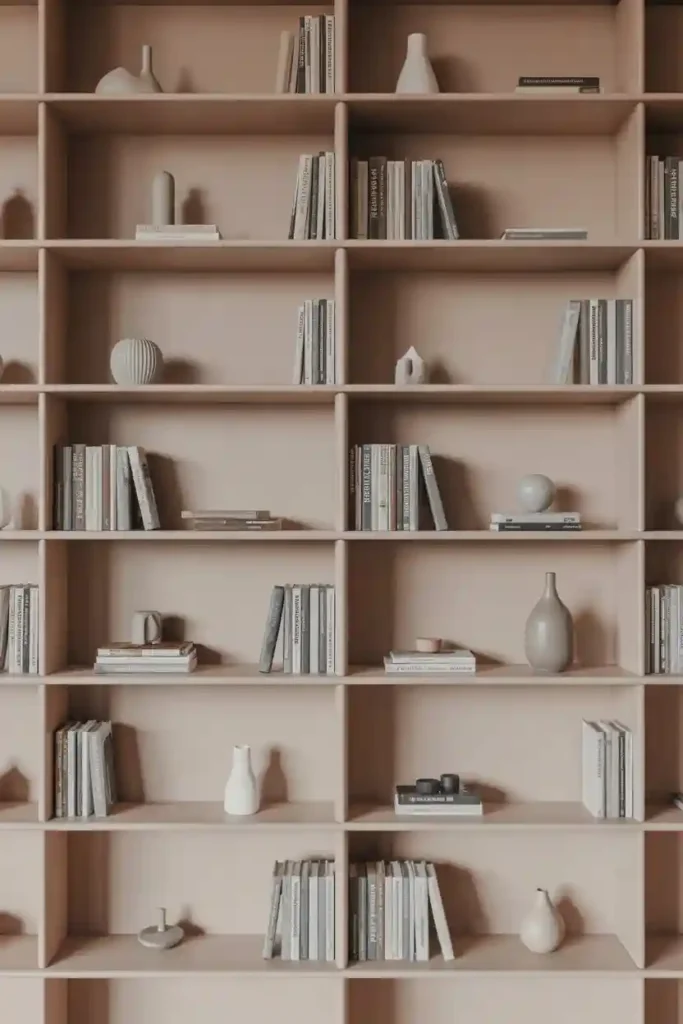
Editing is the final and most important step in bookshelf styling. Even beautiful objects can lose impact when there are too many of them. A truly styled bookshelf feels calm, intentional, and uncluttered. Take a step back and remove anything that doesn’t serve a purpose—visually or emotionally. Leave space around key items so they can stand out. Negative space isn’t empty; it’s what allows the design to breathe.
Editing also helps highlight quality over quantity. A few well-chosen pieces always look more refined than shelves packed with décor. This process often reveals that less really is more. Once edited, shelves feel lighter, cleaner, and more sophisticated. A polished bookshelf is not about filling space—it’s about making every element count.
Final Words
Beautifully styled bookshelves are all about intention, balance, and thoughtful editing. These 16 Bookshelf Decorating Ideas That Look Styled show that you don’t need expensive décor or endless accessories to achieve a polished look. By mixing books with décor, varying height and scale, using negative space, and repeating colors or materials, your shelves can feel curated rather than cluttered.