12 Bookshelf Ideas For Kids That Encourage Reading
Fostering a love of reading in children starts with creating an inviting and accessible space for books. These 12 Bookshelf Ideas For Kids That Encourage Reading are designed to combine fun, functionality, and creativity. A well-designed bookshelf not only stores books but also sparks curiosity, inspires imagination, and makes reading a daily habit.
Children are more likely to engage with books when they can see and reach them easily. From colorful shelves and themed designs to interactive and low-to-the-ground storage solutions, these ideas turn books into a playful, exciting part of their room. With thoughtful organization and creative displays, bookshelves can become mini-adventures that invite children to explore stories independently.
1. Low-to-the-Ground Shelves
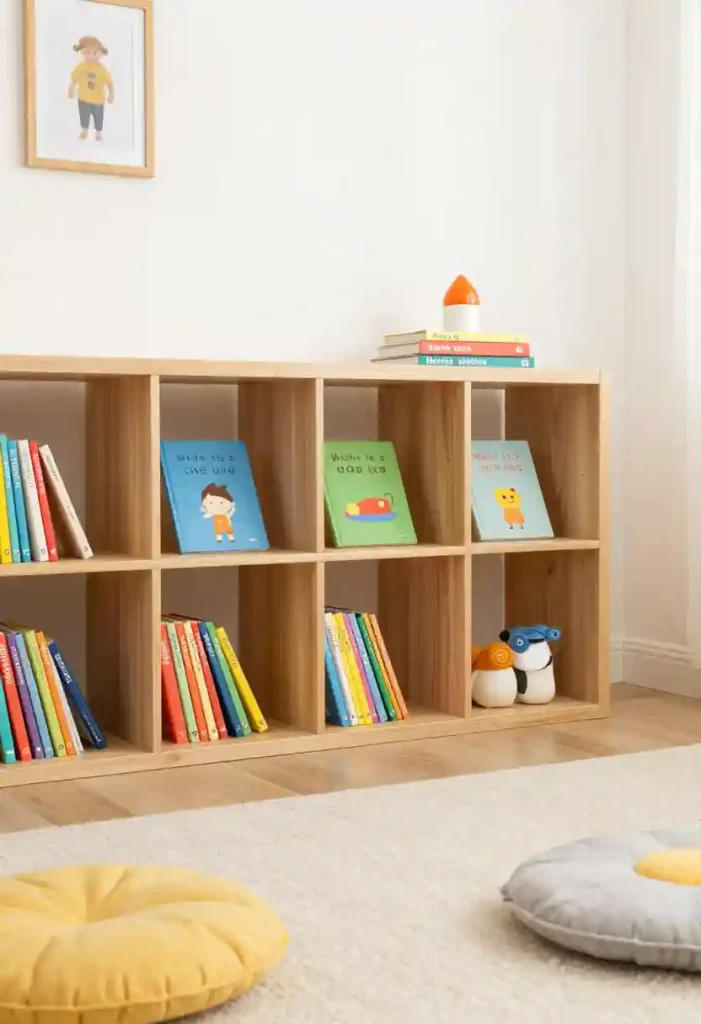
Low-to-the-ground bookshelves make books accessible to children, encouraging independent exploration. When kids can reach books without help, they’re more likely to pick them up and read. These shelves work best for toddlers and preschoolers. Keep the layout simple by organizing books face-out so covers are visible. This approach draws attention to titles and makes selection easier. Add colorful bins for toys or smaller books to further organize the space.
Safety is key, so opt for sturdy wooden or rounded-edge shelves to prevent accidents. Pair the shelves with a comfy reading rug or cushion to create a cozy nook where children can sit and enjoy their books. This combination of accessibility, comfort, and visual appeal encourages a lifelong love of reading.
2. Wall-Mounted Display Shelves
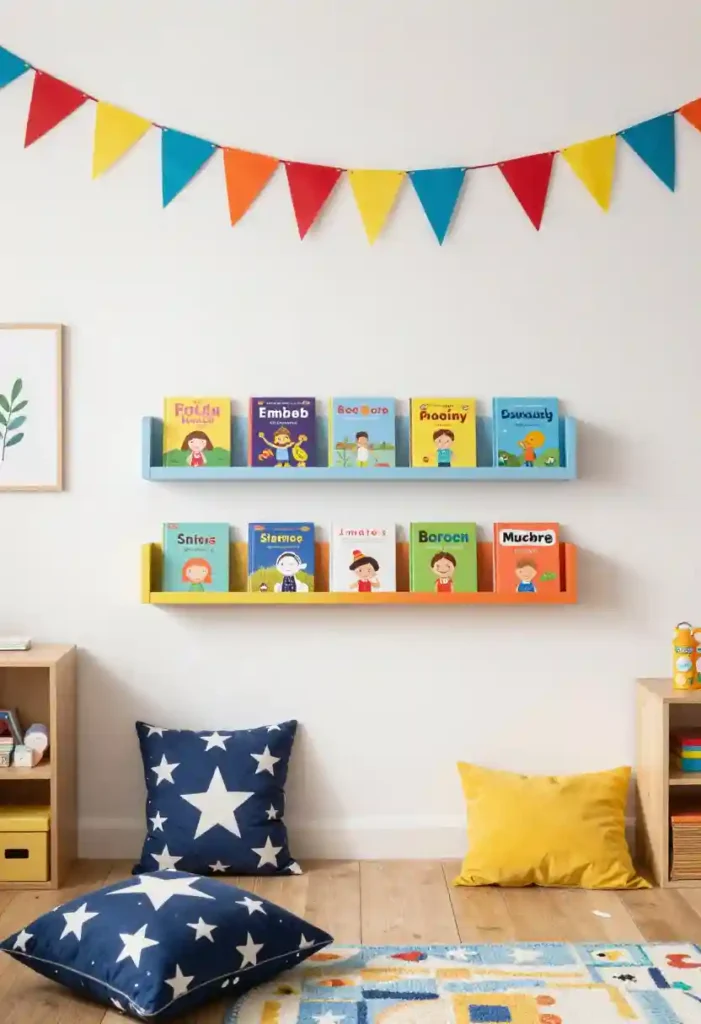
Wall-mounted display shelves allow books to be showcased with their covers facing forward, making it easier for children to choose their favorites. This type of display is particularly engaging for young readers who respond to bright colors and visual cues. These shelves save floor space and can be installed at varying heights to grow with your child. Use a mix of small shelves for picture books and larger shelves for chapter books. Add fun themed brackets or painted back panels to make the display visually exciting.
Keeping books at eye level encourages frequent selection and reading. Combine with a small stool or cushion for comfortable browsing. This method transforms your child’s room into an inviting mini-library where books are celebrated rather than hidden.
Read Also: 13 Bookshelf Organization Ideas That Stay Neat
3. Book Bins and Baskets
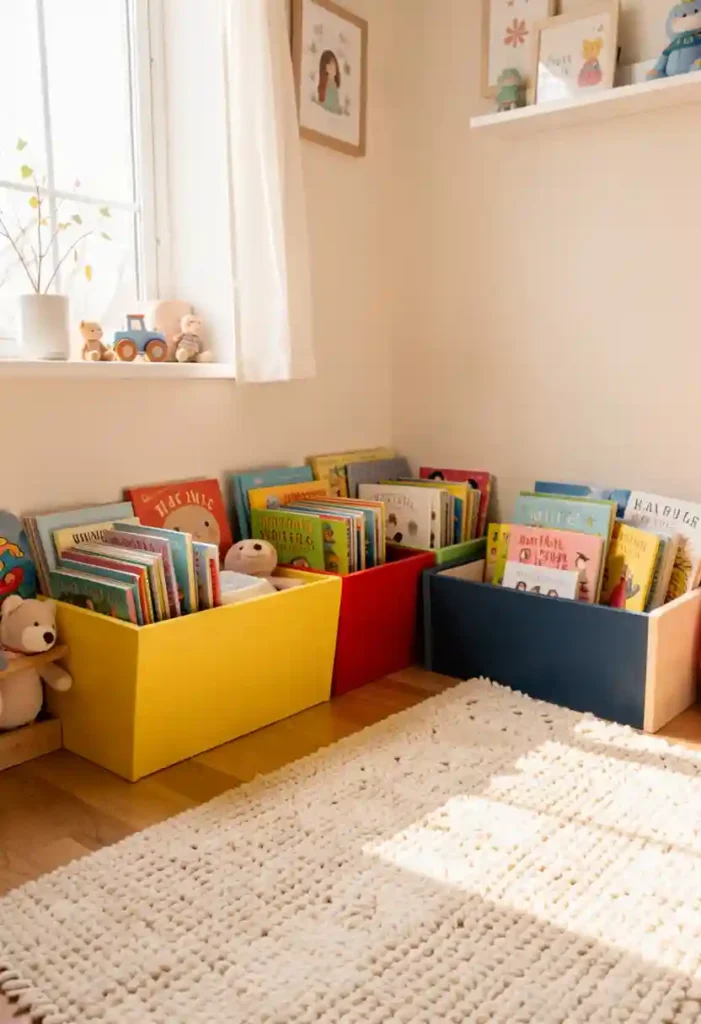
Open book bins and baskets are ideal for organizing children’s books while keeping them within reach. This flexible storage encourages kids to browse freely and return books easily. Label bins with words or pictures to help pre-readers identify categories, such as “Stories,” “Animals,” or “Learning.” Use lightweight, durable baskets to make lifting and carrying books easy for little hands. Stackable bins maximize vertical space while maintaining a tidy room.
Book bins work well on low shelves, in play areas, or even beside beds. They help maintain organization without restricting access, giving children a sense of ownership over their reading space. Bins can also double as storage for small toys or stuffed animals, integrating play and literacy in one area.
4. Themed Bookshelves
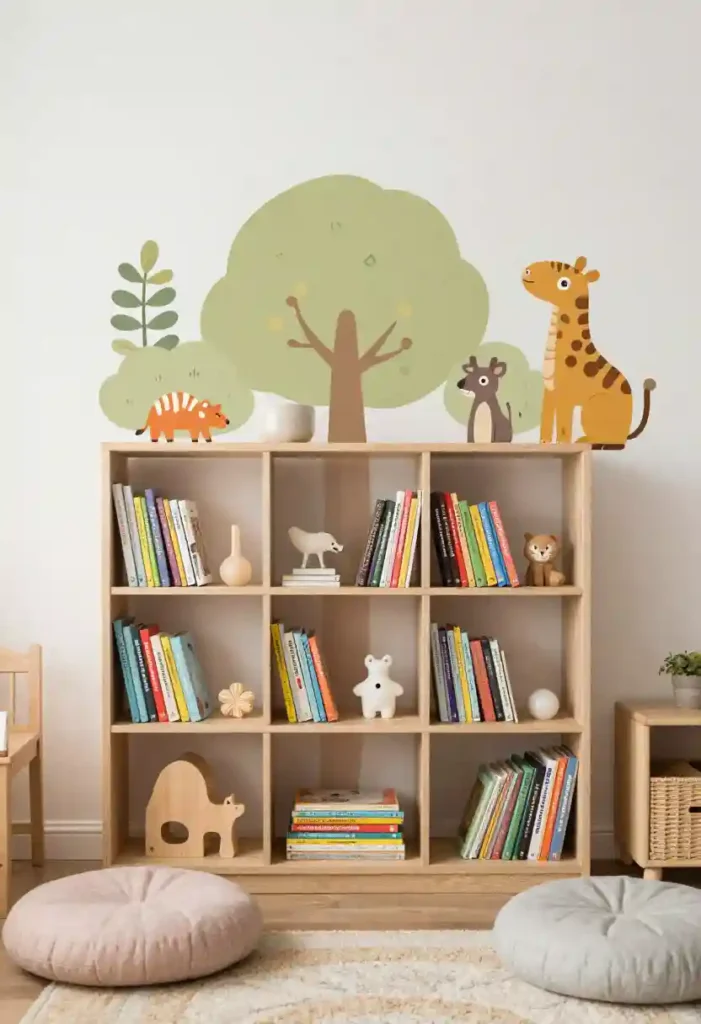
Themed bookshelves, such as ones shaped like houses, trees, or animals, make reading fun and visually engaging. Creative designs turn ordinary shelves into playful, interactive features that capture children’s attention. Choose a theme that complements the room’s décor or reflects your child’s interests. For example, a tree-shaped bookshelf encourages exploration of nature-themed books, while a rocket-shaped shelf sparks interest in science and space. Paint or decals can enhance the theme without being permanent.
Themed bookshelves make selecting books exciting, increasing the likelihood that kids will engage with reading independently. Ensure the shelves are safe, stable, and low enough for young children. This combination of imaginative design and accessibility promotes both literacy and creativity.
5. Reading Nooks with Built-In Shelves
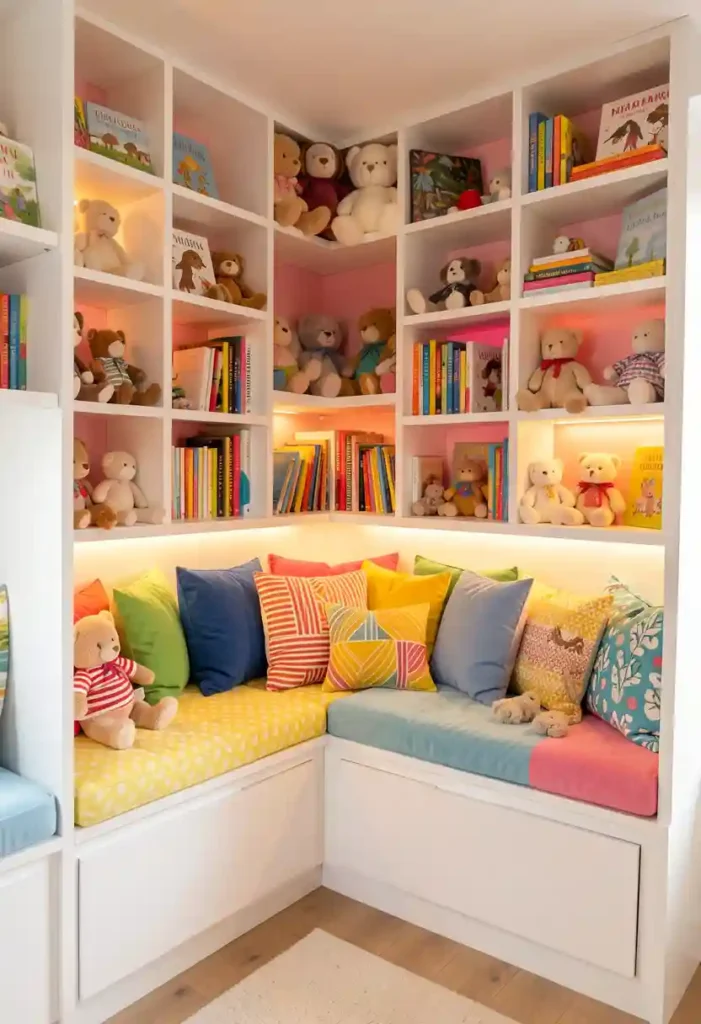
A cozy reading nook paired with built-in shelves creates a dedicated space for reading. Enclosed or corner designs offer a sense of privacy, making children feel immersed in their books. Incorporate cushions, bean bags, or small benches for comfort. Built-in shelves can line the sides of the nook or arch over the top, keeping books within arm’s reach. Soft lighting such as LED strips or small lamps enhances the ambiance, making reading inviting at any time of day.
Reading nooks give children a personal, engaging space that encourages independent exploration. By combining storage and comfort, these areas make reading a fun, consistent part of daily routines.
6. Rotating Bookshelves
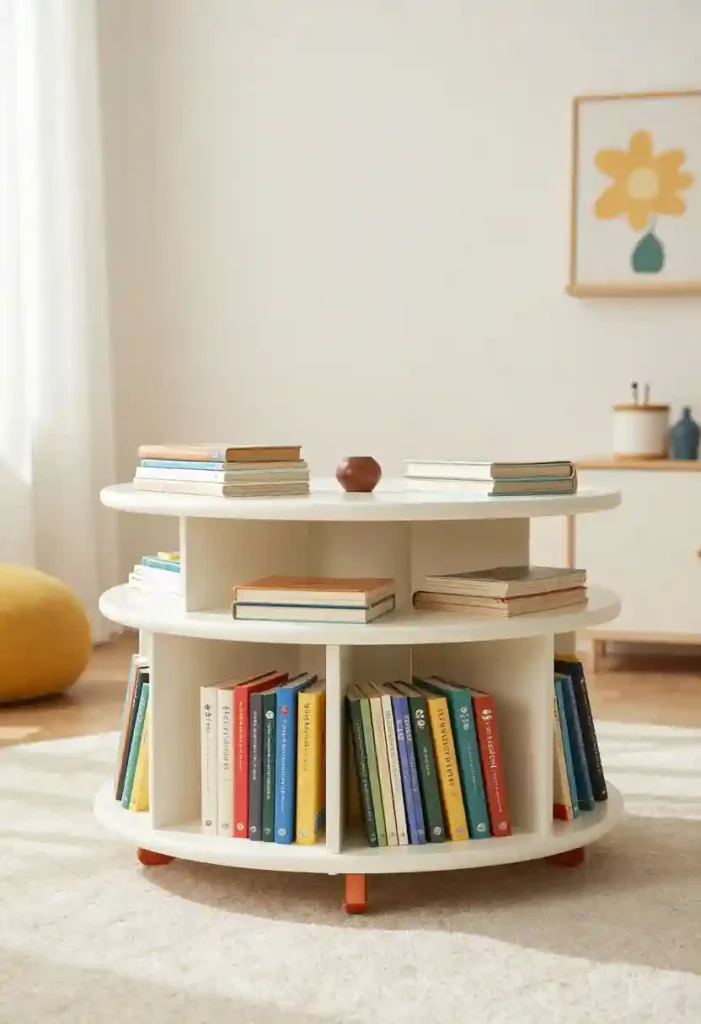
Rotating or lazy-susan-style bookshelves allow children to see all their books at a glance, making it easy to choose their next read. This playful, interactive design adds movement and engagement to the room. These shelves can be small, low units suitable for toddlers or slightly taller models for older kids. Arrange books by theme, color, or size. The rotation mechanism ensures that children can explore all available books independently, promoting curiosity and choice.
Durable construction and smooth rotation are essential for safety. Rotating bookshelves are particularly effective for shared spaces or classrooms, where multiple children need access to the collection. The novelty factor also makes reading more exciting and encourages frequent interaction.
7. Ladder or Step Shelves
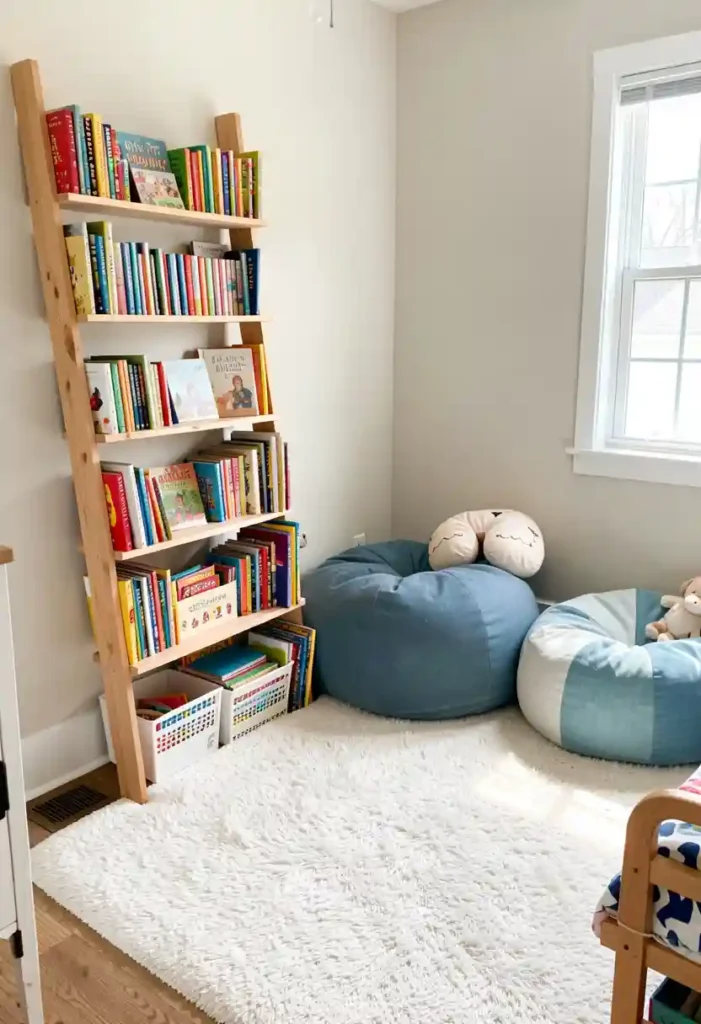
Ladder-style or step shelves are a playful and functional way to store children’s books. These shelves feature multiple tiers, creating a mini staircase effect that allows kids to reach different levels safely. This design combines storage with fun, making book selection a more engaging experience. Arrange larger books on the bottom steps and smaller titles higher up. The stepped design naturally encourages children to explore vertically while keeping books organized and visible. You can also place small toys or decorative items on the upper steps to add interest without overwhelming the space.
Safety is key, so choose sturdy wood with rounded edges to prevent accidents. Ladder or step shelves make books accessible for independent reading while teaching children about organization. This combination of playful design and functionality ensures books are always within reach and neatly arranged.
8. Mobile Bookshelf Carts
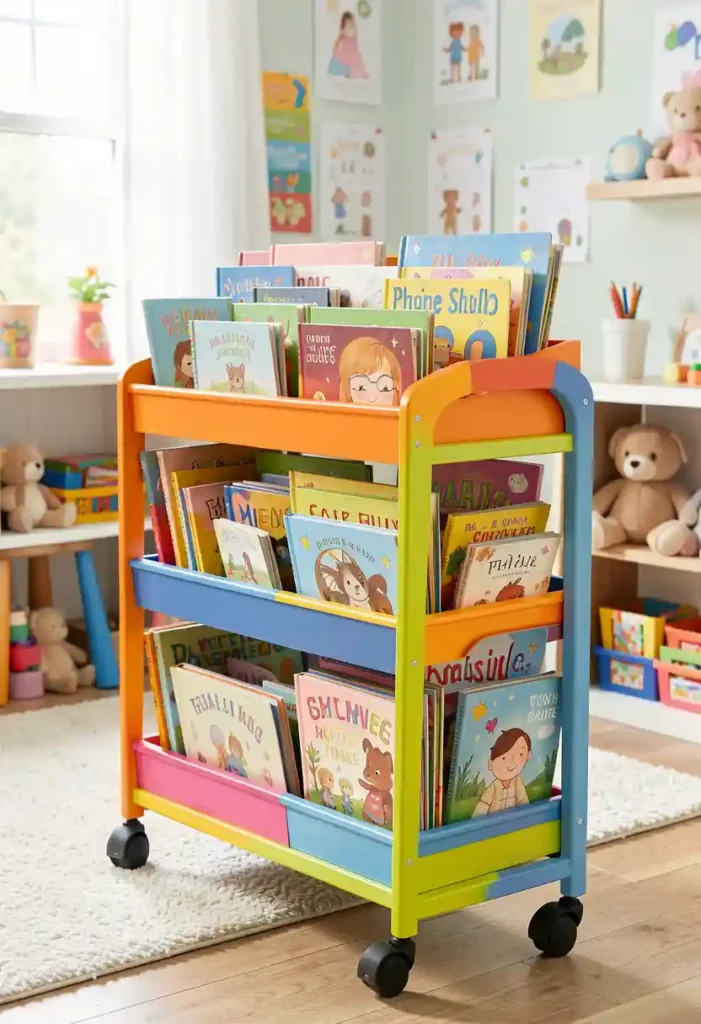
Rolling bookshelf carts are perfect for creating flexible and interactive reading spaces. They allow books to be moved around the room or between rooms, making reading an active, engaging experience. Kids can easily browse through books and take them to a cozy corner or play area. These carts typically feature multiple tiers for organizing books by size or theme. Adding small baskets or dividers helps categorize books while keeping them tidy. Lightweight construction ensures children can safely maneuver the cart without adult assistance.
Mobile carts are particularly useful in shared rooms or classrooms, where multiple children access the collection. They combine convenience, organization, and fun, encouraging kids to explore books independently. The mobility of the cart keeps the reading experience dynamic and enjoyable.
9. Corner Bookshelves
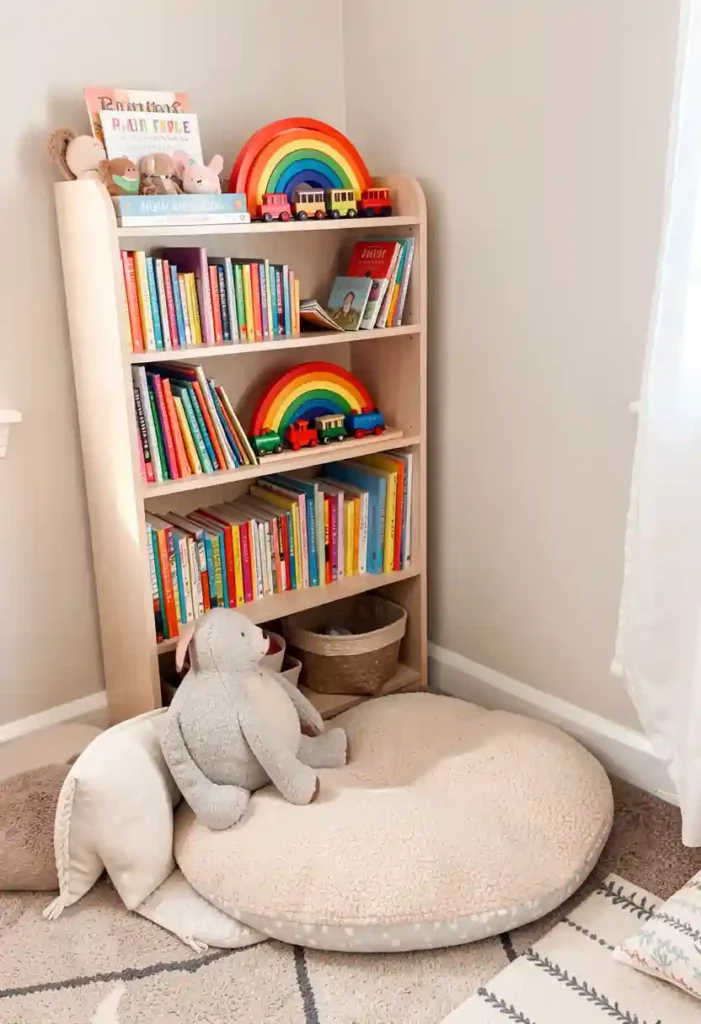
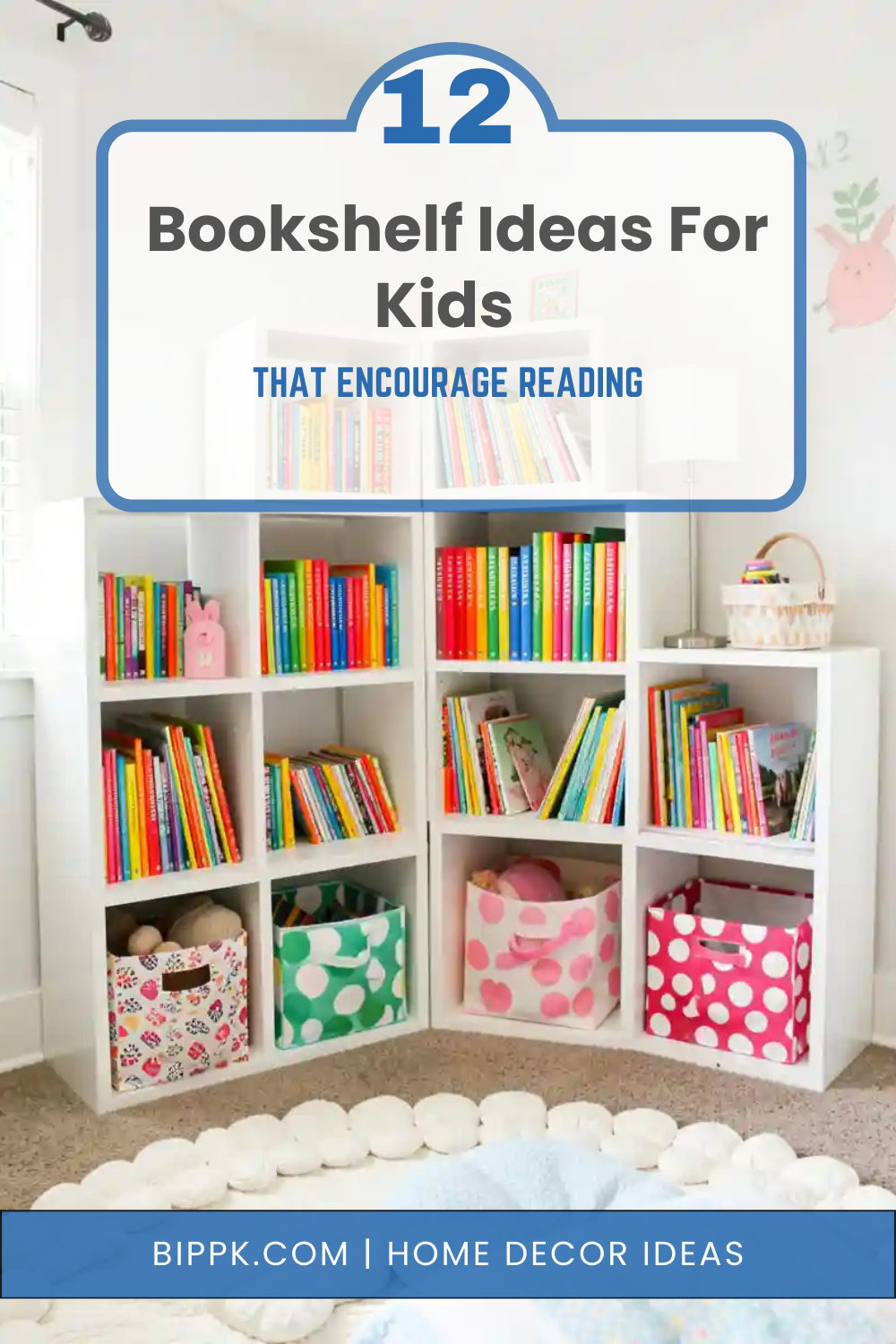
Corner bookshelves make use of often-overlooked spaces, maximizing storage in small bedrooms or playrooms. These L-shaped or triangular shelves fit snugly into corners, providing vertical storage while keeping the floor area open for play. Books can be arranged both vertically and horizontally to create visual interest. The corner layout naturally defines a cozy reading spot, encouraging children to spend time with books. Adding small decorative accents, such as toys or plants, makes the corner more inviting and playful.
Corner bookshelves make efficient use of space while keeping books accessible and organized. They encourage children to independently choose books and develop a consistent reading habit, turning an unused corner into a functional and fun mini-library.
10. Multi-Level Cube Shelving
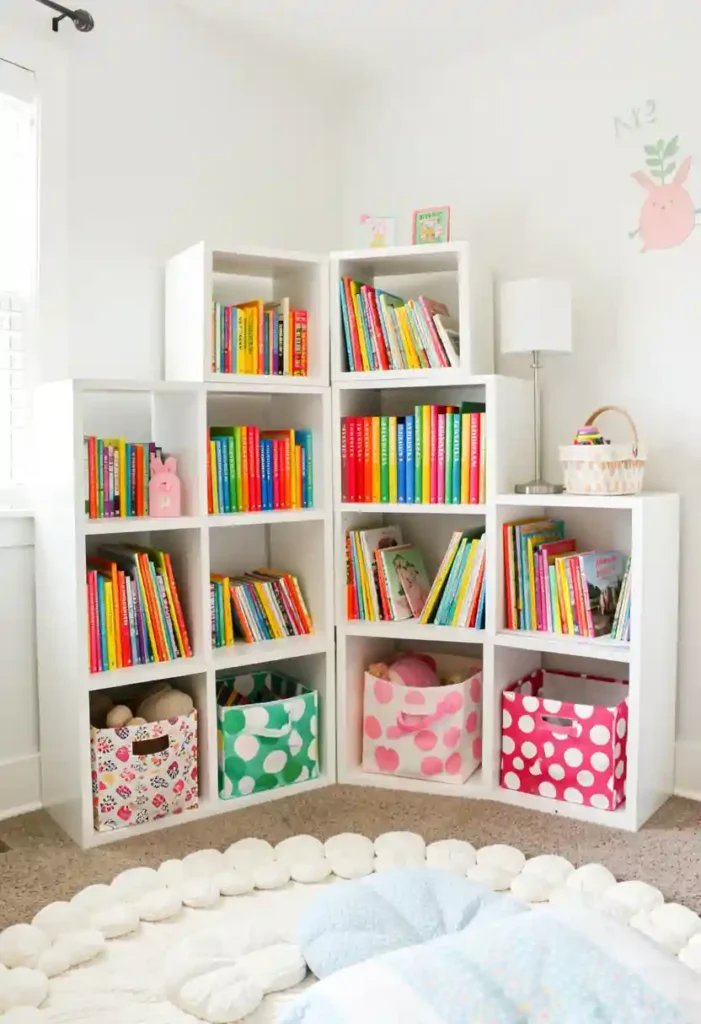
Multi-level cube shelving is a versatile way to organize children’s books while adding fun and structure to the room. Each cube acts as its own compartment, making it easy for kids to categorize books, toys, or decorative items. Lower-level cubes hold books at eye level for younger children, ensuring easy access. Upper cubes can display decorative objects, trophies, or collectibles. Adding baskets or bins inside some cubes keeps miscellaneous items hidden, maintaining a tidy appearance.
This setup teaches children about organization while giving them control over their reading space. The segmented structure prevents clutter from accumulating and allows for playful arrangements without sacrificing order. Multi-level cube shelving is perfect for bedrooms or playrooms where accessibility and visual appeal are equally important.
11. DIY Crate Bookshelves
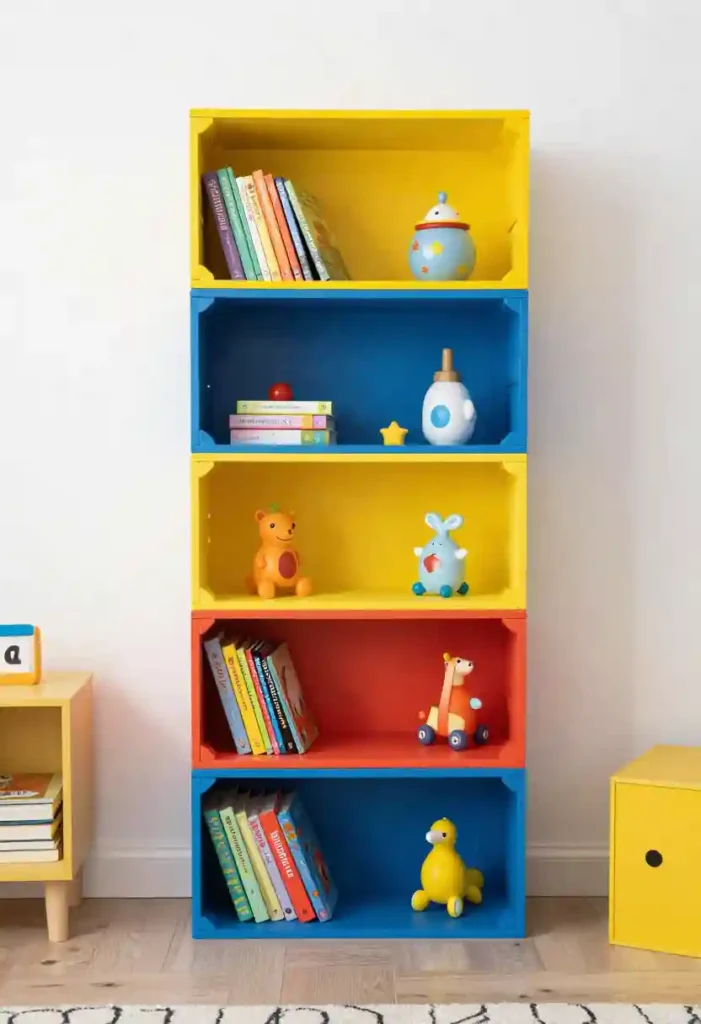
DIY crate bookshelves are a fun, budget-friendly option that can be customized to suit any room. Wooden crates can be stacked horizontally or vertically, painted in bright colors, and used to store books in a playful, engaging way.
Crates can be arranged in various configurations to fit the room’s layout, creating a unique design that grows with your child. Open crates allow easy access for children to pick and return books independently. Adding labels with pictures or words can teach categorization and help pre-readers identify sections. DIY crate bookshelves encourage creativity while combining functionality and accessibility. They’re also a hands-on project that allows parents and children to create a personalized reading space together. This approach promotes both literacy and imaginative play.
12. Integrated Reading and Play Area
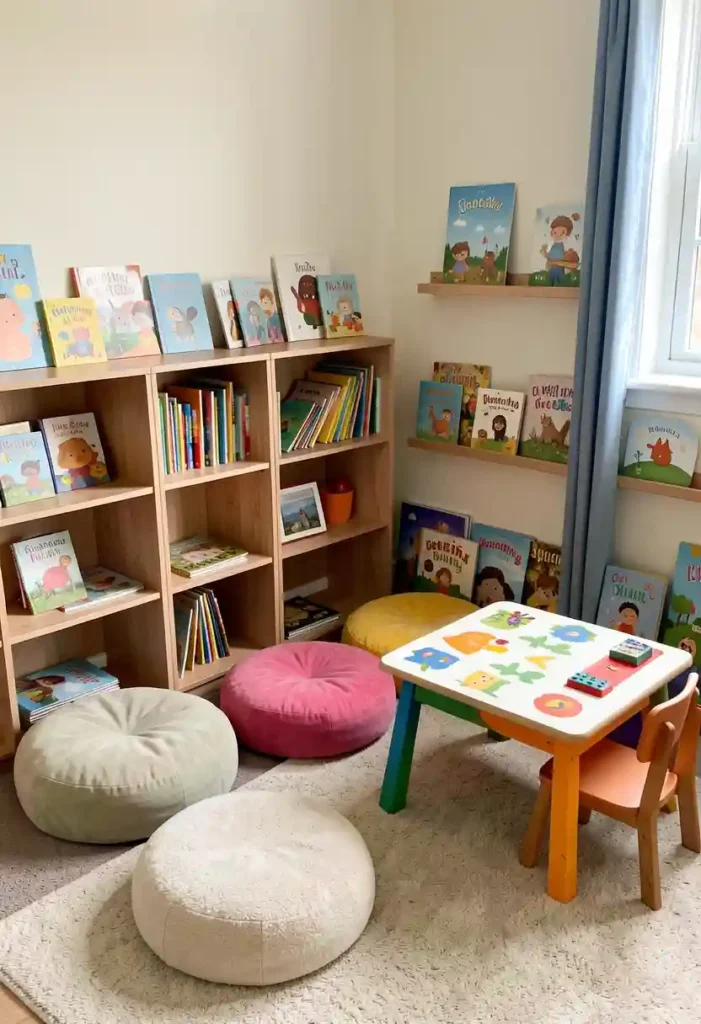
Creating an integrated reading and play area encourages children to view books as part of everyday fun. Combine low, accessible bookshelves with a cozy reading nook, cushions, or a small play table to create an immersive environment. Place books face-out for easy selection and incorporate nearby storage for toys, puzzles, or art supplies. This setup keeps books organized while making reading a natural extension of playtime. Soft lighting, colorful rugs, and child-sized furniture make the area inviting and comfortable.
By combining literacy with play, children are more likely to engage with books consistently. The integration ensures that reading is enjoyable, accessible, and part of their daily routine, fostering a long-term love of reading.
Final Words
Encouraging children to read starts with creating a space that is inviting, accessible, and fun. These 12 Bookshelf Ideas For Kids That Encourage Reading show that organization and creativity can go hand-in-hand. From low-to-the-ground shelves and wall-mounted displays to themed and DIY crates, each idea makes books approachable and visually appealing.