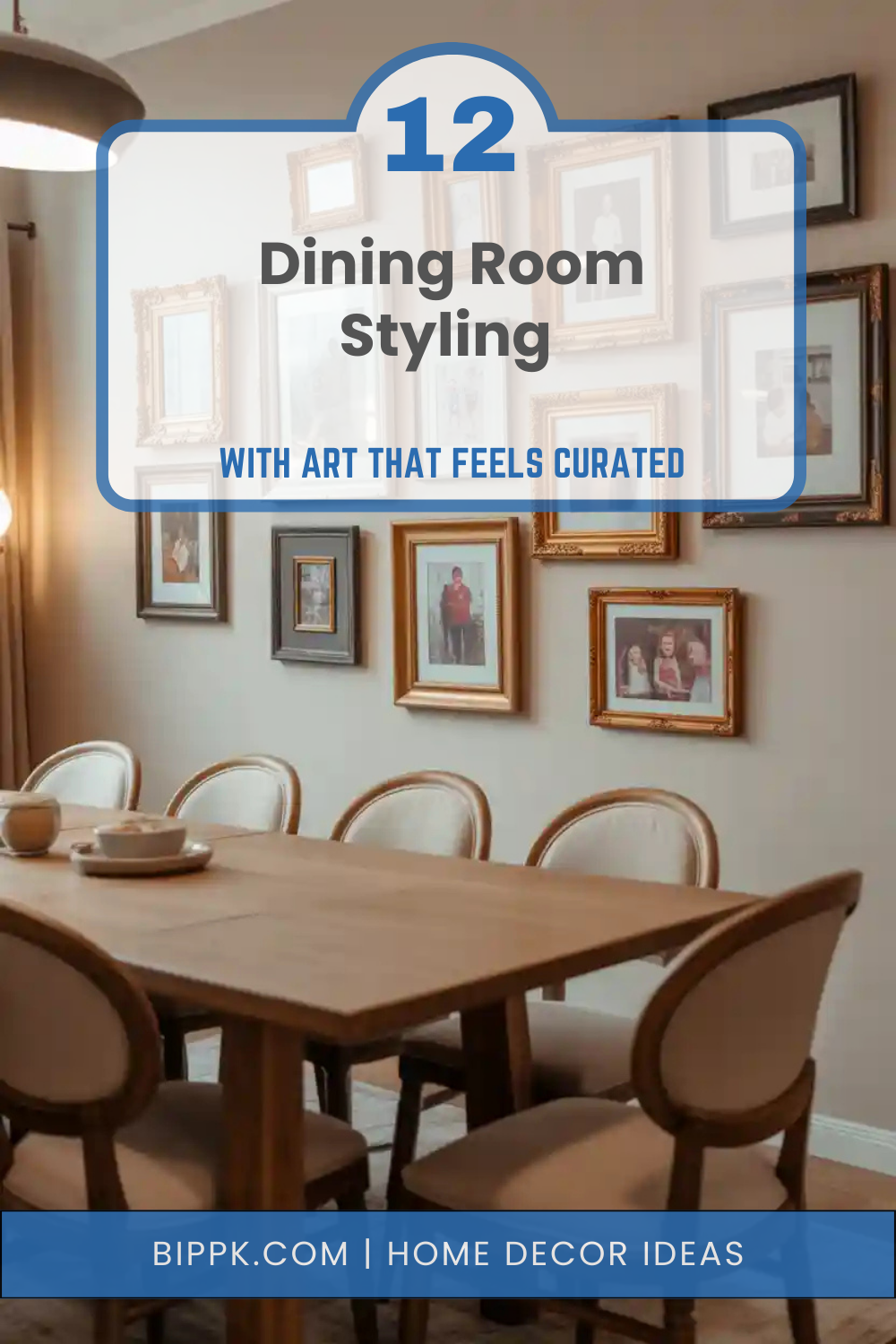
12 Dining Room Styling With Art That Feels Curated
Art can transform a dining room from a simple eating space into a thoughtfully designed environment. Carefully chosen artwork adds personality, color, and visual interest while helping the room feel complete and intentional. Instead of randomly placing decorations, a curated approach focuses on selecting art that complements the dining room’s style and atmosphere. The right artwork can create a focal point, enhance the color palette, and make the space feel more refined and welcoming.
These 12 Dining Room Styling With Art That Feels Curated ideas will help you design a dining space that looks organized and stylish without feeling overly formal. From gallery walls to oversized statement pieces, curated art styling allows you to express your taste while maintaining balance. Whether your dining room is modern, traditional, or minimalist, thoughtful art choices can make the room feel more polished and inviting.
1. Large Statement Artwork
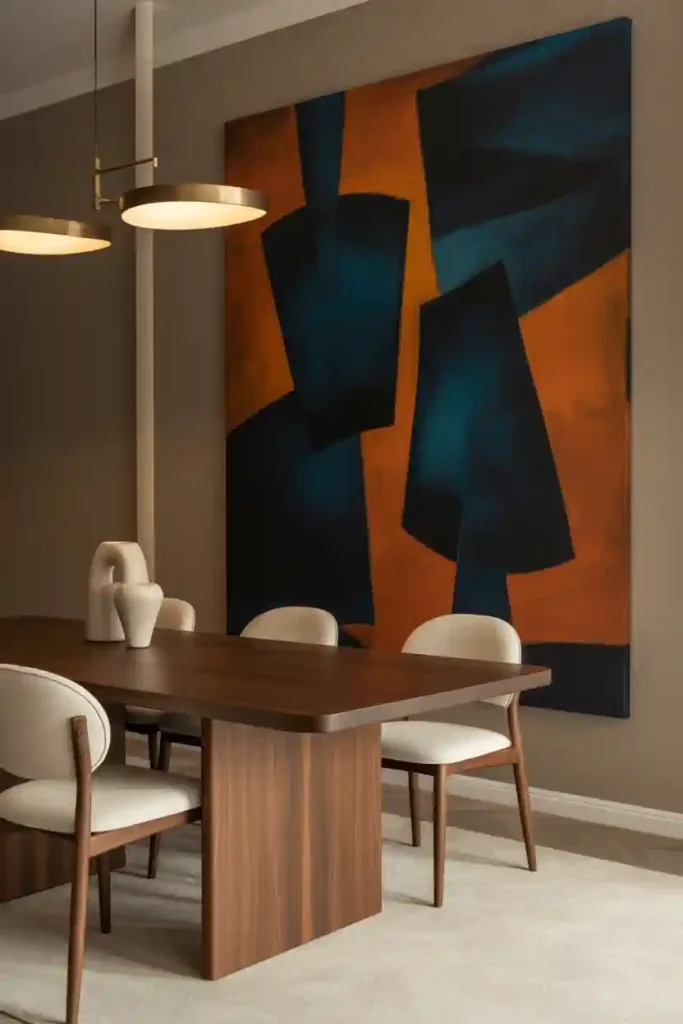
A single large artwork can create a strong focal point in a dining room. Oversized art helps anchor the space and eliminates the need for multiple smaller decorations. Choosing one bold piece keeps the room from feeling cluttered. Large artwork works especially well on the main dining room wall or behind the dining table. Abstract paintings, landscapes, or simple modern prints can all work beautifully depending on the room style. Neutral frames help maintain a balanced appearance.
2. Balanced Gallery Walls
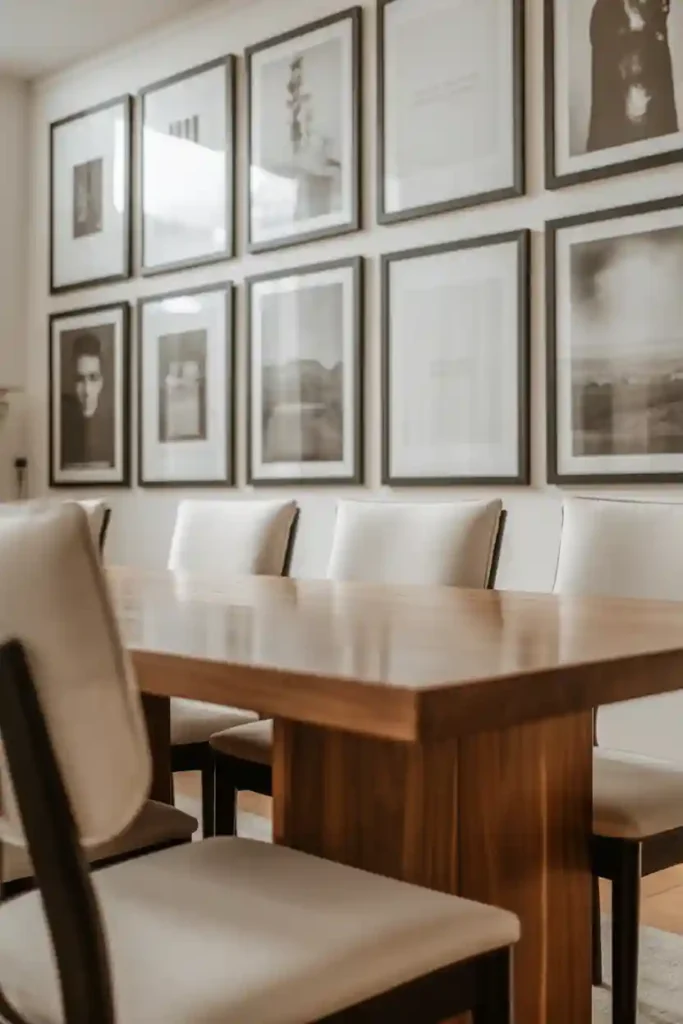
Gallery walls create a curated appearance when arranged thoughtfully. Instead of random placement, balanced spacing and consistent framing help create harmony. Combining artwork of different sizes adds visual interest while maintaining order. Using similar frames or colors keeps the arrangement cohesive. Gallery walls work well on long dining room walls where a single piece might look too small.
Read Also: 14 Dining Room Lighting Trends to Try
3. Matching Art and Textiles
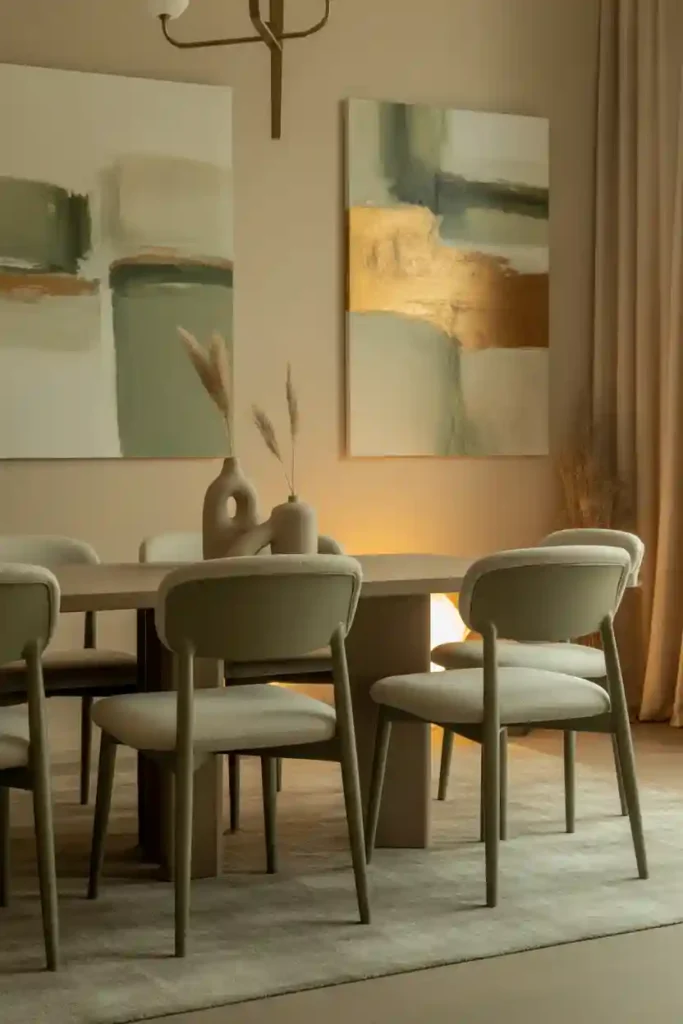
Coordinating artwork with textiles creates a cohesive dining room design. Colors found in rugs, curtains, or cushions can be reflected in wall art. This connection makes the space feel intentional rather than accidental. Soft color repetition helps unify the room without overwhelming it. Even subtle color matches can make a big difference. This approach works well in both modern and traditional dining rooms.
4. Minimalist Art Displays
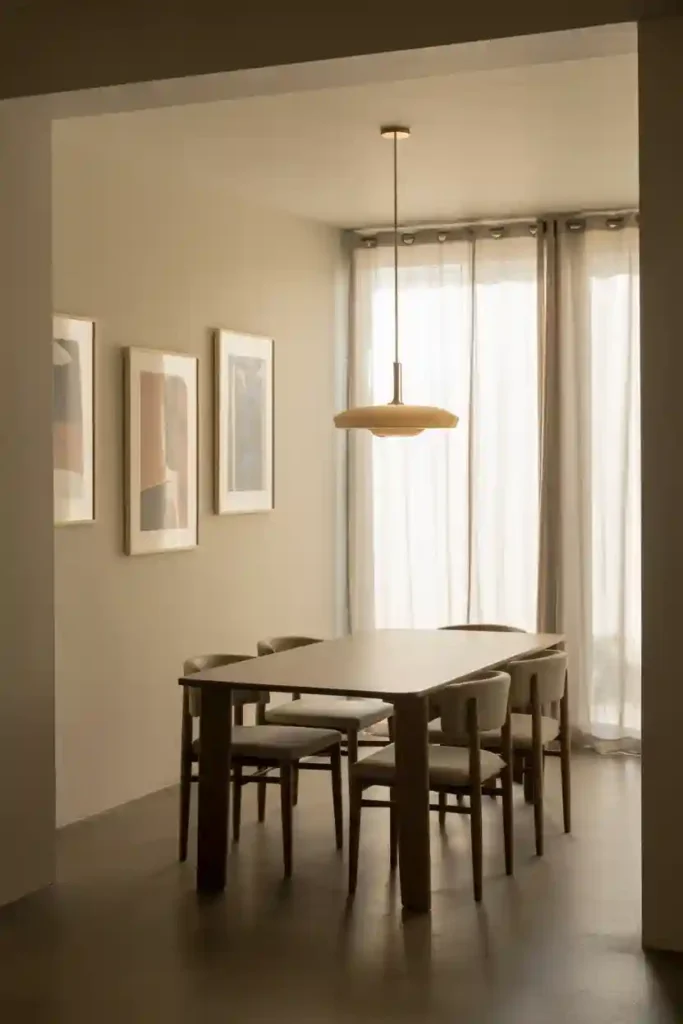
Minimalist art styling focuses on fewer pieces with strong visual impact. Leaving space around artwork helps it stand out. Simple frames and neutral colors keep the look clean. Minimal displays work especially well in small dining rooms. The uncluttered arrangement creates a calm atmosphere. Minimalist styling makes the art the main focus.
5. Leaning Artwork on Shelves
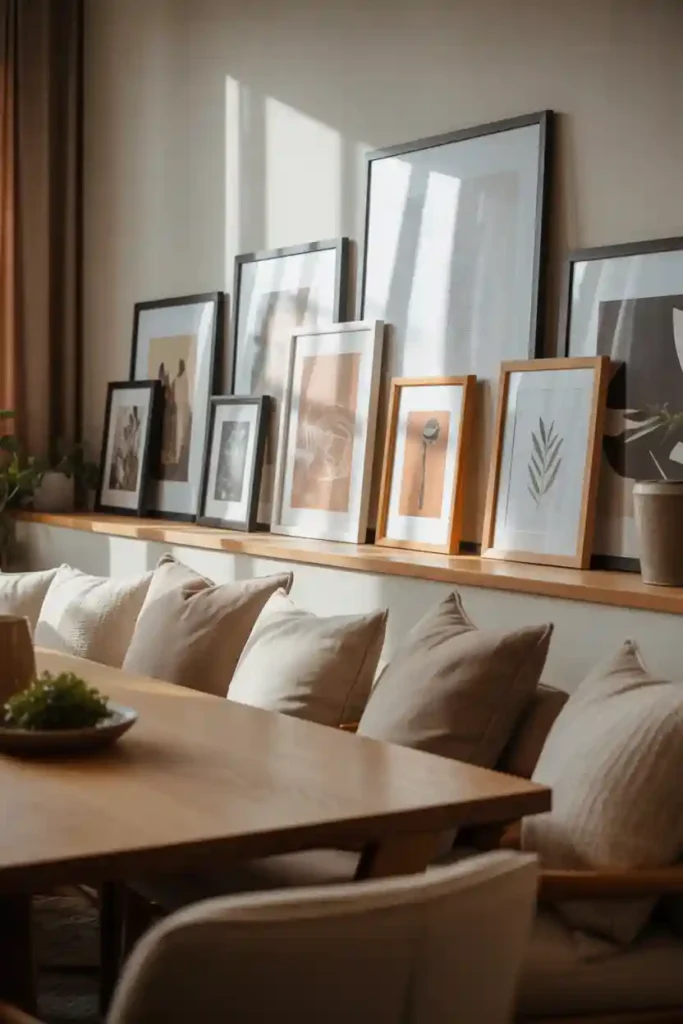
Leaning artwork instead of hanging it creates a relaxed and flexible display. Shelves or sideboards provide the perfect place for this style. Leaning frames allow easy changes when updating décor. Layering different sizes adds depth. This approach feels casual yet curated. Leaning art works especially well in modern dining rooms.
6. Black and White Art Collections
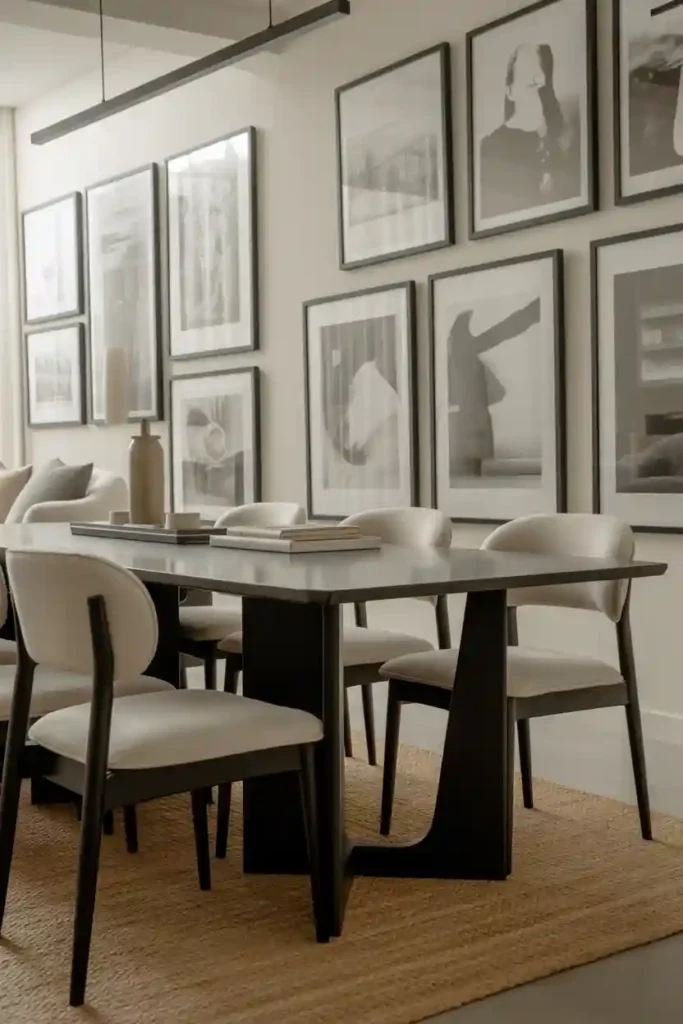
Black and white art creates a timeless curated appearance. Monochrome artwork looks cohesive even when styles vary. This approach works well in modern interiors. Black frames enhance consistency. Neutral tones allow furniture to stand out. Black and white art feels elegant. This style creates visual balance.
7. Art Centered Above the Table
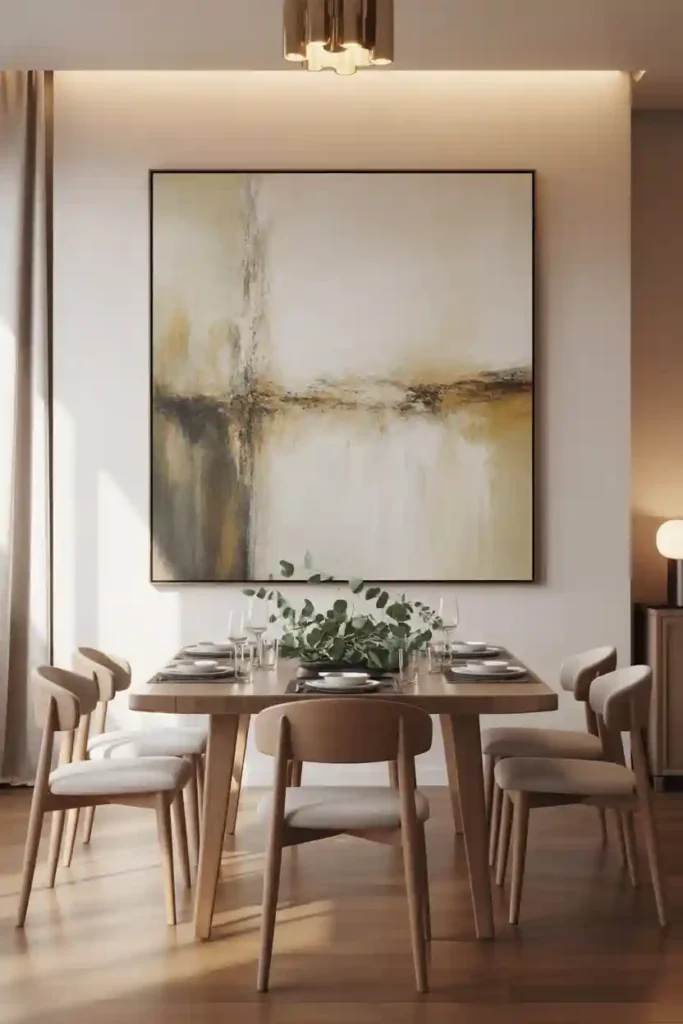
Centering artwork above the dining table creates visual balance. The art becomes part of the dining arrangement. Proper placement helps the room feel organized. Artwork should be sized to match the table width. Centered art improves symmetry. This arrangement looks intentional. It works well in most dining rooms.
8. Natural-Themed Artwork
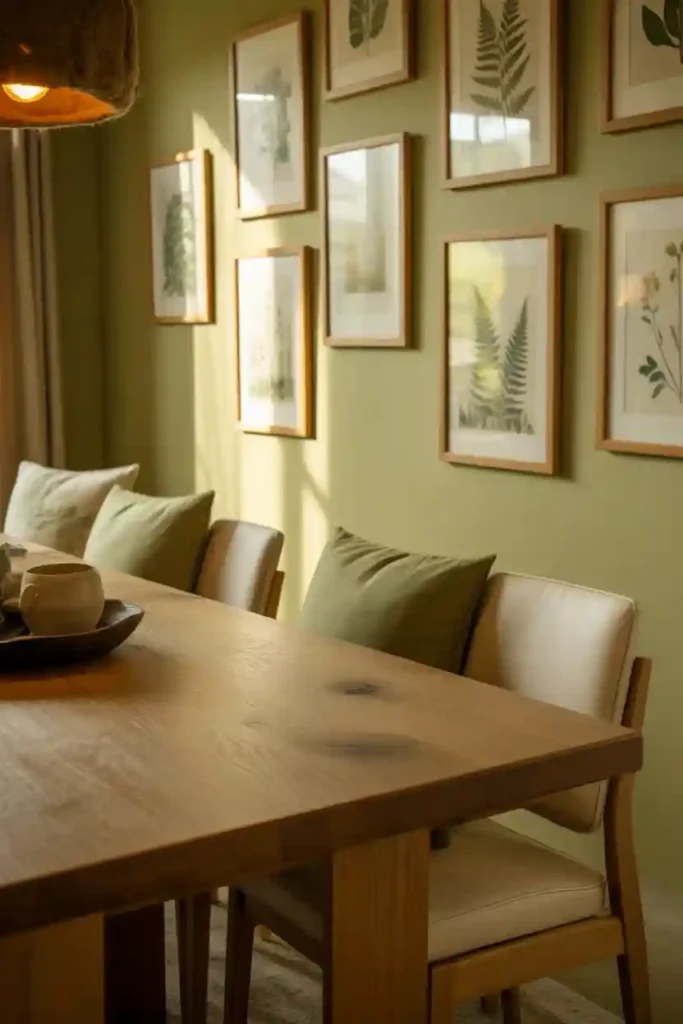
Nature-inspired art adds warmth and calmness. Landscapes, plants, and botanical prints work especially well. Natural themes complement wooden furniture. Soft colors enhance relaxation. Nature art feels inviting. This style suits cozy dining rooms. Natural art connects indoors and outdoors.
9. Mixed Frame Styles
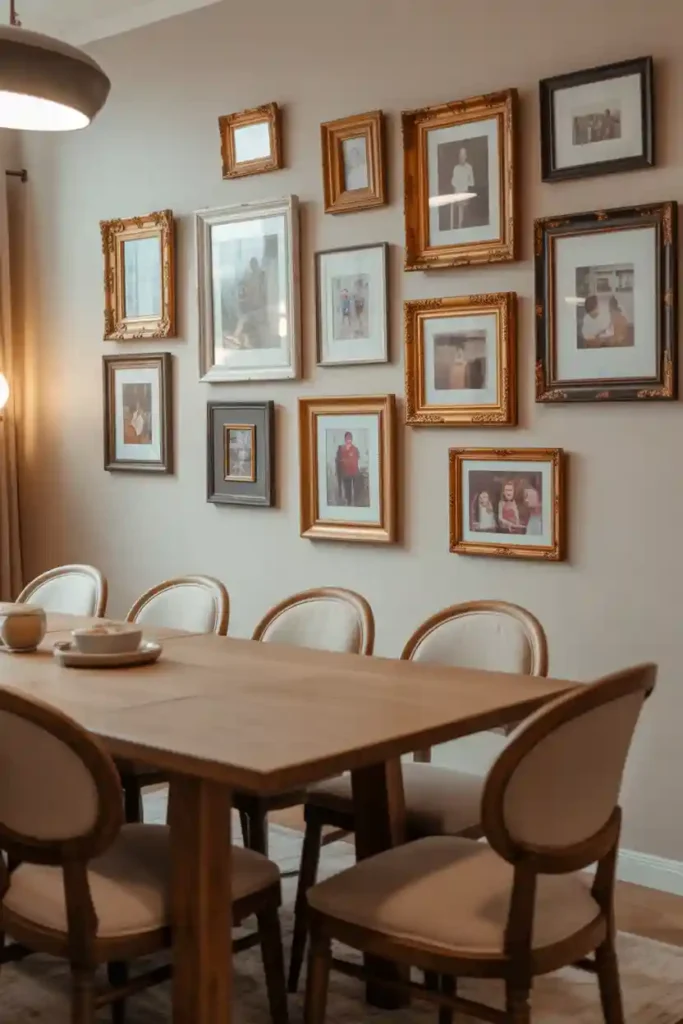
Mixing frame styles creates personality. Combining wood and metal frames adds interest. Keeping colors similar maintains balance. Mixed frames feel collected over time. This approach creates authenticity. It works well in casual spaces. Mixed frames add charm.
10. Art with Soft Colors
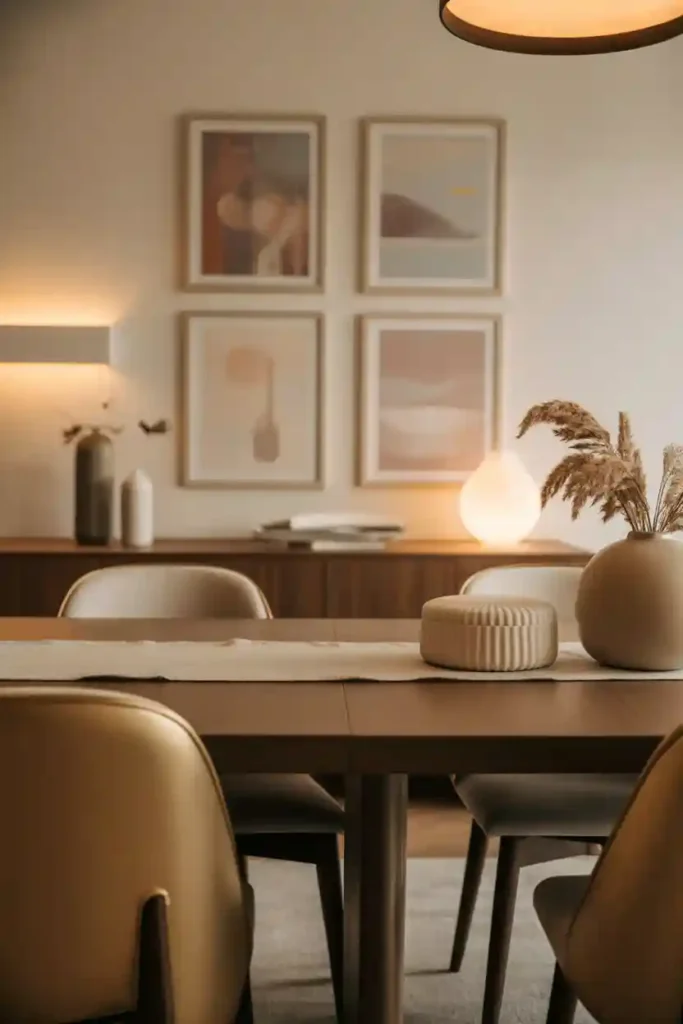
Soft color artwork creates a peaceful dining environment. Gentle tones feel relaxing. Pastels and warm neutrals work well. Soft art supports calm dining. Muted colors maintain balance. This style suits modern homes. Soft art enhances comfort.
11. Sculptural Wall Art
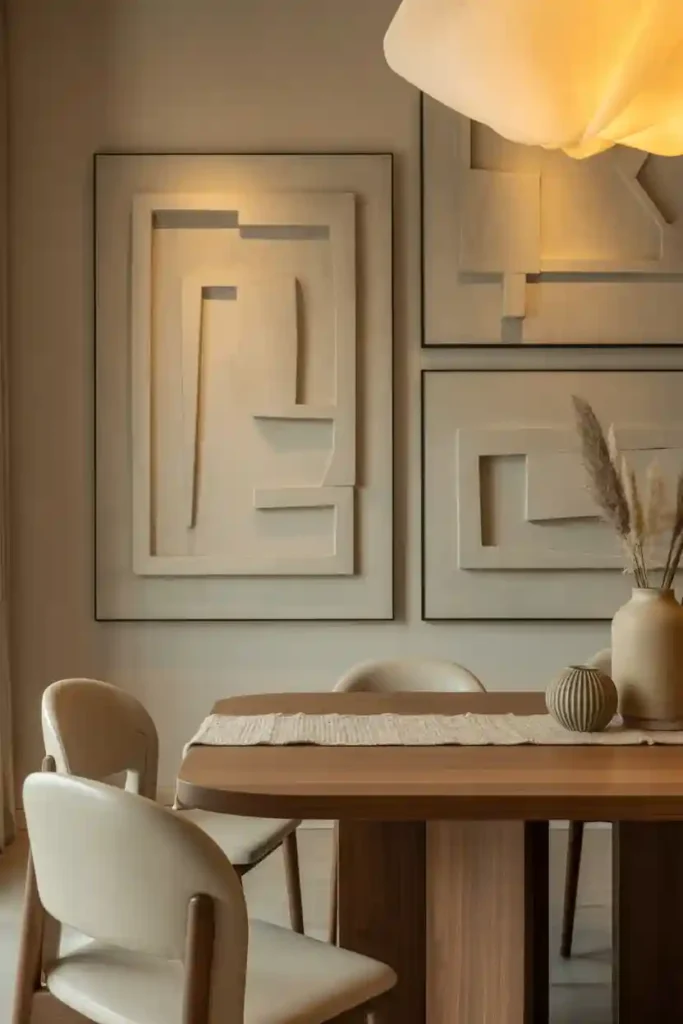
Three-dimensional wall art adds texture. Sculptural pieces create depth. This type of art works well in simple rooms. Texture adds interest. Sculptural art feels unique. It becomes a focal point. This style adds character.
12. Symmetrical Art Arrangements
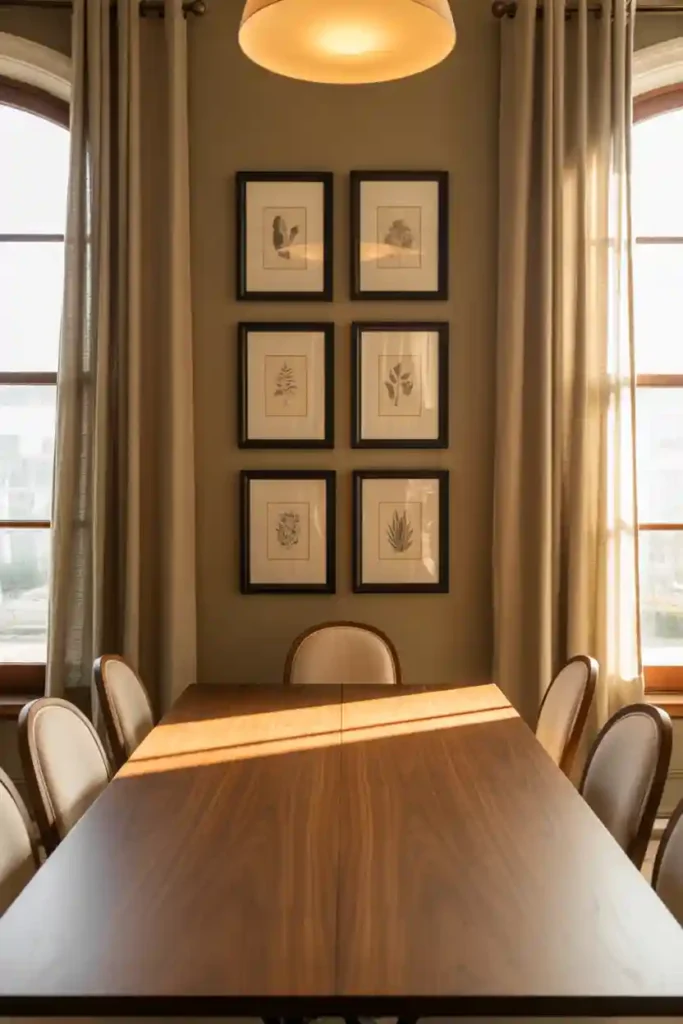
Symmetry creates order and elegance. Matching artwork on both sides of a wall looks balanced. Symmetrical layouts feel formal yet comfortable. Even spacing improves appearance. Symmetry supports harmony. This style works well with rectangular tables. Symmetry creates structure.
Final Words
Styling a dining room with art is a simple yet powerful way to create a space that feels thoughtful and complete. A curated approach focuses on choosing artwork that complements the room’s colors, furniture, and overall atmosphere rather than filling walls with random pieces. When art is selected and arranged with care, the dining room feels more personal, balanced, and visually appealing.