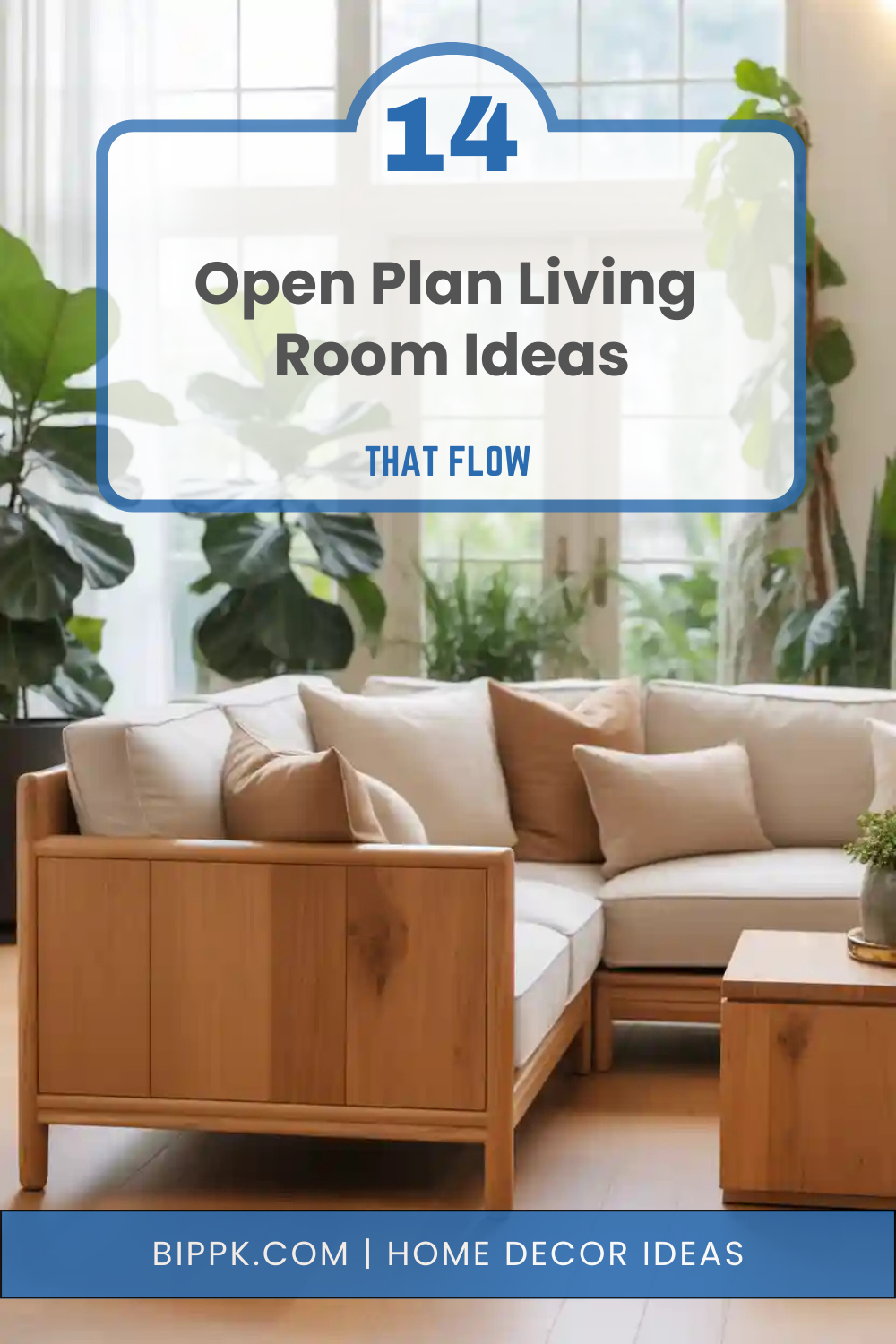
14 Open Plan Living Room Ideas That Flow
Open-plan spaces have become one of the most popular home layouts because they create a sense of openness and connection. 14 Open Plan Living Room Ideas That Flow will help you design a space that feels organized, comfortable, and visually balanced without losing the airy feel. A well-designed open plan living room blends different zones like seating, dining, and kitchen areas into one cohesive layout. The key is creating smooth transitions so each area feels connected rather than crowded.
From smart furniture placement to color coordination and layered lighting, there are many simple ways to improve flow in an open space. Thoughtful design choices can make even large areas feel welcoming and functional. Whether your style is modern, cozy, or minimal, these ideas will help you create a harmonious living environment that looks polished and practical.
1. Use Area Rugs to Define Zones
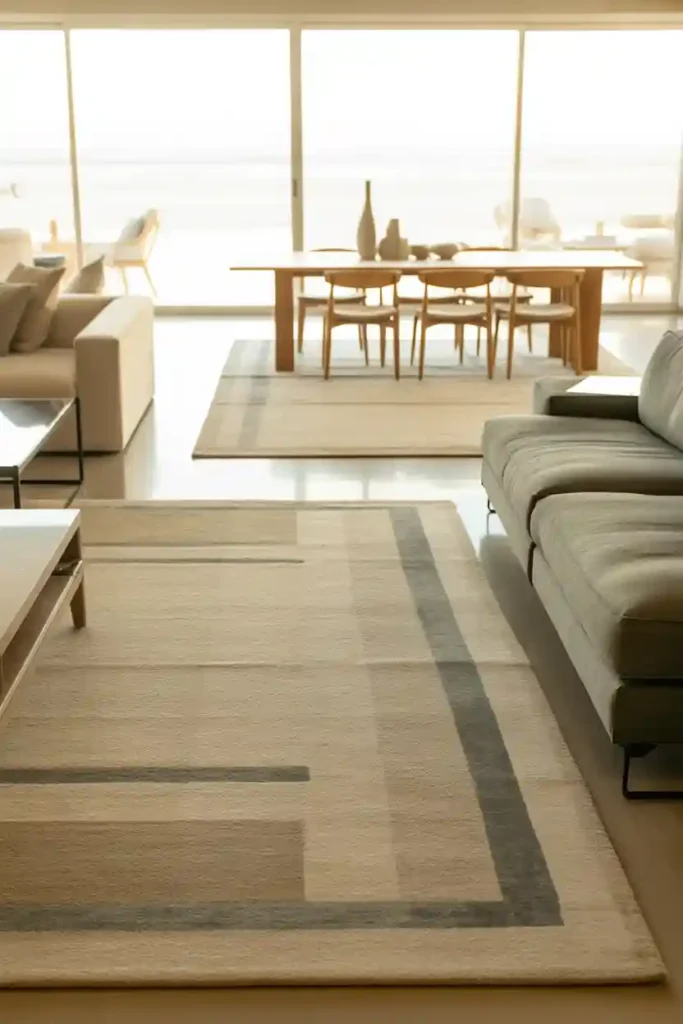
Area rugs are one of the simplest ways to create natural divisions in an open-plan living room. Instead of building walls or installing partitions, rugs visually separate areas while maintaining the open feeling. A large rug under the sofa can define the living zone, while another rug can highlight the dining space.
2. Keep a Consistent Color Palette
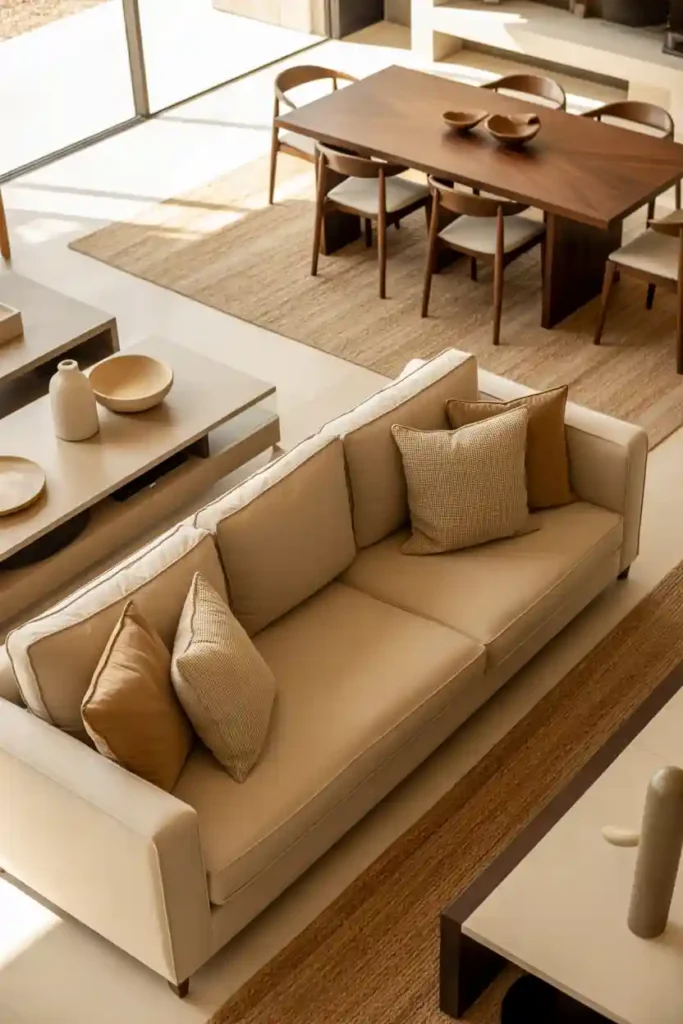
Color consistency is essential in open-plan design. When different areas use unrelated colors, the space can feel chaotic instead of flowing smoothly. A unified palette creates harmony and makes the entire room feel intentional. Choose two or three main colors and repeat them across the living and dining areas. For example, neutral walls paired with warm wood tones and soft textiles create a calm atmosphere. Accent colors can appear in cushions, artwork, and decor.
Read Also: 13 Entryway Wall Decor Ideas That Impress
3. Arrange Furniture for Easy Movement
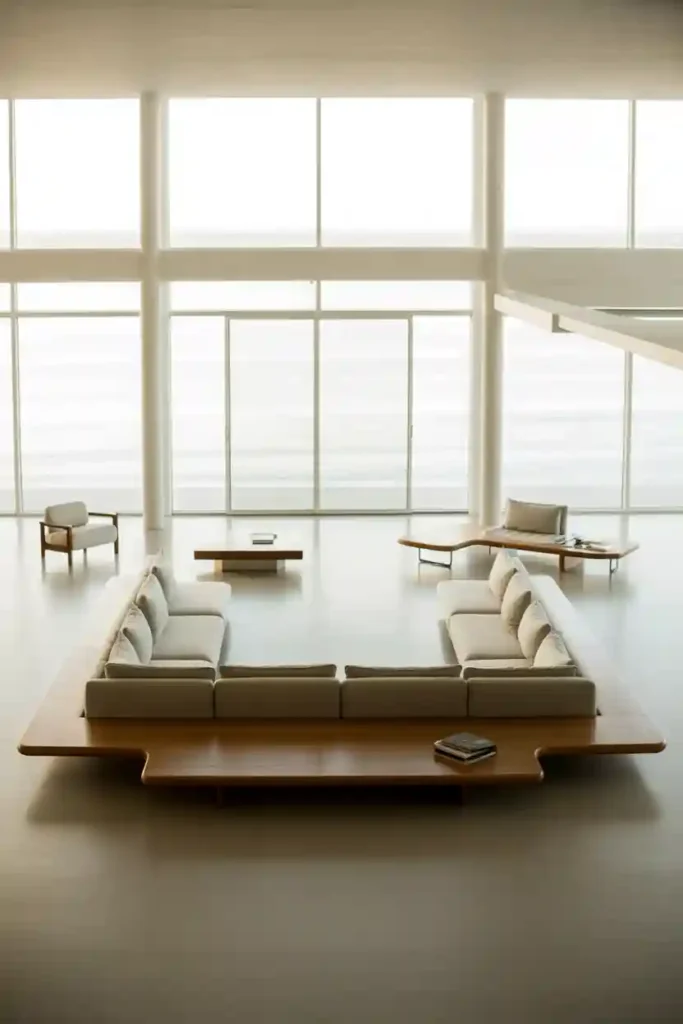
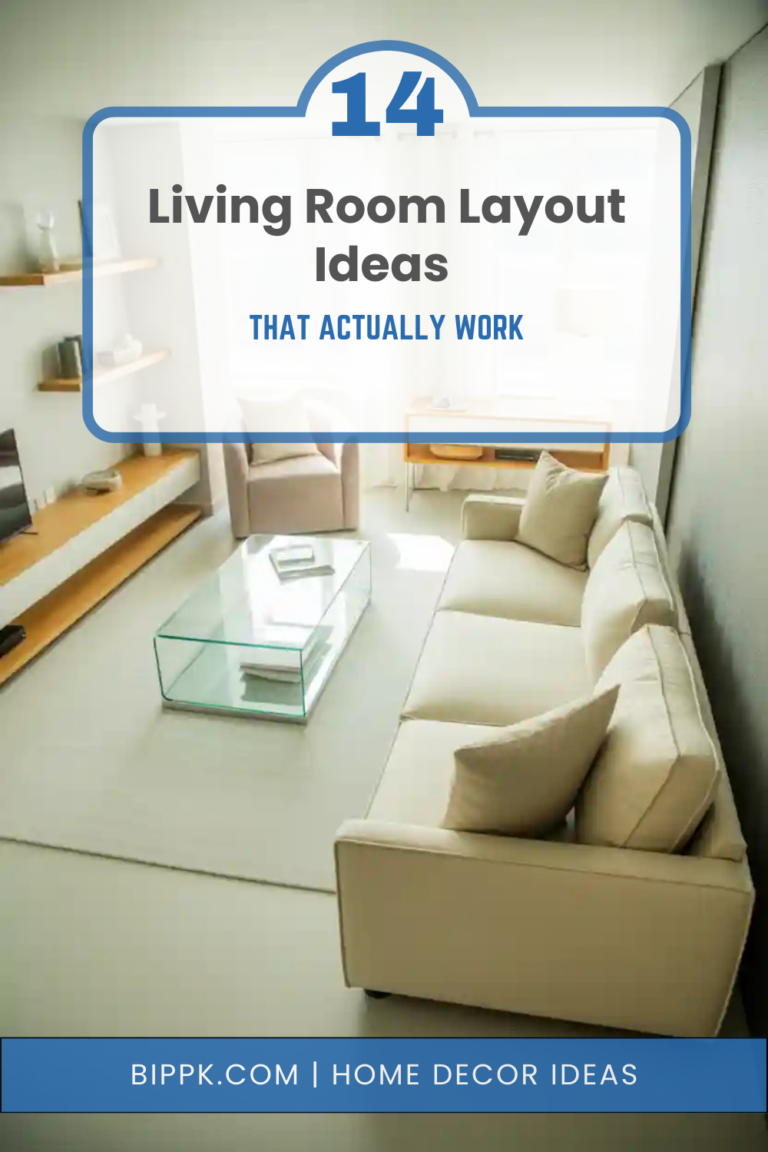
Furniture placement plays a major role in how an open-plan living room feels. Good flow means people can move easily between spaces without obstacles. Walkways should remain open and comfortable. Avoid pushing all furniture against the walls. Floating furniture in the center often works better in open spaces. A sofa can act as a divider between the living and dining areas while keeping the layout open.
4. Use Lighting to Connect Spaces
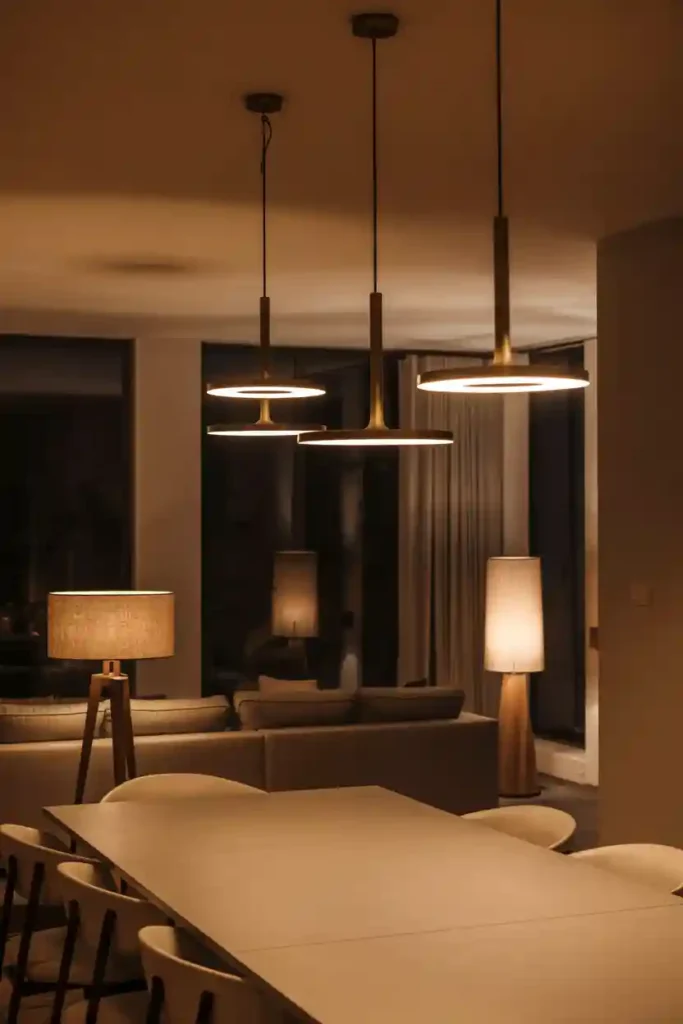
Lighting helps unify an open-plan layout. Instead of relying on one ceiling fixture, use multiple layers of light throughout the room. Pendant lights over the dining table, floor lamps near seating areas, and ceiling lights in the living zone create balance. Each area gets its own lighting while still feeling connected.
5. Create a Focal Point
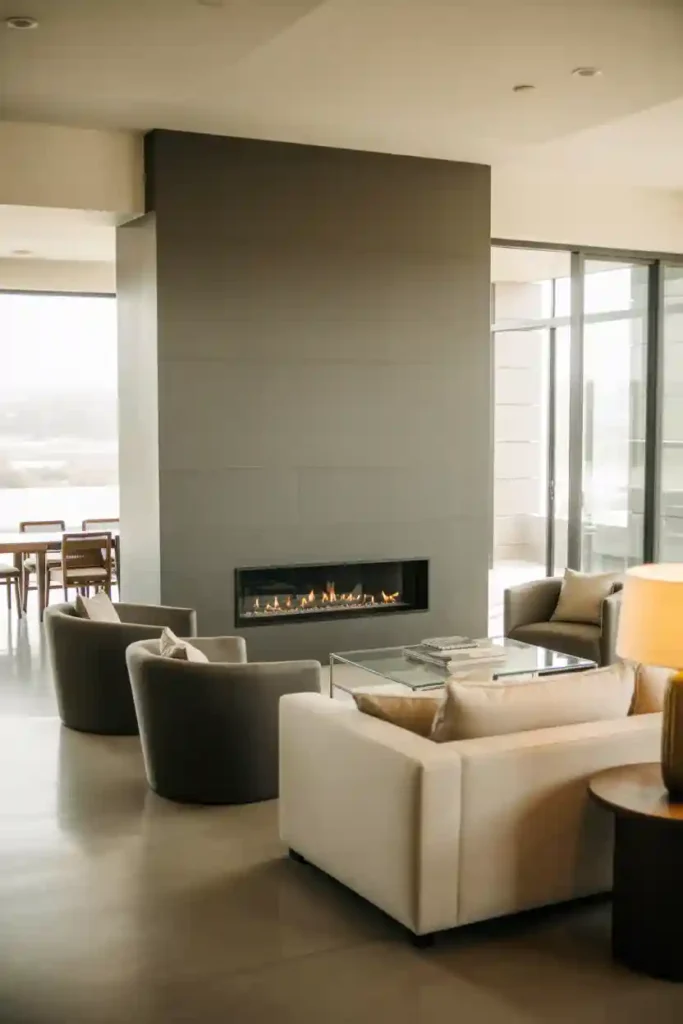
Every open-plan living room benefits from a clear focal point. This could be a fireplace, TV wall, large artwork, or statement furniture piece. A focal point helps anchor the space and gives the eye a natural place to rest. Without one, large rooms can feel scattered. Arrange seating to face the focal point. This makes the living area feel structured while maintaining openness.
6. Add Subtle Room Dividers
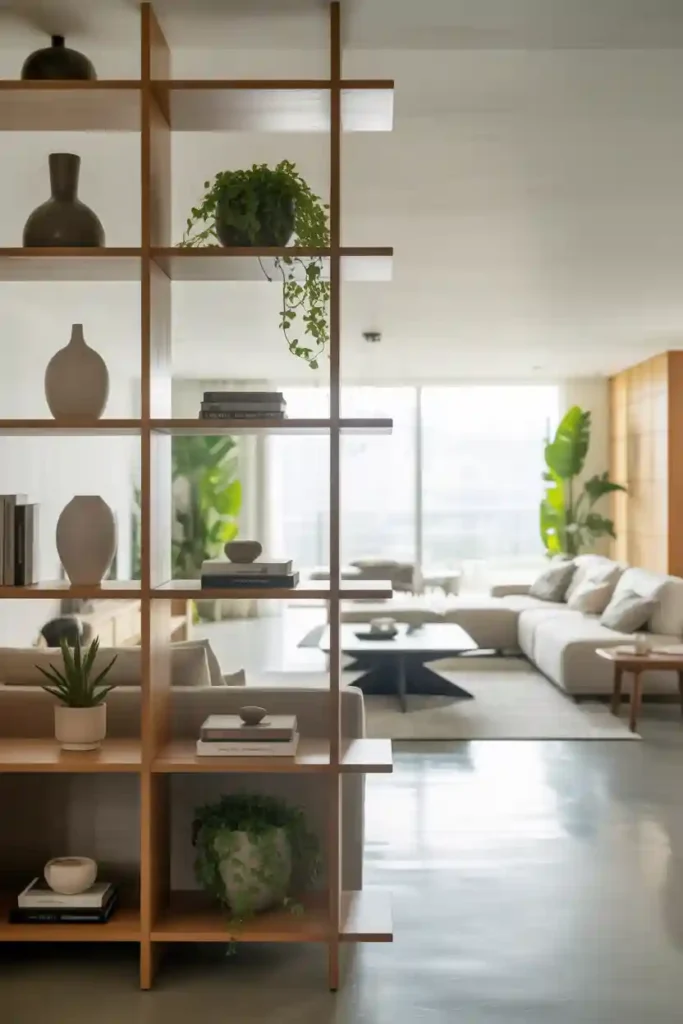
Open-plan spaces sometimes need gentle separation. Instead of solid walls, use subtle dividers that keep the space airy. Open shelving units work well because they divide areas while allowing light to pass through. Decorative screens or partial walls can also help.
7. Match Furniture Styles
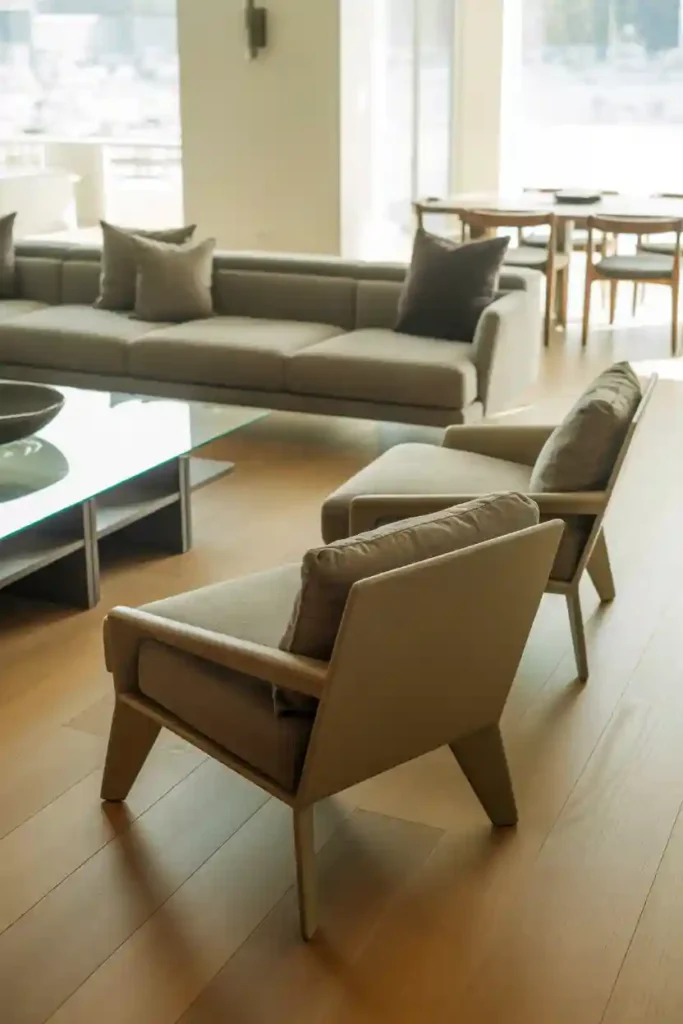
Mixing too many furniture styles can disrupt flow. Keeping a consistent style makes the space feel cohesive. For example, modern sofas pair well with simple dining chairs and clean-lined tables. Similar shapes and materials help connect areas. Wood tones should complement each other rather than clash. Light woods and dark woods can work together if balanced.
8. Use Low Furniture for Openness
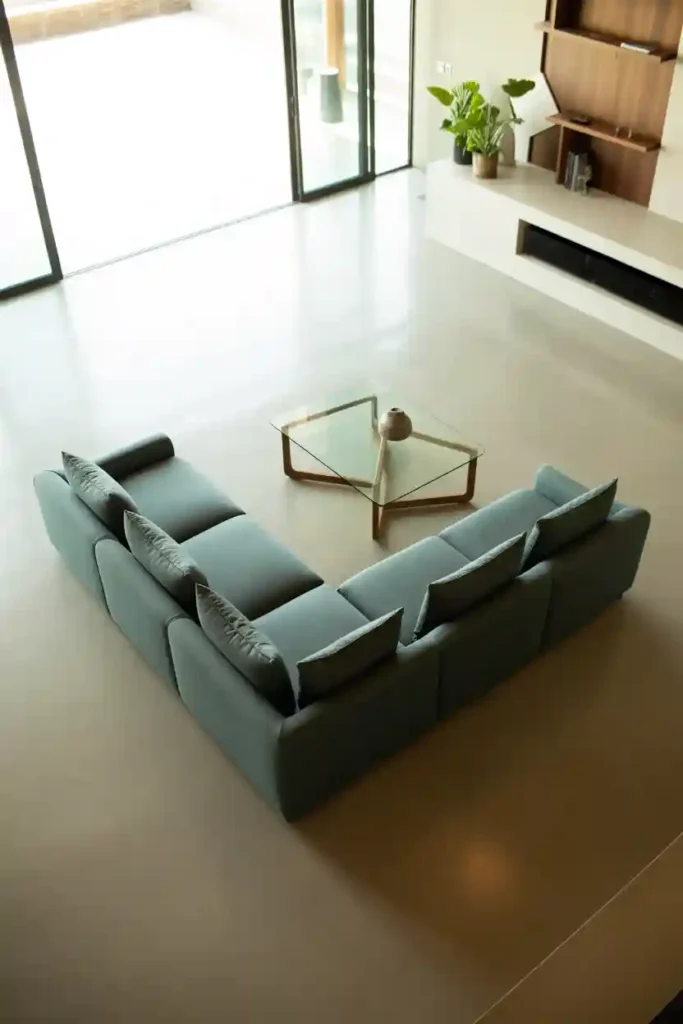
Low-profile furniture keeps sightlines open. This makes the room feel larger and more connected. Choose sofas with lower backs and streamlined designs. Avoid bulky pieces that block views. Open coffee tables and slim chairs help maintain visual space. Low furniture allows natural light to travel across the room. This creates a brighter and more spacious feeling.
9. Keep Decor Balanced
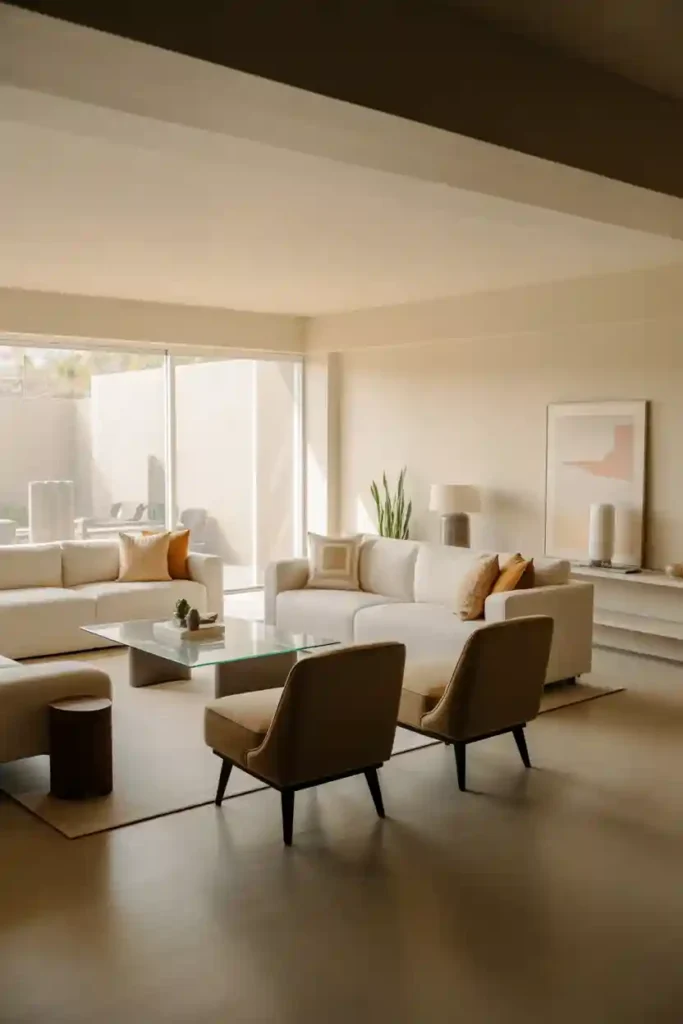
Balanced decor helps maintain visual flow. Too many decorations in one area can make the space feel uneven. Spread decorative items throughout the room. Use similar textures and materials to connect areas. Simple arrangements work best in open spaces. Avoid overcrowded shelves or tables. Symmetry can help create order.
10. Use Multi-Functional Furniture
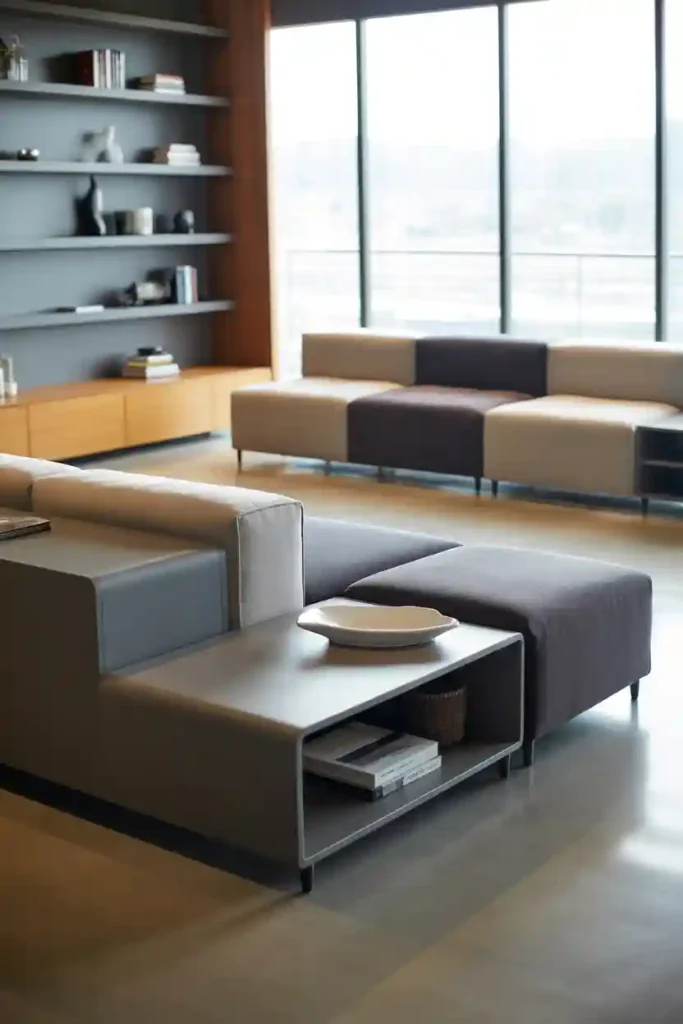
Multi-functional furniture is ideal for open-plan living. Pieces that serve more than one purpose save space and improve organization. Storage ottomans can hold blankets while providing seating. Extendable dining tables adapt to different needs. Console tables can act as dividers and storage areas.
11. Maintain Clear Sightlines
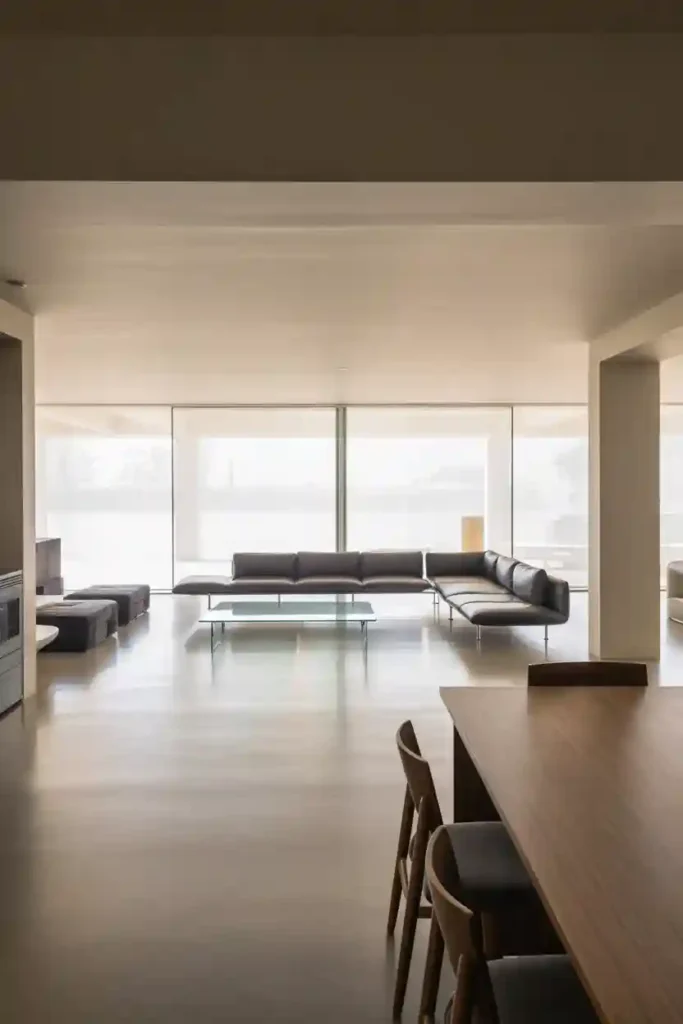
Clear sightlines help open-plan rooms feel connected. Being able to see across the space creates continuity. Avoid tall furniture in the middle of the room. Keep large pieces near walls when possible. Glass tables and open shelving maintain visibility. Simple layouts improve flow. Clear sightlines make spaces feel larger.
12. Add Natural Elements
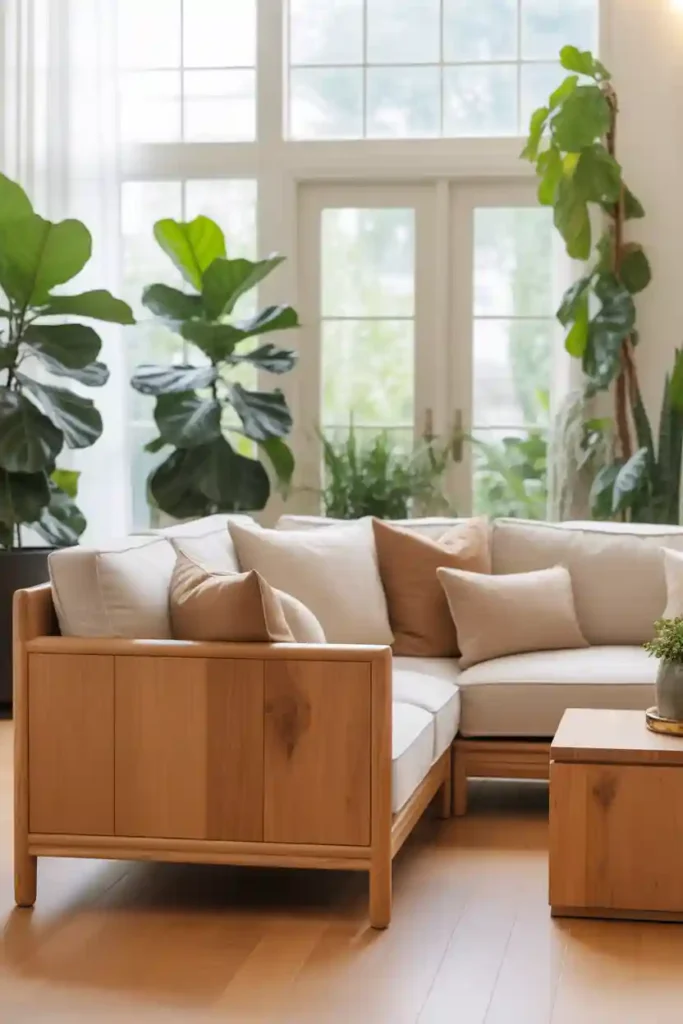
Natural materials make open spaces feel warm and inviting. Wood furniture adds texture and warmth. Plants bring life and softness. Stone or woven textures create depth. Natural colors feel calming. These elements balance modern layouts.
13. Keep Storage Hidden
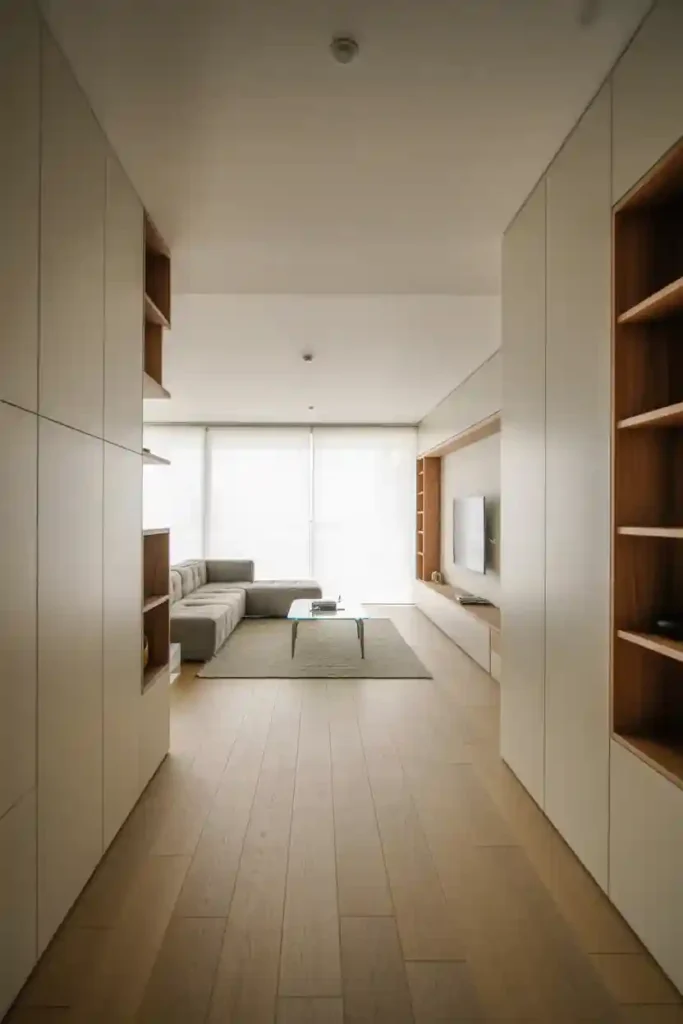
Hidden storage helps maintain a clean appearance. Built-in cabinets reduce clutter. Storage benches keep items out of sight. Closed shelving looks more organized than open shelving. Minimal clutter improves flow. Clean spaces feel larger.
14. Repeat Design Elements
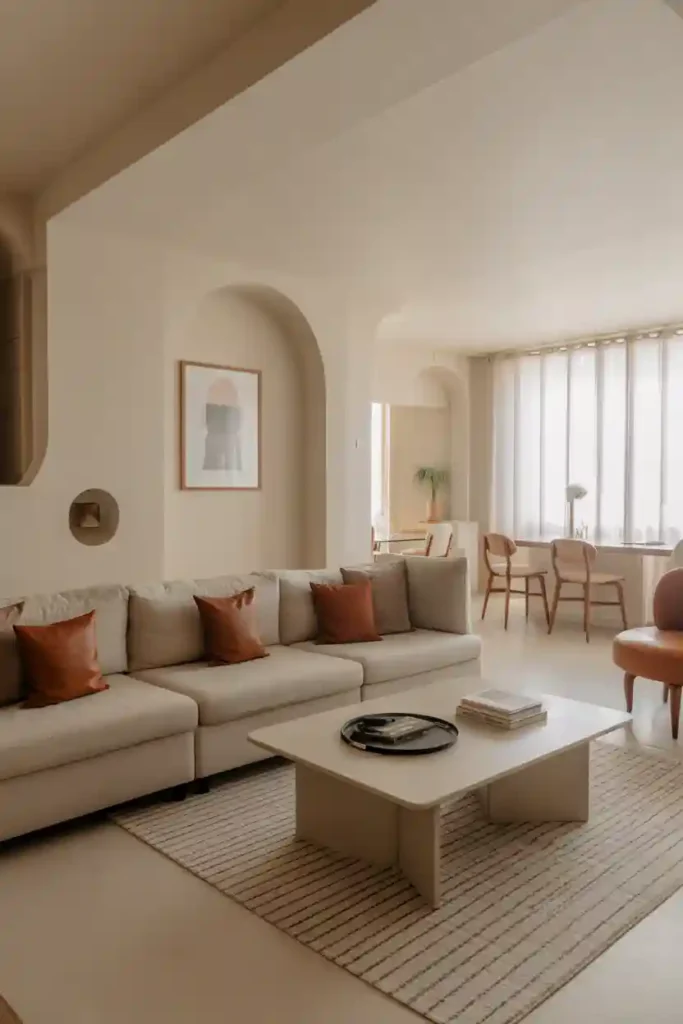
Repeating design elements strengthens visual flow. Use similar fabrics across seating areas. Repeat colors in pillows and artwork. Matching finishes create connection. Patterns can appear in multiple areas. Repetition creates harmony. This ties the whole room together.
Final Words
Designing an open-plan space is all about balance and connection. These 14 Open Plan Living Room Ideas That Flow show how thoughtful choices can create a space that feels both open and organized. With the right layout, colors, and furniture, your home can feel welcoming and harmonious while maintaining a natural sense of flow.