12 Rustic Basement Ideas That Feel Inviting
A rustic basement can transform an ordinary lower level into a warm, inviting retreat full of charm and character. With the right mix of natural materials, cozy textures, and thoughtful design, even a simple basement can feel welcoming rather than cold or utilitarian. Rustic décor emphasizes wood, stone, exposed beams, and earthy tones, creating spaces that are both timeless and comforting.
From cozy lounge areas and rustic bars to home offices and entertainment spaces, the key is balancing function with aesthetic warmth. Lighting, textures, and furniture choices all play a role in making the basement feel like a true extension of your home. These 12 rustic basement ideas that feel inviting provide practical inspiration for turning your basement into a place where family and friends want to gather, relax, and enjoy the natural, cozy ambiance that rustic design brings.
1. Exposed Wooden Beams and Ceiling Accents

Exposed wooden beams instantly add rustic charm to a basement by highlighting architectural detail and natural textures. Whether your basement has existing beams or you add faux timber accents, the look creates a warm, inviting atmosphere. Wood brings character, depth, and a handcrafted feel to a space that might otherwise feel flat.
Pair exposed beams with complementary elements such as wood-paneled walls, stone accents, or warm-toned lighting. Reclaimed wood beams offer sustainability while enhancing texture and interest. This approach works particularly well in open-plan basements where a ceiling detail can define zones without walls. Lighting plays a crucial role. Recessed lights or vintage-style pendant fixtures along the beams enhance the natural warmth and make the space feel cozy. Exposed beams create an unmistakable rustic ambiance, making your basement feel both sophisticated and inviting.
2. Stone Accent Walls
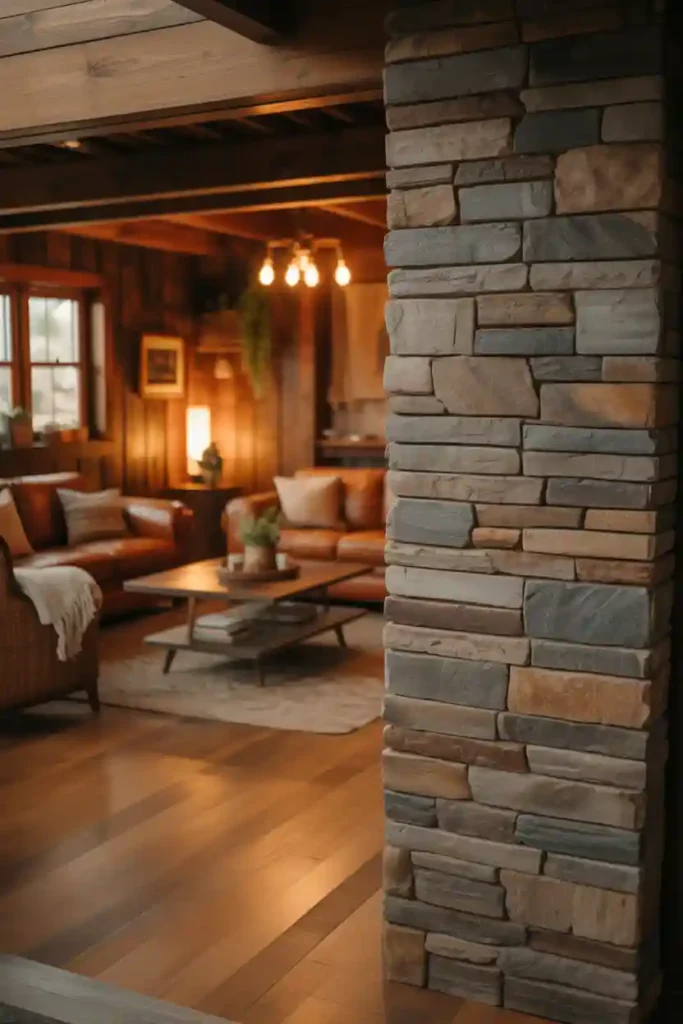
Stone accent walls bring texture, depth, and natural beauty to any rustic basement. Using stone, brick, or stacked river rock creates a focal point that feels grounded and welcoming. A single accent wall behind a seating area or fireplace can dramatically enhance the room’s character.
Pair stone walls with warm wood flooring or ceilings to maintain a balanced rustic look. Soft textiles, like wool rugs and cozy throws, complement the hardness of stone while adding comfort. Natural lighting or warm-toned fixtures highlights the texture and color variations in the stone, making the wall visually appealing even in lower light. Stone accent walls are versatile, working well in lounge areas, media rooms, or bars. The tactile, earthy quality creates an inviting atmosphere where rustic design feels authentic and timeless.
Read Also: 13 Cozy Apartment Decor Ideas for Everyday Comfort
3. Rustic Fireplace Basement
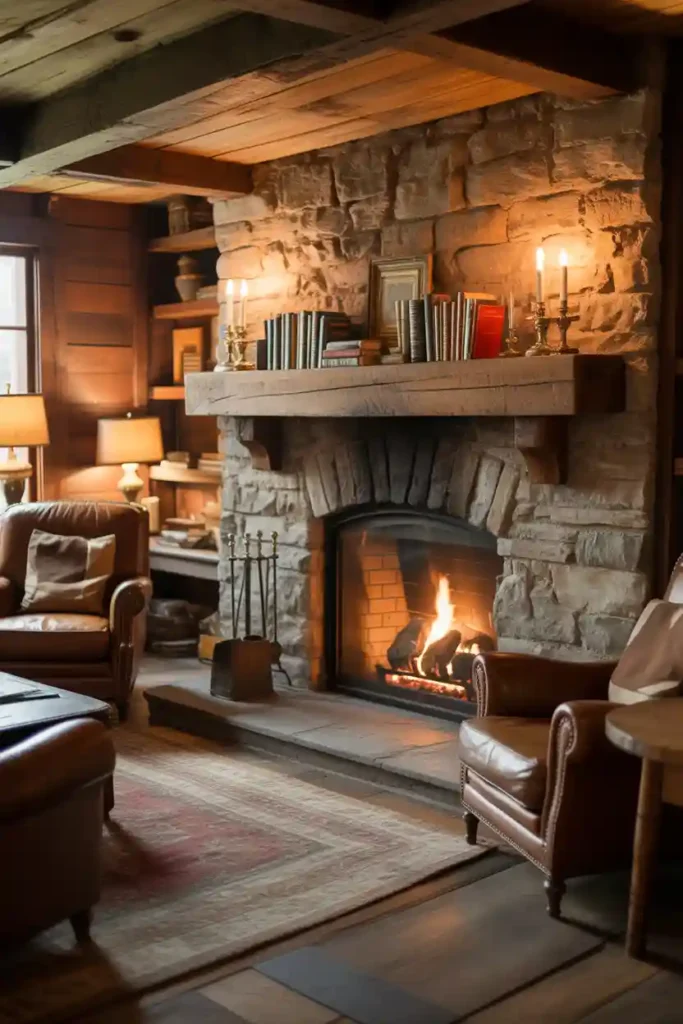
A fireplace is a natural centerpiece for an inviting rustic basement. Whether it’s a traditional wood-burning fireplace or a modern gas insert with stone or brick surround, a fireplace adds warmth, ambiance, and a sense of home.
Use reclaimed wood mantels and surrounding stonework to emphasize the rustic style. Seating arranged around the fireplace encourages socializing, reading, or relaxing. Layered rugs, cushions, and throws make the space feel comfortable while complementing the fireplace’s natural materials. Fireplace lighting, such as lanterns or wall sconces, enhances the warm glow and rustic charm. Even small basements benefit from a compact fireplace, transforming the space into a cozy, inviting retreat perfect for winter evenings or casual family gatherings.
4. Warm Wood Flooring
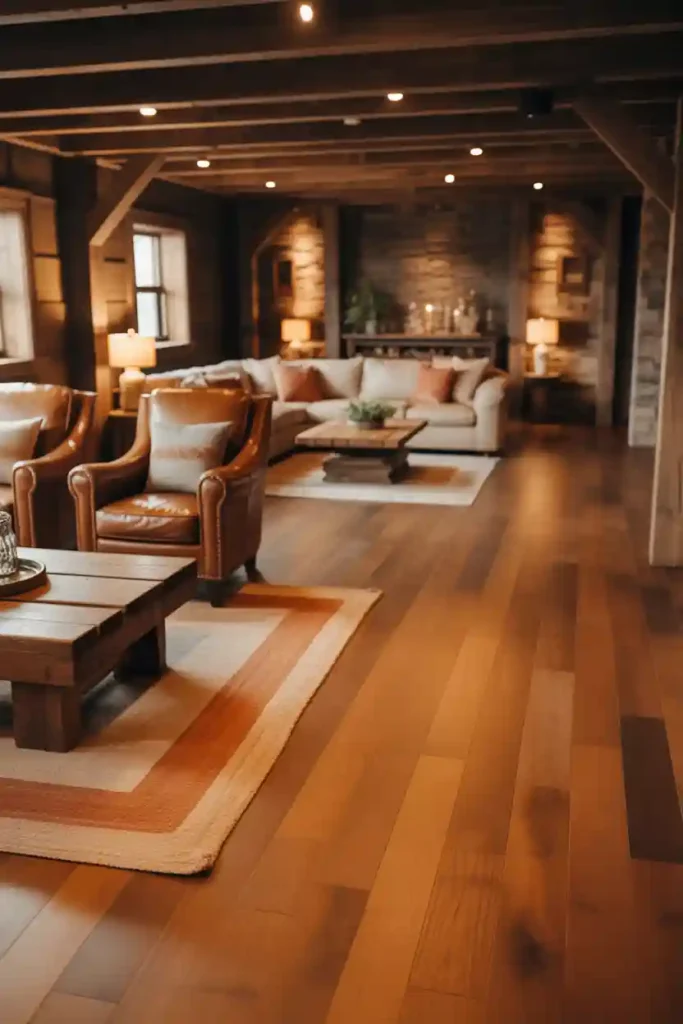
Wood flooring is a cornerstone of rustic basement design, bringing warmth, texture, and continuity to the space. Choose wide-plank hardwood, engineered wood, or even reclaimed timber for an authentic look. Wood’s natural grains and variations add visual interest that complements rustic décor.
Layer the flooring with area rugs in natural fibers such as jute, wool, or cotton to create comfort underfoot and define spaces. Rugs also help absorb sound, which is especially important in basements. Combine warm wood tones with neutral walls and soft lighting to maintain an inviting ambiance. Wood flooring is durable and versatile, making it ideal for living spaces, media rooms, or home offices in the basement. Its natural beauty creates a cozy foundation for any rustic design scheme.
5. Cozy Rustic Lounge Area
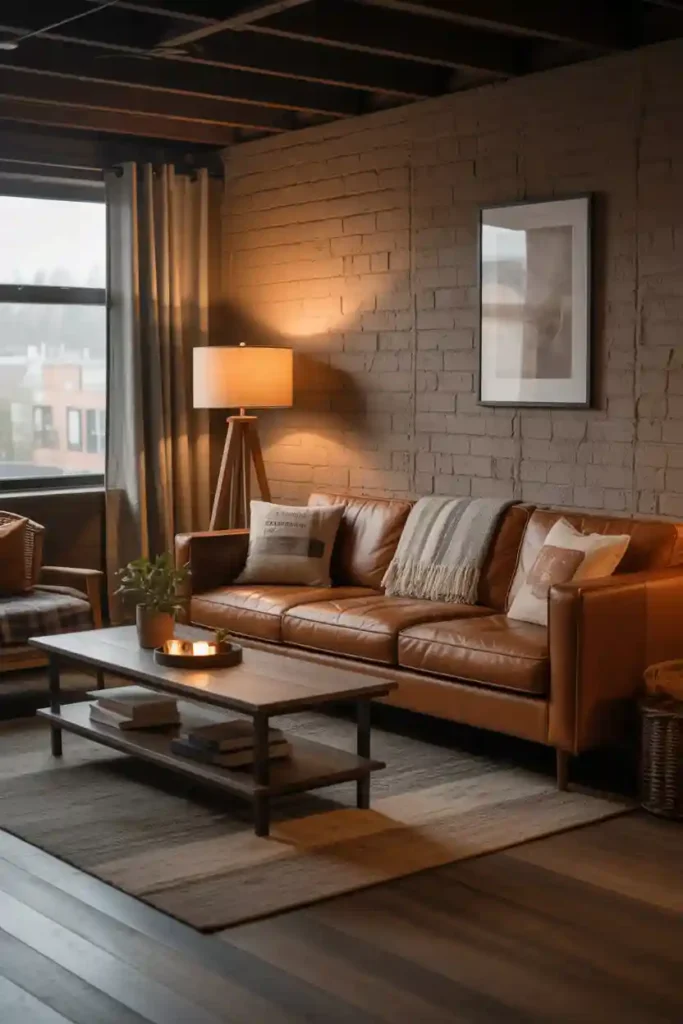
A rustic lounge area creates a welcoming spot to relax, read, or entertain. Use overstuffed leather or fabric sofas, complemented by wooden coffee tables and side tables, to blend comfort with rustic aesthetics. Natural textures, like woven baskets, wool blankets, and linen pillows, enhance the cozy feel.
Consider layering lighting: floor lamps, table lamps, and wall sconces provide soft illumination that enhances warmth and ambiance. Rustic décor items like vintage signs, reclaimed wood shelving, or nature-inspired art complete the look. Arranging seating in conversational groupings encourages family interaction, while cozy accessories make the basement feel lived-in and inviting. A rustic lounge area balances visual charm with comfort, making the basement a central gathering spot.
6. Rustic Basement Bar
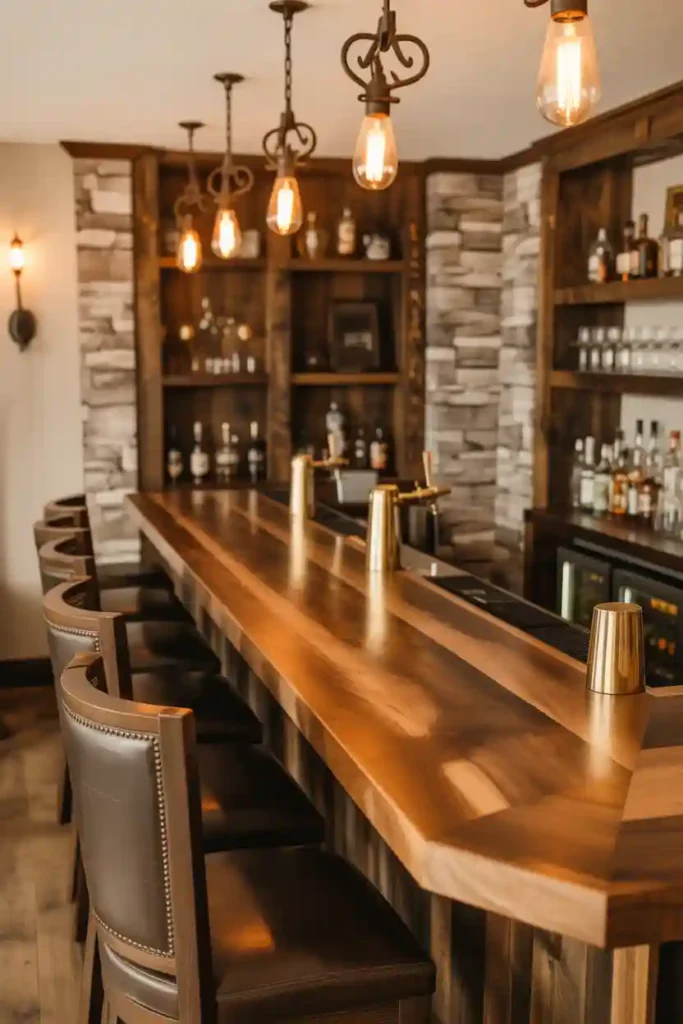
A rustic basement bar turns your lower level into a warm, social retreat. Wooden countertops, exposed beams, and stone or brick accents create a natural, inviting aesthetic. Whether you enjoy casual drinks with friends or a cozy night in, a rustic bar adds character and functionality.
Incorporate wooden bar stools with leather or fabric cushions for comfort. Open shelving or built-in cabinetry keeps glassware and bottles organized while displaying rustic décor like vintage signs or antique bottles. Pendant lighting with warm tones over the bar enhances ambiance and highlights the natural wood and stone materials. Adding a small wine rack, chalkboard menu, or rustic décor accessories enhances authenticity. This space becomes both practical and stylish, offering a cozy area for entertainment that complements the basement’s overall rustic design.
7. Exposed Brick Walls
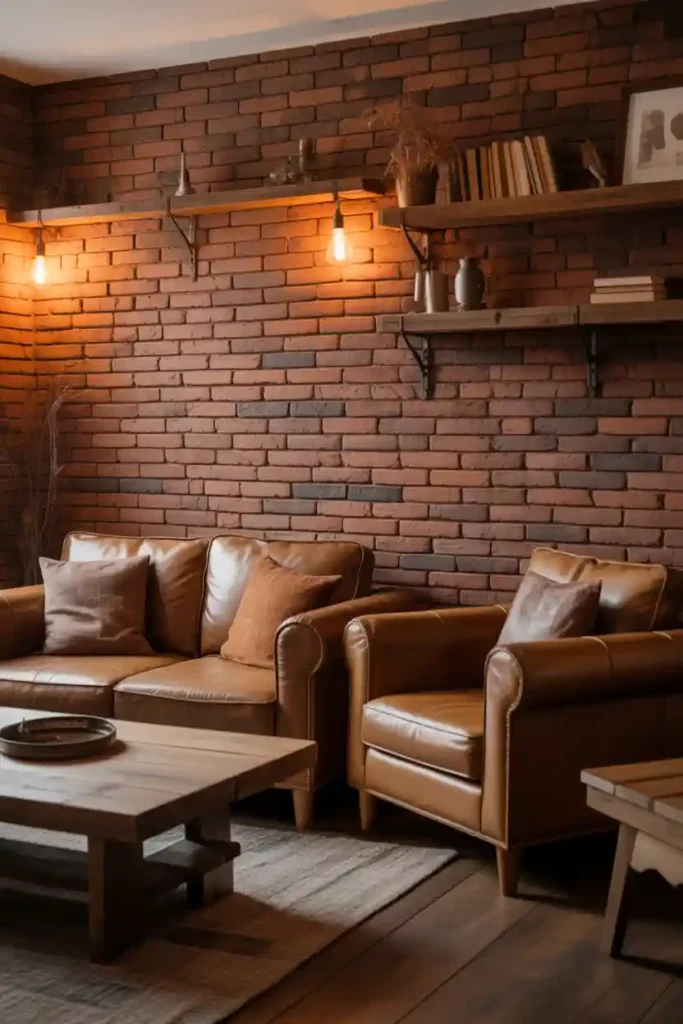
Exposed brick walls give a basement character and texture, creating a natural rustic feel. Bricks add depth, warmth, and a slightly industrial touch that pairs beautifully with wood and stone accents. Highlight the bricks with warm lighting to enhance texture. Pair brick walls with neutral or earthy-toned furniture, cozy textiles, and rustic décor elements to maintain a welcoming environment. Even a single accent wall behind a seating area or fireplace can dramatically elevate the space.
Brick walls are versatile, fitting media rooms, lounges, or dining areas in a basement. Their timeless appeal ensures that the rustic aesthetic remains inviting and stylish for years to come.
8. Neutral and Earthy Color Palette
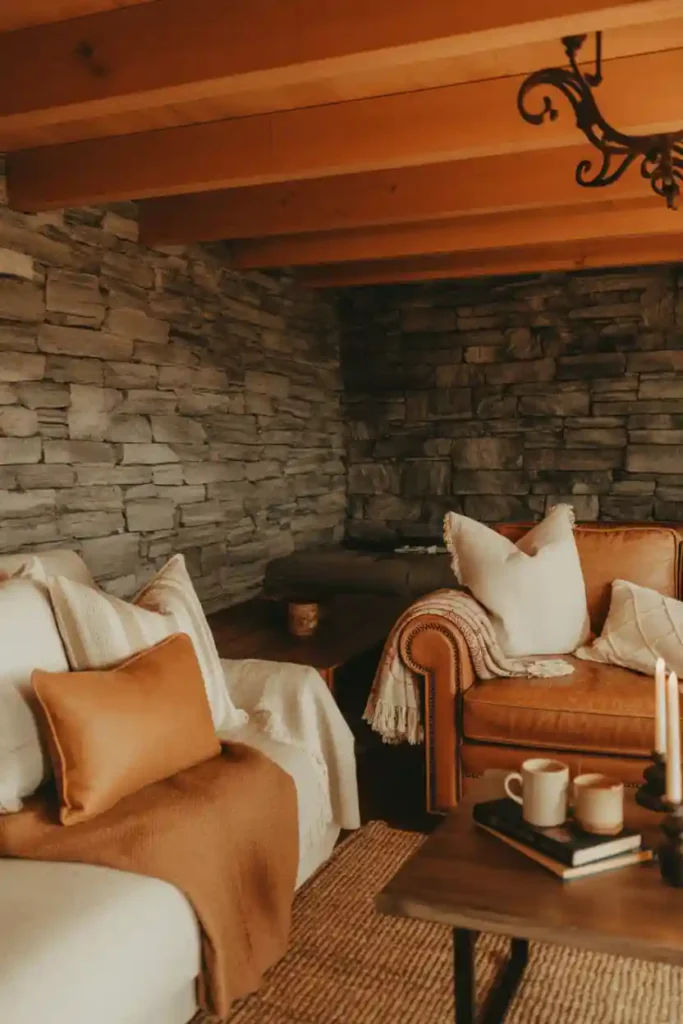
Rustic basements feel inviting when decorated with neutral and earthy tones. Shades like taupe, beige, warm gray, olive green, and soft browns complement natural materials and create a calming environment.
Walls, ceilings, and furniture in muted tones allow textures like wood, stone, and textiles to stand out. Layer soft rugs, throws, and pillows in complementary colors to add warmth and comfort. Earthy accents, like clay pottery or woven baskets, enhance the natural feel. A cohesive color palette ties together different elements in the basement, ensuring that rustic materials feel intentional and harmonious. Neutral, earthy tones make the basement cozy, warm, and welcoming for everyday use.
9. Industrial Rustic Lighting
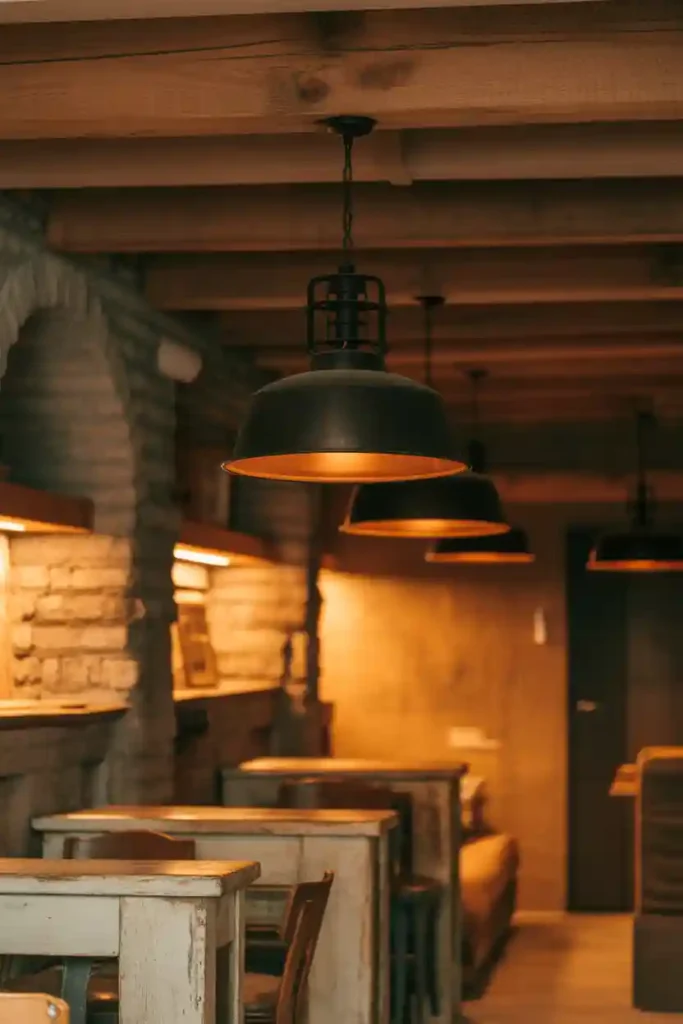
Lighting is essential in creating a cozy rustic basement. Industrial-style fixtures like metal pendant lights, wrought iron chandeliers, or lantern-style wall sconces bring warmth and authenticity.
Mix overhead lighting with table lamps and floor lamps to create layered illumination. Use warm bulbs to avoid harshness and enhance the natural textures of wood, brick, and stone. Lighting highlights architectural features like beams, shelves, or fireplaces, making the basement feel more intimate. Rustic-industrial lighting blends charm with practicality, providing a functional and visually appealing solution for inviting basement spaces. It contributes to a warm, welcoming ambiance perfect for relaxing or entertaining.
10. Reclaimed Wood Furniture

Reclaimed wood furniture is a hallmark of rustic design, offering character, sustainability, and timeless appeal. Tables, shelves, and benches made from reclaimed wood bring natural texture and warmth to the basement.
Pair wood furniture with soft textiles, like cushions, rugs, and throws, to balance hardness with comfort. Darker woods work well for contrast against neutral walls, while lighter reclaimed wood keeps spaces bright. Reclaimed furniture also tells a story, adding history and authenticity to the basement. Its durability and natural beauty make it both practical and aesthetically inviting, enhancing the rustic feel of the space.
11. Cozy Reading or Nook Area
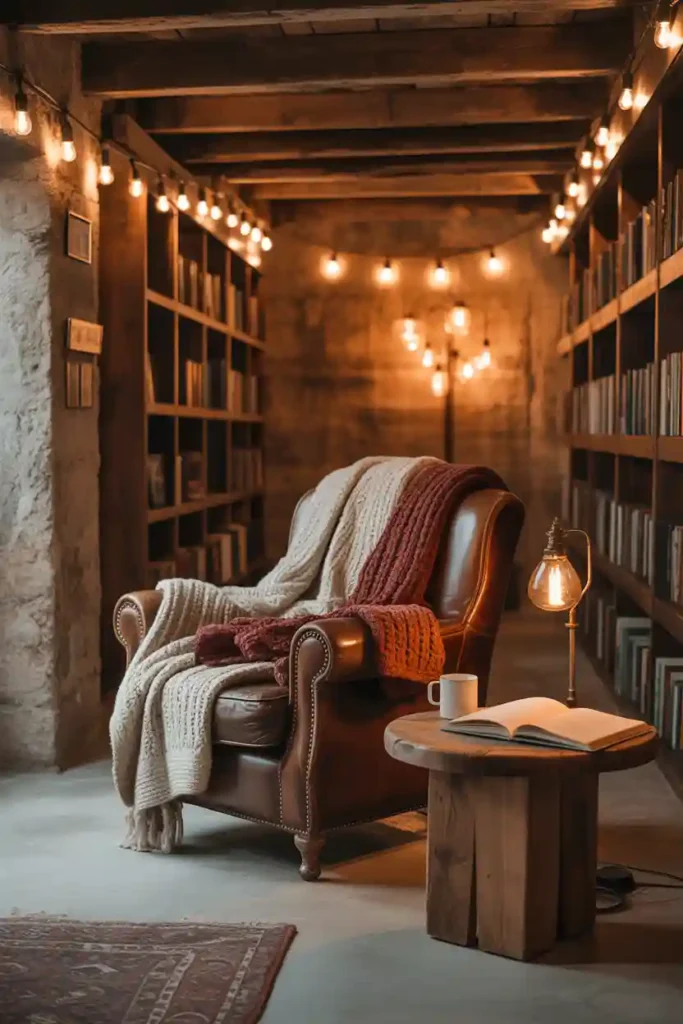
A rustic basement is the perfect place for a cozy reading nook. A comfortable armchair, soft throw blankets, and layered pillows create a relaxing retreat. Surround the space with bookshelves, warm wood accents, and soft rugs.
Add task lighting like a floor lamp or wall sconce to provide functional light while enhancing warmth. Incorporate rustic décor elements, like a small wooden side table or decorative lantern, to tie the nook into the overall design. A reading nook adds a personal, intimate corner to your basement, making it feel inviting and lived-in. It’s an ideal spot to unwind, enjoy a cup of tea, or read a favorite book in comfort.
12. Layered Rugs and Textiles
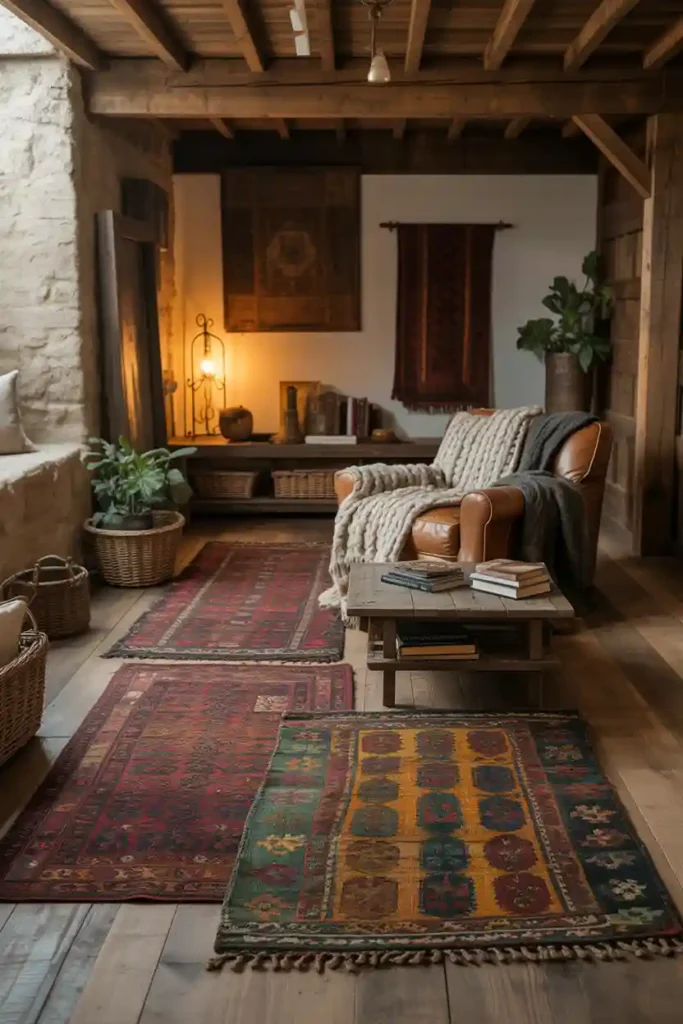
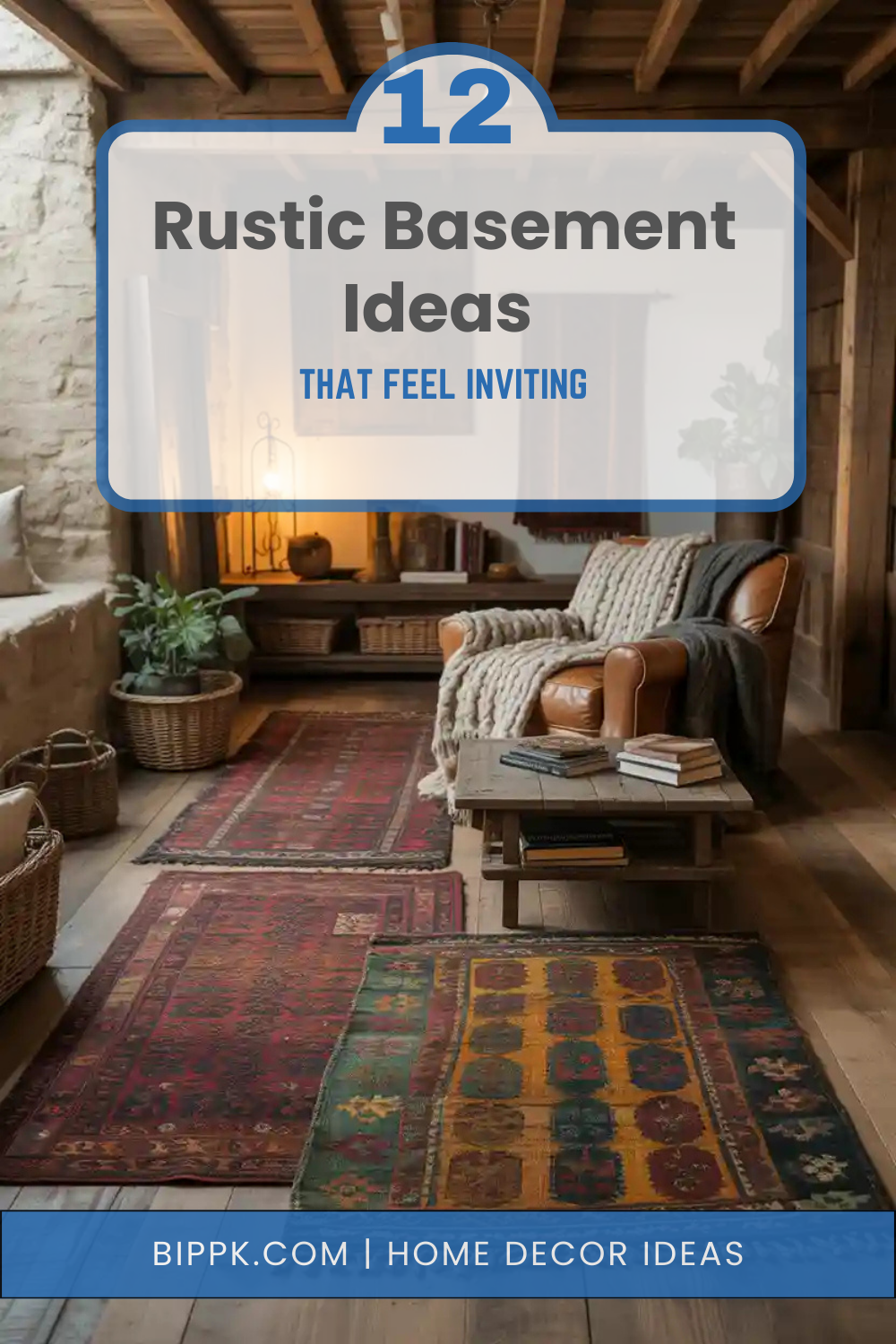
Layered rugs and textiles add depth, comfort, and warmth to a rustic basement. Start with a large neutral or earthy rug as a base, then layer smaller patterned rugs or natural-fiber mats on top to create visual interest and texture.
Use throw blankets, pillows, and cushions in complementary tones to enhance softness and coziness. Natural fabrics like wool, cotton, and linen work particularly well for rustic designs. Layered textiles not only make the basement visually inviting but also provide comfort underfoot, absorb sound, and define functional zones. This approach turns the basement into a cozy, lived-in space perfect for family gatherings or quiet evenings.
Final Words
A rustic basement is more than just a functional lower level—it’s an extension of your home that can feel warm, inviting, and full of character. By combining natural materials like wood and stone, layered textiles, cozy lighting, and thoughtfully chosen décor, you can transform any basement into a space that encourages relaxation, socializing, and everyday comfort.