
12 Warm Minimalist Decor Ideas for Cozy Spaces
Warm minimalism combines simplicity with comfort, creating spaces that feel calm, inviting, and beautifully balanced. Unlike traditional minimalism that can sometimes feel stark or cold, warm minimalist design focuses on soft textures, natural materials, and gentle colors that make a room feel welcoming. The goal is to reduce clutter while keeping the space comfortable and livable.
These 12 Warm Minimalist Decor Ideas for Cozy Spaces will help you design a home that feels peaceful without sacrificing warmth or personality. By blending clean lines with cozy elements, you can create rooms that look modern yet feel relaxing. From natural wood accents to soft lighting and layered textures, warm minimalism offers practical ways to make any space feel comfortable. Whether you are decorating a living room, bedroom, or dining area, these ideas will help you achieve a balanced and cozy minimalist style.
1. Soft Neutral Color Layers
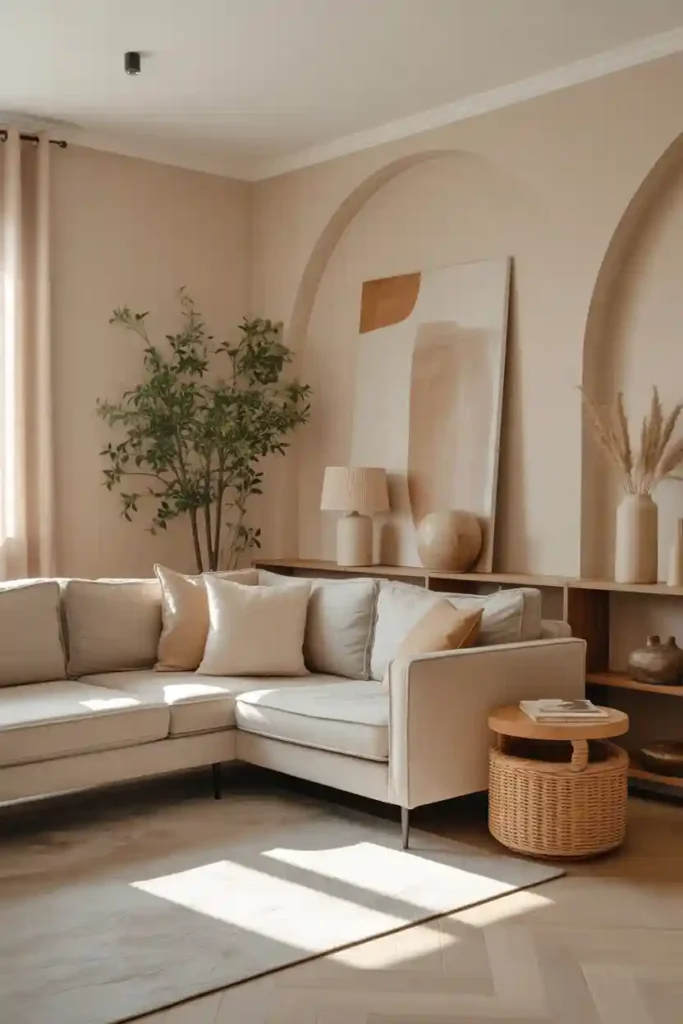
Soft neutral colors are the foundation of warm minimalist spaces. Shades like beige, cream, warm white, and light taupe create a calm and soothing environment. Instead of using stark white walls alone, layering several neutral tones adds depth and warmth without making the space feel busy. Start with a warm neutral base on the walls and then introduce slightly darker or lighter tones through furniture and textiles. A beige sofa paired with cream cushions and a light brown rug creates a gentle contrast that still feels cohesive. Natural color variations prevent the room from looking flat.
2. Natural Wood Accents
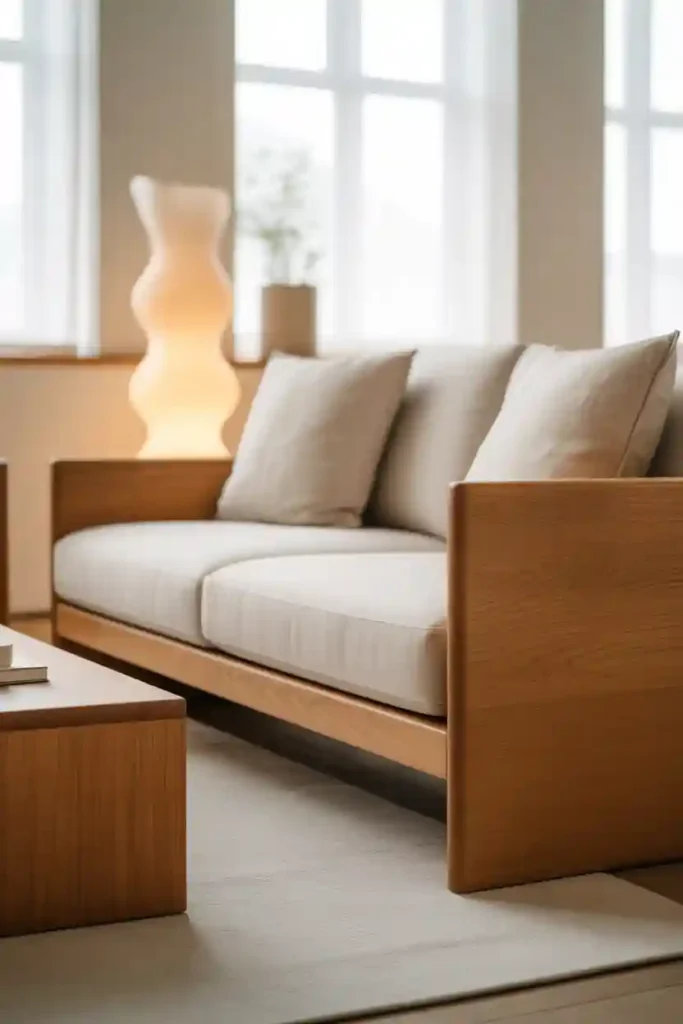
Natural wood instantly adds warmth to minimalist interiors. Wooden furniture and decorative elements create an organic feeling that balances clean lines and simple layouts. Light and medium wood tones work especially well because they keep the space feeling bright while adding texture. A wooden coffee table, dining table, or shelving unit can serve as a focal point without overwhelming the room.
Read Also: 11 Dining Room Seating Ideas for Comfort
3. Soft Layered Textiles
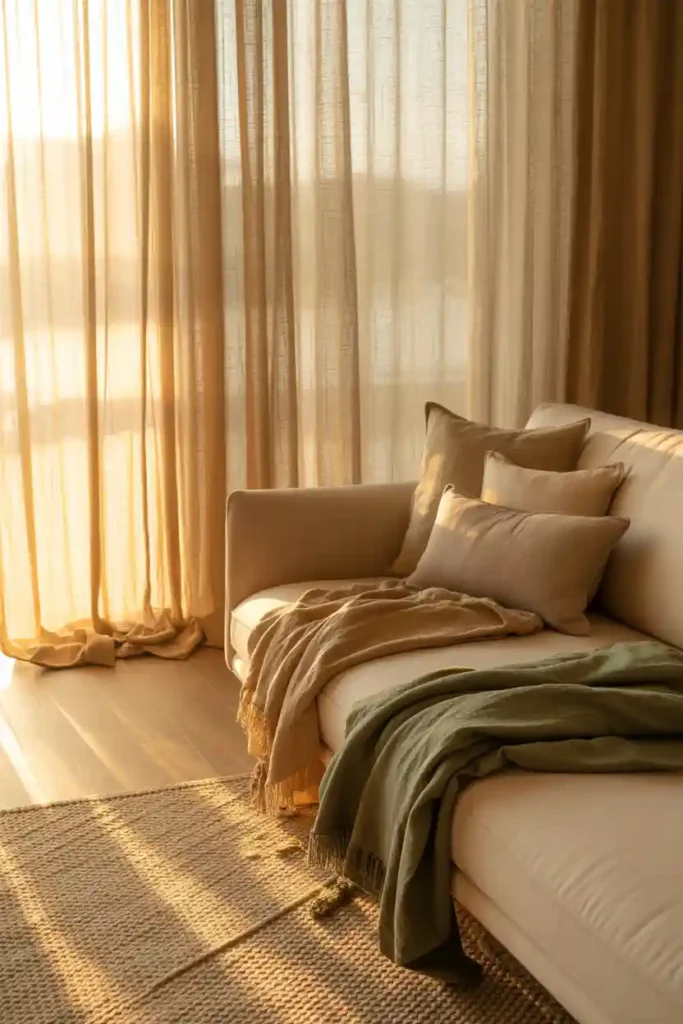
Textiles help minimalist rooms feel comfortable instead of empty. Soft materials like cotton, wool, and linen add warmth while maintaining simplicity. Layering a few well-chosen textiles creates a cozy atmosphere. A simple throw blanket on a sofa, a textured rug on the floor, and linen curtains at the windows add softness without clutter. Stick to neutral or muted tones so the layers feel coordinated. Subtle patterns or woven textures provide interest without overwhelming the design.
4. Warm Ambient Lighting
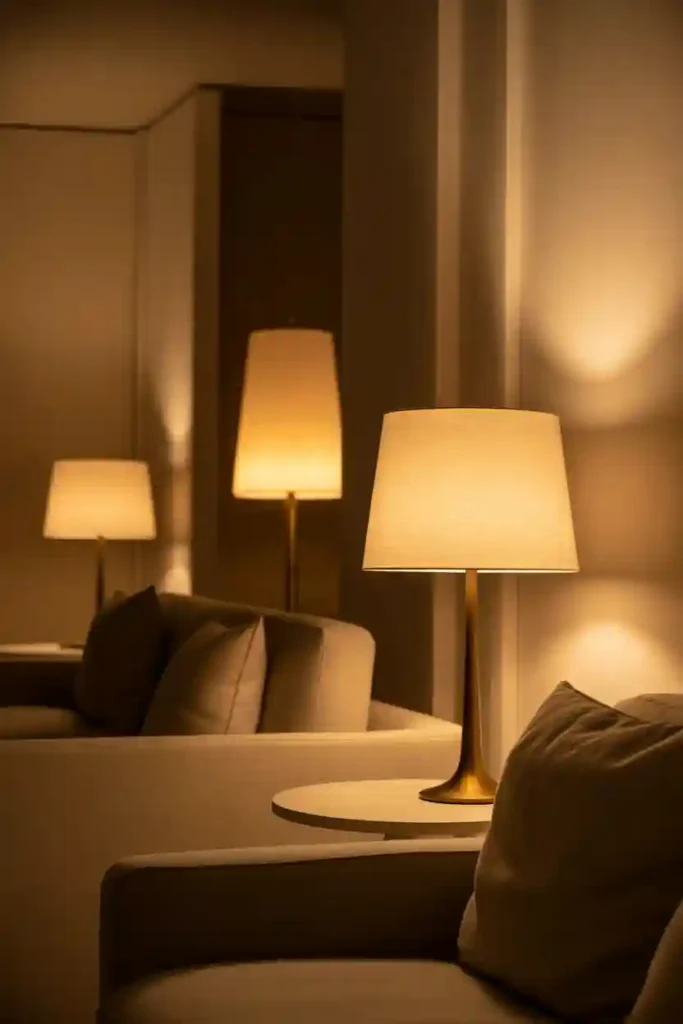
Lighting plays a major role in creating warmth. Soft lighting makes minimalist rooms feel comfortable and relaxing instead of stark. Use warm-toned bulbs rather than cool white light. Table lamps, floor lamps, and wall sconces create gentle illumination that feels inviting. Layering different light sources improves both function and atmosphere. Overhead lighting combined with softer accent lighting creates balance.
5. Simple Cozy Seating
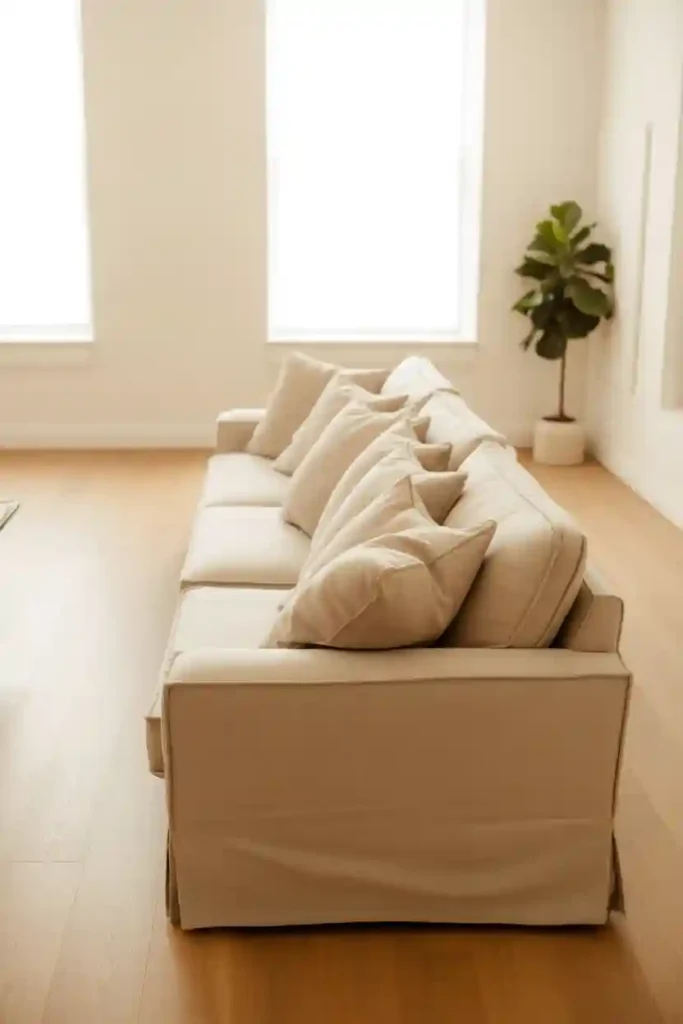
Comfortable seating is essential for warm minimalist spaces. Choose furniture that looks simple but feels inviting. Sofas and chairs with clean lines and soft cushions create the perfect balance. Avoid overly decorative designs and focus on comfort and quality. Neutral upholstery keeps the space feeling calm while soft fabrics make seating more enjoyable. Adding one or two cushions or a throw blanket is usually enough to create a cozy look.
6. Minimal Decor with Meaning
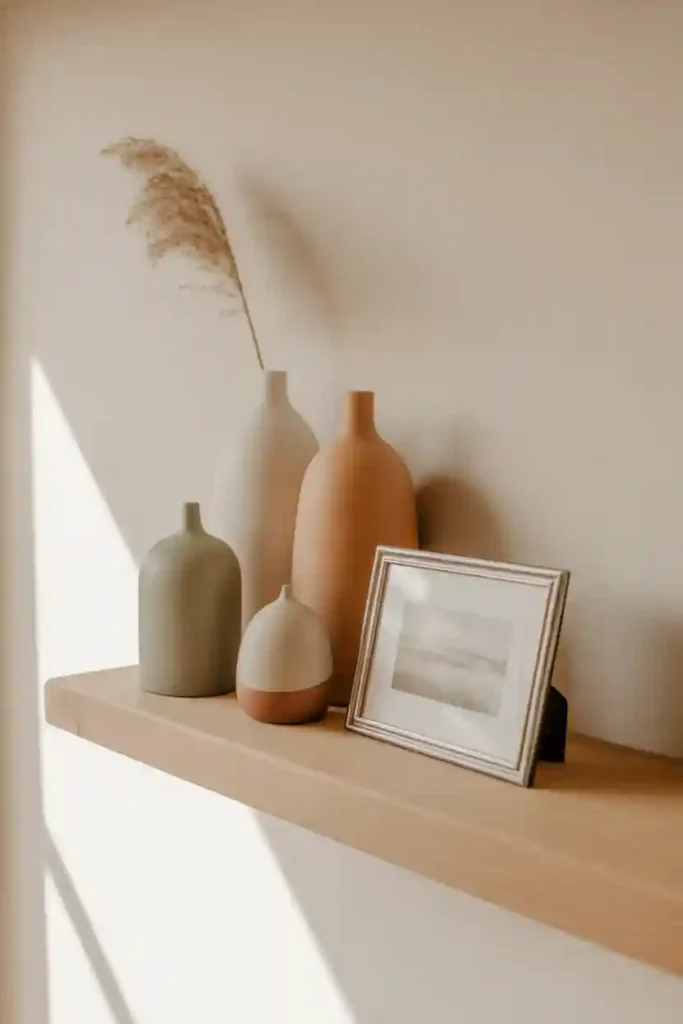
Warm minimalism focuses on fewer but more meaningful decorative items. Instead of filling shelves with many objects, choose a small number of pieces that have personal value. Handmade ceramics, framed photos, or small sculptures can add personality while keeping the space simple. Spacing decorations apart helps them stand out and keeps surfaces uncluttered. Meaningful decor creates emotional warmth that makes the room feel lived in.
7. Soft Window Treatments
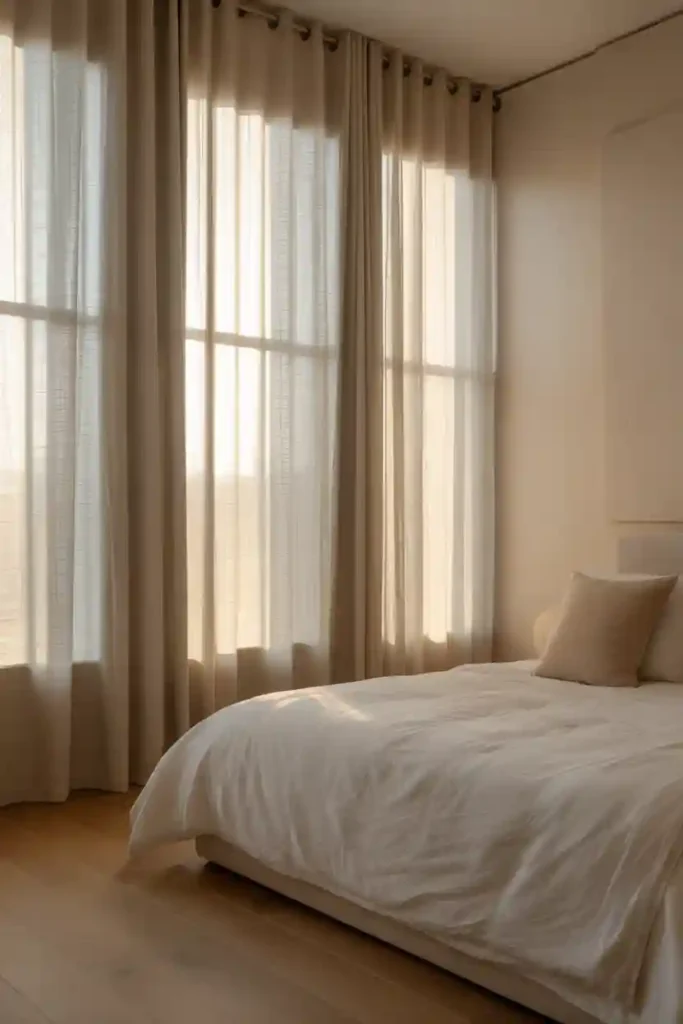
Window treatments can make a minimalist space feel softer and more comfortable. Light fabrics like linen or cotton allow natural light to pass through while adding texture. Floor-length curtains create a relaxed and elegant appearance. Neutral colors help maintain a cohesive look. Sheer curtains work especially well because they brighten the room while providing privacy. Simple curtain designs match the clean style of minimalist interiors.
8. Natural Decorative Elements
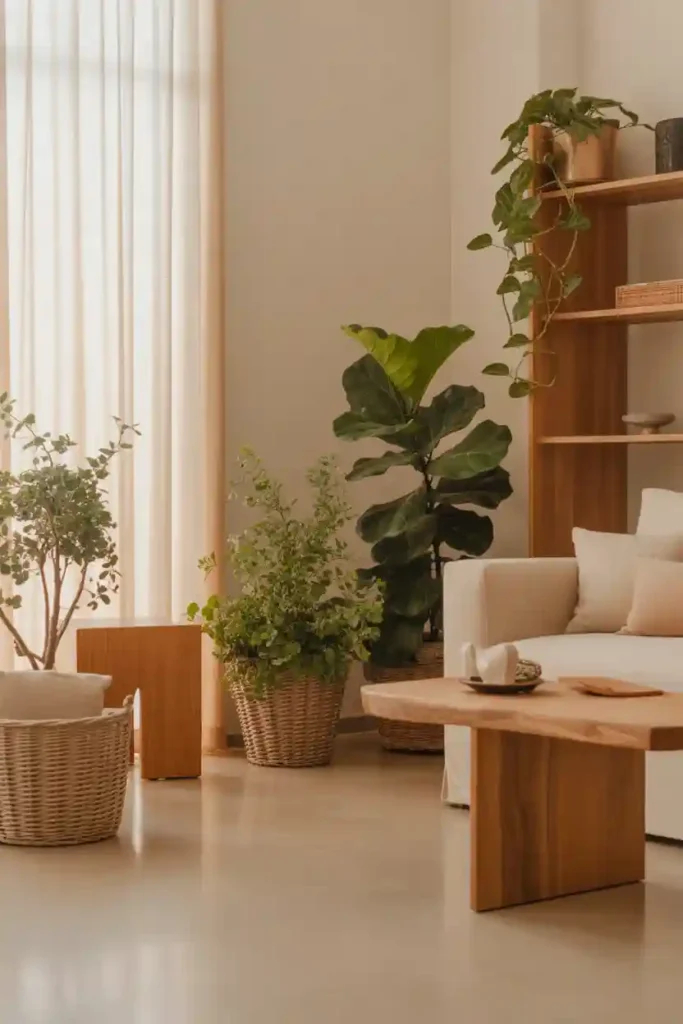
Natural elements bring warmth and life into minimalist rooms. Plants, dried flowers, and stone objects create subtle visual interest. Green plants add freshness and help the room feel alive. Even one or two plants can make a noticeable difference. Dried grasses or branches provide texture without requiring maintenance. Natural elements connect the indoor space with nature, enhancing relaxation.
9. Clean but Lived-In Surfaces
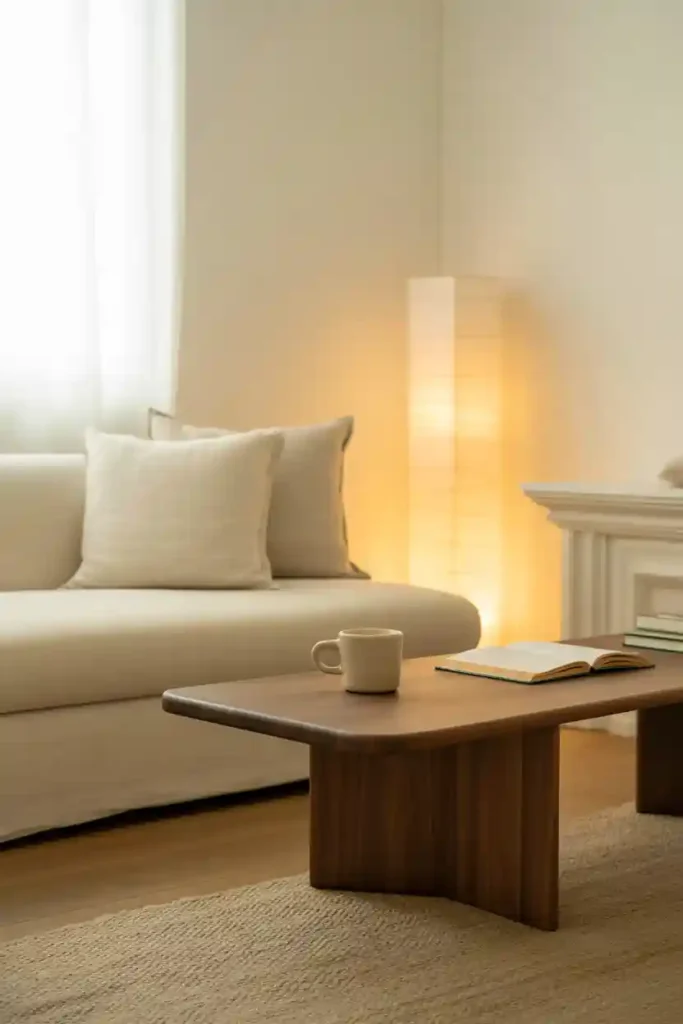
Warm minimalism avoids the overly perfect look. Surfaces should remain clean but still feel natural and lived in. Leaving a book on a coffee table or a folded blanket on a chair adds personality without creating clutter. This approach makes the room feel realistic and comfortable. Simple arrangements work better than overly styled displays.
10. Textured Rugs
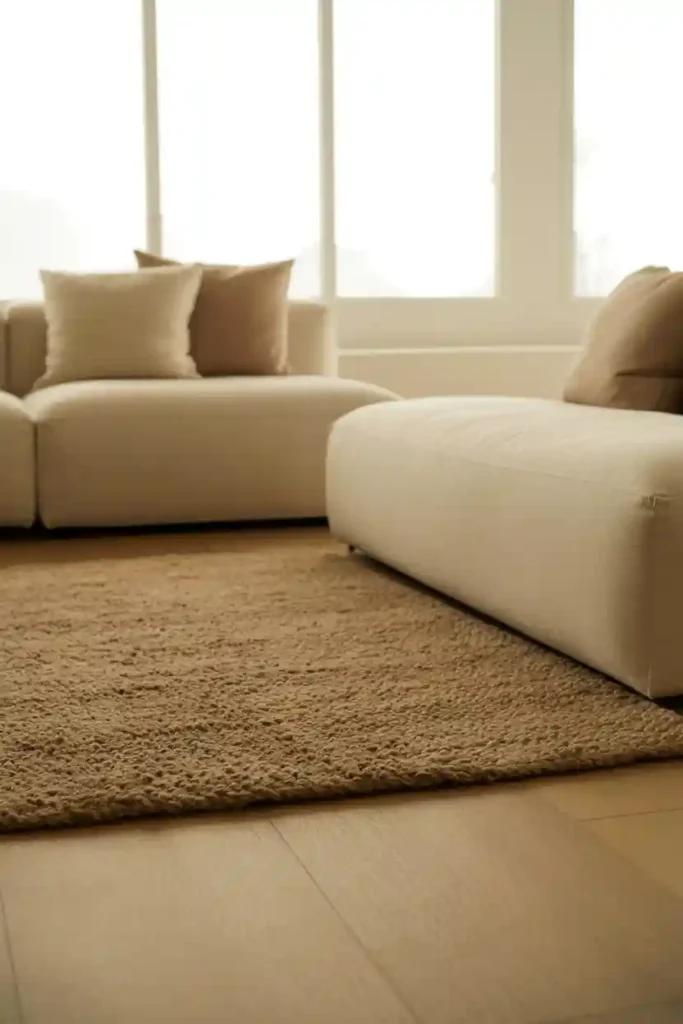
Rugs add warmth both visually and physically. A soft rug makes the room feel more comfortable and inviting. Choose rugs with subtle textures rather than bold patterns. Wool and woven materials work especially well. Neutral colors help maintain simplicity. Rugs also define areas in open spaces without adding walls. This makes the layout feel organized and cozy.
11. Warm Wall Art
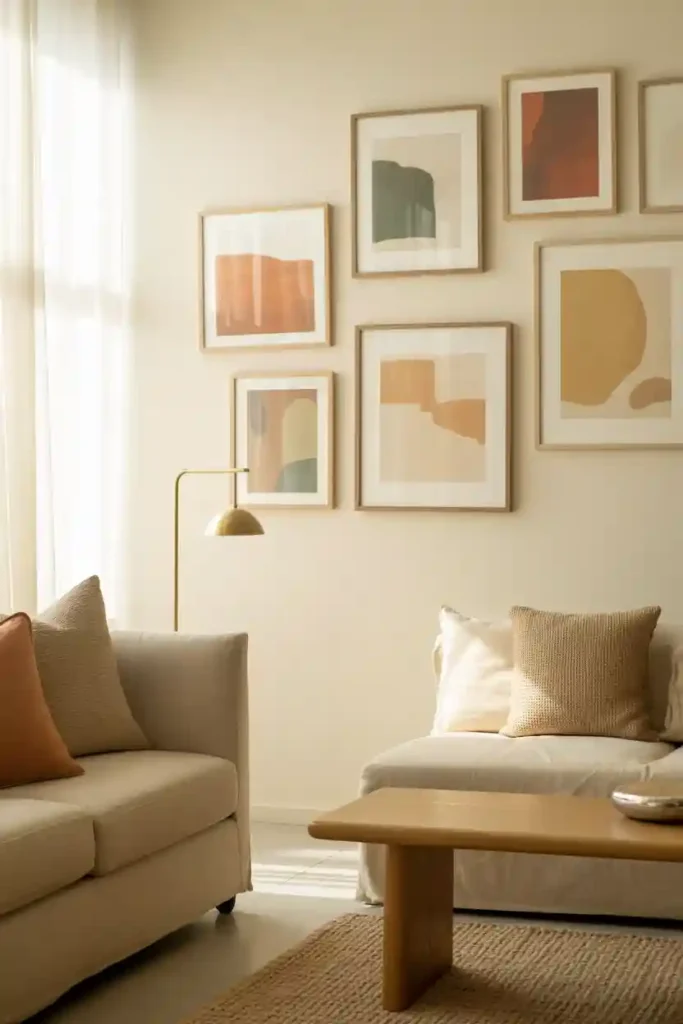
Wall art adds personality without cluttering surfaces. Choose simple artwork with soft colors and natural themes. Abstract prints or landscape art work especially well in minimalist spaces. Frames in wood or neutral tones maintain consistency. Large single pieces often work better than many small items. Warm wall art helps make the space feel complete.
12. Balanced Empty Space
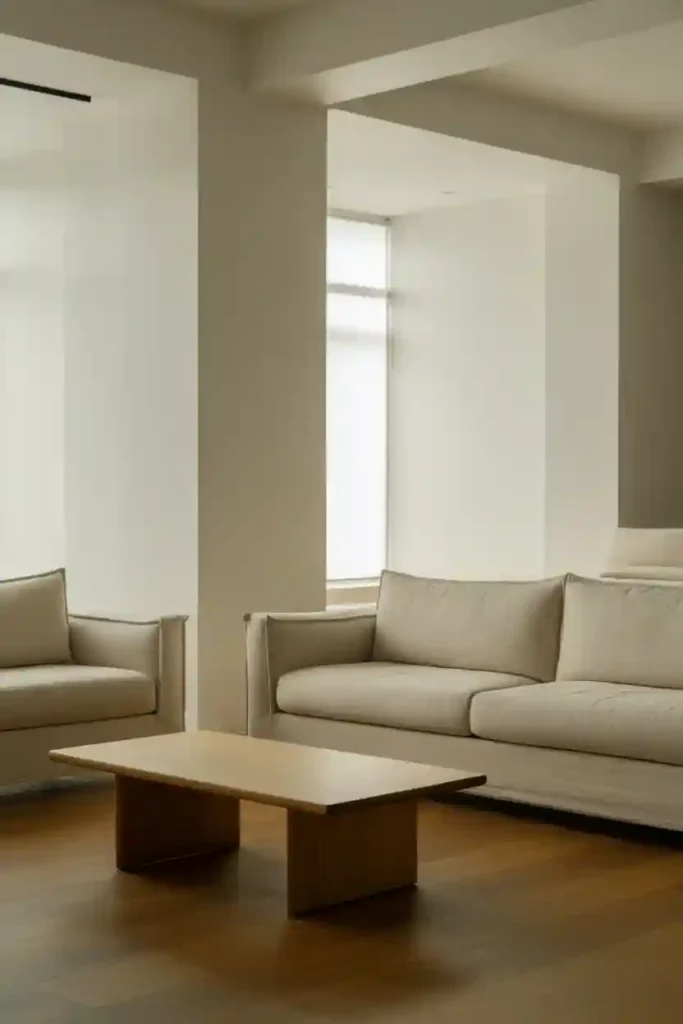
Empty space is an important part of minimalist design. Leaving areas open helps the room feel calm and organized. Open space allows furniture and decor to stand out. Avoid filling every corner with objects. Balanced spacing improves movement and comfort. This approach creates a peaceful environment.
Final Words
Warm minimalism proves that simple spaces can still feel inviting and full of life. By combining clean lines with soft textures, natural materials, and gentle colors, you can create a home that feels peaceful without being cold or empty. The key is to focus on comfort and intention choosing fewer items that truly add value to the space.