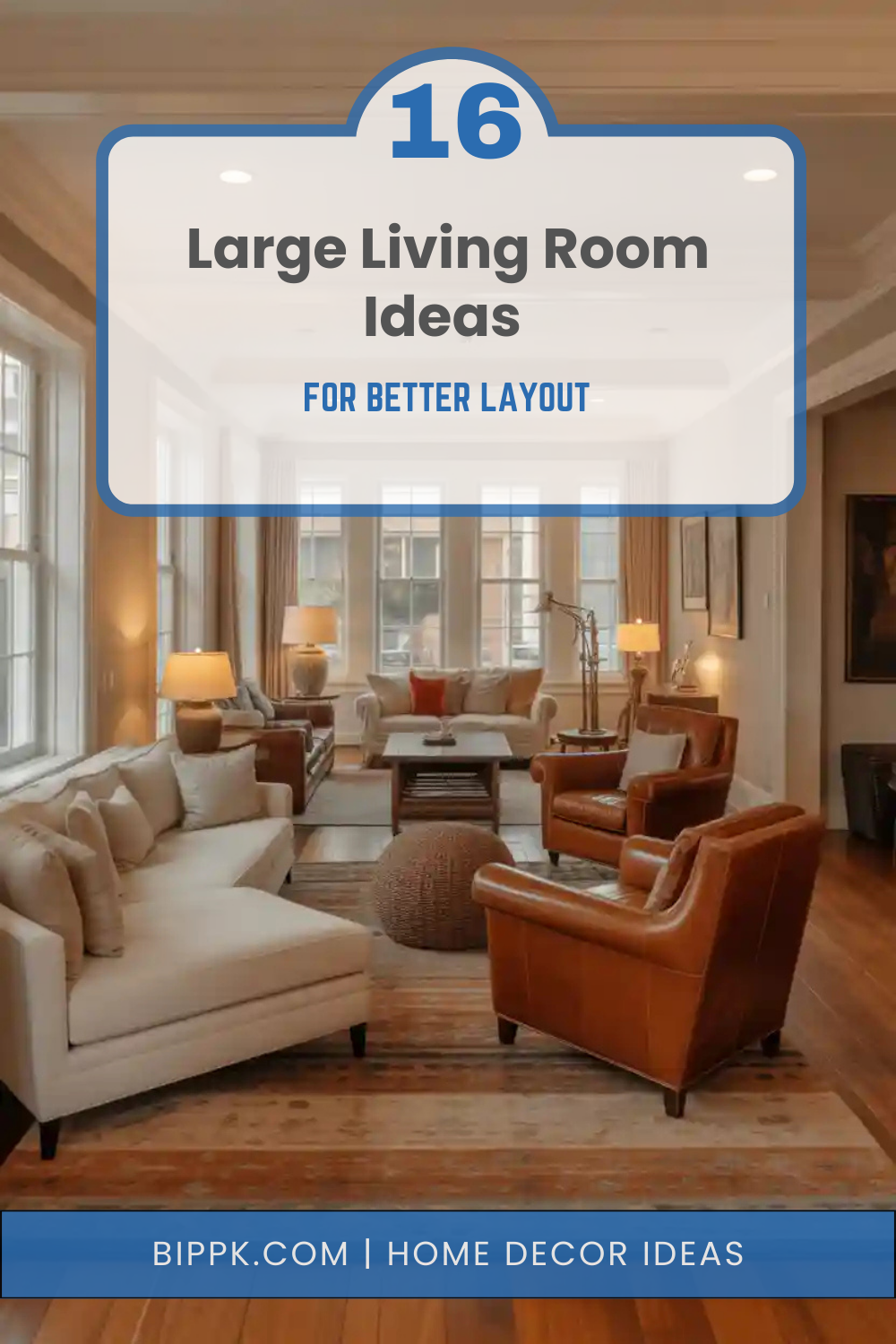
16 Large Living Room Ideas for Better Layout
A large living room is a luxury, but without the right layout, it can feel awkward, empty, or disconnected. Too much open space can make furniture look lost, conversations feel distant, and the room less functional than it should be. The key to designing a large living room is creating balance—dividing the space into purposeful zones while maintaining flow and cohesion.
Thoughtful furniture placement, clear focal points, and intentional use of rugs, lighting, and decor help transform a big room into a welcoming, well-organized space. Whether your living room is long, wide, open-concept, or square, smart layout choices can improve comfort and usability. These 16 large living room ideas for better layout focus on practical solutions that make the space feel connected, cozy, and visually balanced—without sacrificing openness or style.
1. Create Multiple Seating Zones

One of the most effective ways to improve a large living room layout is by creating multiple seating zones. Instead of pushing all furniture toward one wall, divide the space into smaller, functional areas. For example, one zone can focus on conversation, while another serves as a reading or relaxation area. This approach makes the room feel more intimate and purposeful.
Seating zones help eliminate the feeling of emptiness that large rooms often have. Use sofas, chairs, or sectionals to define each area clearly. Rugs and side tables further reinforce these zones without blocking flow. When each section has a clear function, the room becomes easier to use and more inviting. Multiple seating zones encourage interaction while maintaining balance in a large open space.
2. Use Area Rugs to Define Spaces
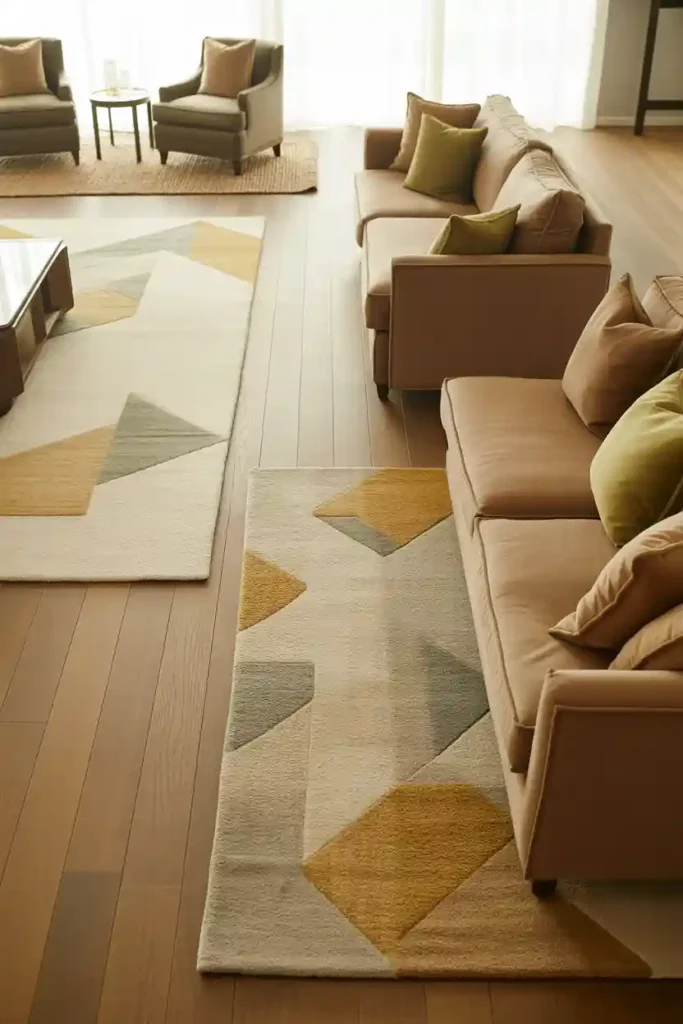
Area rugs are essential for organizing a large living room. Without them, furniture can appear scattered and disconnected. Rugs visually anchor seating areas, helping define zones within an open layout. Each rug creates a sense of structure without the need for walls or dividers.
Choose rugs large enough so at least the front legs of furniture rest on them. This creates unity within each zone. Using different rugs for separate areas adds clarity, while keeping colors or textures complementary maintains cohesion. Rugs also add warmth and softness, preventing large spaces from feeling cold. This simple design tool greatly improves layout and comfort.
3. Anchor the Room with a Strong Focal Point
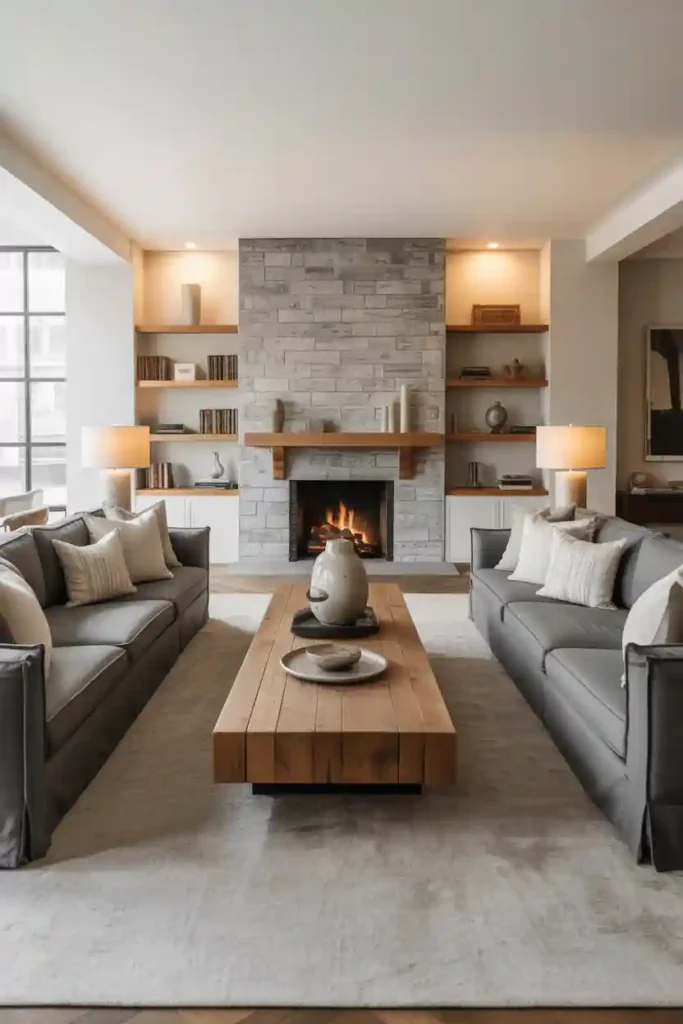
A strong focal point brings direction and clarity to a large living room layout. Without one, the space can feel aimless. Common focal points include a fireplace, large window, TV wall, or statement art. Once established, furniture placement becomes more intuitive.
Arrange seating to face or frame the focal point rather than spreading furniture randomly. This creates visual harmony and encourages natural flow. Supporting elements like lighting and decor should highlight the focal area without competing with it. A clear focal point grounds the room and gives purpose to the layout.
Read Also: 16 Cozy Home Decor Ideas for a Warm Feel
4. Float Furniture Away from Walls
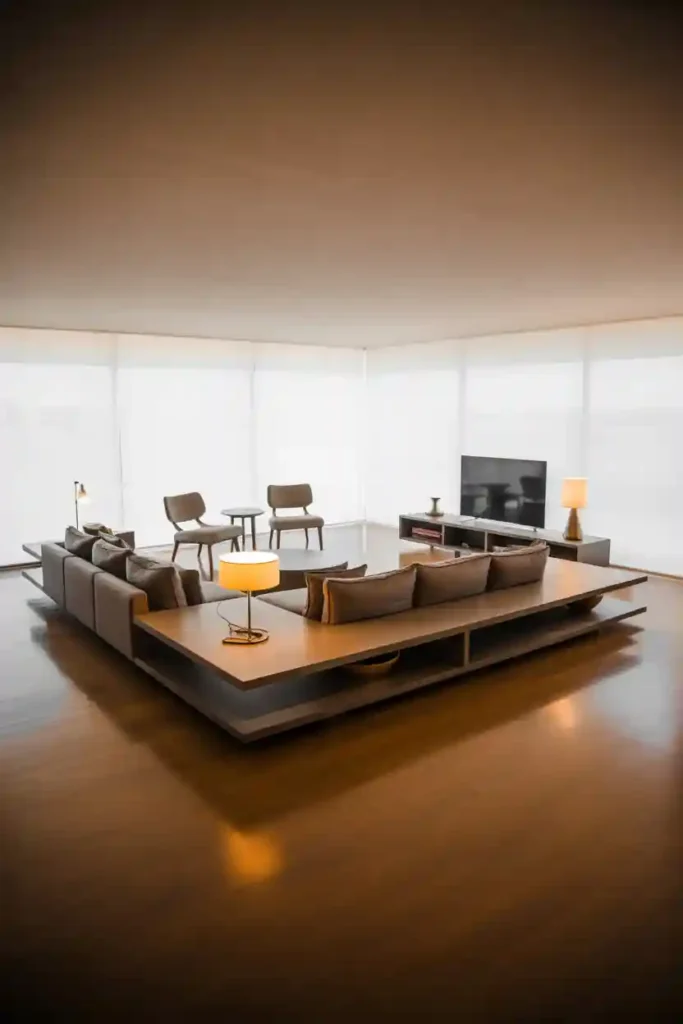
In large living rooms, pushing furniture against walls often makes the center feel empty and disconnected. Floating furniture away from walls creates intimacy and improves flow. Sofas and chairs placed closer together encourage conversation and make the room feel more cohesive.
Use rugs and coffee tables to anchor floating furniture arrangements. Leaving space behind sofas for walkways or consoles maintains functionality. This layout technique fills the room naturally and avoids the “too-big” feeling common in oversized spaces.
5. Balance Scale with Oversized Furniture
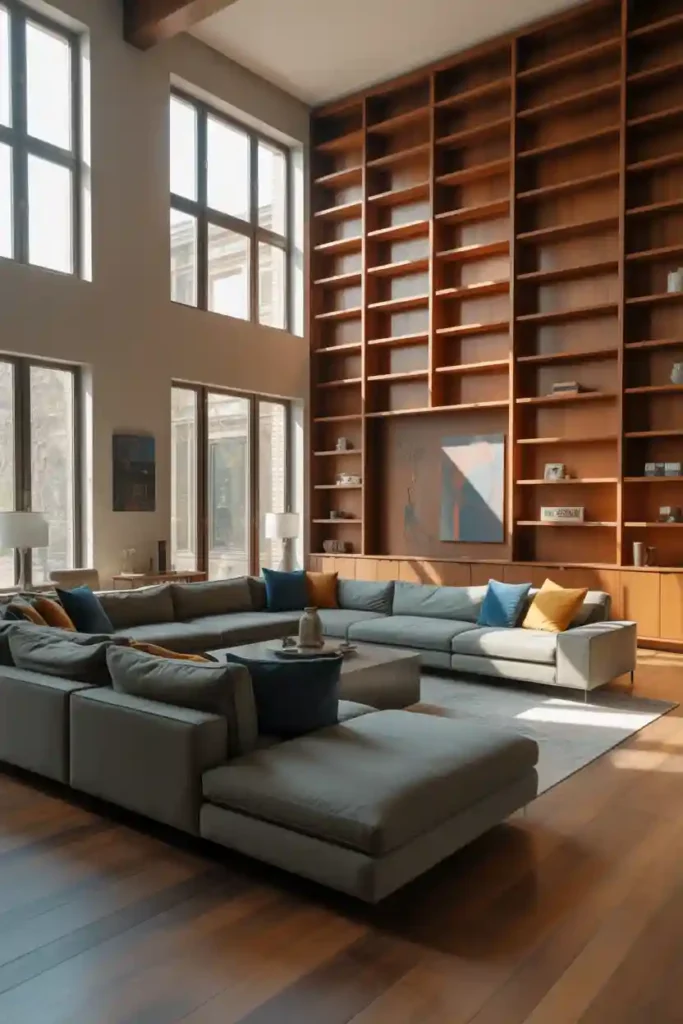
Large rooms require furniture that matches their scale. Small sofas or chairs can look lost, creating imbalance. Oversized furniture fills the space appropriately and adds comfort. Sectionals, large coffee tables, or wide sofas help anchor the room visually.
Balance oversized pieces with lighter accents to avoid heaviness. Mixing textures and materials keeps the space dynamic. Furniture scaled to the room size improves layout and ensures the living room feels intentional rather than under furnished.
6. Add a Central Conversation Area
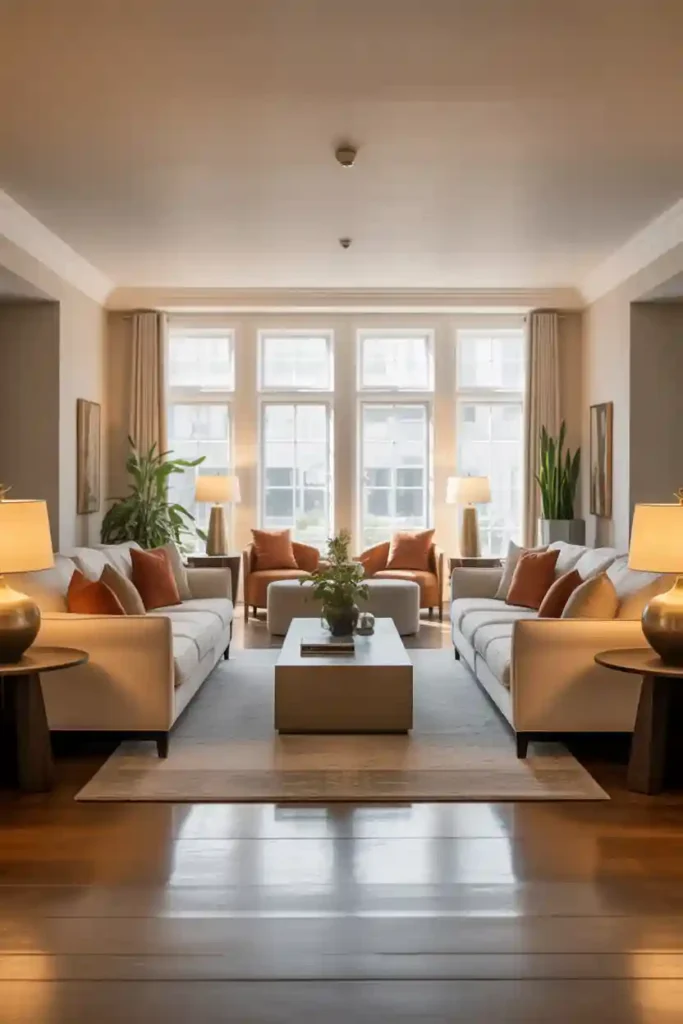
A central conversation area brings focus to a large living room. Placing seating around a coffee table in the center creates a natural gathering spot. This setup works well when the room lacks architectural anchors.
Arrange sofas and chairs facing each other to encourage interaction. The central area becomes the heart of the room, while surrounding space can support additional functions. This approach improves flow and makes the layout feel welcoming.
7. Use Multiple Rugs to Define Zones

In a large living room, one rug is often not enough. Using multiple rugs helps define separate zones while maintaining a cohesive overall layout. Rugs visually anchor furniture groupings, making large spaces feel more organized and intentional instead of empty or scattered.
Place a large area rug under the main seating arrangement to ground sofas and chairs. In another section, use a different rug to define a reading nook, conversation area, or workspace. The rugs don’t need to match exactly, but they should share a common color palette or texture to avoid visual clutter. This approach helps the room feel layered and balanced.
8. Add a Central Coffee Table Statement
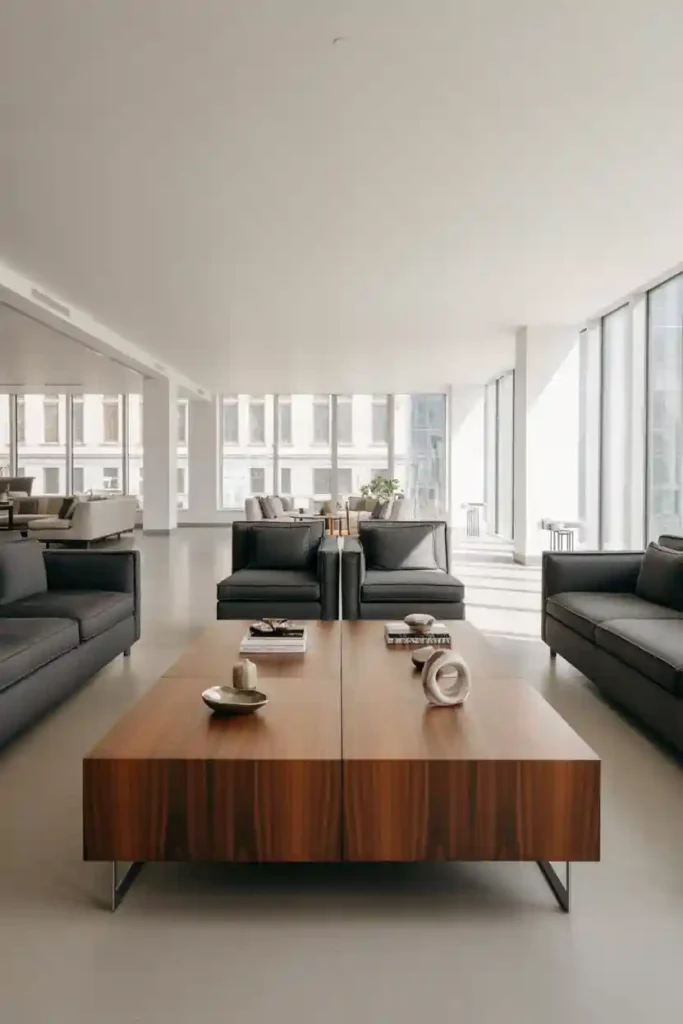
A large living room benefits from a strong visual anchor, and a substantial coffee table can serve that role perfectly. In big spaces, small tables often look lost, making the seating area feel disconnected. Choosing a larger or more sculptural coffee table helps ground the furniture and create a clear focal point.
Beyond function, a statement coffee table improves layout by pulling all seating inward. It encourages conversation and makes the space feel unified rather than spread out. Styling the table with books, trays, or decor further enhances cohesion. This simple layout choice adds structure and makes a large living room feel intentional and well-balanced.
9. Break Up Space with a Console or Sofa Table
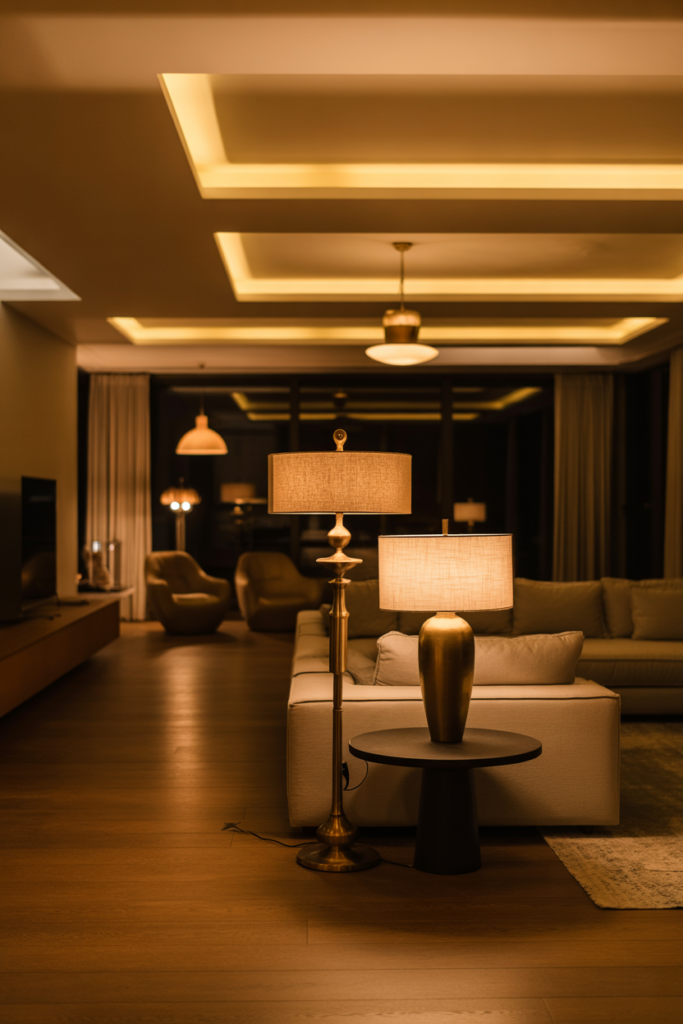
Large living rooms often need subtle dividers to prevent the layout from feeling too open or undefined. A console table or sofa table is an excellent solution that adds function without blocking sightlines. Placed behind a sofa, it helps visually separate areas while maintaining flow.
This approach keeps the room open while adding structure. The table acts as a visual pause, helping the eye understand where one zone ends and another begins. It’s an ideal layout tool for large living rooms that need organization without heavy partitions or walls.
10. Use Lighting to Define Zones
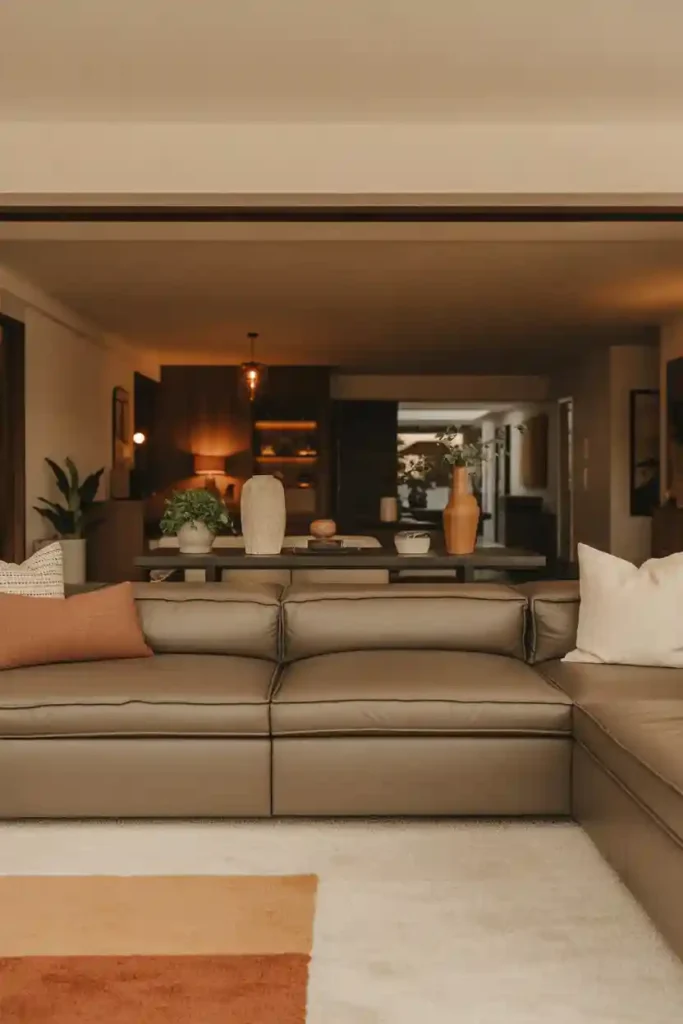
Lighting is more than decoration in a large living room—it’s a tool to define separate zones and improve functionality. Instead of relying solely on overhead lighting, layer light sources with floor lamps, table lamps, and wall sconces to create intimate pockets within the open space.
For example, a reading corner can have a tall floor lamp, while a main seating area benefits from ambient light from a chandelier or ceiling fixture. Adjustable or dimmable lighting adds versatility, allowing each zone to feel cozy at night or bright during the day. Using lighting to visually anchor furniture groupings enhances flow and prevents a large room from feeling cold or empty. Thoughtful placement of light also draws attention to focal points, textures, or artwork, making the space feel more curated and comfortable.
11. Add a Secondary Seating Area
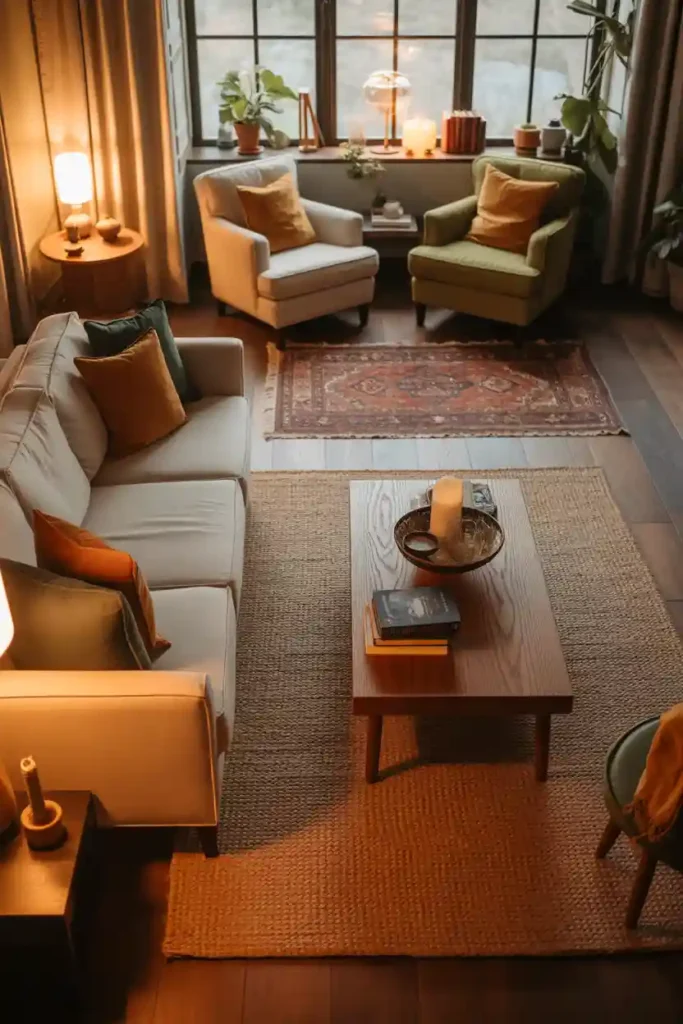
A secondary seating area in a large living room makes the space more functional and welcoming. This could be a pair of chairs near a window, a small loveseat in a corner, or a cozy nook with an armchair and side table. Secondary seating ensures the room can accommodate multiple activities or groups at once.
Placing a secondary seating area strategically prevents the space from feeling one-dimensional. It encourages social interaction, provides quiet spots for reading, and balances the visual weight of the room. Pair it with a small rug, side table, or floor lamp to anchor the area. Even a modest secondary arrangement contributes to a layered, lived-in feel. Large living rooms feel cozier and more usable when furniture is thoughtfully distributed rather than clustered in one zone.
12. Use Low Furniture to Maintain Openness
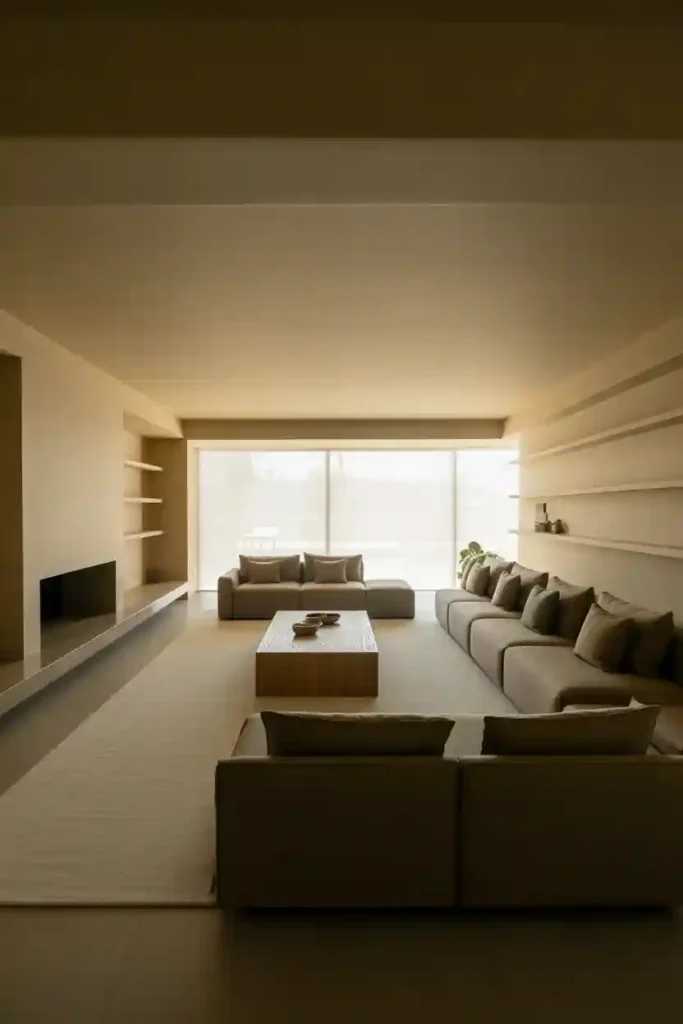
Low-profile furniture is essential in a large living room because it maintains a sense of openness and airiness. Sofas with low backs, short coffee tables, or minimal side tables prevent the room from feeling visually heavy while still defining spaces.
Low furniture works especially well in rooms with high ceilings or wide expanses. It balances vertical space, keeps sightlines clear, and allows natural light to flow freely. Combine low-profile pieces with rugs and layered lighting to define zones without crowding the room. This approach keeps the layout comfortable, functional, and modern. By maintaining openness, low furniture ensures a large living room remains inviting rather than overwhelming.
13. Incorporate Storage Without Clutter

Large living rooms still need storage, but poorly planned storage can make the space feel cluttered. Built-in shelves, media units, and storage ottomans are ideal solutions that add function while maintaining a clean layout.
Use open shelving to display curated decor items, books, or plants, while hidden cabinets keep less attractive essentials tucked away. Storage pieces can also act as visual anchors or subtle dividers between zones. By integrating storage into the layout thoughtfully, you maintain flow while improving organization. This approach ensures that a large living room feels polished and lived-in at the same time. When storage is functional and stylish, it enhances both comfort and usability, preventing the room from looking sparse or chaotic.
14. Layer Furniture for Depth

Layering furniture adds depth and dimension to a large living room. Instead of placing all pieces in a single line, stagger sofas, chairs, ottomans, and side tables to create visual interest and intimacy.
Layered arrangements make the room feel dynamic and inviting. For example, a sectional can anchor the main seating area, while a pair of chairs or a bench layered nearby adds additional seating and breaks up empty space. Use rugs, throw pillows, and lighting to emphasize these layers. By thoughtfully layering furniture, you avoid the flat or sparse look that often plagues oversized rooms. This technique encourages interaction, guides flow, and gives the space a comfortable, lived-in feel.
15. Use Accent Pieces to Fill Visual Gaps
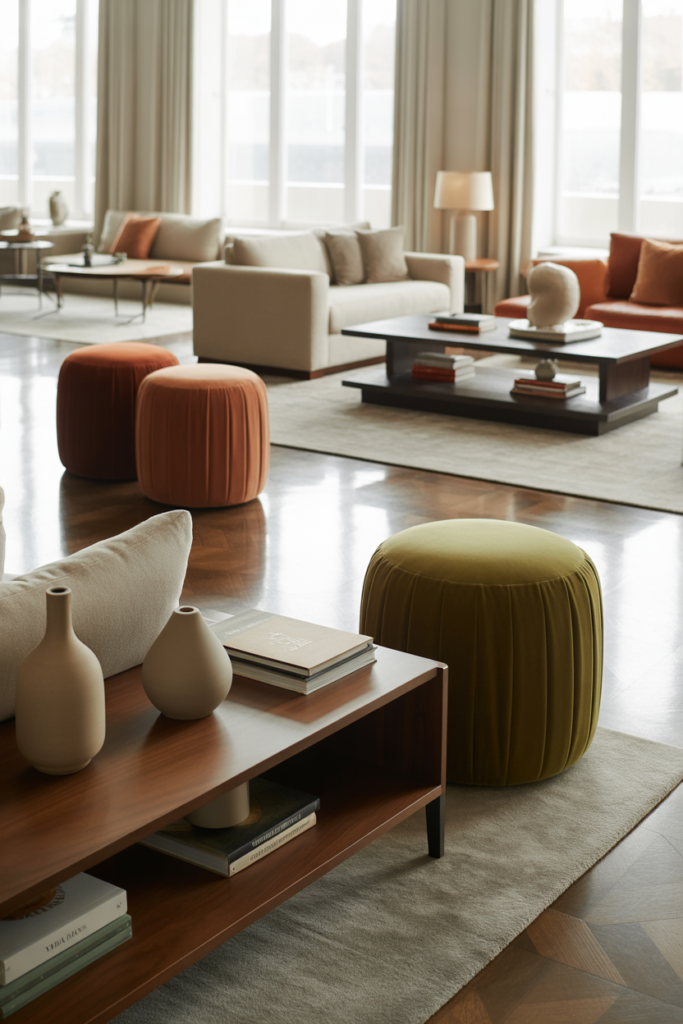
Accent furniture and decor pieces help fill visual gaps in a large living room without overwhelming the space. Poufs, benches, console tables, and side tables provide both function and balance in empty corners or between zones.
Accent pieces prevent areas from looking sparse while maintaining openness. For instance, a bench behind a sofa can define a walkway, while a pouf near a chair adds seating without clutter. Decorative objects like sculptures or vases draw the eye and enhance cohesion. Strategically placed accents ensure the room feels intentional and thoughtfully curated, rather than disproportionately large. Large spaces feel balanced, stylish, and practical when accent pieces are used to complement the main layout.
16. Tie Everything Together with Cohesive Styling
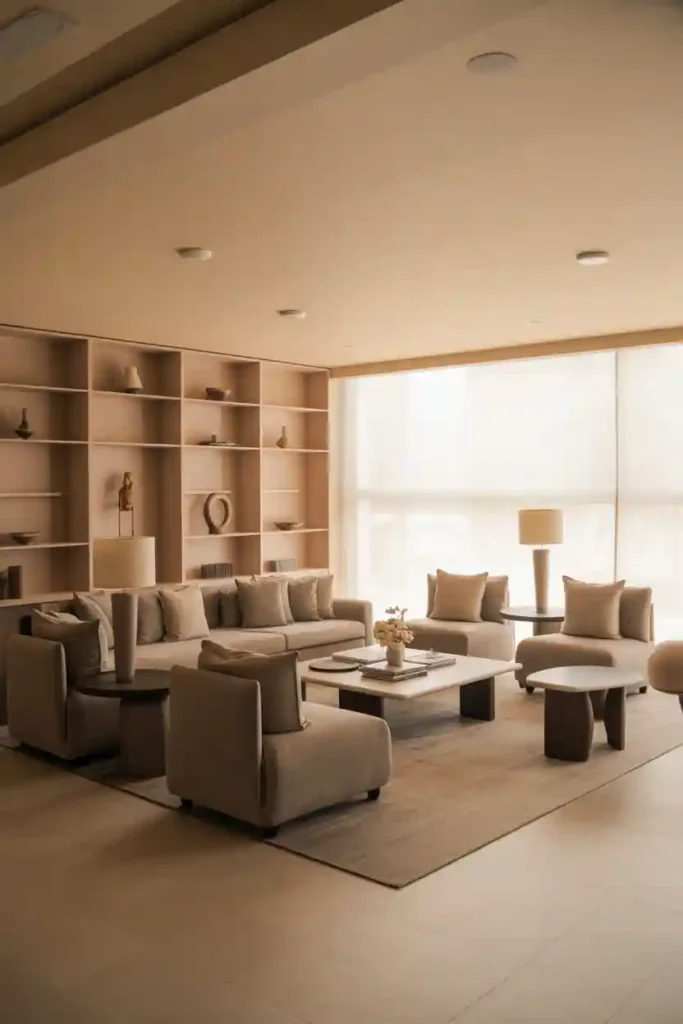
Cohesive styling is the final step in making a large living room feel complete. Colors, materials, and textures should flow consistently throughout the space to unify the zones. Without cohesion, even well-laid-out furniture can feel disconnected.
Layer rugs, lighting, furniture, and decor so each zone relates to the others. Repeating tones or materials—like wood, metal, or fabric textures—creates visual continuity. Even separate seating areas feel connected when the styling is consistent. Cohesive decor also reinforces comfort and intentionality, making a large living room feel harmonious and welcoming. This final step ensures that the room is not just spacious, but also functional, inviting, and beautifully balanced.
Final Words
Designing a large living room doesn’t have to feel overwhelming. With the right layout choices, a big space can become warm, functional, and visually balanced instead of empty or awkward. By dividing the room into clear zones, choosing furniture that matches the scale, and paying attention to flow, you can create a space that supports everyday living as well as entertaining. Small details—like rugs, lighting, and cohesive styling—play a big role in tying everything together.