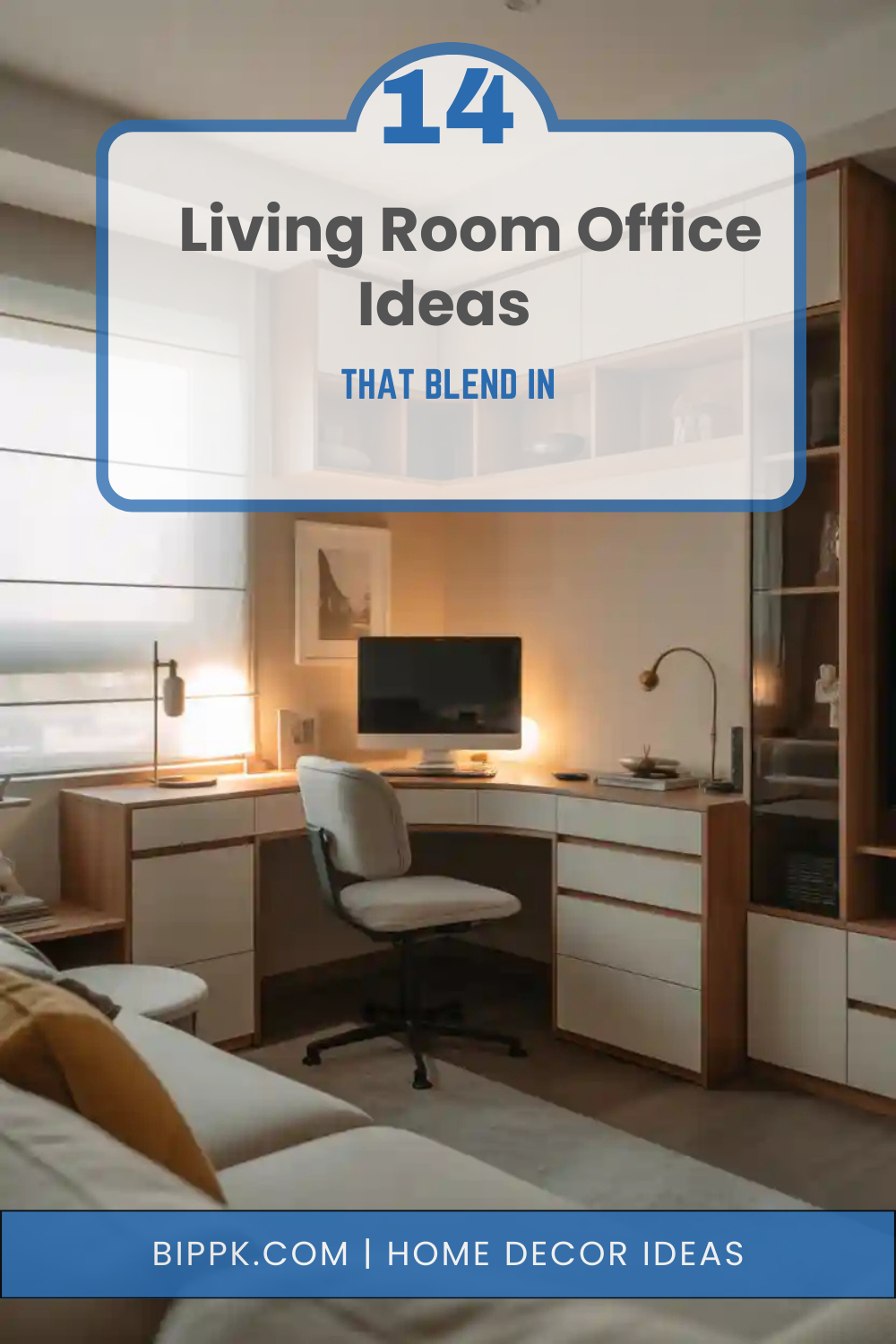
14 Living Room Office Ideas That Blend In
Creating a home office inside the living room can feel challenging, especially when you want the space to remain stylish, comfortable, and welcoming. The key is designing a workspace that blends seamlessly into your living area without disrupting its flow or aesthetic. A well-integrated living room office should feel intentional, not like an afterthought. By using smart furniture choices, cohesive color palettes, clever storage, and subtle zoning techniques, you can create a productive work area that visually disappears when the workday ends.
Whether you live in a small apartment or an open-plan home, blending your office into the living room allows you to maximize space while maintaining harmony and balance. These 14 Living Room Office Ideas That Blend In focus on designs that are functional, discreet, and stylish. From hidden desks and built-in shelving to furniture that doubles as decor, these ideas help you work efficiently without sacrificing the comfort and beauty of your living space.
1. Built-In Desk That Matches the Living Room Style
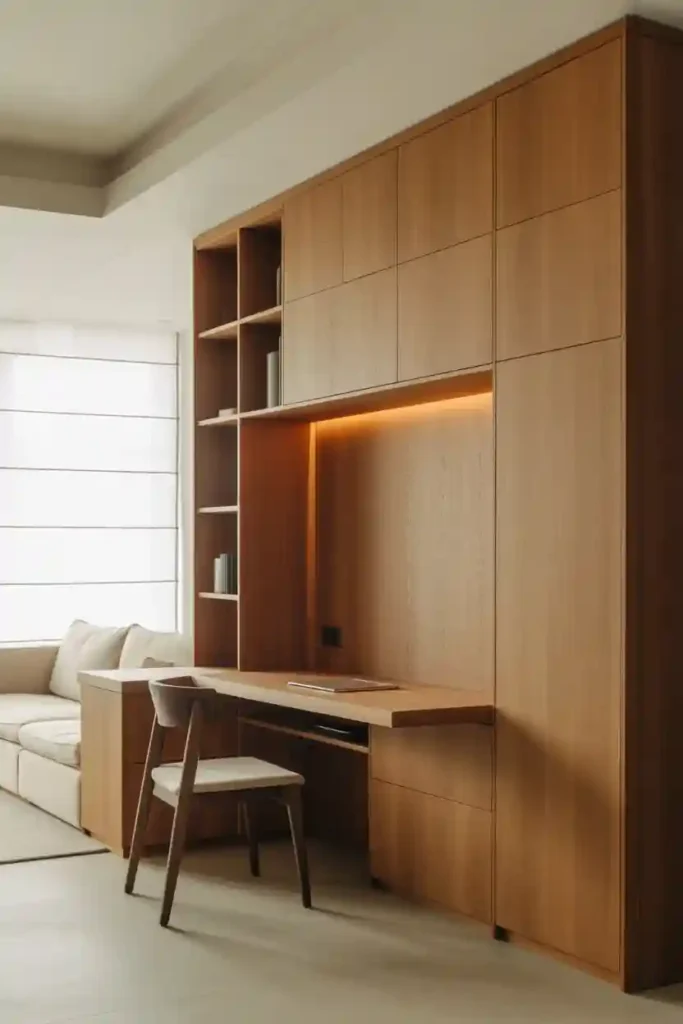
A built-in desk is one of the most seamless ways to blend a home office into your living room. By designing the desk to match existing cabinetry, shelving, or wall finishes, the workspace feels like a natural extension of the room rather than a separate zone. Built-ins can be tucked into alcoves, under staircases, or along unused walls, making efficient use of space without crowding the room.
Choosing the same materials, colors, and finishes as your living room furniture helps the desk disappear visually. Closed storage above or below the desk keeps office supplies hidden, maintaining a clean and clutter-free appearance. When not in use, the desk simply reads as part of the room’s architecture. This approach is ideal for maintaining a cohesive look while still enjoying a fully functional workspace that supports daily productivity.
2. Desk Behind the Sofa for Subtle Zoning
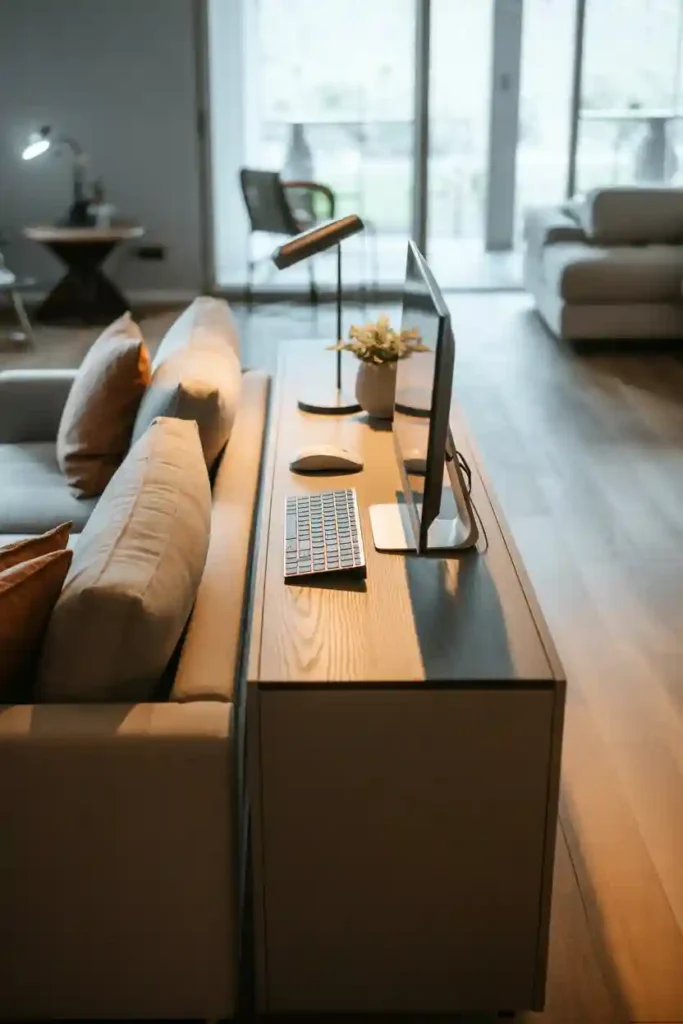
Placing a desk behind the sofa is a clever way to create a living room office without disrupting the layout. This setup uses furniture placement to define a work zone while keeping the overall space open and cohesive. A slim console-style desk works best, ensuring the area doesn’t feel bulky or intrusive.
When styled thoughtfully, the desk blends into the living room like a decorative console table. Use matching finishes, subtle lighting, and minimal accessories to keep the look cohesive. Storage drawers or baskets beneath the desk help hide work essentials. This layout is especially effective in open-plan spaces, as it allows the sofa to act as a natural divider between relaxation and productivity zones without adding walls or partitions.
Read Also: 13 Home Office Ideas for Better Productivity
3. Wall-Mounted Desk to Save Space
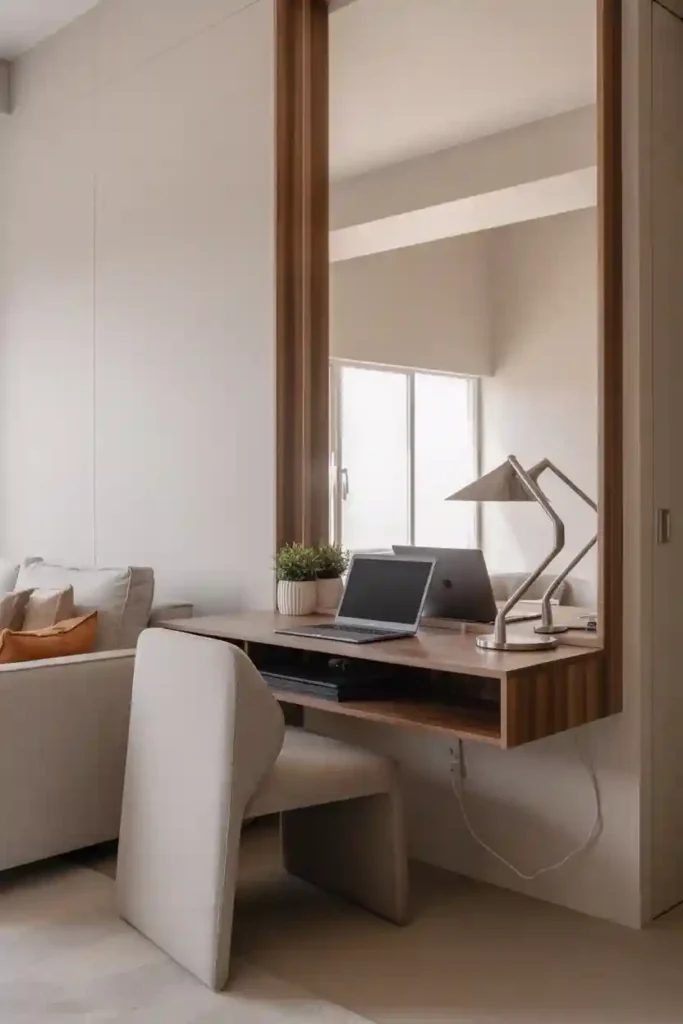
A wall-mounted desk is perfect for blending an office into a living room, especially in smaller spaces. Floating desks take up minimal visual space and can be folded away when not in use, keeping the room looking uncluttered. Mounted at the right height, they provide a comfortable work surface without dominating the space.
Choosing a finish that matches your wall color or nearby furniture helps the desk blend in effortlessly. Add discreet shelving above for essentials or decorative items to maintain balance. This solution works beautifully in minimalist or modern living rooms where clean lines and simplicity are key. A wall-mounted desk offers functionality without sacrificing style or floor space.
4. Hidden Desk Inside a Cabinet
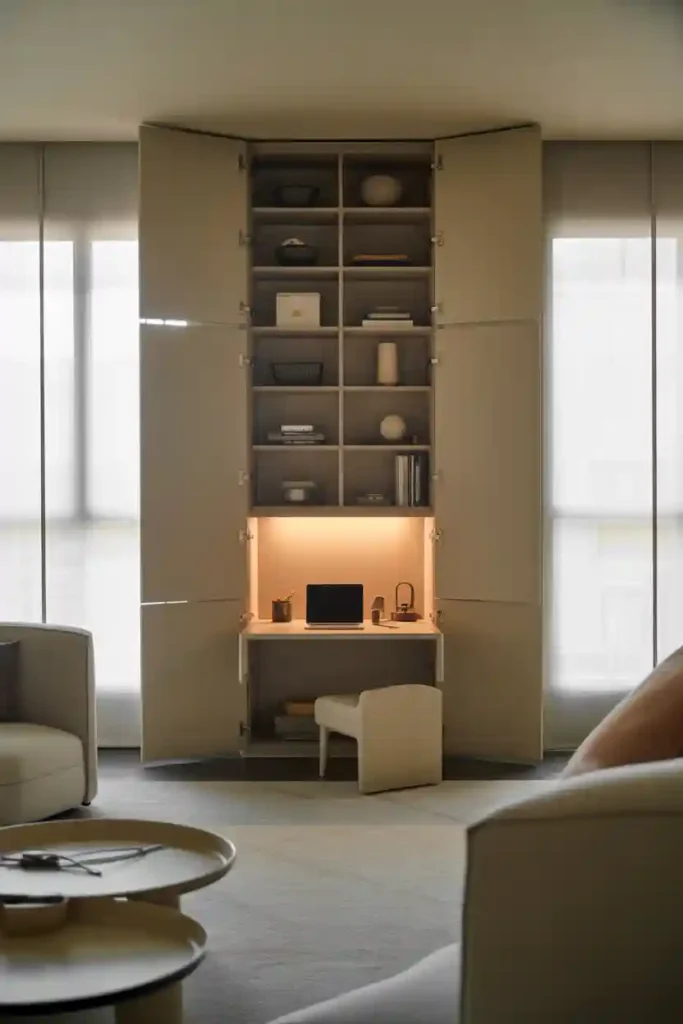
A hidden desk inside a cabinet is an ideal solution for those who want their living room to remain purely relaxing after work hours. These desks can be concealed behind doors, panels, or sliding fronts, allowing you to close off the workspace completely.
When open, the cabinet reveals a functional desk with shelving and storage for supplies. When closed, it looks like a stylish piece of furniture or built-in storage. This approach keeps visual clutter out of sight and maintains the living room’s aesthetic. Hidden desks are especially useful for multifunctional homes where boundaries between work and leisure are essential.
5. Matching Desk and Living Room Furniture
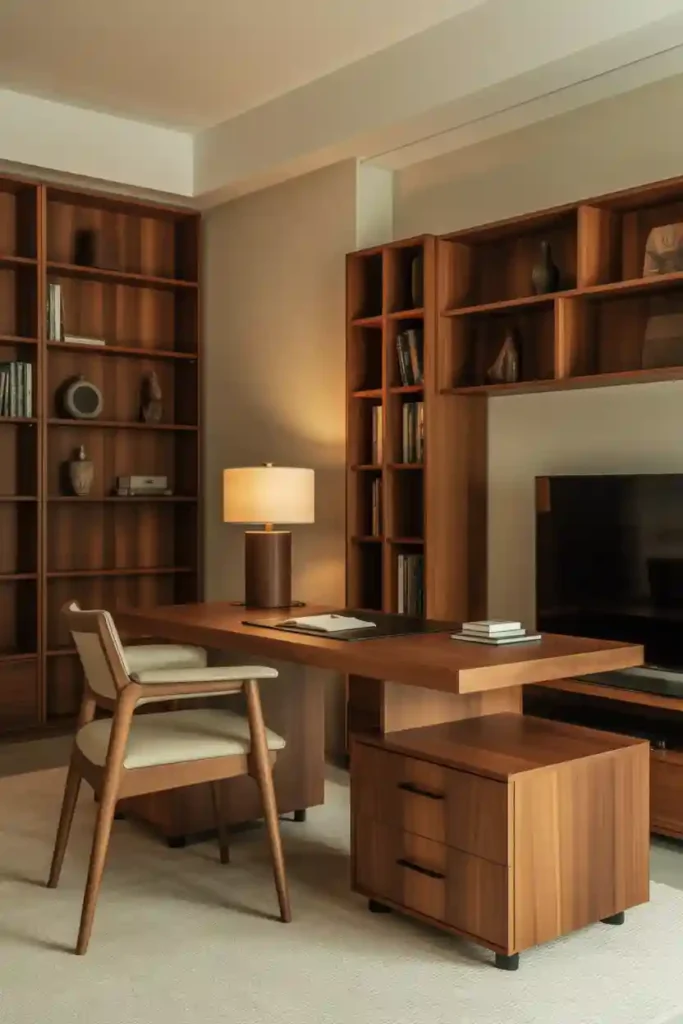
Choosing a desk that matches your living room furniture helps your office blend in naturally. Similar wood tones, finishes, and styles create visual harmony, making the workspace feel intentional rather than separate.
For example, a wooden desk that matches a coffee table or TV console ties the room together. Upholstered chairs that echo sofa fabrics further enhance cohesion. By treating the desk as another piece of living room furniture, the office becomes part of the overall design rather than a standout feature. This approach works well in both traditional and modern interiors.
6. Floating Shelves Instead of Office Cabinets
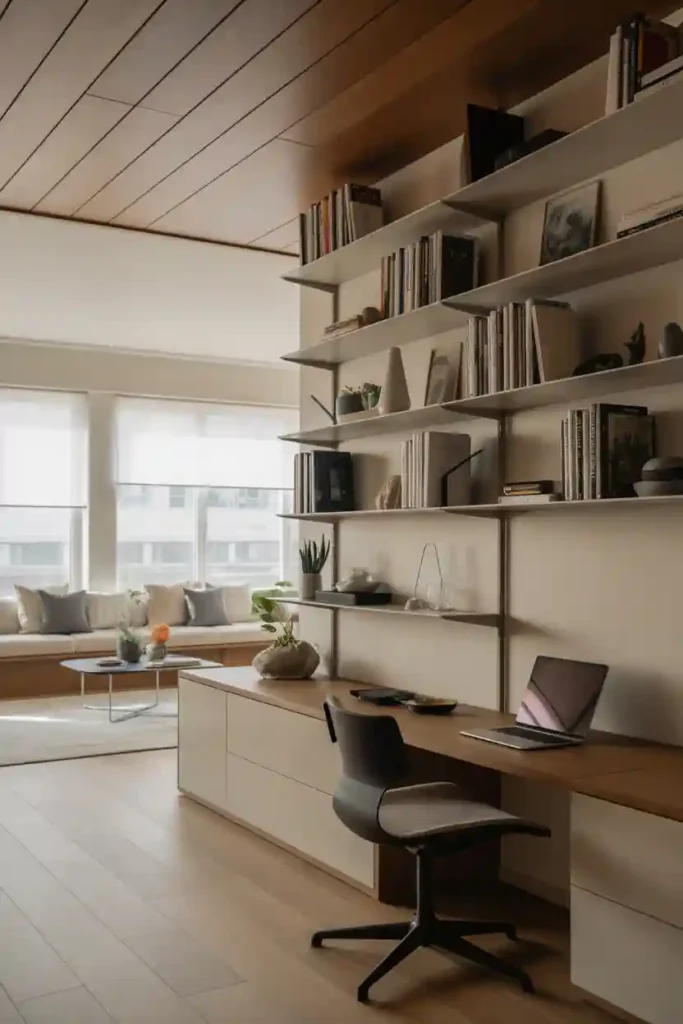
Replacing bulky office cabinets with floating shelves keeps the living room office light and visually appealing. Shelves provide storage for books and work essentials while also offering space for decor that ties into the living room style.
By mixing office items with decorative objects, the workspace feels curated rather than utilitarian. Use neutral colors and minimal accessories to avoid visual clutter. Floating shelves help maintain openness and make the office feel like part of the living room’s decor, not a separate workspace.
7. Neutral Color Palette for Seamless Integration
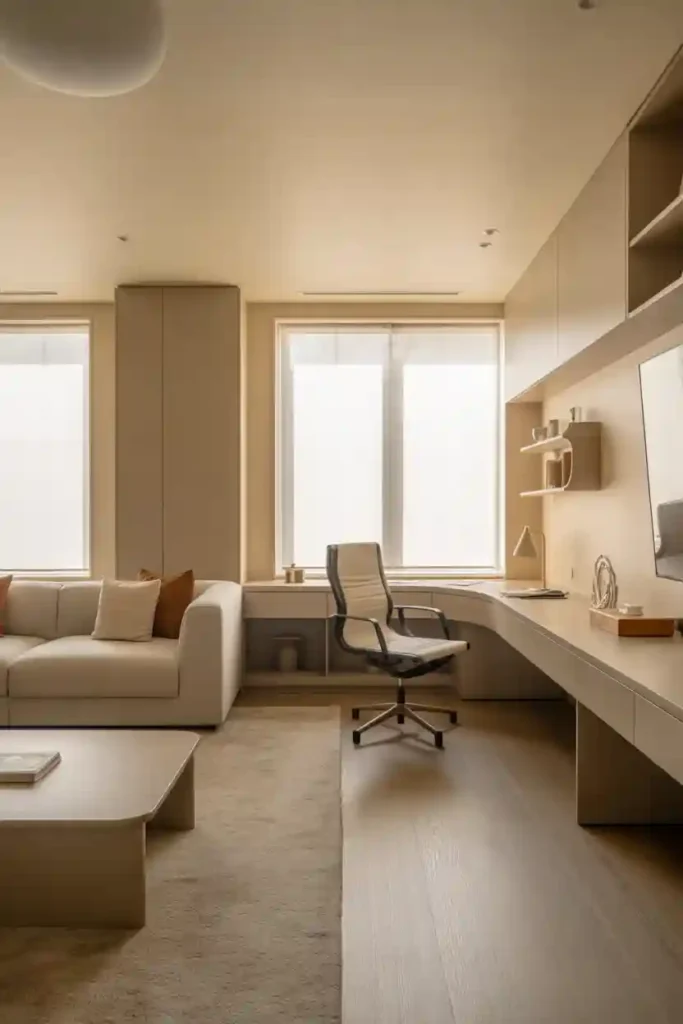
A neutral color palette helps a living room office blend in effortlessly. Shades like white, beige, gray, and soft wood tones create continuity throughout the space. When the desk, chair, and storage match the room’s color scheme, the office visually disappears.
Neutral tones also promote calmness and focus, making the workspace more pleasant. Adding subtle texture through materials like wood, fabric, or metal keeps the area from feeling flat. This approach ensures the office complements the living room without overpowering it.
8. Multi-Functional Furniture Pieces
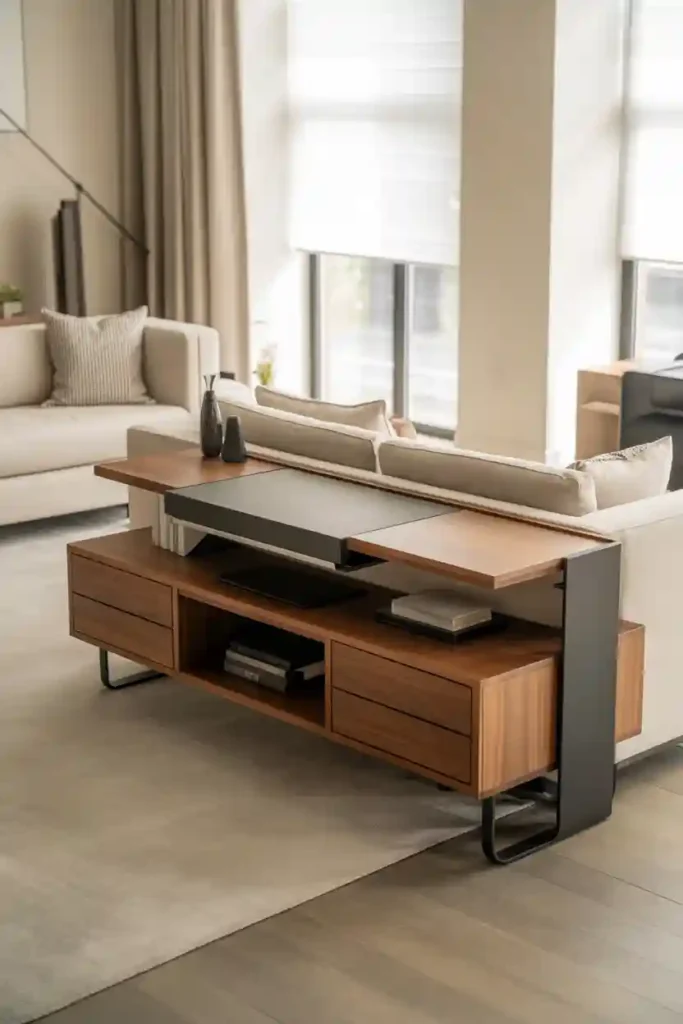
Multi-functional furniture is key to blending a living room office seamlessly. Desks that double as console tables, storage ottomans, or shelving units allow the workspace to serve multiple purposes.
This flexibility keeps the living room feeling open and uncluttered. When work is done, the furniture transitions back into its living room role effortlessly. Multi-functional pieces are especially useful in small homes, offering efficiency without compromising style.
9. Compact Corner Office Setup
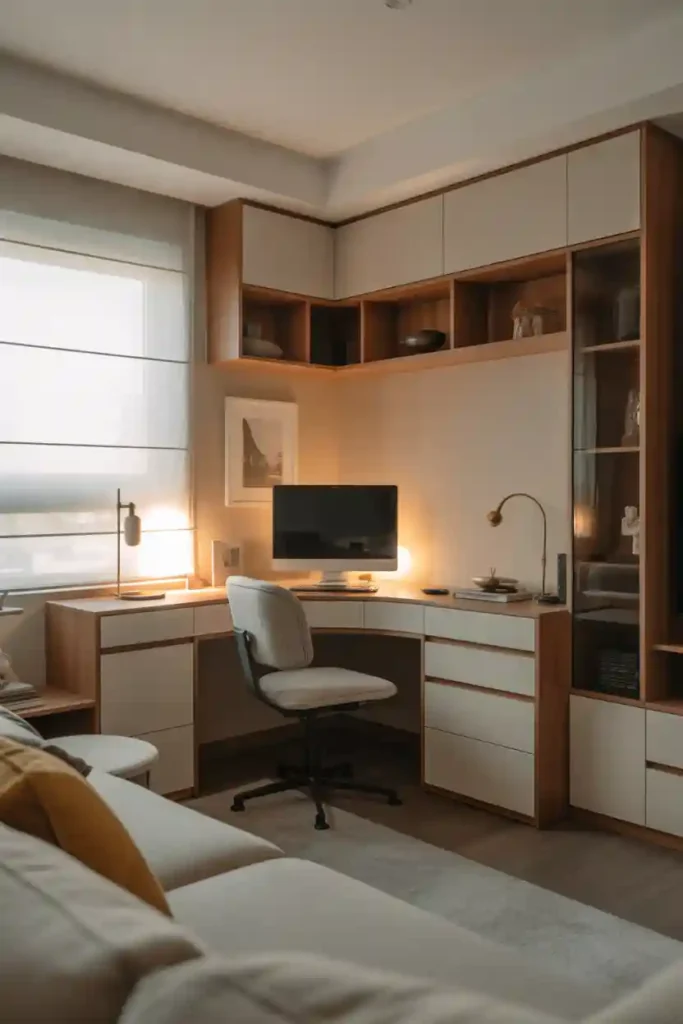
Using a corner for your living room office maximizes unused space while keeping the work area discreet. A small desk, slim chair, and wall shelves can transform an empty corner into a productive workspace without disrupting the room’s layout.
Styling the corner with artwork or lighting that matches the living room helps it blend in. This setup is ideal for small apartments or homes where space is limited. A compact corner office feels intentional yet unobtrusive.
10. Statement Chair That Matches Decor
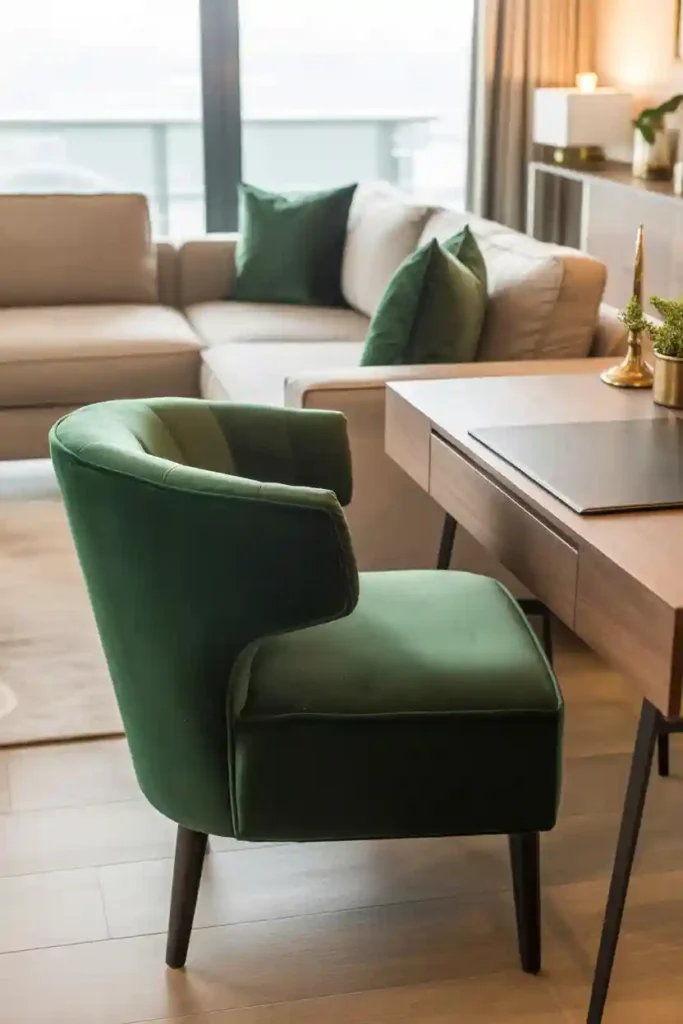
Instead of a traditional office chair, opt for a stylish accent chair that complements your living room decor. This choice helps the workspace blend in visually while still offering comfort.
Upholstered chairs, wooden frames, or mid-century designs work well. The chair can serve as additional seating when guests arrive, reinforcing the idea that the office is part of the living room. Comfort and style coexist seamlessly with this approach.
11. Using Rugs to Define Without Dividing
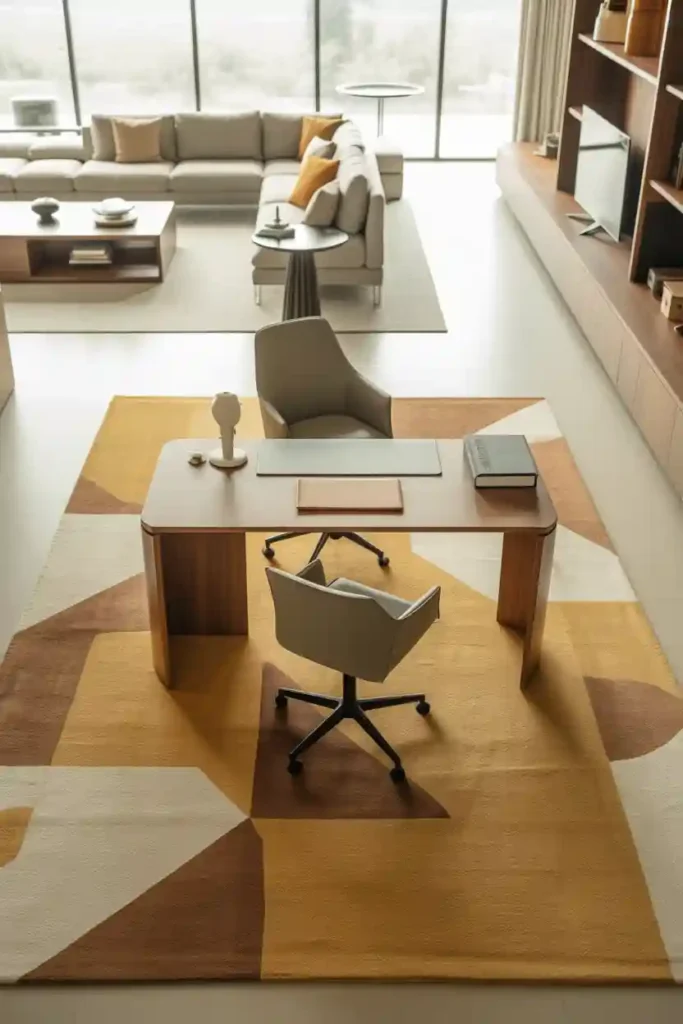
Using a rug is a subtle yet powerful way to blend a home office into a living room without disrupting the open feel of the space. Instead of building physical barriers, a well-chosen rug visually defines the work area while keeping the room cohesive and airy. This approach is ideal for open-plan layouts where flexibility and flow matter.
Choose a rug that complements your living room’s existing color palette and texture. Neutral tones, soft patterns, or natural fibers work best for maintaining harmony. Placing the desk and chair fully on the rug creates a clear visual boundary that signals “work zone” without feeling boxed in. The rug also adds comfort underfoot and helps absorb sound, making the workspace quieter and more focused. When styled thoughtfully, the rug becomes part of the living room decor rather than an office marker. This technique allows your workspace to feel intentional yet discreet, ensuring your living room remains welcoming and stylish even during work hours.
12. Minimal Desk Accessories for a Clean Look
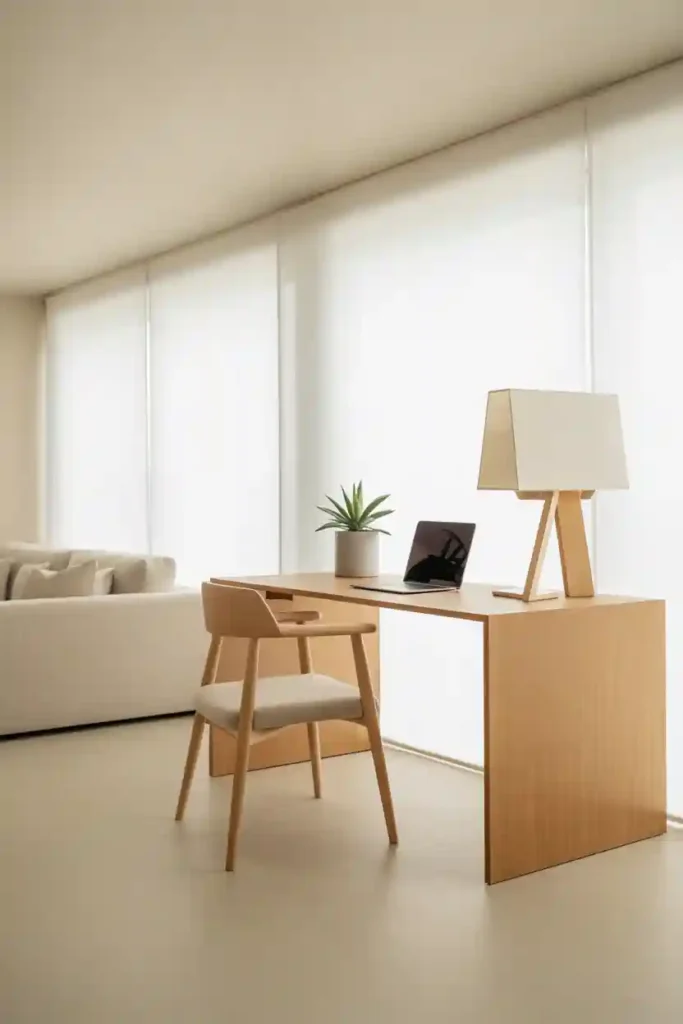
Minimal desk accessories are essential when creating a living room office that blends in seamlessly. Too many items can make the workspace feel cluttered and overly office-like, disrupting the relaxed atmosphere of the living room. A clean, intentional setup keeps the desk visually calm and cohesive with the surrounding decor.
Focus on a few functional yet stylish essentials, such as a sleek desk lamp, a matching pen holder, and a small organizer. Choose materials and finishes that echo the living room’s style—wood, metal, ceramic, or neutral tones work beautifully. Hidden storage solutions, like drawers or baskets, help keep paperwork and supplies out of sight. A minimalist desk setup also improves focus and productivity. With fewer distractions, the workspace feels more serene and manageable. When the workday ends, the desk can easily double as a console or decorative surface, allowing the office to fade naturally into the living room environment.
13. Curtains or Screens for Flexible Privacy
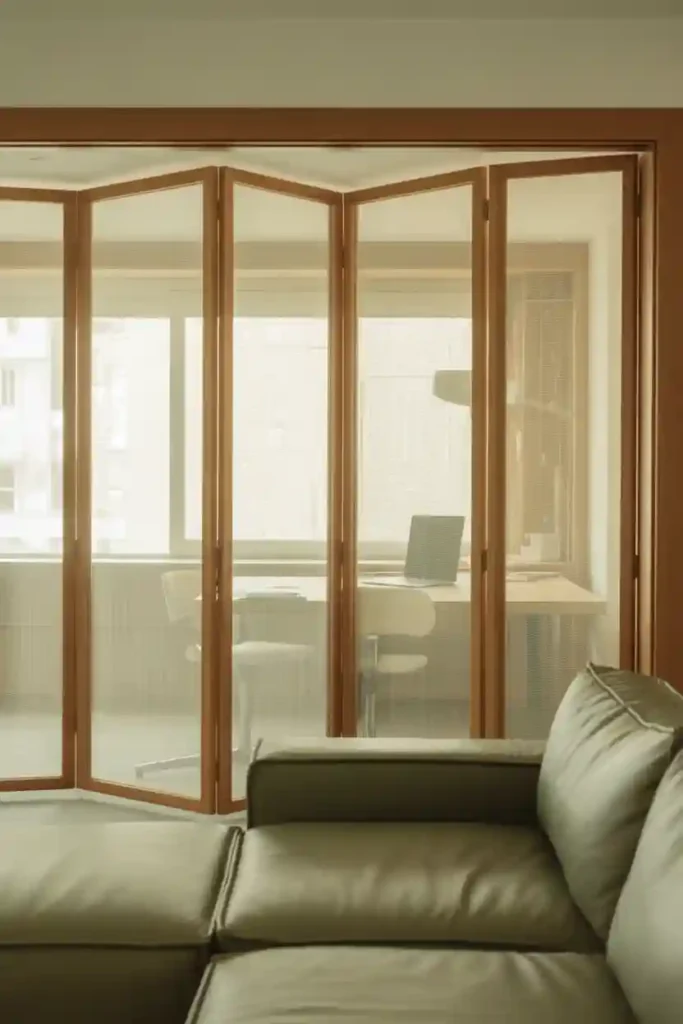
Curtains or folding screens offer a flexible way to create privacy for a living room office without making permanent changes. This solution is perfect for shared spaces or homes where the living room serves multiple purposes throughout the day. When privacy is needed, curtains or screens can be pulled into place, and when not in use, they can be easily opened or folded away. Choosing lightweight fabrics or visually soft screens helps maintain an airy, blended look. Neutral colors, subtle textures, or patterns that match the living room decor ensure the divider feels intentional rather than intrusive. Curtains mounted on ceiling tracks can feel especially elegant and understated.
This approach allows you to visually separate work from relaxation, supporting better focus during work hours and improved work-life balance. Once the workday is over, the divider disappears, restoring the living room’s open, welcoming feel.
14. Office That Disappears After Work Hours
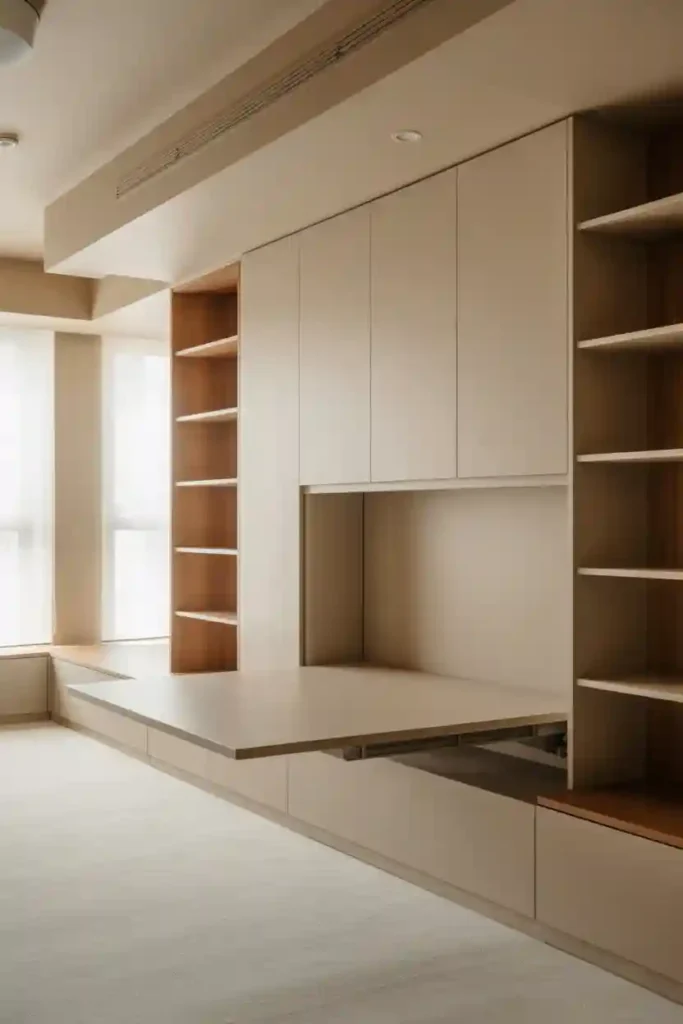
An office that disappears after work hours is the ultimate solution for maintaining a calm and stylish living room. This idea focuses on flexibility, allowing your workspace to exist only when needed. Foldable desks, wall-mounted drop-leaf tables, and compact furniture make it easy to pack everything away at the end of the day. Storage plays a key role in this setup. Hidden drawers, cabinets, or storage ottomans keep laptops, files, and accessories neatly tucked away. Once closed or folded, the office elements blend seamlessly into the living room, leaving no visual reminder of the workday.
This design approach supports mental well-being by creating a clear boundary between work and relaxation. When the office disappears, the living room returns to being a place for rest and connection, making it easier to unwind and recharge.
Final Words
Designing a home office within your living room doesn’t mean sacrificing style or comfort. These 14 Living Room Office Ideas That Blend In show how thoughtful design, smart furniture choices, and subtle zoning can create a workspace that feels natural and unobtrusive. From built-in desks and hidden cabinets to rugs, curtains, and disappearing workstations, each idea focuses on balance—allowing productivity to coexist with relaxation.