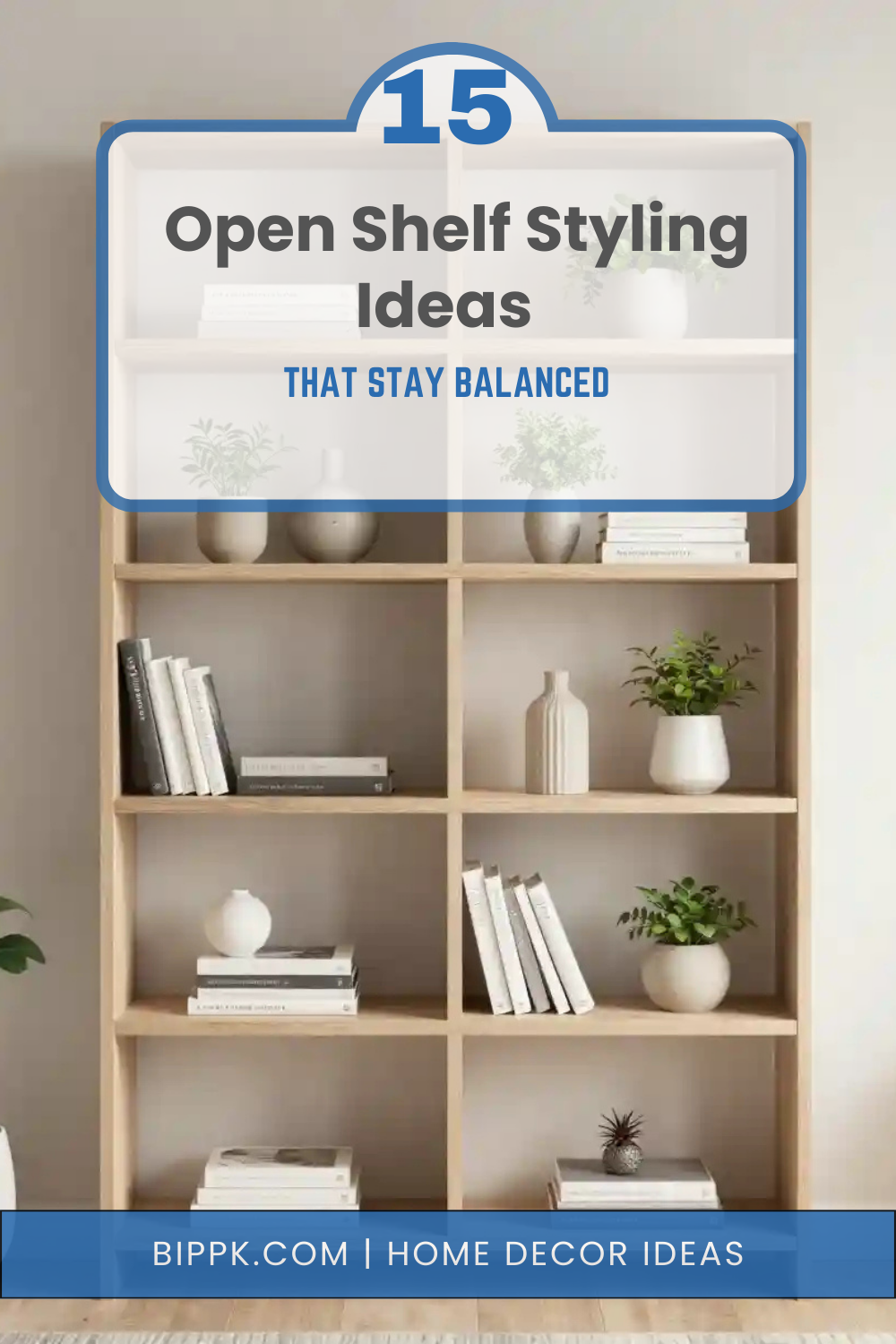
15 Open Shelf Styling Ideas That Stay Balanced
Open shelving is a beautiful way to display personality, but without the right approach, it can quickly look cluttered or uneven. The key to making it work is balance. With the right mix of décor, spacing, texture, and color, your shelves can feel styled yet effortless. Whether in a living room, kitchen, bedroom, or home office, thoughtfully arranged shelves add depth and visual interest to any space.
These 15 Open Shelf Styling Ideas That Stay Balanced will help you create a look that feels curated rather than crowded. From layering artwork to mixing practical items with decorative accents, each idea focuses on harmony and proportion. If you love open shelving but struggle to keep it looking polished, these tips will guide you toward a clean, cohesive display that feels intentional, stylish, and easy to maintain.
1. Mix Books with Decorative Objects
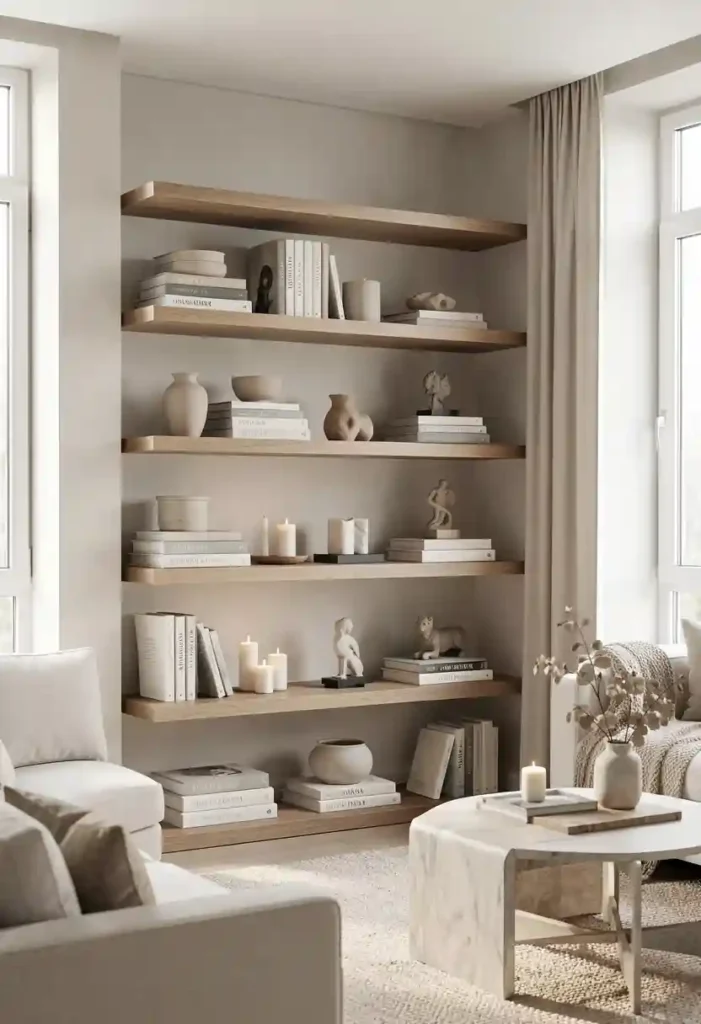
One of the easiest ways to create balance on open shelves is by combining books with decorative objects. Books provide structure and visual weight, while smaller accessories soften the arrangement. Stack some books horizontally and place others vertically to create variety. Then, layer in decorative accents like vases, small sculptures, candles, or framed photos.
Keep the color palette consistent so the shelves do not look chaotic. For example, neutral book covers paired with ceramic décor pieces create a calm, cohesive feel. Use the rule of thirds by grouping items in odd numbers. This naturally feels more balanced to the eye. Leave breathing room between groupings. Empty space is just as important as filled space. It prevents the shelf from feeling crowded and keeps the styling intentional.
2. Use a Repeating Color Story
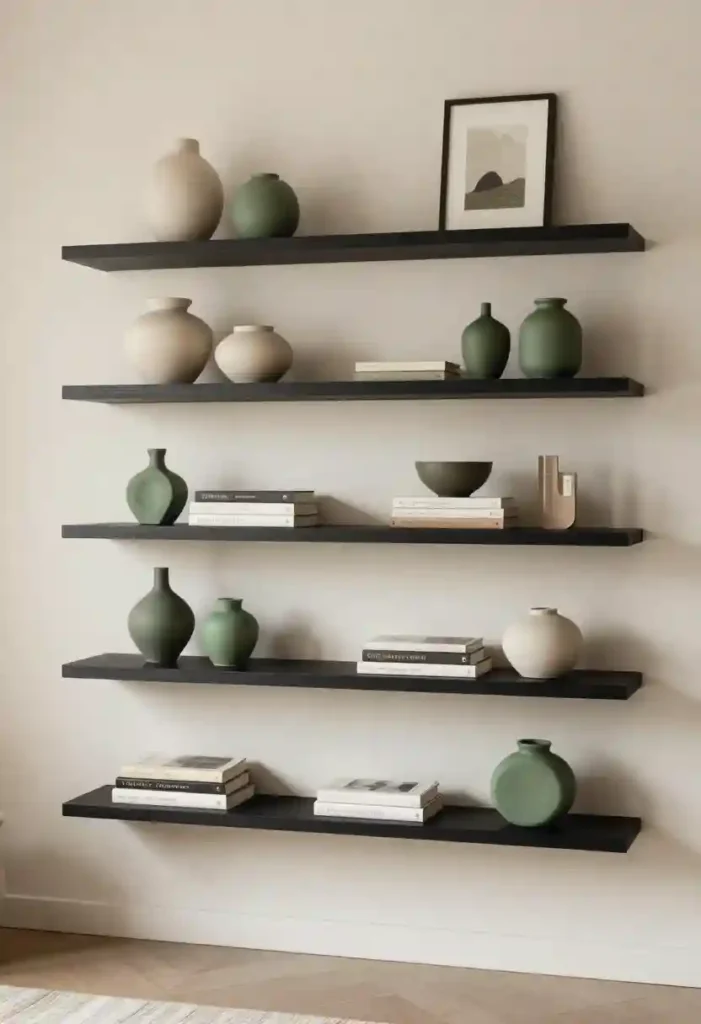
Creating a repeating color story helps shelves feel harmonious. Choose two to three main colors and repeat them across each shelf level. This ties everything together and prevents the display from feeling random. For example, if you choose beige, black, and greenery, repeat those tones in books, vases, art frames, and baskets. Even subtle repetition like matching brass accents across shelves can create a sense of unity.
Avoid introducing too many bold colors. When every item competes for attention, the balance disappears. Instead, anchor the look with neutrals and allow one accent color to pop gently. Color repetition does not mean uniformity. Mix different textures within the same color family to keep the arrangement interesting yet balanced.
Read Also: 12 Cozy Basement Family Room Ideas Everyone Loves
3. Vary Heights for Visual Flow
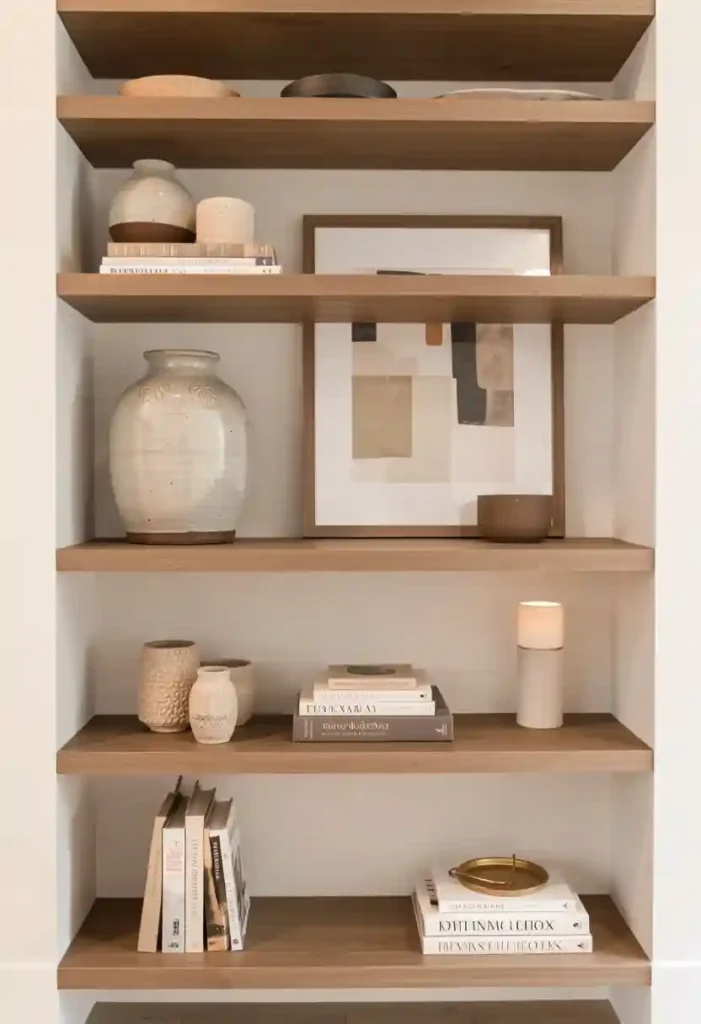
Balance does not mean everything should be the same height. In fact, varying heights creates movement and keeps the shelves visually engaging. Pair tall items like vases or vertical art with medium objects and low stacks of books. Create a triangular composition by placing a taller item on one side and gradually stepping down in height. This guides the eye naturally across the shelf.
Avoid lining up items of equal height in a straight row. That makes the display feel flat. Instead, overlap objects slightly or layer art behind smaller pieces for depth. Height variation creates rhythm. When done thoughtfully, it makes the shelf feel styled without looking chaotic.
4. Add Greenery for Soft Balance
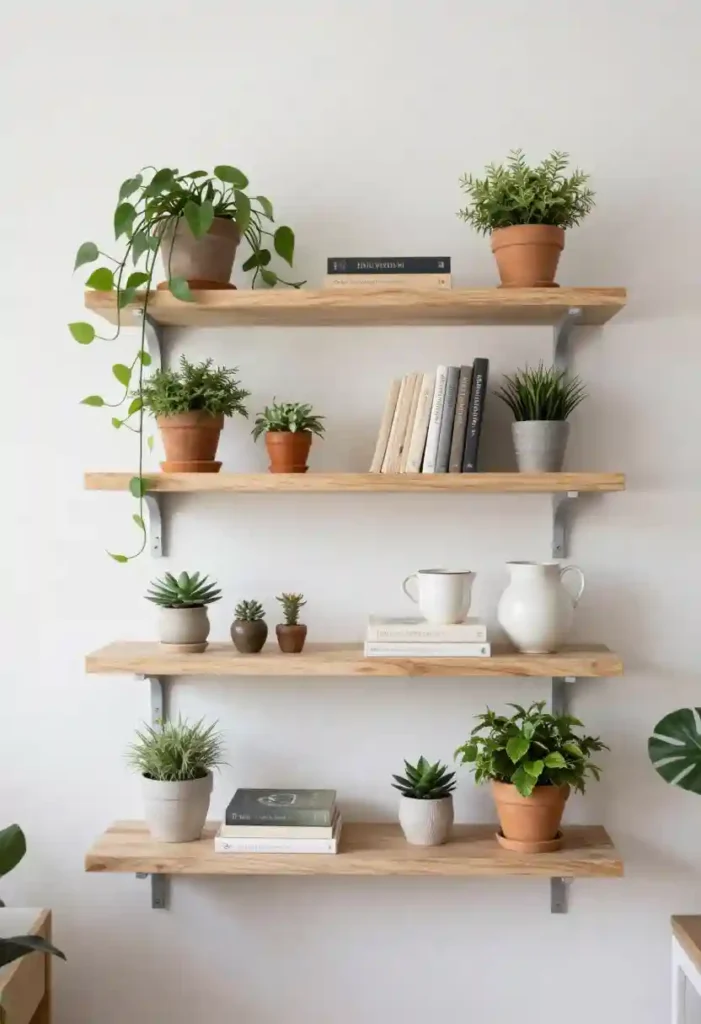
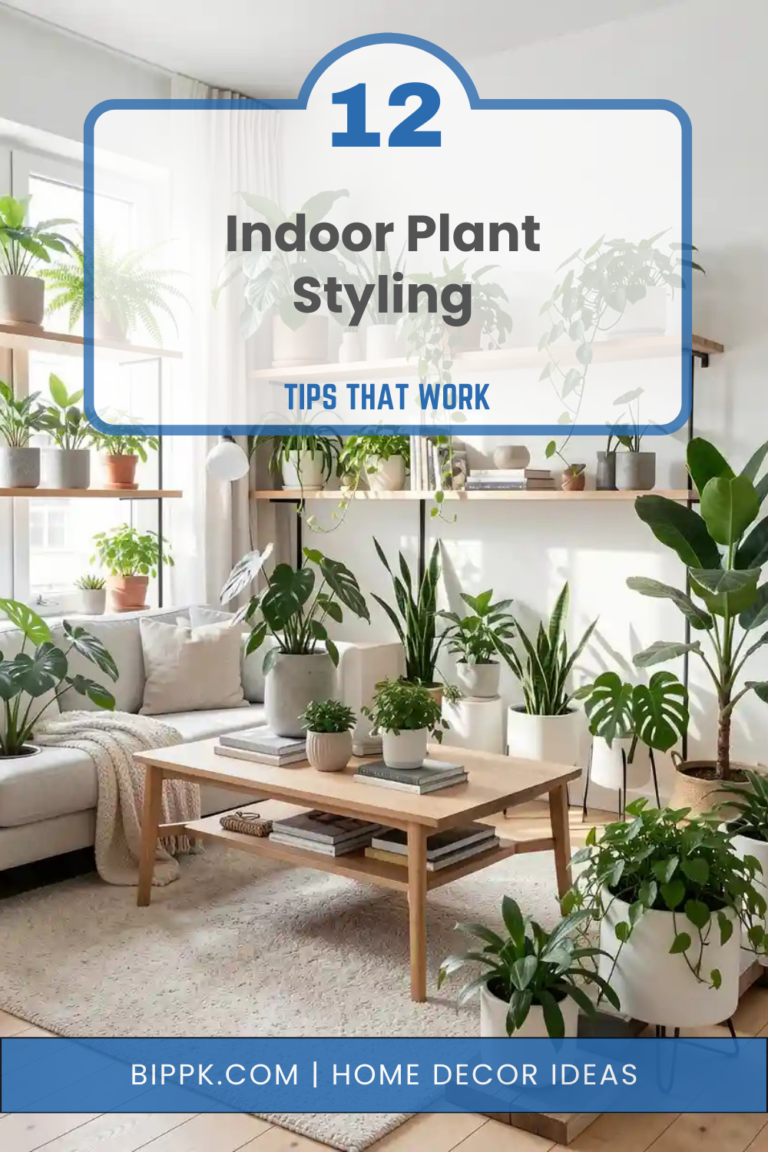
Plants instantly soften open shelving and bring life to structured arrangements. The organic shapes of leaves contrast beautifully with straight shelf lines, creating natural balance. Even a small potted plant can make a shelf feel fresh and welcoming. Use a mix of upright and trailing greenery for dimension. A compact snake plant or small olive tree adds height, while trailing pothos or ivy creates gentle movement. Distribute plants evenly across shelves so one side does not feel heavier than the other.
Keep pots consistent in tone or material. Neutral ceramic planters or woven baskets help maintain cohesion. If you prefer low maintenance, high-quality faux plants work just as well for visual balance. Greenery also breaks up hard materials like books and ceramics. The result feels layered yet calm, structured yet organic.
5. Combine Closed and Open Storage
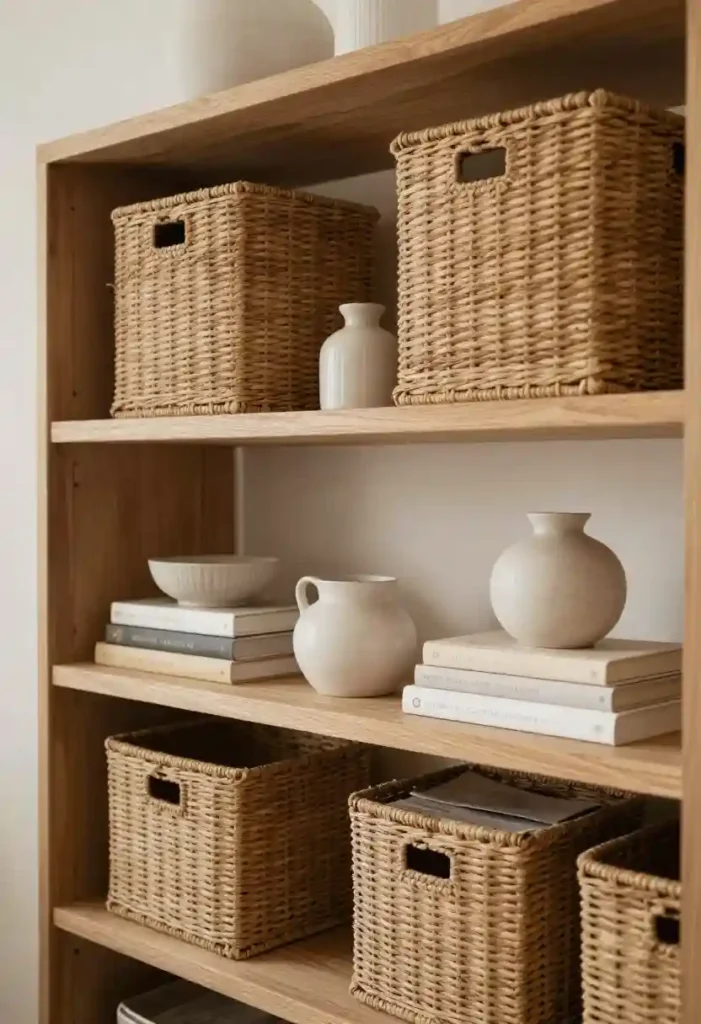
Open shelves can easily look cluttered when filled with too many small items. One of the smartest ways to maintain balance is by mixing decorative display pieces with closed storage elements. Baskets, boxes, and containers provide visual rest while keeping everyday essentials hidden. Woven baskets add texture and warmth. Linen-covered boxes create a soft, refined look. Wooden containers introduce a grounded, natural element. These pieces act as anchors on the shelf, giving the eye a place to settle.
Balance them by pairing a basket on one side with a stack of books or a tall vase on the other. Avoid placing multiple bulky containers next to each other, as this can feel heavy. Instead, alternate between open and closed elements for rhythm. This combination keeps shelves functional and aesthetically pleasing. You get the beauty of display with the practicality of hidden storage.
6. Create Symmetry with Anchor Pieces
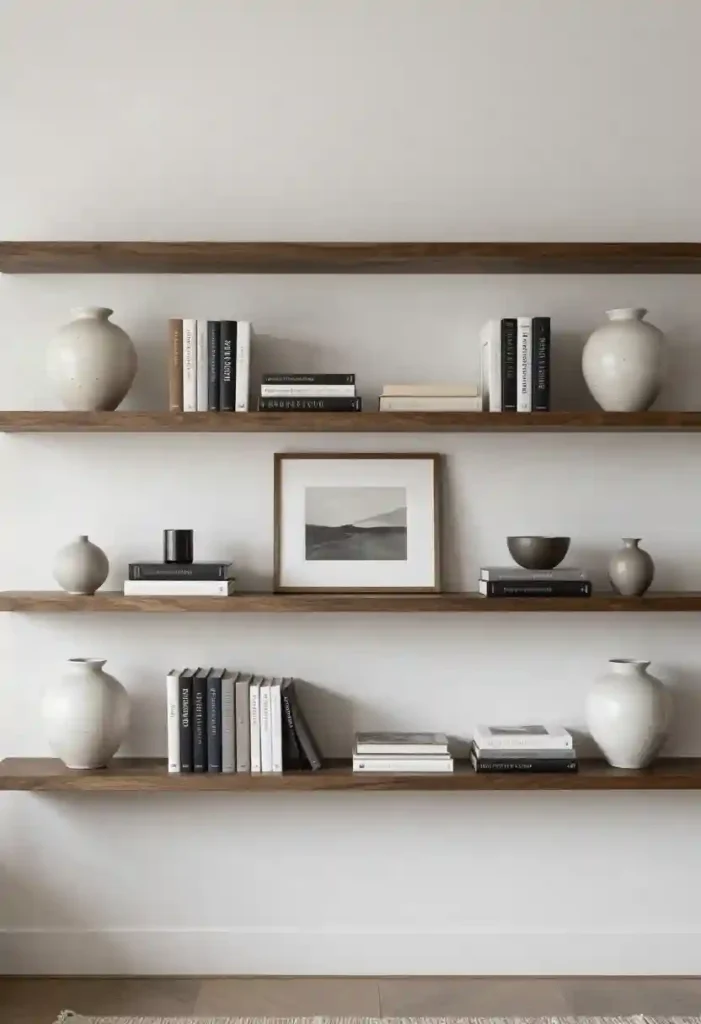
Symmetry is one of the most reliable ways to create balance on open shelves. By placing matching or similar objects on opposite ends, you instantly establish structure and harmony. This approach works especially well on long or wide shelves.
Choose anchor pieces like matching vases, bookends, lanterns, or sculptural objects. Place them at both ends of a shelf to frame the display. This creates a visual boundary and makes the center feel intentional rather than random. To avoid a stiff or overly formal look, keep the center lighter. Add a stack of books, a framed photo, or a small plant between the anchors. The key is maintaining equilibrium without making the arrangement feel rigid. Symmetry also works vertically. Repeat similar pieces across different levels to create cohesion throughout the entire shelving unit.
7. Layer Artwork for Depth
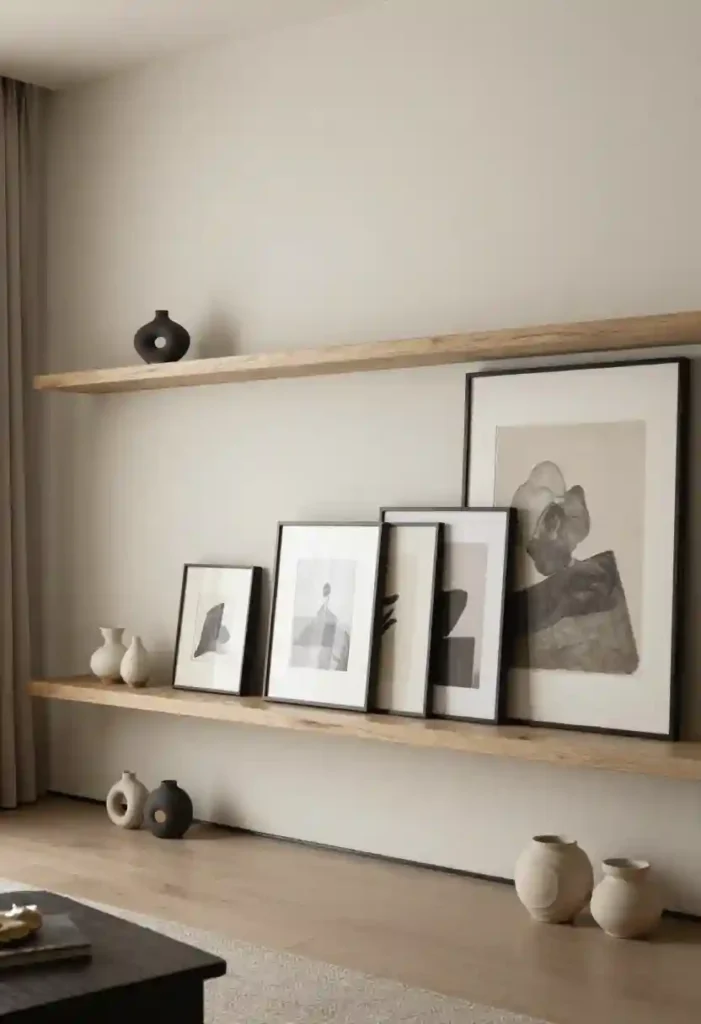
Layering artwork on open shelves adds personality while keeping the display visually balanced. Instead of hanging every frame on the wall, lean larger pieces against the back of the shelf. This instantly creates depth and makes the styling feel relaxed yet intentional. Start with one larger frame as the backdrop. Then place smaller décor items slightly in front, such as a candle, small vase, or sculptural object. This layered approach prevents shelves from looking flat or one-dimensional. It also allows you to create height variation without overcrowding.
To maintain balance, distribute artwork evenly throughout the shelving unit. If one shelf features a bold or darker piece, keep the surrounding shelves lighter and simpler. Stick to a consistent frame color—black, wood, or brass—to maintain cohesion. Layering also makes it easy to refresh your look seasonally. Simply swap prints while keeping the core arrangement intact for a balanced yet dynamic display.
8. Stick to Odd-Number Groupings
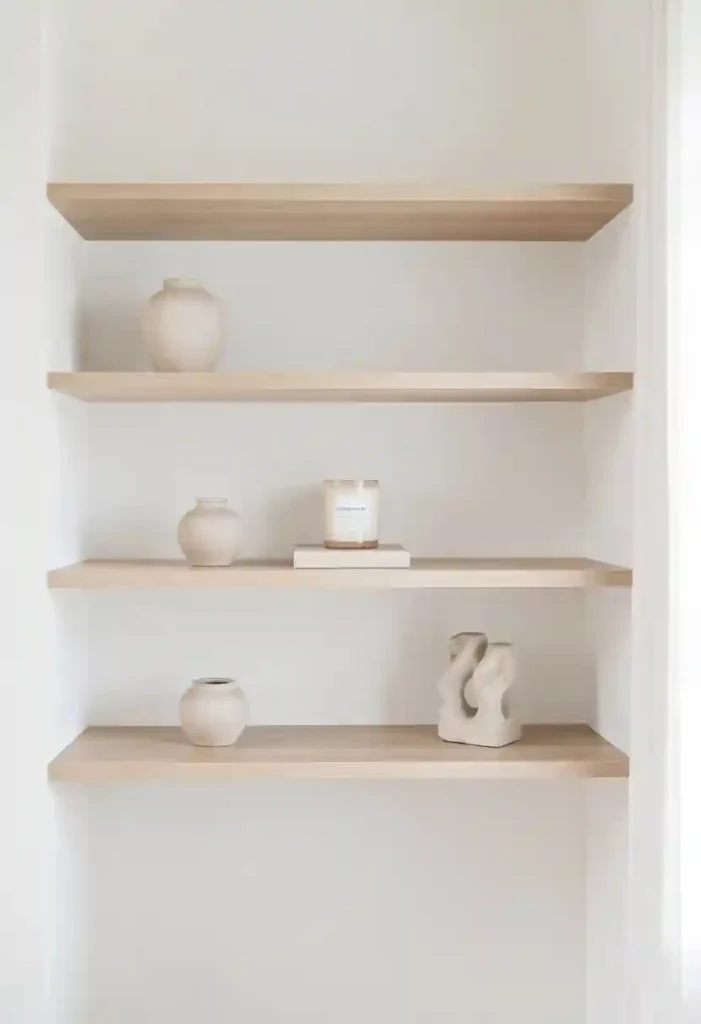
Odd-number groupings naturally create a sense of balance because they feel organic and less predictable. Styling items in groups of three or five prevents shelves from looking too symmetrical or overly staged. For example, combine a small ceramic vase, a candle, and a decorative sculpture. Vary their heights slightly to form a soft triangle shape. This subtle height difference adds movement while keeping the grouping cohesive.
Avoid spreading items evenly in pairs across the shelf, as this can feel rigid. Instead, cluster décor intentionally and leave space around each grouping. The negative space helps highlight the trio and keeps the shelf from feeling crowded. Odd-number styling works beautifully when paired with consistent colors or materials. It allows creativity without sacrificing structure, making your open shelves look curated yet effortless.
9. Balance Heavy and Light Objects
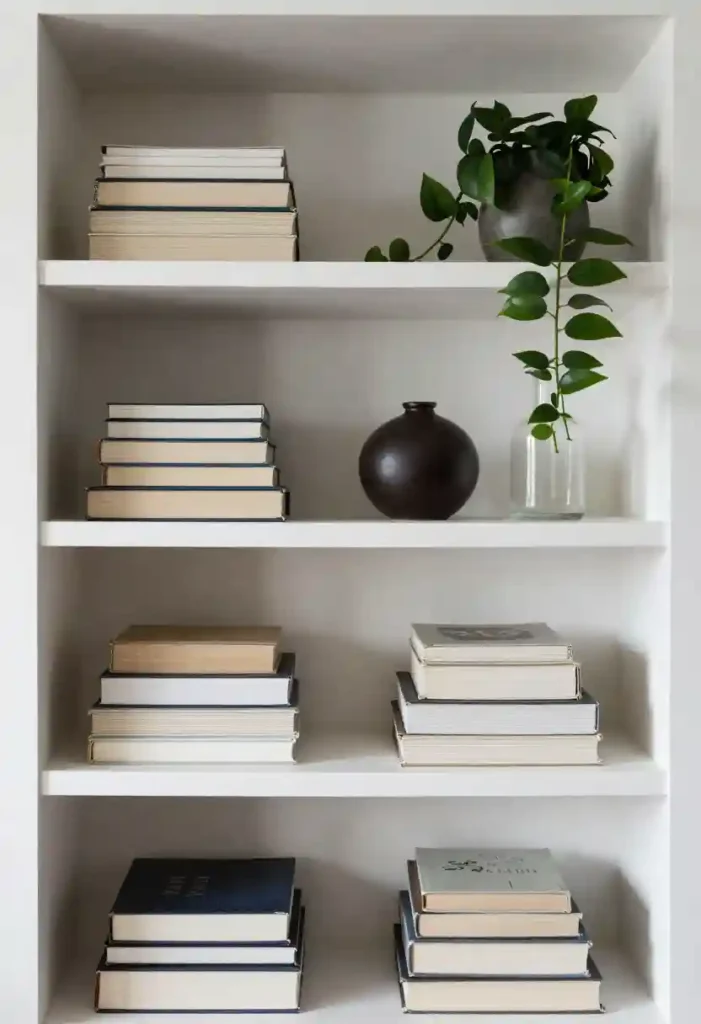
Creating balance on open shelves requires thoughtful distribution of visual weight. Heavy items such as thick book stacks, solid wood décor, or dark ceramics should be paired with lighter elements like glass vases, delicate greenery, or metallic accents. Avoid placing all heavy objects on one side of the shelf. This makes the display feel lopsided. Instead, spread them evenly across the width and height of the shelving unit. For example, if you place a large stack of books on the left, counter it with a tall plant or substantial vase on the right.
Lighter pieces help create breathing room. Clear glass, open metal frames, or airy woven accents prevent the arrangement from looking bulky. The contrast between heavy and light elements creates dynamic balance.When done thoughtfully, this mix of weight and transparency keeps shelves visually interesting while maintaining harmony.
10. Keep Negative Space Intentional
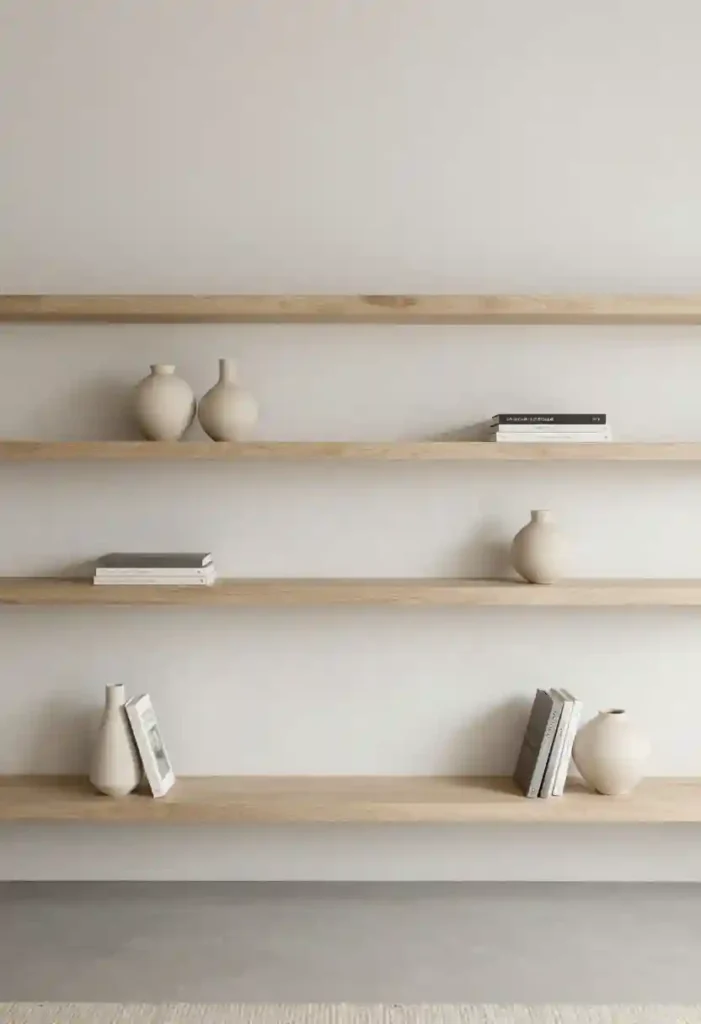
Negative space is one of the most powerful tools in creating balanced open shelves. Many people feel the urge to fill every inch, but overcrowding quickly turns beautiful décor into visual clutter. Leaving intentional empty space allows each item to stand out and keeps the entire arrangement feeling calm and refined. Start by styling in small groupings rather than spreading items evenly across the full length of the shelf. After placing a cluster, step back and evaluate where the eye needs rest. That “empty” area is not wasted space—it is what makes the styling feel breathable.
Avoid pushing décor pieces too close together. Small gaps between objects create clarity and definition. Negative space also highlights focal points, such as a statement vase or framed artwork. When shelves feel too busy, remove one or two items rather than rearranging everything. Often, subtraction is the fastest way to restore balance and elegance.
11. Incorporate Texture Variety
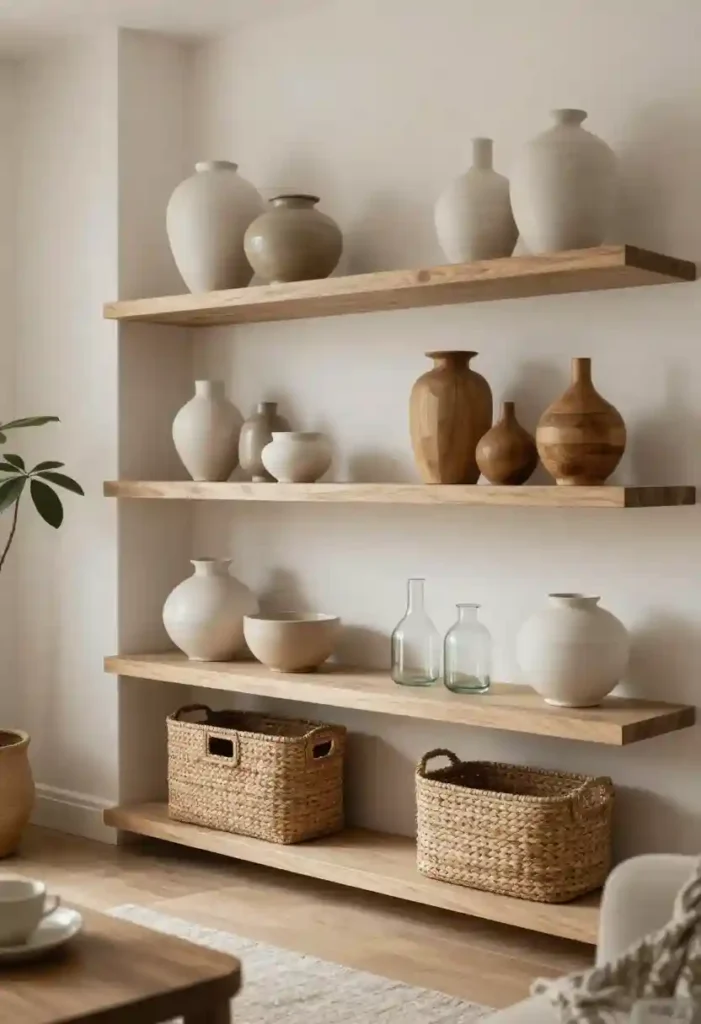
Texture adds depth and warmth without disrupting balance. When open shelves include only one material—such as all ceramic or all wood—the arrangement can feel flat. Mixing textures creates dimension while maintaining a cohesive look. Combine smooth ceramics with woven baskets, natural wood, glass accents, and perhaps a touch of metal. The contrast between matte and glossy finishes keeps the eye engaged. For example, a woven basket next to a sleek ceramic vase creates a pleasing balance of soft and solid elements.
To keep the styling harmonious, limit the color palette even as you vary textures. Neutral tones like beige, white, wood, and black allow textural contrast to shine without overwhelming the shelf. Texture also helps soften harder architectural lines. The result is a layered, inviting display that feels curated rather than cluttered.
12. Use Books as Risers
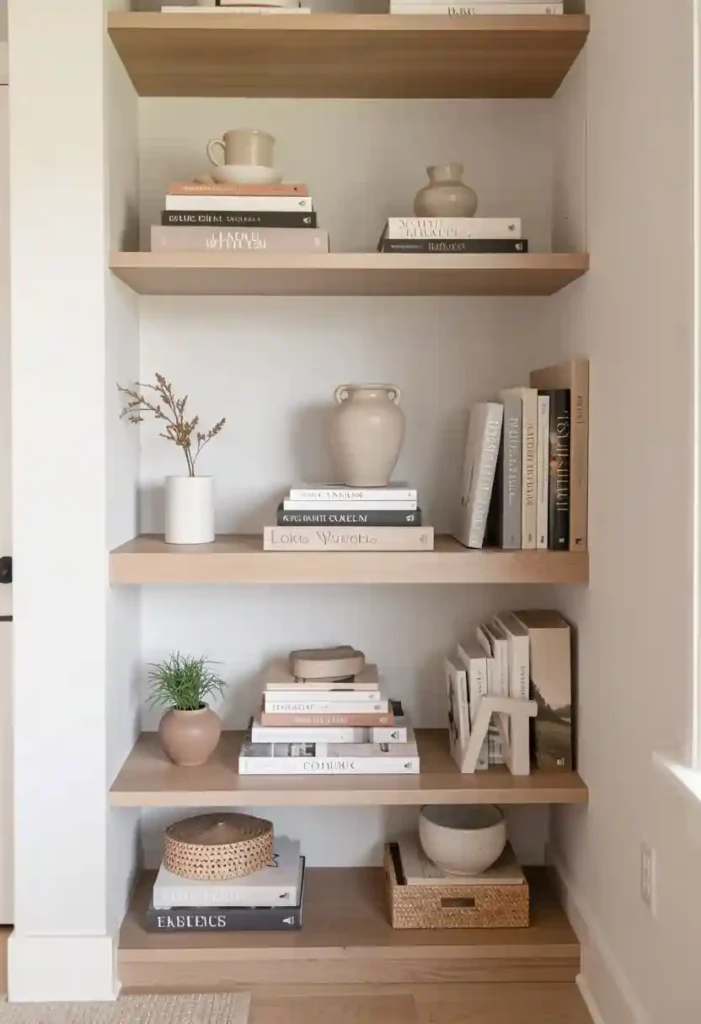
Books are not just for reading—they are excellent styling tools. Using books as risers helps create height variation and ensures smaller decorative pieces do not get visually lost on large shelves. Stack two or three hardcover books horizontally and place a small vase, candle, or sculptural object on top. This elevates the item and adds dimension to the overall arrangement. It also breaks up long horizontal lines, making the shelf feel more dynamic.
Choose books in coordinating colors or remove bright dust jackets for a cleaner look. Neutral spines instantly create cohesion. You can also mix vertical and horizontal stacks to add rhythm. Using books as risers keeps shelves functional while enhancing balance. It allows you to layer décor thoughtfully and makes even simple objects feel intentional and styled.
13. Distribute Visual Weight Across Levels
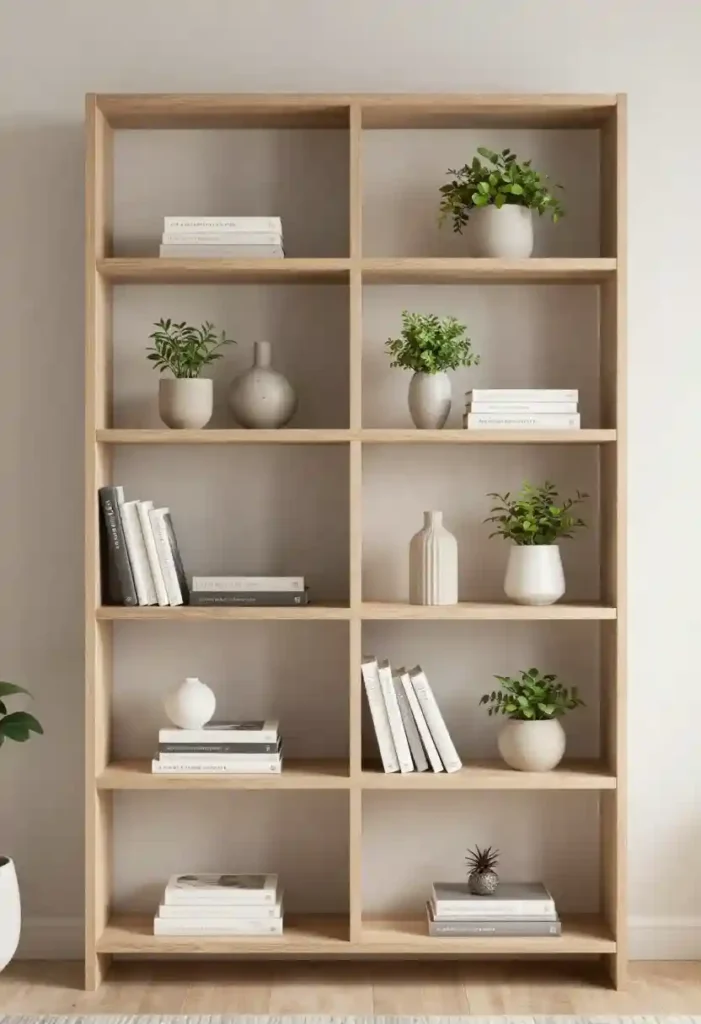
Balanced open shelves are not just about left and right placement. They also require thoughtful distribution from top to bottom. If all large or bold pieces sit on one shelf, the entire unit can feel top-heavy or bottom-heavy. The key is to spread visual weight evenly across every level. Start by identifying your statement pieces. These might include a tall vase, a large framed artwork, or a substantial stack of books. Instead of placing them all on one shelf, space them out vertically. For example, if the top shelf holds a tall ceramic vase, keep the middle shelf lighter and add another medium-weight piece to the bottom shelf.
This creates a smooth visual flow. The eye naturally travels from shelf to shelf without feeling overwhelmed in one area. Think of the shelving unit as one complete composition. When weight is evenly distributed, the entire display feels cohesive and grounded.
14. Introduce Personal Touches Sparingly
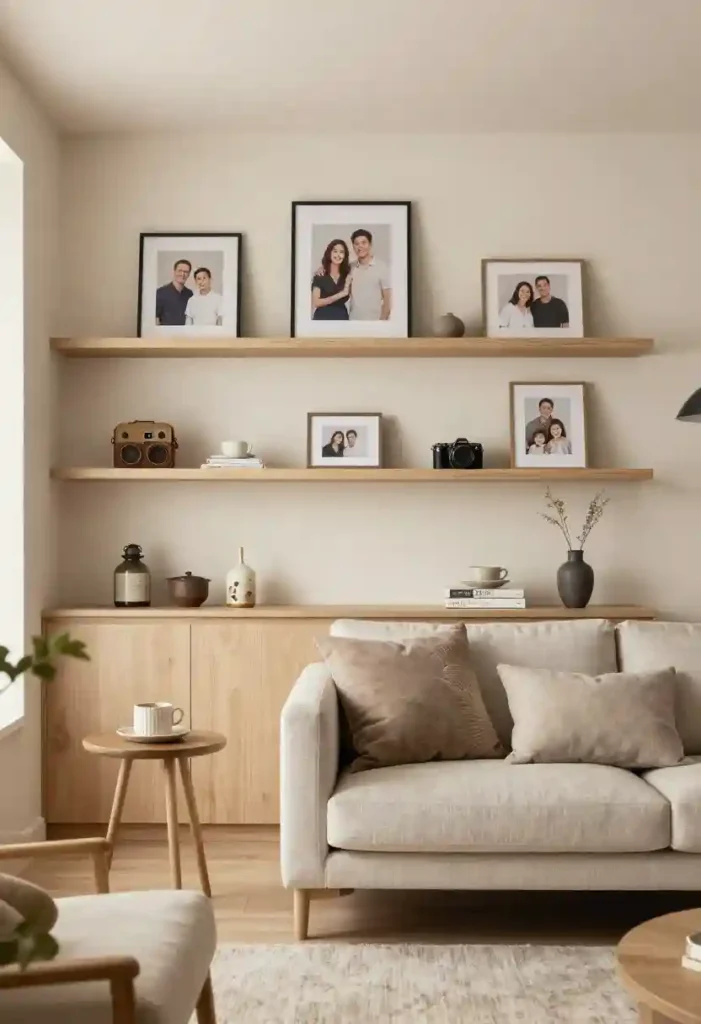
Personal items give open shelves warmth and meaning, but too many can disrupt balance. The goal is to curate, not crowd. Select a few meaningful pieces—such as framed family photos, travel souvenirs, or heirloom objects—and style them intentionally. Keep frames consistent in color or material to maintain a cohesive look. For example, matching black or wooden frames instantly unify different photos. Pair personal items with neutral décor so they stand out without overwhelming the shelf.
Avoid clustering all personal pieces in one spot. Instead, distribute them gently throughout the shelving unit. This keeps the look refined while still authentic. Editing is important here. Choose only the most meaningful items and rotate others seasonally. When styled thoughtfully, personal touches add character without compromising visual balance.
15. Edit and Refresh Regularly
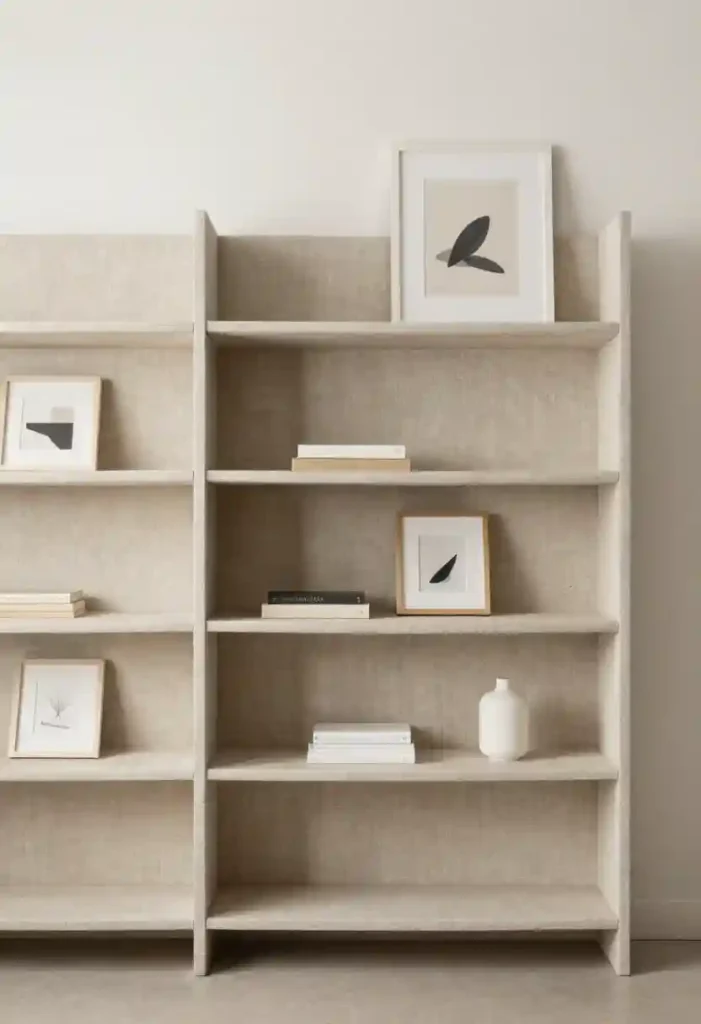
The final secret to balanced open shelves is consistent editing. Even the most beautifully styled shelves can become cluttered over time as new items are added. Regularly stepping back and reassessing the arrangement keeps everything feeling intentional. Every few months, remove everything or at least a few pieces and restyle with fresh eyes. Eliminate items that no longer fit the color palette or feel too small to make impact. Rearrange statement pieces to restore harmony if the display feels uneven.
Seasonal updates are a simple way to refresh without overwhelming the space. Swap greenery, artwork, or decorative accents while maintaining your core structure. Balance is not about perfection—it is about thoughtful placement and restraint. By editing regularly, your open shelves will always feel calm, curated, and beautifully composed.
Final Words
Open shelving can transform any space when styled with intention and balance. The key is not filling every inch, but thoughtfully combining height variation, color harmony, texture contrast, and negative space. By mixing books with décor, layering artwork, adding greenery, and distributing visual weight evenly, your shelves can feel curated rather than cluttered.