
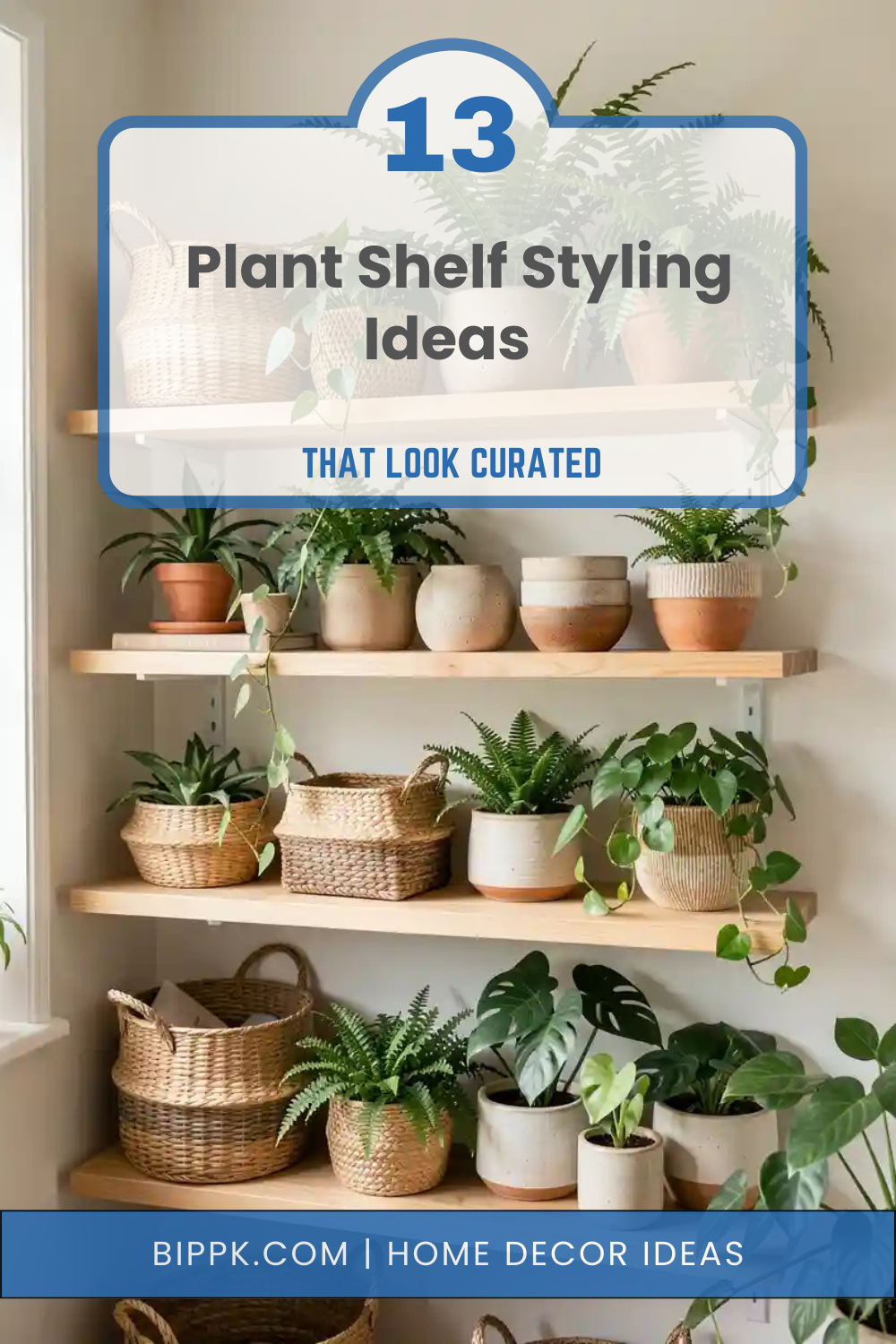
13 Plant Shelf Styling Ideas That Look Curated
Plants instantly make a home feel alive, but the way they are displayed can make an even bigger difference. Instead of simply placing pots wherever they fit, thoughtful plant shelf styling can transform ordinary greenery into a beautifully curated feature. When arranged intentionally, plant shelves add texture, height variation, and visual balance to any room. They can turn an empty wall, a corner, or even a small nook into a charming indoor garden display.
The key to creating a curated look is mixing different elements varied plant sizes, decorative pots, books, art pieces, and natural materials. When these items are layered thoughtfully, the result feels effortless yet designed. Whether your style leans minimal, cozy, modern, or bohemian, plant shelves can easily adapt to your space.
1. Layer Plants by Height for Natural Depth
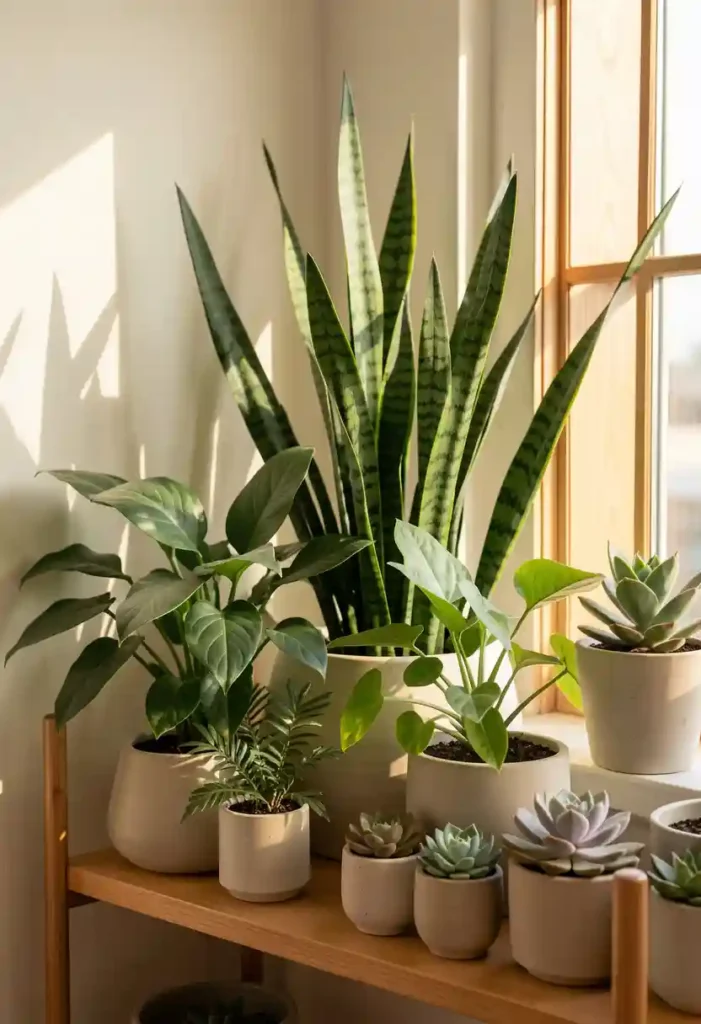
One of the easiest ways to make plant shelves look curated is by layering plants with different heights. Instead of placing every plant at the same level, vary the arrangement so the eye naturally travels across the display. Place tall plants like snake plants or fiddle leaf figs toward the back of the shelf, medium plants in the middle, and smaller plants such as succulents or baby pothos toward the front.
This technique mimics the layered look of nature and instantly creates visual depth. The arrangement prevents the shelf from looking flat and cluttered. To enhance the effect, use plant stands or stack a few books to subtly lift certain plants higher.
2. Mix Decorative Objects With Plants
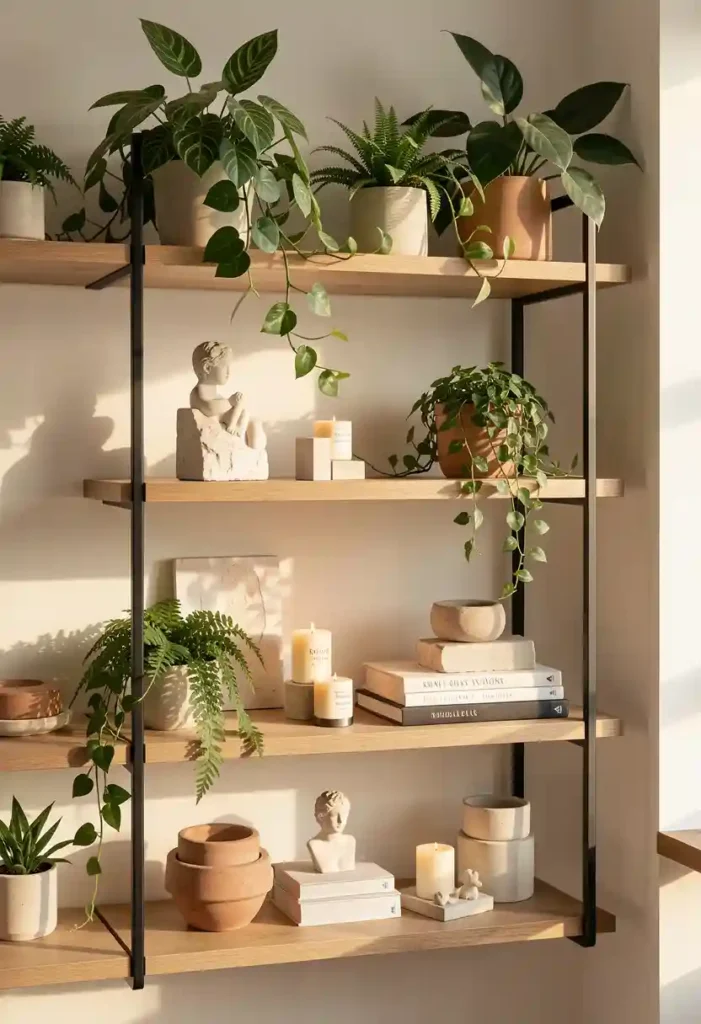
A curated shelf rarely contains only plants. Mixing greenery with decorative objects instantly makes the display feel styled and intentional. Consider adding small sculptures, candles, framed photos, or decorative bowls between plants.
The trick is balance. If every spot contains a plant, the shelf can start to look crowded. Instead, allow some items to break up the greenery. For example, place a trailing pothos on one side and a small ceramic vase or candle on the other.
See Also: 12 Indoor Plant Decor Ideas That Feel Alive
3. Use Matching Pots for a Cohesive Look
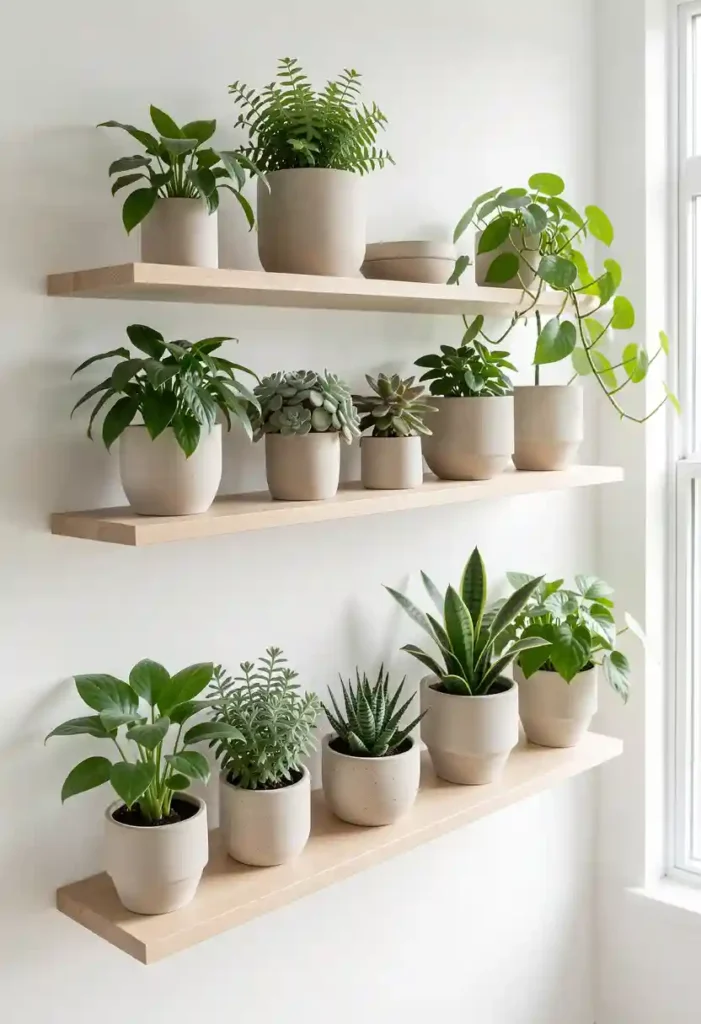
If you want your plant shelf to look polished and curated, consider using pots within the same color family. Matching pots create visual harmony and make the plants themselves the main focus.
This doesn’t mean every pot must be identical. Instead, choose a palette such as white ceramic, earthy terracotta, or soft neutral tones. Different shapes within the same color palette still add interest while maintaining cohesion. For example, a shelf filled with matte white pots in varying sizes can look incredibly elegant. The plants provide the color and texture, while the pots unify the entire arrangement.
4. Add Trailing Plants for Soft Movement
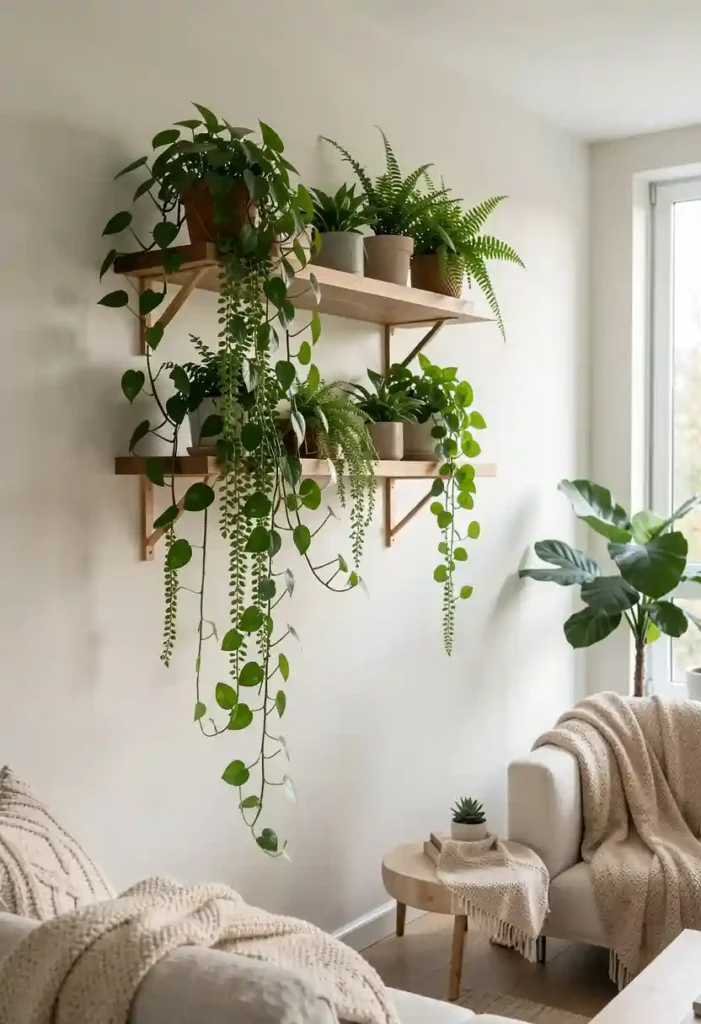
Trailing plants are one of the most effective ways to make a plant shelf feel dynamic and curated. Plants like pothos, string of pearls, or philodendron naturally spill over the edges of shelves, creating soft movement and visual flow.
Place trailing plants on higher shelves so the vines can cascade downward. This helps soften the hard lines of shelves and adds a relaxed, organic feel to the display. Pair trailing plants with upright plants to create contrast. The vertical structure of plants like snake plants balances the softness of hanging vines.
5. Create Color Harmony With Green Tones
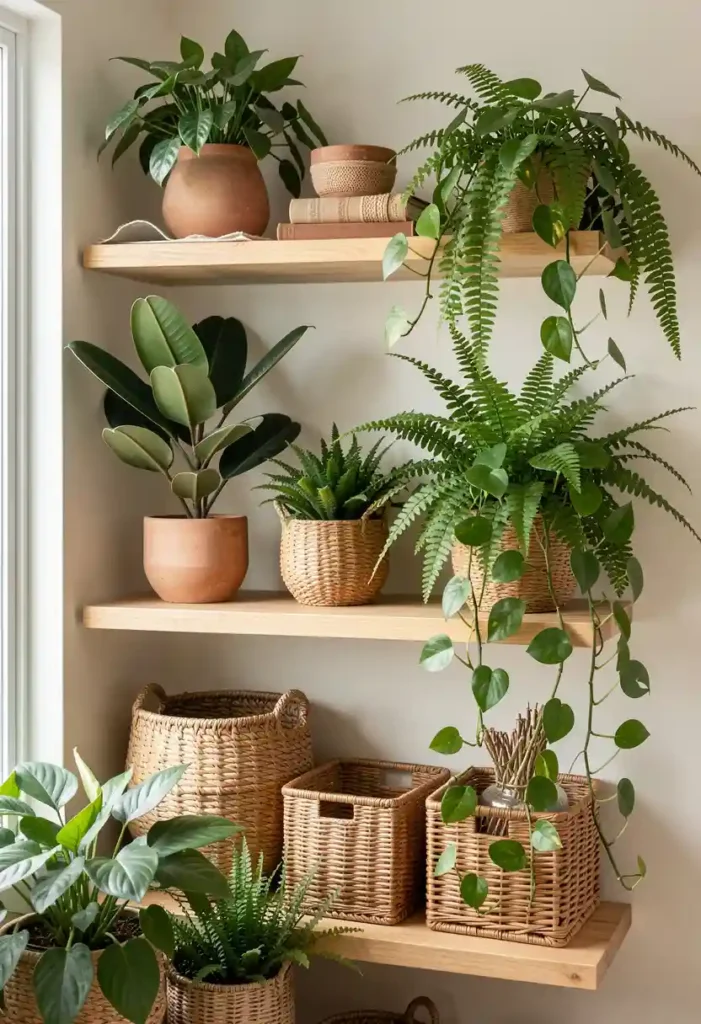
Although plants are naturally green, different species offer surprisingly varied shades from deep emerald to light lime tones. A curated plant shelf often highlights these subtle color differences.
Try grouping plants with slightly different green tones together to create depth without overwhelming the display. For example, pair a dark rubber plant with a lighter pothos or fern. This tonal layering creates visual interest while maintaining a calm, cohesive look. The shelf feels vibrant but still harmonious.
6. Style Shelves With Books and Plants
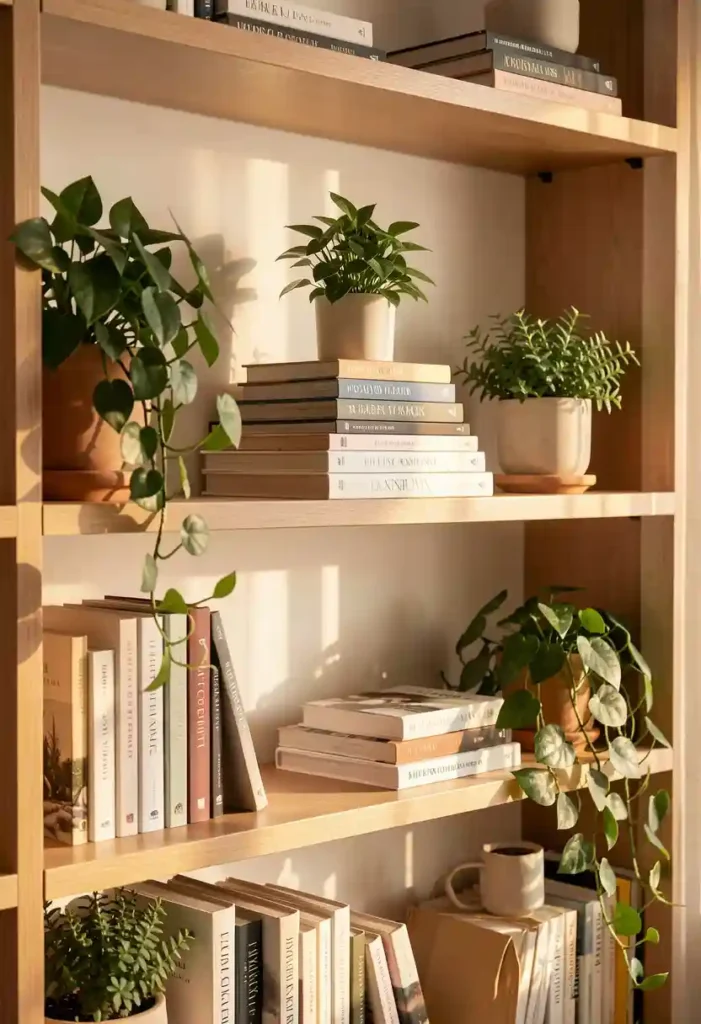
Books and plants make a surprisingly perfect pairing on shelves. Books provide structure while plants bring life and softness to the display. Together, they create a balanced and curated arrangement.
Stack books horizontally and place a small potted plant on top. This adds height variation while also anchoring the plant visually. Alternatively, stand a few books vertically and place a plant beside them. Choose books with attractive spines or neutral covers to keep the display cohesive. Design books, travel guides, or vintage hardcovers work especially well.
7. Use Asymmetrical Arrangements
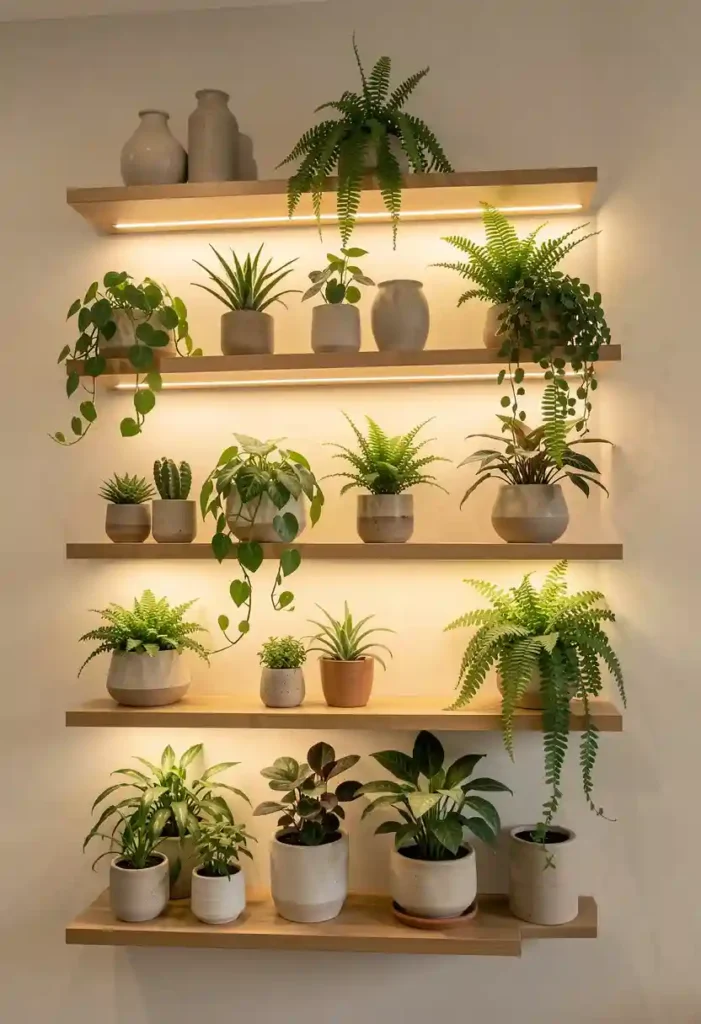
Perfect symmetry can sometimes feel too rigid. A curated plant shelf often looks better with a slightly asymmetrical arrangement. Instead of evenly spacing every plant, cluster some items together while leaving open space elsewhere. For example, place three small plants on one side of the shelf and a single larger plant on the other.
This uneven balance feels more natural and artistic. Designers often use the rule of thirds grouping objects in odd numbers to create visual interest. Vary the spacing between objects so the shelf doesn’t appear overly structured. The goal is to create a composition that looks effortless but still balanced.
8. Incorporate Natural Textures
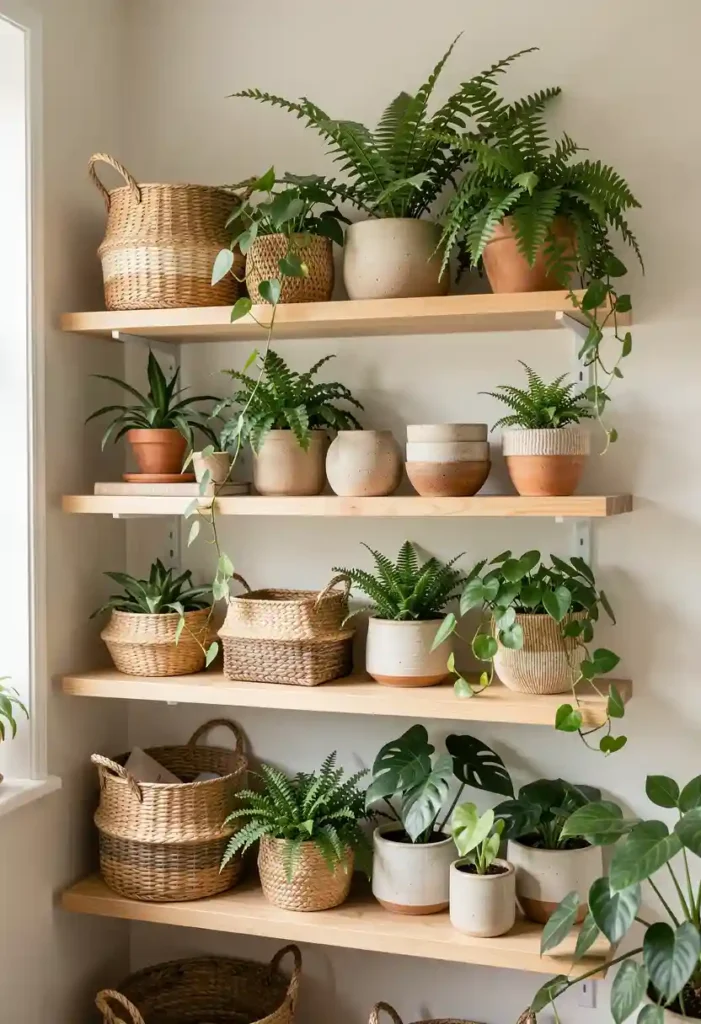
A curated plant shelf feels richer when different textures are included. Plants already bring organic texture through their leaves, but adding complementary materials enhances the overall design.
Consider mixing wood, rattan, woven baskets, stone pots, and ceramic planters. These textures create depth and visual warmth. For example, place a leafy plant inside a woven basket while another sits in a smooth ceramic pot. The contrast makes the shelf feel more dynamic and layered.
9. Add Small Art Pieces Between Plants
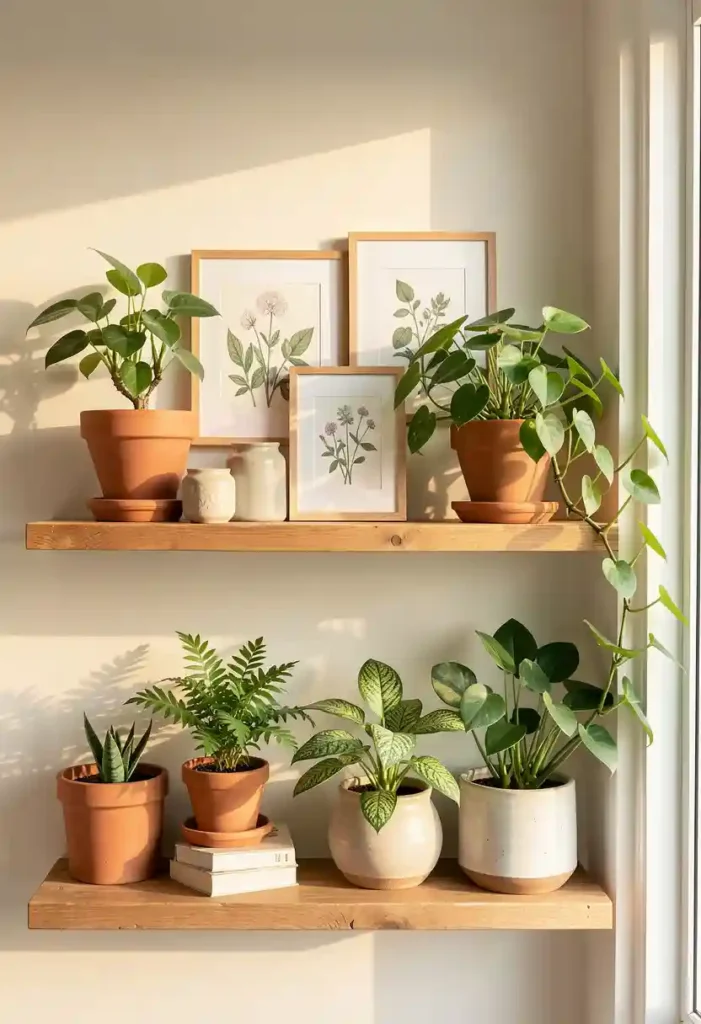
Art doesn’t always need a large wall to make an impact. Small framed artworks can look beautiful when placed between plants on a shelf. Choose minimal prints, botanical illustrations, or abstract art that complements the greenery. Lean the frames against the wall rather than hanging them this creates a relaxed, curated look.
Plants surrounding artwork create a gallery-like effect, almost like a mini exhibition of nature and art combined. Mix different frame materials such as wood or brass to add subtle variation. Keep the artwork relatively small so it doesn’t overpower the plants.
10. Create a Mini Plant Corner Shelf
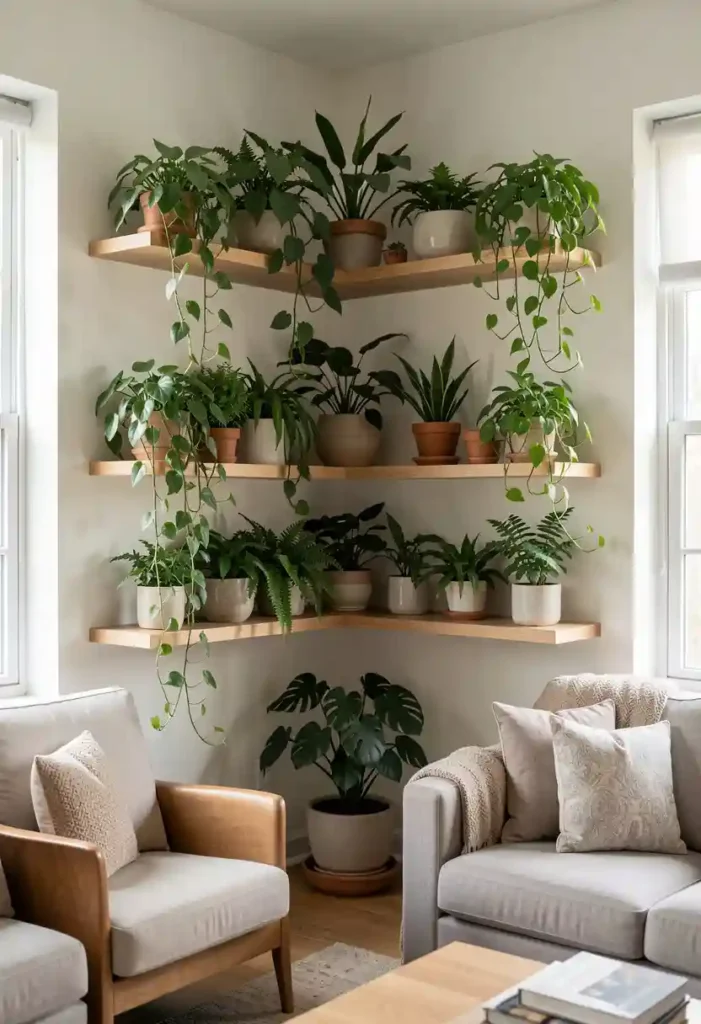
Corner shelves are often overlooked, but they can become beautiful plant displays when styled intentionally. Place a few floating shelves in a corner and arrange plants from top to bottom. Taller plants can sit on the lower shelf while trailing plants occupy higher shelves.
This layered arrangement creates a small indoor plant tower that feels lush and inviting. Corners are ideal for plants because they often receive gentle, indirect light. The vertical arrangement also saves floor space while adding greenery to the room.
11. Keep Some Empty Space
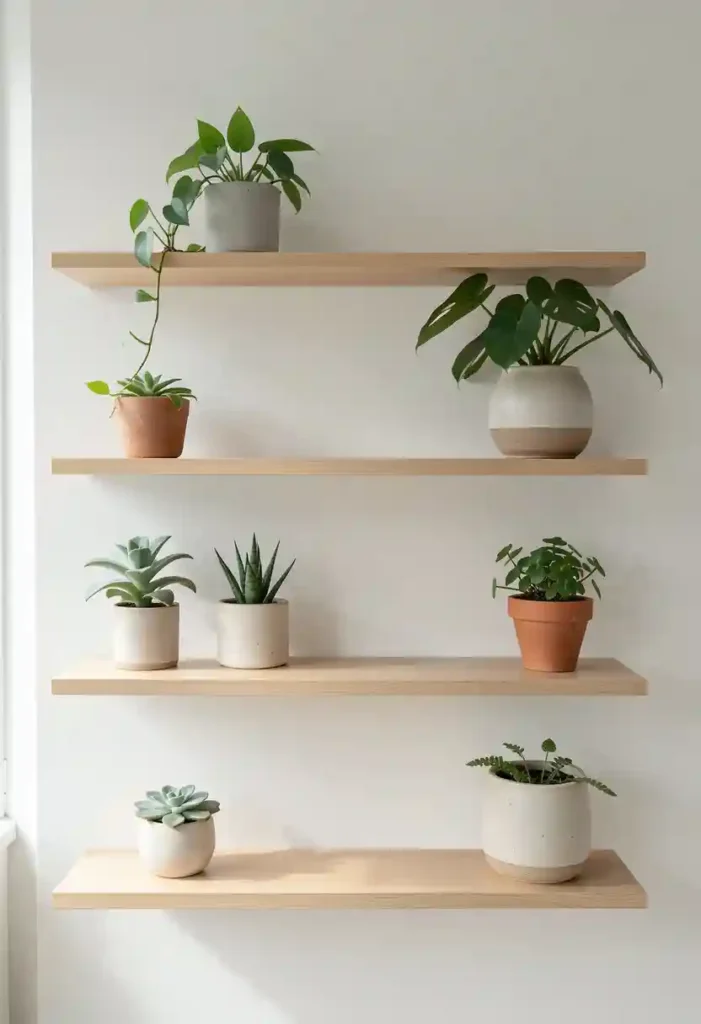
A curated shelf doesn’t need to be completely full. In fact, leaving a bit of empty space can make the display look more intentional and elegant. Negative space allows the eye to rest and helps highlight the plants that are present. Without breathing room, even beautiful plants can start to look cluttered.
Try styling a few plants together on one side of the shelf while leaving the other side open or with just one decorative piece. This minimal approach works particularly well in modern or Scandinavian interiors. Empty space also allows plants to grow without immediately overcrowding the shelf.
12. Use Plant Stands on Shelves
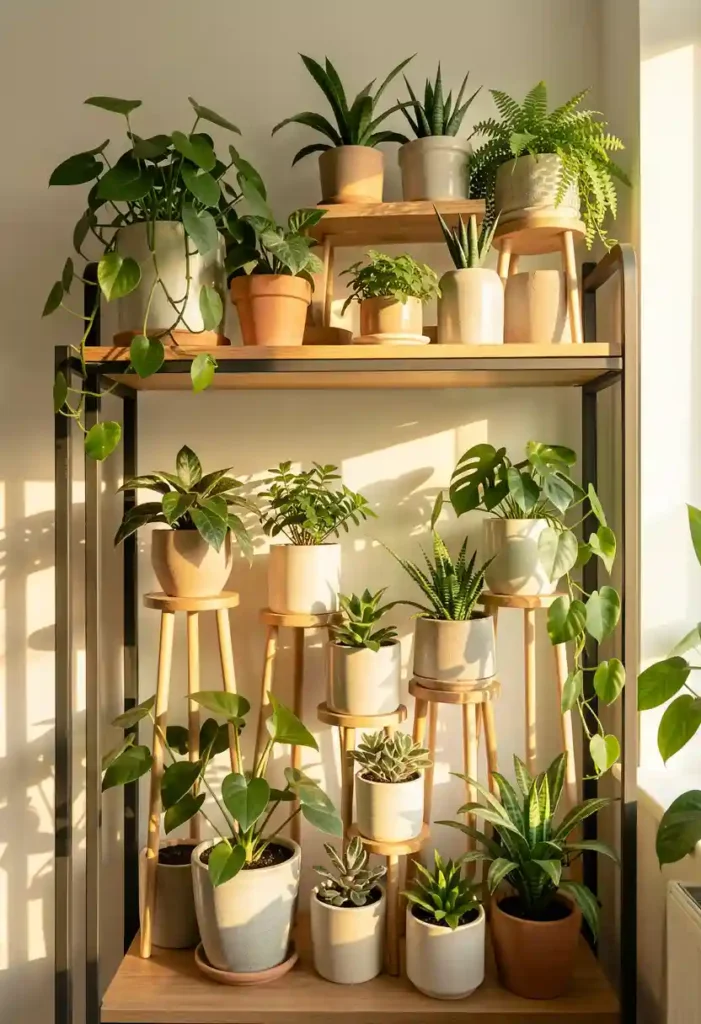
Plant stands aren’t just for the floor they can also be used on shelves to create height variation. Small stands or risers lift certain plants slightly above others, adding depth to the arrangement. This layered look prevents the shelf from appearing flat. Even a small difference in height can dramatically improve the overall composition.
You can use wooden risers, mini stools, or stacked books to elevate certain plants. This trick works especially well when combining small and medium plants on the same shelf. The elevated plants naturally become focal points, while lower plants fill the surrounding space.
13. Rotate Plants Seasonally
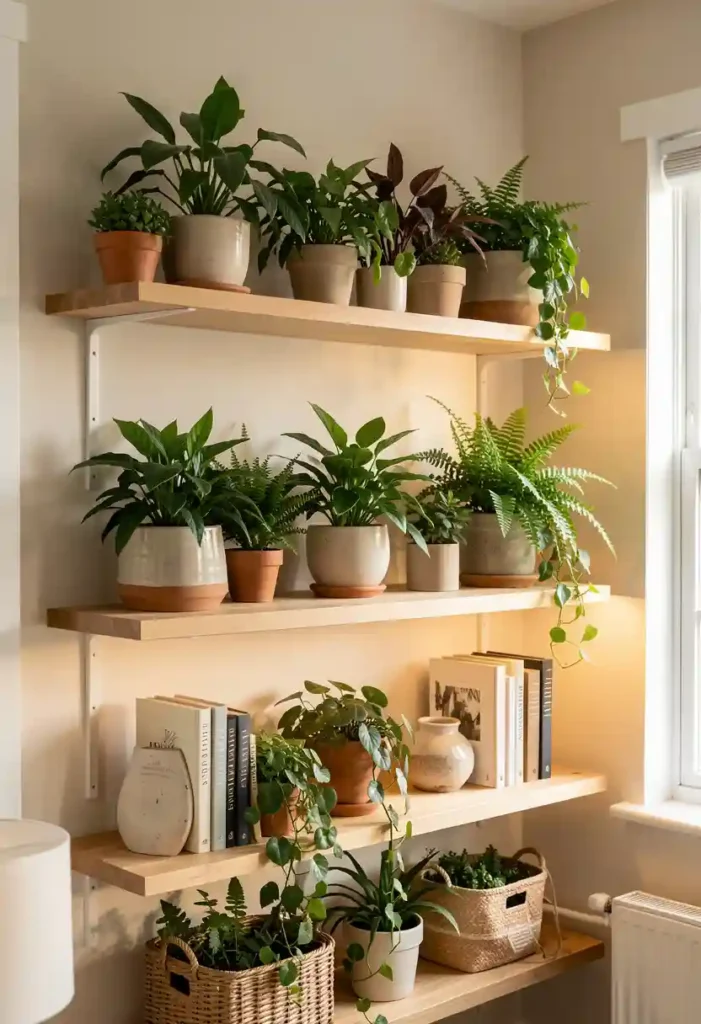
A truly curated plant shelf evolves over time. Rotating plants seasonally keeps the display fresh and interesting. In spring and summer, you might feature vibrant leafy plants and flowering varieties. During autumn, warm-toned pots and fuller greenery can create a cozy atmosphere.
Winter might call for simpler arrangements with fewer plants and more neutral decor pieces. Rotating plants also helps ensure each plant receives proper light throughout the year. Some plants may thrive better in certain locations depending on the season.
Final Thoughts
A beautifully styled plant shelf can turn simple greenery into a design statement. The secret to achieving a curated look isn’t about having the most plants it’s about arranging them thoughtfully. By mixing plant heights, incorporating trailing vines, using cohesive pots, and adding decorative elements like books or small art pieces, you can create a display that feels balanced and intentional.