13 Plant Decor For Small Spaces That Fit
Decorating with plants can completely transform a small space, making it feel fresh, lively, and inviting. The challenge many people face, however, is finding ways to incorporate greenery without taking up valuable floor space. Fortunately, with a little creativity and thoughtful placement, plants can actually make small areas feel larger, brighter, and more balanced. The key is choosing smart styling techniques that maximize vertical space, corners, and overlooked areas.
From floating shelves to hanging planters and compact plant stands, there are many ways to introduce nature into tight spaces without cluttering the room. Plants also add texture, color, and a calming atmosphere that improves the overall look and feel of your home. Whether you live in a small apartment, studio, or simply want to make better use of limited space, these ideas will help you style greenery beautifully. Here are 13 plant decor ideas for small spaces that fit perfectly and look intentional.
1. Use Floating Plant Shelves
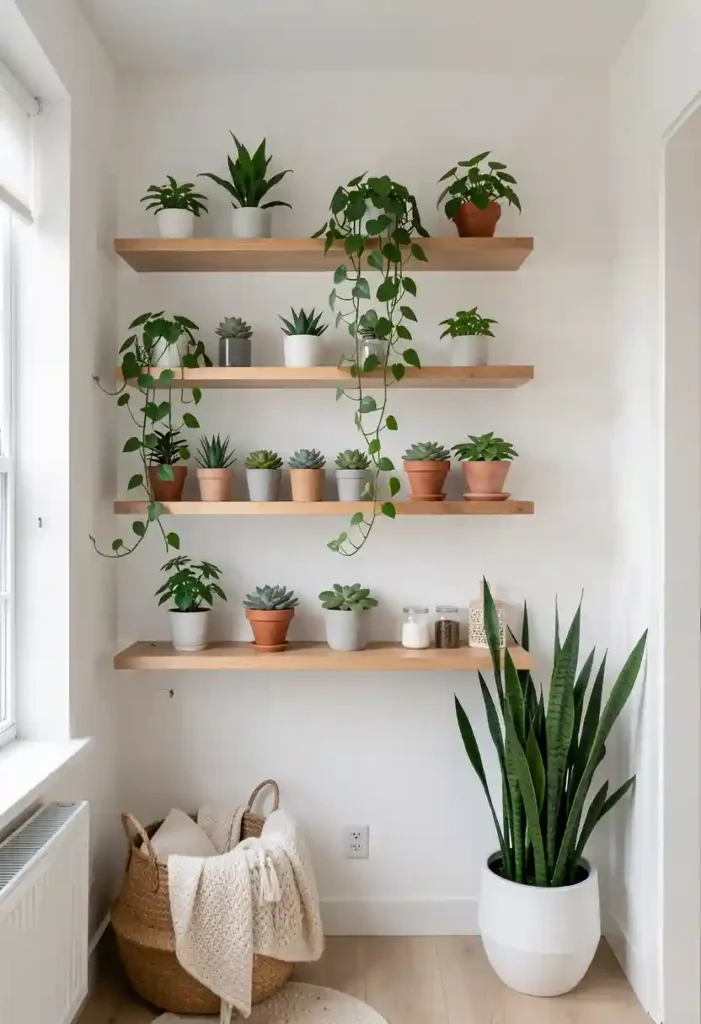
Floating shelves are one of the best solutions for adding plants to small spaces because they take advantage of vertical wall space instead of valuable floor area. Installing a few simple wooden or metal shelves allows you to display several small plants while keeping the room open and uncluttered. This works especially well in living rooms, bedrooms, and even kitchens where counter space is limited.
To keep the shelves looking styled rather than crowded, vary the plant heights and textures. For example, combine trailing plants like pothos with upright plants such as snake plants or small succulents. Leaving a bit of empty space between items helps the display feel curated rather than packed.
2. Hang Plants Near Windows
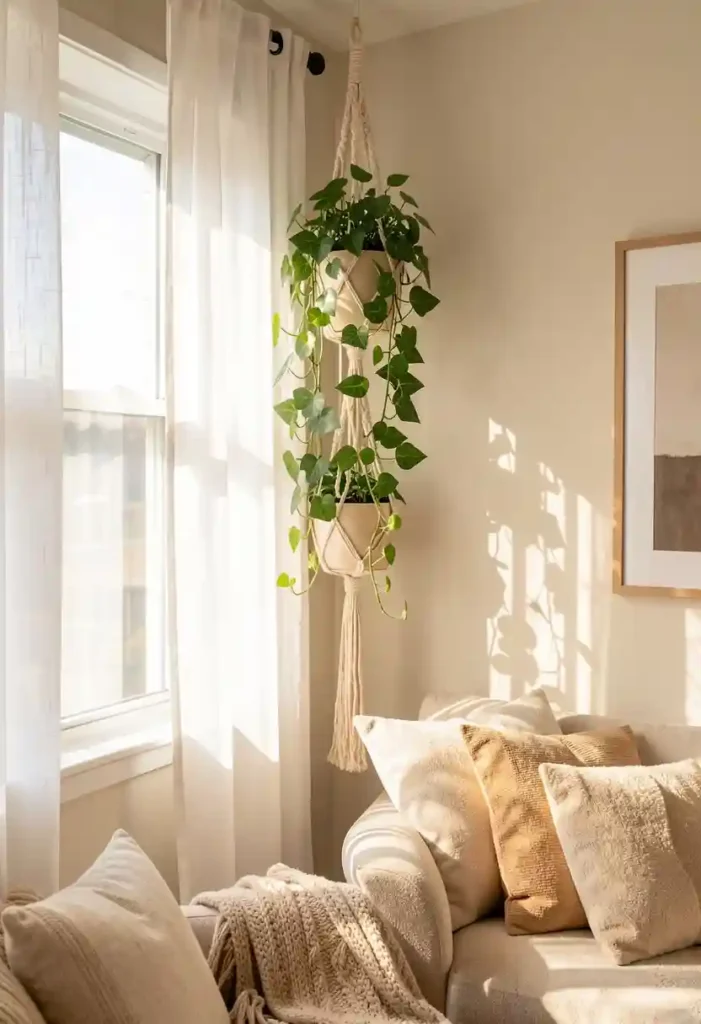
Hanging plants are perfect for small homes because they keep greenery off the floor while drawing the eye upward. By suspending plants near windows, you provide them with the light they need while creating a layered look that makes the room feel fuller and more vibrant.
Macrame plant hangers are a popular choice because they add texture and a handmade aesthetic to the space. Alternatively, sleek metal hanging planters offer a more modern and minimal style. Hanging several plants at different heights can create a beautiful cascading effect that feels like a living curtain. This idea works especially well for trailing plants such as ivy, pothos, or string of pearls. As the vines grow longer, they create a soft, natural frame around the window.
3. Style Plants on Window Sills
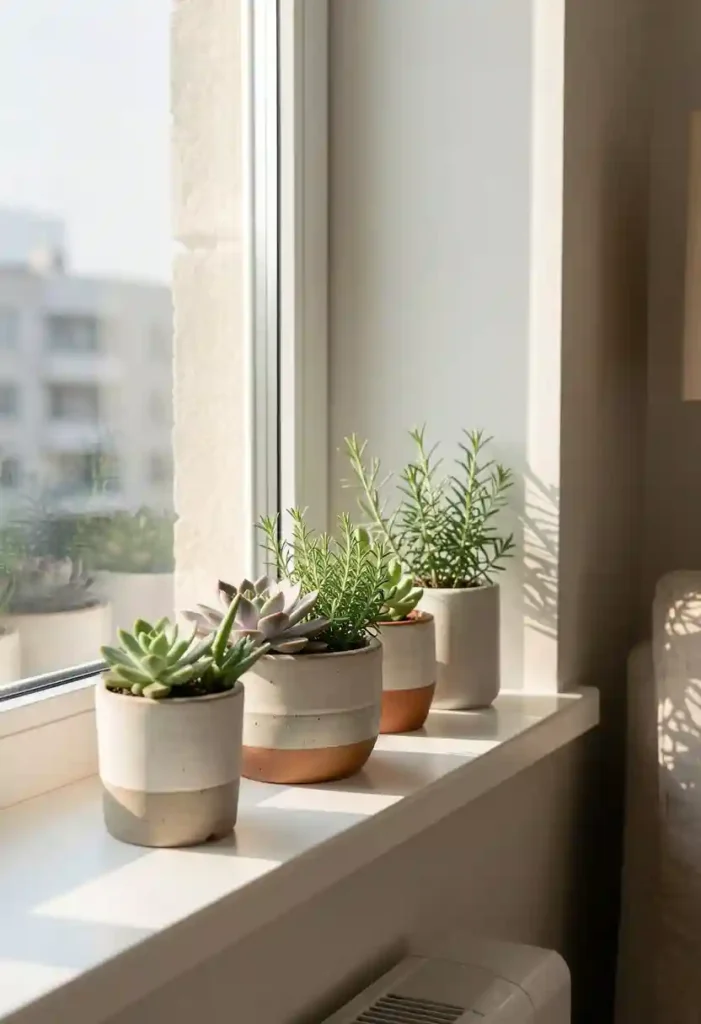
Window sills are often overlooked, but they can become one of the most beautiful places to display plants in a small home. Since plants naturally need sunlight, placing them directly on the window sill gives them the light they thrive on while decorating an otherwise empty space.
Small potted plants such as succulents, herbs, or mini ferns work especially well here. The key is keeping the arrangement balanced so the sill doesn’t feel overcrowded. Try grouping plants in odd numbers and varying the pot shapes for a more natural look. Using matching or neutral pots can create a clean and cohesive style. On the other hand, mixing ceramic textures or subtle colors can add personality while still maintaining harmony.
See Also: 12 Indoor Plant Styling Tips That Work
4. Use Corner Plant Stands
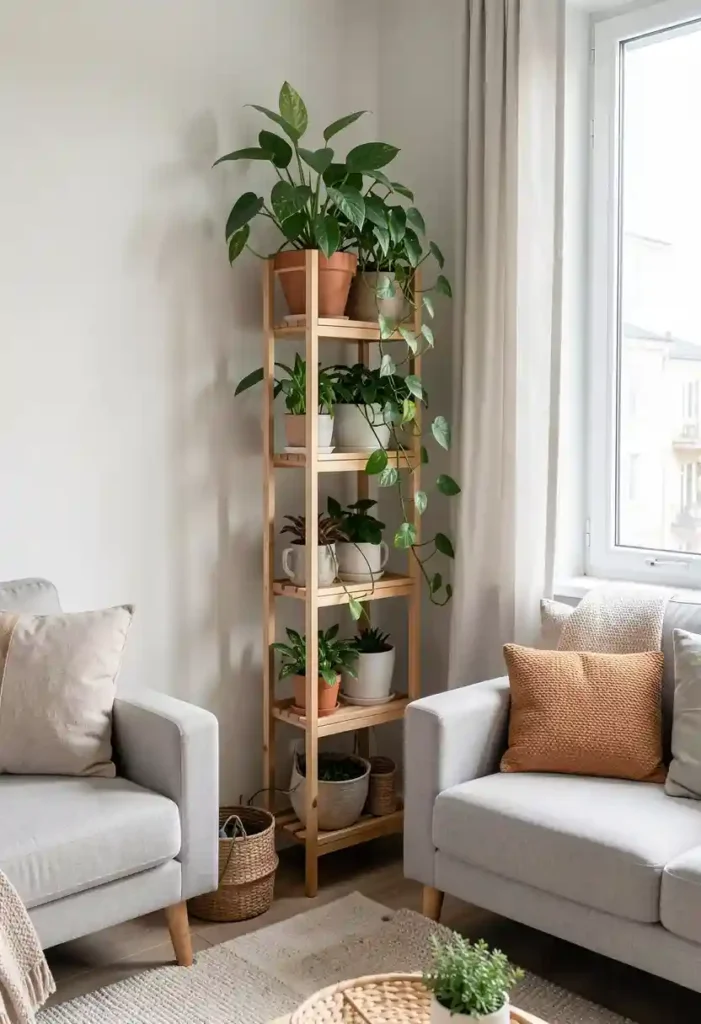
Corners are often underutilized in small spaces, but they are ideal locations for vertical plant displays. A slim corner plant stand allows you to stack several plants in one compact area while keeping the floor space organized.
Multi-tier plant stands are especially useful because they create layers of greenery without taking up much room. Taller plants can be placed at the bottom while smaller plants sit on upper shelves, creating a balanced visual flow. Choosing a stand made from wood or metal helps match the decor style of your home. Wooden stands bring warmth, while black metal stands create a more modern look.
5. Create a Mini Plant Ladder
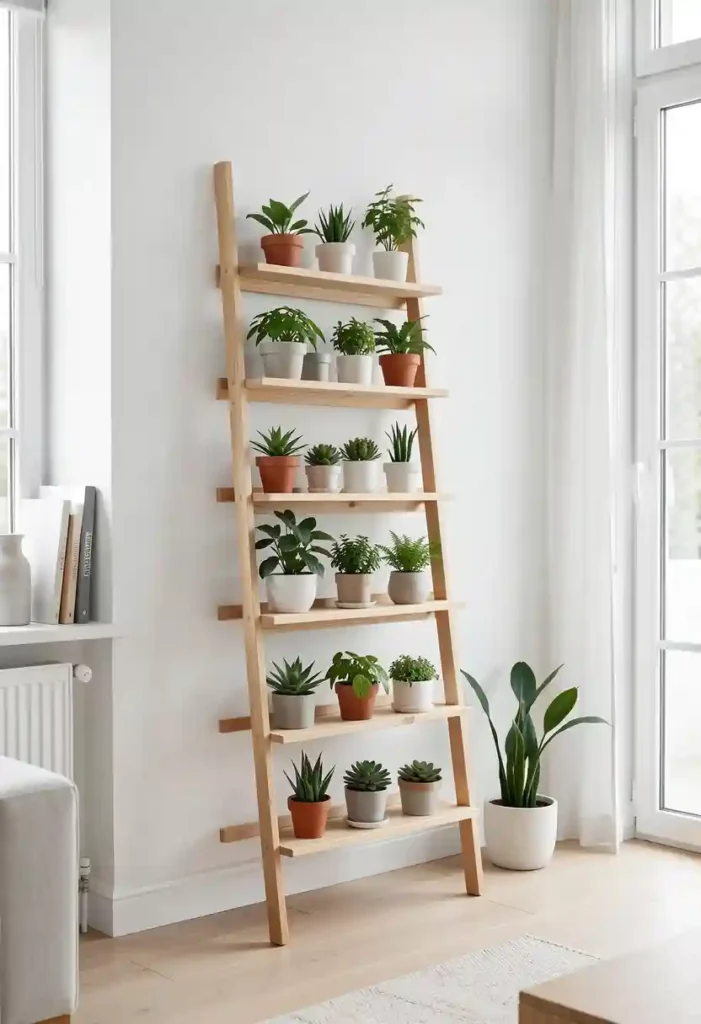
A plant ladder is a stylish and space-saving way to display multiple plants in a small area. These leaning ladder shelves rest against the wall and gradually extend outward at the bottom, making them compact yet visually interesting.
Each step of the ladder can hold a few plants, allowing you to build a layered display. This setup works well with a combination of trailing plants, medium leafy plants, and small decorative pots. The vertical shape draws the eye upward, which helps make small rooms feel taller and more open. Light wood ladders work beautifully in Scandinavian or minimalist interiors, while darker finishes can add a bit of contrast.
6. Decorate With Wall-Mounted Planters
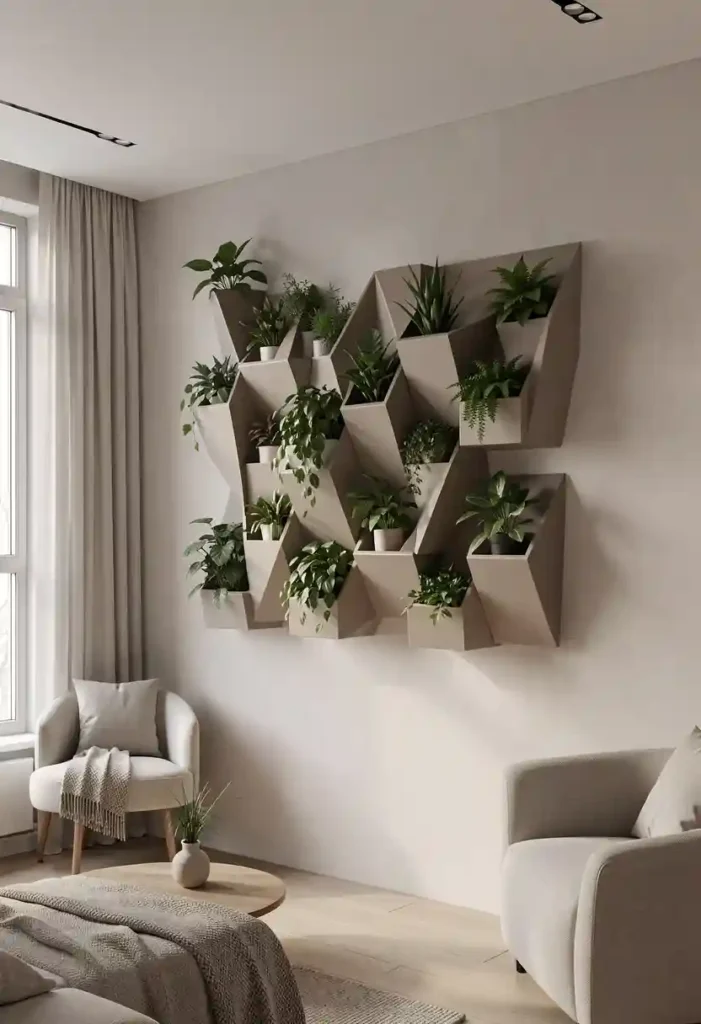
Wall-mounted planters are perfect for extremely tight spaces where even shelves might feel bulky. These planters attach directly to the wall, allowing plants to become part of the decor itself.
You can arrange several wall planters in a grid, vertical line, or scattered pattern depending on the aesthetic you want. Ceramic wall planters with neutral tones create a calm modern look, while geometric metal planters add a contemporary feel. This method works beautifully for small plants like ferns, succulents, or pathos. The plants appear almost like living artwork, bringing texture and color to otherwise empty walls.
7. Place Plants on Narrow Console Tables
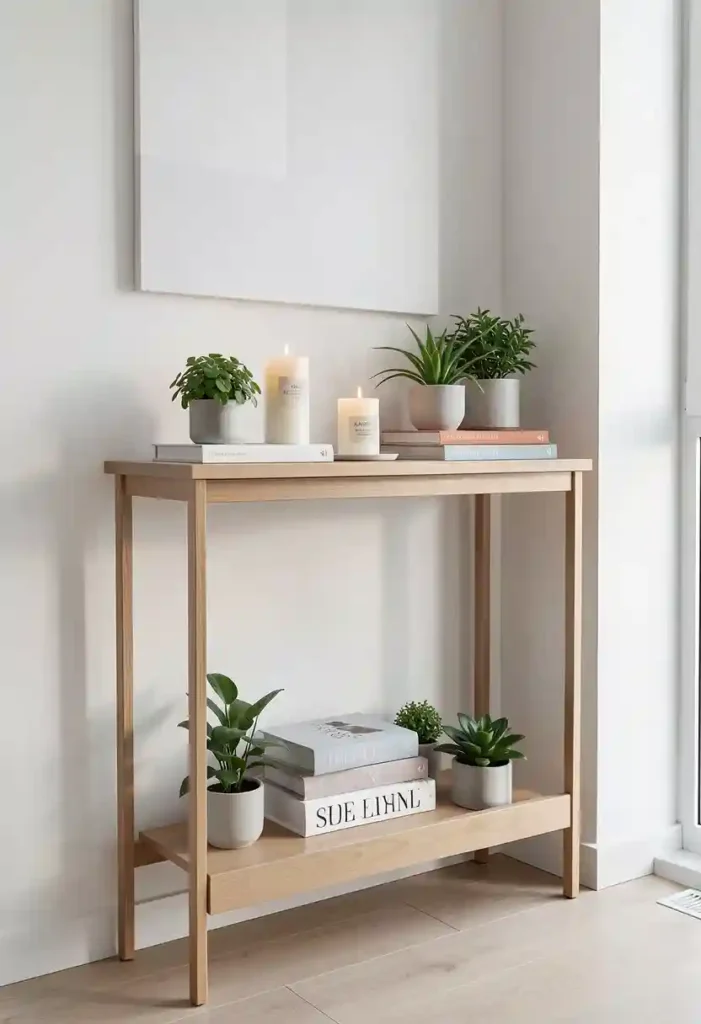
A narrow console table is a great place to style plants without taking up much space. These slim tables are commonly placed behind sofas, along walls, or in entryways where larger furniture would feel too heavy.
Adding a few plants on the console instantly brings life to the space. Mixing one taller plant with two or three smaller plants creates a balanced arrangement that feels intentional. You can also combine plants with simple decor items such as books, candles, or small sculptures to create a styled vignette.
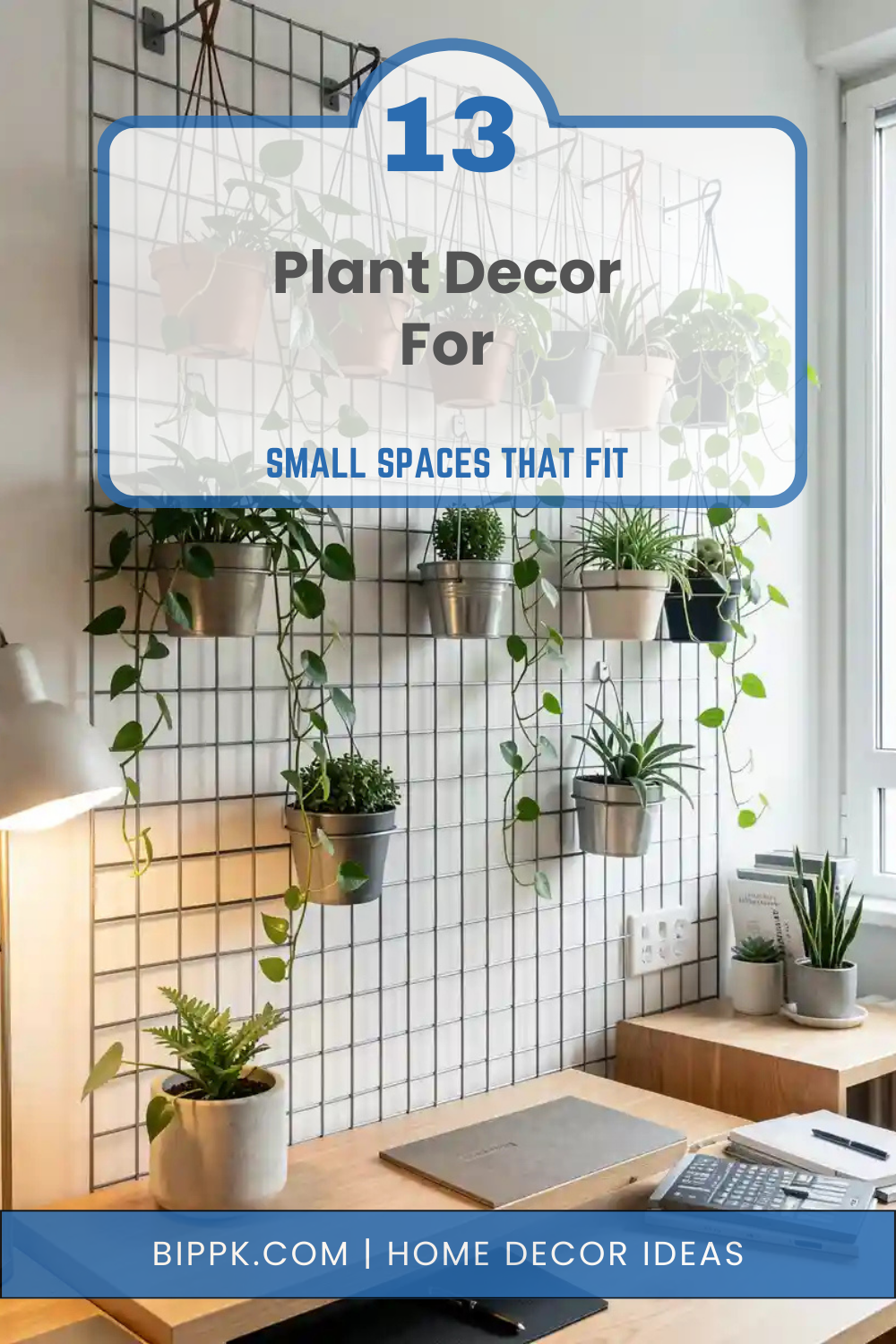
8. Use Plant Wall Grids
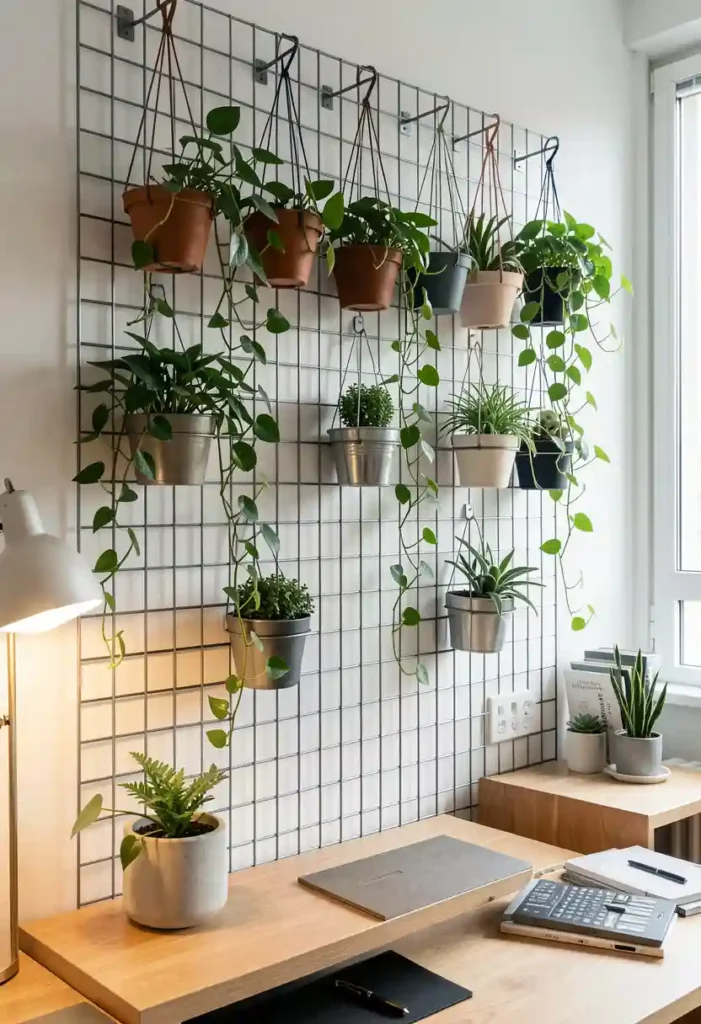
Wall grids are an excellent way to display plants vertically without permanent shelving. A simple metal grid attached to the wall allows you to hang small plant pots using hooks or clips.
This system is flexible because you can easily rearrange the plants whenever you want. It also works well for mixing greenery with photos, art prints, or small decor items. Plants with trailing vines look especially beautiful on wall grids because they can drape naturally around the frame.
9. Add Plants Above Cabinets
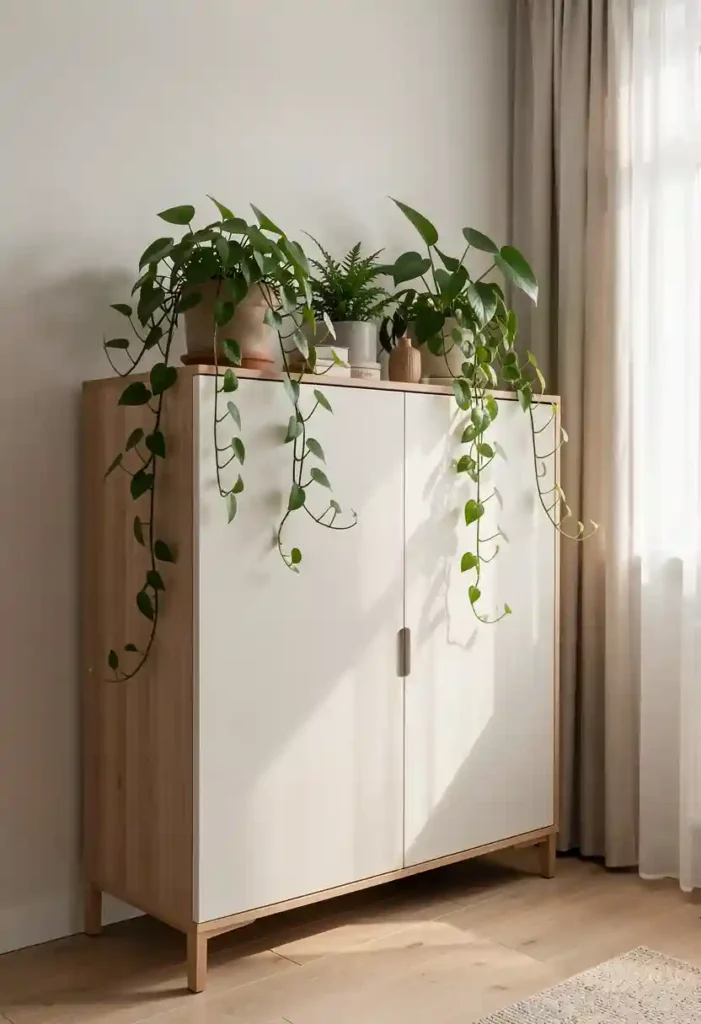
The space above cabinets or wardrobes often goes unused, but it can be a great place to add plants. Placing a few leafy plants on top of cabinets introduces greenery at eye level and fills empty vertical space.
Choose plants that can tolerate slightly lower light since higher areas may receive less sunlight. Plants with cascading vines look especially attractive because they soften the edges of the furniture. Keeping the number of plants limited prevents the area from looking cluttered. Two or three medium-sized plants are usually enough to create impact.
10. Use Small Plant Stools
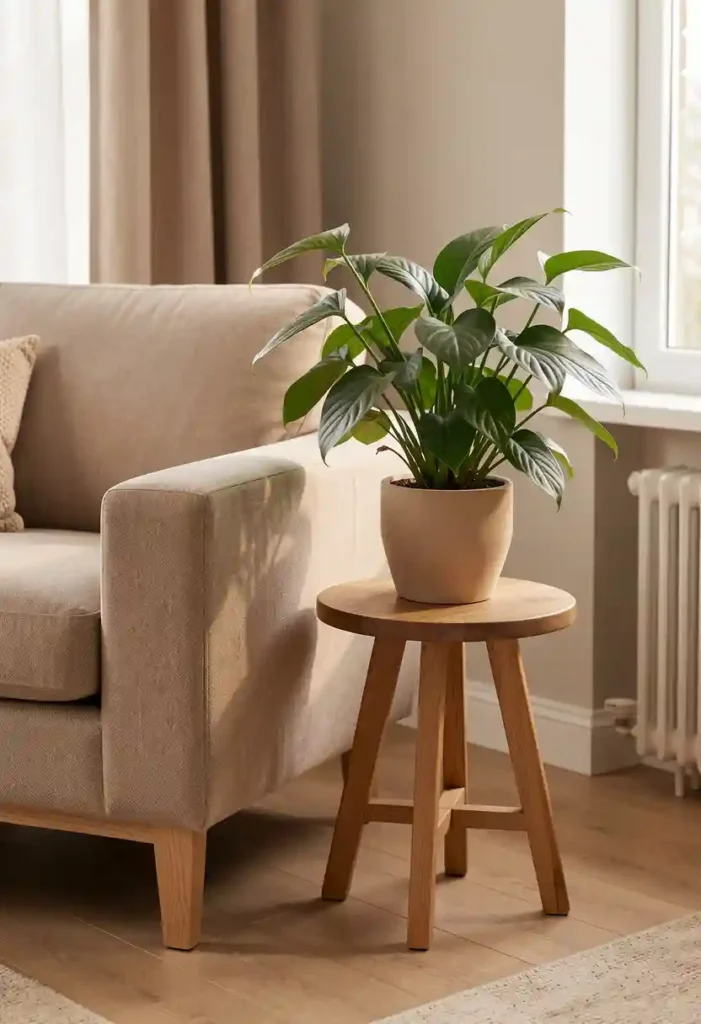
Tiny plant stools or stands elevate plants slightly off the ground while keeping the arrangement compact. These small platforms add dimension and make plants feel more like decorative elements rather than just pots on the floor.
Using different stool heights creates a layered look that feels more dynamic and styled. Wooden stools add warmth, while simple metal stands create a modern feel. This idea works especially well next to sofas, reading chairs, or beds where a small plant can add a touch of greenery without overwhelming the space.
11. Create a Small Plant Cluster
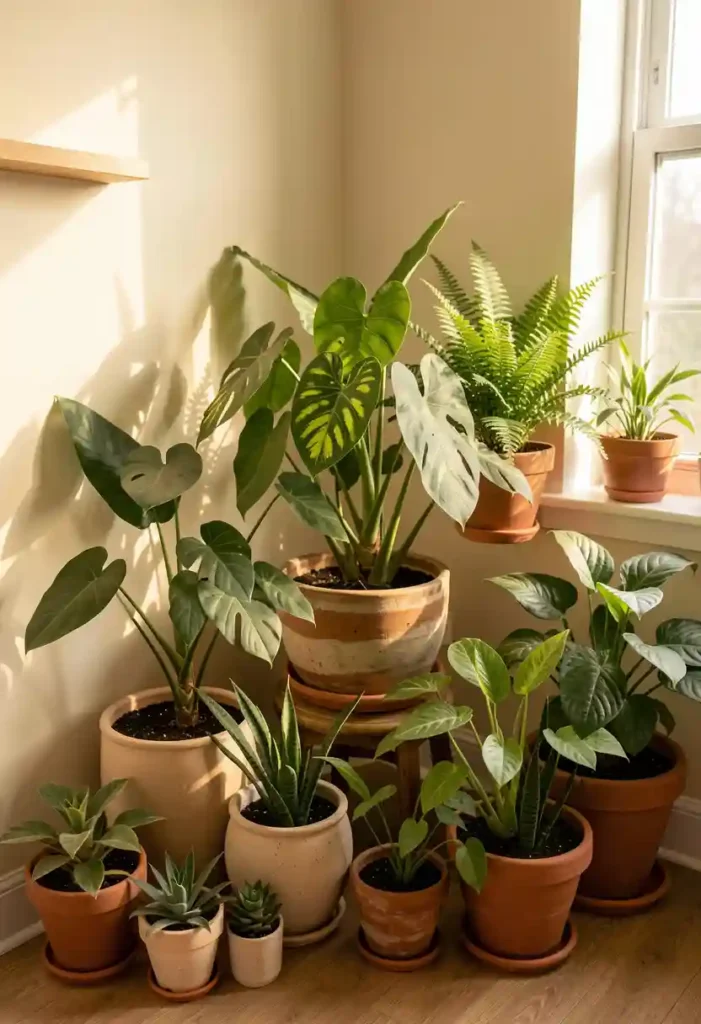
Instead of spreading plants throughout the entire room, creating a small plant cluster can make a stronger visual impact. Grouping three to five plants together in one area forms a mini indoor garden that feels intentional and styled.
The key is varying plant heights, leaf shapes, and pot textures. For example, combine a tall snake plant with a trailing pothos and a small fern. Placing the cluster near a window ensures all the plants receive enough light. Using matching or neutral pots helps keep the grouping cohesive rather than chaotic.
12. Decorate With Hanging Wall Shelves
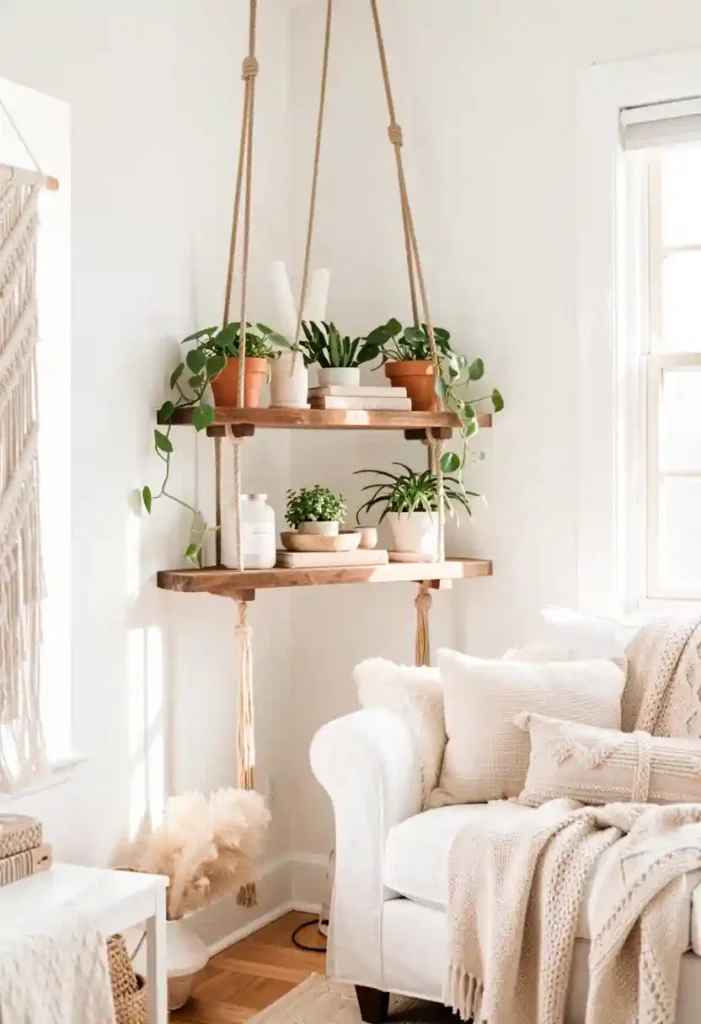
Hanging wall shelves combine the benefits of shelves and hanging planters. Suspended by ropes or cords, these shelves hold small plants while adding a light, airy feel to the wall.
They work beautifully in boho, Scandinavian, and minimalist interiors because they add visual interest without looking heavy. These shelves are perfect for small trailing plants, succulents, or decorative plant pots. Placing one above a desk or bedside table can create a charming green accent.
13. Use Plants as Table Centerpieces
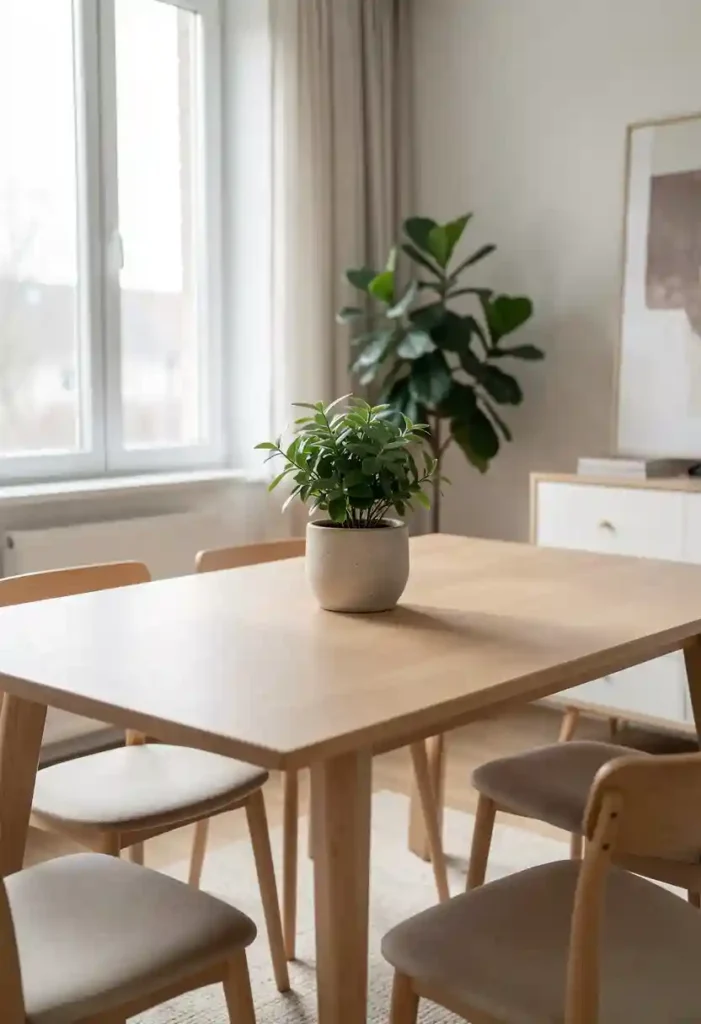
Even in small homes, tables offer opportunities to incorporate greenery. A simple plant centerpiece can instantly make a dining table, coffee table, or side table feel more lively and welcoming.
Choose compact plants that don’t block views across the table. Low-growing plants like succulents, small ferns, or bonsai trees are perfect for this purpose. Placing the plant in a beautiful ceramic or textured pot helps it feel like part of the decor rather than just a plant.
Final Words
Decorating with plants in small spaces doesn’t require a large room or a big collection of greenery. With the right styling ideas, even the smallest corners, walls, and surfaces can become beautiful homes for plants. The secret is to think vertically, use overlooked areas, and choose plant displays that feel light and intentional rather than crowded.