
11 Wall Art Arrangement Ideas That Feel Balanced
Wall art has the power to completely transform a room, but the way it’s arranged can make the difference between a space that feels chaotic and one that feels beautifully balanced. A thoughtful wall art arrangement helps guide the eye, creates harmony, and ties together the colors and textures already present in a room. Instead of simply hanging pieces randomly, a balanced layout considers spacing, scale, alignment, and visual weight.
This doesn’t mean everything has to be perfectly symmetrical balance can also be achieved through creative gallery walls, layered frames, or mixing large and small pieces thoughtfully. Whether you’re decorating a living room, bedroom, hallway, or workspace, the right arrangement can make your wall feel intentional and stylish. From grid layouts to relaxed gallery walls, there are many ways to display art while keeping the space visually calm and cohesive. Here are 11 wall art arrangement ideas that feel balanced and elevate your home’s style.
1. Classic Symmetrical Grid Layout

A symmetrical grid layout is one of the most reliable ways to achieve visual balance with wall art. This arrangement uses evenly spaced frames arranged in rows and columns, creating a clean and structured display. Because the layout follows a clear pattern, the wall immediately feels organized and calm.
This style works particularly well with frames that are the same size. Matching frames create consistency, while the artwork inside can vary slightly to add personality without disrupting the balance. Black-and-white photography, minimalist prints, or abstract art are especially effective in grid displays.
2. Centered Statement Artwork

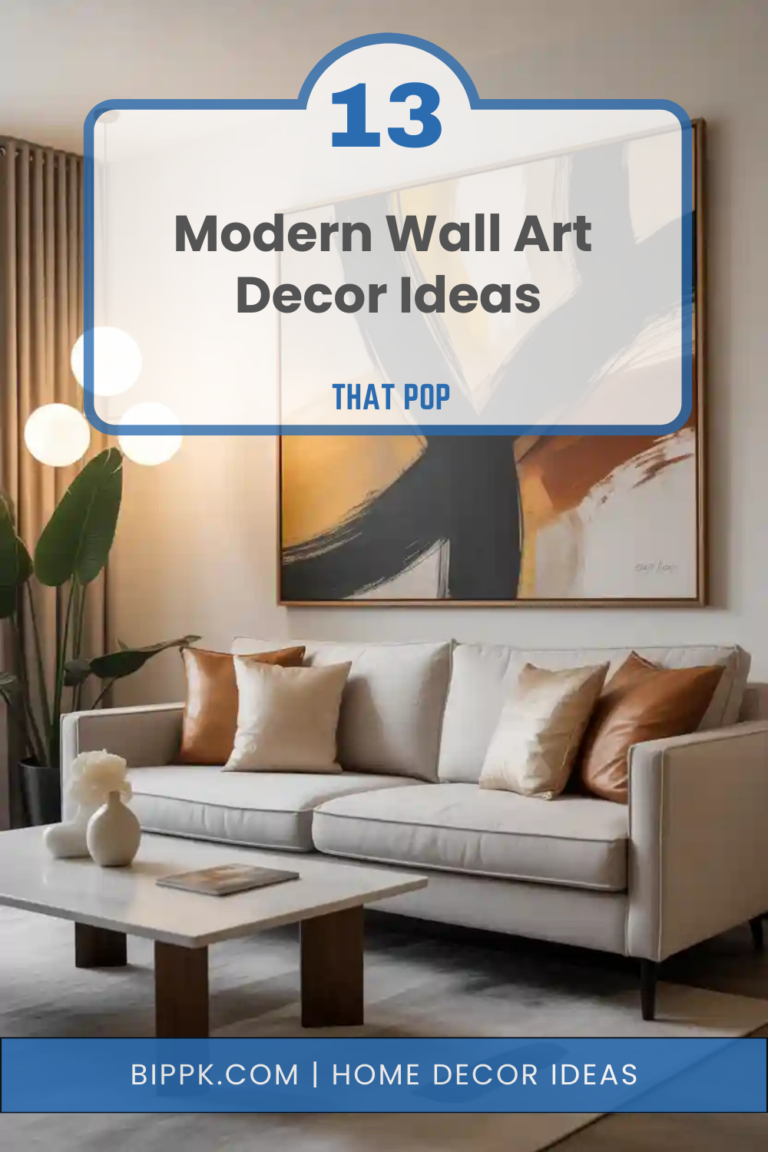
Sometimes the most balanced arrangement is the simplest one. A single large piece of statement artwork placed at the center of a wall can create strong visual harmony without the need for multiple frames. Large art pieces naturally draw attention, making them ideal focal points in living rooms, bedrooms, or dining areas. When centered properly, the artwork aligns with the furniture below, such as a sofa or bed, creating a sense of structure and proportion.
The key to success with this arrangement is scale. The artwork should typically be about two-thirds the width of the furniture beneath it so that the composition feels balanced rather than too small or overwhelming.
See Also: 14 Modern Indoor Plant Décor Ideas
3. Relaxed Gallery Wall

A relaxed gallery wall creates balance through thoughtful variety rather than strict symmetry. Instead of identical frames in perfect rows, this layout mixes artwork sizes and frame styles in a more organic arrangement.
The secret to making this style feel balanced is maintaining a central anchor piece. This larger artwork helps ground the arrangement while smaller pieces radiate around it. Keeping consistent spacing between frames also prevents the wall from looking cluttered. Even though the layout appears casual, careful planning ensures everything feels connected.
4. Linear Horizontal Arrangement

A horizontal line of artwork can create a calm and balanced look, especially on wide walls. This arrangement places several frames in a straight line, maintaining equal height and spacing between each piece.
This approach works well above furniture such as sofas, console tables, or beds where the horizontal layout mirrors the shape of the furniture. Using frames of similar size keeps the display neat and structured, while varying the artwork inside can add personality. Landscapes, abstract prints, or photography often look beautiful in this format.
5. Vertical Stack Arrangement
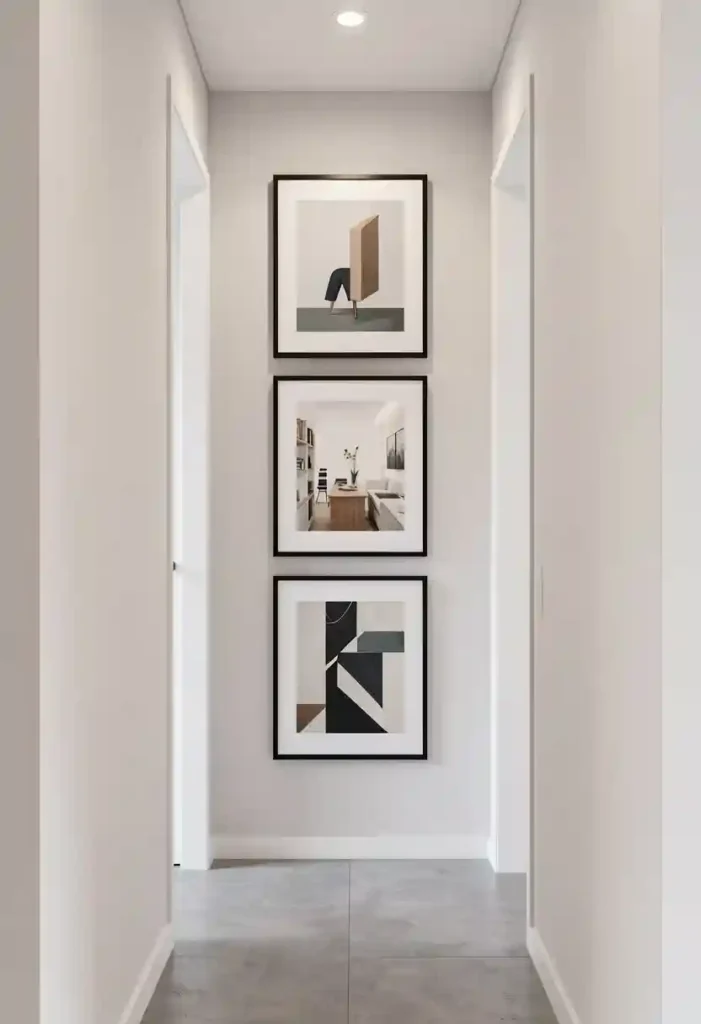
Vertical stacking is an excellent wall art arrangement idea for narrow spaces such as hallways, entryways, or small wall sections. Instead of spreading artwork horizontally, this layout places frames one above another in a clean vertical line.
The vertical arrangement draws the eye upward, which can make ceilings feel taller and spaces appear more open. Two or three frames usually work best in this format. Keeping the frame style consistent helps maintain balance while allowing the artwork itself to vary.
6. Art Anchored Above Furniture
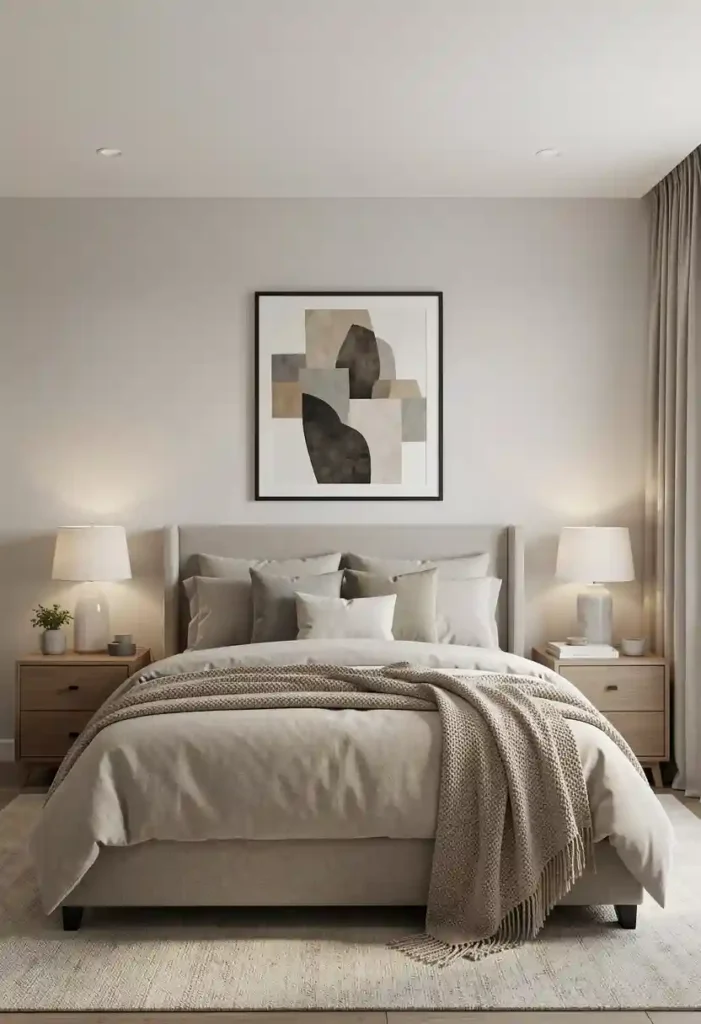
One of the easiest ways to create balance with wall art is by using furniture as a visual anchor. Hanging artwork directly above a sofa, bed, or console table helps connect the wall decor with the rest of the room.
The artwork should be centered horizontally with the furniture below and positioned about 6–10 inches above it. This spacing keeps the art visually connected rather than floating awkwardly on the wall. You can use a single large artwork or a small grouping of two to three pieces. Both approaches work as long as the overall width stays proportional to the furniture.
7. Balanced Asymmetrical Layout
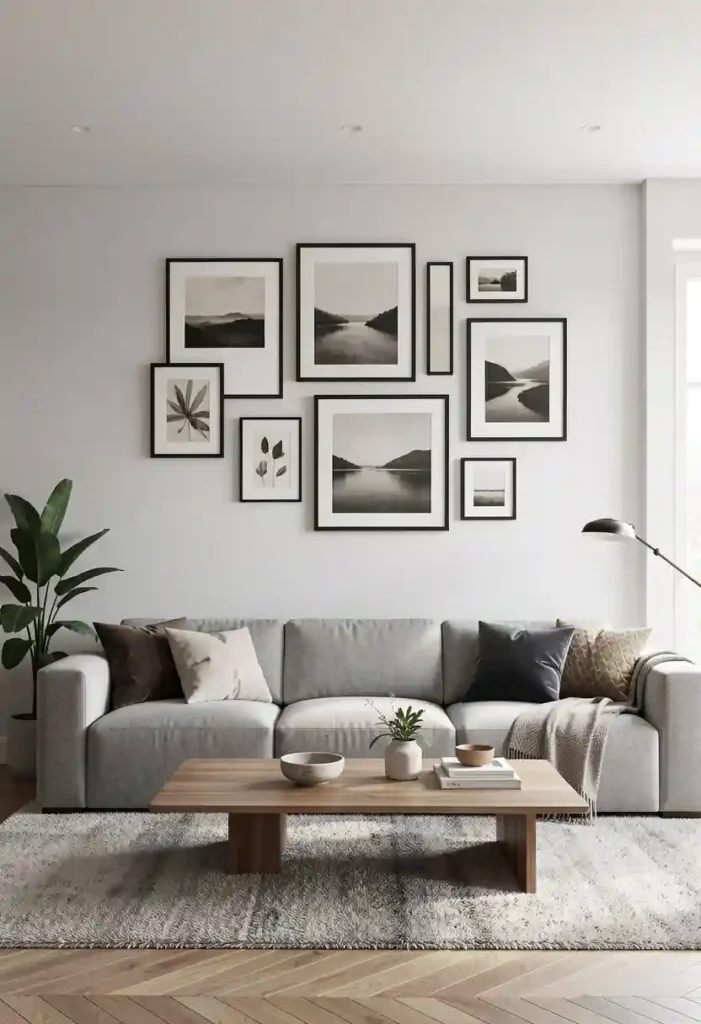
Asymmetry can still feel balanced when visual weight is distributed thoughtfully. In this arrangement, artwork of different sizes is placed in a way that balances larger pieces with smaller ones.
For example, a large artwork on one side of the wall can be balanced by two smaller pieces on the opposite side. The goal is to keep the overall composition visually stable even if the frames are not identical. This layout works particularly well in modern and creative interiors where a slightly unconventional style is welcome.
8. Shelf-Based Art Display

Instead of hanging artwork directly on the wall, using picture ledge shelves allows you to layer and rearrange art easily. Frames can lean against the wall while overlapping slightly for a relaxed yet balanced look.
This arrangement adds depth because multiple layers of artwork create dimension rather than a flat display. Mixing artwork sizes works particularly well here, with larger pieces placed at the back and smaller ones in front. Picture ledges are ideal for people who enjoy changing their decor frequently since the art can be swapped without making new holes in the wall.
9. Triptych Artwork Display
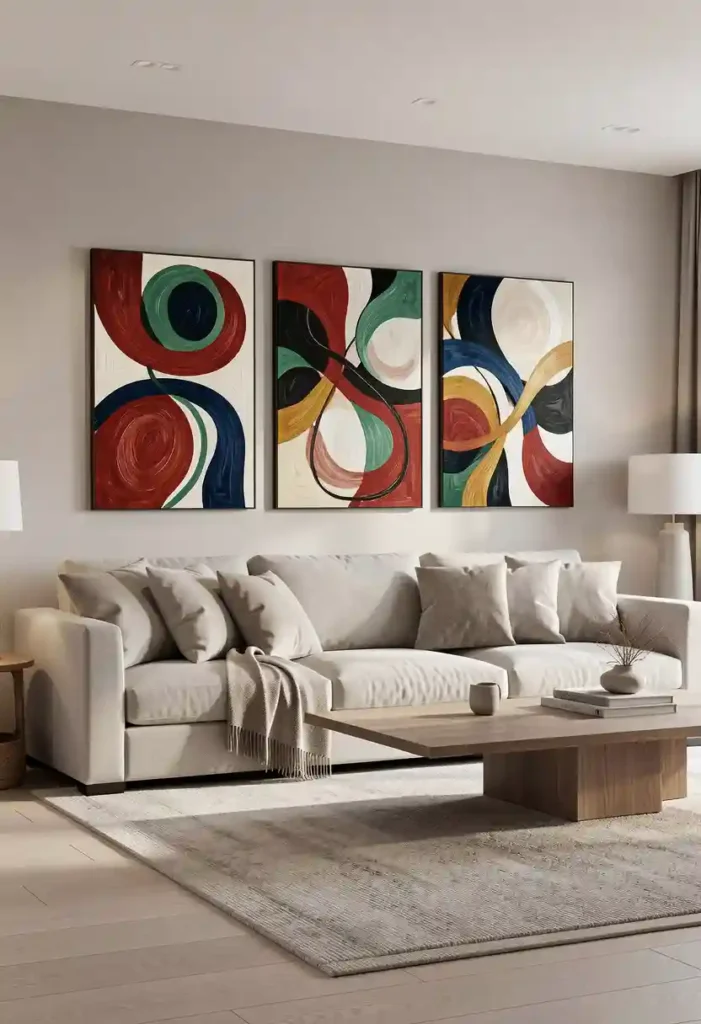
A triptych arrangement uses three related artworks placed side by side to create a unified visual statement. The pieces often share a theme, color palette, or continuous design.
Spacing between the three panels should be consistent to maintain balance. When hung properly, the trio acts as one cohesive artwork rather than separate pieces. Triptychs work particularly well above sofas, beds, and dining tables where the width of the arrangement complements the furniture below.
10. Frame Cluster Arrangement

A frame cluster groups several smaller pieces of artwork together in a compact area. Instead of spreading art across a large wall, the frames are placed close together to create one cohesive visual block.
The cluster should maintain consistent spacing so the arrangement feels intentional rather than random. Using frames in similar colors or materials helps unify the display. Alternatively, mixing frames can work if the artwork shares a similar theme or color palette.
11. Mixed Media Wall Arrangement

Combining different types of wall decor such as framed art, mirrors, sculptures, or woven pieces can create a beautifully balanced display.
The key is distributing the visual weight evenly across the wall. For example, a large framed print might be balanced by a small mirror and decorative wall piece nearby. This arrangement adds texture and variety, making the wall feel layered and interesting.
Final Words
Creating a balanced wall art arrangement is less about strict rules and more about thoughtful placement. When artwork is arranged with attention to spacing, scale, and alignment, it naturally feels more harmonious and visually pleasing. Whether you prefer a structured grid layout, a relaxed gallery wall, or a simple statement piece, the goal is to create a display that complements the room rather than overwhelming it.