16 Basement Ideas No Windows That Feel Bright
A basement without windows doesn’t have to feel dark, small, or depressing. With the right design techniques, even the most closed-off lower level can feel surprisingly bright and uplifting. The secret lies in creating artificial light sources that mimic daylight, using colors that reflect instead of absorb illumination, and selecting finishes that spread light evenly throughout the room. Thoughtful planning can turn a windowless basement into a cozy yet vibrant retreat, a functional workspace, or a stylish entertainment hub.
By combining layered lighting, reflective décor, and smart layouts, you can visually expand the space and eliminate that underground “boxed-in” feeling. Whether you’re designing a lounge, bedroom, home gym, office, or playroom, brightness should always be your baseline goal. In this guide, we explore 16 powerful ideas to make a basement feel open, warm, and full of light—without relying on a single real window.
1. All-White Minimalist Basement
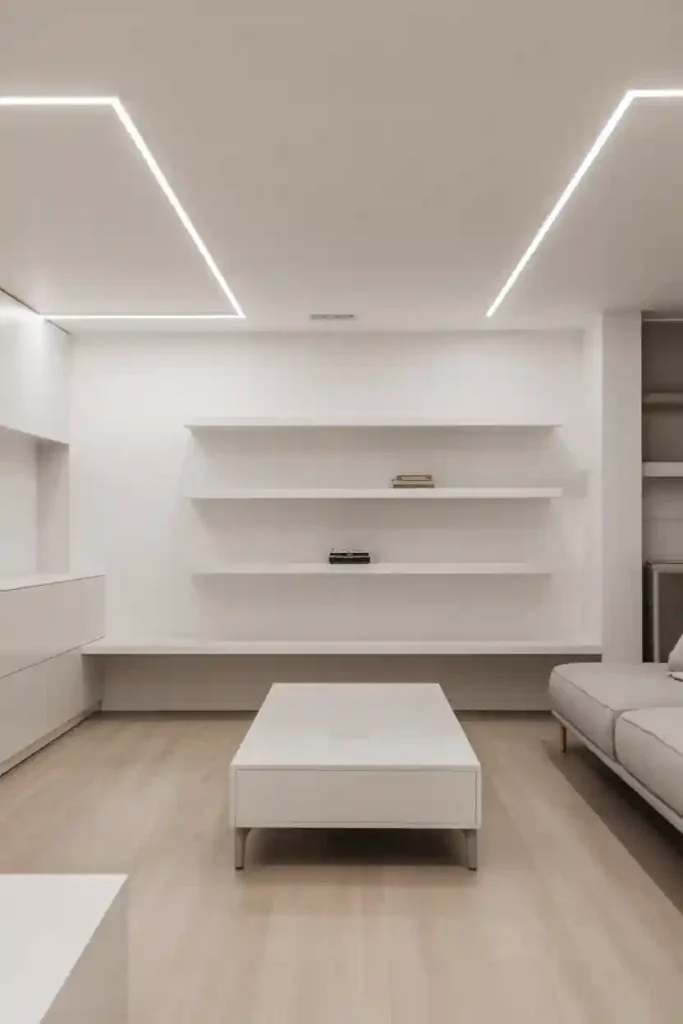
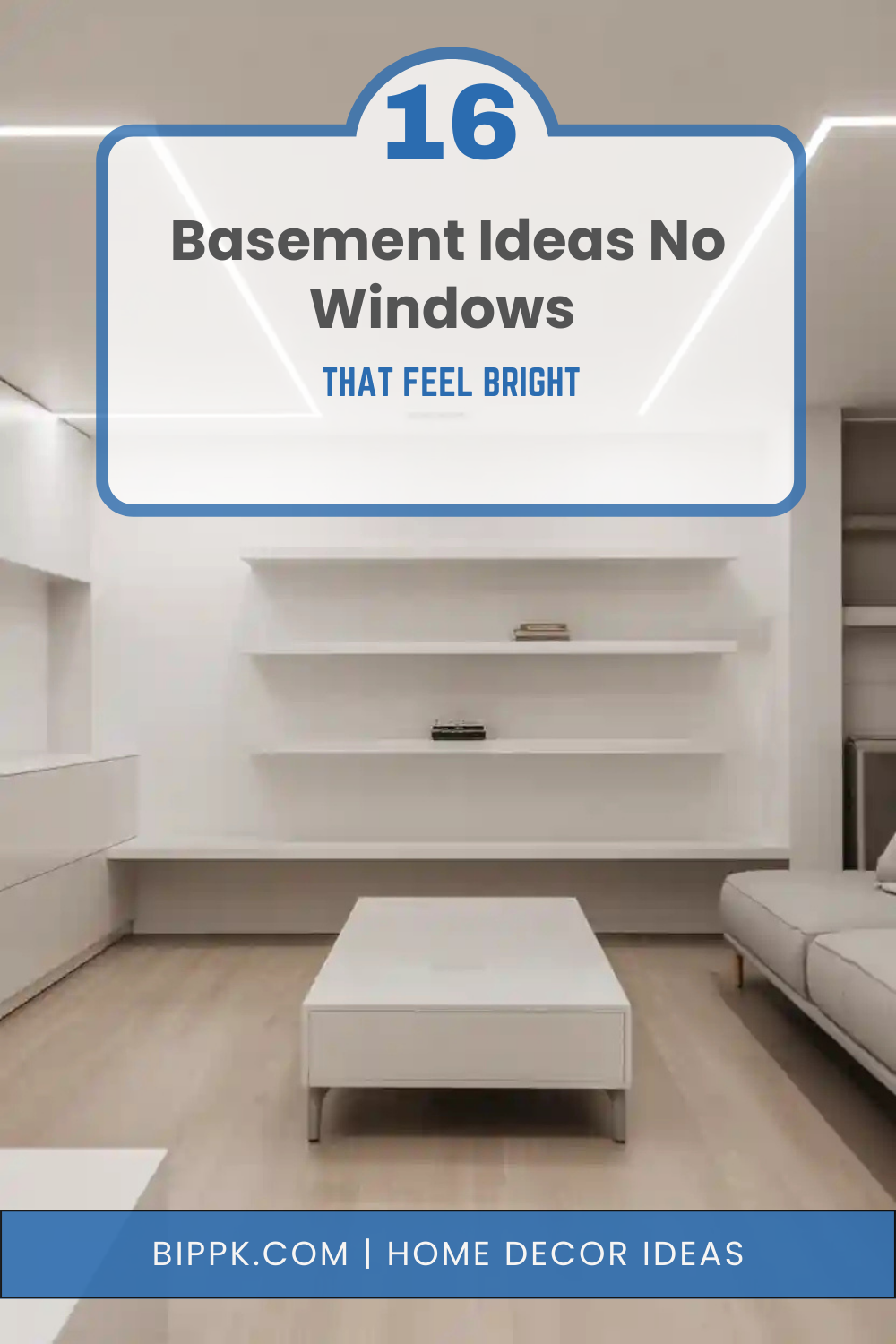
Using an all-white palette is one of the most effective ways to brighten a basement with no windows. White reflects up to 80% of available light, bouncing illumination around the room rather than trapping it like darker shades do. To make the space feel balanced instead of sterile, combine matte white walls with subtle textures like linen sofas, boucle chairs, or ribbed wall panels. A minimalist approach reduces visual clutter, which allows light to flow freely without interruption.
Add recessed ceiling lights and LED strips behind furniture edges to create a soft glow that fills corners evenly. Avoid bulky décor—opt for floating shelves and low-profile seating to maintain openness. For flooring, light wood or whitewashed vinyl adds warmth while still reflecting light. The result is a clean, open, calming basement that feels intentionally bright, spacious, and modern rather than dim and confined.
2. Mirrored Wall Light Expansion
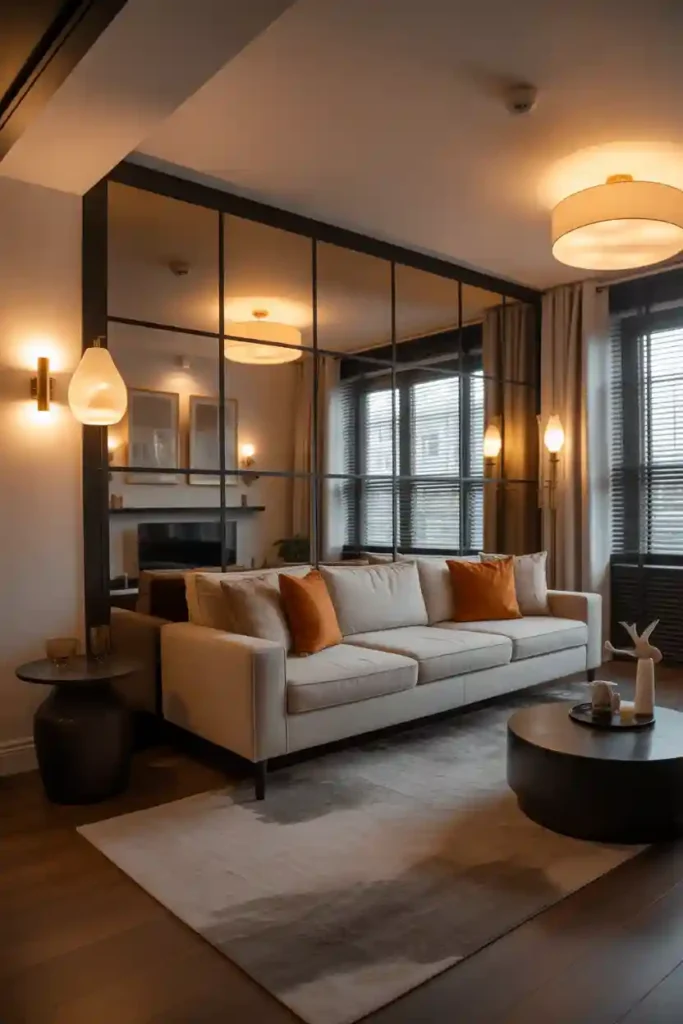
Mirrors are a game-changer in a basement that lacks natural light. A full mirrored wall instantly doubles the perceived brightness by reflecting every light source in the room. Position the mirrors opposite your strongest lighting feature, such as a chandelier, LED grid, or backlit TV wall, to amplify the glow. To avoid an overwhelming reflective effect, choose one statement mirror wall and keep the rest of the décor soft and minimal.
Pair the mirrors with wall sconces or floor lamps so the reflections create depth and layered lighting illusions. Mirrored surfaces also visually expand narrow basements, making them feel less like enclosed rectangles. Choose slim mirror panels or tinted mirrors for added sophistication. The combination of brightness, depth, and visual expansion creates a luxurious, open feel that eliminates the typical “underground” atmosphere basements are known for.
Read Also: 17 Modern Living Room Ideas That Feel Timeless
3. LED Strip Ceiling Grid

A ceiling grid made of LED light strips mimics the structure of architectural skylights, giving a windowless basement a modern “daylit” illusion. The grid evenly distributes light across the ceiling, preventing shadow pockets. Use diffused LED strips (instead of harsh exposed lights) to maintain softness and avoid glare. A symmetrical grid design also draws the eye upward, making low basement ceilings feel taller.
Choose cool white LEDs for a daylight effect or warm white for a cozy glow. Pair the grid with white or light gray walls to maximize reflection. You can also add LED perimeter strips where the ceiling meets the wall for extra lift. This design works beautifully for lounges, media rooms, or creative studios. It transforms the basement ceiling into a design feature that acts as both décor and a practical lighting solution.
4. Light Wood + White Contras
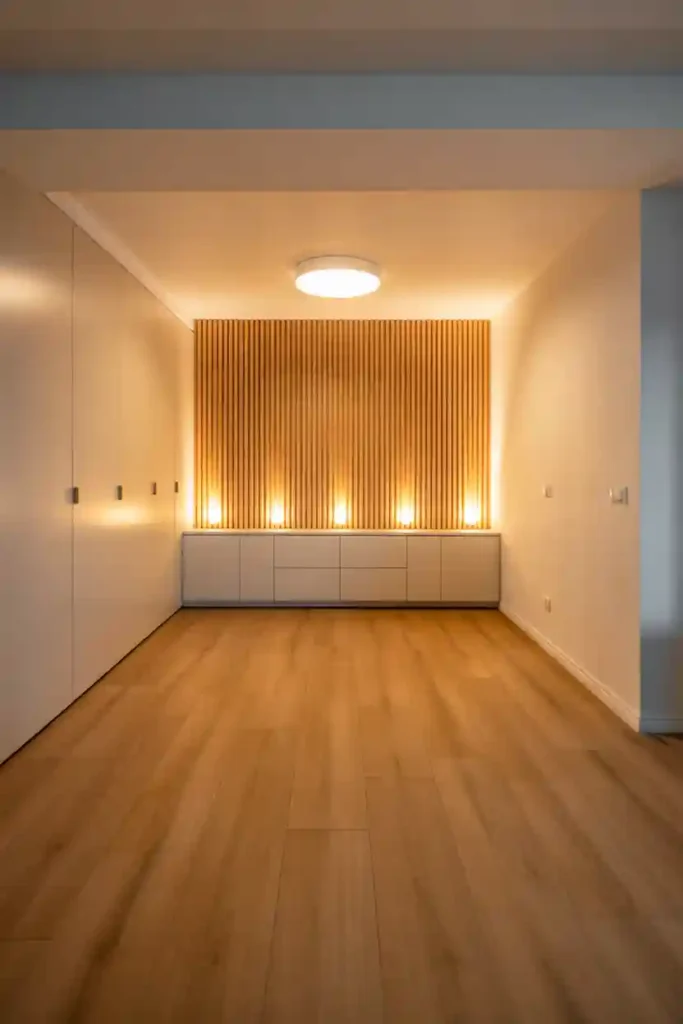
Light wood tones bring natural warmth into a basement while still enhancing brightness. Pairing light oak, ash, or maple flooring with white walls creates a balanced contrast that reflects light without feeling cold. Wood adds psychological “brightness” by evoking natural materials associated with daylight spaces. Use wood furniture with slim frames to avoid heaviness. Add warm lighting through wall lamps or pendant fixtures to blend beautifully with the wood finish.
To maintain brightness, avoid dark stains and glossy varnishes—opt for matte or satin finishes instead. You can also include wood slat accent walls with uplighting behind them to create glowing vertical lines. This design approach makes the basement feel grounded, cozy, and naturally bright even without sunlight.
5. Artificial Skylight Panels
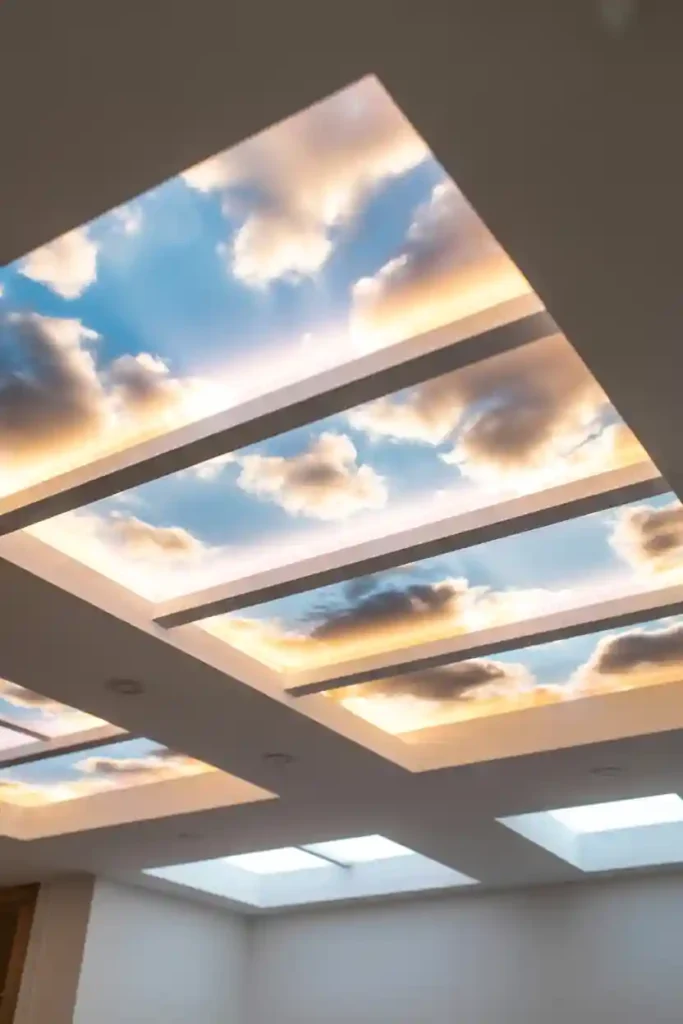
Artificial skylight panels simulate real daylight by using LED backlit frames with frosted diffusers. Installing 2-4 panels across the ceiling creates the psychological effect of a window overhead. Choose panels with adjustable brightness and slight blue-white daylight tones. Surround the panels with recessed lights to blend the edges seamlessly into the ceiling.
This works exceptionally well in basement bedrooms, kitchens, or lounges. For a more realistic effect, choose panels with soft cloud or sky prints layered inside the diffuser. These panels trick the brain into perceiving natural light, instantly lifting mood and perceived brightness. The basement will feel open, breathable, and connected to the outdoors—without a single real window.
6. Glossy Floor Light Reflection
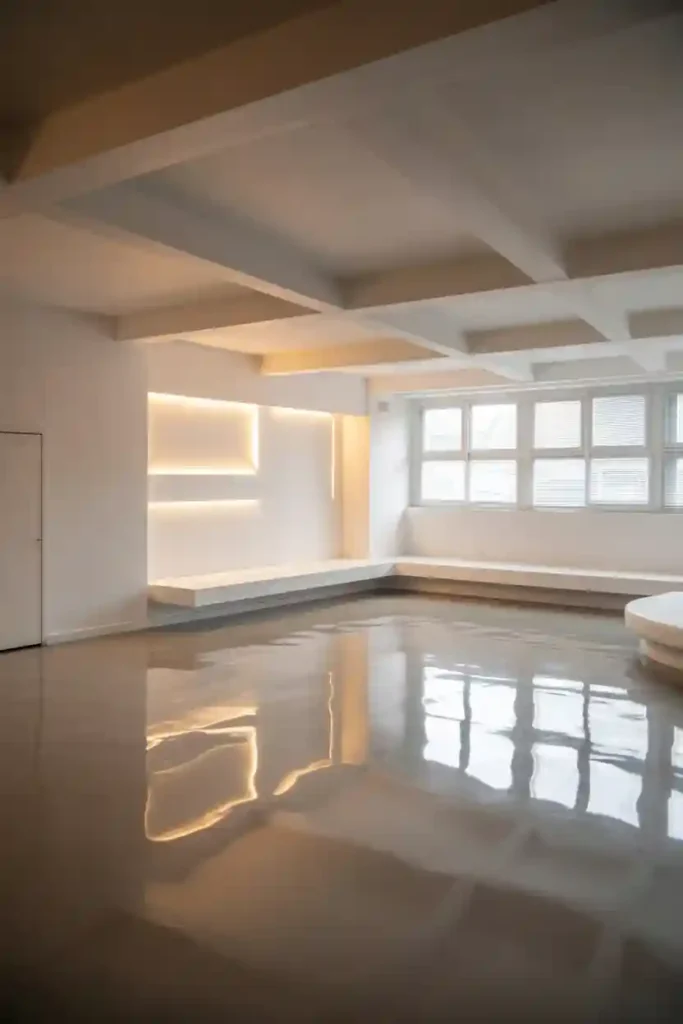
Glossy floors reflect light like water or glass, spreading brightness across the basement. A white or light-neutral epoxy or polished tile floor works best. The reflective surface throws light into areas that ceiling fixtures don’t directly hit, especially corners. Pair the glossy floor with matte walls to avoid excessive glare.
Keep furniture elevated on thin legs so light can travel underneath and reflect upward. This style works well for modern basements, photo studios, or multipurpose rooms. While glossy floors are bold, the brightness payoff is huge. Just be sure to use anti-slip coatings for safety and avoid placing lights directly aimed at the floor.
7. Pastel Light-Infused Basement Retreat
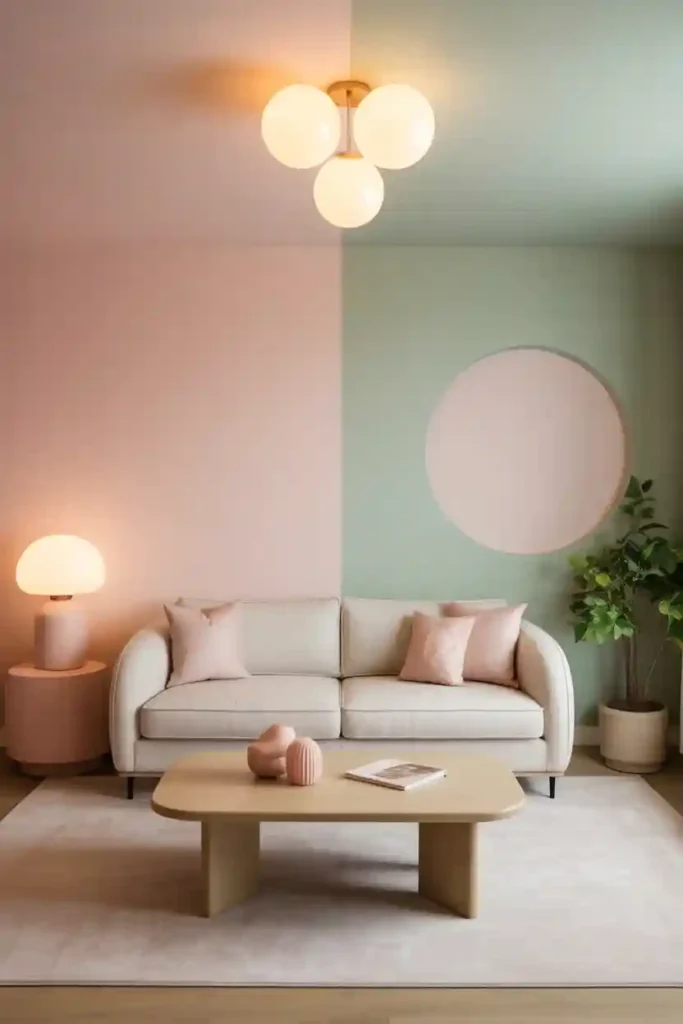
A pastel-themed basement can feel bright, soothing, and full of life even without windows. Pastels reflect light efficiently while adding a gentle emotional warmth that pure white sometimes lacks. Soft shades like blush pink, powder blue, lavender, or mint green create a space that visually mimics daylight, making the room feel higher and more breathable. To enhance brightness, use layered lighting that blends seamlessly with the color palette. Install frosted globe ceiling lights to spread soft illumination evenly, and add tall floor lamps with linen or cotton shades for diffused glow.
LED strips behind shelves or along floor edges add vertical and horizontal light flow, reducing shadows and creating the illusion of hidden natural light sources. Keep furniture light in tone—cream sofas, light oak tables, or pastel-upholstered accent chairs help maintain reflection. Avoid dark décor that disrupts brightness. Use minimal wall art with soft backgrounds and add a large mirror to double the light effect. Pastel basements work well for reading nooks, lounges, or creative studios.
8. Neon Accent Glow Basement Lounge
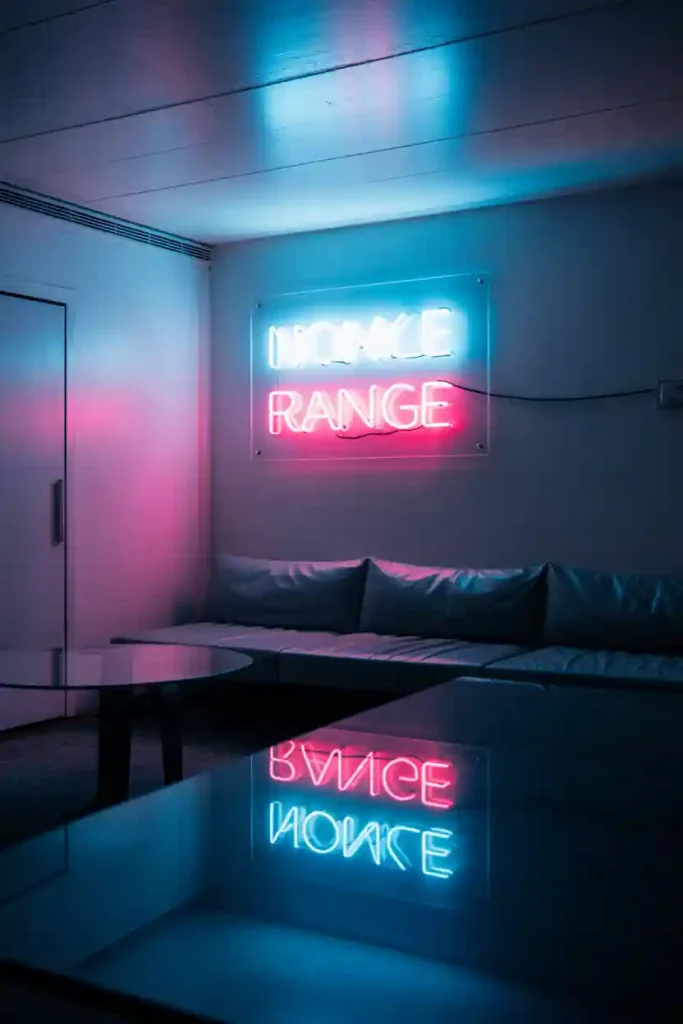
Neon lighting brings brightness into a basement in a psychological, aesthetic, and functional way. Even though neon lights are colored, they can still make a room feel bright if you choose the right tones and reflective surroundings. Icy blue, pastel pink-white, soft aqua, or lavender neon signs create a glowing focal point that spreads visual brightness across the space. To diffuse light wider, mount the neon art on a frosted acrylic or white wooden panel instead of placing it directly on a dark wall.
Recessed ceiling lights should still act as the primary illumination source while neon adds dimension and vibrant contrast. Keep furniture low and minimal so light travels freely—sleek gray or white sofas, open shelving, and clutter-free layouts maintain brightness. This design is perfect for media rooms, hangout lounges, or video creation spaces, where neon looks striking without feeling moody. When recorded on camera, neon gives a radiant, trendy aesthetic that appears bright without real daylight.
9. Light-Reflecting Basement Gallery Wall
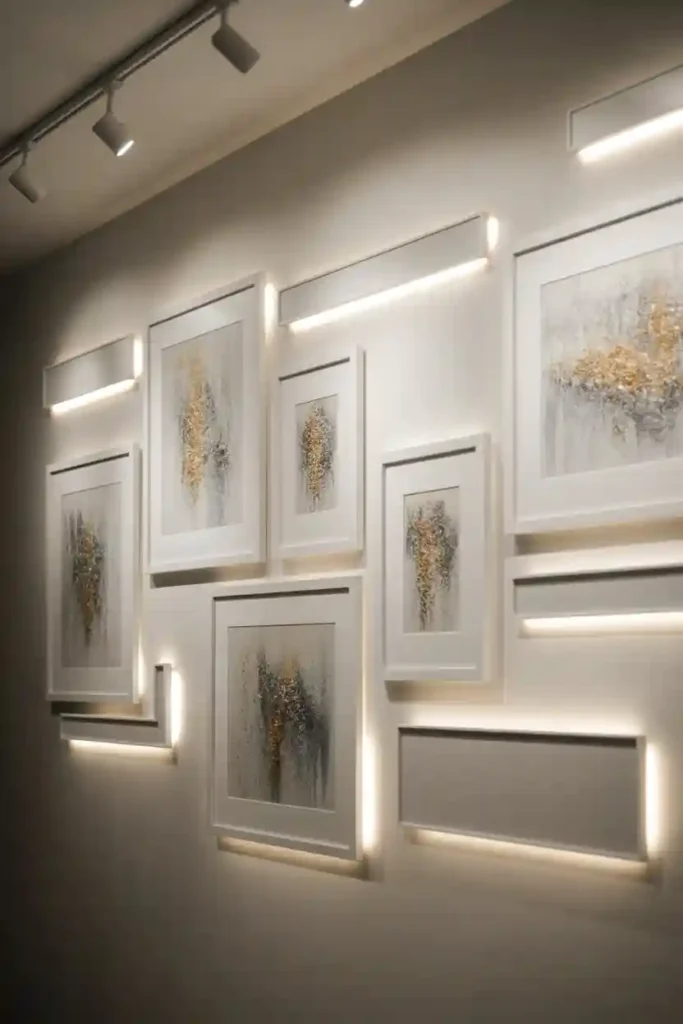
A gallery wall can act as a brightness amplifier in a basement that lacks windows by bouncing artificial light back into the room. The trick is selecting materials that reflect rather than absorb light. Use white or light natural-wood frames, which spread light softly across the wall surface. Choose artwork with pale backgrounds, soft gradients, or metallic highlights—gold foil prints, silver accents, or light abstract designs reflect light more powerfully than dark canvases.
This avoids glare while enhancing brightness. Adding LED backlighting behind the gallery panel or under floating shelves increases vertical light flow, giving the wall a lifted glowing effect. A structured grid or symmetrical frame layout visually widens the space and draws attention away from the absence of natural light sources. Gallery walls work beautifully in lounge areas, hallways, or studio corners, making the basement feel intentional, artistic, and bright.
10. Multi-Layered Lighting for Maximum Brightness
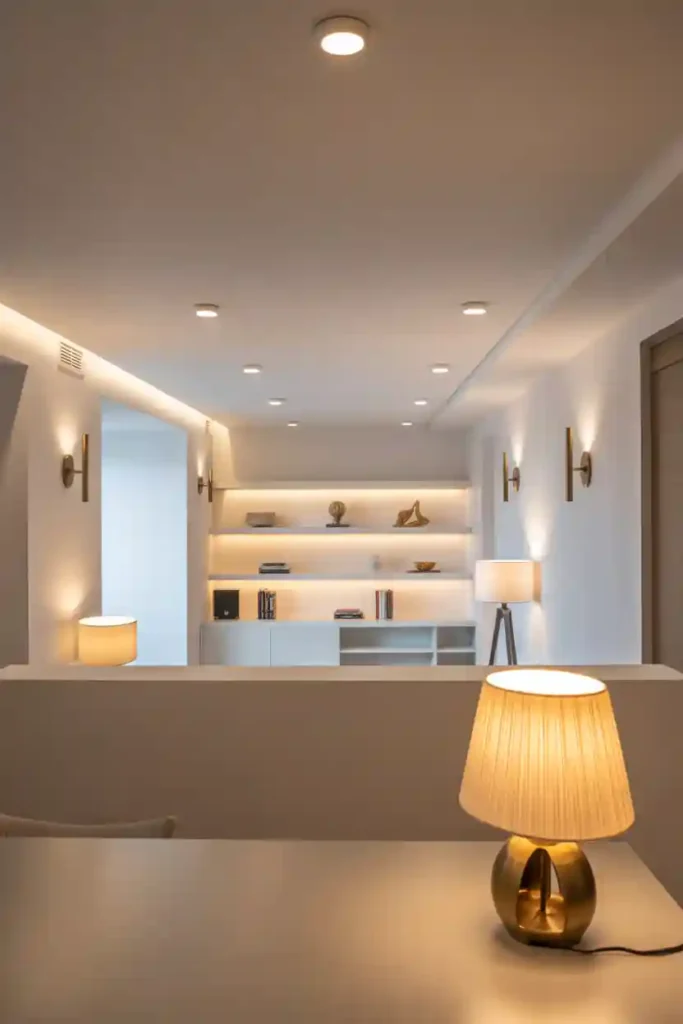
A basement without windows needs more than one overhead light—it requires a well-planned, multi-layered lighting system that eliminates shadows and creates a natural bright perception. Start with recessed ceiling lights spaced evenly to wash the room in soft illumination. Then add wall sconces at eye level to brighten vertical surfaces, which helps the space feel taller. Floor lamps with fabric shades should be placed in darker corners to diffuse light outward instead of directing it harshly. Table lamps on sideboards or consoles add mid-level glow, preventing the space from feeling top-heavy.
LED strip lighting under shelves, along stair railings, or behind media units adds continuous light lines that visually expand the room. To increase reflection, keep walls white or light gray and include metallic or glass accessories near light sources. Use bulbs in the 3000K–4000K range to balance warmth and brightness, mimicking daylight without feeling cold. Dimmers are essential—they allow brightness control while keeping light soft.
11. Frosted Glass Wall Panels to Spread Light
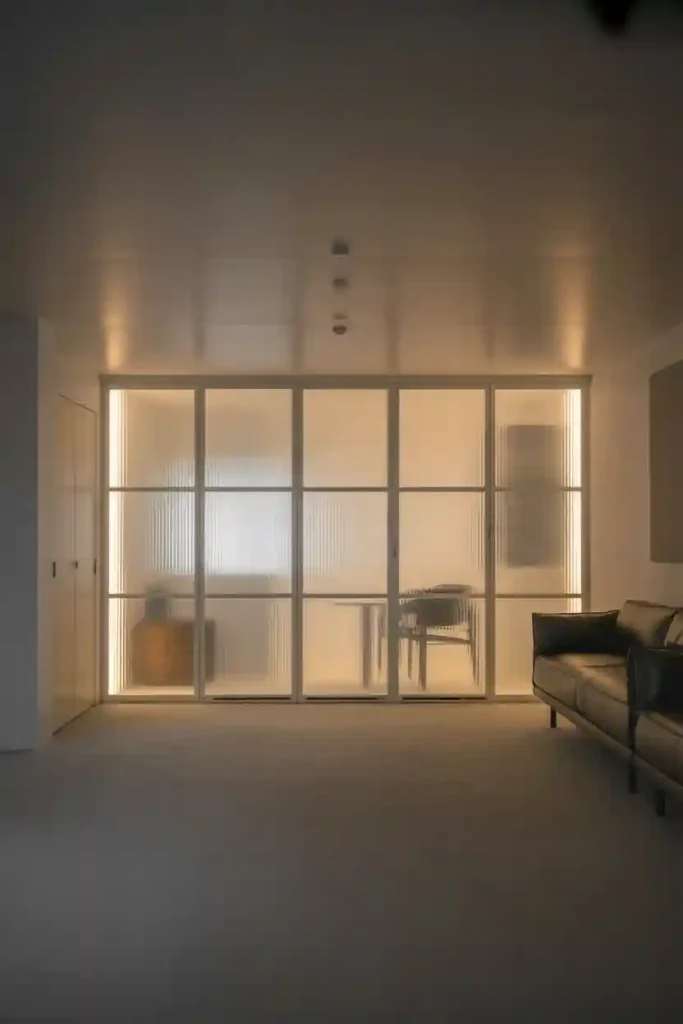
Frosted glass wall panels can transform a closed basement into a glowing, light-filled environment by allowing illumination to travel through the space while maintaining privacy. Install panels as room dividers or as false “light windows” built into walls. When LED lights are placed behind frosted glass, the surface diffuses brightness softly across the room, creating a daylight-like glow effect. Unlike solid drywall, these panels distribute light instead of blocking it, making the entire basement feel interconnected and brighter. Choose white or satin-finished framing around the panels to enhance reflection.
This technique is perfect for basement offices, bedrooms, or lounges where privacy is still needed. Combine the glass panels with ceiling recessed lights for functional brightness and LED backlighting for atmosphere. The frosted effect prevents glare and spreads light evenly, removing harsh contrast. The result is a basement that feels airy, modern, and gently illuminated, replacing the psychological need for windows while making the space feel intentionally designed and filled with light.
12. Up lighting Behind Wall Slats for Vertical Glow
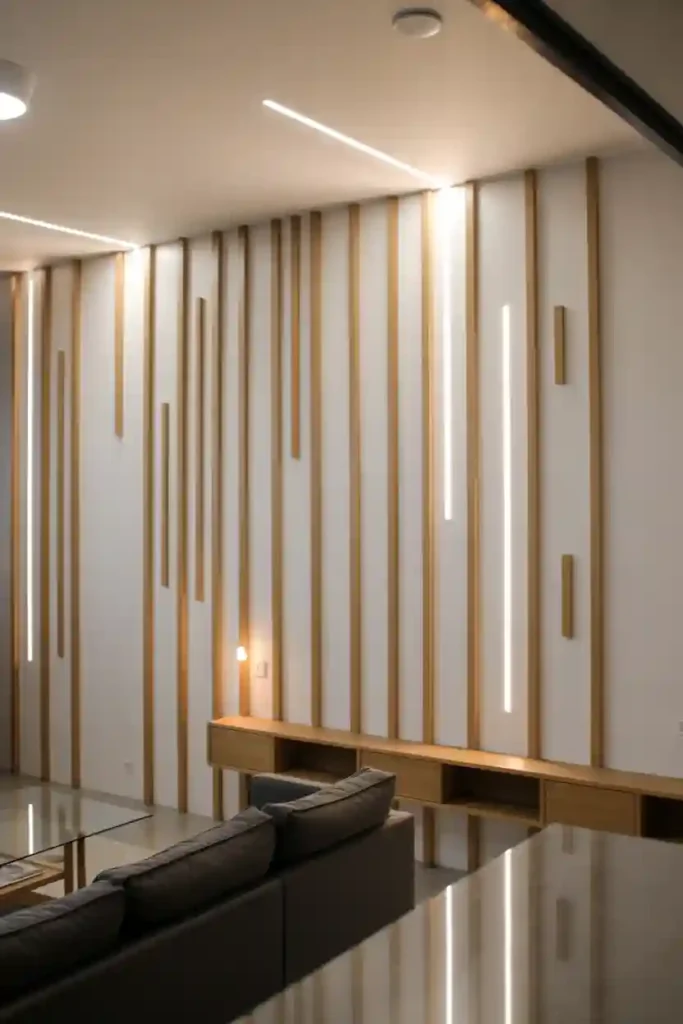
Wall slats made of light wood or white composite panels paired with hidden uplighting create powerful vertical brightness that makes a basement feel taller and lighter. Install slats on one or two main walls, keeping spacing narrow for a clean, structured look. Place LED lights behind the bottom edge or between slat gaps, angled upward so light climbs the wall instead of hitting directly into the eyes. This upward movement mimics how natural light behaves, lifting the ceiling visually and reducing the cave-like feel.
Light oak, birch, or whitewashed slats reflect light beautifully while adding warmth and texture. This technique also enhances acoustics, making the basement sound softer and feel more comfortable. Pair slat uplighting with recessed ceiling lights to fill shadows. Avoid dark stains or heavy décor that absorbs light. The vertical glow effect works exceptionally well in lounges, creative studios, or basement corridors. The result is a space that feels architecturally elevated, evenly illuminated, and emotionally brighter—proving that brightness can be created through direction and design, not just sunlight.
13. High-Gloss Ceiling + Strategic Spot Lighting
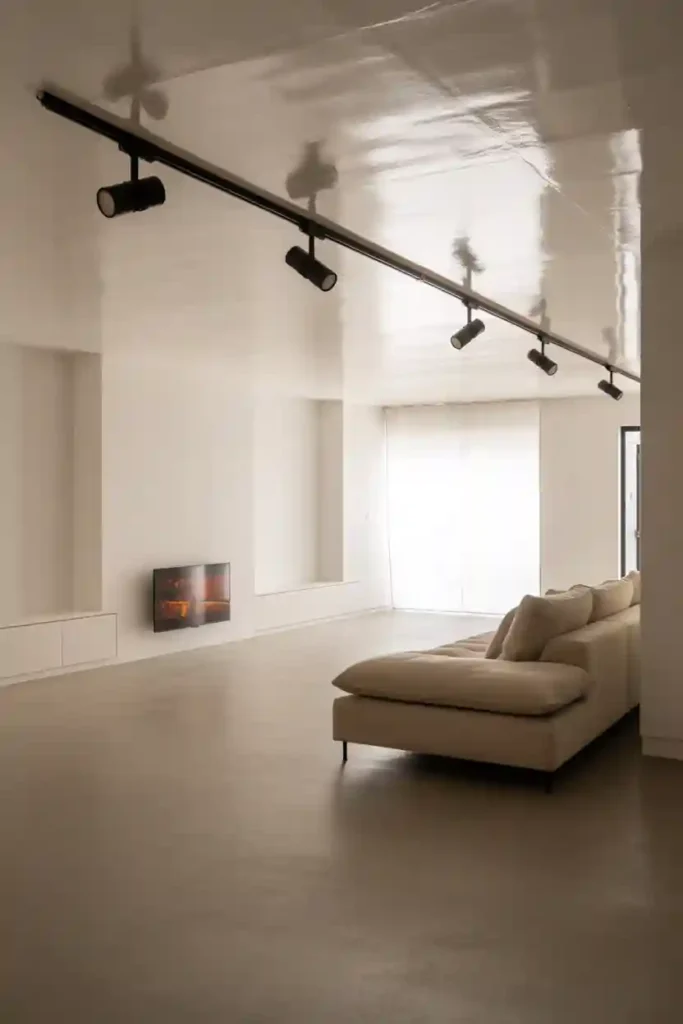
A high-gloss or satin-finished ceiling can dramatically increase the brightness of a windowless basement by reflecting and dispersing artificial light across the room. Unlike matte ceilings that absorb illumination, a glossy surface behaves like a subtle mirror overhead, softly amplifying every light fixture below it. Paint the ceiling in bright white or very light neutral shades, then apply a reflective topcoat for a gentle sheen.
Pair the ceiling with white or light gray walls to avoid contrast shadows. Keep furniture minimal and avoid tall cabinets that interrupt light bounce. This design works beautifully in open lounges or entertainment spaces, where the ceiling becomes a functional light-enhancing feature instead of a forgotten surface. When combined with evenly spaced lighting, the basement feels visually lifted, wider, and brighter. It also reduces the psychological need for windows, since light now comes from multiple directions and reflections.
14. Light-Themed Basement Workspace
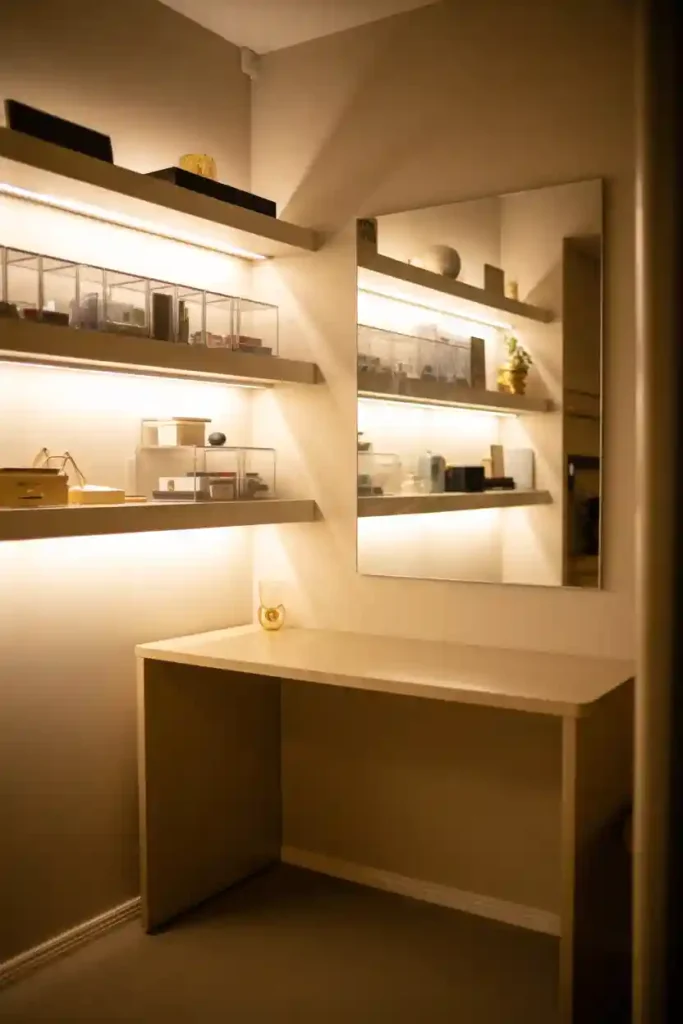
A windowless basement can still become a productive, energizing workspace if designed with reflective tones and functional lighting layers. Start with a white or light ash wood desk and pair it with matching floating shelves that include built-in LED strip lighting. The shelves brighten the wall vertically, preventing the room from feeling compressed. Use desk lamps with wide diffusion and avoid exposed harsh bulbs. Add glass organizers, light-colored stationery holders, and metal accents to bounce light back into the room.
For wall paint, choose soft cream, light gray, or off-white to reflect light while keeping the environment comfortable for long working hours. Position a large mirror behind or beside the desk to double brightness and create depth. Keep cables hidden using white raceways or clips to avoid clutter shadows. This layout works especially well for remote work, content planning, or creative projects like logo and post designing. The room feels organized, open, and bright, reducing eye strain and boosting mood.
15. Backlit Wall Niches for Soft Light Zones
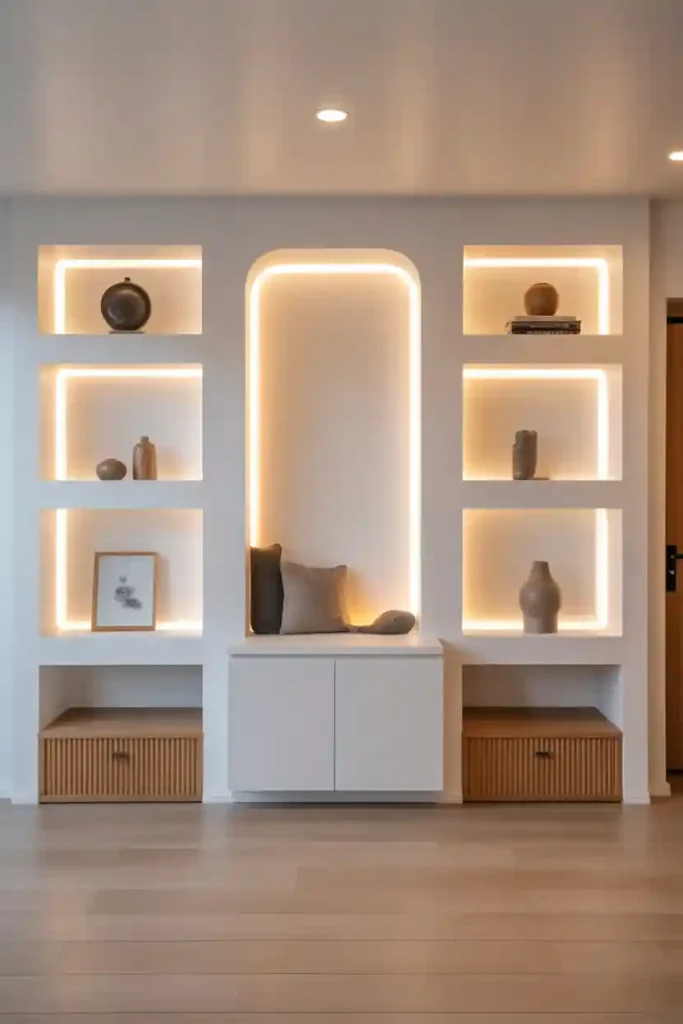
Wall niches or recessed wall cutouts with hidden backlighting can mimic the effect of glowing windows, bringing gentle brightness into a basement that has no natural light openings. Build 2–5 niches into a main wall and install LED lights behind frosted acrylic sheets or inside the edges. The light glows outward softly, creating multiple bright “light zones” that feel natural, calm, and architectural. Paint the niches white or line them with light wood to reflect light better. Display light décor inside them—ceramic vases, small plants, books with pale covers, or minimal sculptures—to diffuse light further. Avoid dark items that absorb brightness.
This design is especially effective in basements used as lounges, hallways, or creative recording corners, since the light looks intentional and visually replaces the need for windows. Pair niches with recessed ceiling lighting for full balance. The glowing pockets reduce harsh contrast and shadows, making the basement feel open and layered rather than flat. It elevates mood, adds style, and spreads light multidirectionally without glare. The result is a bright basement wall that feels artistic, soft, and emotionally uplifting, turning solid walls into light-emitting architectural features.
16. Basement Gym with Mirror + Perimeter LED Glow
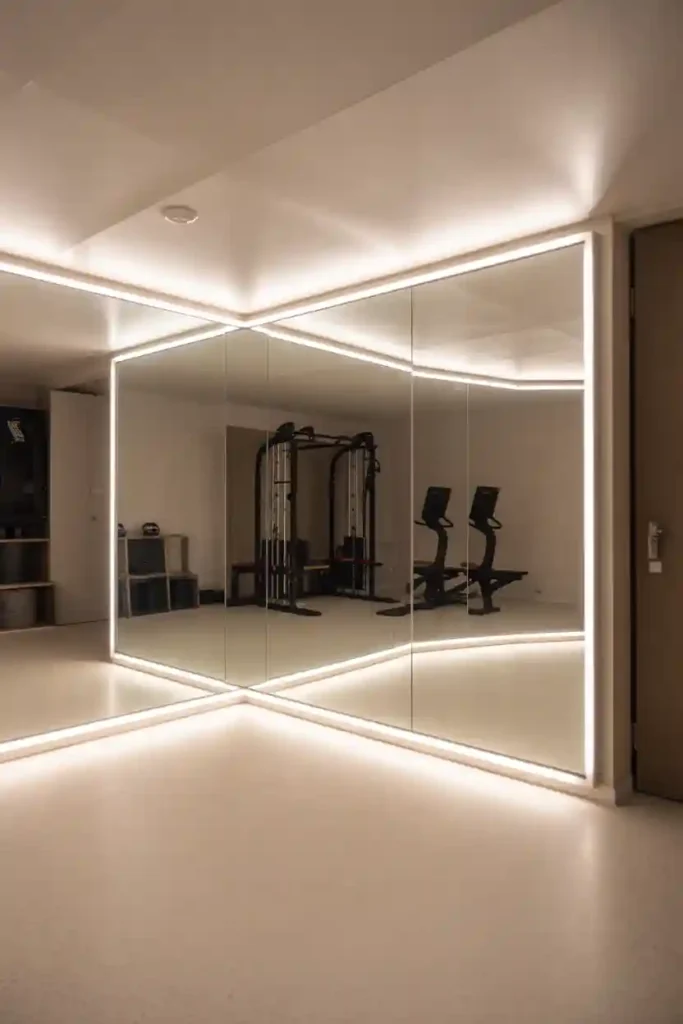
A basement home gym without windows can still feel energetic and bright with the right light-boosting strategy. Mirrors reflect light and visually widen the space, while perimeter LED strips create continuous brightness that removes shadow pockets—especially important in gyms where motivation and visibility matter. Install a large mirror wall behind equipment or across one side of the room. Use white or light gray rubber flooring, which reflects light better than black gym mats. Add LED strip lights along ceiling edges, under benches, and around mirror frames to create light that travels across the room in clean, uninterrupted lines.
Recessed ceiling lights provide functional brightness, while perimeter lighting boosts mood and energy. Keep equipment black, gray, or metallic for contrast, but avoid dark wall paint. This design works exceptionally well for workout videos or content creation, since the lights create a glowing, high-energy look on camera. The combination reduces the underground feel, increases brightness perception, and adds momentum to the space. The result is a gym that feels open, powerful, and visually charged—bright enough to fuel movement, focus, and consistency.
Final words
A windowless basement is not a limitation—it’s a blank canvas for creativity. By using light-reflecting colors, layered illumination, mirrors, and glowing architectural features, you can build a space that feels open, warm, and full of energy. Thoughtful design changes the atmosphere completely, proving that brightness doesn’t only come from the sun—it comes from smart planning and bold ideas. Whether you want comfort, productivity, or style, your basement can deliver it while feeling beautifully bright.