

13 Basement Lighting Ideas That Brighten the Space
Basements often struggle with low ceilings, limited windows, and a lack of natural light, which can make them feel dark and uninviting. The right lighting, however, can completely transform a basement into a bright, comfortable, and functional living space. Whether your basement is used as a family room, home office, guest suite, or entertainment area, lighting plays a crucial role in how the space is perceived.
Instead of relying on a single overhead fixture, professional basement lighting focuses on layering, strategic placement, and light-reflecting techniques. From recessed lighting and wall sconces to LED strips and floor lamps, smart lighting choices can make even the darkest basement feel open and welcoming. This guide explores 13 basement lighting ideas that brighten the space, offering practical solutions that improve visibility, enhance mood, and elevate style. With thoughtful planning, your basement can feel just as bright and inviting as the rest of your home.
1. Recessed Ceiling Lights

Recessed ceiling lights are one of the most popular basement lighting ideas because they provide even illumination without taking up headroom. Basements often have lower ceilings, and bulky fixtures can make the space feel cramped. Recessed lights sit flush with the ceiling, creating a clean and streamlined look.
These lights work well for general lighting and can be spaced evenly across the ceiling to eliminate dark spots. Choosing warm or neutral white bulbs helps prevent the basement from feeling harsh or sterile. Dimmable recessed lights add flexibility, allowing you to adjust brightness for different activities. This idea works because it maximizes brightness while maintaining an open and uncluttered ceiling, making basements feel taller and more spacious.
2. Layered Lighting for Depth
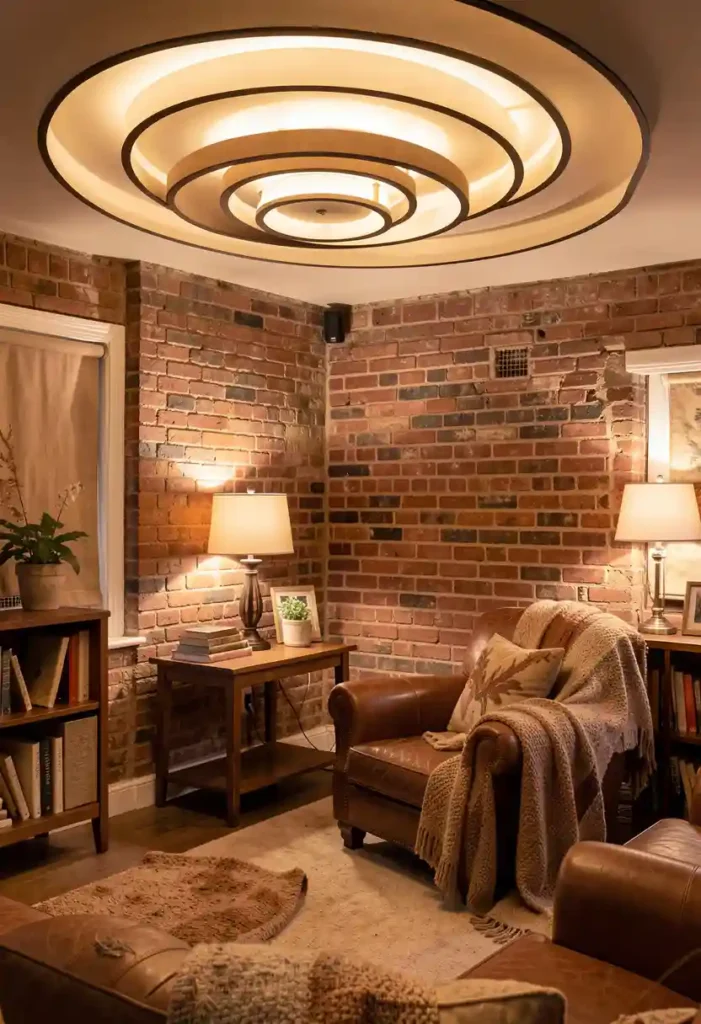
Layered lighting is essential for brightening basements effectively. Instead of relying on one light source, layering combines ambient, task, and accent lighting to create balance and depth. This approach prevents shadows and makes the space feel more dynamic.
Ambient lighting provides overall brightness, task lighting supports activities like reading or working, and accent lighting highlights architectural features or décor. Floor lamps, table lamps, and wall sconces work well in basements to soften overhead light. Layered lighting works because it distributes light evenly throughout the room, eliminating gloomy corners and making the basement feel intentional and well-designed.
Read Also: 11 Bookshelf Ideas For Small Spaces That Work
3. Wall Sconces for Vertical Light
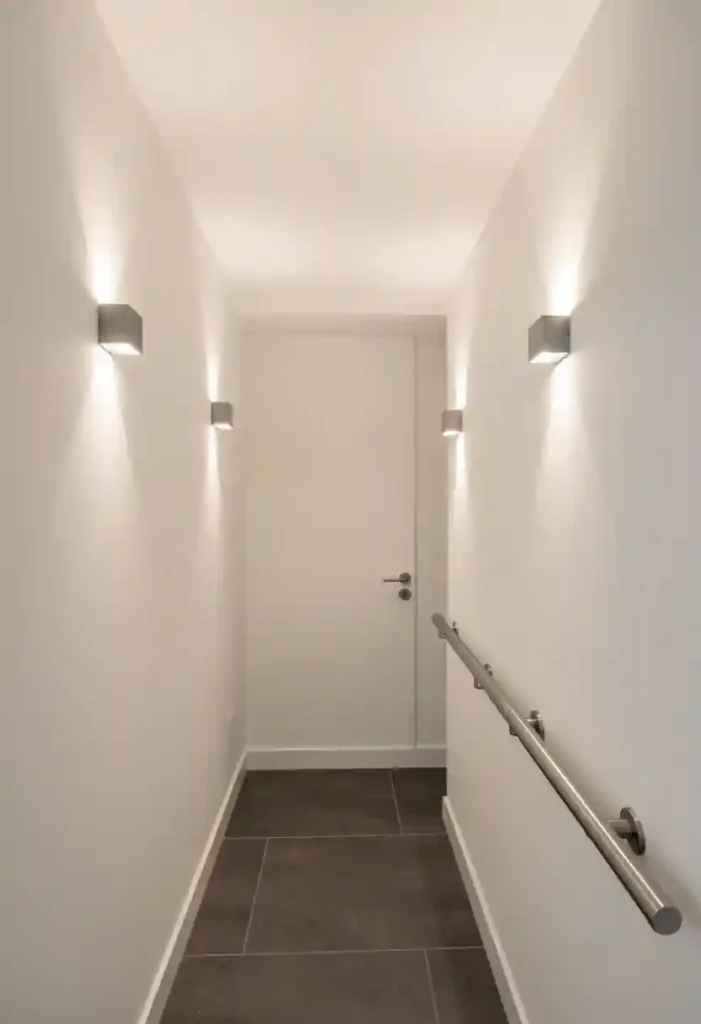
Wall sconces are excellent basement lighting ideas because they bring light up the walls, helping the space feel taller and brighter. Basements often lack visual height, and vertical lighting counters this by drawing the eye upward.
Sconces can be installed along hallways, near seating areas, or beside artwork. Choosing fixtures with upward or diffused light prevents harsh shadows. Wall sconces also free up floor and table space, making them ideal for compact basements. This idea works because it enhances brightness while adding a decorative element that elevates the overall design.
4. LED Strip Lighting
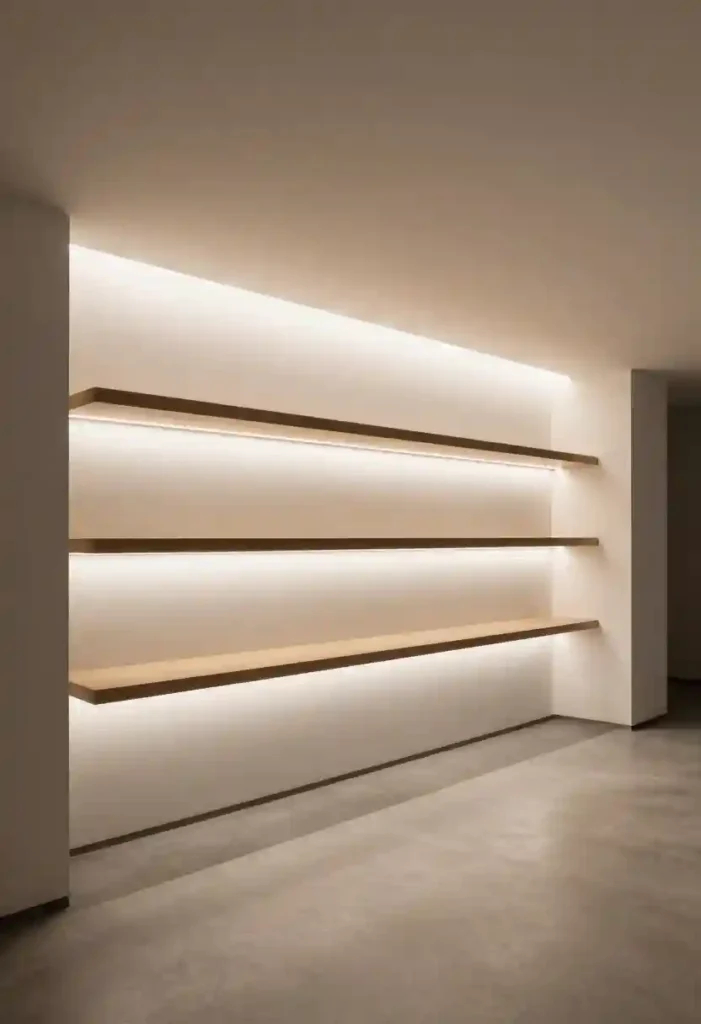
LED strip lighting is a versatile option for brightening basements, especially in areas where traditional fixtures may not fit. Installed under shelves, along ceilings, or behind furniture, LED strips add soft, continuous light that reduces dark zones.
These lights are energy-efficient and often dimmable, allowing you to control the mood. LED strips work well in entertainment areas, bars, or media rooms. They also highlight architectural details and add depth. This idea works because it adds brightness subtly while enhancing the basement’s atmosphere.
5. Light-Colored Ceiling Fixtures
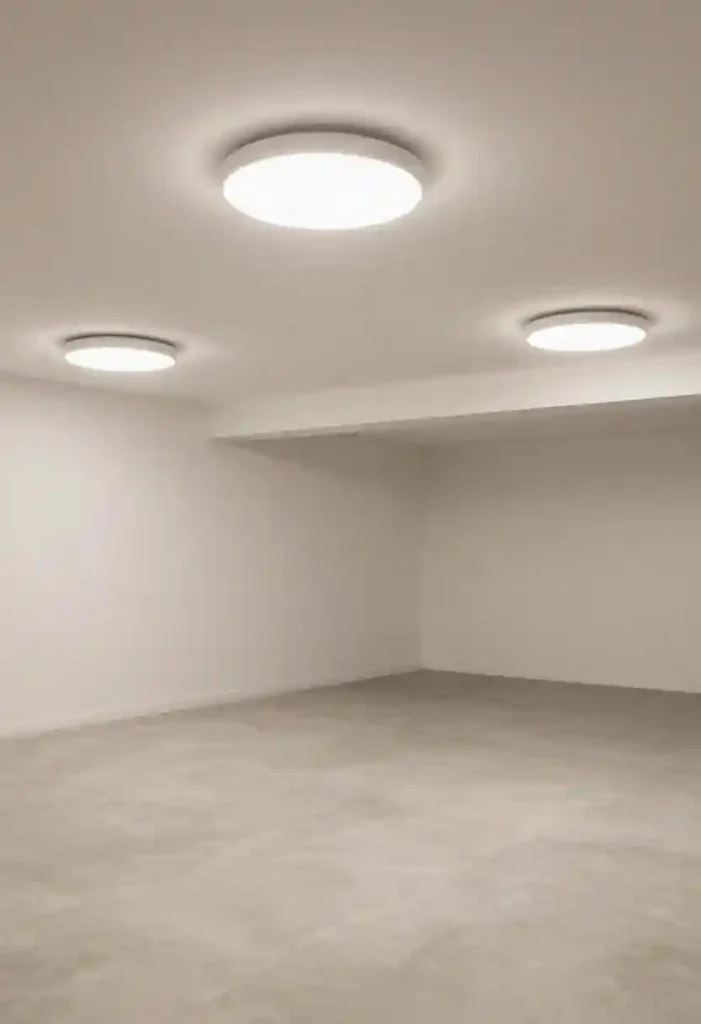
Choosing light-colored ceiling fixtures helps reflect light rather than absorb it. In basements, dark fixtures can make the ceiling feel heavier and lower. Light finishes like white, brushed metal, or glass keep the space visually open.
Flush-mount or semi-flush fixtures work best for low ceilings. Pairing these fixtures with reflective surfaces enhances brightness. This idea works because it supports light distribution and prevents the basement from feeling closed in.
6. Floor Lamps to Eliminate Dark Corners
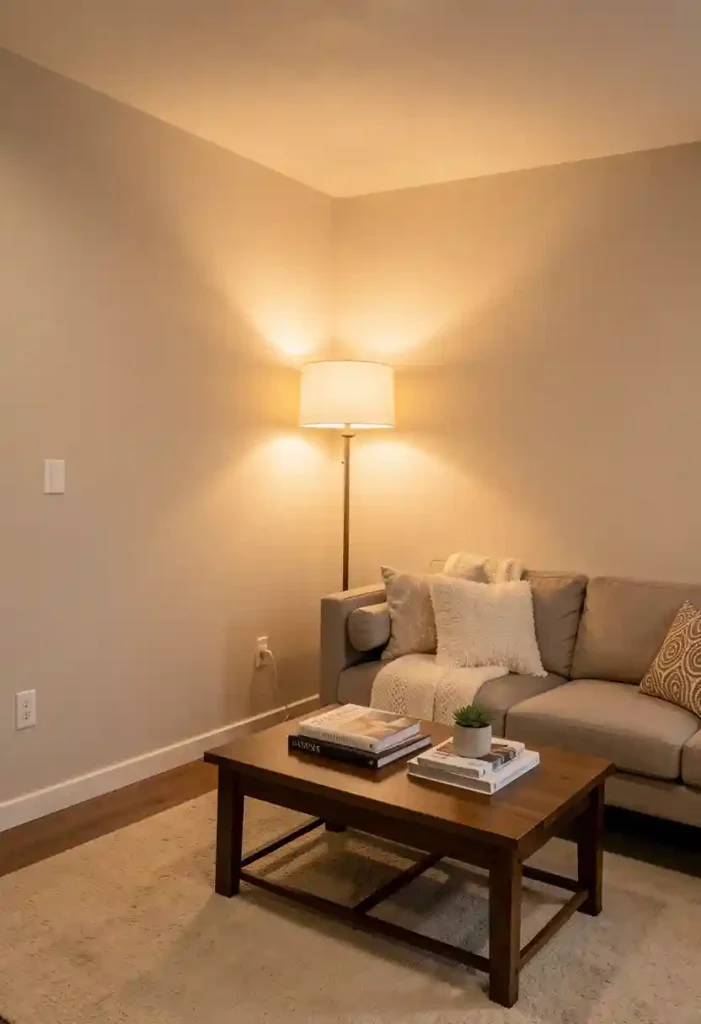
Floor lamps are simple yet effective basement lighting ideas for brightening corners that overhead lights often miss. Placing lamps near seating areas or in unused corners fills in shadowy spots.
Arc lamps or slim designs work best to avoid clutter. Soft white bulbs create warmth while adding brightness. Floor lamps work because they add flexibility—lights can be moved or adjusted as the space changes.
7. Table Lamps for Warmth
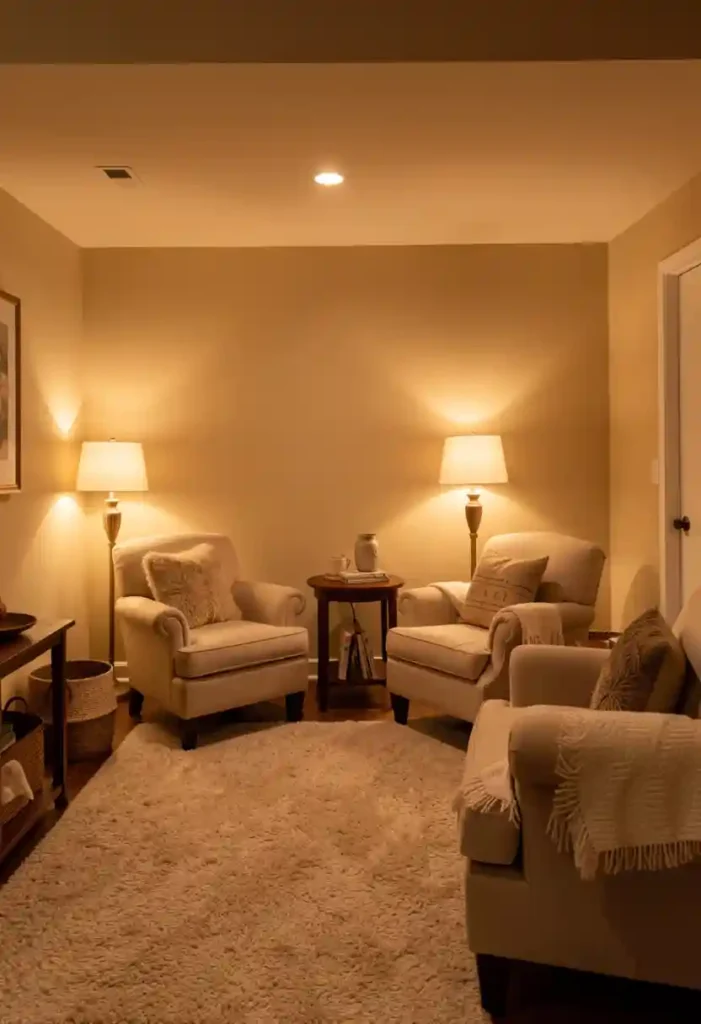
Table lamps bring warmth and comfort to basements, making them feel less utilitarian. They’re ideal for side tables, desks, or shelves and help soften overall lighting.
Using lamps with fabric shades diffuses light, reducing glare. Pairing table lamps with overhead lighting creates a welcoming atmosphere. This idea works because it adds layered brightness and makes basements feel more like living spaces than storage areas.
8. Mirrors to Reflect Light
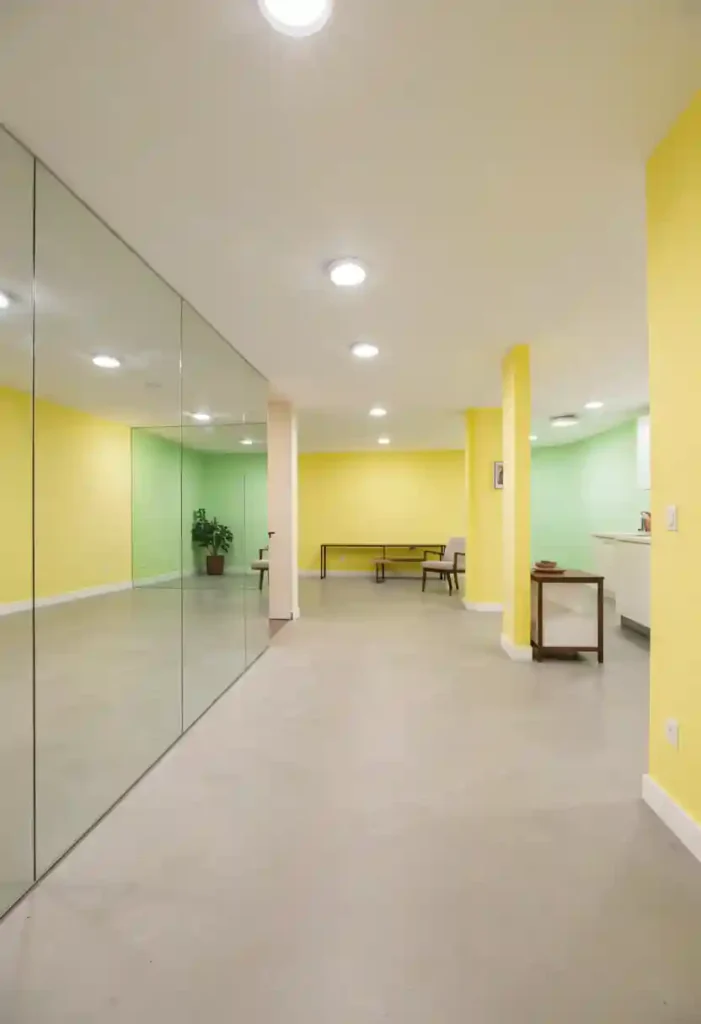
Mirrors are not light sources, but they significantly amplify basement lighting. By reflecting both natural and artificial light, mirrors help distribute brightness throughout the space.
Placing mirrors opposite light fixtures or near stairwells maximizes their effect. Large mirrors work best in small or dark basements. This idea works because it visually doubles light, making the basement feel brighter and larger.
9. Track Lighting for Flexibility
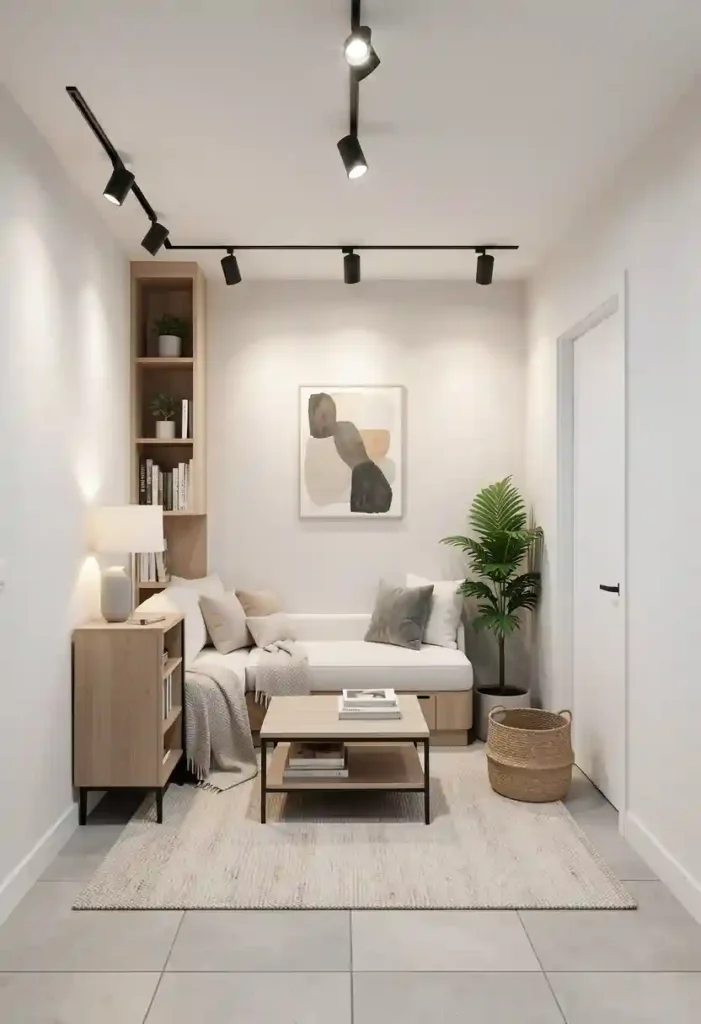
Track lighting offers adjustable illumination, making it ideal for basements with multiple zones. Each light can be directed to highlight seating areas, artwork, or workspaces.
Track systems are especially useful in basements with uneven layouts. Choosing sleek designs prevents visual clutter. This idea works because it allows targeted brightness where it’s needed most.
10. Lighting Around Staircases

Basement staircases often feel dark and unwelcoming. Adding lighting along stairs improves safety while brightening the entry point.
Wall lights, recessed step lights, or LED strips along handrails work well. This idea works because it creates a smooth transition into the basement while enhancing overall brightness.
11. Daylight-Mimicking Bulbs
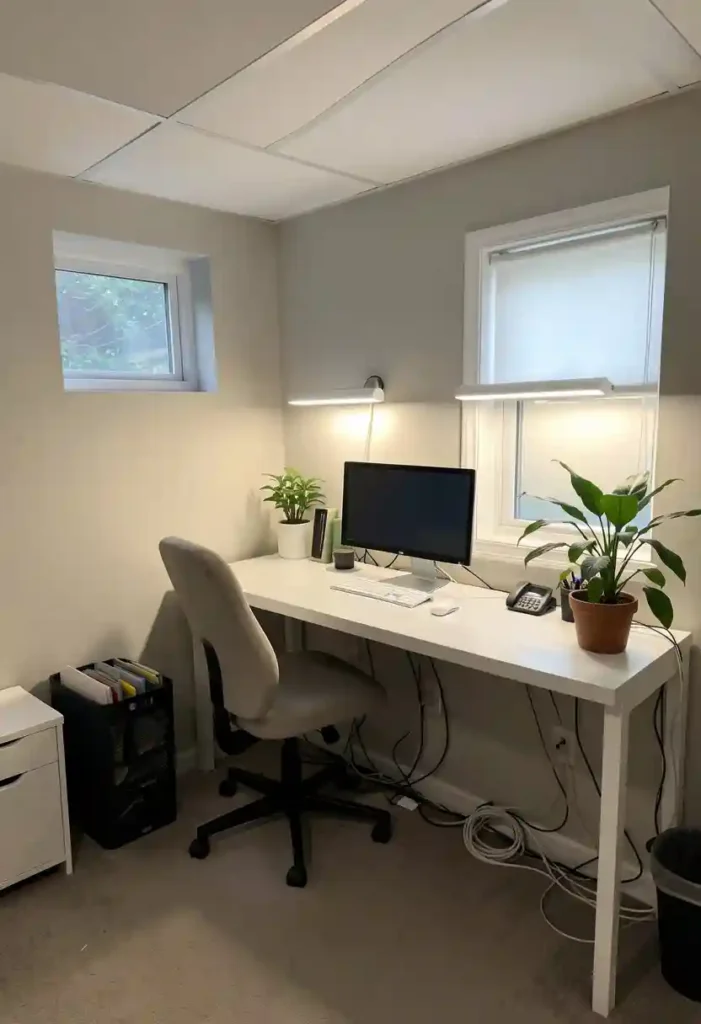
Using bulbs that mimic natural daylight helps counteract the lack of windows in basements. These bulbs provide clear, balanced light without harshness.
Daylight-mimicking bulbs work best in activity areas like offices or gyms. Pairing them with warm accent lighting keeps the space comfortable. This idea works because it boosts brightness while maintaining a natural feel.
12. Daylight-Mimicking Bulbs
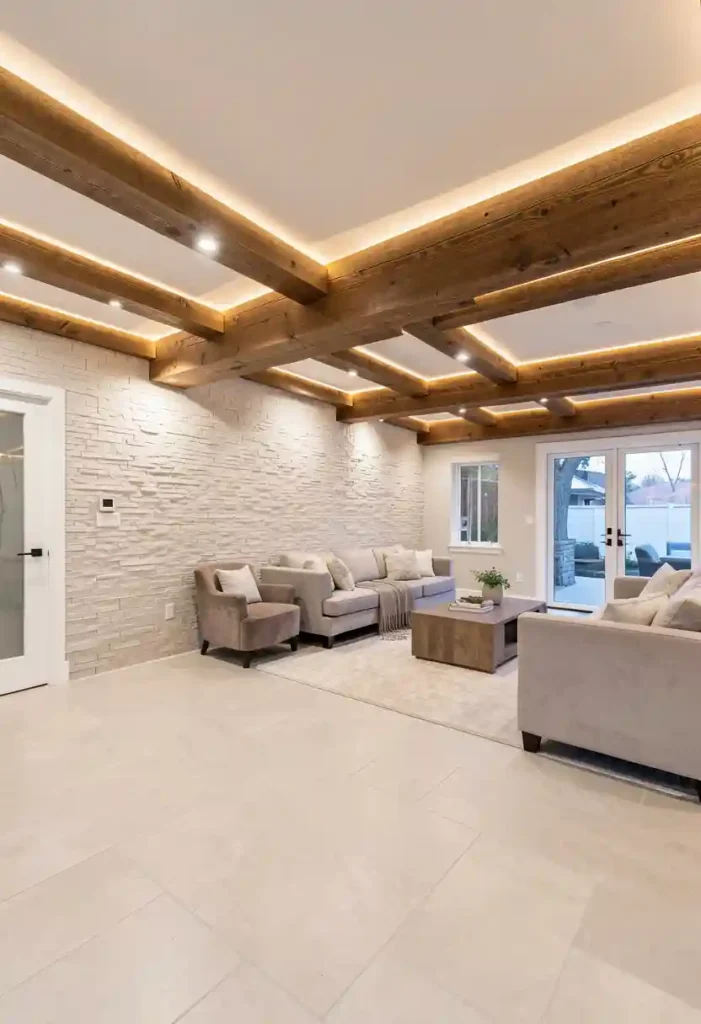
Accent lighting highlights architectural elements like beams, alcoves, or textured walls. This adds depth and visual interest while contributing to overall brightness.
Spotlights or hidden LEDs work well for this purpose. Accent lighting works because it draws attention away from the basement’s limitations and toward its strengths.
13. Smart Lighting Systems
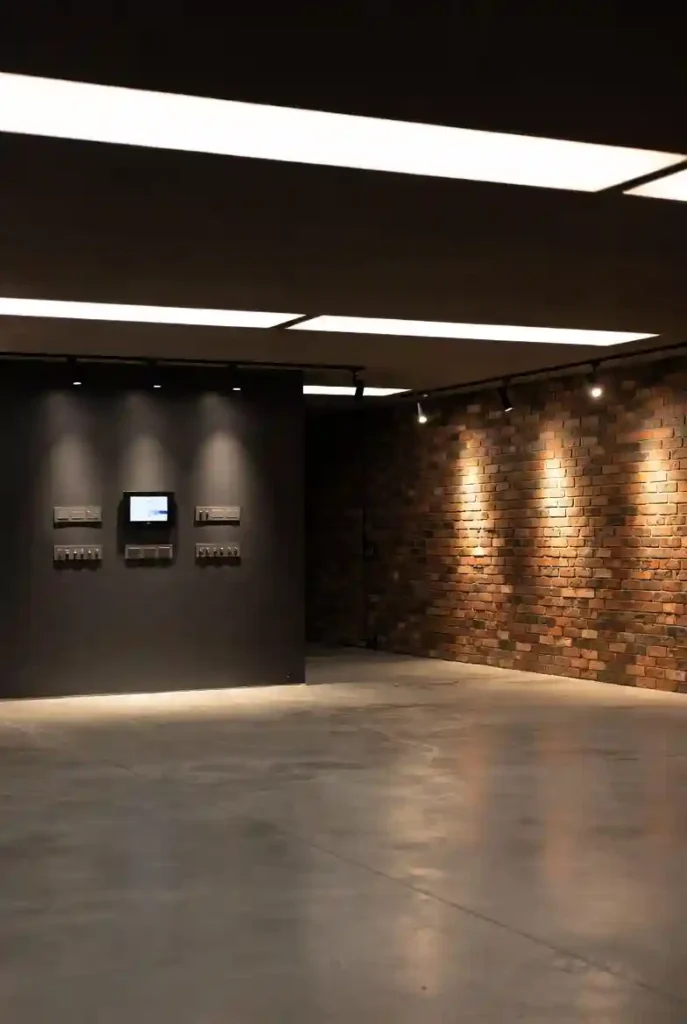
Smart lighting systems allow full control over basement brightness. Using apps or voice control, you can adjust lighting levels, color temperature, and timing.
Smart lighting works well in basements used for multiple purposes. This idea works because it adapts to different needs while ensuring the space stays well-lit and functional.
Final Words
Basements don’t have to feel dark, dull, or disconnected from the rest of your home. With the right lighting choices, even the most light-challenged basement can become a bright, welcoming, and fully functional space. From recessed ceiling lights and layered lighting to mirrors, LED strips, and smart systems, each idea in this guide proves that brightness comes from strategy—not just more fixtures.