

11 Dining Room Paint Color Ideas That Transform
The right paint color can completely transform a dining room, creating an atmosphere that is inviting, stylish, and reflective of your personality. Walls serve as the backdrop for furniture, lighting, and décor, making color choices essential to the overall design. From bold, dramatic shades to soft, neutral tones, paint can define the mood of the room, highlight architectural details, and complement the furnishings.
Dark, moody hues add sophistication, while light, airy colors make the space feel open and vibrant. Accent walls, two-tone combinations, and textured finishes can also introduce depth and interest. Choosing a color that resonates with your style and harmonizes with the dining furniture, flooring, and accessories ensures a cohesive and impactful space. In this guide, we’ll explore 11 dining room paint color ideas that transform, showing how strategic color choices can turn an ordinary room into a polished, inviting, and beautifully designed space.
1. Classic Neutral Beige

A classic neutral beige provides a warm, timeless foundation for any dining room. This versatile shade complements wood furniture, metallic accents, and textiles while maintaining a refined, elegant atmosphere. Beige walls allow other elements, such as artwork, statement lighting, or decorative accessories, to stand out without overwhelming the space. Pairing soft beige with crisp white trim creates a clean, polished look that feels sophisticated yet inviting.
This understated color works in both traditional and modern dining rooms. Layering textures through rugs, curtains, and upholstered chairs adds depth and interest, ensuring the space doesn’t feel flat. Beige’s neutrality makes it easy to update décor seasonally or adjust with accent colors over time.
2. Deep Moody Blue
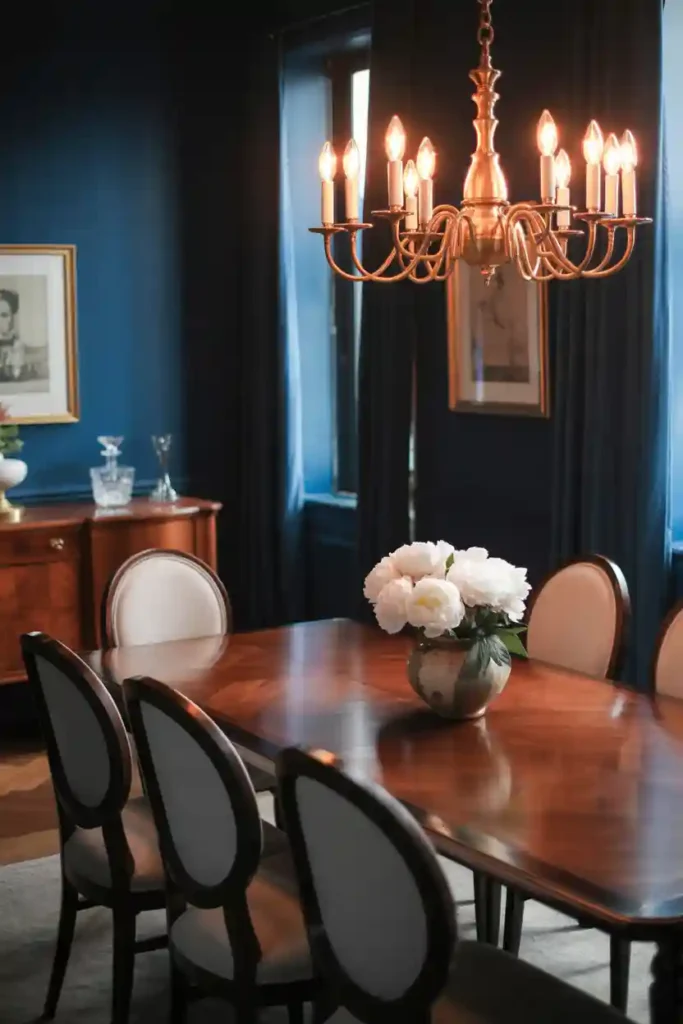
Dark, moody blue is a bold choice that adds depth, sophistication, and drama to a dining room. This shade pairs beautifully with gold, brass, or warm wood accents, creating a luxurious and timeless aesthetic. Blue walls work well in both contemporary and traditional settings. To avoid feeling too dark, balance with lighter furniture, metallic lighting, or white trim. Adding art or mirrors enhances brightness and reflects light, maintaining an airy, polished look.
Deep blue provides a striking backdrop for statement pieces such as a chandelier or sculptural dining chairs. This color makes the space feel intimate, refined, and thoughtfully curated, transforming an ordinary dining room into a stylish haven.
Read Also: 12 Formal Living Room Ideas That Feel Elegant
3. Soft Sage Green
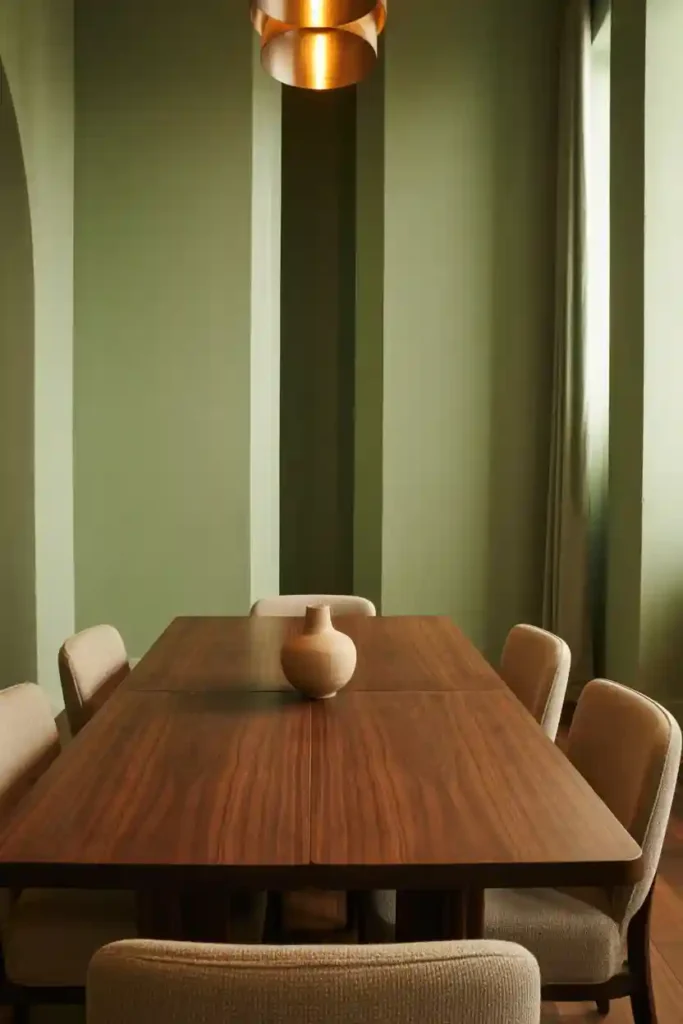
Soft sage green brings a calming, natural vibe to a dining room, making it feel refreshing yet sophisticated. This muted green pairs beautifully with neutral tones, warm wood furniture, and subtle metallic accents. Sage walls add understated color without dominating the space, creating a harmonious backdrop for dining décor. Complement with textiles in creams, soft browns, or muted pinks to layer warmth and texture.
This serene color works for traditional, modern, and transitional dining rooms. Soft sage fosters a tranquil and welcoming environment, perfect for meals and gatherings, while subtly elevating the overall aesthetic with an elegant and contemporary touch.
4. Warm Terracotta
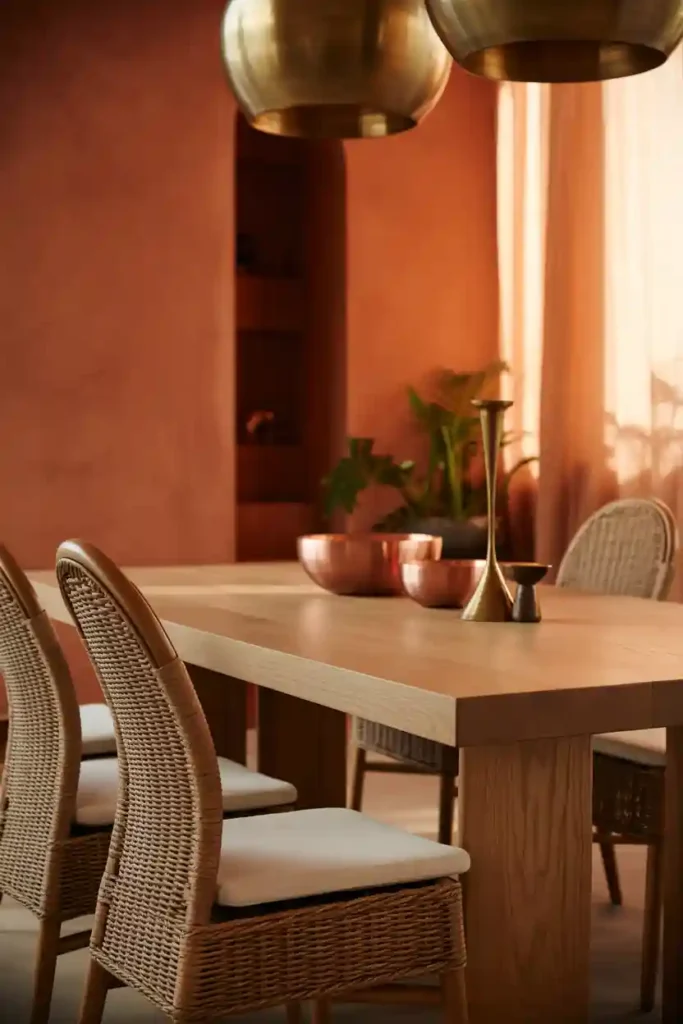
Warm terracotta adds richness and energy to a dining room while maintaining a cozy, inviting feel. This earthy shade works beautifully with wood furniture, rattan accents, and metallic décor elements, creating a balanced, sophisticated aesthetic. Terracotta walls pair well with neutral textiles, soft lighting, and greenery, bringing warmth and depth to the space. It’s an excellent backdrop for eclectic or Mediterranean-inspired dining rooms, as the color naturally complements natural textures and materials.
This shade also encourages conversation and a lively atmosphere, making meals feel more intimate and inviting. Layered textures, such as a plush rug or woven chairs, enhance the visual interest without competing with the wall color. Terracotta transforms the dining room into a space that feels grounded, elegant, and effortlessly stylish.
5. Crisp White
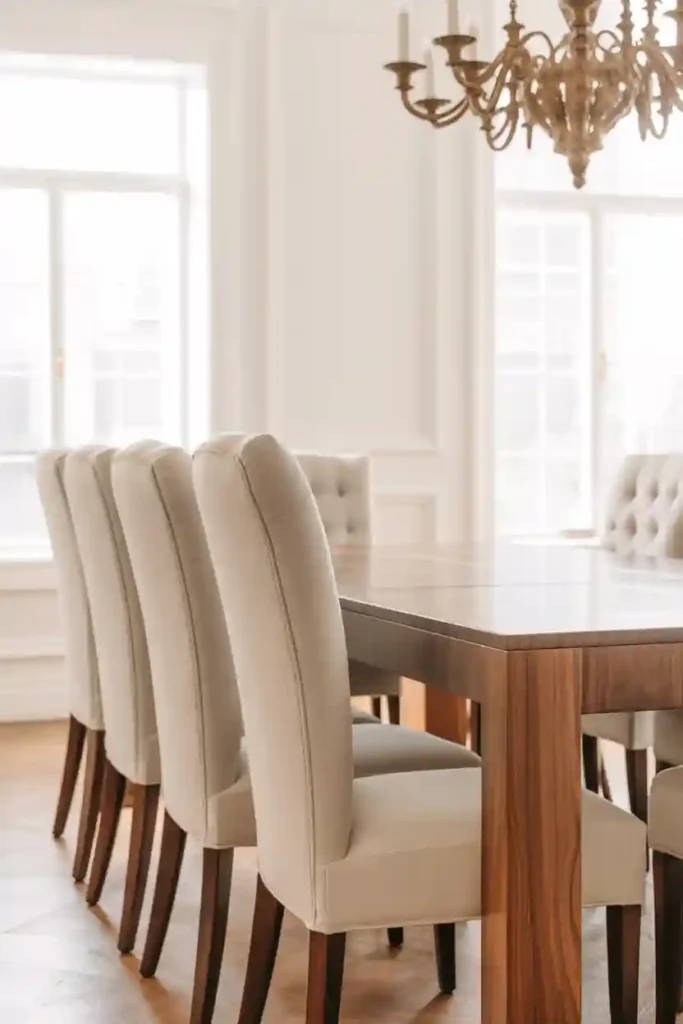
Crisp white walls create a timeless and elegant canvas for a formal dining room. White opens up the space, making it feel airy, clean, and versatile while allowing furniture, lighting, and artwork to take center stage.
Pairing white walls with natural wood tables, upholstered chairs, and metallic or glass accents enhances sophistication. Textured rugs, drapes, and décor elements prevent the room from feeling too stark while maintaining a polished look. White works for modern, classic, or transitional interiors. It’s a perfect backdrop for statement pieces, colorful artwork, or seasonal décor changes. A white dining room exudes brightness, elegance, and a sense of calm, creating an environment that is both functional and visually stunning.
6. Bold Charcoal Gray
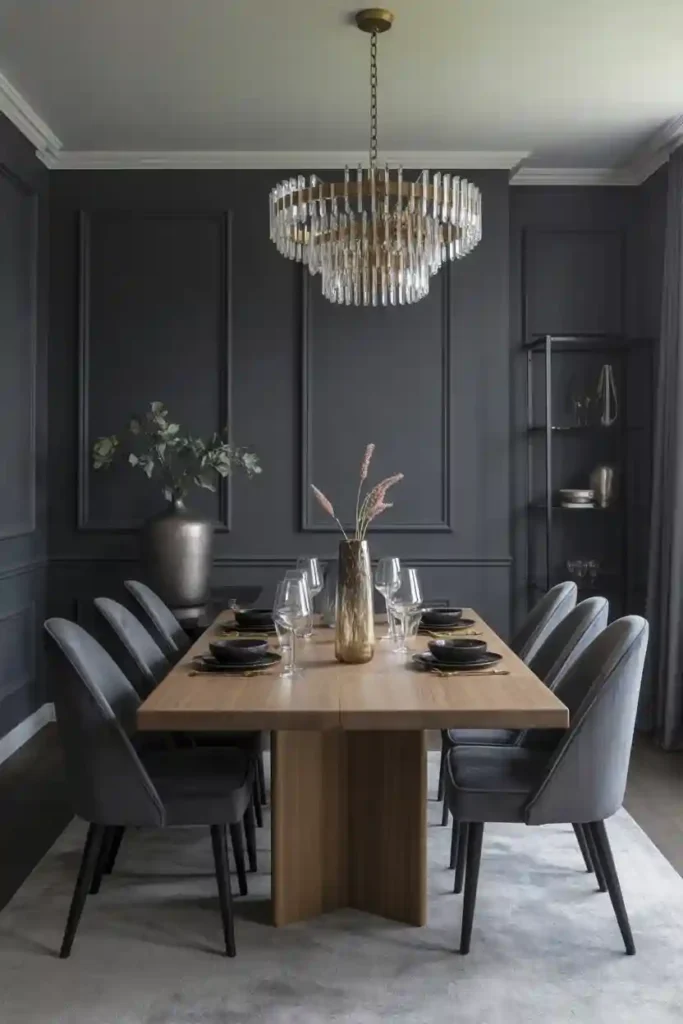
Charcoal gray walls introduce drama and sophistication to a dining room, creating a chic and intimate ambiance. This deep, neutral shade works beautifully with lighter furniture, brass or gold accents, and bold artwork.
Gray provides a versatile backdrop that pairs well with both warm and cool tones. Layered textures, such as velvet chairs, rugs, or curtains, add depth and keep the room from feeling too heavy. A charcoal wall can also highlight architectural features, such as moldings or a fireplace, creating a refined and polished space. This color choice transforms an ordinary dining room into a statement-making, elegant environment. It’s ideal for modern or contemporary interiors while remaining adaptable for transitional or classic styles.
7. Soft Blush Pink
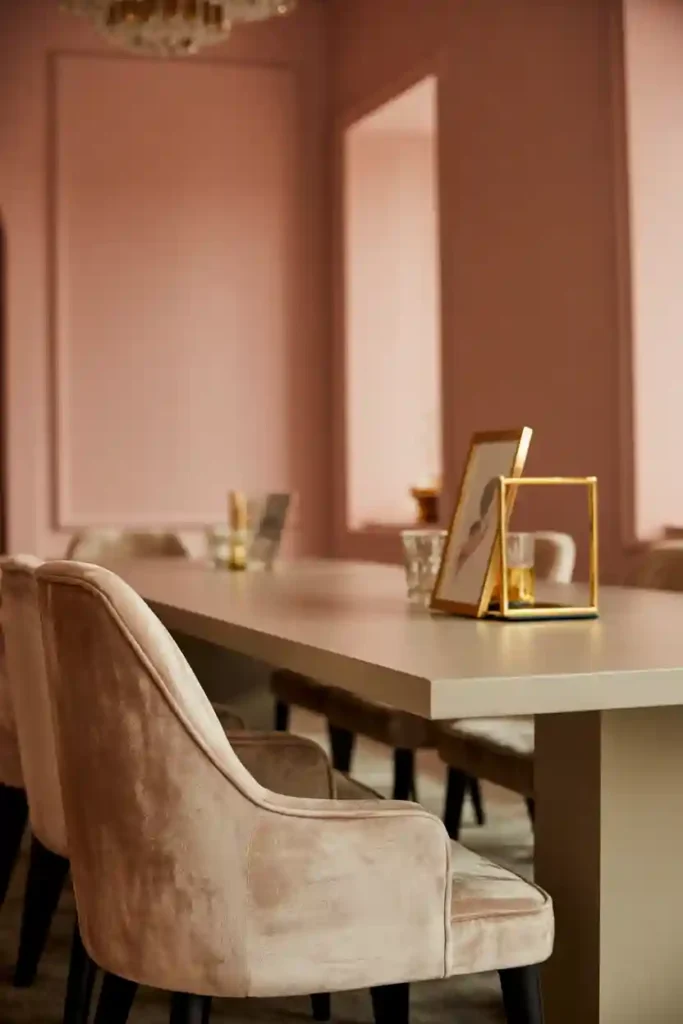
Soft blush pink introduces warmth, elegance, and a touch of romance to a dining room. This subtle color pairs beautifully with cream, gold, and natural wood accents, creating a sophisticated and contemporary vibe.
Blush walls act as a gentle backdrop, allowing artwork, furniture, and lighting to stand out. Layer textures with velvet or linen chairs, soft rugs, and polished tables for depth and dimension. This color works especially well in modern, transitional, or eclectic dining rooms. It adds personality without overpowering the space, transforming the dining room into a welcoming, stylish, and refined environment that feels effortlessly elegant and inviting.
8. Rich Emerald Green
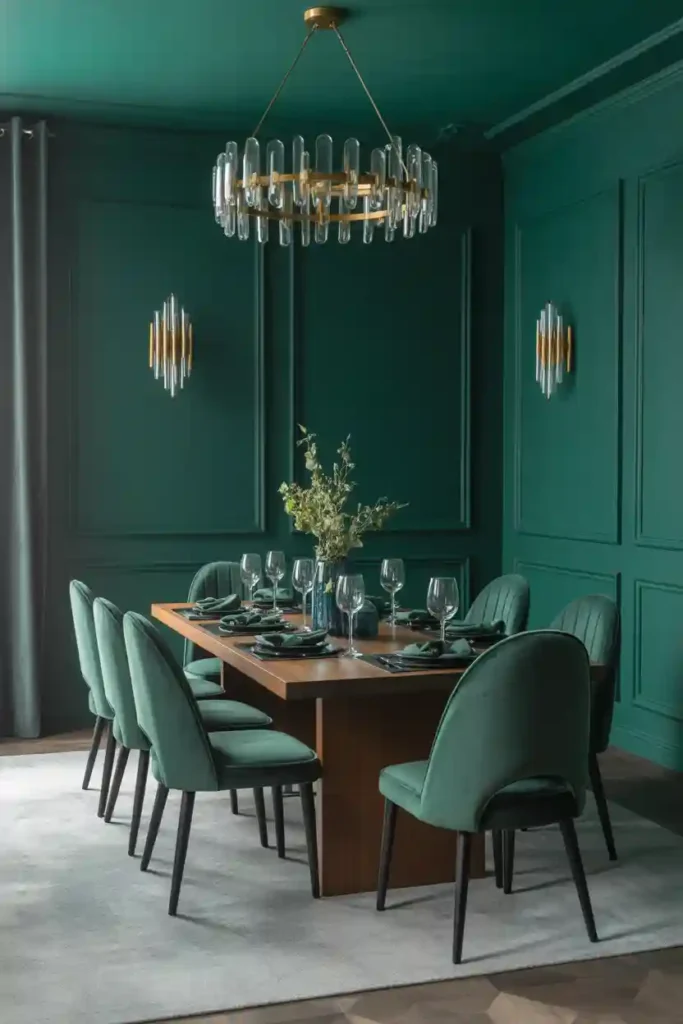
Emerald green walls instantly transform a dining room into a space of elegance and luxury. This jewel tone adds depth and vibrancy while remaining sophisticated and timeless. Pair emerald walls with gold or brass accents, dark wood furniture, and neutral textiles to balance the boldness. The color works beautifully with statement lighting, artwork, or mirrors, highlighting key design elements and creating a polished atmosphere.
Emerald green encourages a sense of opulence while still feeling inviting, making it ideal for formal or modern dining rooms. Layering textures such as velvet upholstery, silk drapes, or patterned rugs enhances richness and visual interest, ensuring the room feels thoughtfully curated. This bold yet classic color transforms an ordinary dining space into a striking, elegant environment perfect for entertaining.
9. Soft Gray-Blue
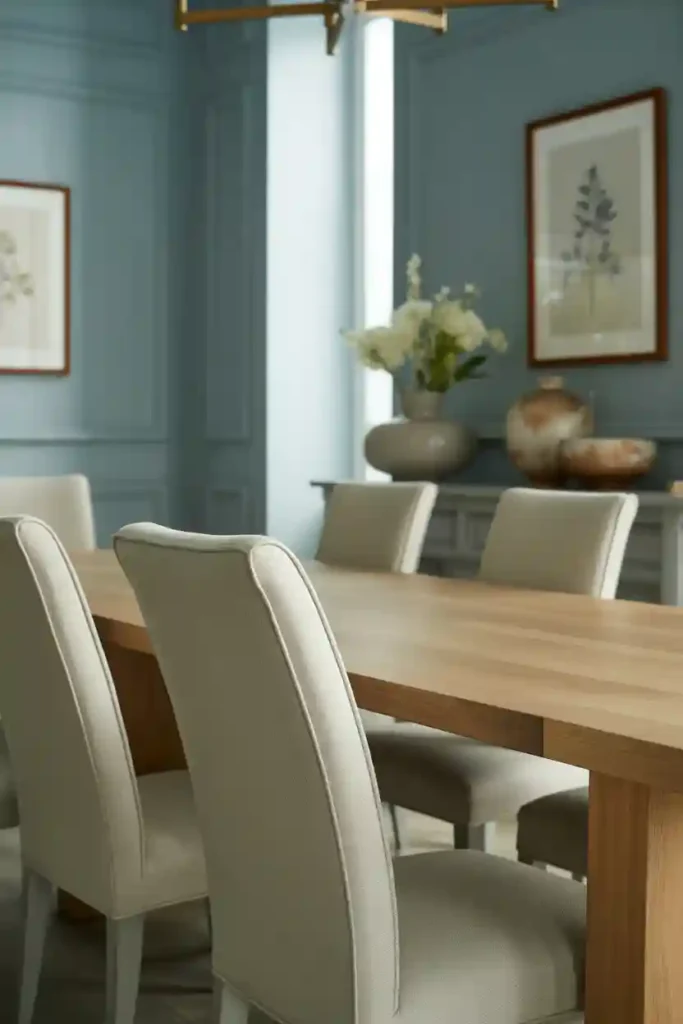
Soft gray-blue walls offer a calming and refined backdrop for a dining room. This muted tone balances cool and neutral elements, providing sophistication without feeling cold. Gray-blue pairs well with light wood or dark furniture, metallic accents, and warm textiles. Layered décor, including rugs, curtains, and cushions, enhances depth while keeping the space serene and elegant. This color is versatile, fitting both modern and traditional interiors.
It creates a relaxed yet polished environment, encouraging conversation and comfort during meals. Gray-blue walls subtly transform the dining room, elevating the design with understated elegance and timeless charm.
10. Bold Mustard Yellow
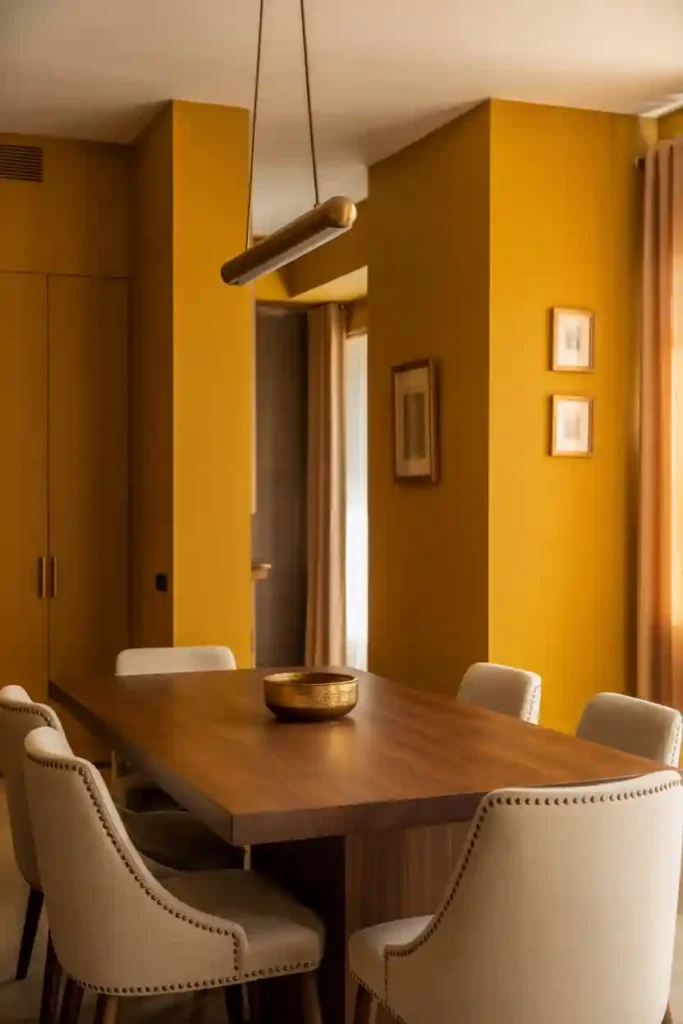
Mustard yellow injects energy, warmth, and personality into a dining room while maintaining sophistication when balanced with neutrals. This earthy, rich yellow adds vibrancy without overwhelming the space.
Pair mustard walls with dark wood furniture, metallic lighting fixtures, and soft neutral textiles to create harmony. Accessories like artwork, rugs, and plants enhance visual interest and soften the bold tone. This color works well for modern, eclectic, or transitional dining rooms, creating a lively yet elegant atmosphere. Mustard yellow transforms a simple dining space into a statement room, making it feel warm, stylish, and welcoming for gatherings and everyday use.
11. Crisp Two-Tone Combination
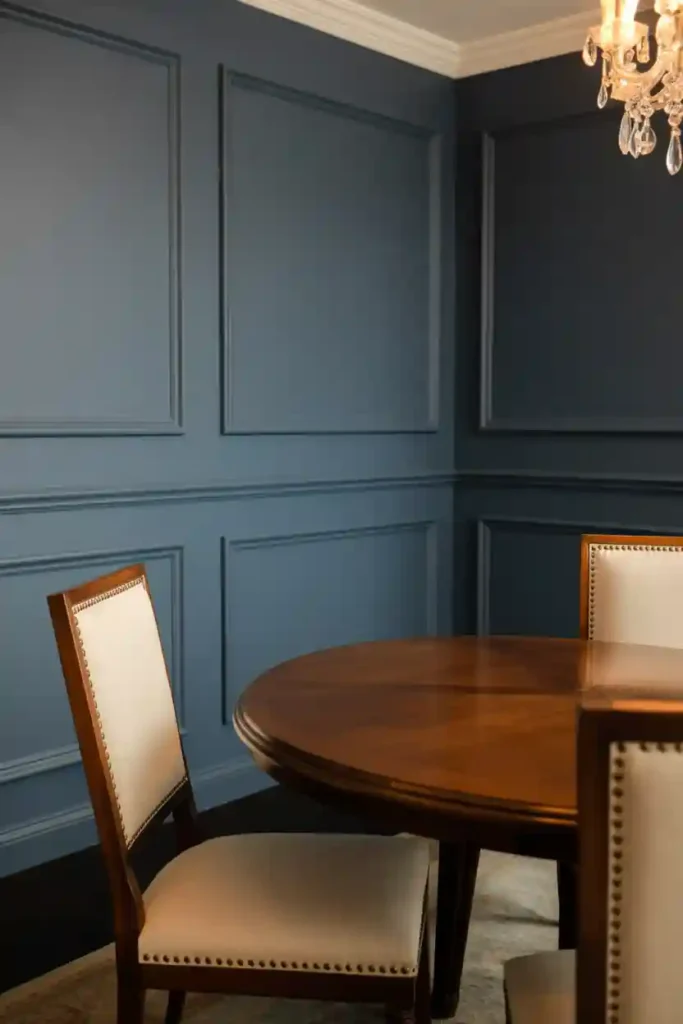
Two-tone walls bring dimension and interest to a dining room while maintaining elegance. Combining a neutral lower color, like soft gray or beige, with a deeper upper shade, such as navy or emerald, creates visual balance and architectural sophistication.
This technique can emphasize wainscoting, moldings, or built-in features, highlighting the room’s structure. Coordinating furniture, lighting, and décor with the two-tone palette ensures a cohesive and polished look. Two-tone walls allow creativity while keeping the space formal and refined. They transform an ordinary dining room into a layered, elegant environment with subtle personality and depth, perfect for both everyday dining and entertaining guests.
Final Words
Choosing the right paint color can completely transform a dining room, turning it from ordinary to extraordinary. From timeless neutrals like beige and crisp white to bold shades like emerald green, deep blue, and mustard yellow, each color has the power to set the tone and elevate the space. Soft hues, such as sage green or blush pink, create calm and inviting atmospheres, while dramatic or two-tone combinations add depth and sophistication.