

12 Downstairs Cloakroom Ideas That Feel Stylish and Spacious
A downstairs cloakroom may be one of the smallest rooms in the house, but it holds huge potential for style and smart design. Often located near entryways or living areas, this compact space plays an important role for guests and daily convenience. With the right design choices, even the tiniest cloakroom can feel open, elegant, and thoughtfully put together. Clever layouts, light-enhancing finishes, and space-saving fixtures are key to making a downstairs cloakroom feel both stylish and spacious. Rather than treating it as an afterthought, a well-designed cloakroom can become a standout feature that complements the rest of your home.
From floating vanities and wall-mounted toilets to bold accents used strategically, these 12 Downstairs Cloakroom Ideas That Feel Stylish and Spacious focus on maximizing visual space while maintaining functionality. Whether your cloakroom is narrow, windowless, or awkwardly shaped, these ideas will help you create a welcoming, practical, and beautifully balanced space
1. Light Color Palettes to Open Up the Space
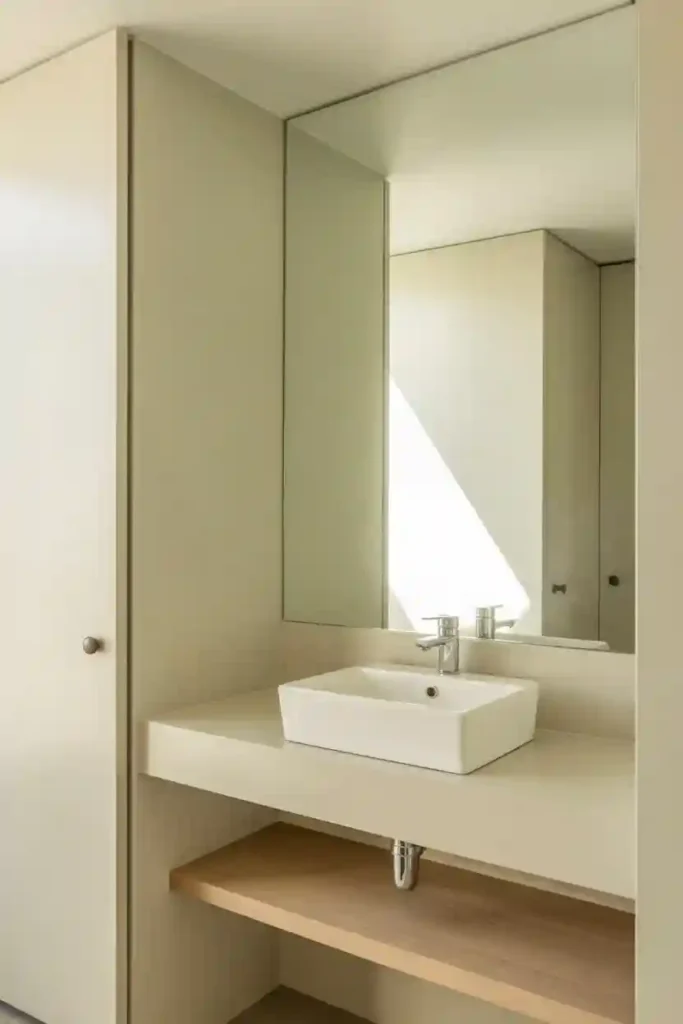
Light color palettes are one of the most effective ways to make a downstairs cloakroom feel larger and more inviting. Soft whites, pale grays, warm beiges, and muted pastels reflect light rather than absorb it, helping even windowless cloakrooms feel brighter. These colors create a calm foundation that visually pushes the walls outward, making the room feel less confined. In compact spaces, continuity is important. Using the same light shade on walls, ceilings, and even cabinetry reduces visual breaks and keeps the room feeling cohesive. To avoid a flat or clinical look, subtle texture can be introduced through tiles, plaster finishes, or soft matte paint.
Light palettes also allow fixtures and accessories to blend seamlessly into the background, reducing visual clutter. This approach ensures the cloakroom feels open, clean, and stylish rather than cramped. It’s a timeless design choice that works for both modern and traditional homes.
2. Wall-Mounted Toilets for a Cleaner Look
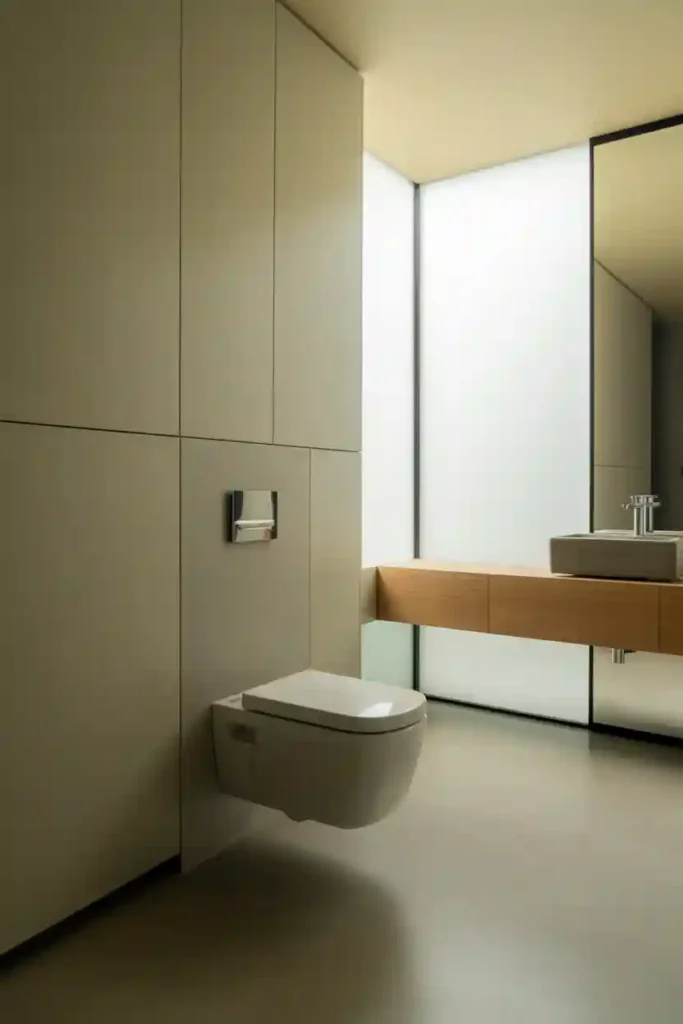
Wall-mounted toilets are ideal for downstairs cloakrooms where floor space is limited. By hiding the cistern within the wall, the room instantly feels less cluttered and more streamlined. The visible floor area beneath the toilet creates the illusion of extra space, which is crucial in compact rooms. From a design perspective, wall-mounted toilets support a modern, minimalist aesthetic. Their clean lines pair beautifully with floating vanities and slim basins, helping the entire cloakroom feel cohesive. Height-adjustable installation also improves comfort without affecting visual flow.
Practicality is another advantage. With fewer surfaces touching the floor, cleaning becomes easier, keeping the cloakroom looking fresh and well-maintained. This smart fixture choice combines functionality and style, making it a popular option for homeowners aiming to create a spacious feel in a small downstairs cloakroom.
Read Also: 11 Minimalist Bathroom Ideas for a Clean, Calm Space
3. Floating Vanities for Visual Space
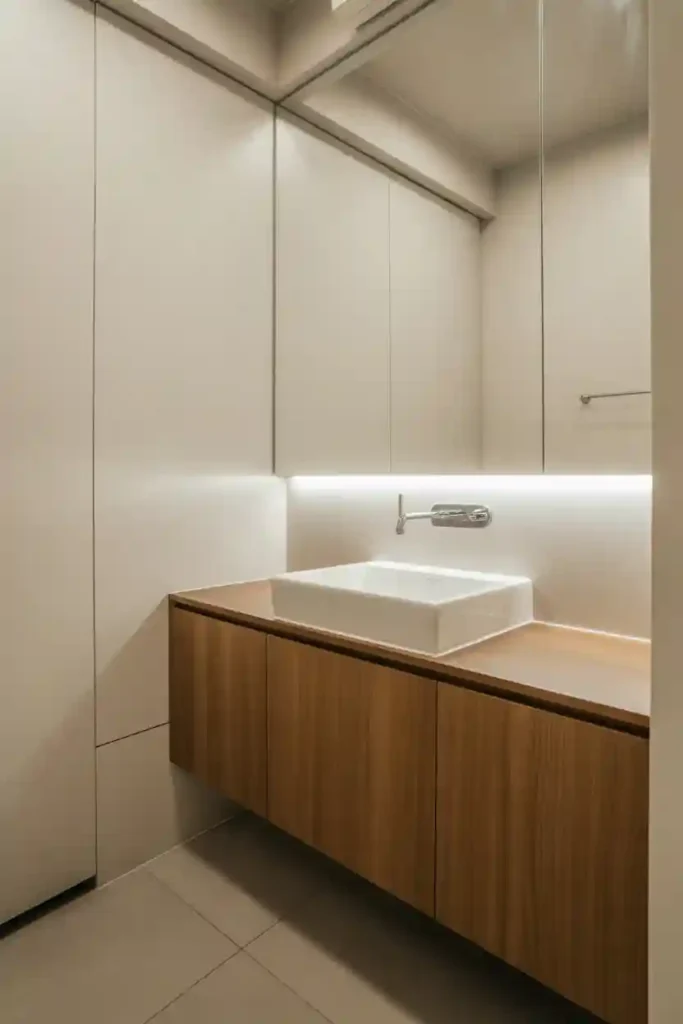
Floating vanities are a smart solution for creating visual space in a downstairs cloakroom. By lifting the vanity off the floor, the room immediately feels lighter and less crowded. The exposed flooring draws the eye across the space, enhancing the sense of openness. Design-wise, floating vanities emphasize clean lines and simplicity. Compact designs with handle-less drawers or integrated sinks work especially well in narrow layouts. Materials such as light wood, matte finishes, or smooth stone maintain a refined yet understated look.
Despite their minimal appearance, floating vanities still offer valuable storage for essentials like hand soap, cleaning supplies, or spare towels. This encourages clutter-free surfaces, which is essential in small spaces. A floating vanity balances style and practicality, making it a perfect addition to a stylish, spacious-feeling downstairs cloakroom.
4. Large Mirrors to Reflect Light
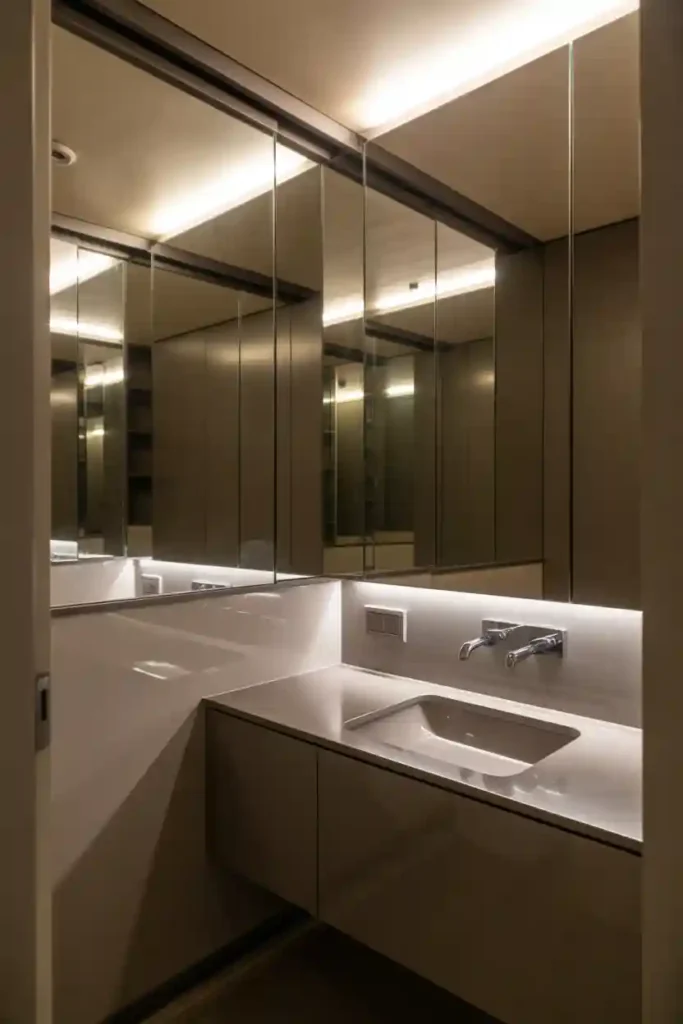
Large mirrors are a powerful design tool in downstairs cloakrooms, especially those without windows. A generously sized mirror reflects both natural and artificial light, instantly brightening the space and making it feel larger. It also adds depth, visually extending the room beyond its physical boundaries. Choosing a mirror that spans the width of the vanity or even an entire wall maximizes this effect. Frameless or slim-framed designs keep the look clean and modern, while softly rounded shapes can add a touch of elegance without overwhelming the room.
Beyond aesthetics, mirrors are practical and essential in a cloakroom. When thoughtfully placed, they enhance both functionality and visual spaciousness. This simple addition transforms a compact cloakroom into a brighter, more open-feeling space with minimal effort.
5. Slimline Basins for Tight Layouts
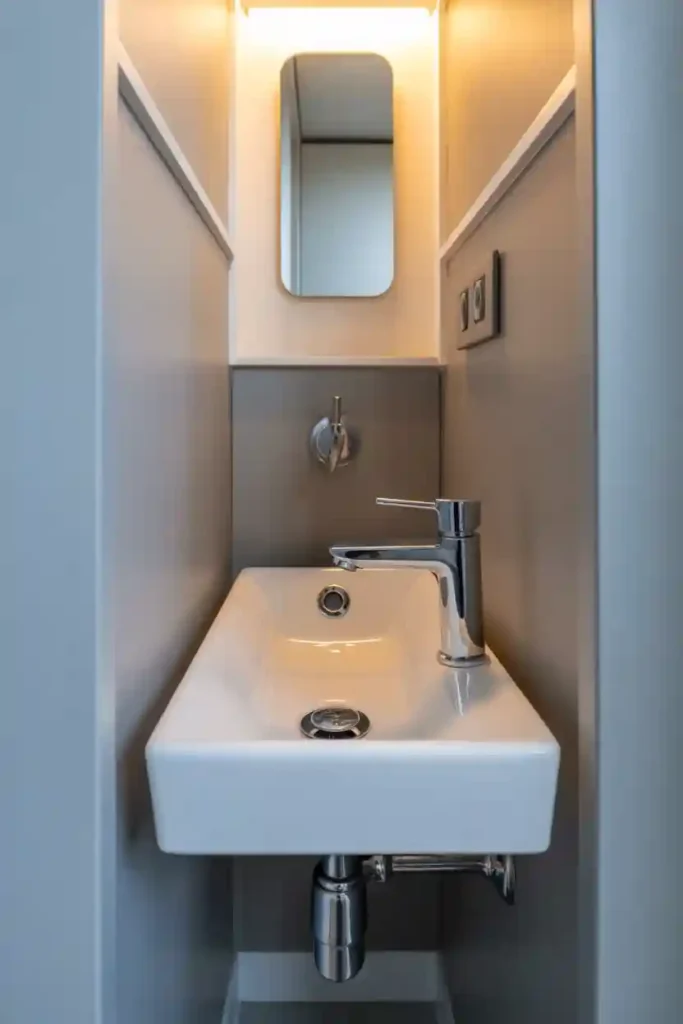
Slimline basins are perfect for downstairs cloakrooms with tight or narrow layouts. Designed with reduced depth, these basins provide full functionality without protruding too far into the room. This leaves more circulation space and prevents the cloakroom from feeling cramped. Available in wall-mounted or corner designs, slimline basins adapt easily to awkward layouts. Clean shapes and simple forms support a minimalist aesthetic, allowing the basin to blend seamlessly into the overall design. Pairing them with wall-mounted taps further enhances the streamlined look.
Despite their compact size, slimline basins don’t compromise on style. Modern finishes, integrated towel rails, or subtle curves add character without visual bulk. This thoughtful fixture choice ensures your cloakroom remains practical while feeling stylish and spacious.
6. Clever Storage Without Clutter
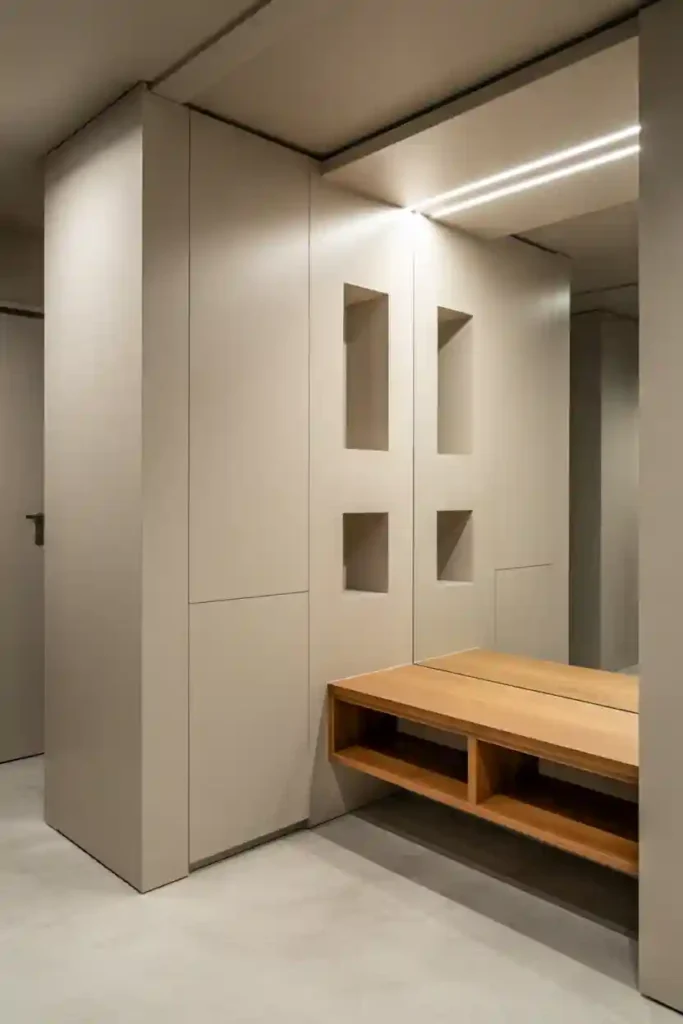
Storage is essential in a downstairs cloakroom, but it must be handled carefully to avoid overcrowding the space. Clever storage solutions focus on keeping items hidden while maintaining clean lines. Recessed shelves, vanity drawers, and mirrored cabinets are excellent options. Using vertical storage rather than bulky floor units preserves valuable floor space. Open shelves should be minimal and styled thoughtfully to avoid visual noise. Closed storage helps maintain a tidy appearance, which is key to making the room feel larger.
Well-planned storage ensures that everyday essentials are within reach without overwhelming the design. By keeping surfaces clear, the cloakroom feels calm and organized. Smart storage solutions support both style and practicality, making them indispensable in compact downstairs cloakrooms.
7. Glass and Reflective Finishes
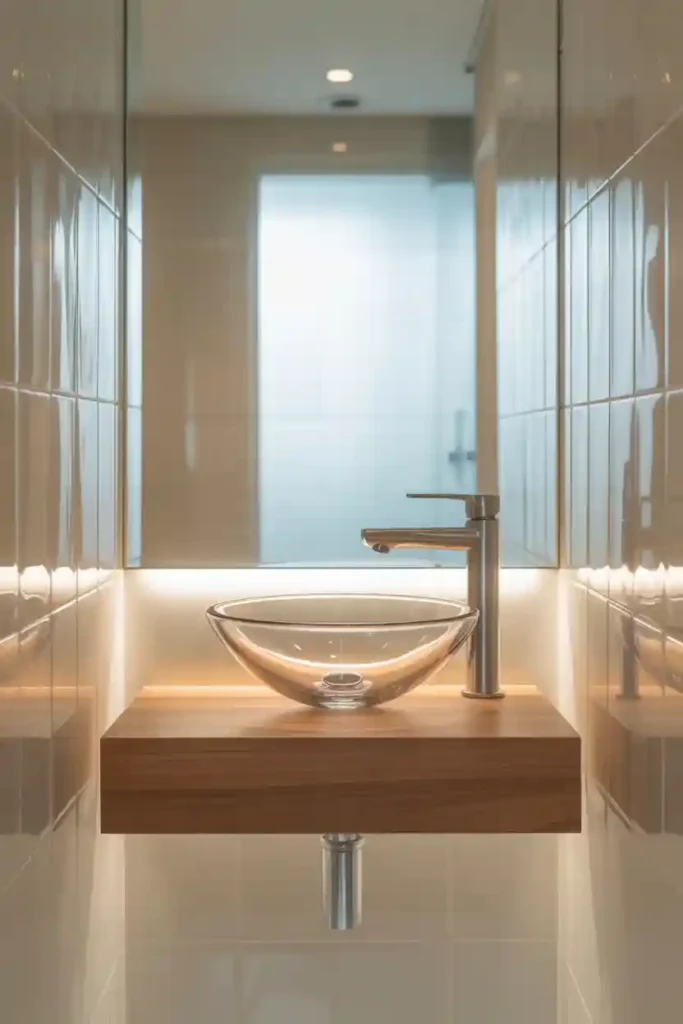
Glass and reflective finishes help bounce light around a downstairs cloakroom, enhancing the feeling of space. Materials such as glossy tiles, mirrored cabinets, and glass shelves reduce visual weight and add subtle elegance. Using reflective surfaces strategically prevents the room from feeling dark or enclosed. A glass basin or glossy backsplash can add interest without overwhelming the space. These finishes pair well with neutral color palettes and simple fixtures.
From a design standpoint, reflective materials create depth and movement. They enhance lighting and contribute to a brighter, more open atmosphere. When used thoughtfully, glass and reflective finishes elevate the cloakroom’s style while maintaining a spacious feel.
8. Vertical Design to Maximize Height
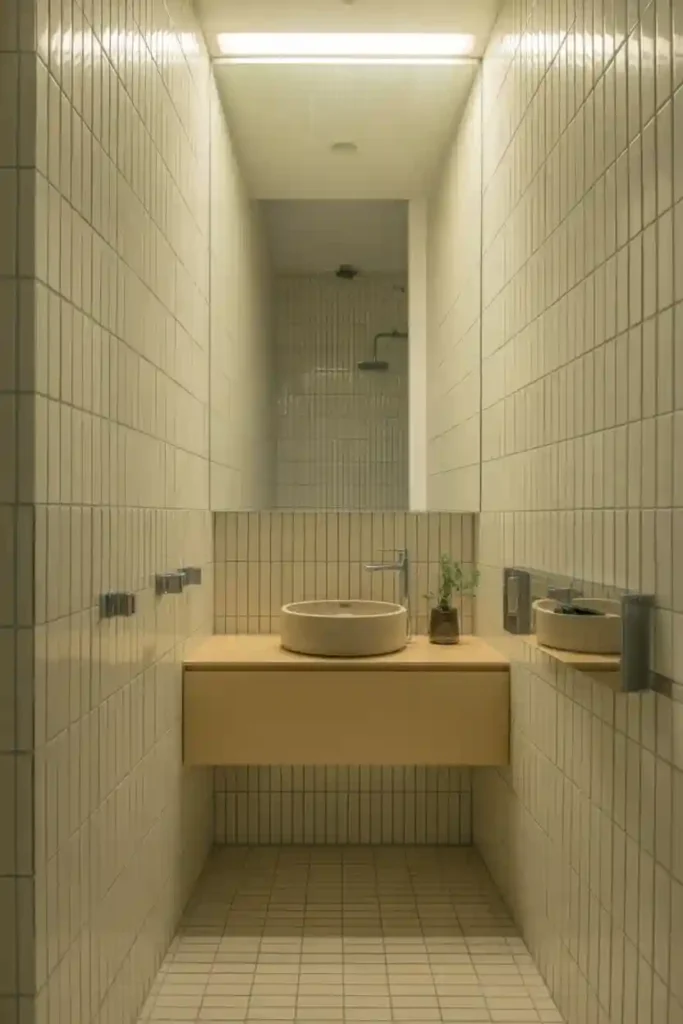
Vertical design is a powerful visual strategy for making a downstairs cloakroom feel taller and more spacious. When floor space is limited, drawing the eye upward helps shift focus away from the room’s compact footprint. Elements such as vertical wall tiles, tall mirrors, elongated lighting fixtures, or slim floor-to-ceiling storage units emphasize height and create a sense of openness. This approach is especially effective in narrow cloakrooms or those with low ceilings. Using vertical lines consistently throughout the space enhances harmony and flow. For example, vertically stacked tiles behind the basin or toilet naturally guide the eye upward, while a tall mirror reflects light and reinforces the illusion of height. Keeping the color palette light further amplifies this effect, preventing the room from feeling enclosed.
Vertical design doesn’t just improve aesthetics—it also adds practicality. Tall storage makes better use of wall space without crowding the floor. Overall, vertical elements help transform a compact downstairs cloakroom into a balanced, visually spacious, and well-proportioned space.
9. Statement Wallpaper Used Strategically
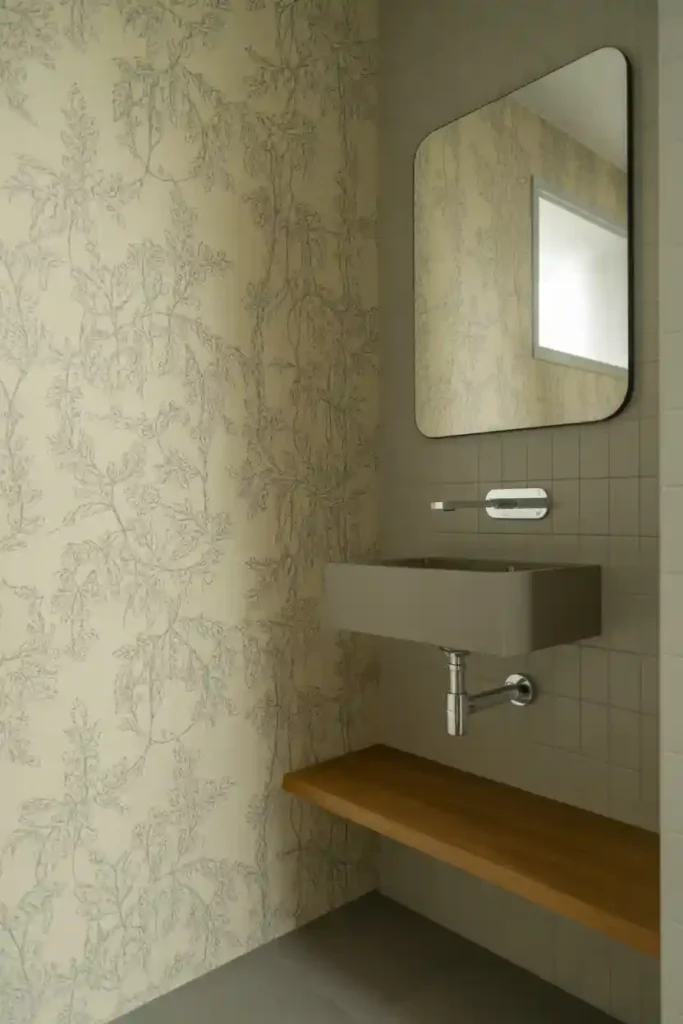
Statement wallpaper can bring personality and style to a downstairs cloakroom without compromising the feeling of space—when applied thoughtfully. Rather than covering every wall, using wallpaper on a single feature wall or above half-height paneling keeps the room visually balanced. This controlled approach allows bold patterns or artistic designs to shine without overwhelming the compact layout. Choosing wallpaper with light backgrounds, fine detailing, or subtle metallic accents helps reflect light and maintain an open feel. Vertical or softly flowing patterns can even enhance the perception of height. Pairing statement wallpaper with minimalist fixtures and simple color schemes ensures the space remains elegant rather than busy.
A downstairs cloakroom is an ideal place to experiment with design, as it’s a smaller, contained area. Strategic wallpaper use turns it into a memorable feature while still feeling spacious. This balance of boldness and restraint creates a stylish cloakroom that feels intentional and refined.
10. Minimalist Fixtures for a Sleek Feel
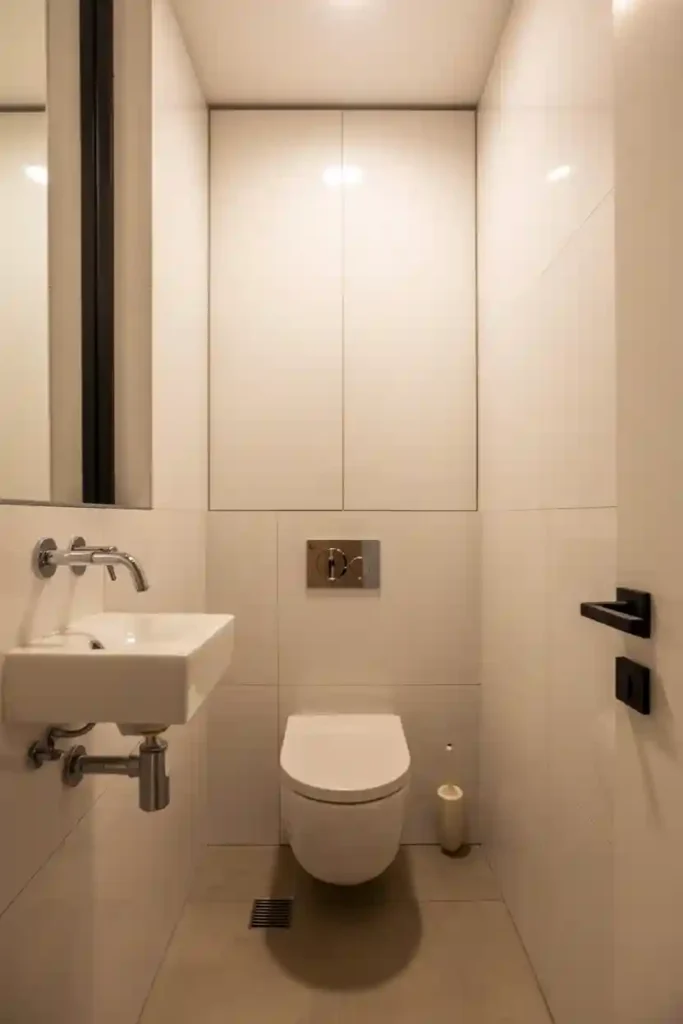
Minimalist fixtures play a crucial role in making a downstairs cloakroom feel sleek, modern, and spacious. In small rooms, overly decorative or bulky fixtures can quickly make the space feel cluttered. Choosing taps, flush plates, towel holders, and accessories with clean lines and simple forms keeps the overall design calm and uncluttered. Wall-mounted fixtures are particularly effective, as they free up floor and surface space while enhancing visual flow. Finishes like chrome, brushed nickel, or matte black add subtle contrast without drawing too much attention. Consistency is key—using the same finish across all fixtures creates cohesion and prevents visual distraction.
Minimalist fixtures also support practicality. With fewer grooves and details, they are easier to clean and maintain, keeping the cloakroom looking fresh. This streamlined approach ensures the space feels open, balanced, and stylish, proving that simplicity is often the most effective design choice in compact cloakrooms.
11. Good Lighting to Enhance Spaciousness
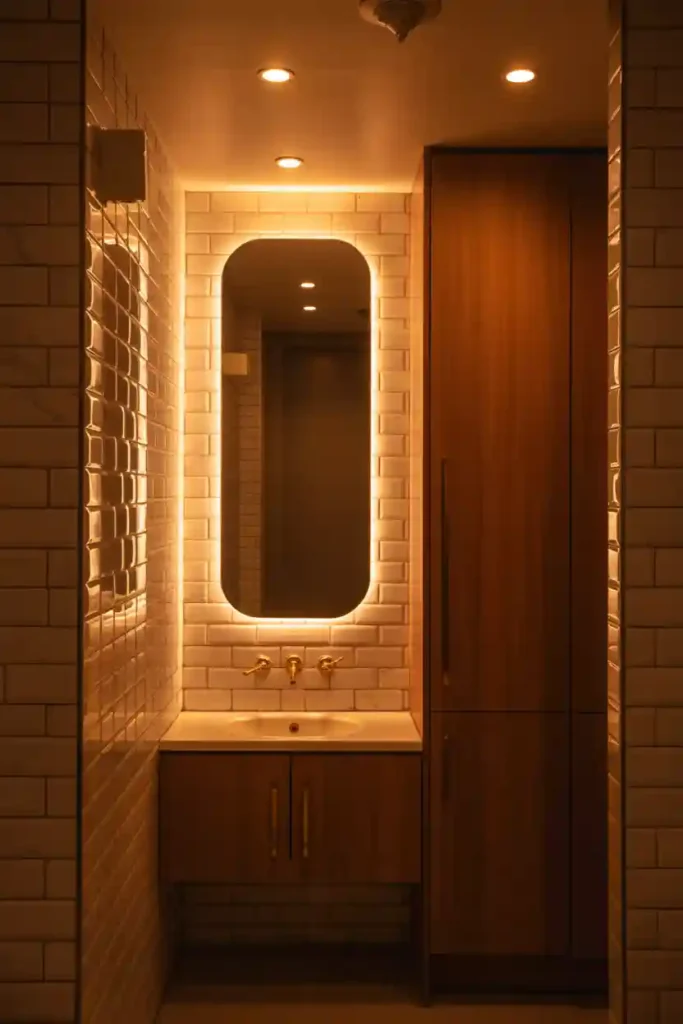
Good lighting is essential for making a downstairs cloakroom feel open, welcoming, and visually larger than it actually is. Because many cloakrooms lack natural light, artificial lighting needs to be carefully planned to avoid shadows and dark corners. A layered lighting approach works best, combining ceiling lights with wall-mounted fixtures and illuminated mirrors. This ensures even light distribution throughout the space. Warm white lighting creates a comfortable, inviting atmosphere, while brighter task lighting around the basin improves functionality. Recessed ceiling lights are ideal for low ceilings, as they don’t visually intrude into the space. An LED-backlit mirror not only adds a modern touch but also reflects light, further enhancing the sense of depth.
Thoughtfully placed lighting highlights finishes, textures, and vertical elements, helping the room feel more expansive. When done correctly, lighting transforms a compact downstairs cloakroom into a stylish, airy, and practical space that feels far larger than its footprint suggests.
12. Consistent Design with the Rest of the Home
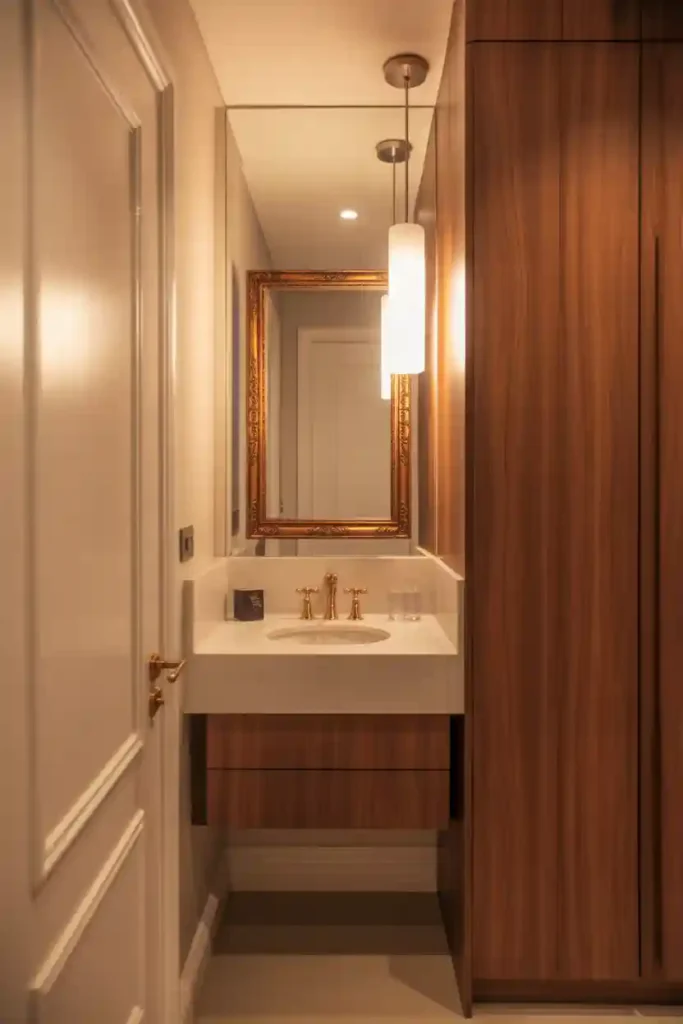
Creating a sense of flow between the downstairs cloakroom and the rest of the home can significantly enhance how spacious and intentional the space feels. When the cloakroom echoes the colors, materials, or finishes used elsewhere, it feels like a natural extension rather than a separate, enclosed room. This visual continuity reduces contrast and helps the area feel more connected and open. Using similar flooring, wall colors, or fixture finishes ties the cloakroom into nearby spaces such as the hallway or living room. Even subtle repetition—like matching hardware or lighting styles—can make a big difference. This doesn’t mean the cloakroom has to be identical, but it should feel complementary.
A cohesive design approach elevates the overall aesthetic of the home and makes the cloakroom feel thoughtfully designed. By maintaining consistency, the space appears calmer, more spacious, and effortlessly stylish despite its compact size.
Final Words
A downstairs cloakroom may be small, but with thoughtful design choices, it can feel both stylish and surprisingly spacious. By using light color palettes, space-saving fixtures, clever storage, and strategic lighting, you can transform this compact room into a polished and practical part of your home. Design techniques such as vertical elements, reflective surfaces, and minimalist details help maximize visual space while maintaining comfort and functionality.