
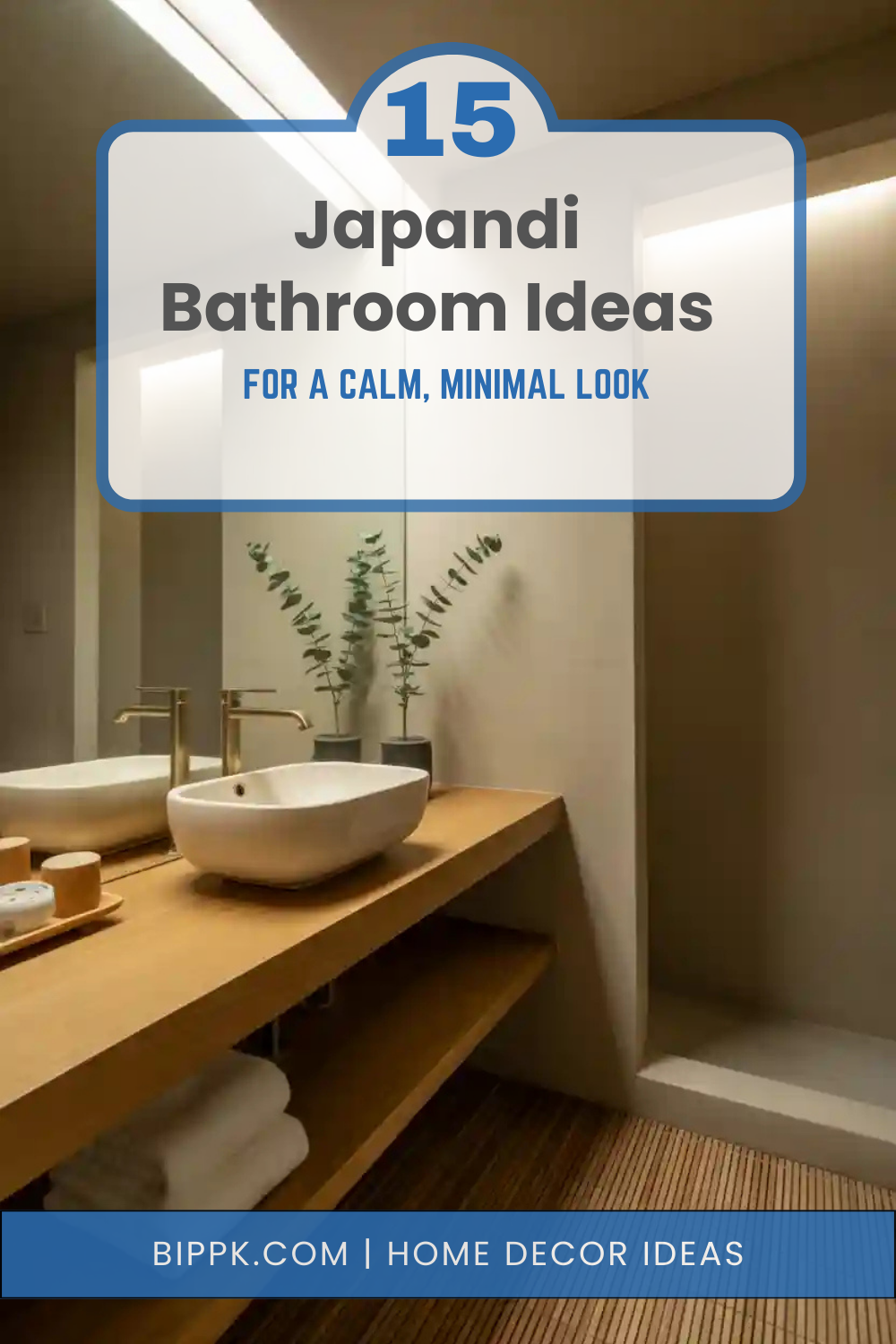
15 Japandi Bathroom Ideas for a Calm, Minimal Look
Japandi style is a harmonious blend of Japanese minimalism and Scandinavian functionality, creating interiors that feel both serene and sophisticated. In bathrooms, this aesthetic emphasizes clean lines, natural materials, neutral tones, and thoughtful simplicity, resulting in a space that promotes relaxation and mindfulness. The combination of Japanese-inspired tranquility with Scandinavian practicality allows you to design a bathroom that is uncluttered, functional, and visually calming.
From wooden vanities and soft lighting to stone textures and muted color palettes, every element is carefully chosen to support a sense of balance and wellness. Whether you are renovating your bathroom or refreshing a small space, adopting Japandi principles can help transform it into a retreat-like sanctuary. In this guide, we’ll explore 15 Japandi bathroom ideas for a calm, minimal look, providing inspiration and practical tips to create a spa-like environment that embodies simplicity, warmth, and timeless elegance.
1. Minimalist Wooden Vanity
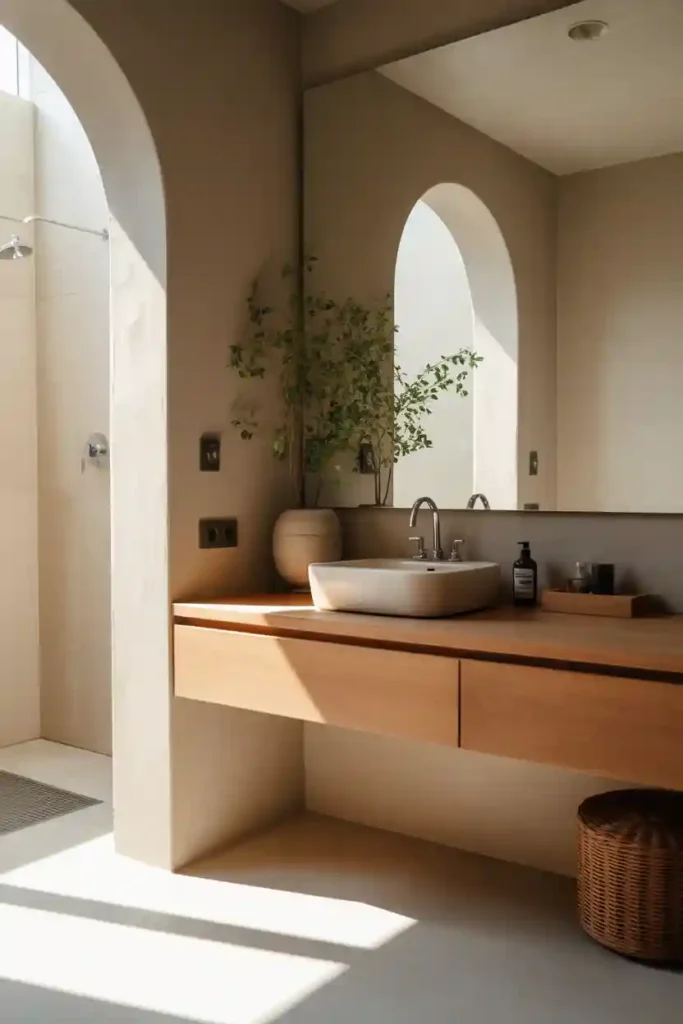
A wooden vanity with clean lines is central to Japandi bathrooms. Natural wood tones evoke warmth and provide a tactile, grounding element while maintaining simplicity. Floating vanities are ideal because they keep the floor visible, enhancing the sense of space and openness.
Choose vanities with flat-front drawers or hidden handles to keep surfaces clutter-free. Pair with an integrated sink or a simple ceramic basin to maintain the minimalist aesthetic. Accents like a small wooden tray or a plant add subtle detail without overwhelming the design. The combination of natural wood and uncluttered forms captures the essence of Japandi style, balancing beauty and functionality for a calm, harmonious bathroom environment.
2. Soft Neutral Color Palette
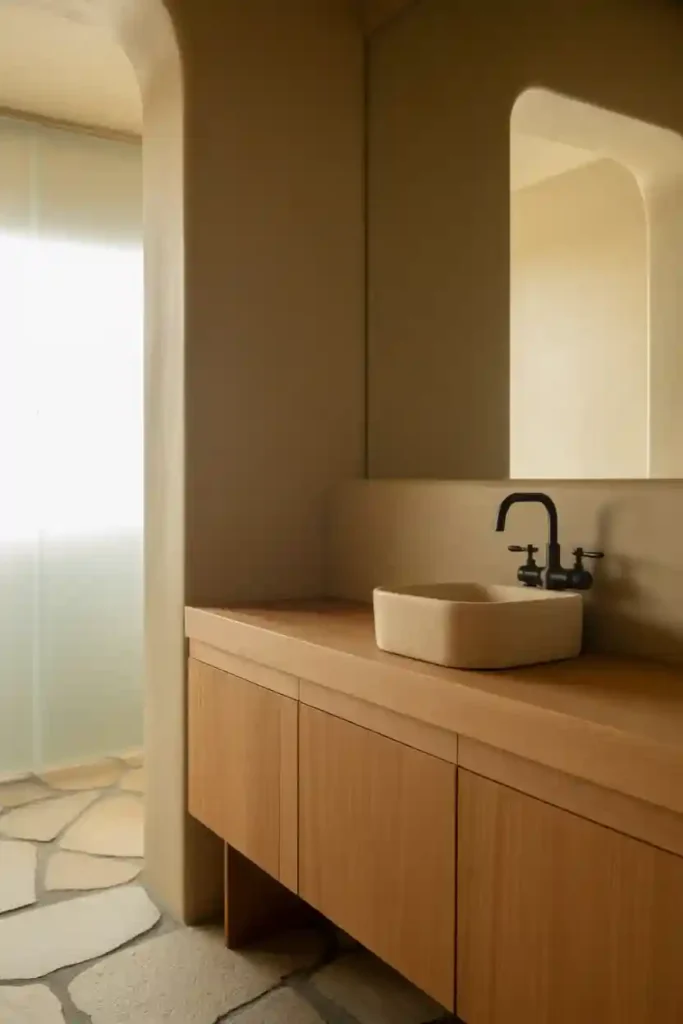
Japandi bathrooms thrive on soft, muted tones like warm beige, sandy taupe, off-white, and soft gray. These colors create a soothing backdrop and amplify natural light, giving the bathroom a peaceful, airy feel.
Neutral walls paired with wooden vanities, stone tiles, or minimal accessories allow textures and shapes to take center stage. Subtle contrast can be added through darker fixtures, such as matte black faucets or towel bars, to create visual interest while preserving calmness. A neutral palette encourages mindfulness and relaxation, providing a serene environment ideal for daily routines, meditation, or unwinding after a long day.
Read Also: 12 Coastal Dining Room Ideas for Breezy Style
3. Stone or Tile Accent Wall

Adding a stone or textured tile accent wall introduces natural materiality while maintaining minimalism. Smooth or lightly veined stone tiles behind the vanity or shower create visual depth without clutter.
Large-format tiles in beige, gray, or soft cream shades emphasize simplicity and make the space appear larger. Accent walls can also define zones, such as separating the shower area from the rest of the bathroom. Stone finishes connect the interior to nature, a key principle in Japandi design, and provide a tactile, grounding element that enhances relaxation.
4. Floating Shelves for Clutter-Free Storage
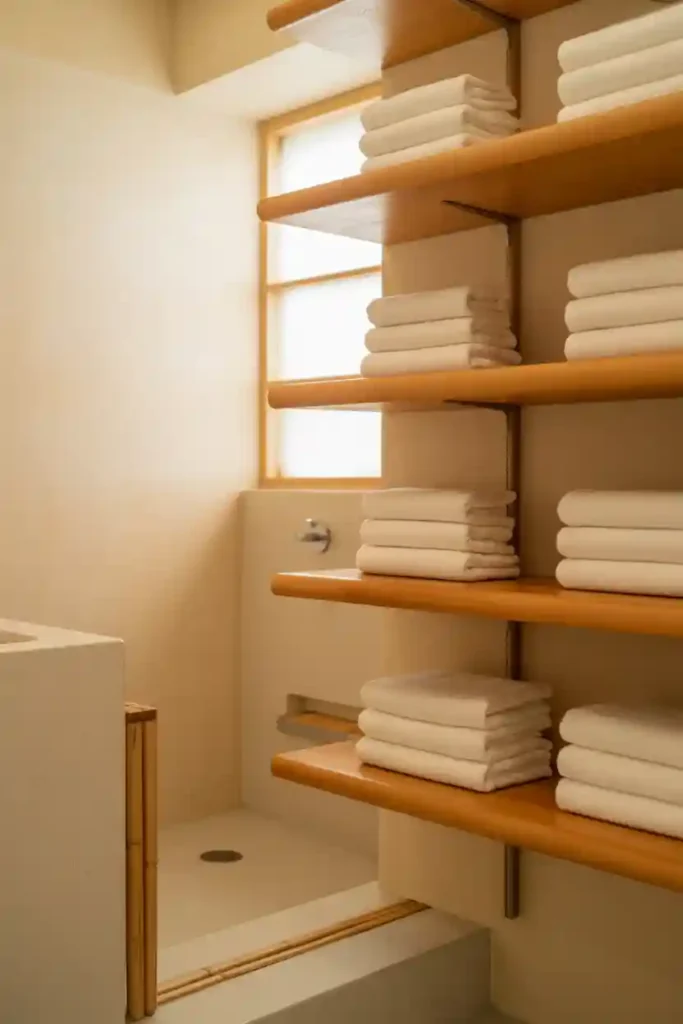
Floating shelves are a hallmark of Japandi design, blending functionality with clean lines. By mounting shelves directly on the wall, you keep the floor space open, making the bathroom feel larger and uncluttered. Choose shelves in natural wood or light-toned materials to complement the warm, neutral palette of the space.
These shelves are perfect for neatly stacking towels, storing daily essentials, or displaying a single decorative item like a small ceramic vase or a bamboo plant. Limit the number of items to maintain minimalism and serenity. Floating shelves also encourage organization, as only what’s truly necessary can be displayed. Combined with a minimalist vanity, these shelves enhance the calm, breezy feeling of a Japandi bathroom. Their understated presence elevates the design without distracting from the natural textures and muted tones that define the style.
5. Frameless Glass Shower Enclosure

A frameless glass shower creates an open, airy feel in a Japandi bathroom, emphasizing simplicity and fluidity. Without bulky frames, the shower seamlessly integrates with the surrounding space, keeping sightlines unobstructed and enhancing natural light.
Combine it with neutral stone or large-format tiles to reinforce the calming, minimalist aesthetic. Matte black or brushed metal handles provide subtle contrast without overwhelming the serene atmosphere. Consider a recessed niche inside the shower for storing toiletries, which keeps surfaces clean and uncluttered. The frameless design also makes even smaller bathrooms feel more spacious and luxurious. This approach aligns perfectly with Japandi principles, where every element has a purpose, contributes to harmony, and maintains visual calm.
6. Matte Black Fixtures for Subtle Contrast
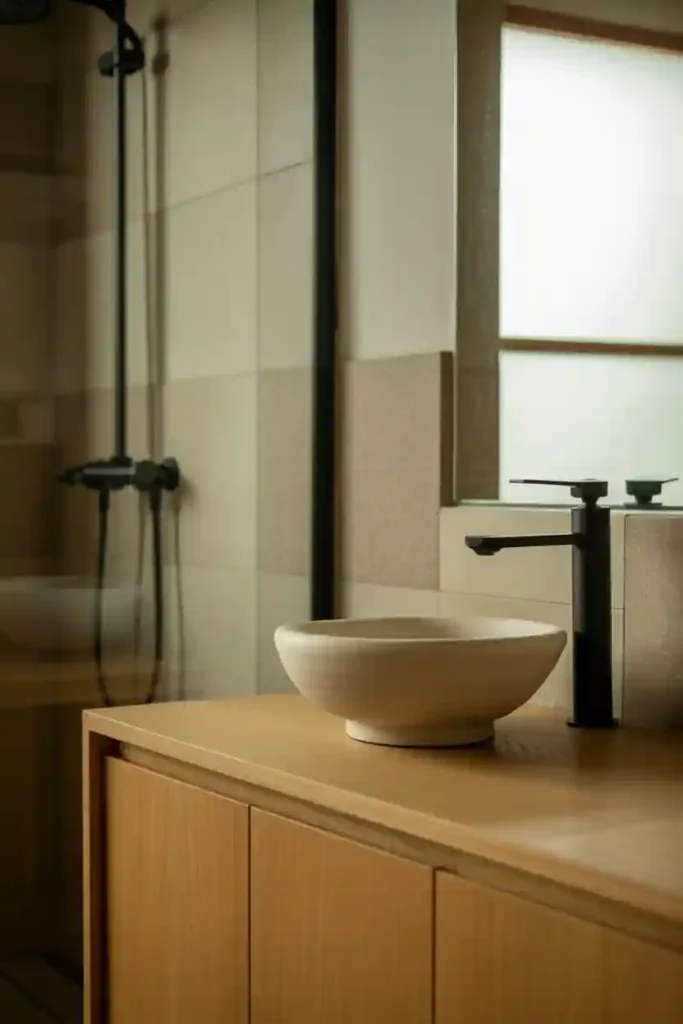
Matte black fixtures are a sophisticated way to add contrast in a Japandi bathroom while keeping the overall look minimal and calm. Black faucets, showerheads, and towel bars stand out against neutral walls and wooden surfaces, creating a balanced visual focal point.
Pair black fixtures with soft beige, cream, or light gray tiles to emphasize their sleek form. Minimalist shapes, such as simple cylindrical faucets or geometric shower handles, maintain clean lines and reinforce the Zen-like quality of the space. Matte black accents provide modern elegance without clutter, allowing natural textures like wood and stone to remain the stars of the design. Their subtle boldness enhances the room’s aesthetic while supporting Japandi principles of harmony, simplicity, and function.
7. Natural Fiber Accessories
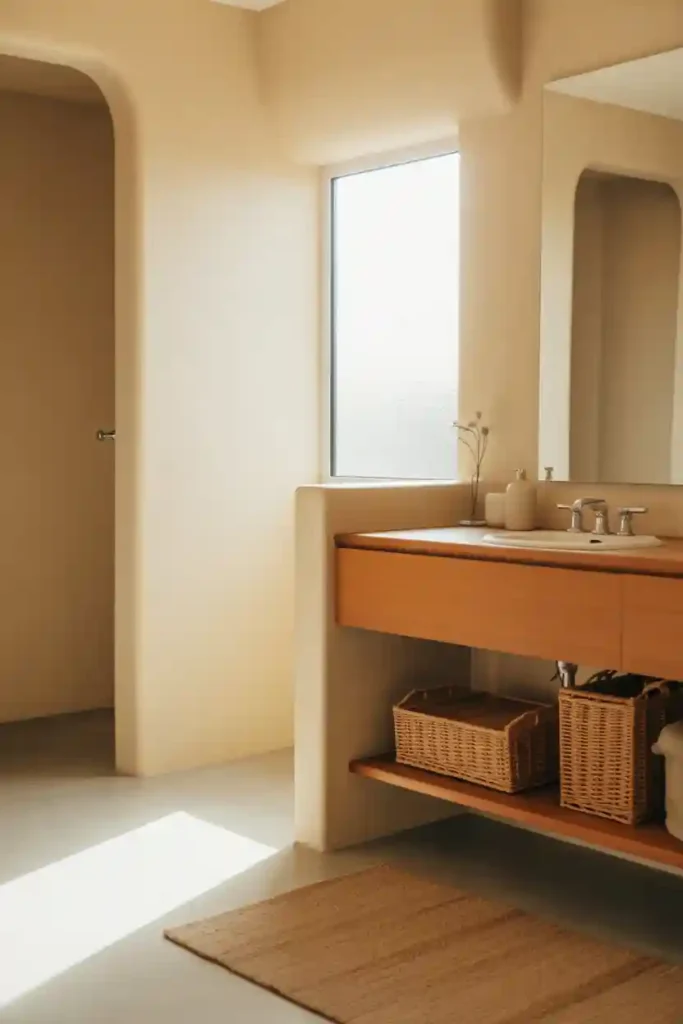
Incorporating natural fiber accessories like rattan baskets, woven laundry bins, or jute rugs brings warmth and texture to a Japandi bathroom. These materials complement wooden vanities and stone surfaces, creating a balanced, organic aesthetic that feels inviting yet minimalist.
A small rattan basket can store towels or bath essentials, while a jute rug softens the floor and adds tactile comfort underfoot. These elements are functional yet understated, keeping the space organized without cluttering it. Natural fibers also evoke a connection to nature, a core principle of Japandi design. Their soft, earthy tones harmonize with neutral walls and muted palettes, enhancing the serene, spa-like atmosphere. Layering these textures subtly creates visual interest without compromising the minimalist, calming feel of the bathroom.
8. Soft Indirect Lighting
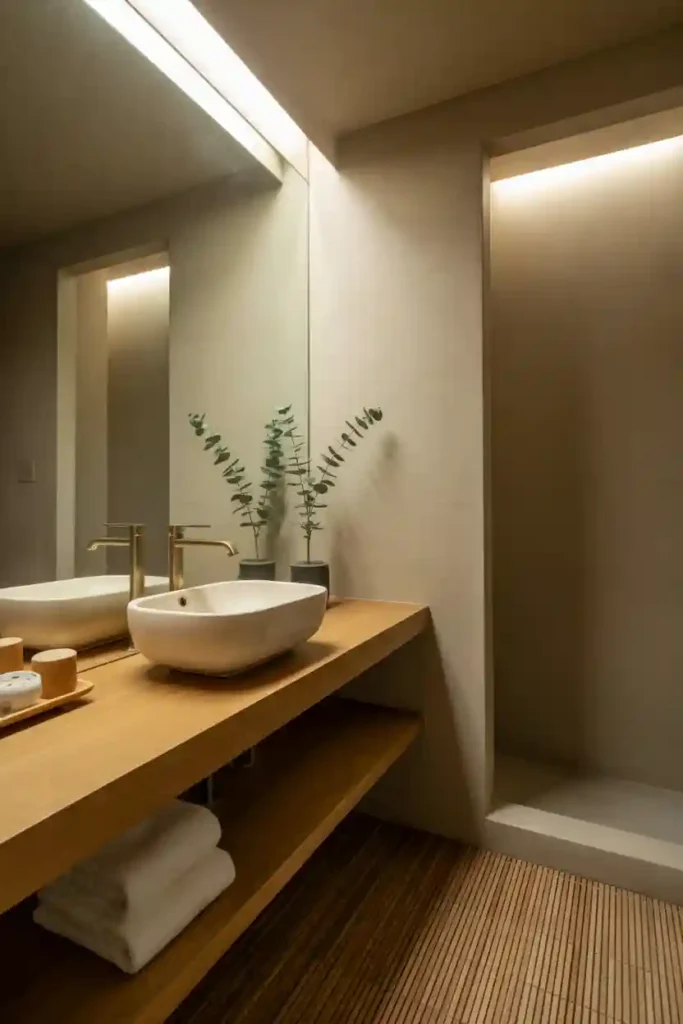
Soft, indirect lighting is essential for creating a calm, relaxing Japandi bathroom. LED strips under floating vanities or around mirrors provide gentle illumination that enhances the space without harsh shadows.
Warm white light tones are ideal, complementing natural wood and neutral stone surfaces. Avoid bright overhead lighting that disrupts the serene atmosphere. Instead, combine subtle ceiling lights with focused vanity lighting to create layered illumination. Indirect lighting also emphasizes textures, such as the grain of a wooden vanity or the smoothness of stone tiles. This thoughtful use of light reinforces the spa-like ambiance, making daily routines feel more mindful and soothing.
9. Minimalist Mirror Design
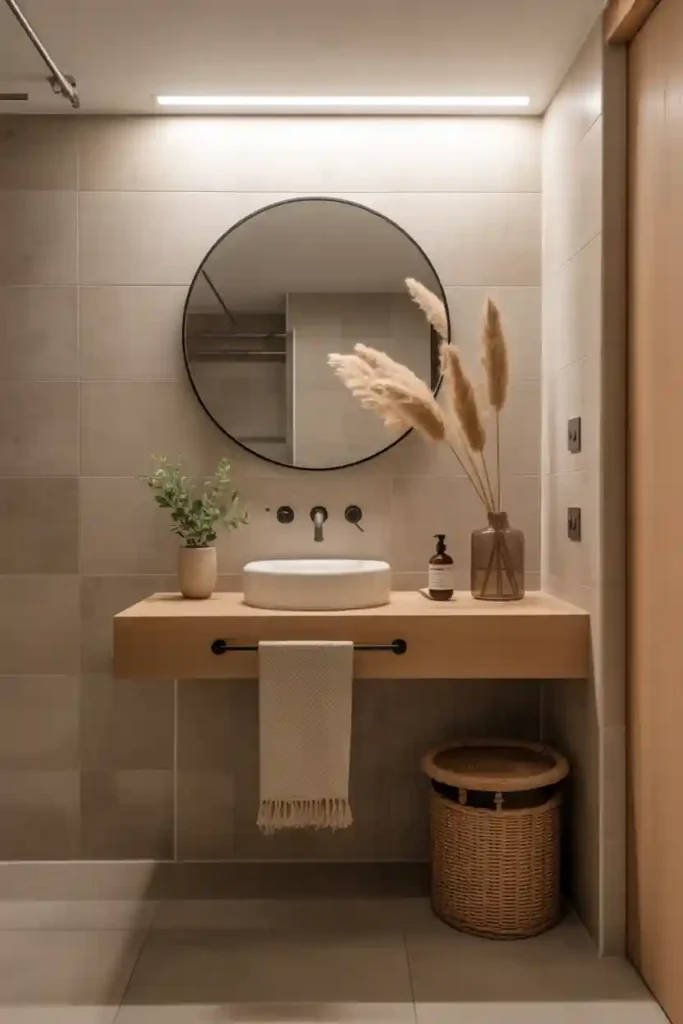
Mirrors in Japandi bathrooms are designed to enhance space and light without overwhelming the room. Choose round or rectangular mirrors with thin frames in wood, matte black, or brushed metal to maintain a minimalist aesthetic.
Large mirrors reflect natural light and visually expand the room, contributing to an open, airy feel. Frameless mirrors or mirrors with simple geometric shapes emphasize clean lines, keeping the focus on the bathroom’s natural textures and calming tones. Placed above a floating vanity, a minimalist mirror becomes both functional and decorative, reflecting the serene simplicity that defines Japandi design. Its understated elegance reinforces the balance and harmony essential to the space.
10. Integrated Wall Niches
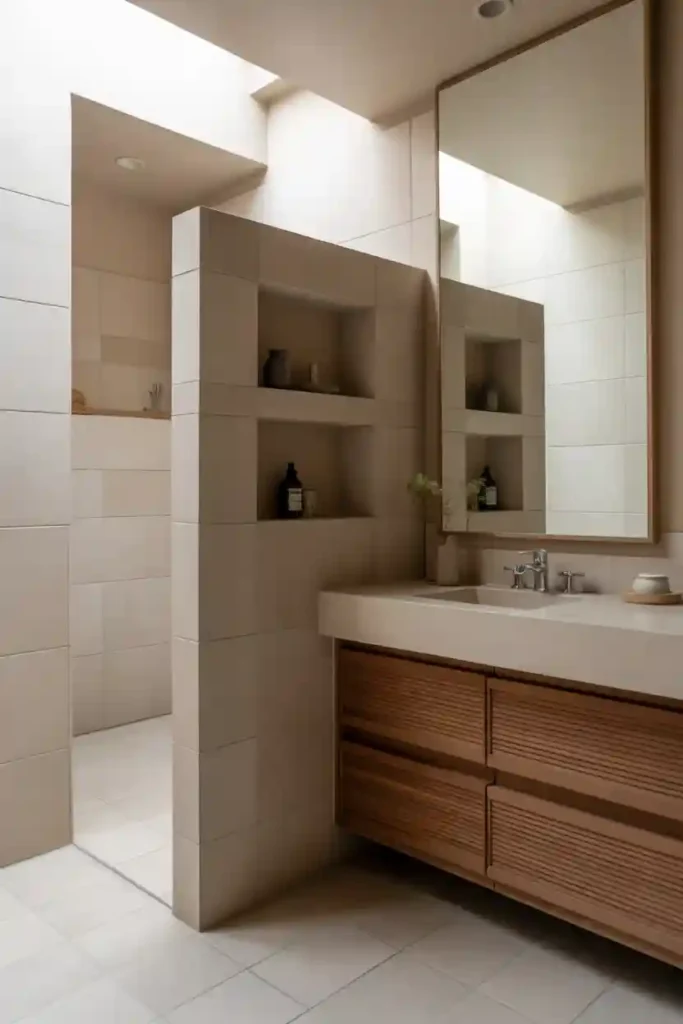
Integrated wall niches are a subtle yet functional feature in Japandi bathrooms. Built into shower walls or above vanities, these recessed spaces provide storage without adding clutter, keeping the minimalist aesthetic intact.
Niches can hold toiletries, small decorative objects, or natural elements like candles and stones. Using materials that match the surrounding wall, such as stone or wood, ensures the niches blend seamlessly into the space. Soft lighting inside the niche can further enhance their visual appeal while emphasizing textures. This approach maintains clean lines and open surfaces, central to Japandi design, while adding practical storage. By keeping essentials neatly contained, wall niches contribute to a serene and organized bathroom environment that supports both functionality and calmness.
11. Japanese-Inspired Soaking Tub

A Japanese-style soaking tub brings a spa-like experience into your home while emphasizing simplicity and relaxation. Typically deep and rectangular, these tubs allow for full immersion, promoting mindfulness and stress relief.
Position the tub near a window or against a neutral stone wall to enhance natural light and maintain the serene atmosphere. A small wooden stool or tray can hold bath essentials, keeping everything minimal yet functional. Pair the tub with subtle, matte black or brushed metal fixtures for a modern touch without disrupting the calm aesthetic. This tub serves as both a focal point and a functional feature in the bathroom, embodying the balance, elegance, and tranquility that define Japandi style.
12. Greenery and Natural Plants
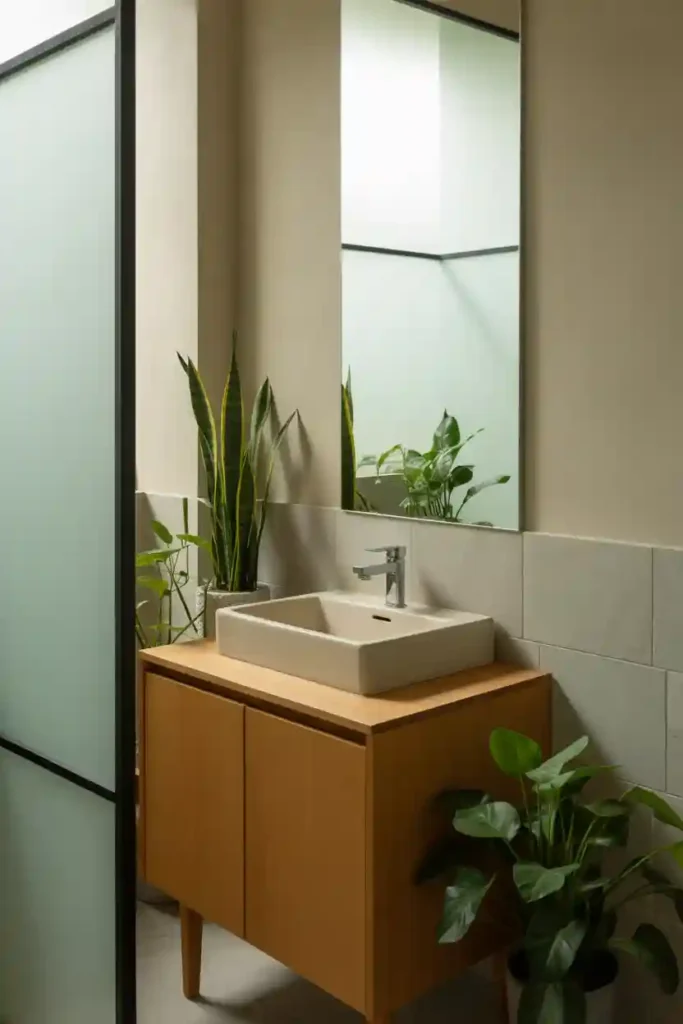
Adding greenery in the form of indoor plants enhances the natural, serene feel of a Japandi bathroom. Small potted bamboo, ferns, or bonsai trees introduce life and color without disrupting the minimalist aesthetic.
Place plants strategically on floating shelves, vanities, or even floor pots to maintain balance and simplicity. Use natural or neutral-toned pots that blend with wood and stone textures, reinforcing the organic feel of the space. Plants not only improve visual appeal but also contribute to a sense of calm and well-being, connecting the interior to nature. In a Japandi bathroom, they serve as subtle decorative elements that enrich the space while maintaining tranquility.
13. Neutral Floor Tiles with Texture
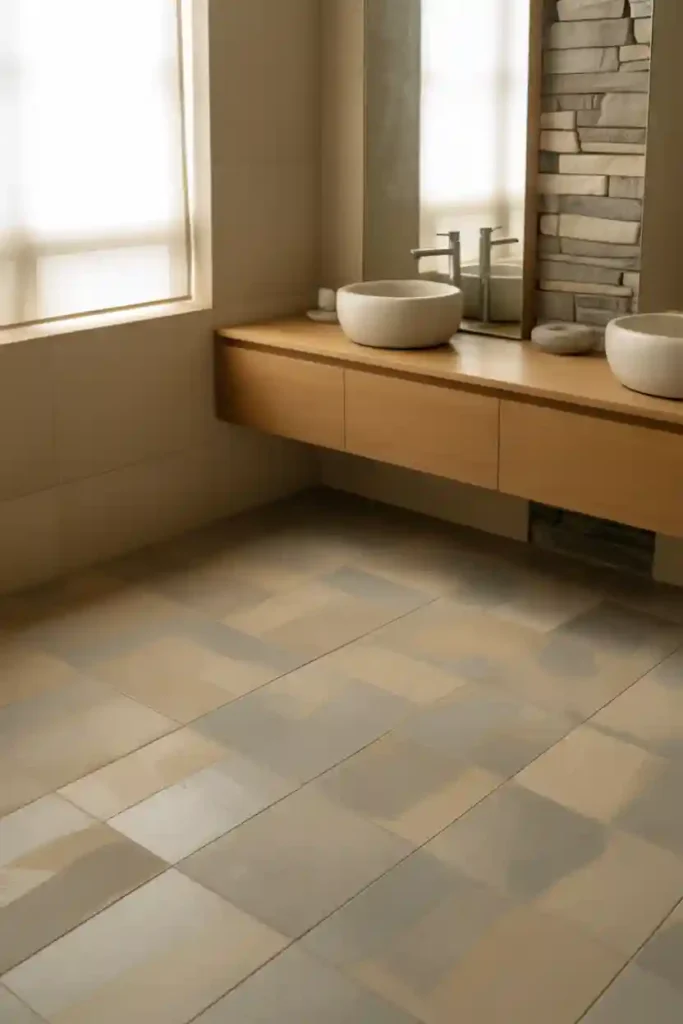
Textured floor tiles in neutral tones are a subtle but essential element in a Japandi bathroom. Large-format tiles in beige, soft gray, or sand shades add tactile interest without overwhelming the minimalist design.
Textured surfaces also enhance safety by providing grip, especially in wet areas like near showers or tubs. The natural feel of stone or ceramic tiles complements wooden vanities and soft wall tones, creating a cohesive, serene environment. By choosing simple, muted patterns or subtle textures, the floor becomes an understated design feature that reinforces calmness. This approach ensures the space feels grounded and connected to nature, a core principle of Japandi style.
14. Simple Open Shelving for Decor

Minimal open shelves allow you to display essentials or decorative objects in a clean, uncluttered way. Wooden shelving works best, blending seamlessly with natural tones and textures found in Japandi bathrooms.
Keep objects minimal—folded towels, a small ceramic vase, or a plant—to maintain tranquility. Overcrowding shelves disrupts the sense of calm and simplicity central to Japandi design. Open shelving adds subtle warmth and visual interest while maintaining functionality. It’s a practical solution for small bathrooms or for highlighting key décor items, enhancing the balance between utility and minimal aesthetics.
15. Soft Linen Towels and Textiles
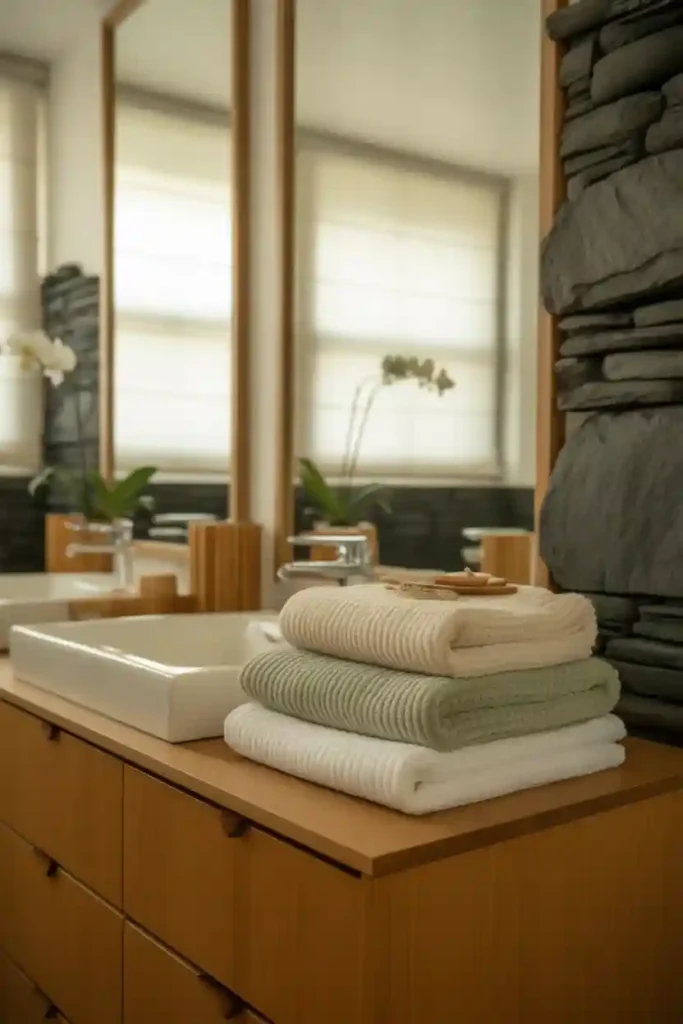
High-quality linen or cotton towels in muted shades like cream, beige, or soft gray complete the Japandi bathroom look. Their soft texture adds comfort and warmth, softening hard surfaces like stone and wood.
Neatly folded on open shelves or draped minimally on hooks, these textiles maintain the minimalist aesthetic while providing functionality. Layering subtle textures, like a linen bath mat, enhances the sensory experience without cluttering the space. Soft, natural fabrics reinforce the spa-like, calm atmosphere, making the bathroom feel like a tranquil retreat. Every small detail, including towels and textiles, contributes to the mindful, serene environment central to Japandi design.
Final Words
Japandi bathrooms embrace simplicity, natural materials, and muted tones to create serene, functional spaces that feel like a retreat. By incorporating these 15 Japandi bathroom ideas for a calm, minimal look, you can transform your bathroom into a spa-like sanctuary that supports relaxation, mindfulness, and daily rituals. Whether it’s through natural textures, clean lines, or thoughtful accessories, Japandi design proves that minimalism can be warm, inviting, and timeless—perfect for creating a space that nurtures both the body and the mind.