14 Modern Basement Ideas That Feel Finished
A basement doesn’t have to feel dark, cold, or forgotten. With the right design choices, it can become one of the most stylish and functional areas in your home. These 14 Modern Basement Ideas That Feel Finished will help you transform an unfinished lower level into a polished extension of your living space. From smart lighting solutions to cozy textures and multi-purpose layouts, modern basement design focuses on comfort, warmth, and visual flow.
Whether you want a family lounge, home office, guest suite, or entertainment zone, the key is creating a space that feels intentional and cohesive. Thoughtful flooring, layered lighting, neutral palettes, and clever storage all play a role in achieving a finished look. If you’re ready to upgrade your basement into a space that feels bright, welcoming, and completely livable, these ideas will inspire your next renovation project.
1. Create a Cozy Modern Family Lounge
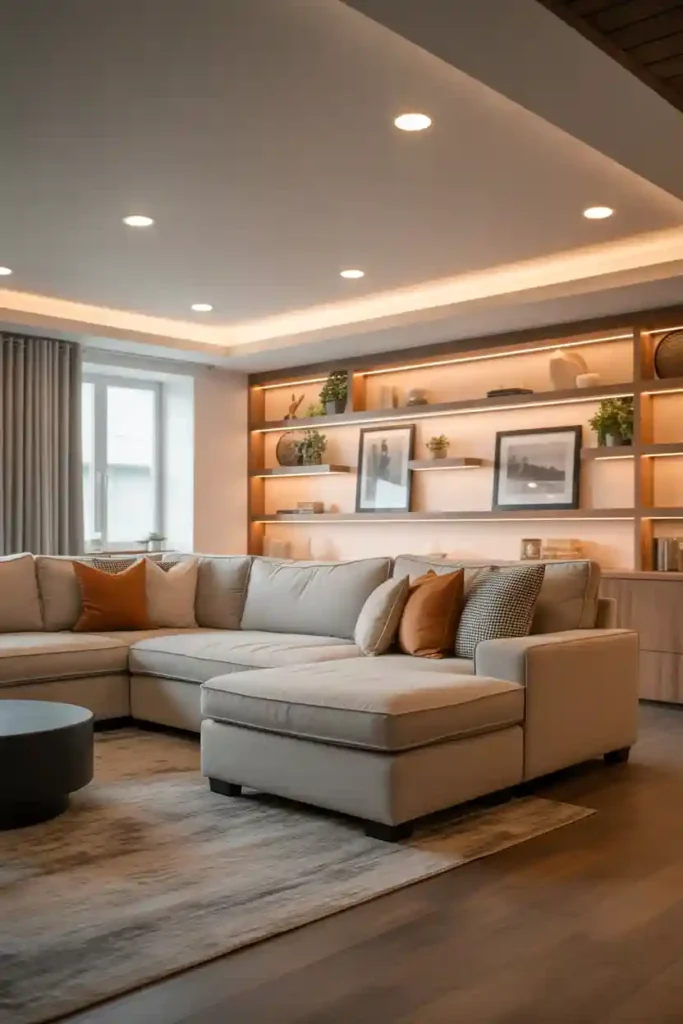
Transforming your basement into a modern family lounge instantly makes it feel finished and purposeful. Start with a comfortable sectional sofa in a neutral tone like soft gray, beige, or warm taupe. Add textured throw pillows and layered blankets to make the space feel inviting rather than cold. Low-profile modern furniture works best in basements with lower ceilings because it keeps the room from feeling cramped.
Lighting is essential. Combine recessed ceiling lights with floor lamps and table lamps to create a warm glow. Avoid relying on one central light source. Add a large area rug to define the seating zone and soften hard flooring. Finish the space with built-in shelving, framed artwork, and a sleek media console. When your basement feels like a true living room, it no longer feels like an afterthought.
2. Design a Home Theater with Clean Lines
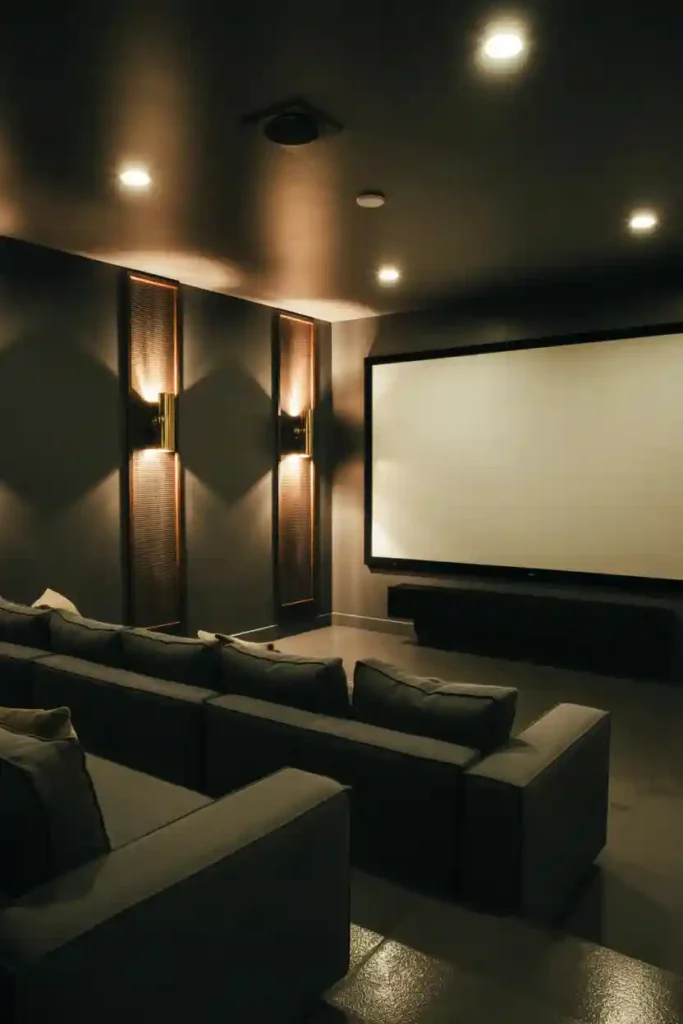
A modern home theater is one of the most popular basement upgrades. Choose dark, rich paint colors like charcoal, navy, or deep green to create a cinematic mood. Install wall-mounted sconces and dimmable recessed lighting for a theater-like glow. Instead of bulky recliners, opt for sleek theater seating or a large sectional with clean lines.
Acoustic panels can be covered in stylish fabric to blend with your décor while improving sound quality. Add a floating media console to keep wires hidden and maintain a minimalist look. Soft carpeting enhances comfort and reduces echo. Finish the room with blackout curtains if you have small basement windows. This design makes your basement feel polished, functional, and intentionally designed.
Read Also: 12 Sofa Styling Ideas for a Polished Look
3. Add a Bright Guest Suite
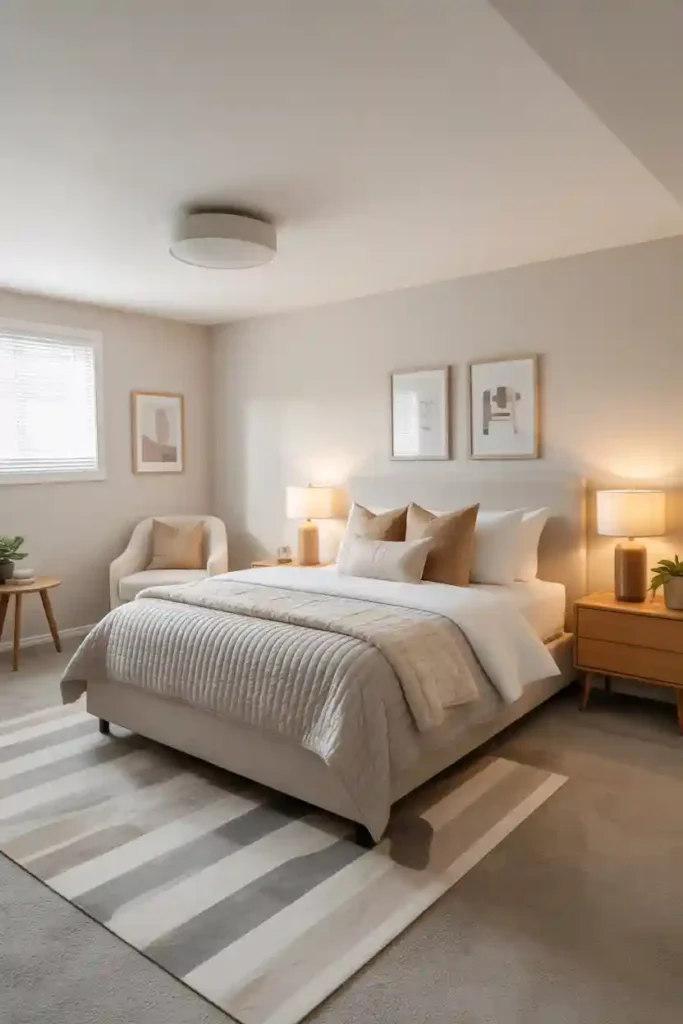
Turn your basement into a modern guest retreat that feels hotel-worthy. Choose light wall colors like soft white or pale greige to brighten the space. Use layered bedding with plush duvets and textured pillows to create a welcoming bed setup. Add bedside lamps for soft nighttime lighting.
If space allows, include a small seating area with an accent chair and side table. Wall-mounted mirrors help reflect light and make the room feel larger. Incorporate built-in storage or a sleek wardrobe so guests have room for belongings. Add subtle décor like abstract artwork and greenery to complete the look. A well-designed guest suite makes your basement feel like a finished extension of your home.
4. Install Built-In Storage Walls
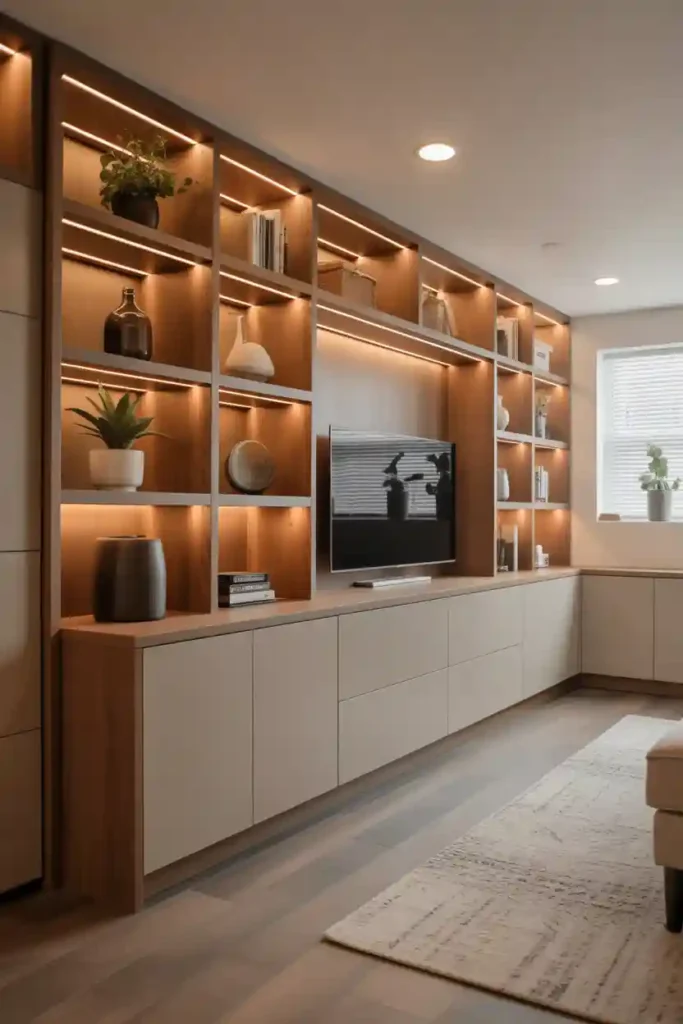
Custom built-ins instantly elevate a basement. Floor-to-ceiling shelving painted in a soft neutral tone creates a seamless, finished look. Use closed cabinets on the bottom for hidden storage and open shelves on top for décor and books.
Built-ins make the space feel architectural rather than temporary. Add integrated lighting inside the shelves for a high-end touch. You can design storage around a TV, fireplace, or workspace to create a cohesive feature wall. This approach reduces clutter and keeps your basement organized. A clean and structured design is key to modern style.
5. Create a Modern Home Office Zone
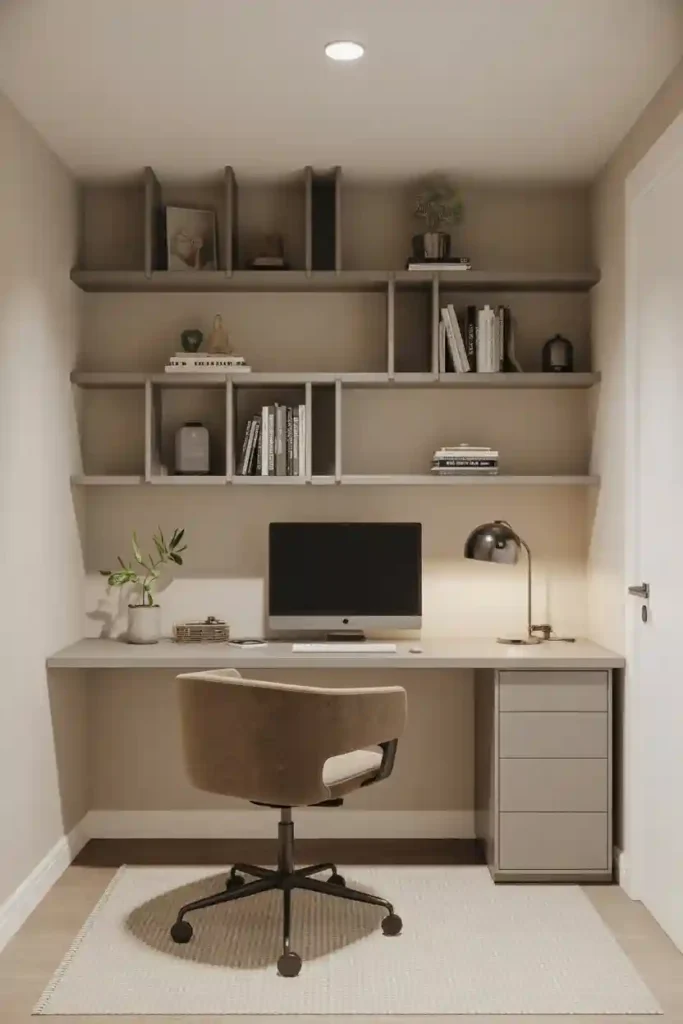
A basement can become a quiet and highly productive workspace when designed with intention. Start by choosing a streamlined desk with clean lines and minimal detailing. Light wood, matte black, or soft white finishes work beautifully in modern interiors. Pair it with an ergonomic chair that offers comfort without looking bulky. In basements, visual simplicity helps prevent the room from feeling heavy or closed in. Lighting is critical. Combine recessed ceiling lights with a focused desk lamp to eliminate shadows. If your basement has a small window, position the desk nearby to maximize natural light. Use warm white bulbs to create a welcoming glow instead of a harsh office feel.
Add floating shelves above the desk to keep paperwork organized without crowding the floor. Incorporate subtle décor like framed abstract art, a small indoor plant, or woven storage baskets for texture. A neutral color palette with layered textures keeps the space modern yet inviting. With thoughtful organization and layered lighting, your basement office will feel intentional, polished, and fully finished rather than temporary.
6. Design a Stylish Basement Bar
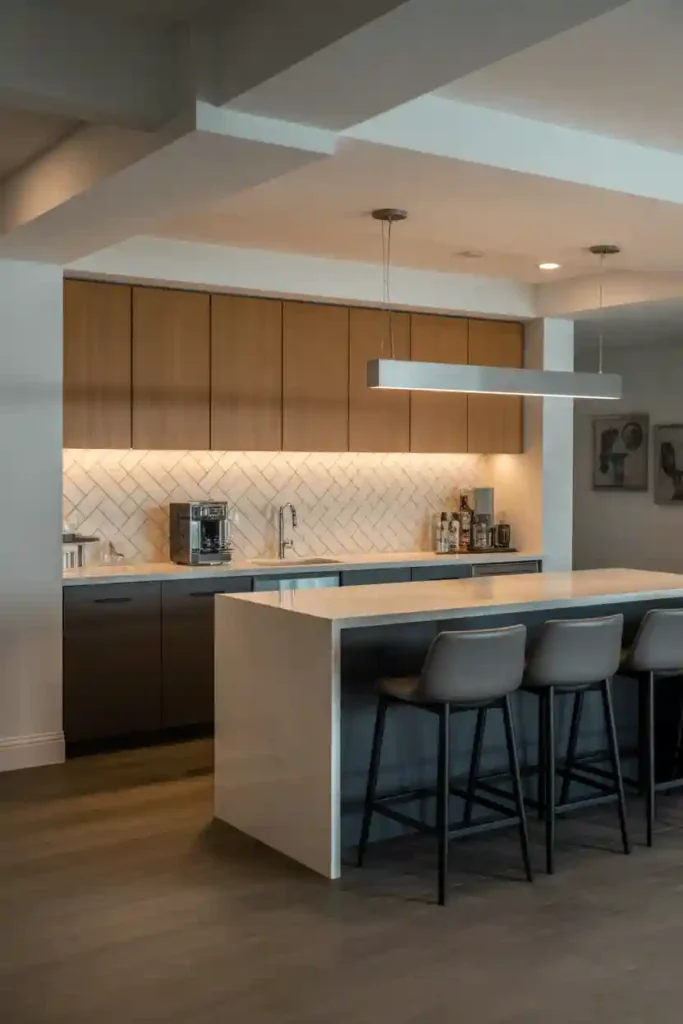
A modern basement bar instantly elevates the space and makes it feel designed for entertaining. Start with flat-panel cabinets in a neutral tone such as charcoal, navy, or warm white. Pair them with a quartz or stone countertop for a sleek and durable surface. Open shelving above the counter allows you to display glassware while keeping the look light and airy.
Under-cabinet LED lighting creates a soft glow that enhances ambiance and makes the bar feel upscale. Choose bar stools with slim metal or wood frames and simple silhouettes to maintain a modern aesthetic. Avoid bulky furniture that can overwhelm a basement layout. Consider adding a statement backsplash with geometric tile, marble-look porcelain, or subtle texture for visual interest. Keep the palette cohesive with the rest of the basement to maintain flow and balance. When thoughtfully designed, a basement bar feels like a seamless extension of your main living space rather than an afterthought. It adds function, personality, and a finished look to your lower level.
7. Use Layered Lighting Throughout
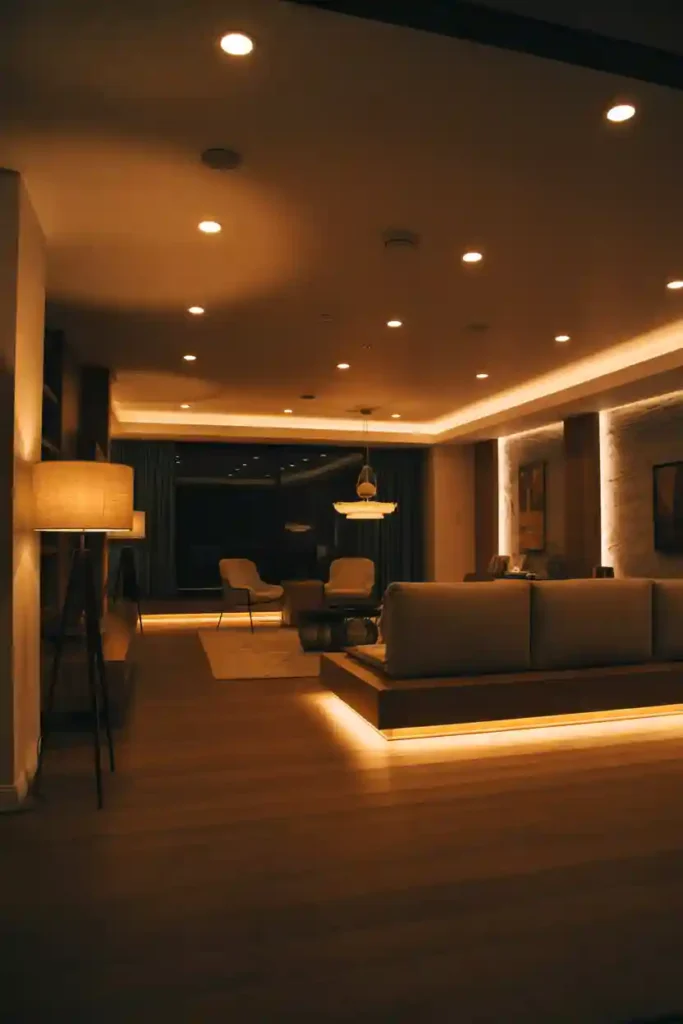
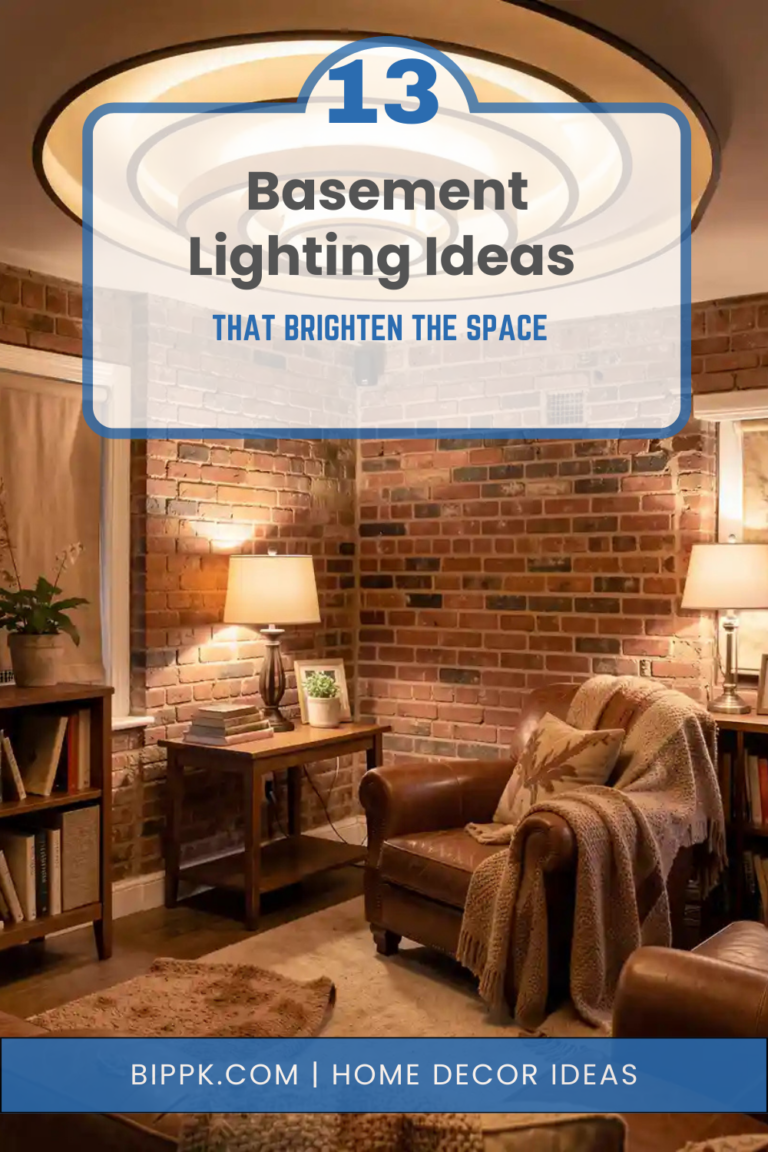
Lighting is one of the most powerful tools for making a basement feel complete and welcoming. Because basements often lack natural light, relying on a single overhead fixture can make the space feel flat and shadowy. Instead, layer multiple light sources. Recessed ceiling lights provide overall illumination without lowering ceiling height. Add floor lamps and table lamps in seating areas to create warmth.
LED strip lighting under shelves or behind media units adds subtle depth and dimension. Pendant lights can highlight specific zones like a bar or game table. Installing dimmer switches allows you to adjust the mood depending on the time of day or activity. Warm white bulbs help counteract the coolness of underground spaces. Proper lighting eliminates dark corners and makes the room feel thoughtfully designed.When lighting is layered intentionally, your basement instantly feels brighter, cozier, and truly finished.
8. Add a Statement Accent Wall
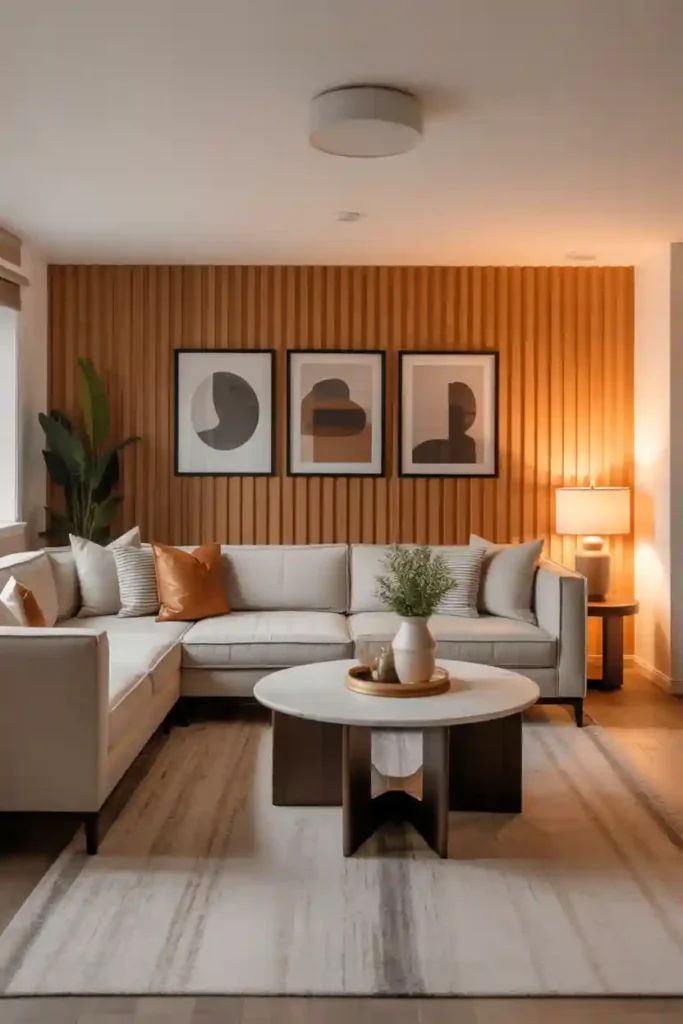
An accent wall is a simple yet impactful way to add personality and depth to your basement. Choose one focal wall — behind a sofa, bed, or media unit — and give it special treatment. Wood paneling adds warmth and texture, especially in light oak or walnut tones. Geometric wallpaper introduces pattern without overwhelming the room. You could also use textured paint finishes or board-and-batten detailing for subtle architectural interest.
Keep surrounding walls neutral to maintain balance. This contrast ensures the accent wall feels intentional rather than busy. Incorporate complementary décor such as framed artwork, floating shelves, or modern sconces to complete the look. Accent walls help define zones in open basement layouts. They visually anchor furniture and make the space feel styled and cohesive.With the right material and placement, a statement wall transforms your basement from basic to beautifully finished.
9. Install Modern, Durable Flooring
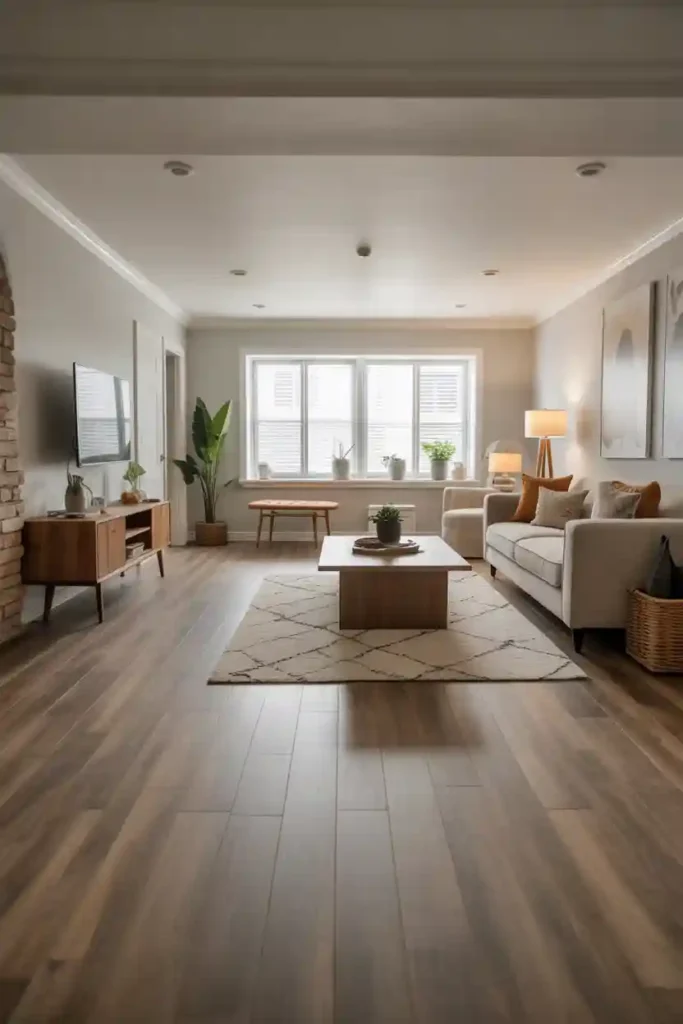
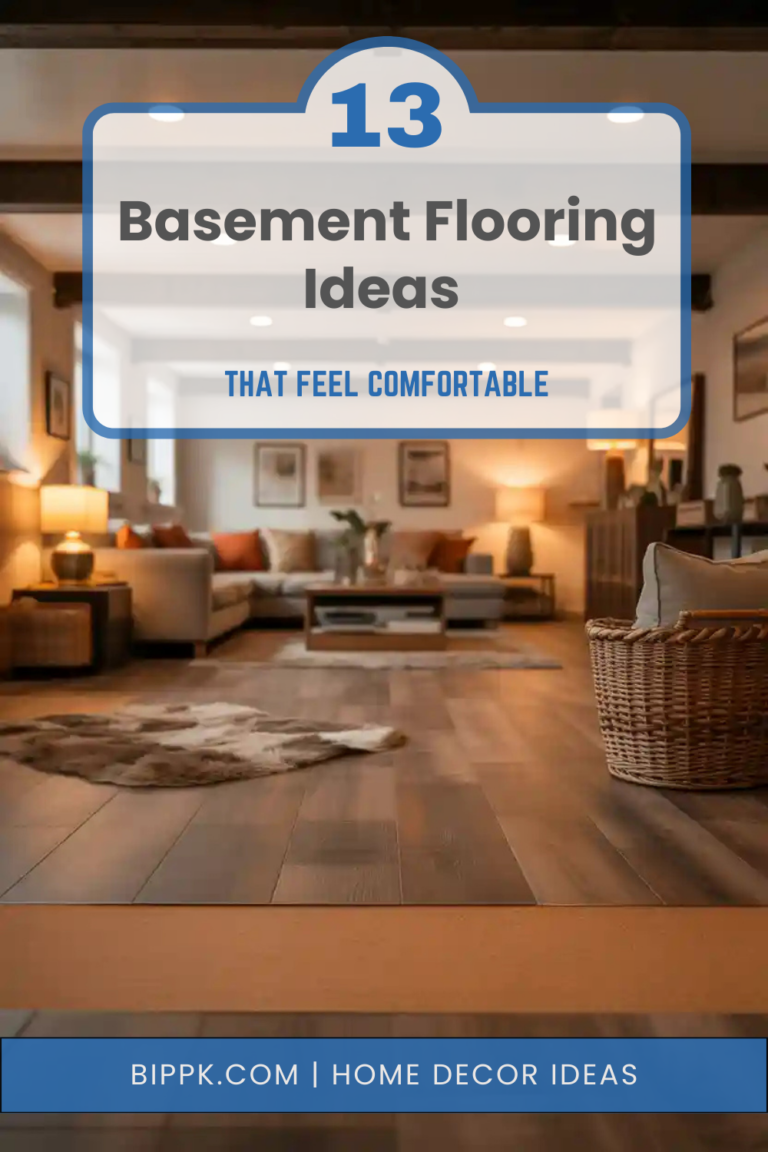
Flooring plays a major role in making your basement feel complete and comfortable. Because basements are below ground, it’s important to choose materials that resist moisture while still looking stylish. Luxury vinyl plank is a popular modern option because it mimics hardwood while offering durability and water resistance. Engineered hardwood can also work when properly installed with moisture barriers. For a softer feel, consider carpet tiles that can be replaced individually if needed.
Warm-toned flooring helps counteract the coolness often associated with basements. Light oak, honey, or medium walnut finishes create warmth and visual balance. Layer large area rugs to define seating areas and add texture. Avoid cold, unfinished concrete unless it’s intentionally polished and styled in an industrial design. The goal is to make the basement feel like a true extension of your home, not a secondary space. When the flooring feels intentional and cohesive with the rest of the design, the entire basement instantly looks polished and finished.
10. Incorporate a Sleek Fireplace Feature
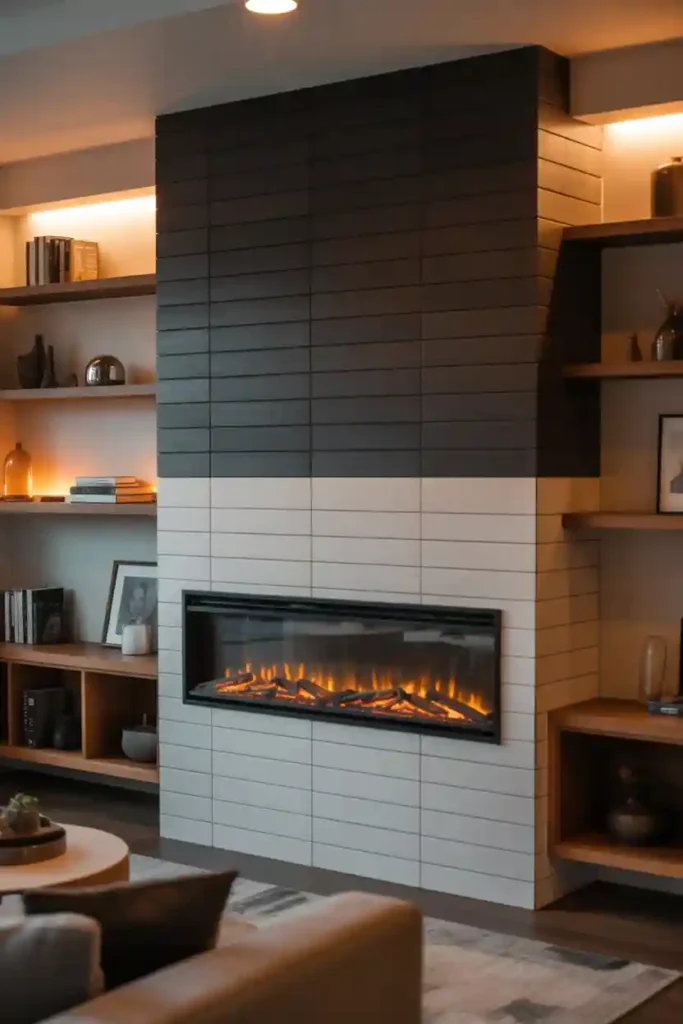
Adding a fireplace instantly elevates a basement and makes it feel like a true living space. A linear electric fireplace is ideal for modern designs. It offers warmth and ambiance without requiring complex ventilation. Install it within a minimalist surround using tile, stone, or smooth plaster for a clean, streamlined appearance. Mount the fireplace at eye level and consider pairing it with built-in shelving on either side for symmetry. Floating shelves or closed cabinets can provide both style and storage. Keep décor minimal a few ceramic vases, framed art, or stacked books are enough to maintain a modern feel.
Soft lighting around the fireplace enhances its glow and makes the basement feel cozy rather than dim. Even if the basement is primarily used for entertainment or lounging, a fireplace adds a welcoming focal point. This single feature can transform an unfinished lower level into a sophisticated and comfortable retreat.
11. Create a Kids’ Play Area with Style
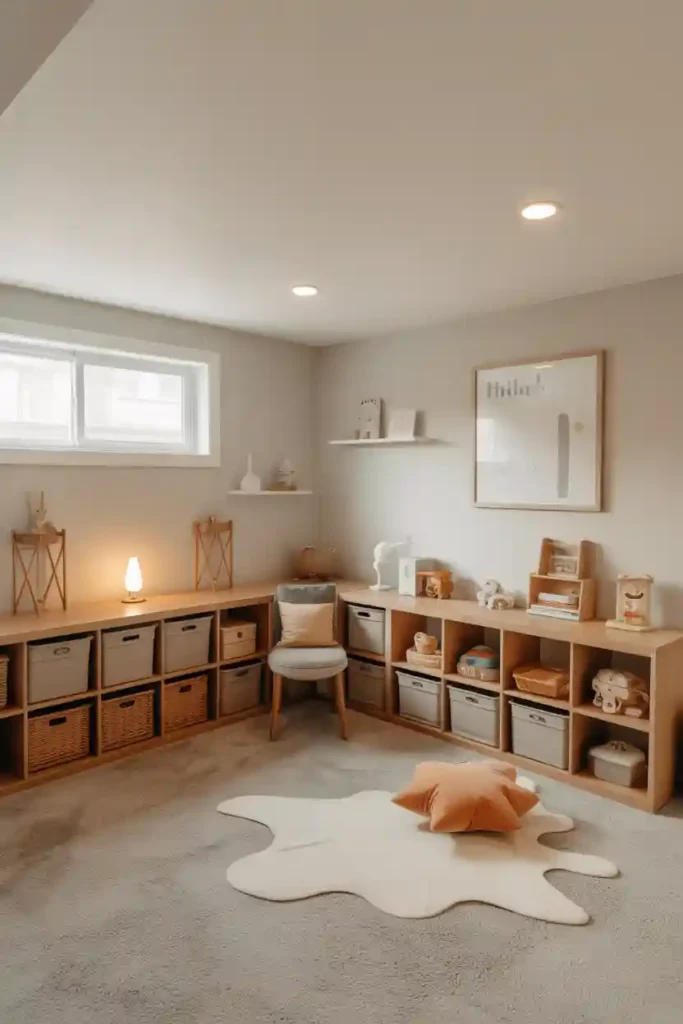
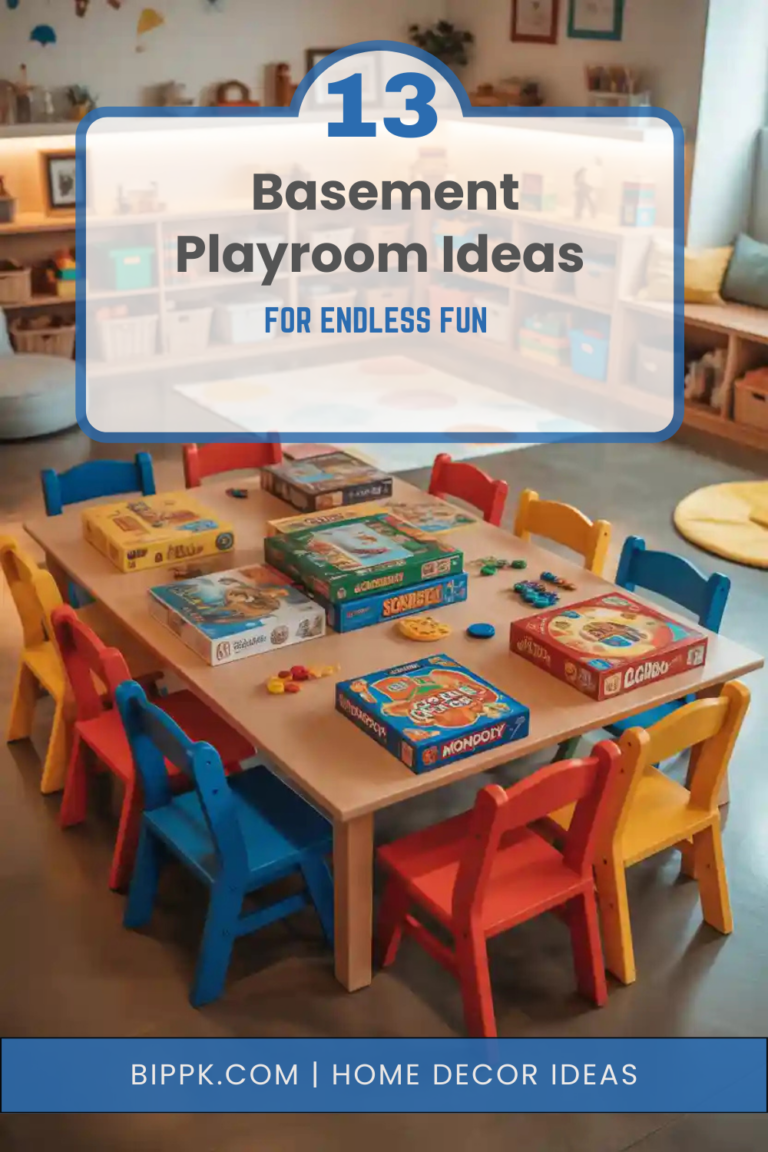
A basement can be the perfect place for a children’s play area — and it doesn’t have to look chaotic. Start with durable, easy-to-clean flooring such as vinyl plank or carpet tiles. Choose a soft neutral wall color like warm beige, light gray, or soft sage to maintain a calm environment. Instead of bright primary colors everywhere, add playful accents through toys, artwork, and cushions. Use closed cabinets and labeled bins to keep clutter organized. Low open shelving allows children to access books and games easily. Add a cozy reading nook with floor cushions, a small tent, or built-in bench seating.
Good lighting is essential to make the space feel safe and welcoming. Combine recessed lighting with a playful pendant fixture or wall sconces for character. When thoughtfully designed, a basement playroom can feel cohesive with the rest of your home while still being fun and functional. A tidy, well-planned layout makes the space feel finished rather than temporary.
12. Add a Compact Home Gym
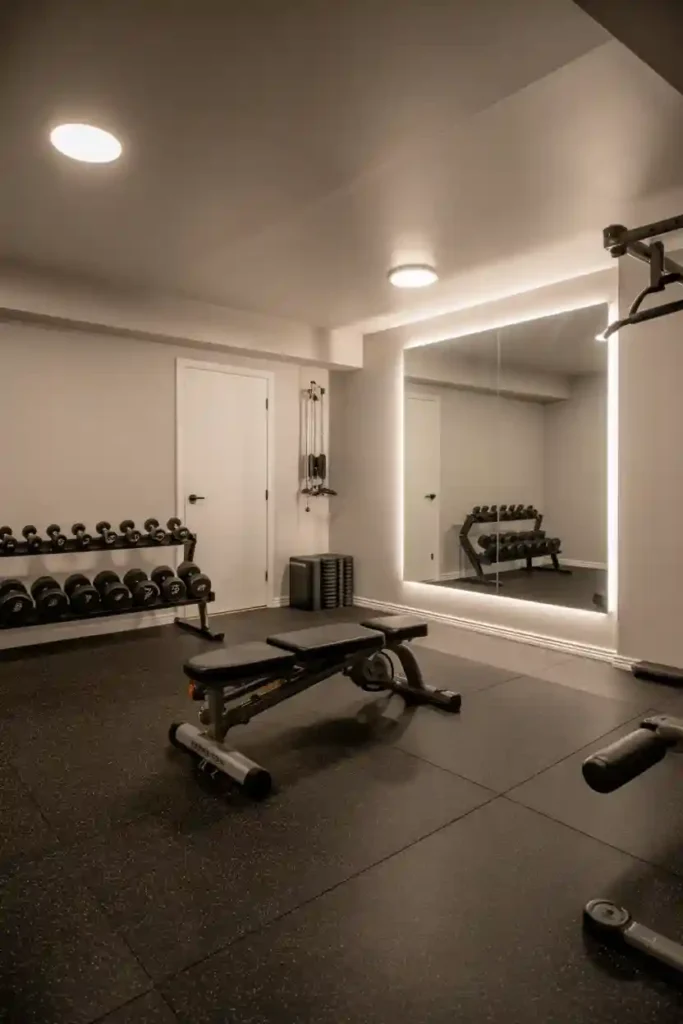
Transforming part of your basement into a home gym creates a purposeful and motivating environment. Start with rubber or foam flooring for durability and safety. These materials protect both the subfloor and your equipment while reducing noise. Add a large wall mirror to reflect light and make the space feel bigger. Keep equipment streamlined and organized. Wall-mounted racks for weights and resistance bands prevent clutter. Choose a neutral color palette with black, gray, or white accents to maintain a clean, modern aesthetic.
Proper lighting is crucial in a gym setting. Bright overhead lighting combined with subtle accent lights keeps the area energizing without feeling harsh. If possible, add a Bluetooth speaker system for a fully immersive workout experience. A compact gym doesn’t require a huge footprint — just intentional planning and organization. When the layout feels clean and uncluttered, your basement gym will look polished and completely finished rather than makeshift.
13. Design an Open Concept Layout
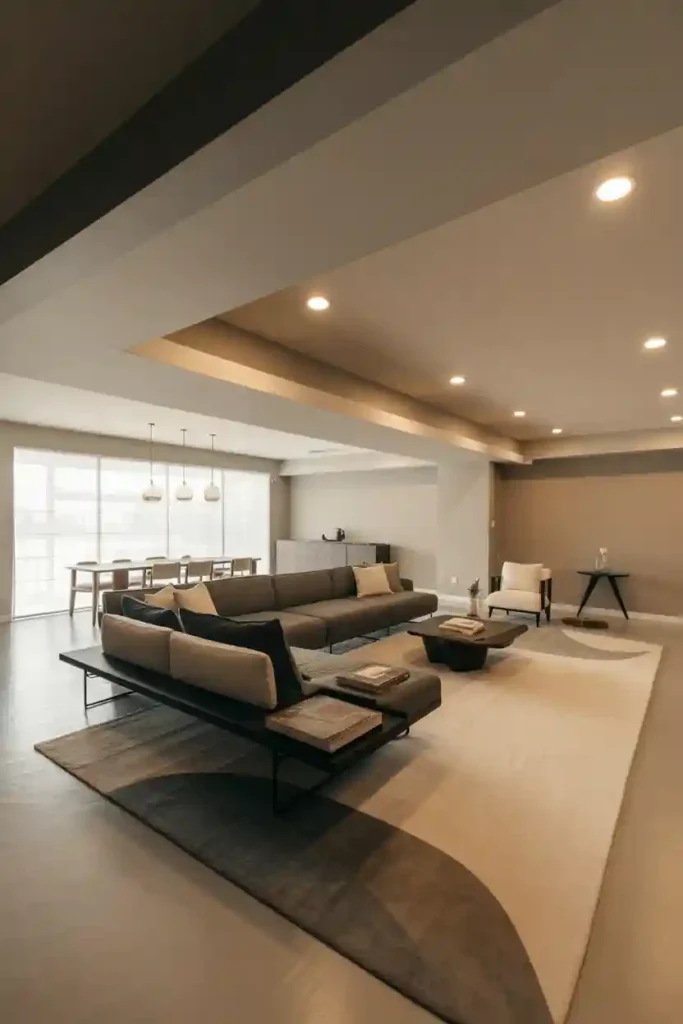
An open concept layout is one of the most effective ways to make a basement feel finished and expansive. Instead of dividing the space with unnecessary walls, create distinct zones using furniture placement, rugs, and lighting. For example, position a sectional sofa to define the lounge area, place a console table behind it to subtly separate spaces, and use a large area rug to anchor the seating zone. A dining table, game table, or small bar area can flow naturally into the same open footprint. Keep the color palette cohesive throughout the basement. Soft neutrals like warm white, greige, taupe, and light wood tones help unify the space. Consistency in flooring also enhances the seamless feel. Avoid abrupt material changes that visually chop up the room.
Layered lighting is especially important in open layouts. Use recessed lighting for overall brightness, pendants to highlight specific zones, and lamps for warmth. An open concept basement feels larger, brighter, and more intentional. With thoughtful zoning and cohesive finishes, the entire lower level feels like a true extension of your main floor rather than a collection of separate rooms.
14. Bring in Natural Elements for Warmth
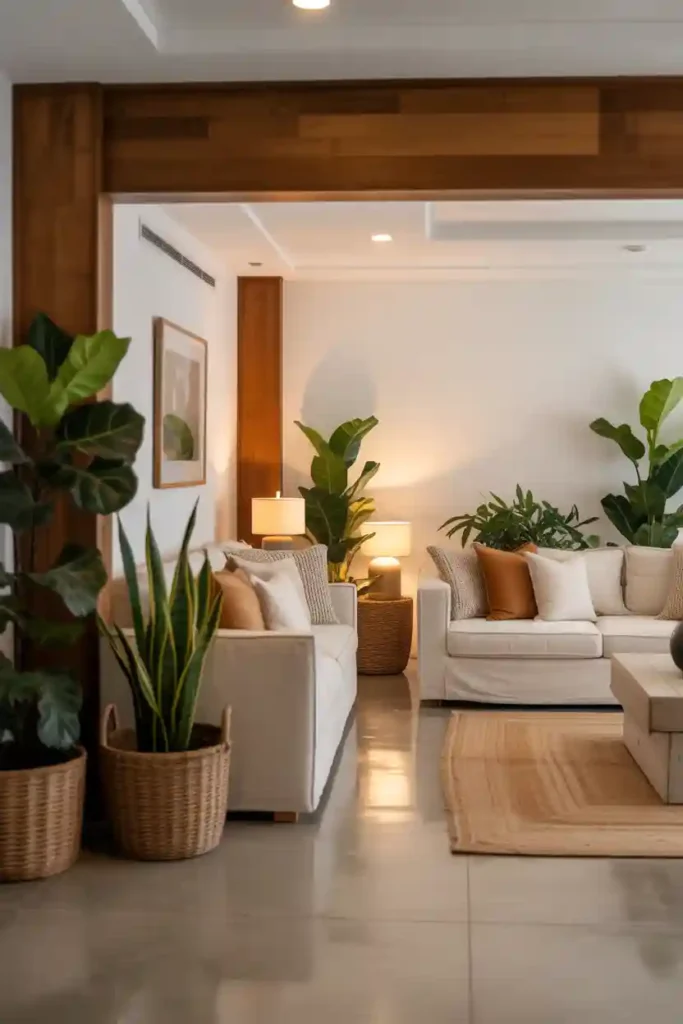
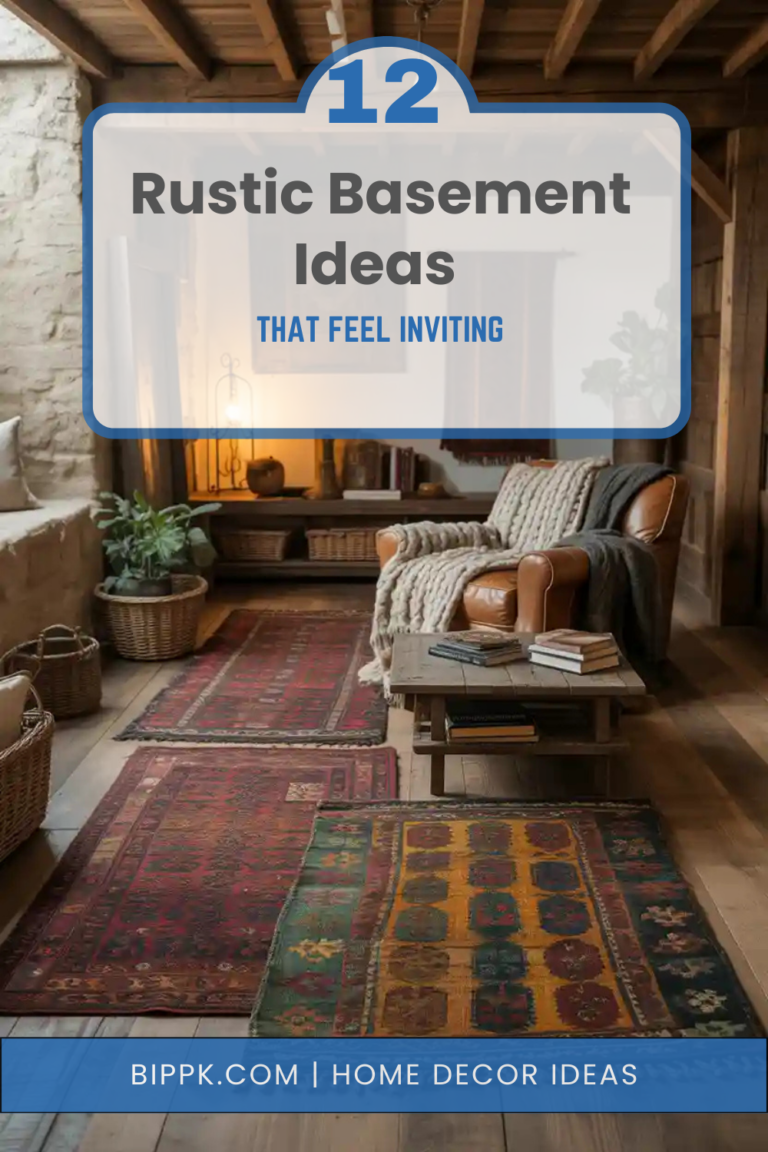
Basements often lack natural light, which can make them feel cool or disconnected from the rest of the home. Incorporating organic materials helps soften the space and create warmth. Start with wood accents such as slatted wall panels, floating wood shelves, or light oak furniture. These elements immediately add texture and visual interest. Woven materials like rattan baskets, linen curtains, and textured throw pillows bring softness to the design. Indoor plants are another powerful addition. Even low-light varieties can thrive in basements with proper care. Plants introduce color and make the space feel alive and welcoming. If natural light is limited, consider high-quality artificial greenery for a similar visual effect.
Choose fabrics in natural fibers like cotton and wool for rugs and upholstery. Keep the palette grounded in earthy tones such as beige, sand, soft green, and warm gray. When you balance clean modern lines with natural textures, your basement feels cozy, stylish, and completely finished. These final touches transform the lower level into a space that feels intentional, livable, and beautifully connected to the rest of your home.
Final Words
Transforming your lower level doesn’t require a complete overhaul it requires thoughtful design choices that make the space feel intentional and cohesive. These 14 Modern Basement Ideas That Feel Finished show how lighting, flooring, layout, and texture work together to create a basement that feels warm, functional, and beautifully styled.