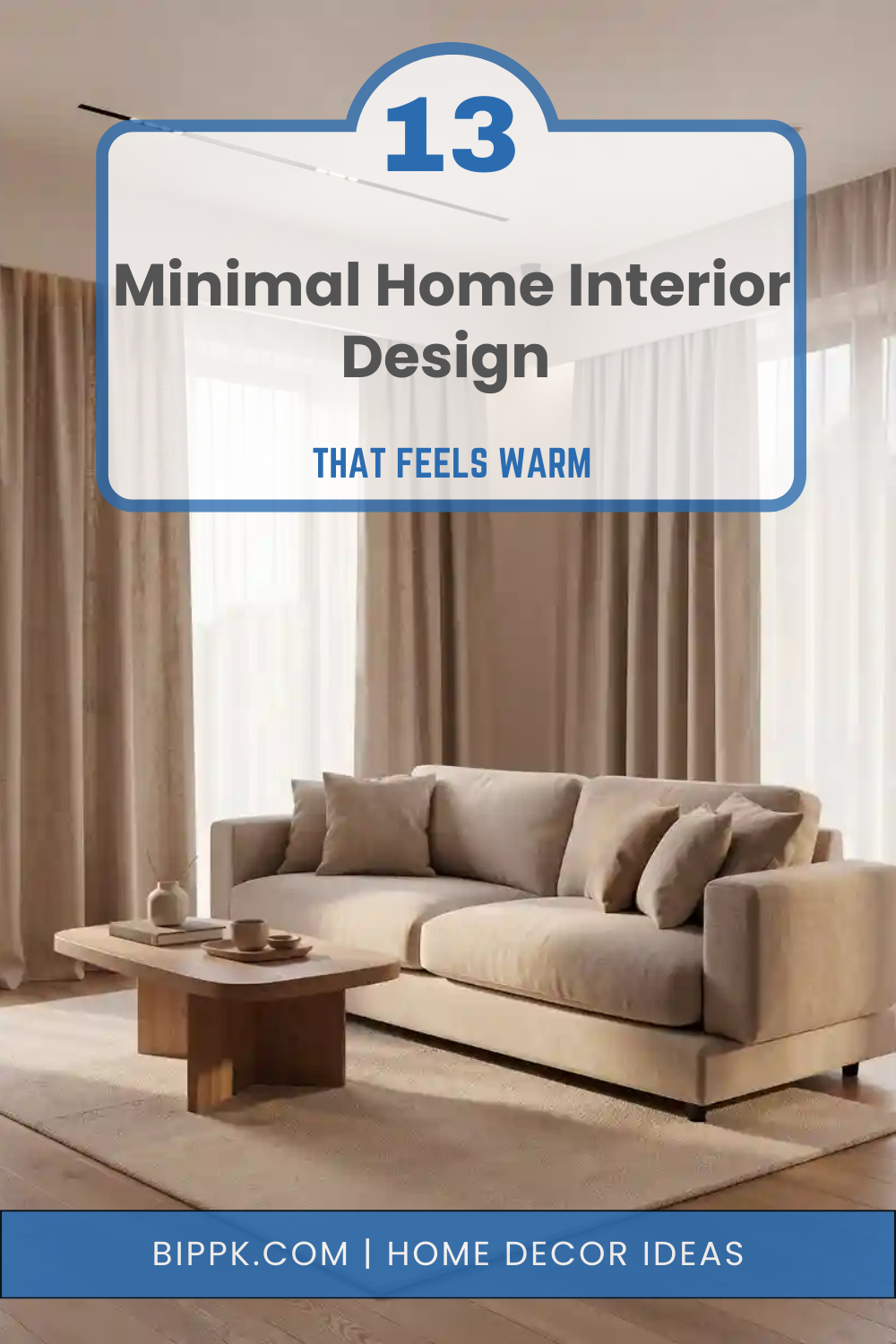
13 Minimal Home Interior Design That Feels Warm
Minimal home interior design is often associated with clean lines and clutter-free spaces, but it can also feel warm and inviting when done thoughtfully. Instead of cold and empty rooms, warm minimal interiors focus on comfort, texture, and balanced simplicity. The key is combining neutral colors, natural materials, and soft lighting to create a space that feels calm without looking sterile. Warm minimalism emphasizes quality over quantity, allowing carefully chosen furniture and decor to stand out.
By using wood finishes, soft textiles, and earthy tones, you can create a home that feels both modern and cozy. Minimal design helps reduce visual noise, making your living spaces feel more relaxing and organized. These minimal home interior ideas show how simple choices can transform your home into a peaceful environment that feels stylish yet comfortable, proving that minimalism and warmth can work beautifully together.
1. Warm Neutral Color Layers
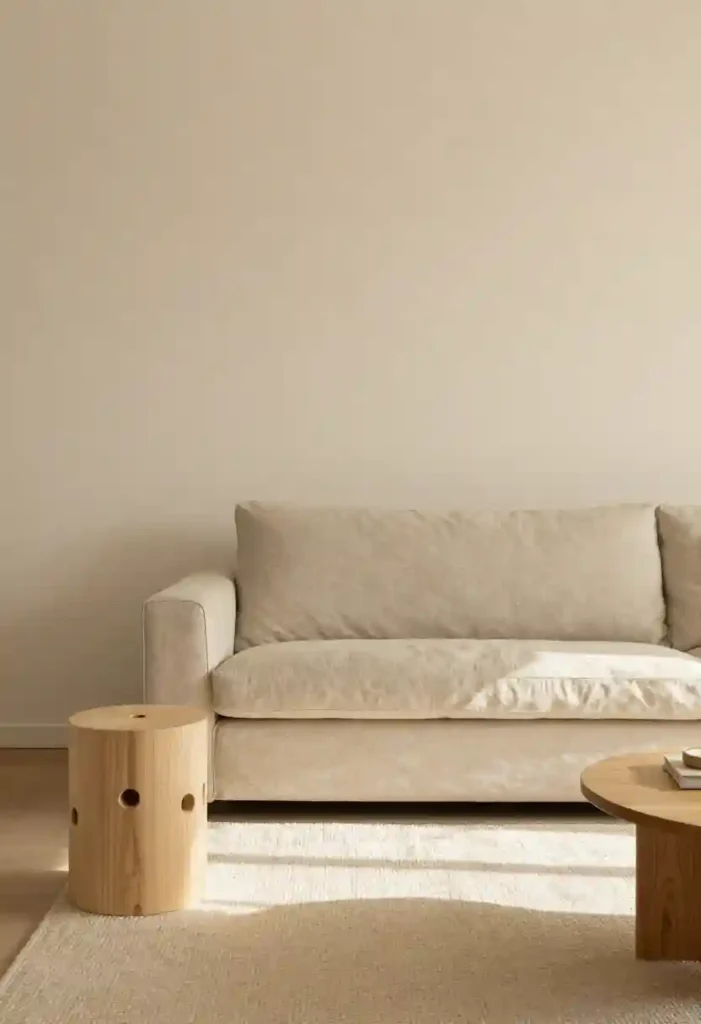
Warm minimal interiors start with a balanced neutral palette. Instead of stark white walls, choose warm shades like cream, soft beige, sand, or light taupe. These tones create a welcoming environment while maintaining a clean minimalist appearance.
Layering neutrals adds depth without making the room feel crowded. For example, cream walls can be paired with beige upholstery and light wood furniture. The subtle variations in tone make the space feel visually interesting while still calm and uncluttered.
2. Natural Wood Accents
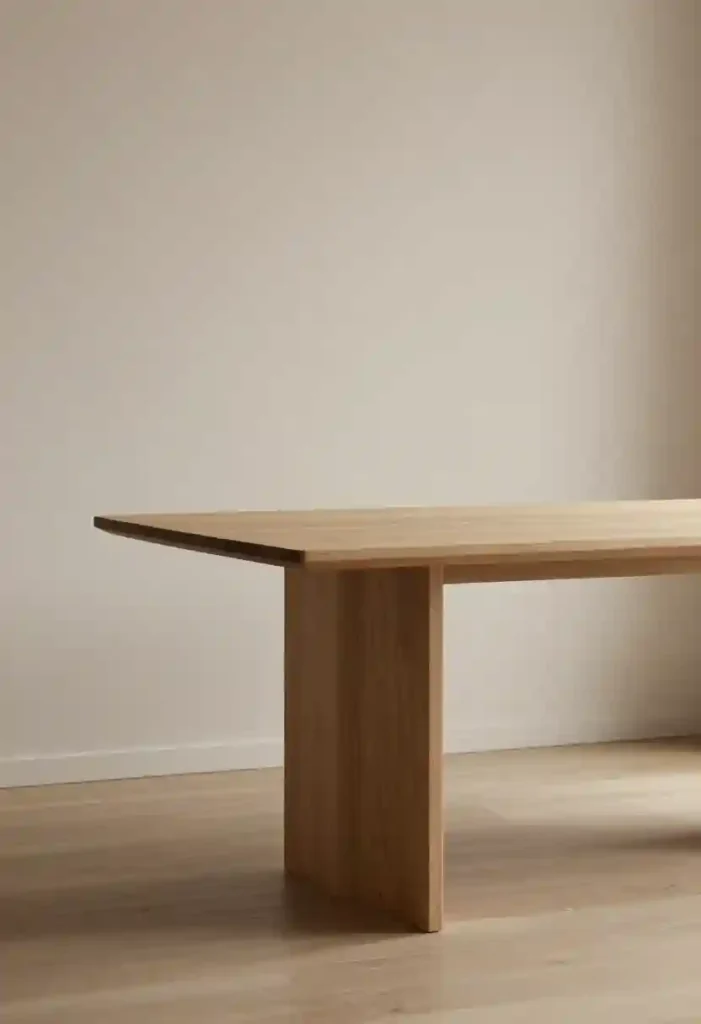
Wood is one of the easiest ways to warm up a minimalist interior. Natural wood tones introduce warmth and texture while maintaining simplicity. Light oak, maple, or walnut finishes work especially well in minimal spaces. Wooden tables, shelves, or cabinets add visual interest without requiring extra decoration.
The grain patterns in wood bring subtle detail that prevents the room from looking flat. Choose pieces with simple shapes and smooth finishes. Wood pairs beautifully with neutral colors and soft fabrics. Even small additions like wooden picture frames or trays can enhance the overall design.
3. Soft Textures for Comfort
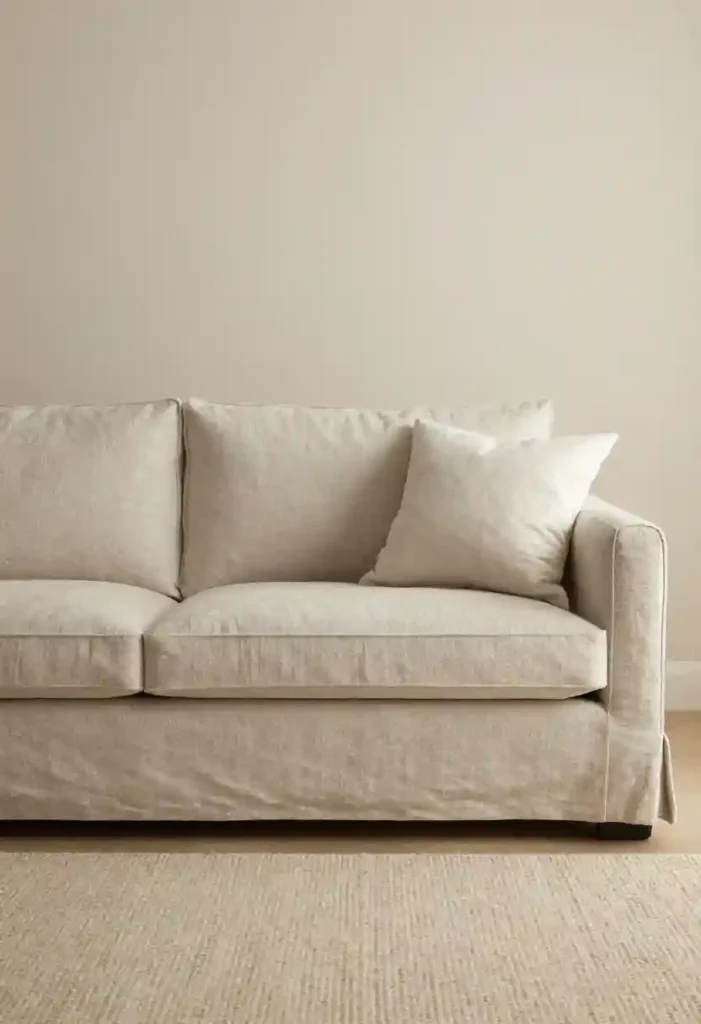
Texture is essential for making minimal interiors feel warm. Without texture, minimalist spaces can look plain or unfinished. Soft materials like wool, cotton, and linen add comfort without cluttering the room. A textured rug or throw blanket can transform a simple space.
Choose fabrics in neutral tones to maintain a cohesive look. Layering textures makes the room feel inviting while keeping the design simple. For example, combine a linen sofa with a wool rug and cotton cushions. These subtle details create warmth without overwhelming the minimalist aesthetic.
Read Also: 11 Earthy Bathroom Ideas for a Warm, Natural Vibe
4. Simple Furniture With Rounded Shapes
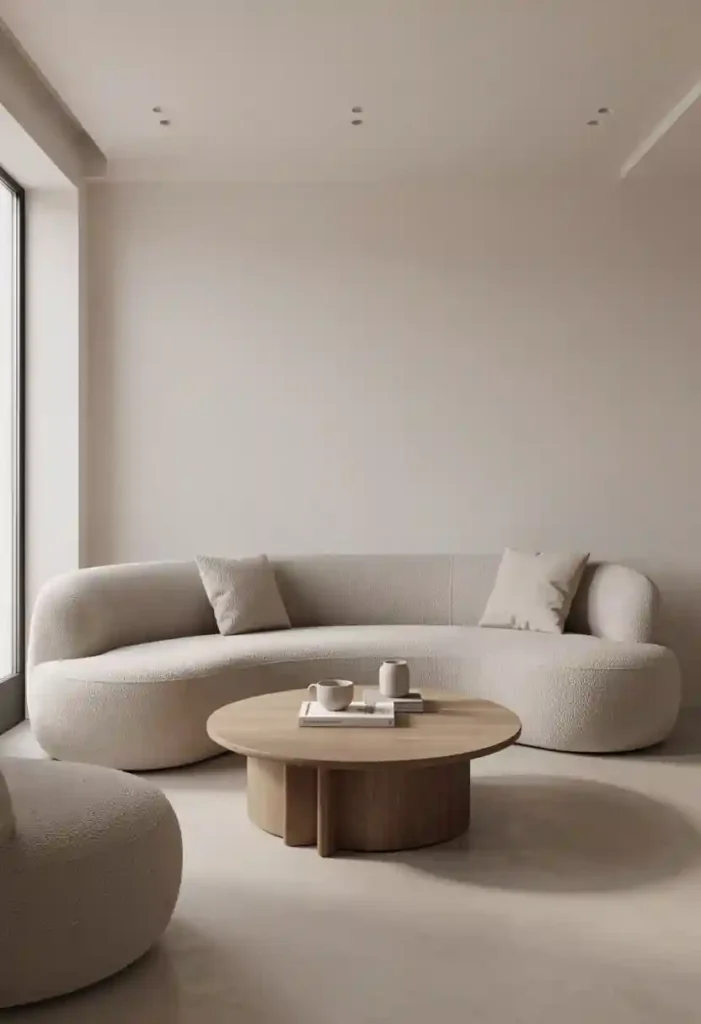
Minimal furniture doesn’t have to feel rigid. Rounded shapes soften the appearance of minimalist interiors. Curved sofas, circular tables, and arched mirrors add gentle visual interest. Soft lines create a welcoming atmosphere.
These shapes contrast nicely with straight walls and floors. Rounded furniture also makes spaces feel more relaxed and less formal. Choose pieces with clean designs and minimal decoration. Neutral upholstery works best.
5. Warm Ambient Lighting
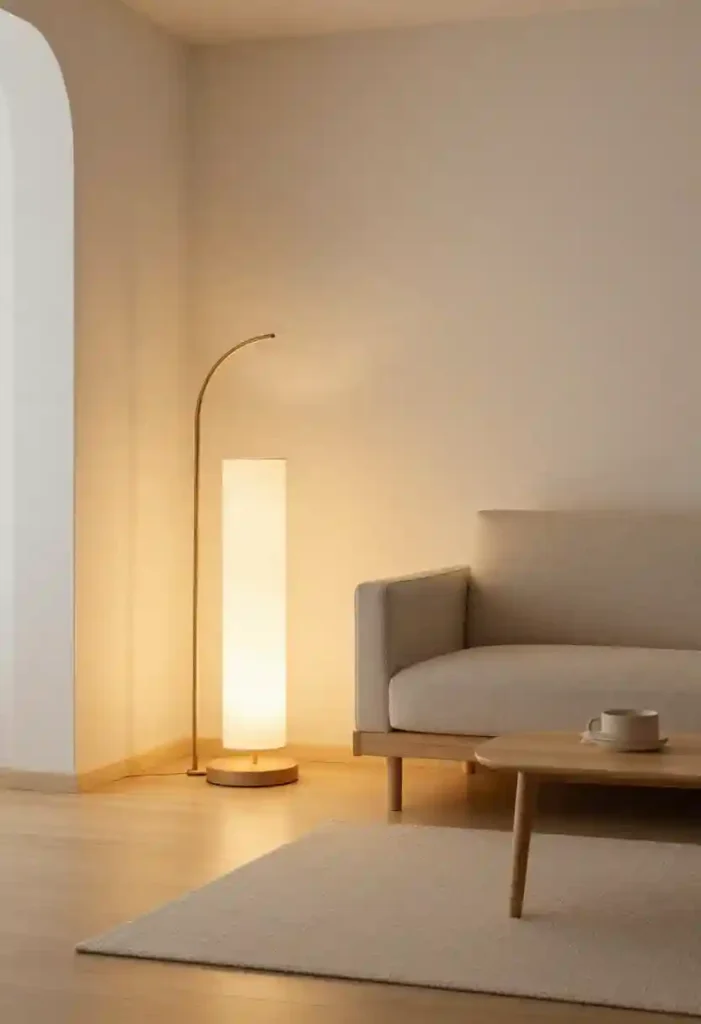
Lighting strongly affects how minimal interiors feel. Warm lighting creates a cozy atmosphere while preserving simplicity. Use soft white bulbs instead of cool bright lights. Table lamps and floor lamps create gentle layers of light. Indirect lighting reduces harsh shadows.
Warm lighting enhances neutral colors and wood finishes. Simple fixtures work best in minimal spaces. Avoid overly decorative lighting. Soft illumination makes the room feel relaxing and comfortable.
6. Decluttered Open Surfaces
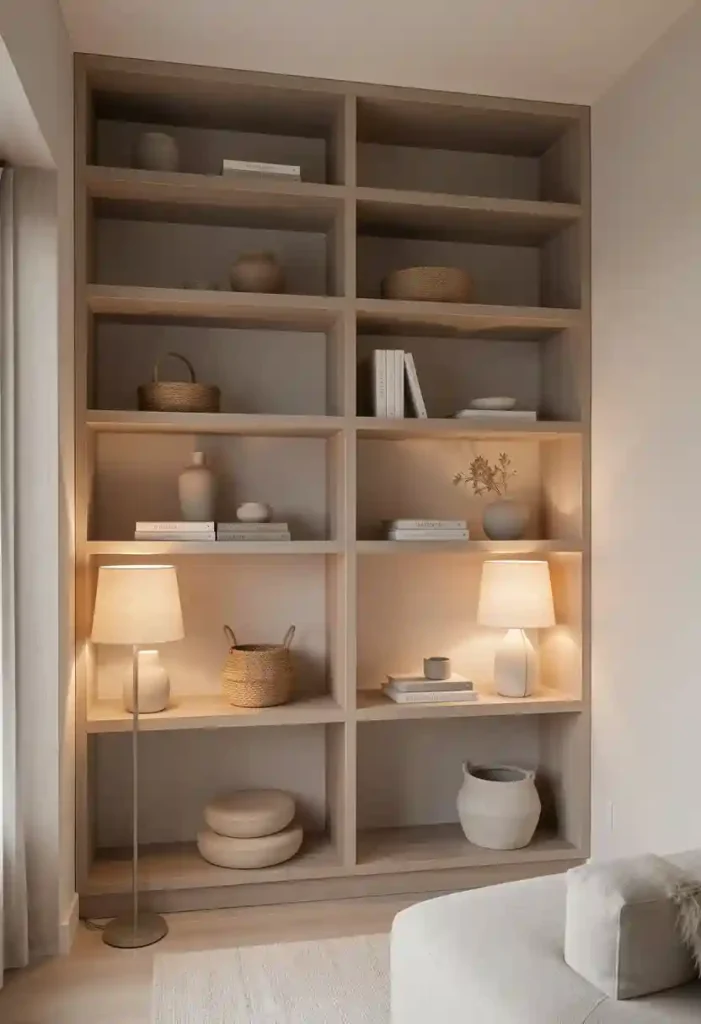
Minimal interiors rely on clean and open surfaces. Keeping surfaces uncluttered creates a peaceful environment.
Limit decorations to a few meaningful items. Open space helps highlight furniture and textures. Avoid filling every shelf or table. This approach reduces visual stress. Simple organization systems help maintain the look. Clear surfaces make rooms feel larger. Minimal clutter supports a calm lifestyle.
7. Indoor Plants as Natural Accents
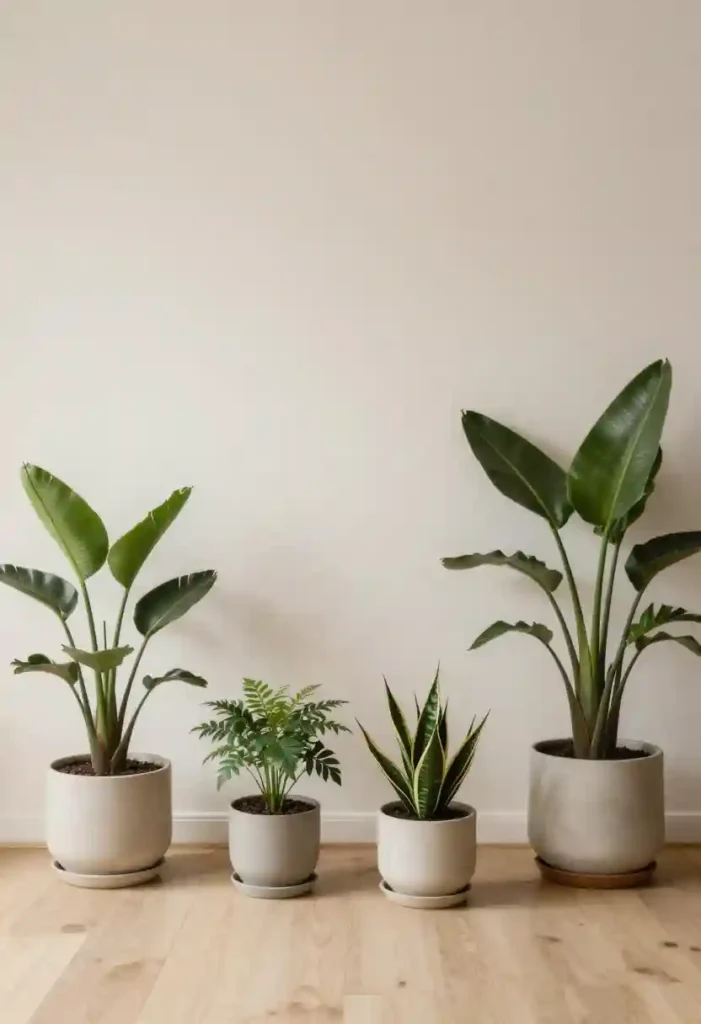
Plants add life to minimalist interiors without adding clutter. A few well-placed plants can transform the atmosphere.
Greenery provides contrast against neutral colors. Plants make spaces feel fresh and natural. Choose simple pots in neutral tones. Large plants can fill empty corners. Small plants work well on shelves. Natural elements enhance warmth.
8. Cozy Minimal Living Room Layout
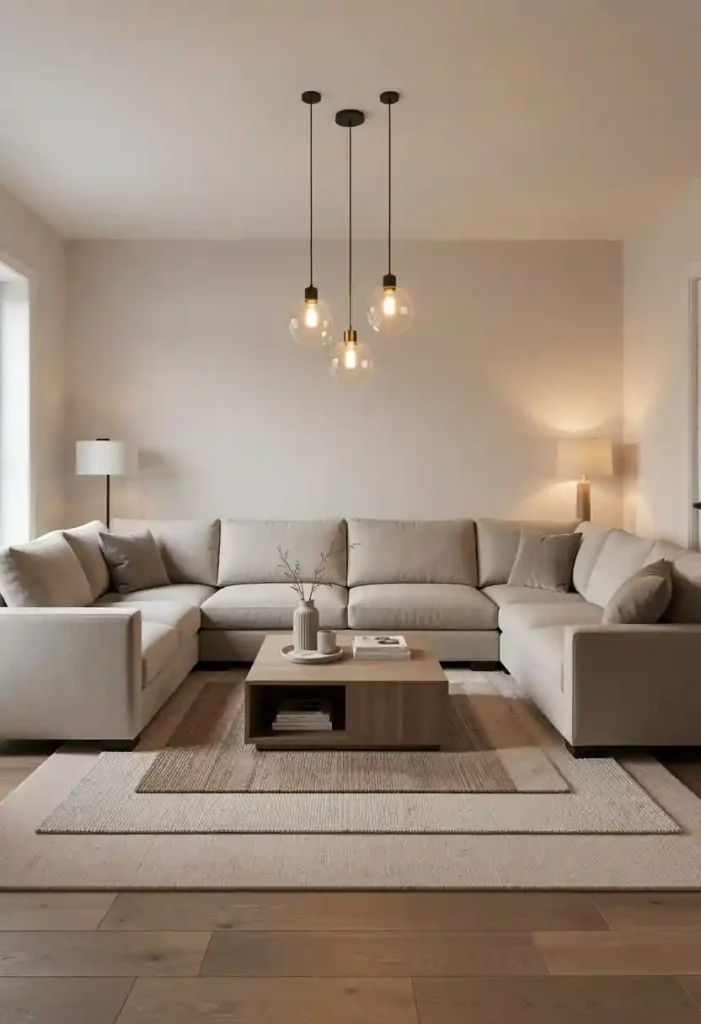
Furniture placement affects how warm a minimal space feels. A cozy layout encourages comfort and conversation.
Arrange seating close enough for interaction. Avoid spreading furniture too far apart. Use rugs to define areas. Balanced spacing improves flow. Comfortable seating is important. Simple layouts reduce stress. Thoughtful arrangement makes minimal interiors inviting.
9. Natural Stone Details
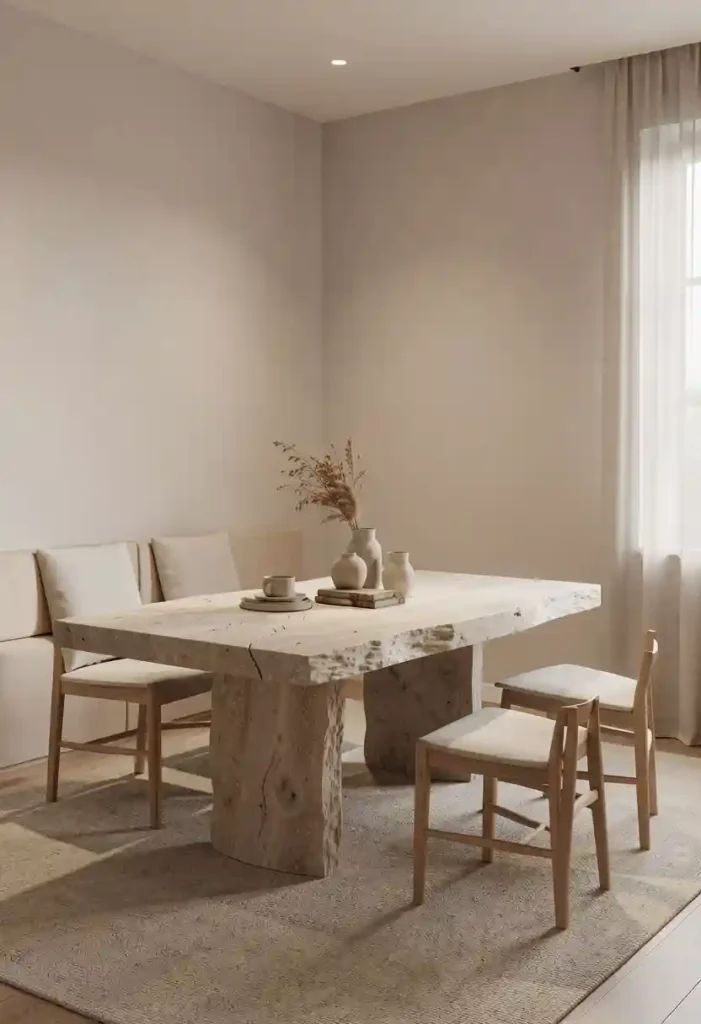
Stone surfaces add subtle texture to minimal interiors. Materials like marble or limestone feel elegant and natural.
Stone countertops or tables create visual interest. Neutral stone colors fit minimal design. Natural patterns prevent monotony. Stone pairs well with wood. Durable materials support long-term design. Stone adds quiet luxury. Minimal decor keeps focus on materials.
10. Soft Window Treatments
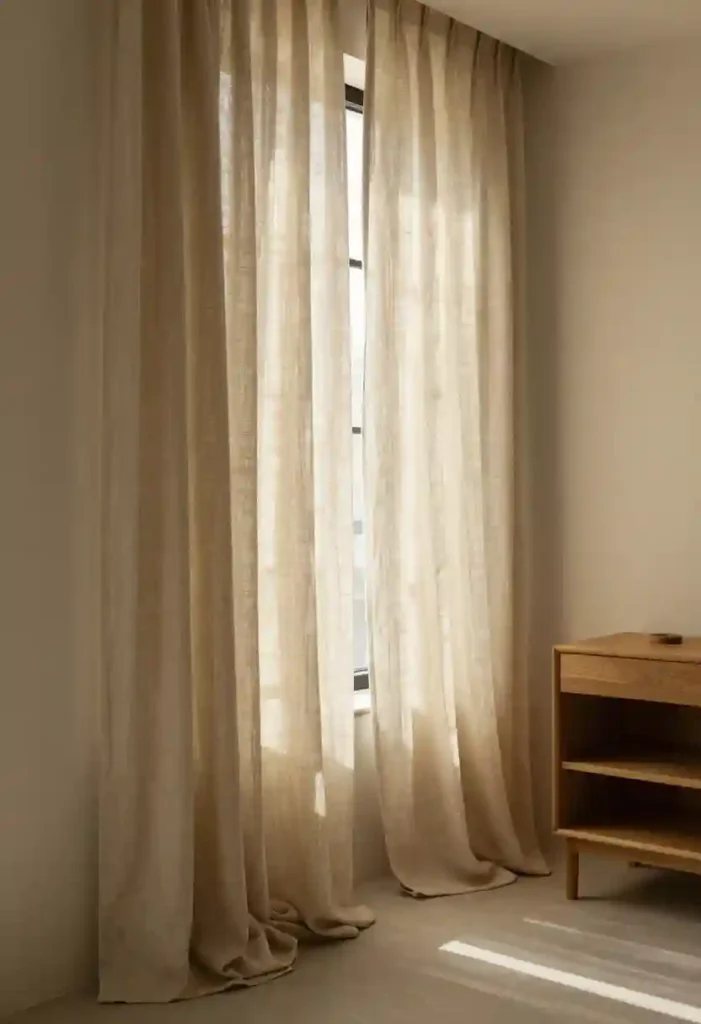
Window treatments influence the warmth of minimal interiors. Heavy curtains can feel overwhelming.
Light fabrics work better. Sheer or linen curtains soften sunlight. Natural light enhances warmth. Neutral colors maintain harmony. Simple designs suit minimal spaces. Soft fabrics improve comfort. Balanced lighting creates calm spaces.
11. Meaningful Minimal Decor
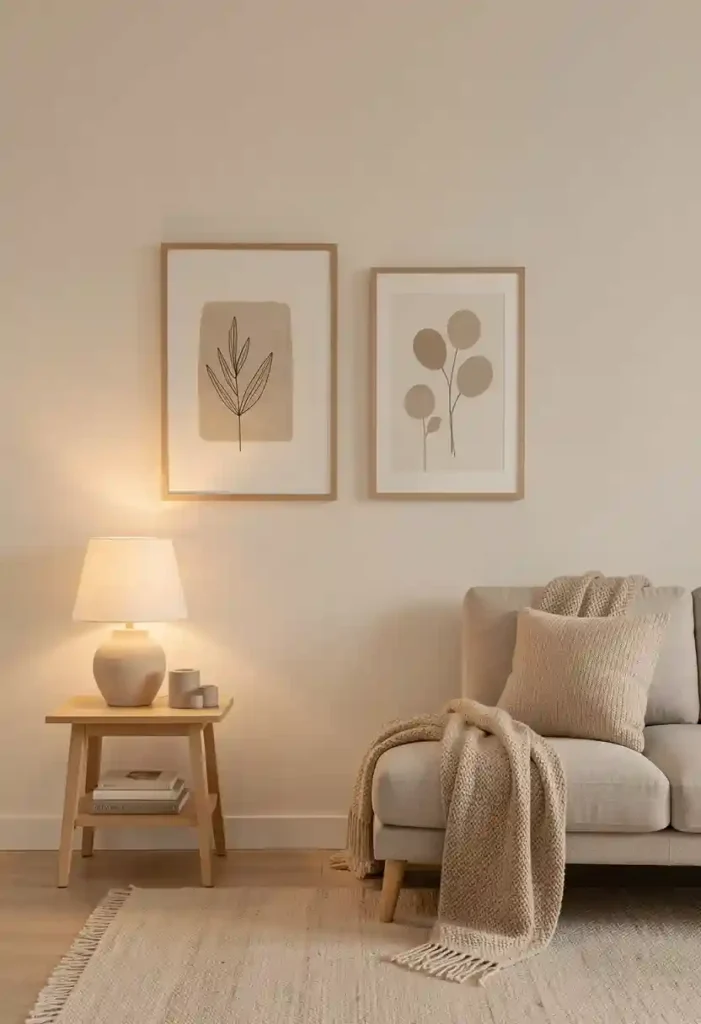
Minimal decor should feel intentional. Carefully chosen items create personality without clutter. Display only a few objects. Personal items add warmth.
Simple artwork works well. Neutral frames maintain cohesion. Meaningful decor makes spaces unique. Avoid excessive decoration. Quality matters more than quantity. Minimal decor keeps rooms calm.
12. Light Wood Flooring
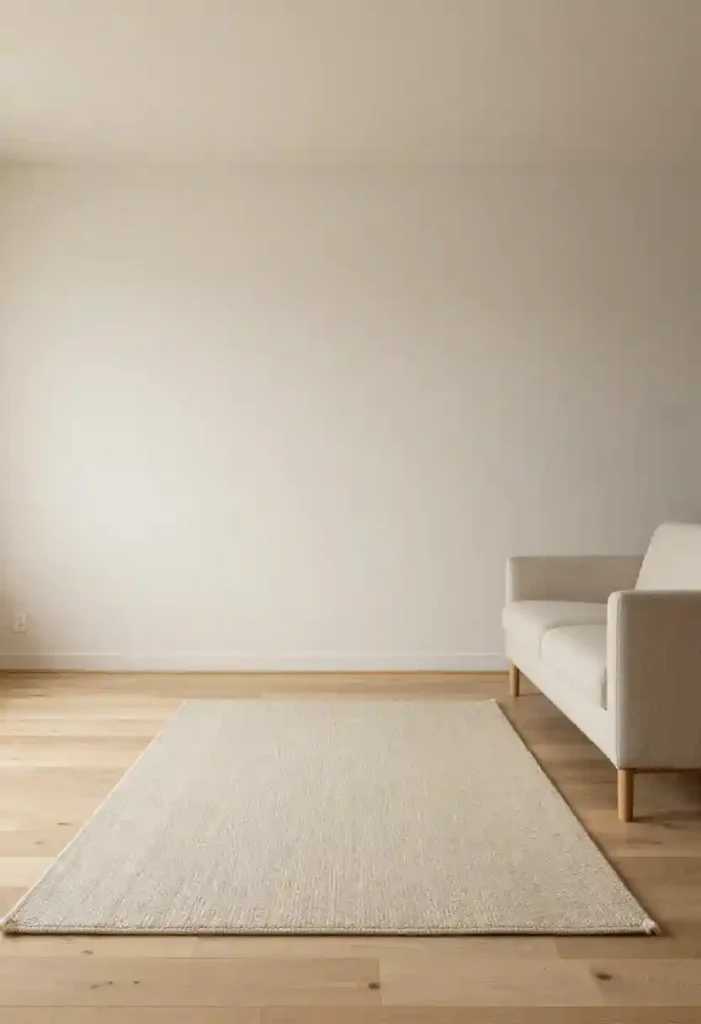
Flooring sets the tone for minimal interiors. Light wood floors create a warm and airy feeling. Natural finishes look best.
Avoid overly dark stains. Light floors reflect light. Wood adds organic texture. Simple rugs complement flooring. Neutral tones maintain balance. Natural materials enhance warmth. Wood floors feel timeless.
13. Calm Balanced Spaces
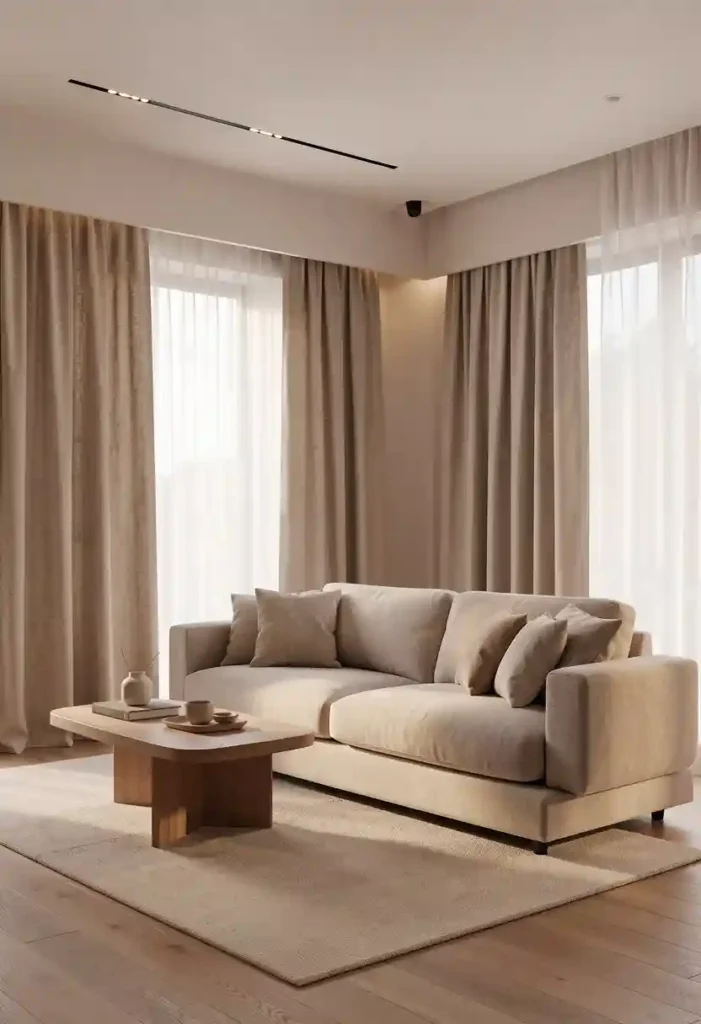
Balance is essential in warm minimal interiors. Too many objects disrupt the design. Too few items feel empty. Balanced spaces feel peaceful.
Symmetry can help. Proportion matters. Simple arrangements work best. Comfort should guide choices. Balanced interiors support relaxation. Warm minimal design feels timeless.
Final Words
Warm minimal interiors prove that simplicity doesn’t have to feel cold or impersonal. With the right balance of natural materials, soft textures, and neutral tones, minimal spaces can feel comfortable and inviting while still maintaining a clean and modern look. These 13 Minimal Home Interior Design That Feels Warm ideas show how thoughtful choices can transform a simple space into a relaxing and welcoming home.