
14 Small Office Bookshelf Ideas That Save Space
Maximizing storage in a small office can feel like a puzzle. Traditional bookshelves often occupy too much floor space, leaving little room for movement or creativity. The good news is that with clever design and smart placement, you can create an organized office without sacrificing style or comfort. Small office bookshelf ideas can serve more than just functional purposes—they can also enhance the room’s aesthetic, add personality, and even improve workflow.
From floating shelves and ladder-style units to corner or modular storage, there’s a solution for every tiny workspace. Using vertical space, multi-functional designs, and innovative layouts, you can store books, files, and office essentials while keeping the room airy and uncluttered. This guide explores 14 small office bookshelf ideas that save space, maximize efficiency, and transform even the coziest office into a stylish, productive environment.
1. Floating Wall Bookshelves
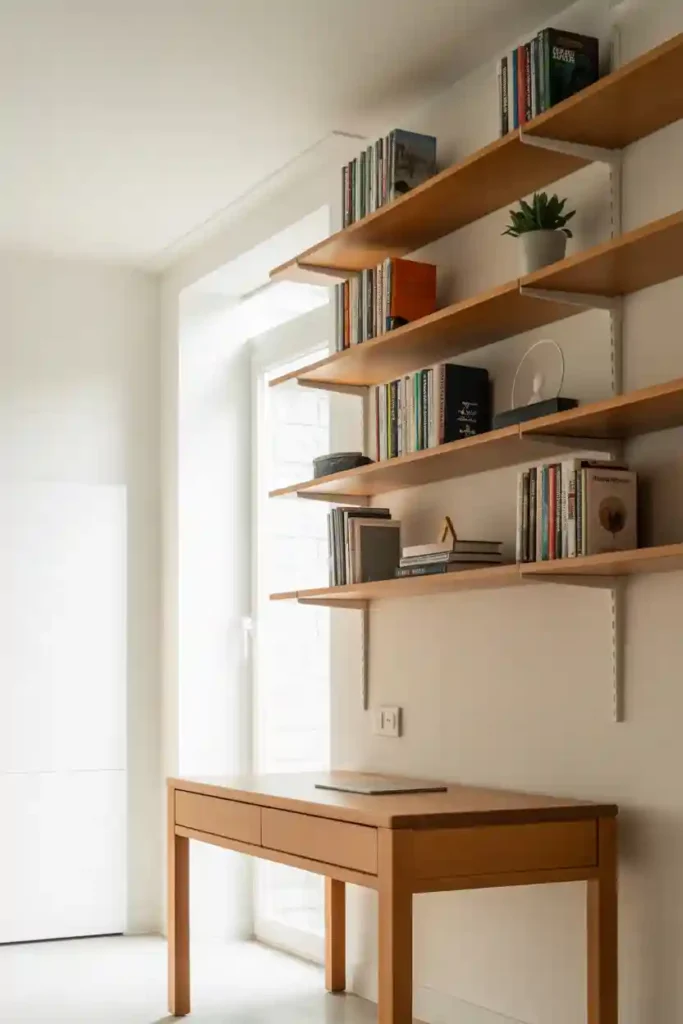
Floating wall bookshelves are perfect for small offices because they utilize vertical wall space instead of occupying the floor. These shelves can hold books, office supplies, and décor while keeping the workspace open and uncluttered. Because they are mounted to the wall, they create a sense of airiness and prevent the room from feeling cramped.
Floating shelves are versatile—they can be arranged in a single row, staggered, or even in a geometric pattern to add visual interest. Choose shelves that match your office décor; wood shelves add warmth, while metal or painted shelves suit a modern or industrial style. Pairing floating shelves with a desk below makes the most of vertical space and keeps frequently used items within easy reach.
2. Corner Ladder Shelf
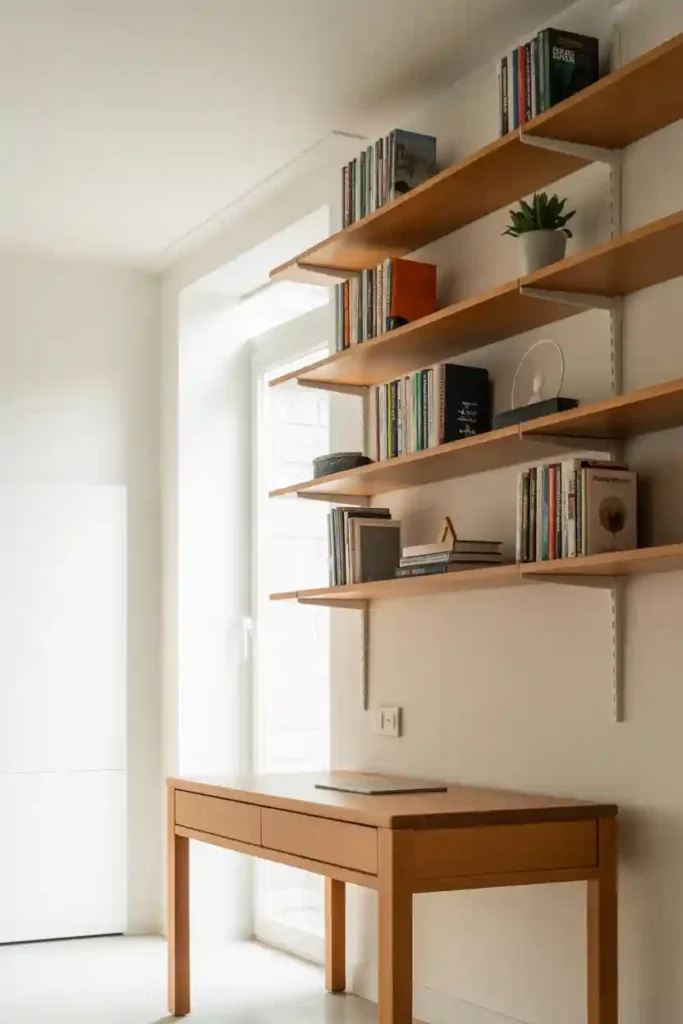
A corner ladder shelf fits snugly into unused corner space, making it ideal for compact offices. Its narrow profile allows it to hold books, files, and decorative items without taking up valuable floor space. The tiered design provides multiple levels of storage, with larger shelves at the bottom and smaller ones at the top, maximizing vertical storage.
These shelves are visually light, so they won’t overwhelm a small room. Leaning ladder shelves can be positioned at an angle against the wall, creating an interesting design element while serving a functional purpose. Pair with small office plants or organizational baskets for a stylish yet practical setup. A corner ladder shelf keeps your office tidy and efficiently uses often-neglected corner areas.
3. Vertical Tall Shelving Unit
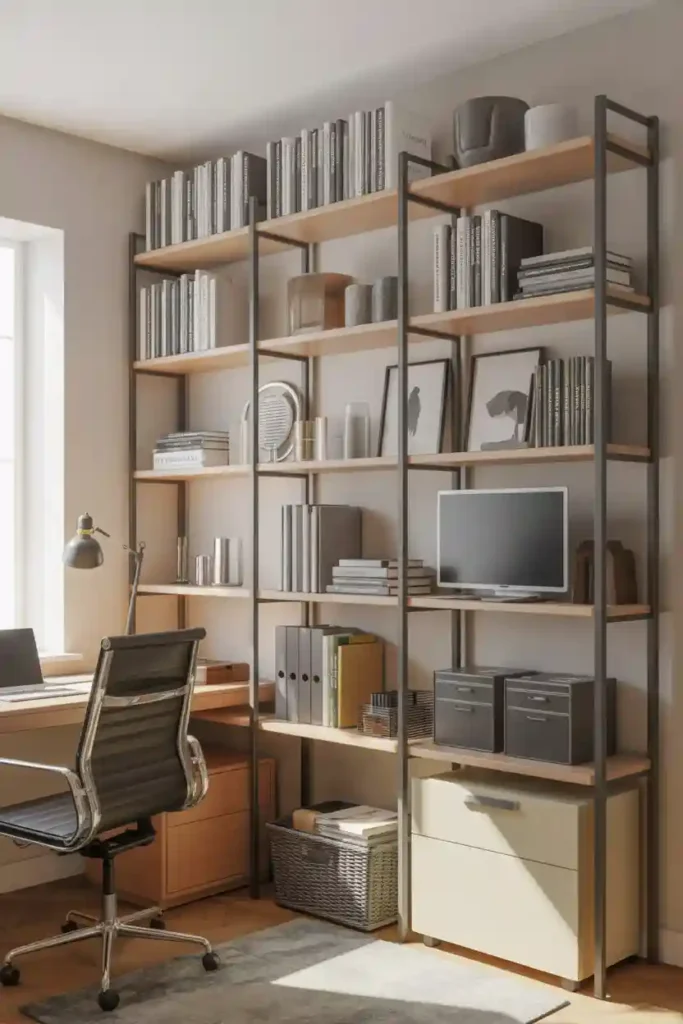
A vertical tall shelving unit is an excellent space-saving solution for offices with high ceilings. By extending upward instead of outward, it provides ample storage without consuming precious floor space. Tall shelves can hold books, binders, and office accessories in an organized, accessible manner.
When using a tall unit, consider adjustable shelves to accommodate different-sized items. Lighter finishes or open-back designs can prevent the unit from overwhelming a small room. Placing the shelving unit against a wall keeps the office floor clear, which makes the room feel larger. This design is particularly effective in minimalist or contemporary small offices.
Read Also: 14 Blue Living Room Ideas That Feel Calm
4. Modular Cube Storage
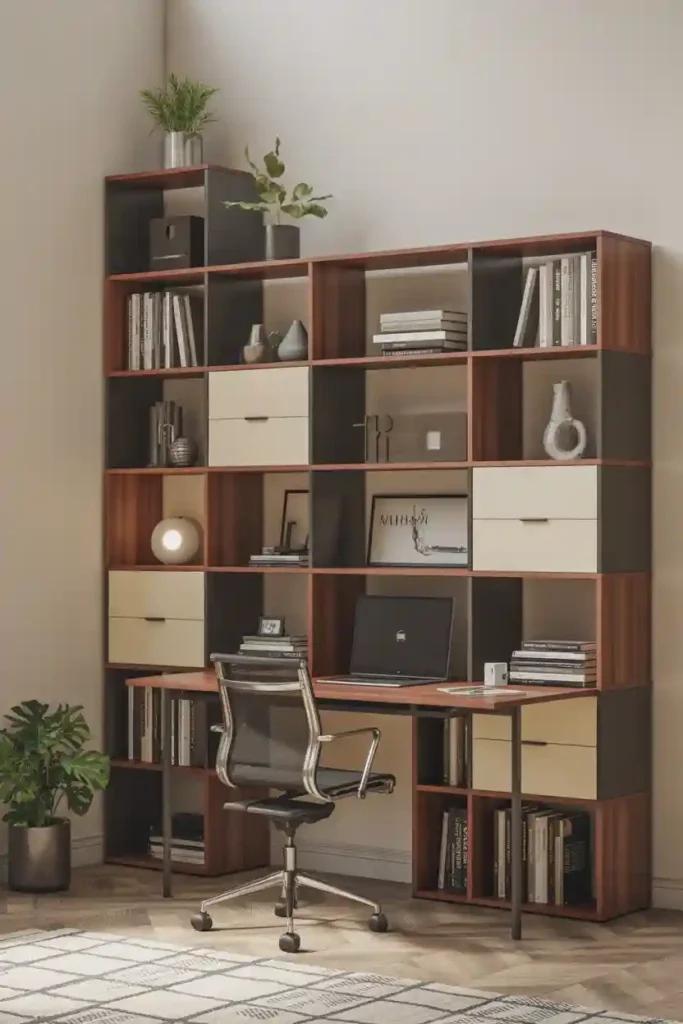
Modular cube storage offers flexibility in arranging shelves to suit your office space. Each cube acts as a separate compartment for books, files, or décor. You can stack cubes vertically or horizontally, creating a custom storage solution that fits perfectly in small areas.
Cubes can be combined in various configurations, making it easy to expand storage as needed. Add baskets or bins to hide clutter while maintaining accessibility. The modular design works in any style of office, from minimalist to eclectic, and can double as a display for decorative items. Its adaptability makes cube storage a smart choice for saving space without sacrificing style.
5. Bookshelf with Built-In Desk
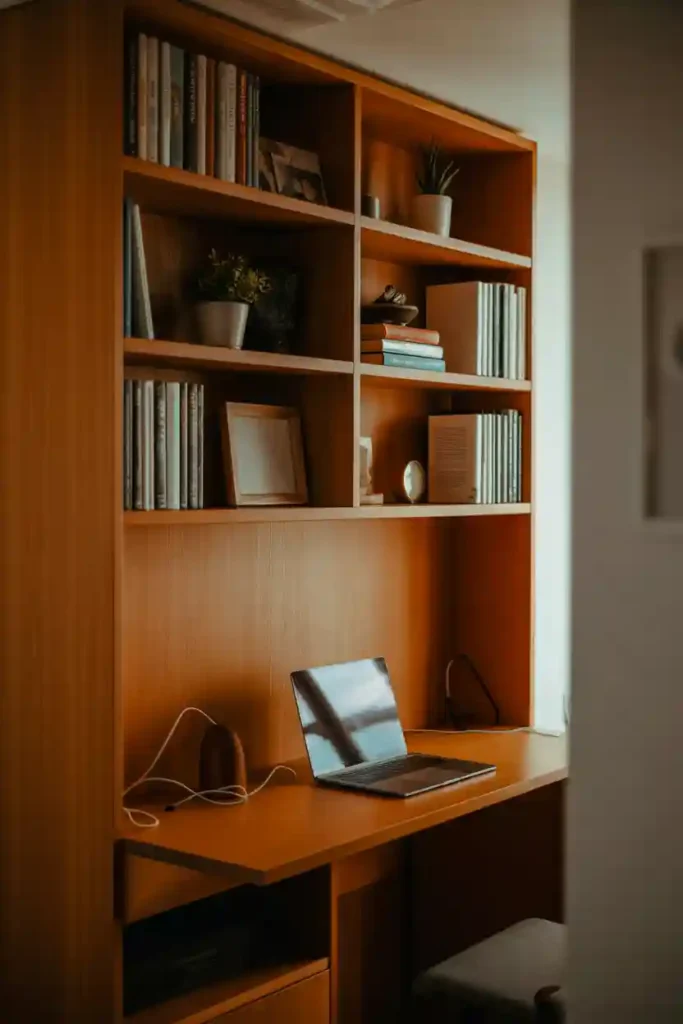
A bookshelf with a built-in desk combines storage and workspace in one unit, ideal for small offices where floor space is limited. The desk sits within the shelving framework, providing a dedicated work area while keeping books and office supplies easily accessible.
This design maximizes vertical space and reduces the need for multiple furniture pieces. Shelves above and beside the desk offer ample room for organization and display. Choose a sturdy material to support books and office equipment, and opt for open shelving or cabinet doors depending on whether you want to display or conceal items. This multifunctional piece enhances productivity while saving space.
6. Under-Window Shelf
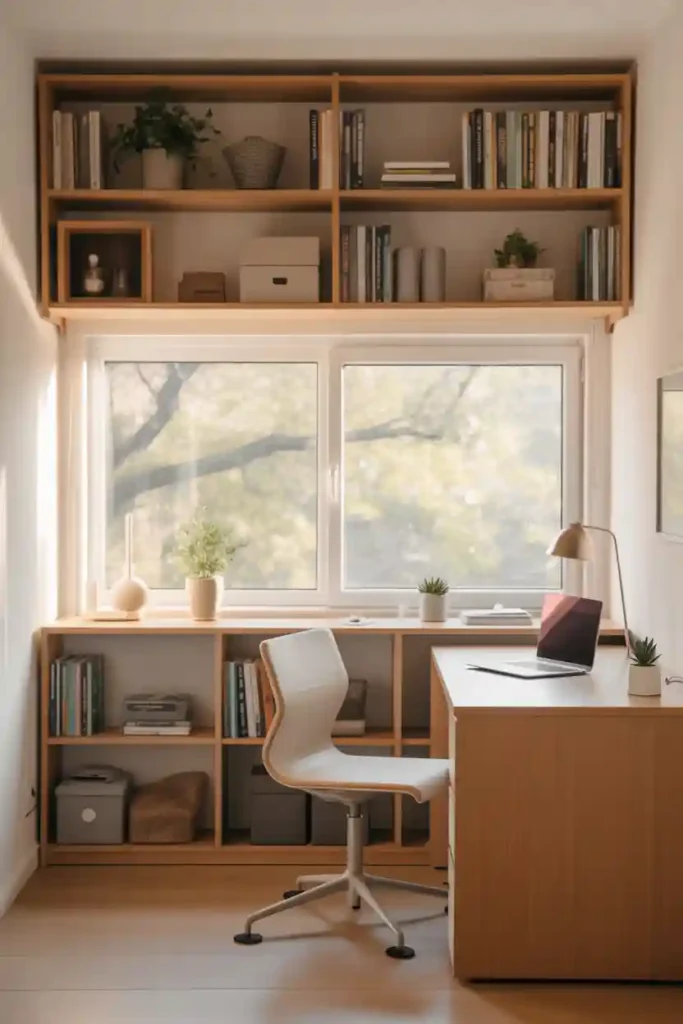
An under-window shelf is a smart way to use space that often goes unnoticed in small offices. Instead of leaving the area beneath the window empty, installing a low-profile bookshelf creates valuable storage without blocking natural light. Because the shelf sits below the window line, it keeps the room feeling open and bright while still providing a functional place for books, files, and decorative accents.
This idea works especially well in compact home offices where wall space is limited. Choose a shallow-depth shelf to prevent it from protruding into the room. Built-in designs create a seamless, custom look, while freestanding units offer flexibility. You can also style the top of the shelf with plants or storage boxes without overcrowding the space. An under-window shelf maintains clean sightlines, enhances natural light, and makes excellent use of an otherwise underutilized area.
7. Narrow Leaning Ladder Shelf
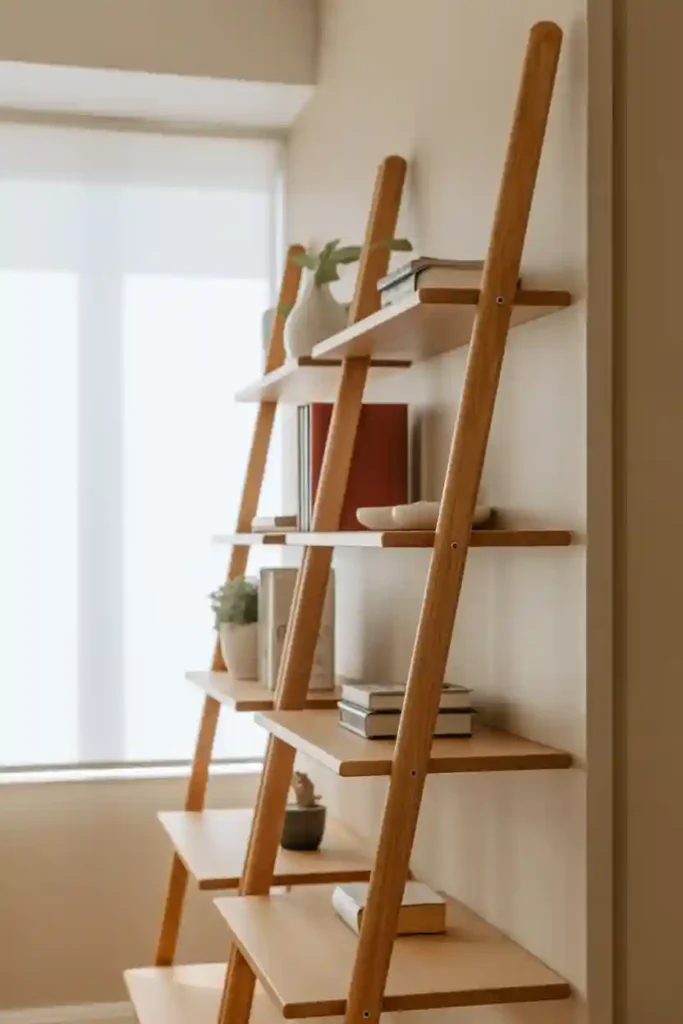
A narrow leaning ladder shelf is ideal for small offices that need vertical storage without visual bulk. Its slim footprint takes up minimal floor space while offering multiple shelves for books, documents, and décor. Because it leans against the wall, the design feels light and airy, preventing the office from feeling crowded.
This type of bookshelf works particularly well in tight corners or beside a desk. The open-back design allows light to pass through, which helps maintain a spacious feel. To keep the look balanced, avoid overloading the shelves—mix books with a few decorative items or storage boxes. Choose a neutral or light wood finish to blend seamlessly with the wall. A narrow ladder shelf adds storage and style while preserving the openness of a small office.
8. Bookshelf Room Divider
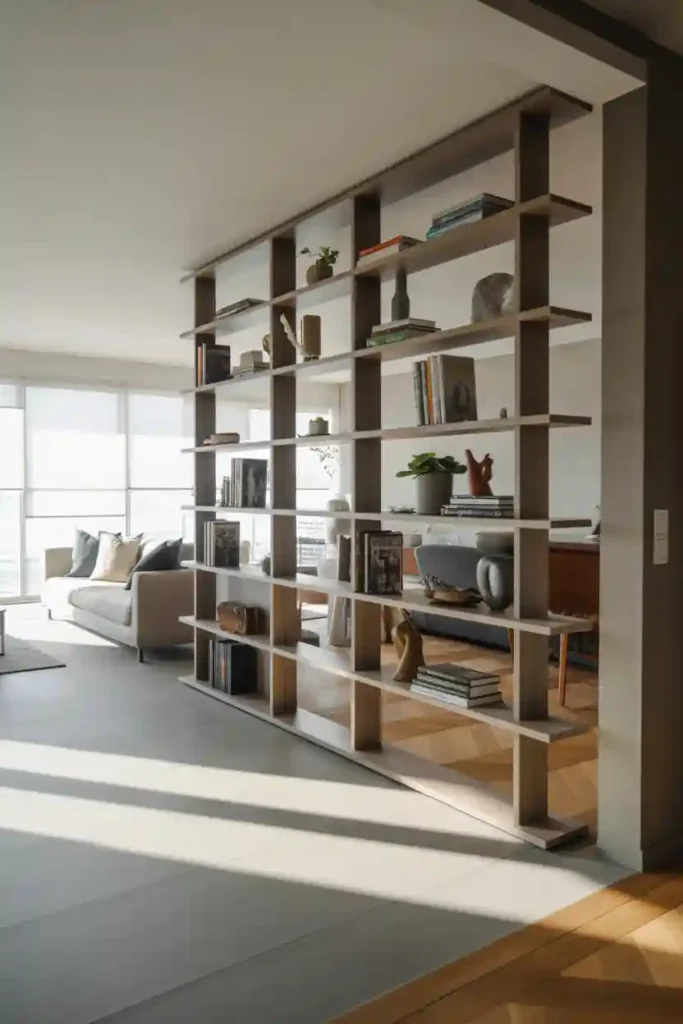
A bookshelf room divider is a clever solution for small offices in open-plan spaces or studio apartments. Instead of adding walls, a shelving unit separates zones while still allowing light and airflow to move through the room. This makes the space feel defined without feeling closed in.
Open-back bookshelves work best as dividers because they maintain visual openness. You can store books, files, and decorative pieces on both sides, effectively doubling functionality. To keep the space from feeling cluttered, use a balanced mix of open areas and storage bins. Positioning a bookshelf divider between a work area and living space helps create structure while saving space. It’s a practical and stylish way to organize a small office without sacrificing brightness or flow.
9. Hanging Bookshelf System
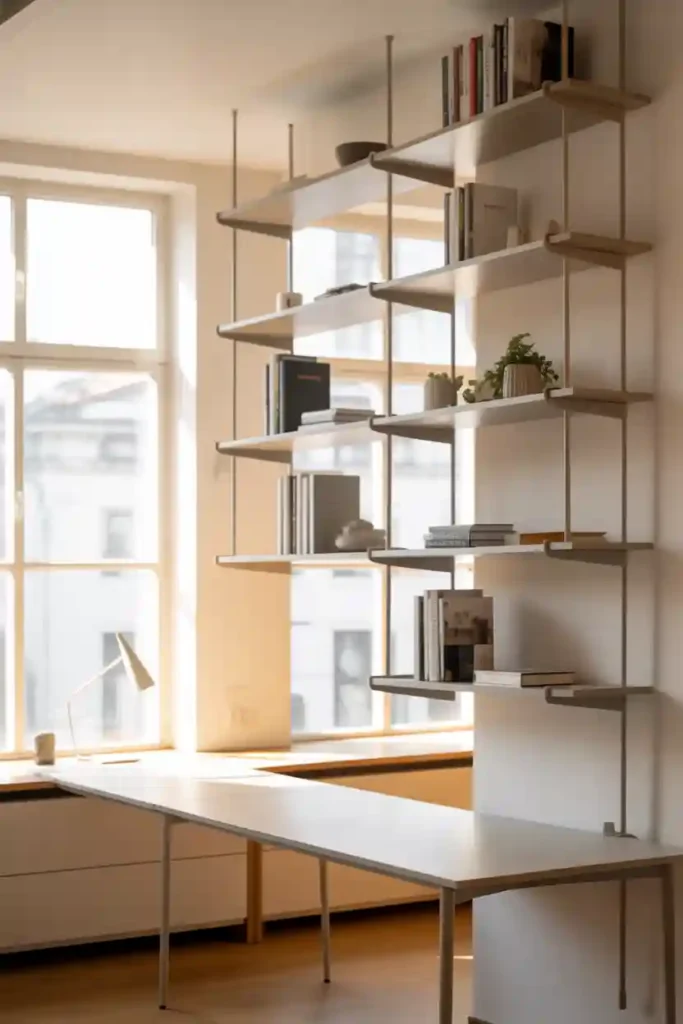
A hanging bookshelf system is a modern and highly space-efficient solution for small offices. By suspending shelves from the wall or ceiling, you eliminate the need for floor-standing units, which instantly makes the room feel more open. This type of shelving is perfect for compact workspaces where floor space is at a premium but wall space is available.
Hanging shelves work well above desks or along unused wall sections. Choose slim shelves with metal rods or cables for a clean, contemporary look. Keep heavier items on lower shelves and lighter décor above to maintain balance and safety. Because the shelves are open and elevated, they prevent the office from feeling boxed in. A hanging bookshelf system combines function with a visually light design, helping small offices stay organized without sacrificing space or style.
10. Built-In Wall Niche Shelves
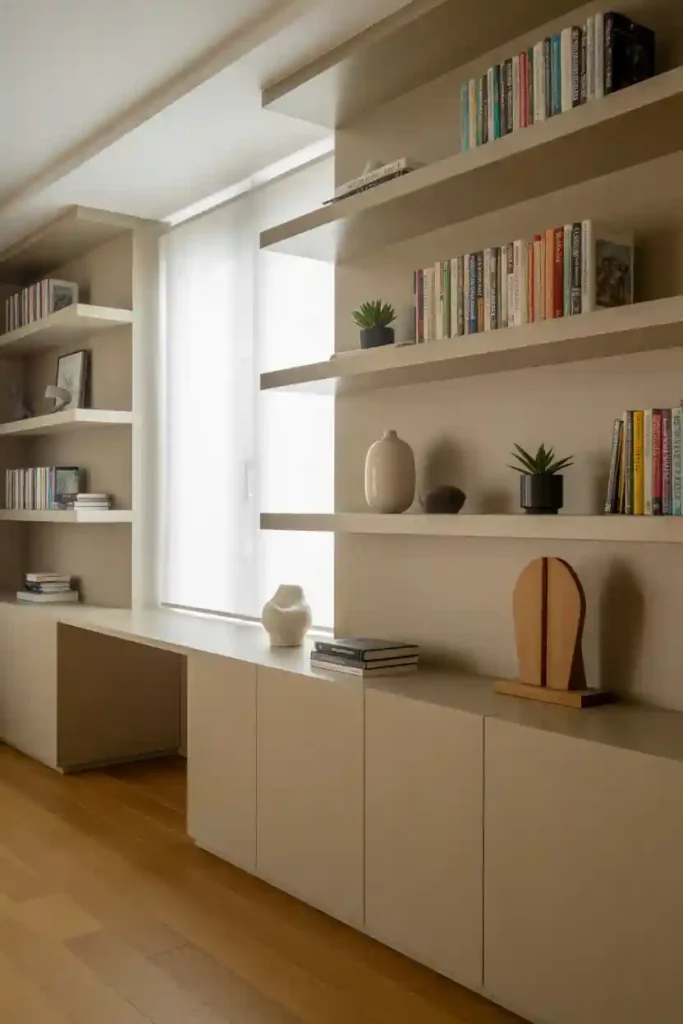
Built-in wall niche shelves are an excellent way to save space by using the wall cavity itself. Instead of adding shelves that protrude into the room, niches sit flush with the wall, keeping the office streamlined and uncluttered. This design is especially useful in very small offices where every inch of depth matters.
Wall niches can be customized to fit books, files, and décor items. You can install a single vertical niche or multiple recessed sections for added storage. Painting the niche interior a slightly darker or contrasting color adds depth without overwhelming the space. Built-in shelves feel intentional and architectural, making the office look more polished while maximizing storage efficiently.
11. Rolling Mobile Bookshelf
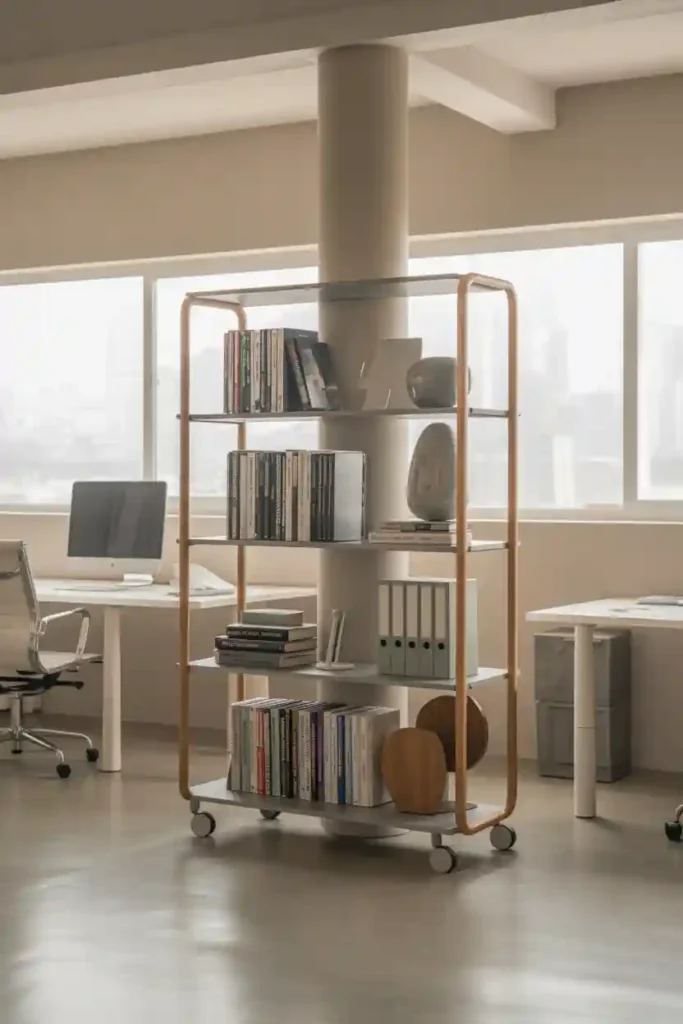
A rolling mobile bookshelf offers flexibility and smart space usage in a small office. Mounted on wheels, this type of shelf can be moved wherever storage is needed and tucked away when not in use. It’s an excellent option for multipurpose rooms where the office space changes throughout the day.
Mobile bookshelves are typically slim and vertical, making them easy to maneuver without taking up much space. They can store books, files, and supplies while doubling as temporary room dividers or side storage next to a desk. Locking wheels keep the shelf stable when in place. This adaptable solution maximizes storage while allowing your office layout to remain flexible and uncluttered.
12. Minimalist Open Frame Shelf
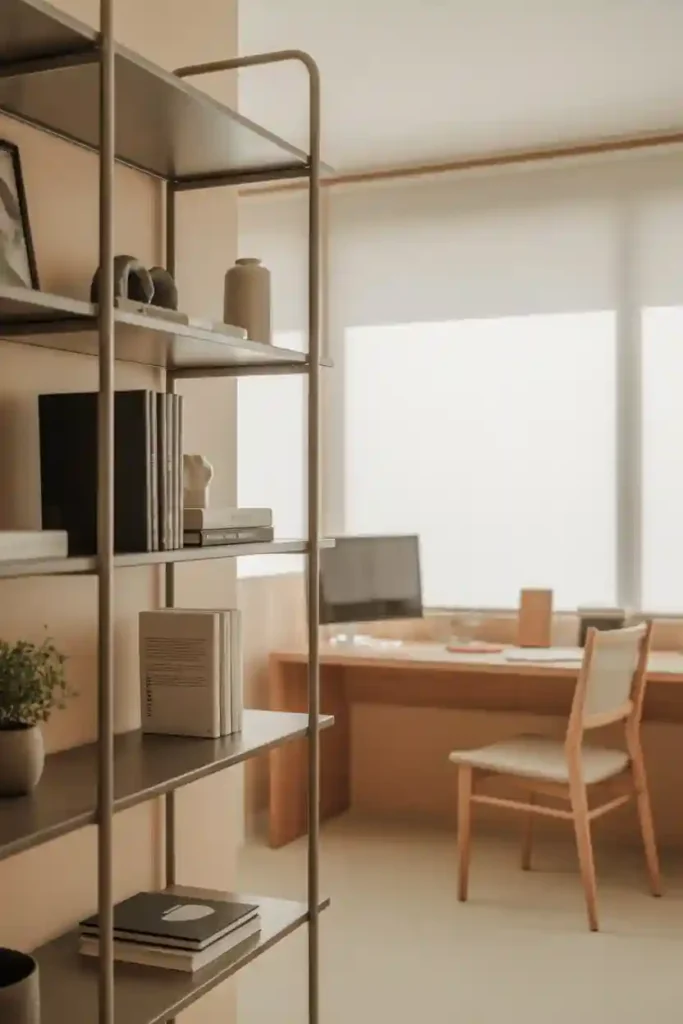
A minimalist open frame shelf is ideal for small offices that need storage without visual heaviness. Unlike bulky bookcases, open frame shelves use thin metal or wood structures that keep the design light and airy. This allows light to pass through the shelves, preventing the office from feeling closed in or overcrowded.
These shelves work beautifully in modern, industrial, or Scandinavian-style offices. Their clean lines and simple structure make them easy to pair with compact desks and neutral color palettes. To maintain a spacious feel, avoid overfilling the shelves—combine books with a few carefully chosen decorative items or storage boxes. An open frame shelf offers practical storage while preserving openness, making it a smart space-saving choice for small offices.
13. Overhead Wall Cabinet Shelves
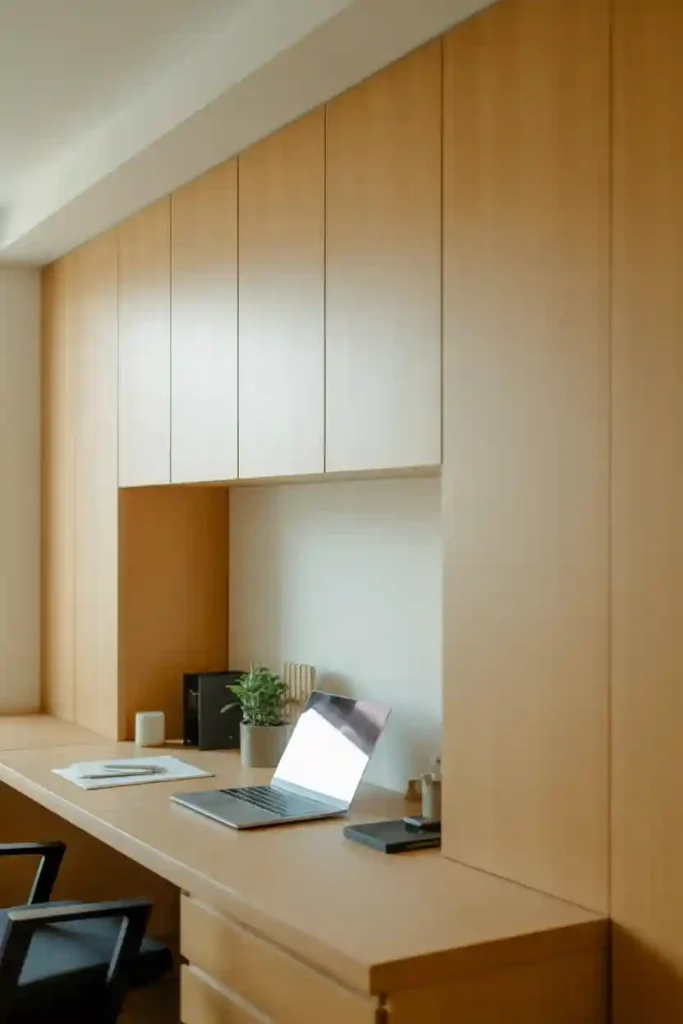
Overhead wall cabinet shelves make use of high wall space that often goes unused in small offices. By installing cabinets or shelves above eye level, you free up floor and desk space while still gaining ample storage. This approach keeps essential items organized without crowding the workspace.
These shelves are perfect for storing books, binders, and supplies that aren’t used daily. To prevent the room from feeling heavy, choose light-colored cabinets or open shelving with clean lines. Installing cabinets above a desk creates a built-in look while maximizing vertical space. Overhead shelving is a practical way to keep a small office tidy and functional without sacrificing openness.
14. Multi-Level Tiered Shelf

A multi-level tiered shelf offers smart vertical storage while maintaining a compact footprint. With shelves arranged at varying heights, this design allows you to store books, files, and décor efficiently without taking up too much floor space. The tiered structure adds visual interest while maximizing functionality.
This type of shelf works well against a wall or in a corner of a small office. The varying shelf heights make it easier to organize items by size and frequency of use. To keep the space feeling open, choose a slim design with open sides and a light finish. A multi-level tiered shelf combines storage and style, making it a practical solution for saving space in a small office.
Final Words
Designing a small office doesn’t mean you have to compromise on storage or style. With the right bookshelf ideas, even the most compact workspace can feel organized, efficient, and visually open. From floating shelves and built-in niches to mobile units and multi-level designs, each option in this guide shows how thoughtful shelving can save space while enhancing functionality. The key is to think vertically, choose lightweight designs, and avoid visual clutter.