12 Indoor Plant Styling Tips That Work
Indoor plants can instantly transform a space, but simply placing a few pots around the room doesn’t always create the stylish look people imagine. The secret lies in intentional styling. When plants are arranged thoughtfully, they can add height, texture, color, and life to a room without feeling cluttered. Whether your home style leans minimal, modern, cozy, or eclectic, the right plant styling techniques can make your greenery feel like part of the decor rather than an afterthought.
Small details like choosing the right planter, layering heights, or grouping plants strategically can dramatically change the way plants look in a space. Even a single plant can become a statement piece when styled correctly.
1. Style Plants in Groups of Three
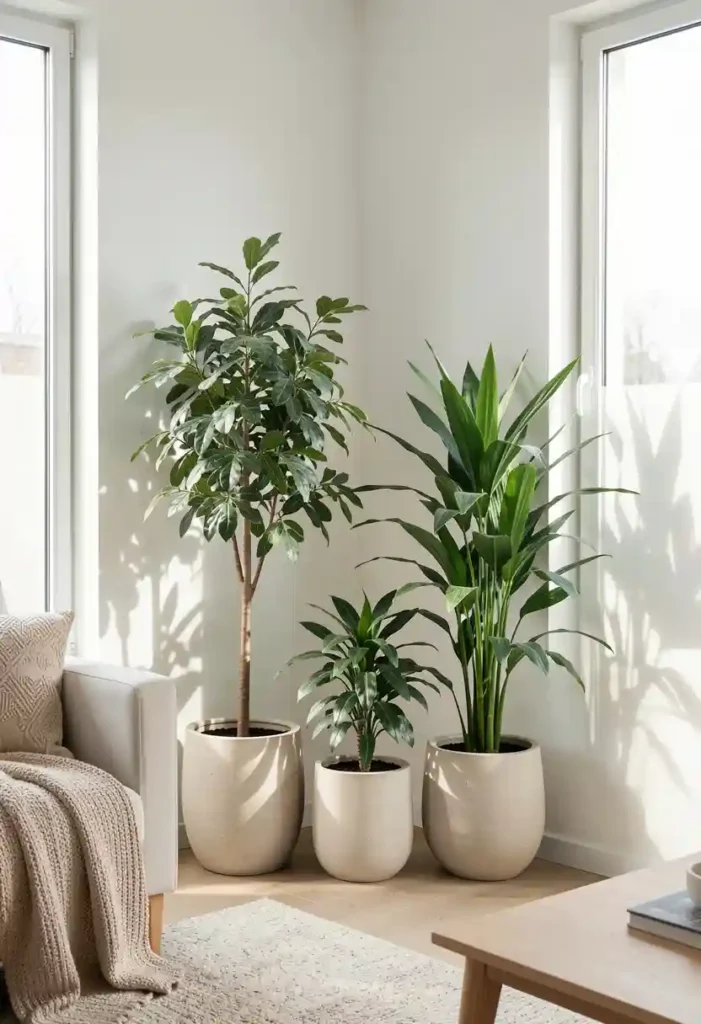
One of the easiest ways to make indoor plants look professionally styled is by grouping them in sets of three. Designers often rely on odd-number groupings because they create a more natural and visually interesting arrangement. When plants are grouped thoughtfully, they feel intentional rather than scattered around the room.
To create a balanced grouping, choose plants with different heights, leaf shapes, and textures. For example, pair a tall plant like a fiddle leaf fig with a medium leafy plant and a smaller trailing plant. This variation creates visual movement and prevents the arrangement from feeling flat.
2. Mix Plant Heights for Visual Balance
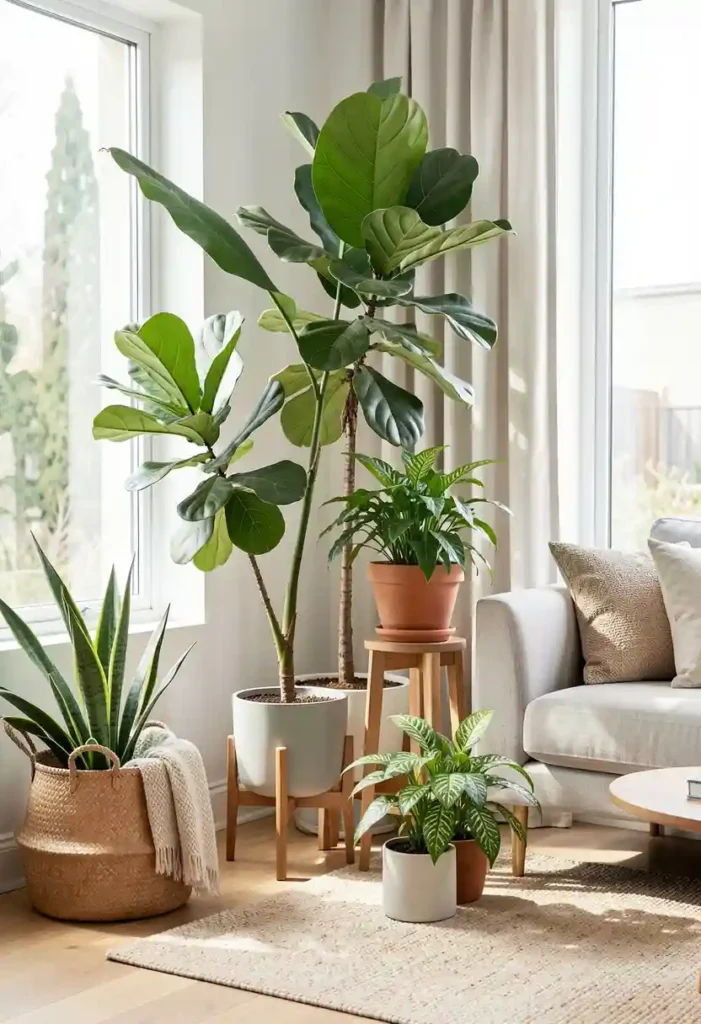
Flat arrangements can make plant displays feel dull. Instead, mix different plant heights to create a dynamic and layered look. When plants sit at varying levels, they naturally draw the eye around the room and add dimension.
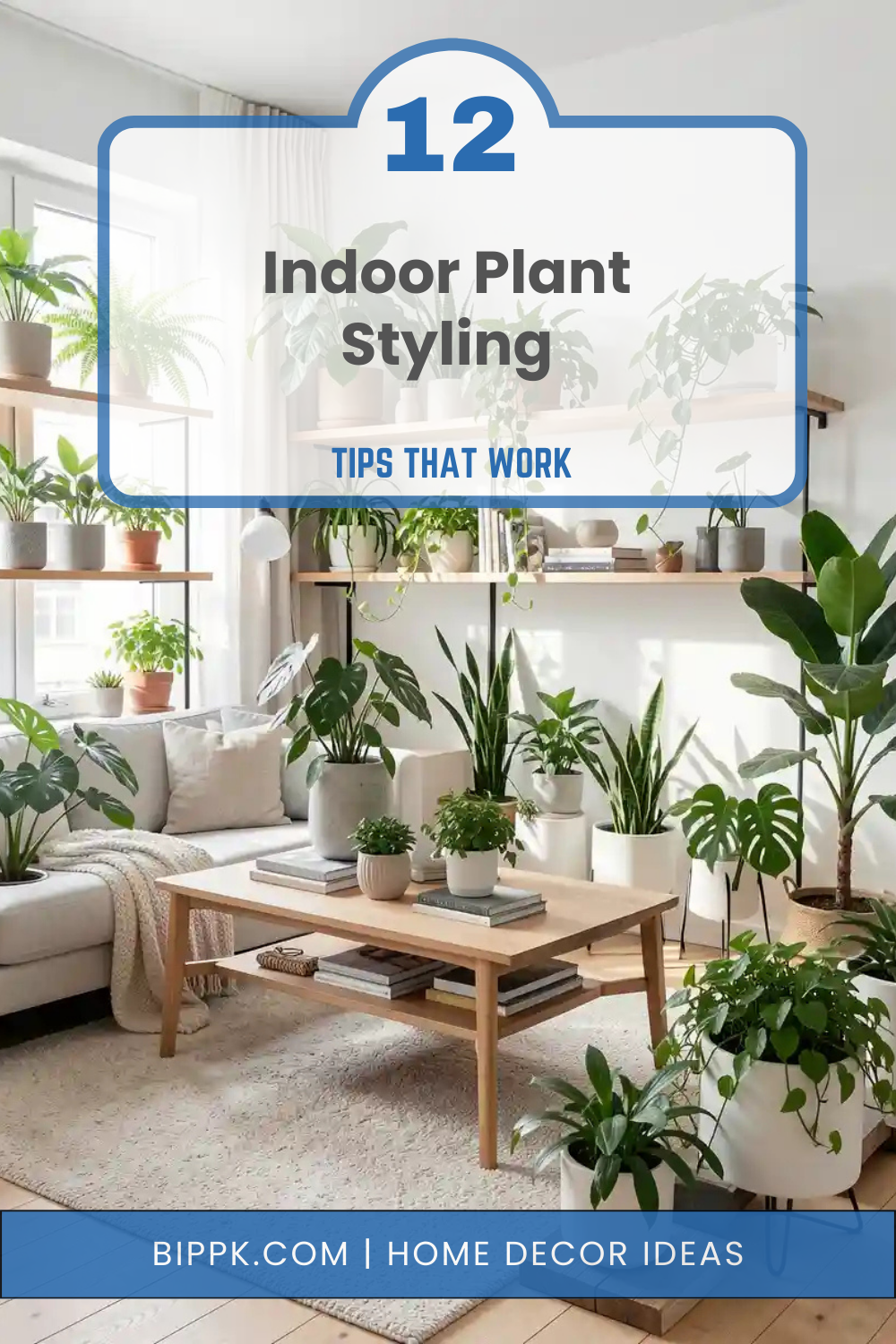
Start with a tall floor plant such as a rubber plant or bird of paradise. Then add a medium-height plant on a stool, side table, or stack of books. Finish the arrangement with a smaller plant placed directly on the floor or shelf. This layering technique works beautifully in corners where empty vertical space often exists. It also helps plants feel integrated with furniture instead of floating awkwardly in the room.
3. Use Plant Stands for Elevated Style
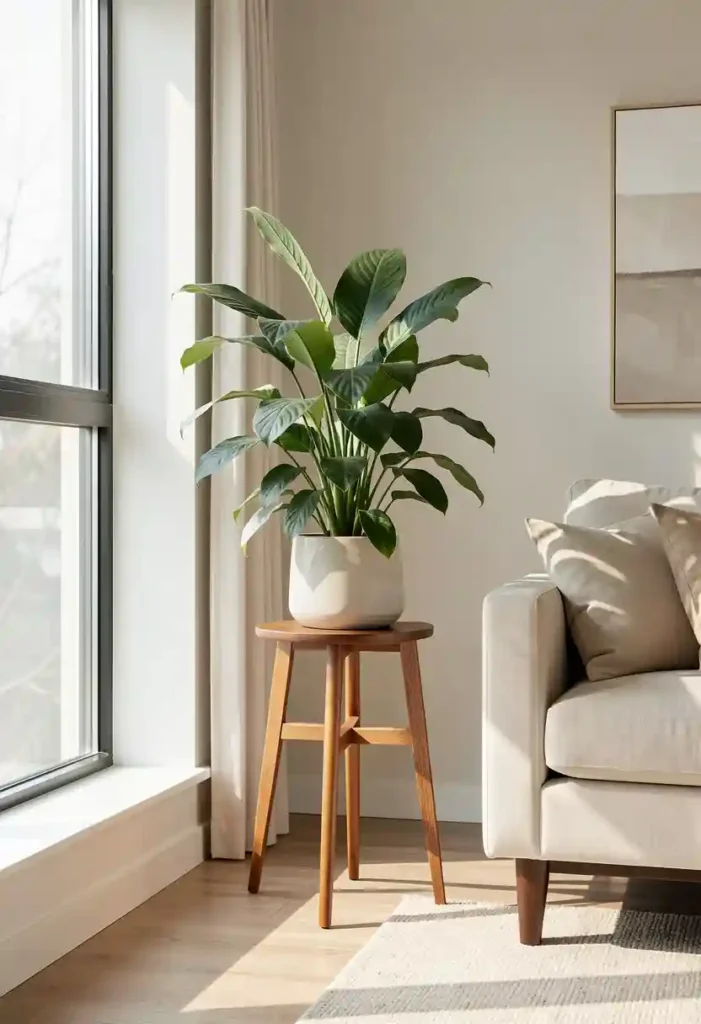
Plant stands are one of the simplest ways to instantly upgrade the look of indoor plants. Elevating plants off the floor adds elegance and helps them stand out as decorative elements.
A plant stand can highlight a beautiful planter while also improving the visual balance of a room. Taller plants placed on stands become sculptural pieces that fill empty corners without making the space feel crowded. Wooden stands work well in Scandinavian or minimalist interiors, while metal stands can create a modern or industrial look. Woven or rattan stands add warmth and texture to boho spaces.
4. Create a Plant Shelf Display
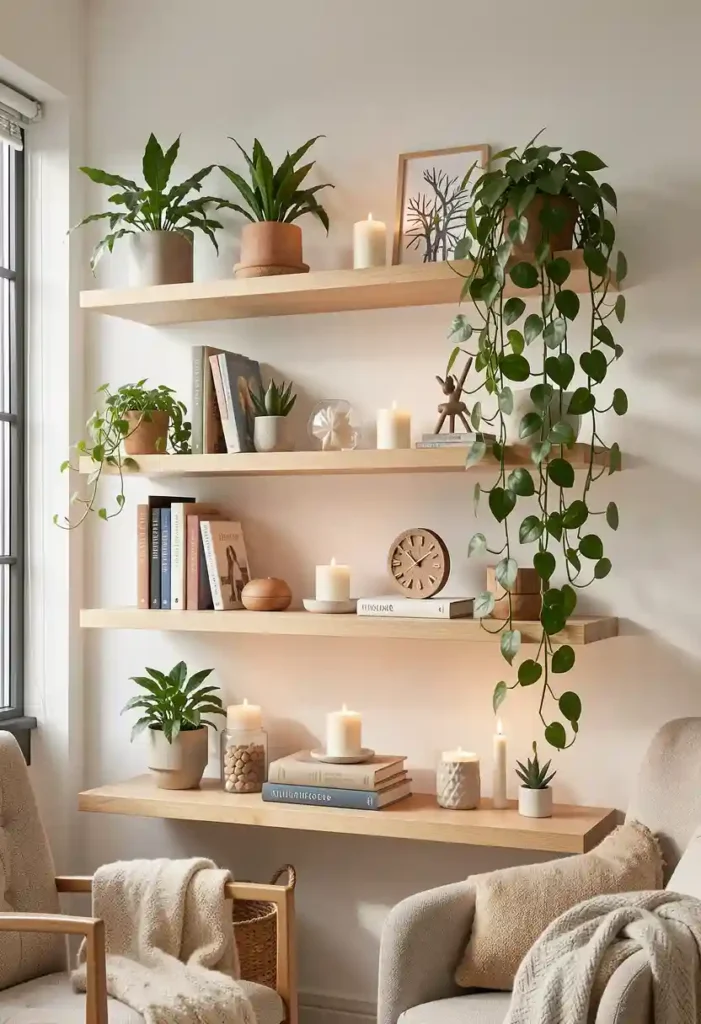
Shelves offer an excellent opportunity to style plants alongside decorative objects. Instead of dedicating an entire shelf to plants, mix greenery with books, candles, framed art, and small sculptures.
This combination creates balance and prevents the shelf from looking overcrowded with foliage. Trailing plants such as pothos or string of pearls are perfect for shelves because their vines can cascade down beautifully.
Check Also: 13 Minimal Plant Decor Ideas for Clean Style
5. Highlight One Statement Plant
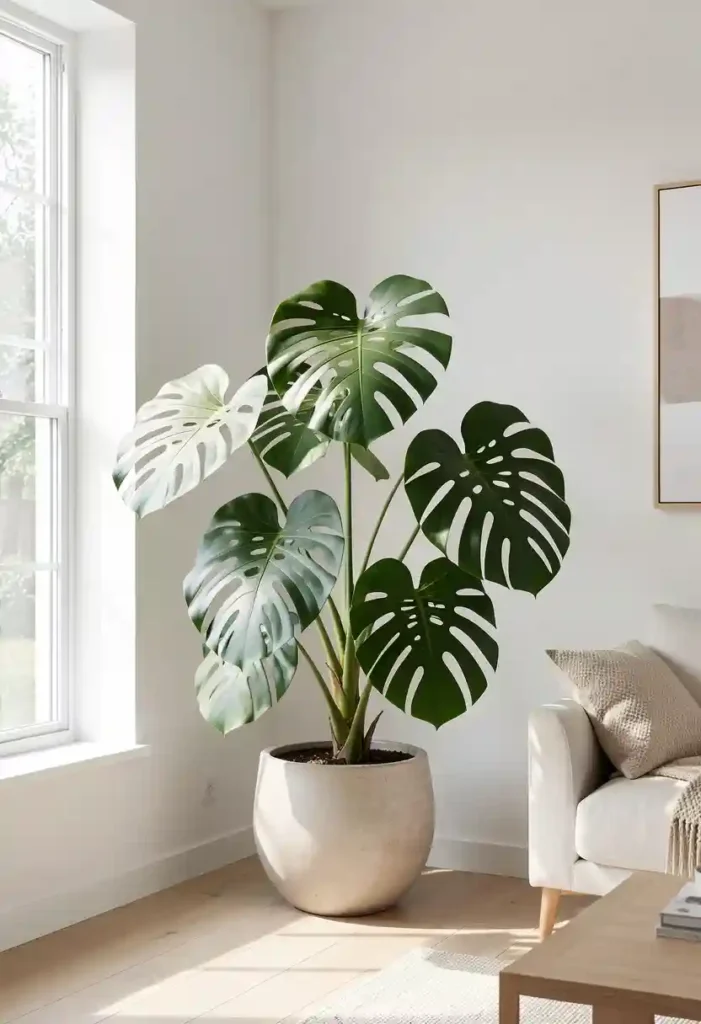
Sometimes the most powerful styling approach is simplicity. Instead of filling a room with many plants, choose one large statement plant and let it shine.
Plants like fiddle leaf figs, monstera deliciosa, or bird of paradise have bold shapes that naturally attract attention. When placed in the right spot, they can function almost like living sculptures. Position your statement plant near a window where it receives plenty of light. Choose a stylish planter that complements your room’s color palette.
6. Style Plants Near Windows
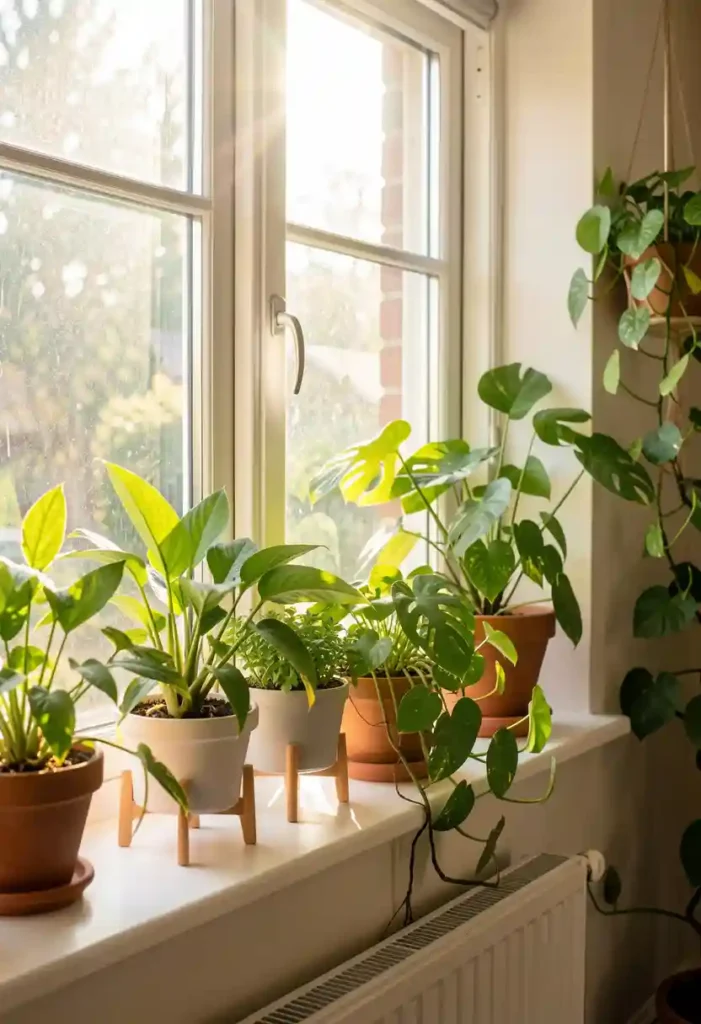
Plants naturally thrive near light sources, which also makes windows the perfect place for styling greenery. A well-arranged window area can feel like a calm, refreshing indoor garden. You can place plants on windowsills, small stools, or hanging planters near the window. Varying the height and position keeps the arrangement visually interesting.
Trailing plants look especially beautiful near windows because their vines can frame the glass and soften the space. Meanwhile, taller plants can stand beside the window to add vertical greenery. This arrangement also enhances natural light in the room, making leaves appear brighter and more vibrant.
7. Mix Planter Materials
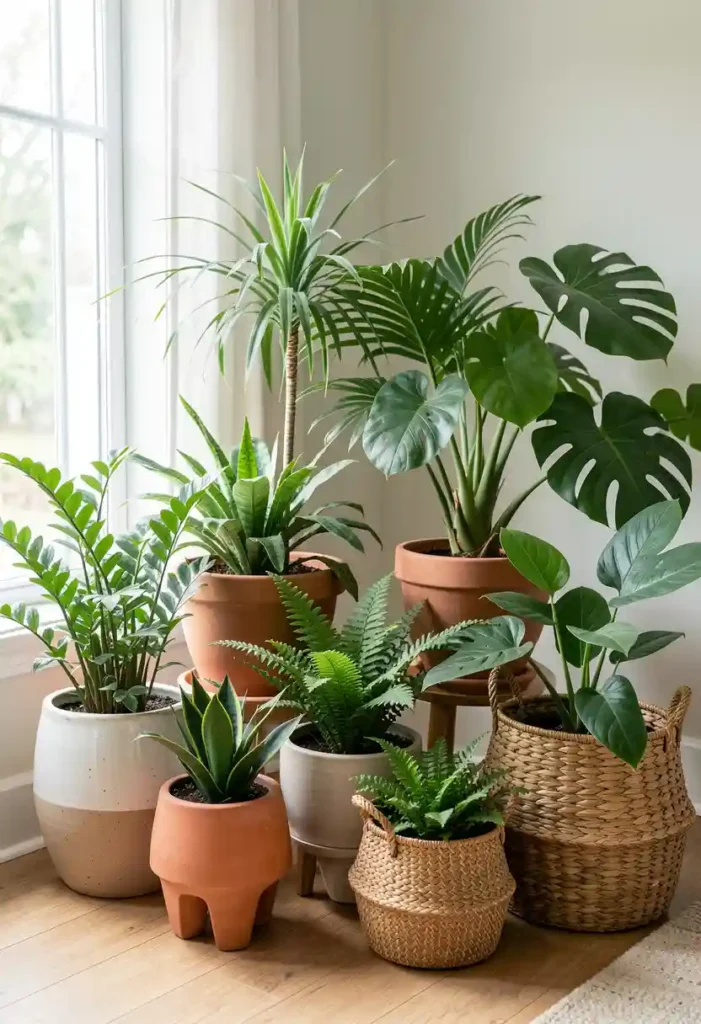
Planters can dramatically influence the overall style of your plant display. Instead of using identical pots, mix materials such as ceramic, terracotta, woven baskets, and metal planters. Combining textures adds depth and personality to plant arrangements. For example, a smooth white ceramic pot next to a woven basket planter creates a pleasing contrast.
However, it’s helpful to maintain a consistent color palette so the display still feels cohesive. Neutral colors such as white, beige, and soft gray often work well in most interiors. This styling technique helps plants blend naturally with the rest of your home decor while still feeling intentional.
8. Use Hanging Planters for Vertical Space
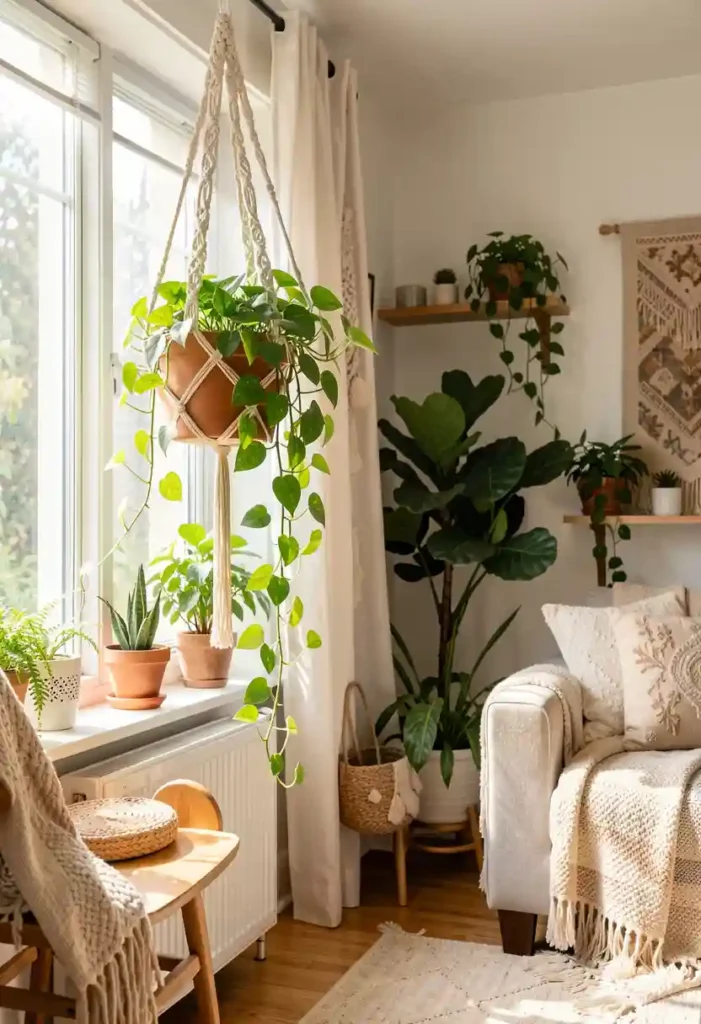
Hanging plants are perfect for adding greenery without taking up valuable floor space. They also create visual interest by drawing the eye upward.
Plants like pothos, philodendron, and string of pearls thrive in hanging planters because their vines cascade beautifully. These plants can soften corners, fill empty ceiling areas, or frame windows elegantly. Macrame hangers add a boho vibe, while minimalist metal or ceramic hangers create a modern look. Hanging plants can also make small rooms feel more open because they keep surfaces clear.
9. Create a Cozy Plant Corner
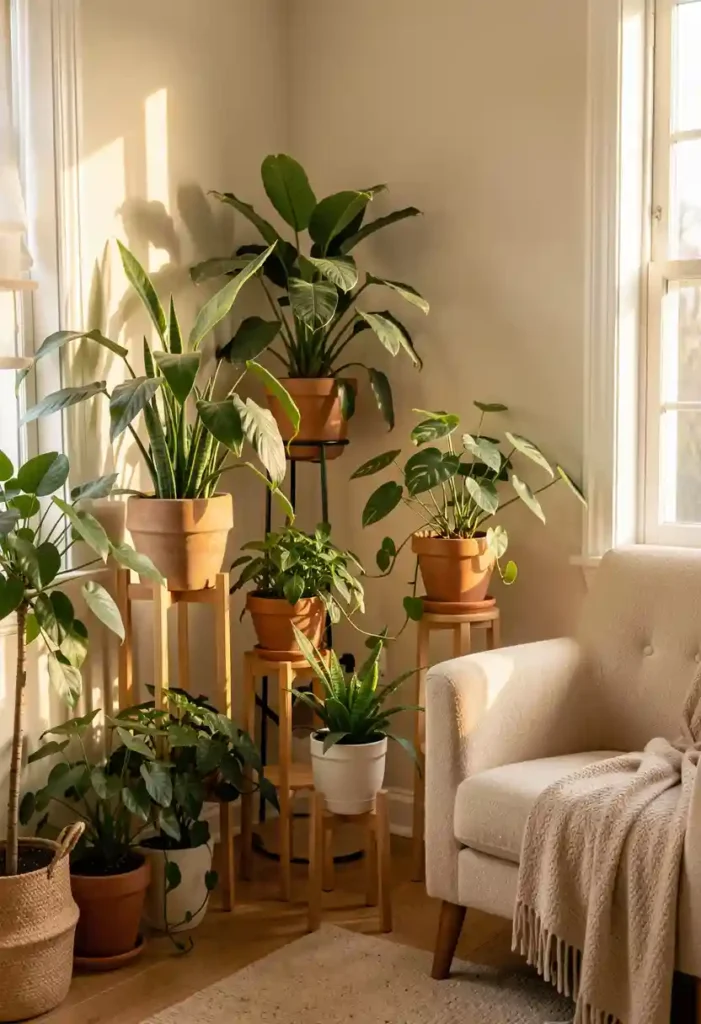
An unused corner can easily become a charming plant nook. Instead of leaving it empty, fill it with a small collection of plants arranged at different heights. Start with a tall plant as the anchor. Then add medium plants on stools or stands and smaller plants near the floor. A cozy chair or floor lamp nearby can make the space feel inviting.
This type of arrangement creates a relaxing atmosphere that feels almost like a miniature indoor garden. Plant corners are perfect for reading spaces, bedrooms, or quiet areas where you want a calm environment.
10. Combine Plants with Decorative Objects
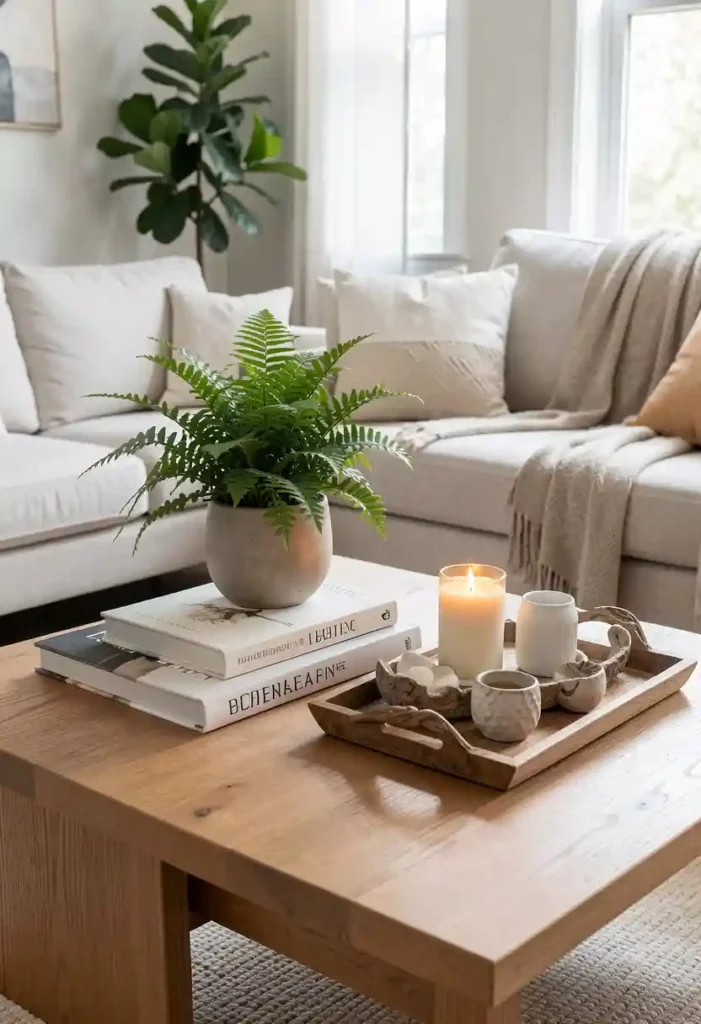
Plants look even better when paired with decor items. Mixing plants with objects like candles, vases, books, and sculptures creates a more layered and intentional display.
For example, a plant next to stacked books or a decorative tray can turn a simple table into a styled vignette. This technique works beautifully on coffee tables, console tables, and shelves. The key is balance. Avoid overcrowding the surface by leaving some negative space between objects.
11. Use Plants to Frame Furniture
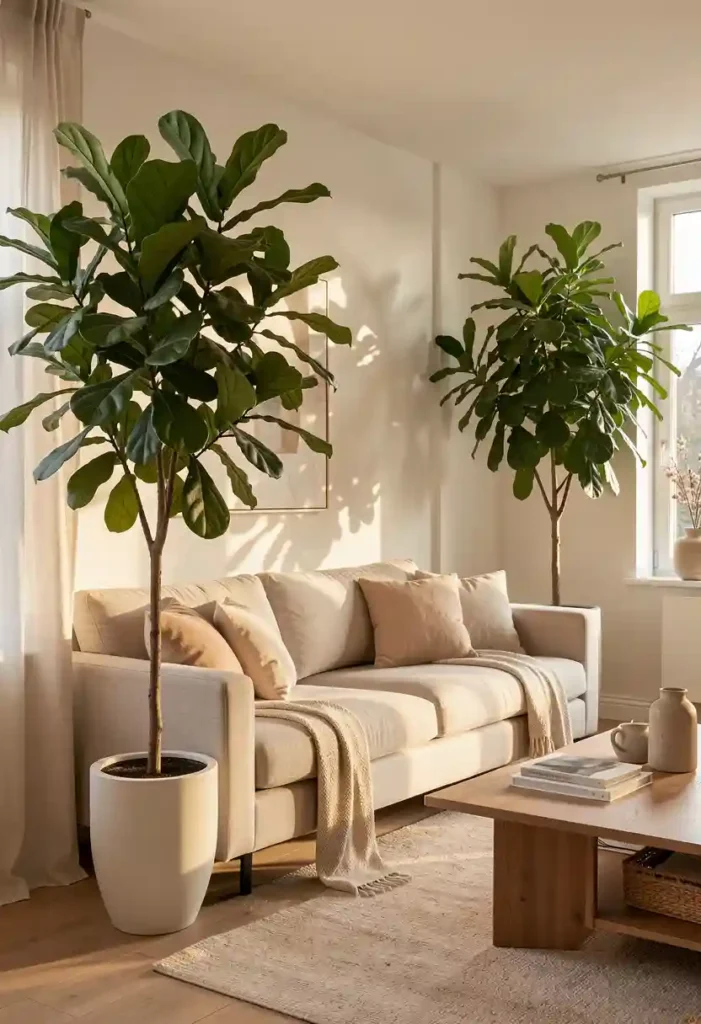
Plants can help frame furniture pieces and make a room feel more balanced. For example, placing a tall plant beside a sofa or armchair can soften the space and create symmetry.
Similarly, plants placed on either side of a console table or TV stand can create a pleasing visual structure. This styling trick helps large furniture pieces feel less heavy while adding natural beauty to the room. The key is choosing plants that fit the scale of the furniture. Large plants work well next to sofas, while smaller plants suit side tables.
12. Rotate Plants for a Fresh Look
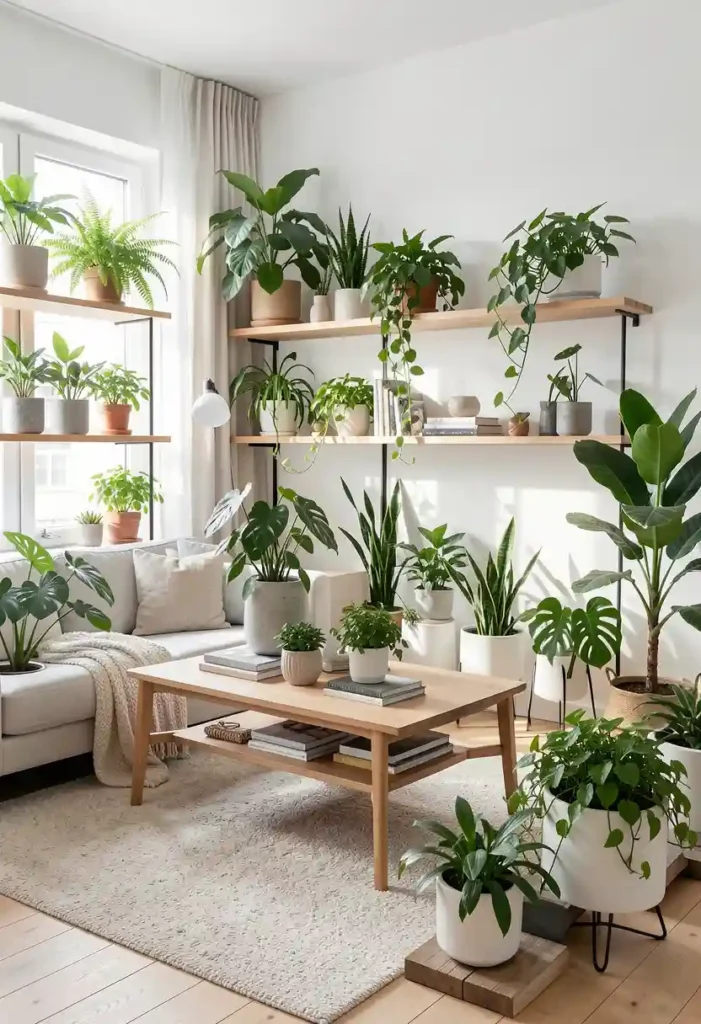
One overlooked styling trick is simply rotating plants around the home. Moving plants to different locations every few weeks can refresh the look of your space without buying anything new.
For example, a plant from the bedroom can be moved to the living room shelf, while a window plant can be placed on a side table. This small change instantly makes a room feel refreshed. Rotating plants also helps ensure that plants receive balanced sunlight over time, which keeps them healthy. Seasonal changes are another great reason to rearrange plant displays. In winter, plants may look better clustered together, while summer arrangements can feel lighter and more spread out.
Final Words
Styling indoor plants is not just about adding greenery to a room it’s about creating balance, texture, and life within your space. With the right approach, plants can become one of the most beautiful design elements in your home. Small styling decisions like grouping plants, mixing heights, choosing attractive planters, or placing greenery near natural light can completely transform the way plants look and feel in a room.